Change is the only constant in life, yet we’re rarely taught how to move through it with ease. Whether we’re facing career shifts, relationship changes, health challenges, or the natural transitions of the phases of womanhood, these liminal spaces—the in-between times—can feel both terrifying and sacred.
Navigating Change
I’m just back from my first ever festival, Buddhafield, where I had a fantastic time attending several transformative rituals and workshops. In one of these workshops, a Blue Lotus ritual, the facilitator explained that we’re at the cusp of a new 12-year energetic cycle, which started on July 22nd. She asked us to remember where we were 12 years ago.
I realised that 12 years ago was when I attended my first birth as a doula and also began my perimenopause journey. This realisation helped me understand why I’ve felt at the cusp of something completely new in my work for the last few weeks.
What feels even more significant is that I’m now approaching menopause itself. My last period was in October last year, so if I haven’t bled again by this October, I will have truly crossed that bridge—a very significant one.
Perimenopause has been a deeply uncomfortable and turbulent rite of passage for me, much more so than motherhood. It’s been a time of deep unlayering, healing, and questioning. Two quotes have particularly resonated with me during this time:
“At menarche a girl meets her power, through menstruation she practices her power, at menopause she becomes her power.” — First Nations American saying, shared by Jane Hardwicke Collings
“Midlife: when the Universe grabs your shoulders and tells you ‘I’m not f-ing around, use the gifts you were given.’” — Brené Brown
I have a new book about how drumming supports women’s wellbeing coming out in September, with launch events and new offerings planned for autumn. I’m also having a new website built to reflect my change of direction. I can feel the energy of something new coming—it feels very powerful—but I don’t yet know exactly what shape or form this will take. For someone used to having control, this uncertainty is difficult. There’s also the added stress of reduced income during this transition.
I’m still in the limbo phase, before something else is born. Much like when I was a first-time mother waiting for labour to start (my first child was born two weeks after the “due date”), or as a doula waiting for clients to go into labor, I oscillate between moments of peaceful, quiet acceptance and deep frustration and impatience. If I’m totally honest, there are more challenging days than peaceful ones.
How We Navigate Periods of Accelerated Change
So how do we move through times when we don’t know where life is taking us? When everything feels uncertain and we’re suspended between what was and what’s coming?
One crucial aspect is remembering that when we feel dysregulated and stressed, we tend to scramble, grasp, react, and seek knee-jerk solutions. This happens because when we enter fight-or-flight mode, we lose access to the part of our brain that does rational thinking. In survival mode, we’re run by the ancient, more primitive parts of our brain.
I keep having to remind myself of this. Re-regulation is key. I need to notice when I’m dysregulated or panicking about things.
For me—and I’m sure this is true for many of you—experiencing mental chatter is usually a clear sign that I’m dysregulated.
The key to navigating these periods of change is to create moments of peace in your day, to prioritise this, so you can stay present and grounded.
The Traffic Light System for Self-Awareness
The simplest way to understand and practice noticing your state is to think of it like a traffic light:
Green is the ideal state: relaxed, present, socially engaged.
Orange is fight-or-flight: wanting to run away, avoid tasks, getting frustrated/annoyed.
Red is freeze or collapse: stuck, not wanting to do anything at all.
The key is noticing when you’re moving into the orange state before you hit red, because it’s easier to shift from orange to green than from red to green.
Tools for Re-regulation
I’m a big believer that we are all unique, so what works for me may not work for you. I suggest trying a range of approaches to see what resonates:
Movement & Body-Based Practices:
Go for a walk (even 5 minutes makes a difference)
Dance for a few minutes (put on music you love and move)
Sway your hips for 5 minutes
Stand or walk barefoot on grass/earth for 5 minutes
Go for a swim (wild swimming always works for me but this needs more time)
Grounding & Sensory Practices:
Massage or wrap yourself with a scarf (try rebozo self-care techniques)
Practice the 5-4-3-2-1 technique: notice 5 things you can see, 4 things you can touch, 3 things you can hear, 2 things you can smell, and 1 thing you can taste
Diffuse or sniff uplifting or calming essential oils
Go outside in nature, even just to a garden or park
Creative & Meditative Practices:
Craft or draw something (even for just 5 minutes)
Doodle your feelings: draw a person with thought bubbles and download all your thoughts without censoring
Drum or listen to a calming drum track (5 minutes)- or if you want something longer, I have recorded a 20 min drum journey called Birthing something new)
Meditate for 5-10 minutes (often easier with guided meditations using free apps like Insight Timer)
Set a timer for 3 minutes and write/think/speak a gratitude list
Other Supportive Practices:
Cuddle or play with a pet if you have one
Practice the physiological sigh—one of the most effective, fastest techniques to reduce anxiety (3-5 minutes)
Smudge yourself and/or your space (I like Palo Santo or Mugwort incense)
Take rescue remedy (drops or pastilles)
Conclusion: Trusting the Process of Becoming
As I write this, I’m reminded that transformation is rarely linear or comfortable. We live in a culture that prizes certainty, control, and quick fixes, but life’s most deepest changes happen in the messy middle—in the space between who we were and who we’re becoming.
The ancient wisdom traditions understood something we’ve forgotten: that liminal spaces are sacred containers. They’re where the real work of transformation happens. Like a caterpillar dissolving in the chrysalis before emerging as a butterfly, we too must sometimes completely let go of our old forms before our new selves can emerge.
Maybe the goal isn’t to eliminate the discomfort of not knowing, but to learn to be more comfortable with discomfort itself. To trust that even when we can’t see the path ahead, we can take the next right step. To remember that periods of transition, however challenging, are often the precursors to our greatest growth and most authentic expressions of who we’re meant to be.
The practices I’ve shared aren’t magic bullets—they’re tools for staying present with ourselves through the storm. They help us remember that even in uncertainty, we have the capacity to regulate our nervous systems, to find moments of peace and joy, and to trust the process of our own becoming.
As the First Nations saying reminds us, this isn’t about losing our power—it’s about finally, fully stepping into it.
Walking the Path Together
If this has resonated with you, if you recognise yourself in the space between what was and what’s coming, I’d love to hear from you! Please comment below.
Please also know that you don’t have to navigate this journey alone.
Through my mentoring work, I support women who are moving through their own deep transitions—whether that’s perimenopause, career changes, relationship shifts, or the spiritual awakening that accompanies midlife. Having walked this path myself, I understand both the challenges and the gifts that these liminal spaces can offer.
My approach combines practical nervous system regulation tools (like those shared above) with explorations of what wants to emerge through you during this time of change. Together, we create a safe container for you to explore your own becoming, to trust your inner wisdom, and to step more fully into your power.
If you’re curious about working together, I’d love to hear from you. Sometimes the most transformative journeys begin with a simple conversation about where you are and where your soul is calling you to go.
You may have heard of microdosing of plant medicine, a grassroot movement, driven by communities rather than corporations, where people take sub-perceptual amounts of a psychedelic plant or plant substance (for example psylocibin or LSD) without experiencing hallucinogenic effects. People who microdose report benefits such as improved mood, energy levels, cognition, creativity, and reduced depression and anxiety. Scientific research on microdosing is emerging, with some studies showing improvements in mood and mental health.
I microdosed psylocibin for a couple of years to support my mental health during a time of struggle. It had very positive effects very quickly, when antidepressants had failed me. It allowed me to become aware of negative thought patterns I was not previously aware of, and modify them. I wrote about this in my article Dancing with chaos: my review of 2022.
About a year ago, deep into the process of writing my book about women and drumming (the book will be published this year by Womancraft publishing), I started a practise of beginning my working day with 5 minutes of drumming. I simply set an intention, put a timer on my phone for 5 min and drummed.
Within a couple of weeks, I noticed the exact same phenomenon of awareness and reframing of negative thought patterns I had noticed within 2 weeks after starting to microdose plant medicine. I noticed a negative, judgmental voice in my head, but this time there was an immediate reframing of the negative thought, which had not happened before.
One morning, whilst sitting down having breakfast, I started feeling grumpy because my husband had not expressed gratitude about the many things I had organised for him on his birthday the day before. In the past I would have verbalised this disappointment to him, and, as you can imagine, it would not have been received well. Nobody responds to criticism by being grateful. This time, as soon as the thought of unappreciation appeared, I heard a voice in my head saying “what’s really happening here is that you aren’t appreciating yourself”. The truth of this resonated so deeply that I sat there for quite some time digesting it. As I did this, I noticed that the tension and unpleasant feelings created by the negative thoughts had evaporated, as if by magic. Then, my husband appeared in the kitchen, and told me how much he appreciated all the things I had organised for him the day before.
In the process of preparing for a talk about drumming and women’s wellbeing I gave at the convention of women drummers and makers in Colchester, UK, I came up with the term drum microdosing, to describe this practice I had discovered.
How drum microdosing works
When you drum (or listen to drumming-but I find drumming myself more powerful), your brainwaves entrain to the sound waves created by the drum. It is a phenomenon known as auditory entrainment. Put simply, when you listen to the drum, the speed of your brainwaves align with the speed of the drumming. The type of drumming I use, known as shamanic drumming, at around 3 to 4 beats per seconds, results in brain waves slowing down. That slowing down is associated with meditative states. With the sound of the drum, I can enter this deeply aware yet relaxed state very quickly and effortlessly, contrary to when I try to sit still and meditate. Students of mine have reported the same effect, including people who, like me, find meditation difficult, and people who are skilled meditators, who report going much deeper into their meditative state when accompanied by the drum.
For me, what clearly happens is that not only does it calm my brain and nervous system down from a stressed to a calm state, but it then also leads to an immediate loosening of my thought patterns, which results in creativity and solution finding. You know when you are looking for a word and cannot find it, and the more you scramble and try to find it, the more it eludes you, only to find that it often appears once you stop trying? That’s what the drum does for me. I liken it to having a massage, but inside my brain instead of my body.
There is plenty of scientific evidence demonstrating this, so much in fact that the chapter on the science of drumming I wrote for my book was so big that the publisher asked me to subdivide it into two separate chapters!
If you want to see a cool example of this, watch this video which shows the effect of shamanic drumming on brainwaves, by drummer and researcher Jeff Strong, who has been studying the effects of drumming on the brain and wellbeing since the 1990s.
How to get started with drum microdosing
There are two ways you could do it: either drum live if you have a drum (or get a drum), or listen to drumming tracks designed to change consciousness. I find the live drumming more powerful, I suspect it is something to do with the more active aspect of it, and the involvement of movement, rather than the passive listening.
If you already have a drum, set an intention to drum for just 5 min each day. Set a timer on your phone for that time and drum.
If you do not have a drum, the drums I use are frame drums (drums that are made of a wooden hoops with a natural or synthetic hide stretched over it, and played either with a beater or by hand). It works with any drums, but these are easiest to use technically.
A really affordable frame drum option is the Remo Fiberskyn or Rennaissance frame drum. Anything from 12 to 16 inches diameter. They cost about £30 to £40. They do not come with a beater, but you can play by hand or make a beater by wrapping a couple of socks around a stick and securing them with string or an elastic band. Or you could look on Ebay or Facebook Marketplace for a second hand Irish Bodhran, some are available for about the same price. If you’d like to explore drum options more widely, I have written an article called How to choose and buy a shamanic drum.
If you’d like to try the drumming tracks: there are plenty of shamanic drumming tracks on YouTube or Spotify, and the best resource by far is Jeff Strong’s Brain Stim Audio website, which has a wide range of tracks to change your brain state at will (free for 2 weeks without entering payment details, and around £9 a month if you decide to carry on using it after that).
Regardless of how you do it, you’ll get a more powerful effect if you commit to doing this practice mindfully, with clear intention setting and conscious integration, very much like it is done with microdosing substances.
How to drum mindfully:
Set an overarching intention for a cycle of about 4 for 6 weeks. What do you want to improve/feel better about? Perhaps emotional balance, creativity, clarity, or focus. Be specific.
Choose a dedicated time each day for your drumming practice, for example the start or the end of the day.
Before each session, take a moment to ground yourself, set an intention for this specific session, one that naturally flows from your overarching intention. Create sacred space in whatever way feels authentic to you (it could be as simple as lighting a candle, a stick of incense, or diffusing some essential oils).
Keep a simple journal to track your experiences: note how you feel before and after drumming, any insights that arise, shifts in your energy or mood, and patterns you observe over time. Like any medicine, drumming works best when approached with respect, consistency, and awareness.
After each session, take a few minutes to integrate – sit quietly for a few minutes, or journal about your experience. This mindful container will allow the healing benefits of drumming to work more deeply in your system.
Conclusion
Drum microdosing offers an easy, powerful, accessible, and natural path towards better mental health, emotional balance, wellbeing, and personal transformation. Unlike plant microdosing, it’s legal, easily accessible, affordable, and has no physical side effects.
With a small consistent, mindful practice, the drum is a wonderful tool for consciousness, expansion and personal growth. Whether you’re seeking alternatives to Western mental health approaches, plant medicine, getting unstuck, wanting to explore new ways of working with your mind, drum microdosing provides a simple path forward.
If you would like to explore this further:
One-to-One Drum-Assisted Mentoring : personalised guidance combining drumming with transformational mentoring. These sessions offer a sacred space for deep insight and personal breakthrough, tailored to your unique journey.
Group Drum Microdosing Circle starting on the 23rd of July. Join an intimate circle of women exploring this transformative practice together. Meeting weekly on Zoom over 3 weeks, we’ll develop our practice, share experiences, and support each other’s growth. The course will provide structure, accountability, and a sacred container for your journey into drum medicine. message me if you have any questions.
You may have heard about various approaches to mental health – from talking therapy to medication to meditation. But there’s a powerful, ancient practice that’s gaining recognition in modern science: drumming. Research shows that drumming can profoundly impact our mental health, emotional wellbeing, and sense of connection to others.
I discovered the therapeutic power of drumming through my own experimenting with drumming. What started as an experimental approach revealed itself as a transformative tool for healing. When I started including drumming in my healing and mentoring work , within just a few sessions, I observed changes in people that sometimes months of therapy hadn’t achieved.
The Science Behind Rhythm
When you drum (alone or in a drum circle), something remarkable happens in your brain and body. Studies have shown that just 20 minutes of group drumming can significantly lower stress and anxiety levels. The rhythmic percussion creates a form of brain entrainment – our brainwaves literally sync with the drum’s rhythm, leading to deeper states of relaxation and awareness. This synchronisation helps rewire neural pathways, enhancing neuroplasticity – your brain’s ability to form new connections and adapt. It is literally changing your brain.
But it goes beyond just relaxation. Research has demonstrated that drumming can:
Reduce depression and anxiety
Improve overall mental wellbeing
Boost self-esteem and motivation
Help in addiction recovery
Create deeper social connections
What’s particularly fascinating is how drumming helps people process emotions that are difficult to express in words. Many participants report being able to “drum out” their anger, sadness, or frustration in a safe, contained way. It’s as if the drum becomes an extension of their emotional voice.
I collected most of the evidence and wrote it for my upcoming book about drumming and women (to be published in September 2025). There is so much research about the positive effects of drumming on the mind and body, that I had to write not one but two whole chapters about it.
If you want to read a paper that explains the effects on mental health really well, read Drumming Through a Polyvagal Lens by Simon Faulkner.
The Power of Community Rhythm
While individual drumming is powerful, group drumming adds another dimension entirely. Studies have shown that when people drum together, it activates parts of the brain associated with empathy and understanding others’ emotions. This explains why after a group drumming session, participants often report feeling more connected and understanding of each other, even if they started as strangers.
In one particularly moving study, researchers found that people drumming in pairs had higher activation in the right temporoparietal junction – a brain region crucial for empathy and social connection – compared to when they were just talking to each other.
This breakthrough has become permanent for me – when I feel overwhelmed, weak or numb, especially in therapy, I take off my socks, connect to the ground and stand up, remembering the feeling of rising power. My therapist says there has been a huge change in me within the few short months that I have been drumming, which I feel too: more unity within myself, a sense of my own power, a sense of belonging with others and more capacity for joy. Anna, describing what the sense of rising power she experienced after her first drum circle session.
How to Start Your Drumming Journey
You don’t need any musical experience to benefit from drumming. Here’s how you can begin:
Join a Drum Circle: Many communities have regular drum circles that welcome beginners. These provide a supportive environment to learn and experience group drumming.
Individual Practice: Even a simple frame drum and 5 minutes a day can create positive changes surprisingly quickly. Start with simple, heartbeat-like rhythms and let your intuition guide you.
Therapeutic Drumming: Look for facilitators who offer drumming for mental health and wellbeing.
Creating a Small, Regular Practice, ie Drum Microdosing
What it can be used for:
Mental health/wellbeing
Anxiety
Overwhelm
Regulate your nervous system
Feeling stuck
Overcome procrastination
Navigating change/challenging time
Increase your creativity
Increase your ability to focus
And much more
To make the most of your drumming practice:
Set aside dedicated time in a quiet space
Begin with an overarching intention for a course of 4 to 6 weeks, and one for each daily session
Allow yourself to express whatever emotions arise
Stay present with the rhythm and your body’s response
End with a moment of reflection, either silently, or in writing
Beyond Traditional Therapy
What makes drumming particularly valuable in mental health is its holistic nature. Unlike traditional talking therapy, drumming engages the body, mind, and spirit simultaneously. It bypasses the analytical mind and speaks directly to our emotional and physical selves.
As one participant in a drumming program shared: One of my key struggles has been a lack of self-belief, doubts about my worthiness and the value of my being. The drumming practice helps me break through self-limiting ideas, uncover challenges and find the courage to express myself more freely. Philippe.
Conclusion
In our increasingly disconnected and mentally challenging world, drumming offers a path back to ourselves and each other. It’s not just about making music – it’s about creating a space for healing, connection, and transformation. Whether you’re dealing with stress, anxiety, depression, feeling stuck, or simply seeking a deeper sense of wellbeing, drumming might be the medicine you never knew you needed.
If you’d like to explore drumming for mental health:
Drum Microdosing circle : A 3 week group, meeting online weekly, to hold space and accountability to develop a regular drumming practice, exploring different aspects of drumming for emotional wellbeing. We start on the 23rd of July.
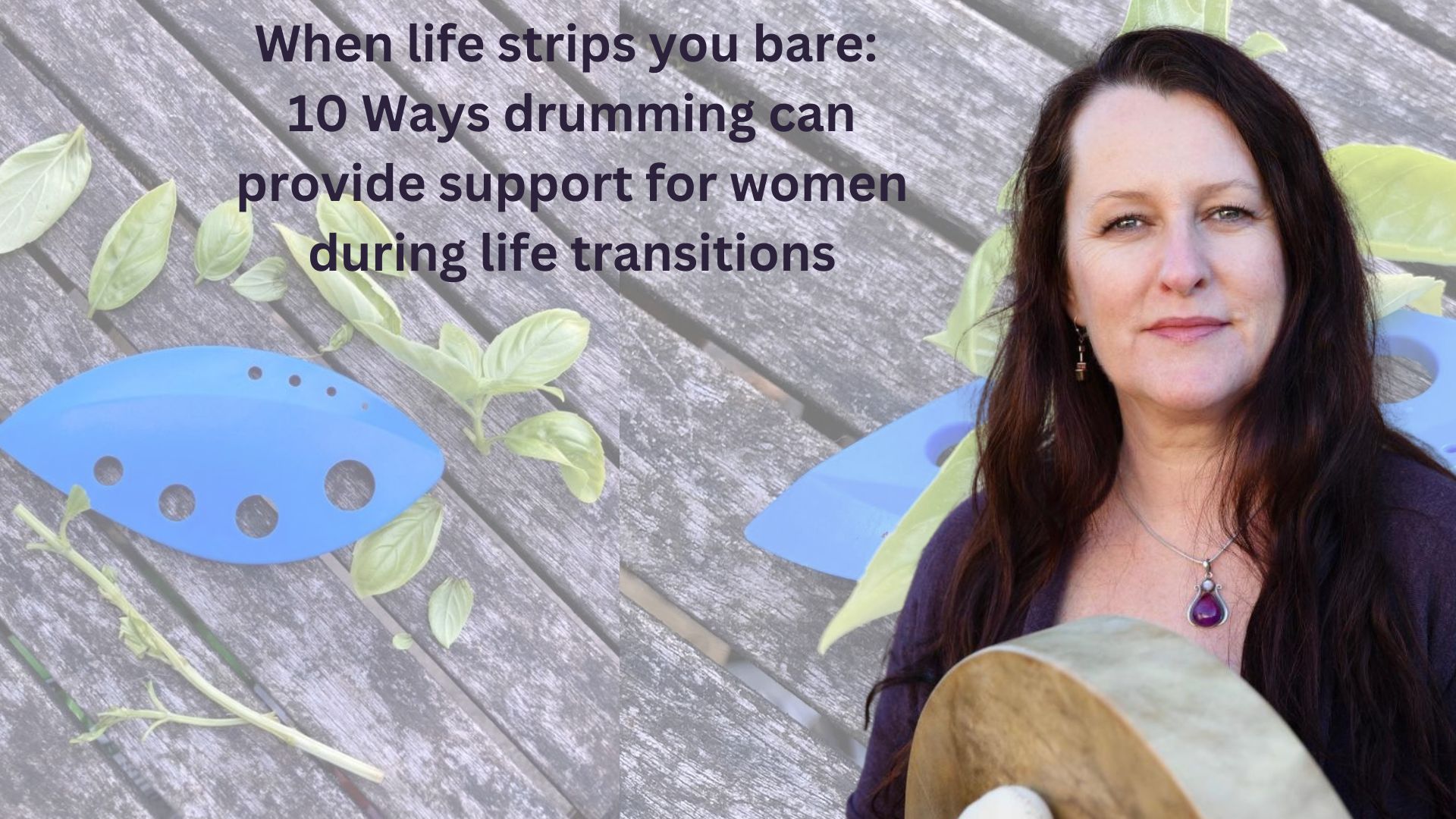
Last week, I had the vision of this herb stripping tool pop in my mind. It’s a little gadget with different sized holes in it, through which you pull a strip of herbs to remove the leaves. This felt particularly weird because I had completely forgotten that I had it and hadn’t used it for years.
The vision clearly showed me that I was being stripped. Stripped of what no longer serves belongs. And that’s how I’ve been feeling for the last couple of months.
This feels both scary and exciting, like I’m being remade and remodelled into a new version of myself. The focus of my work is changing direction completely, going from being focused on mostly birth to supporting women to trust themselves, and I do not yet know what my new offerings will look like.
And of course, it’s doing it in its own sweet time (a bit like waiting to go into labour). There is nothing to do but wait, and trust. It feels really uncomfortable, and I oscillate between excitement and fear, quiet acceptance, and frustration. It’s a daily practice for me to work with the resistance, and to surrender into the unknown.
Being stripped is a normal, regular occurrence.
It is a fact for many of us, life has a way of stripping us down. If you’re navigating new motherhood, menopause, career changes, or any other major life shift, there are times when everything you thought you knew about yourself gets turned upside down. I know this very well myself, as someone who evolved from a scientist to an antenatal teacher and doula, to an energy healer and shamanic drummer, and mentor/guide to women during life transitions.
During my own journey from scientist to spiritual guide, I discovered that drumming is one of my most powerful practices. What started with scepticism and disbelief evolved into understanding of how drumming can literally rewire our nervous systems and help us reconnect with our authentic selves.
If you are feeling overwhelmed and disconnected, if it feels like you’re losing yourself in the chaos of change, drumming might be just the thing you need to reconnect with your inner wisdom. In this space, you can reconnect with a sense of presence and inner peace, from which you can navigate change without the sense of being overwhelmed and scrambling for quick solutions that come from a dysregulated nervous system.
Here are ten ways drumming can support you through life transitions.
1. Nervous system regulation
When life feels out of control, our nervous system often gets stuck in fight-or-flight mode. From that place you can not feel safe, be creative, or think rationally. Drumming helps to regulate your autonomic nervous system, shifting you from hypervigilance to a calmer, more grounded state. The repetitive rhythm literally entrains your brainwaves, moving you from gamma/beta (stress) to alpha (relaxed alertness) state.
This is particularly powerful for women experiencing perimenopause, new motherhood, or any major life metamorphosis where stress hormones can run high.
Many accomplished women (myself included) have learned to rely almost entirely on our analytical minds. But during major transitions, logic alone doesn’t work. Drumming bypasses the prefrontal cortex and engages deeper brain regions (and the body!) where intuition lives. Percussion rhythms create a trance-like state that allows you to tap into your inner knowing.
Imagine a murky pond with sediment clouding the water: this is your analytical mind, cluttered with thoughts that obscure clarity.
When you strain to see through the murky depths, forcing answers to emerge, you only stir up more sediment. The harder you grasp for insights, the cloudier everything becomes, like when you are frantically searching for a forgotten word.
Drumming creates gentle ripples on the surface that gradually allow the sediment to settle rather than stirring it up. As you stop straining to find answers, they become visible on their own. Your inner wisdom emerges as your analytical mind relaxes its grip.
The drum effortlessly stills the waters of the mind, allowing insights to surface naturally. The answers were always there, waiting for your mind to settle.
3. Release of trauma and tension
Drumming is a full-body experience that helps release trauma stored in your nervous system. The act of striking the drum, combined with the sounds and vibrations, helps your body to move stuck energy and emotions. This somatic release is particularly important for women who’ve experienced birth trauma, relationship endings, or other life upheavals.
One of the most powerful sets of associations created in utero is the association between patterned repetitive rhythmic activity from maternal heart rate, and all the neural patterns of activity associated with not being hungry, not being thirsty, and feeling ‘safe’ (in the womb)… Rhythm is regulating. All cultures have some form of patterned, repetitive rhythmic activity as part of their healing and mourning rituals – dancing, drumming, and swaying. Dr Bruce Perry
4. Rebuilding your sense of power
There’s something primal and empowering about drumming. When life has left you feeling powerless, it reconnects you with your strength. The act of making sound and rhythm, reminds you that you have autonomy and agency—that you can create, influence, and direct energy.
This is especially healing for women who’ve been in situations where they felt voiceless or powerless.
At home, I felt in my own space but in the hospital, I felt at the system’s mercy and a lot of vulnerability. The drumming stirred up the empowerment and standing up for myself. The drum calls upon strength and authenticity and celebration. The drumming felt like when you are jogging and you have power music on, it gave me a power boost, like it was saying, ‘Open up, relax, trust your body, have faith in the journey.’ It made me feel more confident in my abilities. Leigh (about how having me drumming during her birth made her feel).
5. Creating space for grief and processing
Transitions always involve loss, and even positive changes require us to let go of who we used to be. Drumming creates a sacred container for grief, allowing you to honour what you’re leaving behind while opening space for what’s emerging. It holds you safe as you feel deeply.
I’ve seen women use drumming to process everything from divorce to career changes to the loss of their pre-motherhood identity.
When drumming, the drum becomes an extension of your body. Each beat, when we drop into it, tells the story of how we are feeling, what we are going through and what we need without words. As we drum, particularly with other women in a safe space, that freedom of expression seems to spread into the body itself, creating movement, shaking, dancing, stamping – somatically allowing emotion, trauma and tension to move, be seen and perhaps released. Then that beat and safe space spreads to the voice. It opens up the throat, our space of authentic truth. It allows us to let out that which is held within – in roars, tears, tones, words and song. Melonie Syrett
6. Connecting with your authentic self
When you’re stripped of familiar roles and identities, drumming helps you reconnect with your authentic self, with the part of you that exists beyond the mother, the wife, the professional, the daughter, or any other roles. In the beat of the drum, you meet yourself as pure creative energy, beyond societal expectations.
This is transformative for women who’ve lost themselves in pleasing others or conforming to external expectations.
7. Building resilience
Like meditation, drumming builds your capacity to stay present with difficult feelings and emotions. As you learn to come back to the beat, to the rhythm, when your mind wanders or emotions arise, you develop the same skill for navigating real life challenges. This becomes a resource you can draw upon during tough times.
The drum becomes a teacher in staying grounded when everything else feels unstable.
8. Activating your creativity
Many women in transition feel stuck, creatively blocked or uninspired. Drumming allows you to tap into your creativity, the same energy that births babies, builds businesses, and creates art. This spills over into other areas of life, helping you imagine new possibilities for your future.
The trance-like state can open up channels for intuitive insights and creative inspiration. People can experience heightened intuition, artistic expression, or innovative solutions to problems during or after a drum session or journey. These days when I encounter a problem, I make a mental note to “drum on it”.
I’ve seen women rediscover their artistic gifts, start new businesses, and make bold life changes after beginning a drumming practice.
9. Connecting with something greater than yourself
Drumming has been used for thousands of years to connect with the divine, the ancestors, and the natural world. When you’re feeling isolated or questioning your place in the world, drumming can restore your sense of connection to something larger than yourself, whether you call it God, the universe, or your own inner knowing.
This spiritual connection provides comfort and guidance during times of uncertainty.
10. Integrating science and spirituality
For analytical women who are opening to spiritual dimensions (like I was), drumming offers the perfect bridge. Drumming is backed by cutting edge neuroscience research showing its benefits for brain health, stress reduction, and emotional regulation, while also being a deeply spiritual practice. You don’t have to choose between your rational mind and your spiritual heart, you can integrate both.
This integration is particularly powerful for women, who like me, have been taught that science and spirituality are incompatible.
How do I begin?
If you’re in a life transition and feeling overwhelmed, disconnected, or like you’re losing yourself, I’m inviting you to explore drumming. You don’t need to be musical or have any experience, just an openness to try and let it guide you back to yourself.
It is simple: find a drum (even tapping on a book or desk will work), put on a timer for 5 minutes, sit quietly, and begin with an intuitive, heartbeat-like rhythm. Let yourself feel the sounds and vibrations, notice what emotions arise, and trust the process.
Your authentic self is waiting to meet you in the drumming. Sometimes, when the analytical mind fails and logic falls short, the wisdom of the drum can guide you back to yourself.
Remember: You’re not broken, you’re breaking open. The drum can help you trust that process.
If this resonates with you, I’d love to hear what that feels like. Please comment below. And you’d like to explore how drumming, along with other neuroscience-backed holistic practices, can support your journey through life transitions, I’d love to connect with you. Or check out my drum mentoring sessions, or my new book, The Beat of Your Own Drum.
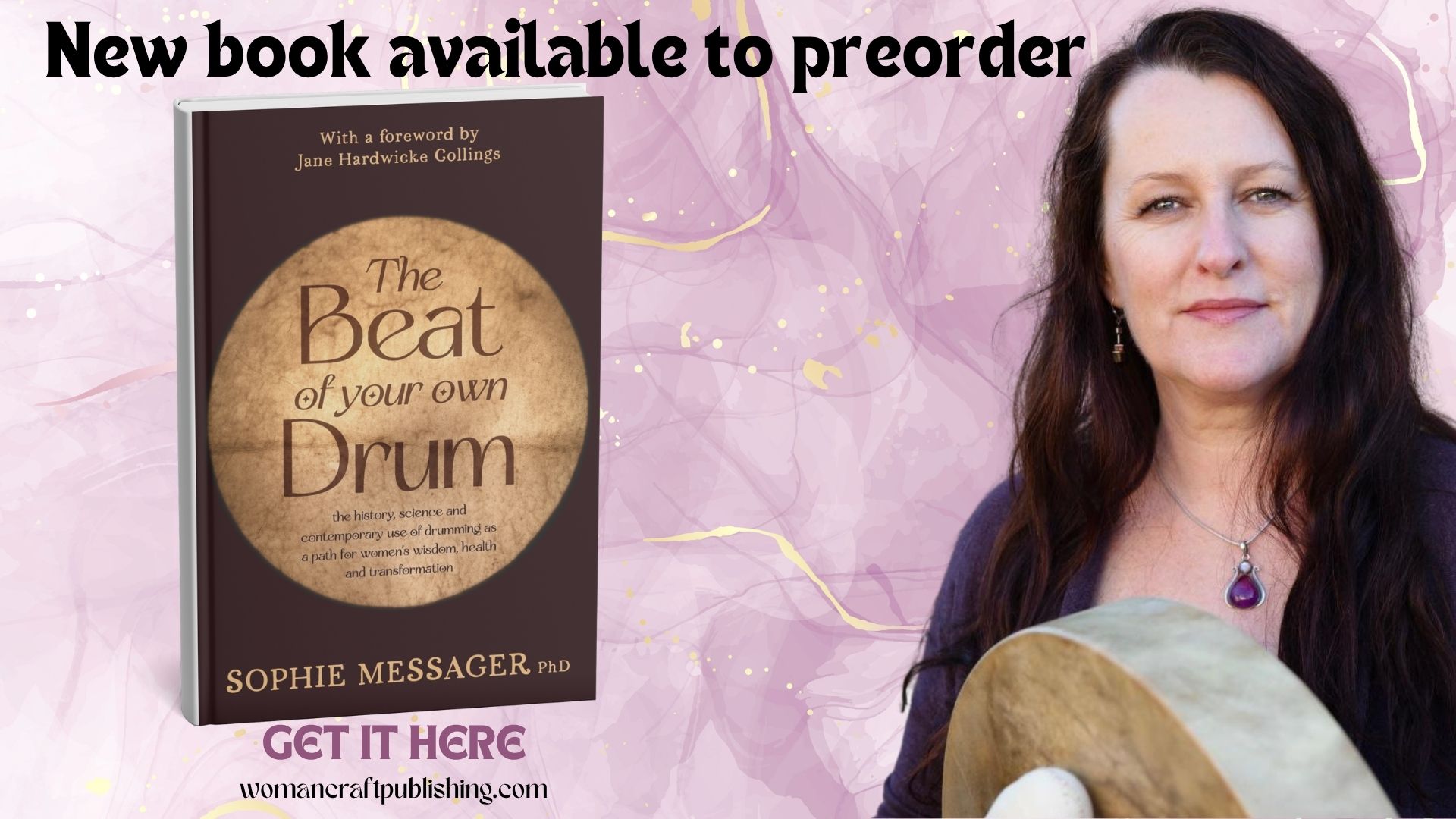
After a long wait I can finally reveal the cover and announce that my new book, The Beat of Your Own Drum, the history, science and contemporary use of drumming as a path for women’s wisdom, health, and transformation, is now available to pre-order from Womancraft Publishing.
When you pre-order, you do not only support myself and a wonderful small independent publisher in launching the book, you get a bunch of exclusive freebies carefully crafted by me.
Here are the exclusive freebies that accompany the pre-order:
1) Playlist
A Spotify playlist of songs about drumming, women and power. Each song is associated with a specific chapter of the book, and you may want to play each song before or as you start reading each chapter, or afterwards, to tune into its energy..
2) Drum microdosing guide
Drum microdosing is a practice I created. I discovered this practice whilst writing the book. Having microdosed mushrooms for a couple of years I was intuitively guided to start a drum microdosing practice. Drumming for just 5 min a day with intention can rewire the brain into more positive patterns, and works in a way that is both accessible and gentle. In this guide, I take you through the all practicalities of starting your drum microdosing practice from choosing a drum to creating an altar to journaling prompts.
3) Journey to the Heart of the Drum
A shamanic drum journey, where I guide you to connect with the heart of the drum. Discover what healing insights, guidance, or clarity wants to come through for you right now.
Pre-order the book before September to get these bonuses. You will receive them a few days before the publication date, which is on the 12th of September.
I need your help!
To help support the birth of this new book into the world, here are 3 things you can do to help:
Part practical guide, part scholarly exploration, and part inspirational journey, The Beat of your own Drum invites women to reclaim their rhythmic heritage and harness the healing power of percussion for personal and collective transformation.
Weaving together science and sacred wisdom, Sophie Messager explores the transformative power of drumming for women’s wellbeing. Written by a former biological research scientist turned holistic women mentor, this ground-breaking text bridges the gap between evidence-based research and ancient feminine wisdom.
Drawing on historical evidence, cutting-edge research, and personal experience, Sophie weaves together a compelling narrative that reveals drumming as far more than a musical practice. She explores its role in everything from supporting neurodivergent individuals to offering a natural alternative to psychedelics, from easing birth journeys to facilitating social change.
Sophie’s expertise in supporting women’s life transitions – from birth to perimenopause – enriches her investigation of how drumming can support these crucial thresholds. Her research spans from the historical significance of women drummers to contemporary applications in healthcare and ceremony, creating a comprehensive guide for anyone interested in the intersection of rhythm and wellbeing.
Whether you’re a seasoned drummer, a curious beginner, or a professional interested in innovative wellbeing approaches, this book offers practical guidance alongside fascinating insights. Discover how the simple act of drumming can regulate your nervous system, enhance your spiritual practice, and help you navigate life’s transitions with greater ease and authenticity.
The book contains the following chapters:
Foreword by Jane Hardwicke Collings
Introduction: The First Beat
1 – Rhythms of Awakening: My journey with the drum
2 – Echoes Through Time:
A short history of women and drumming
3 – Vibrations of Wellbeing:
The science of drumming and physical health
4 – Percussion and the Psyche:
Drumming’s resonance in brain, nerves and healing
5 – Diverse Frequencies:
How drumming supports people who are neurodivergent
6 – Beating the ‘Shroom:
Drumming as an alternative to psychedelics
7 – Sacred Circles: Drumming, rituals and ceremonies
8 – The Rhythm of New Life:
Drumming to support the birth journey
9 – Tuning into Your Instrument: Finding a drum
10 – Rhythmic Practices:
Ways to work with the drum and drumming
Conclusion: Echoes into the Future
Appendix
“ It’s early morning in a woodland. The air feels like it’s been washed clean overnight. It’s got that special lightness that only exists at dawn, before the day’s heat settles in. The sunlight dapples through the trees, making beautiful patterns on the mossy ground. Birds are singing their dawn choruses.
In the middle of a clearing, a woman stands, ready to drum. She holds the drum’s handle in one hand. On its circular wooden frame, a taut supple skin is stretched. The beater sits in her other hand, ready. As she pauses, the air seems to hold its breath in anticipation.
With a flick of her wrist, the beater connects with the drum’s skin. A “BOOM” pierces the silence, sharp and clear. The drum’s skin ripples from the impact, sending out invisible waves and suddenly the air is alive. The deep “BOOM” rolls through the space, through her body. She feels it in her chest, in her belly and hips, in the soles of her feet. It’s not just a sound – it’s a force, a presence.
She finds her rhythm. BOOM-Boom-Boom. BOOM-Boom-Boom. The beater dances across the drum’s surface, sometimes striking the edge, sometimes the centre, creating different tones. Each beat resonates through the skin, the frame and into her body, as if the drum was speaking directly to her bones.
The tempo increases. Her arm moves faster, the beater a blur. Boom-Boom-Boom-BOOM, Boom-Boom-Boom-BOOM. The rhythm becomes a pulsing energy, flowing from the drum and into the space around her.
Her eyes are closed, and she is lost in the rhythm. Her body sways gently. The beater seems to move of its own accord, as if guided by an unseen force. She can no longer hear the birds or see the forest around her. She is no longer playing the drum – she is the drum, the beater, the rhythm. Past and future melt away, leaving only the now of the beat.
The beat shifts, slows. Now it’s a gentle pulse. Boom…Boom, like a heartbeat… Each strike is deliberate, mindful. She feels her breathing deepen; her muscles relax. The world outside disappears, leaving only this moment, this connection between her, the frame, the skin and the beater.
As the final beat fades, its echo seems to linger in the air. The silence that follows is rich and full, vibrating with otherworldly energy. The nature around her is grateful for this honouring and even the birds are quietly listening. She is left with a profound sense of peace, of presence, of connection to something ancient and powerful that continues to resonate within her long after the drum has gone quiet.
This is what I have been doing weekly for the last four years: drumming at dawn in a woodland with two other women. This practice has given me more gifts than I can count: a deeper connection to nature, to myself, a sense of sisterhood and belonging. It has fulfilled my longing for more connection to the sacred. But perhaps most importantly, it has given me a growing sense of peace and spaciousness in my heart, something to hold on to in the midst of life’s busyness and challenges. What my ever-busy mind could not achieve with meditation, the drum gives to me without my even having to try.”
Sometimes the most profound wisdom comes from practicing what we preach. As my book launch approaches, I find myself in a familiar space—one I’ve guided countless women through as a doula, but now must navigate myself.
The limbo before the birth
Lately I’ve been feeling in a sort of limbo-in between 2 worlds. The prelaunch of my book is looming (a week days to go), so I’m busy doing a lot of behind the scenes stuff and I’m also having a completely new website built over the summer to reflect my new focus.
I’ve been having not so positive feelings of lack of “doing”, lack of “putting things out there”, I even have just had to cancel 2 in person courses due to lack of bookings (something that’s not happened like this ever before), and a general sense of lack of direction. I’ve had to work at reminding myself that there is rich fertile soil in period of fallowness and void. But in a culture that glorifies busy and “productivity”, even though it’s been over 8 years that I’ve started my journey of reclamation of spaciousness within, it’s still something I struggle with.
So the last few days I’ve been surrendering as much as I can, and making a point to do things that give me joy, such as swimming in the river (which is wonderful as we’re having a heatwave in the UK right now)
One of the things several people I work with have told me is to trust the process of where the book launch is going to take me-somewhere completely new. It’s scary to trust this at time, even though I can feel the energy of what’s coming and it’s f*cking huge.
When I chose to publish my new book withWomancraft Publishing, what attracted me most to them was their values of women supporting women.
So in preparation for the launch, I’ve been busy recording a bunch of conversations about Women Making Noise (reclaiming our right to make noise).
In one of these conversations yesterday we talked about the “limbo” that women experience in the days before they go into labour. I know this, yes, I’m familiar with supporting this as a doula, I told myself, this is what I’m experiencing now. I should heed my own wisdom.
This morning, out of these conversations, I’ve been offered to come and run a bunch of events in Brighton (and down the line maybe even some retreats), and in another we’re started to put in place the process of doing published research on what drumming does for women. This feels so exciting! My heart sings at the prospect of doing many new (ground breaking) things in this field.
Learning to trust the void
But for now I wait. I wait and try to surrender, telling myself the things I used to tell myself when waiting for my “overdue” baby to arrive, and the pregnant women when they entered their “in between time”. I have plenty of experience supporting this time, and I also experienced it for myself, as a doula, whilst waiting for labour to start.
This week, I was struck by listening to another Womancraft author, Coco Oya -Cienna-Rey, in her episode of the Creative Magic podcast. Her book is published today. In the podcast Coco said that after the publication she was going to take the summer off. Then it became very clear that I needed to do something similar.
When my first book, Why Postnatal Recovery Matters, was published in 2020, I did not understand that, after riding the wave of the publication, after the flurry of the launch, the signing and posting hundreds of books, writing articles etc, after all the excitement, I would crash and experience a long fallow period. And crash I did, spectacularly. I did not understand the natural cycles of growth and decay, of birth and death, of summer and winter, the way I am now. I felt extremely guilty and uncomfortable in that state, because I was unconsciously driven by modern society’s belief that productivity = worth. I could not understand what one of my drum sisters said about the need for me to acknowledge the enormity of what I’d done and receive the book. The irony for someone whose book was about postpartum recovery!
Because it’s true. I’m due to have a baby soon. Not a physical baby, but I’m “giving birth” to my new book. It’s been a long gestation, with conception starting over 2 years ago, the process of writing, then editing and correcting the book, and finally the “baby” will soon be ready to be born. It will not arrive in physical form until the 12th of September, but pre-ordering (which comes with a bunch of goodies exclusive to people who are pre-ordering), is only a week away, on the 27th of June. I’ll share as soon as it becomes available. You could say I’m entering my 3rd trimester.
Between now and the Autumn all of my energy is going to be focused on preparing for the birth, in supporting this new baby in entering the world and then in sharing and nurturing it. I will need to slow down, need to recover from birthing, and nurture myself too.
Therefore I will not be offering any new courses or programs in the next 2 to 3 months. However, my many pre-recorded courses , webinars, and workshops are still available (scroll down for these below, these include many drum based trainings).
I would also love to support women who feel called to the drum but do not know how to start or want to overcome procrastination or impostor syndrome through my mentoring sessions.
Here’s some short excerpts from the book:
The many women I have drummed for during pregnancies, birth and postpartum, during difficult life transitions, loss, trauma, grief, illness, accidents, changes of circumstances, end of relationships and more, have told me that the drum spoke to something deep within them, something they recognised: a remembering. They spoke of feeling like they were inside of a temple, of feeling their ancestors around them, of being reminded of their strength, of receiving powerful messages of guidance from within, including messages from goddesses and the divine feminine.
As we drum, we don’t just think differently – we experience the world differently. This altered state of being opens doorways to new perspectives, al- lowing us to imagine and embody alternatives to the limiting narratives that have been unconsciously programmed into us. In essence, drumming doesn’t just challenge the system – it transports us beyond it, offering an experience of what true autonomy and connection feel like.
Drumming, because of its ability to modify our state of consciousness, can help us get out of a rational, masculine-centric way of thinking and re-learn how to access a more intuitive, more feminine way of knowing. Drumming can provide an antidote, not only to the ever-increasing speed and business of our world, but also to the systematic destruction of women’s power and autonomy.
And a video of me reading another excerpt:
Play
Conclusion
This limbo, this in-between time, is teaching me that the pause before emergence is as sacred as the emergence itself. Just as I’ve witnessed with the women I’ve supported, this waiting isn’t empty time—it’s a space where something beautiful is preparing to unfold.
I’m choosing to trust the process, to honour the natural rhythms of creation and rest, and to model what I’ve long taught others: that our worth isn’t measured by our productivity, but by our willingness to dance with the ever moving energies within us.
Does this resonate? Do you experience discomfort during periods of fallowness? If yes I’d love to hear from you-just comment below.
If you’re feeling called to the drum but don’t know how to start, or if you’re struggling with impostor syndrome around your own emergence, I’d love to support you through individual mentoring sessions.
Ready to begin your own drumming journey? Explore my pre-recorded courses and workshops below, including drum-based training that will help you access your own inner wisdom and power.
Mark your calendars: Pre-orders for my new book open on June 27th, with exclusive goodies for early supporters. I’ll share the link as soon as it’s available—this book baby is almost ready to meet the world, and I can’t wait to share it with you.
When I received my ADHD diagnosis at 53, it wasn’t a surprise but rather a confirmation of something my hyperfocused research had already revealed. Unlike many who experience conflicting emotions upon diagnosis, I only felt empowered – finally understanding why certain environments dysregulated me, why focus sometimes flowed and other times vanished completely, and why my brain seemed to operate so differently from others.
What I didn’t expect was how my deepening relationship with drumming would become not just a passion or spiritual practice, but essential medicine for my neurodivergent mind. The delay in my ADHD medication journey opened an unexpected doorway, leading me to discover how drumming could offer my brain the regulation, focus and calm that pharmaceutical interventions couldn’t meet sustainably. This is the story of how my drum became my teacher and healer on my midlife neurodivergent journey.
Diagnosis as empowerment
2 years ago, aged 53, I was diagnosed with ADHD. This wasn’t a surprise as I had already done some hyperfocus on the subject, after my youngest child had been diagnosed with autism the previous year.
I’ve heard a lot of people say they struggled with a lot of conflicting feelings when they got their diagnosis. Not me. I had already done the work after struggling with my child’s diagnosis, because there is still so much negative stigma attached to being neurodivergent, and because I had so much to learn about what being neurodivergent meant.
For me, being diagnosed was empowering, and empowering only. It meant that I stopped beating myself up with stuff that I found hard to do. It meant that I finally got support for my business in the form of an Access to Work grant. It meant that I started to understand what dysregulate me (hello noises and changes in temperature) when I didn’t before and got to put supportive measures in place (noise cancelling headphones, earplugs, a fan…). And it meant that I got to try ADHD medication.
I first tried ADHD medication once 2 years before I got diagnosed as it was recommended as a sure way to establish whether I had ADHD or not. The experience was very positive and you can read about that here. I also tried antidepressants, and microdosing mushrooms. I hated the antidepressants, and the mushrooms helped me a lot in uncovering unhelpful thought patterns I had.
Having had such a positive experience with the ADHD medication, I was keen to get prescribed the drugs, so after my diagnosis I applied to start titration (a process of trying different drugs at different doses to establish what’s right for you) with the right to choose company that had diagnosed me, psychiatry UK.
The unexpected medication delay: a blessing in disguise
I was told it could take 7 months of waiting. In the end, due to a communication mistake (I wasn’t told I needed an ECG and my GP did not take action), I ended up waiting more than a year. This turned out to be a blessing in disguise.
As I was busy writing my book about women and drumming, and desperately needing better focus to write effectively, I came across Jeff Strong’s book, Different Drummer. Jeff is a drummer and clinical researcher with ADHD, who has been using drumming to change brain states since the 1990s. In his book Jeff explained how you could use some rhythms to change your brain waves, including to help focus. I found Jeff’s on demand drumming website, Brain Stim Audio. I signed up for his free 2 weeks trial (no payment methods are required to try it). I started using his focus tracks and was amazed to notice a similar sensation in my brain as when I had taken ADHD drugs. When my free trial ran out, I bought a monthly subscription (which only costs $10 a month). I started using the tracks every day, to great effects on my ability to focus and write my book.
The medication experience: benefits and warning signs
A few months later, psychiatry UK told me they were ready to start my ADHD medication titration. This was a bumpy journey. I told the nurse that I was very sensitive to medication and asked to start on the lowest dose possible, lower than what was normally recommended. The first medication I tried (Ritalin), really did not agree with me. I just could not sleep whilst on it, and was getting more and more wired each day. I only took it for 3 days before stopping. After a break, I started on the lowest dose possible of Elvanse (lisdexamfetamine), at 20mg. With hindsight this was still too high.
On this drug I was able to focus really well, in fact too well. For example I could stay seated at my desk and write for 4h solid without a break, sometimes not even stopping to drink water. I have to admit I loved it. I also experienced an elevated mood. This helped me immensely to help finish my new book on time. However, even from the start there were concerning side effects, in particular a slightly elevated heart rate. When the prescriber suggested I try a higher dose of 30mg, my heart rate went up to 115 beats per minute. I stayed on the 20mg despite the slight rise in my heart rate, for the duration of the titration, and the few months after. I also loved that, whilst taking this drug I was never tired. I could go all day. I had no desire or need to nap in the afternoon during our holiday, despite the heat (my parents live in the South of France). My mother mentioned this whilst we were on holiday, she found it concerning, she said I wasn’t my normal self. One day, I forgot to take the meds, and I felt completely exhausted by mid morning, like a crash. The drug also made me lose weight. When I look back there were many red flags right from the start, but the positive effects made me ignore them.
One of the other positive side effects was that titration required giving up alcohol. After a few weeks, I noticed that not drinking was actually good for me, and I haven’t drank any alcohol since.
Back from holidays in September, even whilst I loved the hyper productivity the drug afforded me, I started getting a niggling sense that this wasn’t sustainable. That same month, I started getting serious side effects from the HRT medication I was taking (constant bleeding). I went on HRT a year prior against everything I normally believe in, to heal from a chronic stress situation I was in- you can read about this here. Looking back now, I believe that this was the first sign that my body gave me to tell me that the ADHD medication wasn’t good for me. During the Autumn, I stopped the medication during the weekend to give my body a break but this led to an unpleasant energy and mood crash on the first day I stopped. I must admit the way the meds make me feel was quite addictive.
When my body said “enough”
A couple of months later, I started getting very severe gastrointestinal side effects, eventually leading to a diagnosis of ulcerative colitis. I refused to take the anti-inflammatory drugs and oral steroids that I got prescribed because they would not treat the root cause, but just put a lid on the symptoms. Instead, I meditated on what my gut was trying to tell me: you need to slow down, it replied very clearly. I was worried about how I would feel if I stopped the ADHD meds but the side effects I was now experiencing worried me more. I joined several patient groups, and did some research and found evidence of stimulants causing such gut symptoms. This led me to stop the ADHD meds. I also saw my homeopath and started taking healing herbs (slippery elm and aloe). And I slowed right down. I nearly stopped working for 6 weeks, doing only the bare minimum. After the Christmas holiday, I tried to get back to work but my body wouldn’t let me, so I kept the slower pace for a bit longer (this was hard-despite having worked deeply on the ability to rest without guilt for many years, I still experience some level of resistance). Within a couple of weeks, symptoms were much reduced, and I was symptom free within 6 weeks. Tests later on would prove that a particular gut inflammation marker had gone below detectable levels (it had been extremely high before), something unheard of happening so quickly.
Rediscovering my natural rhythm
When I eventually got back to work, I had to re-learn to work with my natural ebb and flow ADHD energy-one that has two modes: either full throttle, do a week’s work in 2h hyperfocus, or nearly catatonic. That was hard. And yet, deep down I kind of knew that was healthier and would allow me to do some healing work. It’s not been easy or plain sailing. Interestingly, I’m also almost entirely convinced that I’m done with my cycle now, though I will not know for sure until I haven’t bled for a year.
The perimenopause process, which I have been undergoing for 13 years now, has felt on many levels like puberty, with a complete change of identity. Perimenopause is also what brought my ADHD symptoms to light, and led to my diagnosis.
The drum as daily medicine
Taking the ADHD meds somewhat disconnected me to my regular drumming practice because I felt so focused and positive on them I did not really need it. I still kept my weekly drumming practice in the woods with my drum sisters, and led my monthly drum circle, and drummed occasionally on top of that, but it wasn’t a regular occurrence.
Since I stopped the meds I’ve reconnected with it for myself, and supported others to do the same, in fact I led a couple of workshops using the drum (one about overcoming procrastination with the drum, and the other a drum microdosing workshop, followed by a month long drum microdosing circle).
I’ve also resumed using Brain Stim Audio’s focusing drum tracks on a daily basis.
In my upcoming book (prelaunch is next month!) about how drumming supports women’s wellbeing and power, there is an entire chapter dedicated to how drumming can support people who are neurodivergent. I wrote it because of the work I was doing with the drum, discovering Jeff Strong, taking his course and interviewing him, and using his tracks to fuel my focus. If my medication journey hadn’t been delayed, this chapter might not have existed.
Adult ADHD Study: A comparison between Rhythmic Entrainment Intervention (REI) drumming and Ritalin showed that drumming produced better results on the Test of Variables of Attention (T.O.V.A.). While 10mg of Ritalin improved the subject’s score from -12.74 to -6.60 and 20mg improved it to -3.47, listening to REI drumming tracks achieved a near-normal score of -1.87— almost 50% better than the medication.
Elementary School Study: In a double-blind, placebo-controlled study with 100 children, those listening to REI drumming scored significantly higher (68) on attention tests compared to silence (23) or placebo music (31).
Brain Shift Radio’s Continuous Performance Test: Large-scale testing with thousands of participants showed drumming reduced error rates by an average of 36.73% across multiple attention metrics. Specifically, detection errors decreased by 30%, commission errors by 46.5%, and omission errors by 33.7%. Response times also improved with drumming.
I’ve discovered both from personal experience and research that drumming offers unique support for ADHD and autism. As a woman diagnosed with ADHD at 53, while navigating perimenopause, I’ve found that drumming provides effortless nervous system regulation that meditation alone cannot match. Drumming increases dopamine, provides an outlet for emotions and energy, and creates a beautiful stillness in overactive minds through what I call “a massage in your brain.” Research by Friedman, Strong, and others confirms drumming’s benefits: improved focus, reduced anxiety and enhanced social connection.
For me personally, drumming has become an essential tool for managing ADHD symptoms, helping me find calm amidst overwhelm through daily practice, listening to entrainment tracks while working, and connecting with others through my drum circles. Unlike other pursuits I’ve quickly abandoned, drumming has remained and grown in my life for eleven years, testifying to its profound power to support neurodivergent minds.
Conclusion
The dance between my ADHD diagnosis, medication experience, and deepening drumming practice continues to evolve as I move through the end of perimenopause. What began as a spiritual practice has revealed itself as medicine for my neurodivergent brain – a way to find focus without the toll of stimulant medications, and to regulate my nervous system.
The drum speaks a language my brain and spirit intrinsically understands: rhythm, presence, and the permission to both flow with intense energy and find stillness within rhythm. While trying ADHD medication offered a window into what focused attention could feel like, drumming has become my sustainable path toward the same clarity – honouring my natural ebb and flow rather than overriding it.
As I continue leading circles, teaching workshops, and using rhythmic entrainment in my daily work, I am deeply grateful for this ancient technology that serves my modern neurodivergent needs. The drum has taught me that sometimes the most powerful medicines aren’t found in prescriptions, but in practices that have supported human brains and hearts for thousands of years.
If you’re intrigued by how drumming might support your own neurodivergent brain, I invite you to join me for my upcoming workshop “Beat Distraction: Drumming for ADHD” on Thursday, May 22nd, 2025 at 4pm UK time. No musical experience or drum required—just bring your curiosity and openness to experience how rhythm can regulate your nervous system and enhance your focus.
During this workshop, you’ll:
Experience firsthand how specific drumming rhythms can shift your brain state
Learn simple techniques you can incorporate into your daily routine
Discover how to use rhythm to transition between hyperfocus and rest states
Connect with others exploring drumming as medication-free ADHD support
In postpartum care and trauma healing, ancient wisdom is meeting modern neuroscience to create powerful, holistic approaches. Somatic rituals like closing the bones are gaining recognition for their profound impact on both physical and emotional well-being.
At the heart of these rituals lie two seemingly simple yet deeply effective techniques: rocking and wrapping. In this article I look at the science behind these practices, exploring how they tap into our primal comfort mechanisms to regulate the nervous system, promote healing, and offer a symbolic journey of rebirth after trauma.
Whether you’re a new mother, a trauma survivor, or a holistic or healthcare professional, understanding the transformative power of these rituals can open new pathways to healing and self-discovery.
What happens during a closing the bones ritual?
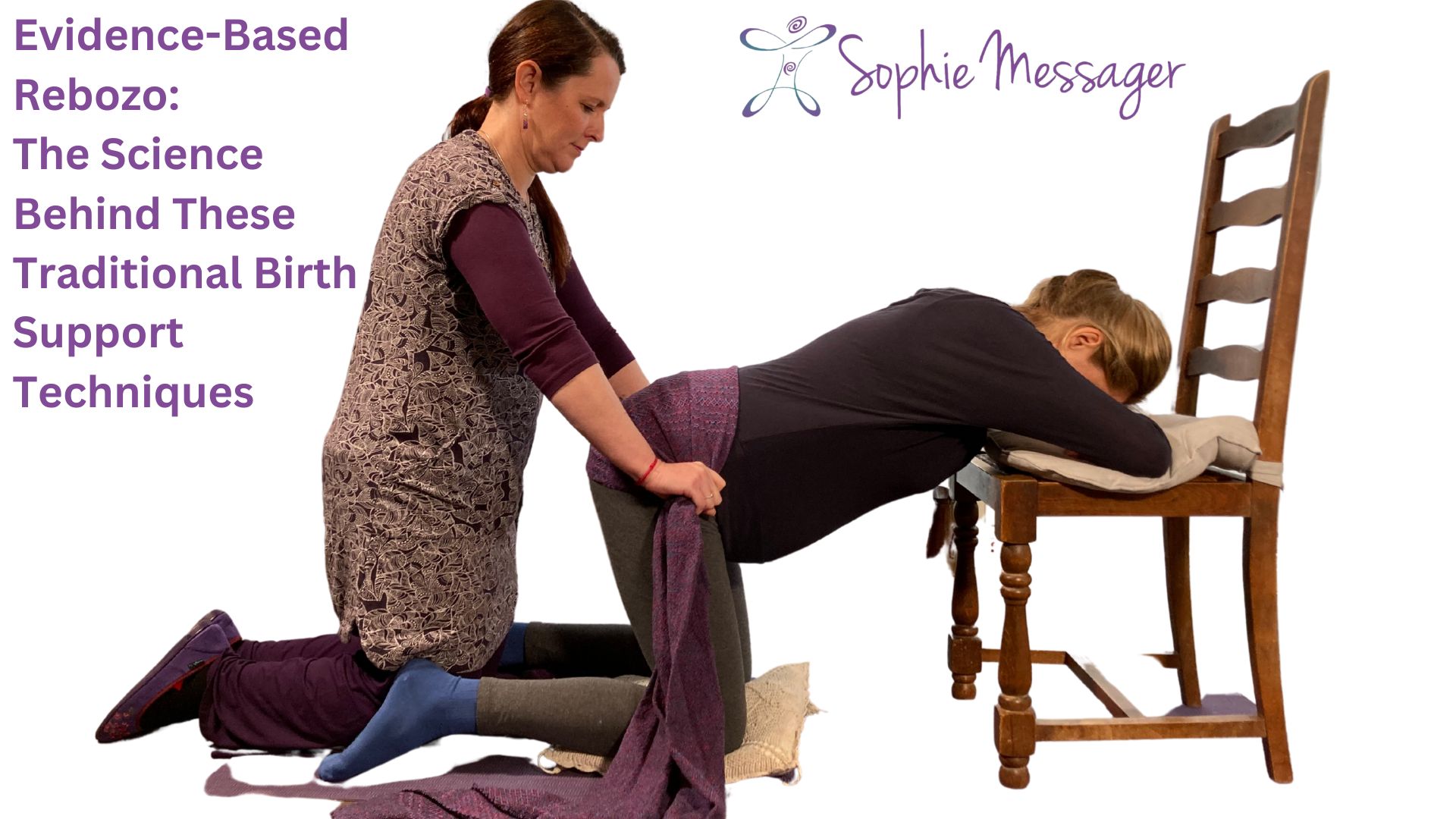
The ritual includes rocking the entire body with scarves (I use Mexican shawls called Rebozos), following by an abdominal massage sequence, and finally a process of tightening the rebozos around the body in sequence from the head to the toes.
For a longer explanation, read my article What is closing the bones. And, because a pictures speaks a thousand words, watch the short video below to get a taster of what it looks and feels like:
Play
How closing the bones supports healing and nervous system re-regulation
Rocking and wrapping
Rocking and wrapping, two key elements of the closing the bones and postnatal recovery massage ritual, play a crucial role in calming the nervous system and healing from stress/trauma. These seemingly simple actions tap into deep, primal comfort mechanisms that can profoundly impact both our nervous system and emotional state.
The soothing power of rocking
Rocking is a universal comfort measure, instinctively used by mothers to soothe infants. This rhythmic motion has several benefits for trauma recovery:
Nervous system regulation: The gentle, repetitive movement of rocking helps activate the parasympathetic nervous system, our body’s “rest and digest” mode. This counteracts the hyperarousal often associated with trauma.
Grounding and presence: Rocking encourages a focus on bodily sensations, helping individuals connect with the present moment rather than being caught in traumatic memories.
Emotional release: The soothing motion can create a sense of safety, allowing suppressed emotions to surface and be processed gently.
Vestibular stimulation: Rocking stimulates the vestibular system, which is linked to our sense of balance and spatial orientation. This can help individuals feel more centered and embodied.
The comforting effect of wrapping
Wrapping, another key component of these rituals, offers its own set of benefits for trauma recovery:
Deep pressure therapy: The firm, encompassing pressure of wrapping, activates the body’s deep pressure receptors. This stimulation can reduce anxiety and increase feelings of security.
Boundary reinforcement: For those who have experienced boundary violations, wrapping can provide a tangible sense of where the body ends and the outside world begins, reinforcing a sense of self.
Containment: The physical containment offered by wrapping can symbolically represent emotional containment, helping individuals feel safe enough to process difficult emotions.
Proprioceptive input: Wrapping provides strong proprioceptive input, which can help individuals feel more present in their bodies – particularly beneficial for those who dissociate as a trauma response.
Neurodivergence and Sensory Regulation
For neurodivergent individuals with autism or ADHD, rocking and wrapping can be particularly beneficial:
Sensory regulation: These actions provide predictable, controllable sensory input, which can be calming for those who struggle with sensory processing.
Self-stimulatory behaviour: Rocking, in particular, mimics self-stimulatory behaviours often used by neurodivergent individuals for self-regulation.
Anxiety reduction: The deep pressure from wrapping can significantly reduce anxiety, a common co-occurring condition in neurodivergence.
Symbolic Rebirth and Integration
Beyond their physiological benefits, rocking and wrapping carry powerful symbolic meaning:
Womb-like experience: these processes can recreate a womb-like environment, symbolically offering a chance for rebirth or a fresh start after trauma.
Ritual transformation: The process of being wrapped and then unwrapped can represent a journey through trauma and emerging anew.
In conclusion, the rocking and wrapping elements of closing the bones and postnatal recovery massage offer a unique blend of physiological regulation and symbolic transformation. By tapping into these primal comfort mechanisms, these rituals provide a gentle yet powerful approach to trauma healing, honouring the body’s innate wisdom and capacity for recovery.
Conclusion
The practices of rocking and wrapping, central to rituals like closing the bones, offer a potent blend of physiological and psychological benefits. By harnessing the body’s innate healing mechanisms, these techniques provide a gentle yet effective approach to trauma recovery and nervous system regulation. Their universal appeal lies in their ability to create a sense of safety, groundedness, and renewal – essential elements for healing after birth or traumatic experiences.
The adaptability of these practices makes them valuable tools for a wide range of individuals, including people who are neurodivergent. Rituals like these remind us of the profound connection between body and mind in the healing process.
For professionals in the field of women’s health and trauma recovery, incorporating these techniques into your practice can offer clients a unique and deeply nurturing path to healing.
In embracing these ancient yet innovative practices, we open doors to holistic healing that honours the body’s wisdom and the power of gentle, intentional care. As we rock and wrap away the pain, we create space for a profound sense of coming home to ourselves.
Learn to offer the ritual
If you are a holistic professional who supports women through birth, other life transitions or healing and you would like to be able to offer this ritual, I have 3 in person trainings near Cambridge this summer. I also offer an online course version of the ritual which makes it possible to learn this ritual anywhere in the world.
For centuries, birthing women around the world have been supported through labour using traditional techniques that modern obstetrics is only beginning to rediscover. Among these, the rebozo—a traditional Mexican shawl—is one of the most versatile and effective tools for supporting physiological birth. As rates of medical interventions continue to rise globally, these ancient practices are more needed than ever because of their effectiveness in addressing common challenges during labour.
In this article, I explore the history, techniques, and growing research evidence behind the use of rebozo techniques during birth. As both a scientist and birth worker with over 15 years of experience, I have witnessed firsthand the remarkable effects these simple techniques can have, often transforming challenging labours and helping women avoid unnecessary interventions.
The rebozo’s effectiveness isn’t mystical; it’s based on sound biomechanical principles that facilitate optimal fetal positioning and maternal comfort. This article is both a personal journey and an evidence-based exploration of how a humble woven cloth can revolutionise birth support in modern settings
History & background
I feel it is important to start with a bit of history and background (and feel free to skip this and go straight to the analysis of the published rebozo research in the second part of this article if you prefer)
What is a rebozo
A rebozo is a handwoven shawl from Mexico, traditionally used as an item of clothing, for massage and support during pregnancy, labour, birth and the postpartum, as well as to carry babies.
What are rebozo techniques
Rebozo techniques are a mix of rocking, jiggling, and wrapping techniques, where the rebozo scarf is placed on specific areas around the body.
The techniques have 3 main aims:
To provide relaxation and comfort.
To support the baby to be in an optimal position for birth
To support moving out of a situation where labour is not progressing (caused by something in the woman’s body or the baby).
How are they used?
Rebozos have been used to support childbirth for hundreds of years, likely dating back to pre-Columbian Mesoamerica. The exact historical origins are unclear, but it became a versatile tool in the hands of midwives (parteras) in traditional Mexican cultures. Midwives used it for various purposes, such as aiding in fetal positioning, relieving labor discomfort, and offering emotional and physical support during birth.
There are tens of different rebozo techniques in existence. I personally know over 40 techniques, including several original techniques that were created by Mexican Midwife Naoli Vinaver.
Rebozo techniques have become known in the birth professional community because Mexican midwives started sharing them with an international audience.
Rebozo techniques have gained international recognition in recent decades as part of a broader revival of traditional and non-invasive childbirth techniques, because they have been shared with international audiences by Mexican midwives such as Naoli Vinaver and Angelina Martinez.
Midwives and doulas worldwide now incorporate rebozo techniques within their birth support, because they provide gentle yet incredibly effective alternatives to obstetric interventions, something that is more needed than ever before in the face of ever rising rates of induction of labour, and cesareans.
My story
I came to rebozo training out of frustration. During my first year as a doula, back in 2013, I witnessed many first time mothers have long labours lasting 30+ hours. At some point the woman would start to push, after a couple of hours of no baby, a midwife would do a vaginal exam and find the woman to be 6cm dilated with a “back to back” baby. Most of the time another exam later would reveal no further dilation. The midwife would then insist that the mother stops pushing, for fear of causing trauma to the cervix. The mother couldn’t stop pushing, by this time she was usually very tired and vulnerable, and the “lack of progress” aspect was very difficult to cope with. So an epidural was “offered”. She ended up in bed on her back. The baby could not rotate, and this was always followed by a trip to the theatre, with the baby being born by either forceps or a cesarean.
I became increasingly frustrated by this for two reasons; I felt frustrated on behalf of the mothers, because I knew that the intervention offered would only make things worse (how on earth is a baby taking a while to rotate in an optimal position for birth is supposed to be helped by making a woman lie on her back in bed?). And I also felt frustrated for myself, because this meant that I supported long, challenging births, that did not end up the way the mother wanted it, and also without me being able to support them when they needed me the most (my local hospital applied a strict one partner only rule in theatre-this is something I tried but failed to change, which never had anything to do with safety but with control-but this would be another blog post entirely).
I knew that there had to be another way, one that supported physiology and allowed women to remain in their power. That’s how I discovered rebozo techniques.
I started training in 2013, and trained with the following people:
Osteopath Teddy Brookes (he taught me what the techniques do to various joints and organs)
Francoise Freedman (One to one Rebozo techniques workshop & Birthlight workshop)
Jennifer Walker and Gail Tully (Spinning babies workshops, 2016 & 2017)
Doula Gena Kirby (Rebozo online course, 2017)
Midwife Molly O’Brien (Biomechanics for birth workshop 2019)
Midwife Naoli Vinaver (Rebozo techniques online from 2020 and 3 days in-person workshop 2022).
The women I’ve supported through pregnancy birth and the postpartum with rebozo techniques.
The professionals who have attended my rebozo workshops and rebozo for an easier birth online course (I started teaching these techniques in person in 2016 and online in 2018).
I also read the following books on rebozo techniques:
Le Rebozo: Bien l’utiliser au quotidien et dans sa vie professionnelle by Virginie Mandin
The rebozo technique unfolded by Mirjam de Keijzer , Thea Van Tuyl and Naoli Vinaver
The Easy Guide to Rebozo for Pregnancy and Birth: 3 simple techniques to increase your comfort by Nicola Nelson
Rebozo me mummy and Rebozo Basic book, by Gena Kirby.
“The rebozo is an extension of our hands, driven by our warmth, focus & intention” Naoli Vinaver
Witnessing Miracles
As soon as I started using rebozo techniques, I saw miracles happen. During pregnancy, the techniques often helped rotate a baby from OA to OP in a few minutes. But it was during birth that the effect was the most amazing. Where before the typical OP scenario I described above would unfold, this time, using the shaking the apples technique, combined with belly rocking during a few contractions would change things completely. I have more examples than I can count, but the three births below are the ones that stick to mind.
First time mother
After 24h of labour, the dreaded “stuck at 6cm” situation happened. The mother refused to transfer from the birth centre to the delivery unit for an epidural, but the midwife pushed hard for diamorphine to prevent the involuntary pushing (note: the issue here is with the belief within mainstream maternity care that this early pushing is harmful-this isn’t true, nor based on evidence Learn more about this in the book Birthing your baby-the second stage of labour, by Nadine Edwards). The mother was exhausted and agreed to the diamorphine. I explained that after receiving the drug she would probably fall asleep, and asked if she would be happy to try some rebozo (shaking the apples and belly sifting) whilst we waited for the midwife to prepare the drug. She agreed. Within 2 or 3 contractions I knew something had shifted because her contractions felt completely different, more powerful and productive. The midwife came back and explained that she needed to examine her again before administering the drug. She had gone from 6cm to fully dilated in less than 30 minutes. She never got the diamorphine and started to push and birthed her baby shortly after. To say that I was elated was an understatement.
Birth Centre VBAC
This mother had had the typical back to back labour scenario during her first labour, ending in a cesarean. SHe expressed that she was very worried about this happening again. When I joined them in labour at the birth centre, she was on her hands and knees, having the typical OP pattern of one long-contraction followed by one short contraction, and back pain during and between contractions. Knowing that letting her know that her baby might be OP would not feel good, I asked if I could try some rebozo techniques to ease her back pain. Within 3 contractions each of shaking the apples and belly sifting, her contractions were even and she no longer had back pain. She birthed her baby in the pool a few hours later.
In this home birth VBAC, after 4 long days of labour, the mother found herself with the “stuck at 6cm” scenario again (with no progress over a period of several hours), this time with an asynclitic baby as well. Having experienced this very scenario before and asked specifically what to do to Gail Tully at a Spinning Babies workshop, I knew exactly what to do. I helped the mother get into an inversion position, and shook the apples during 3 contractions. The mother said she felt the baby turn during the process, and when she came back up, her back was no longer hurting. She started to push soon afterwards, and had her baby in the pool in her lounge a couple of hours later. When the baby was born I was so exhausted and elated I cried and laughed at the same time.
The evidence behind rebozo techniques
Even though it is a traditional practice, there is nothing “woo” about the way rebozo techniques work. They simply work on the principles of biomechanics. When something is stuck, gently jiggling it will help it come unstuck. Jiggling helps move things when they are stuck as well as provide relaxation because it is impossible to stay tense when being jiggled.
Why there was so little research
Before I share this I feel it is important to address the elephant in the room: in our modern world, unless something is published about in a peer reviewed journal, people often believe that it is not “evidence based”. From this misguided viewpoint, people often assume that it is a proof that the untested techniques are ineffective. However, lack of evidence isn’t equal to lack of effectiveness, it just means that it hasn’t been studied!
There are three main reasons why rebozo techniques haven’t been extensively studied (until recently-read more below) :
1) We have an unconscious, biased, colonialist mindset which is very prevalent in modern science and medicine. This mindset assumes that what hasn’t come from modern science is both uneducated and ineffective. If the rebozo techniques were applied with a fancy piece of technology instead of with handwoven scarves, people’s reactions to it would be very different.
2) There is no financial gain in using rebozo techniques. Nobody is going to make big bucks from them and they cannot be patented.
3) There are tens of different techniques and each one would need to be studied individually. Dr Sara Wickham explains this well in her article, The evidence for rebozos.
“The rebozo evolved as a tool rather than being invented to solve a specific, measurable problem. But the difficulty in evaluating rebozo effectiveness isn’t a reflection of the inappropriateness of tools such as rebozos. It reflects the uneasy relationship that exists between the very rigid thinking and evaluation means of western medicine and the more fluid knowledge that exists within and around other healing modalities, such as traditional midwifery.”
Dr Sara Wickham
Rebozo techniques used in the research
In the research papers listed below, the 3 techniques most common techniques used are rocking the hips (lying down), shaking the apples, and bump rocking.
Hip Rocking (this can be done standing up or lying down)
This consists in gently rocking the hips of a pregnant woman with a rebozo. This can be used for comfort, to help labour start or to adjust fetal malposition by adding a tug in the direction desired.
This provides movement between the lower thoracic spine and the lumbar spine, and helps with the compression forces caused by postural changes during pregnancy. It provides a passive articulation, completely removes the pressure, especially in the thoraco-lumbar joint. This can have a positive impact on breathing too as it also releases the diaphragm. Using a faster movement makes it more of a fluid technique/viscera (which can direct movement into the uterus and its ligaments). Movement in the body causes pressure changes resulting in fluid pumping in and out of tissues and at cellular level, increased fluid movement leads to more healthy body tissues. Fascial tightness or looseness can govern the ability of fluid to move in and out.
Bump rocking
The mother is on her hands and knees, kneeling over a sofa or birth ball or chair, and the rebozo is wrapped around the bump and lifted gently, then rocked. As well as providing relaxation and comfort, this technique can help restore balance to the uterus and therefore the positioning of the baby during pregnancy or labour.
This loosens all the fascial tension: abdominal fascia and muscles, viscera (organ) ligaments, lumbar muscles and fascia. The vibration provides more movement into the uterus and uterine ligaments and helps to take the tension off it.
Shaking the apples
The woman is on her hands and knees (or standing up), kneeling over a sofa or birth ball or chair, and the rebozo is wrapped around her buttocks, applied tightly to the hip bones, and a jiggle is applied. This technique helps relax the pelvis ligaments and muscles (including the pelvic floor) and provide pain relief during contractions.
This provides a fluid vibration technique and helps with pelvic ligaments and to vibrate the viscera. The jostling can help resettle things and can encourage the baby to move.
Review of the research
Until recently there was almost no published evidence behind the effectiveness of rebozo techniques to support labour and birth.
The last time I wrote about this, there were literally 3 papers: one story of a midwife’s experience in using rebozo within the NHS, one that looked at how rebozo techniques could help turned OP babies (but this was a descriptive paper rather than an experimental one) , and one about the satisfaction of women receiving a rebozo intervention during labour.
However this has changed, with 11 new papers being published since 2022, and it is time for this evidence to be reviewed, so it can be shared, so we can help break the misguided belief that rebozo techniques are just not effective.
Below you will find a summary of all the published scientific papers (I have only included the papers in English) I have found about rebozo techniques, in chronological order, with a link to each of the papers, should you be a geek like me and want to read them.
Techniques : sifting, shaking the apples, and head massage.
Summary: The article explains what a rebozo is, how the author was introduced to rebozo techniques, and how she has incorporated them into her midwifery practice in the UK. The author shares her journey from being hesitant to use these techniques in hospital settings to eventually teaching them in active birth workshops. There is an emphasis on the fact that these techniques should be used appropriately and that any intervention is still an intervention.
Techniques: hip rocking lying down, shaking the apples, and belly sifting.
Summary and outcomes :The paper explains the background for the techniques and how to carry them out. The article outlines practical considerations for implementing rebozo techniques in a hospital setting. The paper includes a case study of a woman in labour with an OP baby for whom using the belly sifting techniques lead to a more comfortable and effective labour.
Techniques: Sifting and jiggling (both hips and belly, either standing up/ lying down or on hands and knees)
Summary and outcomes: Techniques were mostly used with suspected malposition. In more than half of the cases, the midwife answered that a change in the labour was observed after rebozo use. Most women reported positive bodily sensations, pain relief, and described the techniques as user-friendly and non-invasive. The techniques were well-received as a supportive measure during labour.
Study type: Multicenter randomised controlled trial
Location: Danemark
Number of women: 372 (women with a singleton breech presentation at 35-36 weeks pregnancy)
Techniques: Sifting and jiggling (both hips and belly, either standing up/ lying down or on hands and knees), combined with Spinning babies type positioning (open-knee
chest, breech tilt, and crawling on all fours).
Summary and outcomes: Techniques were mostly used with suspected malposition. Most women reported positive bodily sensations, pain relief, and described the techniques as user-friendly and non-invasive. The techniques were well-received as a supportive measure during labour.
This is the only published randomized controlled trial to date examining the effect of rebozo techniques as an adjunct to ECV. Contrary to expectations, the addition of rebozo techniques before ECV did not improve, but rather reduced, the likelihood of achieving a cephalic presentation at birth (51% vs 62%). The intervention was found to be safe, with no adverse events reported.
Note : the paper states that despite initial consent to refrain from performing rebozo, 32 women from the control group reported to have performed rebozo exercises at home or had consultations with a private provider outside the hospitals.
Techniques: Unspecified, but assumed to be the trio above, combined with light touch massage
Summary and outcomes: Before intervention, most women reported moderate (53.3%) or severe (20%) pain. Afterward, the majority experienced only mild pain (60%) or no pain (26.7%), with just 13.3% reporting moderate pain and none reporting severe pain. Every participant experienced pain reduction.
Techniques: Belly sifting, shaking the apples and double hip squeeze with rebozo
Summary and outcomes: Statistically significant reduction of both pain (a 20% reduction on average) and anxiety (average of 17%) in the rebozo group. The majority of the rebozo group reported a positive experience with labour, compared to the control group.
Summary and outcomes: The rebozo group had, on average, a shorter first stage of labour than the control group (measured by the number of women having a labour under 6h versus over 6h).
Techniques: not specified but assumed to be sifting and jiggling based on references, using either combined rebozo and hypnobirthing, or just hypnobirthing as a control group.
Summary and outcomes: The rebozo and hypnobirthing was associated with a shorter second stage of labour, and no difference in Agpar score.
Techniques: Shaking the apples or Zilgrei method (a breathing technique)
Summary and outcomes: Both the rebozo and Zilgrei interventions reduced the length of the first stage of labour, and the rebozo group had on average a shorter first stage of labour than in the Zilgrei group.
Techniques: Hip rocking lying down and shaking the apples with rebozo compared with oxytocin massage (light touch spine massage)
Summary and outcomes: Significant difference between the massage and rebozo group, with the rebozo group having a shorter average second stage of labour (58 min) than the massage group (67 min) .
Techniques: Rebozo techniques (not specified in the paper, but assumed to be the same as in the other papers) versus relaxing massage.
Summary and outcomes: Women in the rebozo group had lower pain levels during birth and greater birth satisfaction, as well as a shorter duration of labour.
Number of women: 1500 in prospective cohort (before the techniques were used) and 779 in retrospective cohort (after the techniques were used regularly)- 2279 in total
Techniques: Rebozo combined with Spinning babies techniques
Summary and outcomes: Reduction of persistence of OP position during labour. About 35% of babies in both groups started labour with an OP position. In the control group about 36% of those babies remained OP until birth. In the study group, only about 28% remained OP, a statistically significant reduction of 8%.
Summary of the research
Studies have been conducted in the USA, Egypt, Turkey, Indonesia, Italy, and Denmark.
Sample sizes are small (range from 14 to 2,279 women)
Techniques: Most studies used rebozo sifting (rocking/jiggling the pelvis or belly), sometimes combined with maternal postures or combined or compared to other pain-relief methods.
Outcomes:
Consistent findings of reduced perceived labour pain and improved birth satisfaction.
Some evidence of shorter labour and improved fetal positioning.
High acceptability and positive feedback from women using the technique.
No significant adverse outcomes reported.
Strength of the research:
Growing international interest with studies from diverse healthcare settings
Consistent positive findings for pain reduction and maternal satisfaction across multiple studies
Some larger sample sizes in more recent studies (notably the Italian study with 2,279 women)
Evolution from purely observational to experimental and randomized controlled designs
Limitations of the research:
Small sample size in most studies
Inconsistent methodology: Techniques vary significantly between studies, making direct comparison difficult
Many studies combine rebozo with other techniques (Massage, positions…) making isolating effects difficult
Limited blinding: Due to the nature of the intervention, proper blinding is challenging, increasing risk of bias
The current body of research evidence indicates that rebozo techniques are an effective, safe, and well-accepted non-pharmacological intervention for reducing labour pain, improving the birth experience, and potentially facilitating labour progress. The integration of rebozo techniques into modern maternity care is supported by both quantitative and qualitative evidence. Bigger and more rigorous studies would help to strengthen the evidence base and guide standardised practice.
Conclusion
As you can see, through both my personal account and emerging research, rebozo techniques offer a transformative approach to supporting physiological birth in an era of increasing medicalisation. The growing body of evidence, spanning multiple countries and methodologies, consistently shows benefits for pain reduction, maternal satisfaction, labour duration, and potentially fetal positioning.
What makes rebozo techniques particularly valuable is their simplicity, accessibility, and safety. Unlike many medical interventions, they work with the body’s natural physiological processes rather than overriding them. They empower both birthing women, their partners and supporters with practical tools that can be applied in virtually any birth setting, from hospitals to home births.
Ideally, there would need to be larger, more standardised studies. But we must also be careful not to fall into the trap of dismissing traditional wisdom simply because rebozo techniques haven’t been subjected to large double blind clinical trials. The absence of these does not indicate a lack of effectiveness : it reflects historical biases about which knowledge systems are deemed worthy of scientific attention. (And I also want to point out that a published review of UK maternity care guidelines showed that only 9 to 12% of them are based on this kind of evidence….)
As birth professionals and maternity care systems continue to seek balance between technology and physiological support, rebozo techniques are a powerful symbol of integration, honouring traditional wisdom while meeting contemporary standards for evidence-based care. Through this integration, my hope is that we may move closer to a model of birth that places the needs and experiences of birthing women at the centre.
If you want to learn more
I offer an online course called Rebozo for an easier birth, which contains written explanations of 25 rebozo techniques, with video tutorials and an explanation of what each techniques does to the body by an osteopath.
I offer one to one mentoring sessions. These sessions are ideal if you are a birth professional and want to extend your confidence and knowledge about how/when to use the techniques. I also offer a 3 months mentoring package for perinatal and holistic professionals. I create a space where your inner wisdom can emerge and be recognised. Through deep listening, embodied practices, and ritual, we’ll walk together on this path of discovery.
If you’d like me to come and teach these techniques to you, I am happy to offer training up to 2h from Cambridge, UK. I am especially keen to train more NHS midwives (I have already delivered several workshops within the NHS). Sharing these tools with healthcare providers creates powerful ripple effects, enhancing care for birthing families throughout the system. This allows us to re-integrate traditional wisdom into standard practice, benefiting both providers and the families they serve. Contact me to explore training opportunities for your team or unit.
In this episode, I interview Kate Codrington and we discuss the changes of consciousness during menopause.
Kate is a mentor, author, speaker, and artist with 30+ years as a therapist. Her book Second Spring: The Self-Care Guide to Menopause was named among NYT’s top seven menopause books. She mentors those in perimenopause individually and in groups, guides nature-based Yoga Nidra, hosts “Life – An Inside Job” podcast, and creates textile art.
We explore the natural inward journey that often conflicts with society’s expectations, Kate’s seasonal framework for understanding our life changes, and practical wisdom for navigating this transformative time.
Kate shares profound insights about the transformative journey of perimenopause and menopause. She explores how these transitions fundamentally shift women’s consciousness, creating a natural turning inward that often conflicts with societal expectations. She discusses the psychological and emotional aspects of this life stage, emphasising the importance of self-awareness, connection with the earth, and building supportive communities. Kate also offers practical guidance for navigating this transition, including how to approach HRT decisions and embrace both the challenges and wisdom that emerge during this time.
Episode Highlights
The Consciousness Shift: Kate explains how perimenopause creates a natural inward focus, making external demands increasingly exhausting and disconnecting.
Cultural Context: Discussion of how patriarchal narratives conflict with women’s natural needs during this transition.
Seasonal Framework: Kate introduces her seasonal map for understanding different life stages, including the concept of a “second spring” post-menopause.
Practical Support: Insights on how women can honour their changing needs while balancing multiple responsibilities.
HRT Considerations: Balanced perspective on hormone therapy as one possible tool, with recommendations for mindful implementation and tracking.
Post-Menopause Purpose: Exploration of how this life stage often brings stronger connection to earth, community service, and clarified values.
Quotes from the episode
“Perimenopause is characterised by a shift towards an internal focus, with the outside world becoming unappealing and exhausting. There’s a deep need for space, connection with the earth, and intimacy with oneself.”
“The post-menopausal stage often brings a stronger connection to the earth and a desire to serve the community. It’s like entering a second spring with renewed purpose and clarity.”