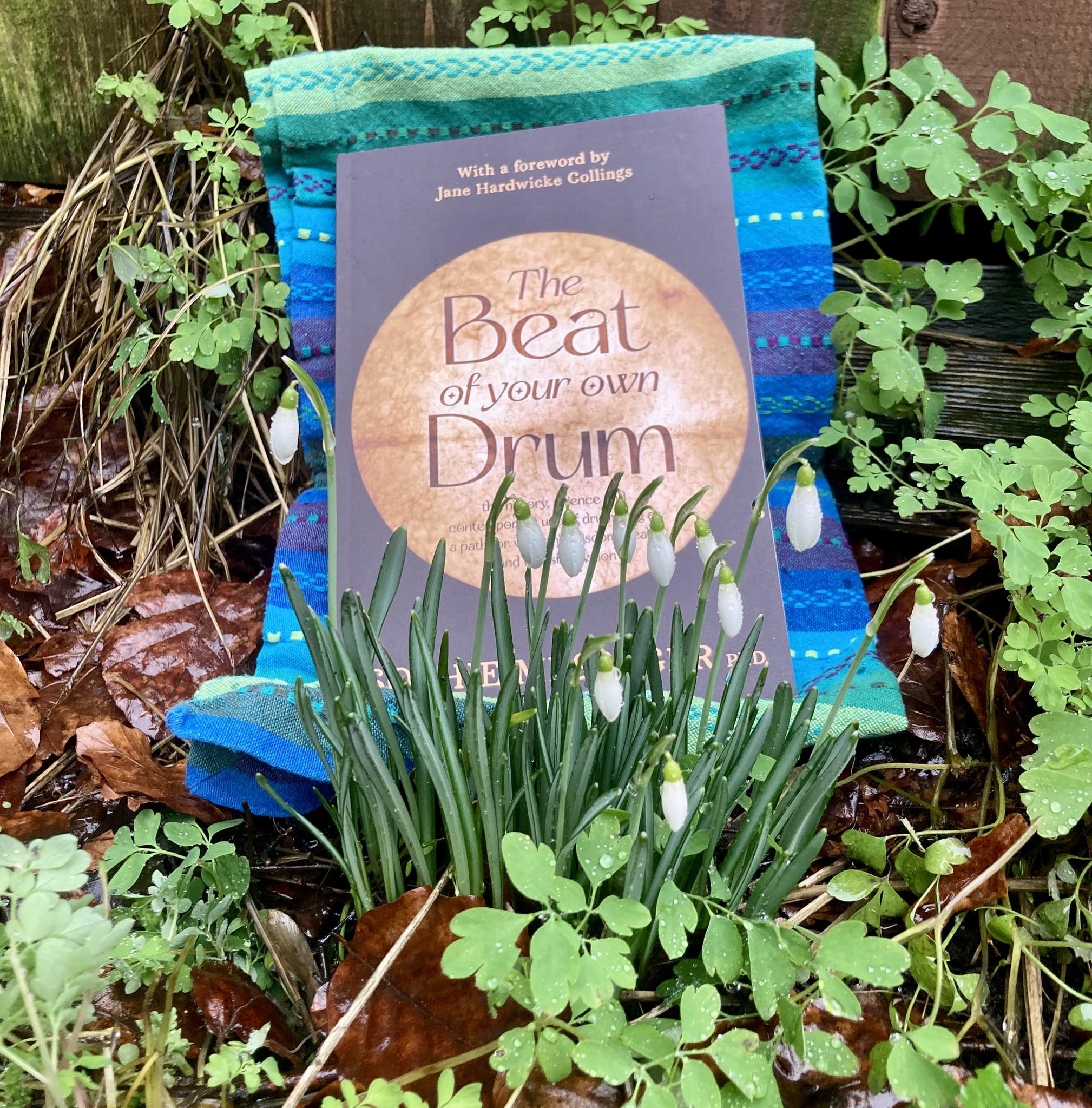
Author: Sophie Messager

  • Women drumming for peace

    Women drumming for peace

    Whilst setting up for my last drum circle, something happened.

    A voice inside told me, clearly and simply: start a worldwide movement of women drumming for peace.

    I’ve learned to listen to those voices. So I’m doing exactly that.


    What is Women Drumming for Peace?

    Every Sunday at 8pm UK time, I go live in the Women Drumkeepers Community Facebook group to drum together, intuitively, simply, with one shared intention: peace.

    Five minutes. That’s all. No experience needed, no particular skill or technique. Just a drum, a willing heart, and the knowledge that women across the world are drumming alongside you in that same moment.

    Then we sing a song.

    Afterwards, I invite everyone to share their experience in the comments. Because what happens when we drum with intention is worth talking about.


    Two ways to join

    Drum from wherever you are: at 8pm UK time, pick up your drum and play. You might be in your living room, your garden, your studio. It doesn’t matter. The intention travels.

    Join me live : come and find me in the Women Drumkeepers Community Facebook group, where I’ll be streaming live every Sunday at 8pm UK.


    What time is that for you?

    🌍 Europe: London 8pm · Paris, Amsterdam, Berlin 9pm · Athens, Cairo 10pm

    🌎 Americas: New York, Toronto 3pm · Chicago 2pm · Denver 1pm · Los Angeles, Vancouver 12pm · São Paulo & Buenos Aires 4pm

    🌍 Africa: Cape Town, Johannesburg, Lagos 9pm · Nairobi 10pm

    🌏 Middle East & Asia: Dubai 11pm · India 12:30am Mon · Bangkok 2am Mon · Hong Kong, Singapore 3am Mon

    🌏 Oceania: Sydney 6am Mon · Auckland 8am Mon

    If the live time doesn’t work for you, you are warmly invited to drum at your own 8pm, wherever you are in the world. The intention travels. 🌍


    Why I believe this could change the world

    There is something that happens when women drum together with intention. Something that goes beyond rhythm, beyond sound, beyond what we can explain. A coherence. A field. A grid. A prayer that the body makes before the mind has found the words.

    Peace is not something that happens to us. It’s something we cultivate, in ourselves, in our communities, in the world. And I believe that five minutes of women drumming together, every week, from every corner of the globe, is not a small thing.

    It’s a beginning.


    Women Drumming for Peace happens every Sunday at 8pm UK time. Come and find us in the Women Drumkeepers Community

  • You don’t need permission: why wrapped in rhythm is touching something women didn’t know they were missing.

    You don’t need permission: why wrapped in rhythm is touching something women didn’t know they were missing.

    What if you already knew how to do this?

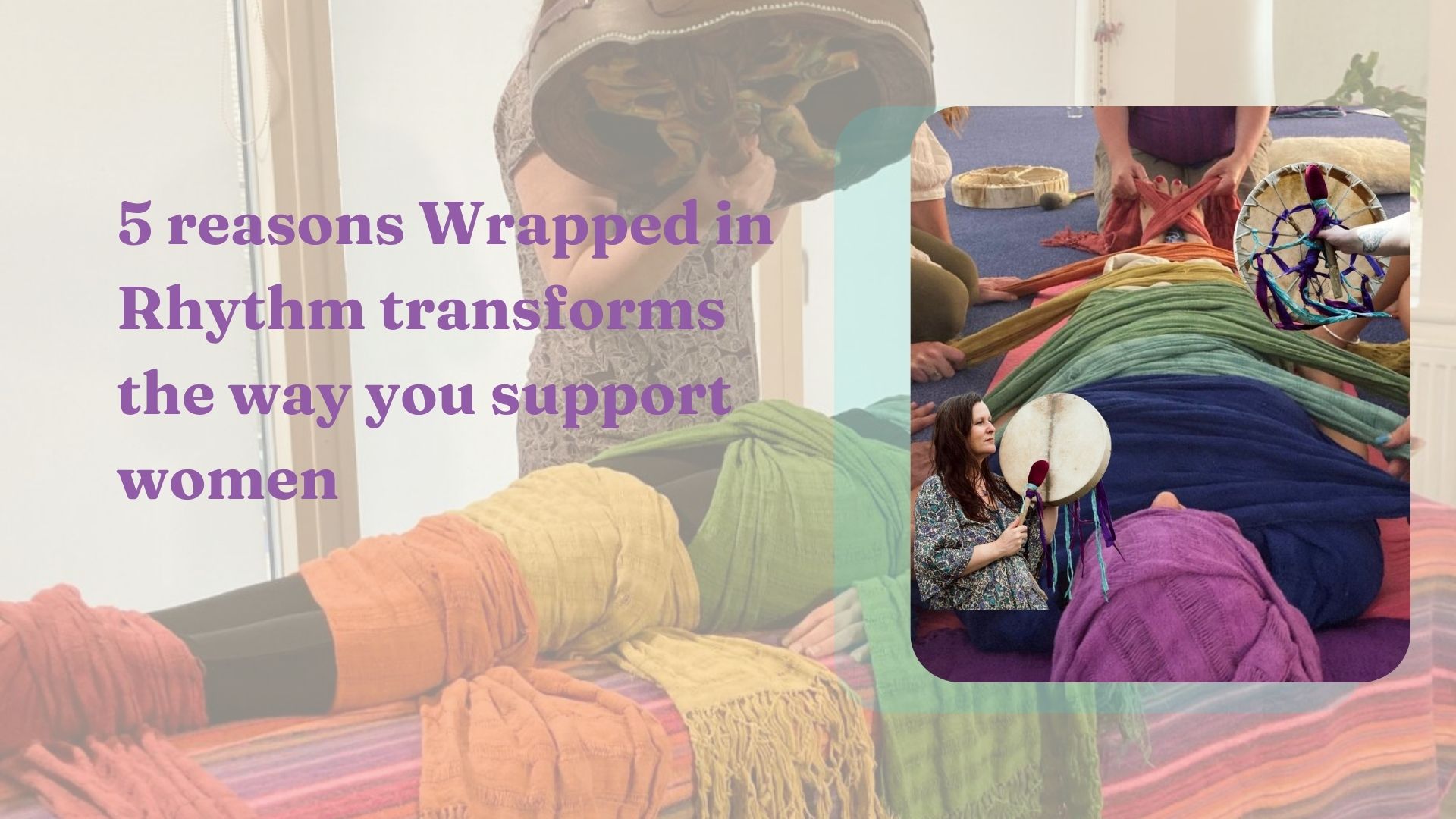
    Last November, when I decided to create a new healing ritual, blending rebozo wrapping (closing the bones style) and intuitive drum healing, I knew I was taking a gamble, but I never expected it to prove so popular.

    I ran a fully booked taster workshop last month, and my first ever teaching workshop was also fully booked with a waiting list. Women are asking me when I’m doing it again AND also asking when I’m going to be offering an online version of this training.

    Honestly I was really surprised by how popular this has been. I think I’m beginning to understand why this is resonating so deeply. And it has everything to do with permission, intuition, and breaking away from patriarchal ways of doing things.

    How I got here

    I decided to create this hybrid modality after teaching closing the bones for over 12 years, when I facilitated a workshop with this modality, without prior training, for 55 women at the convention of women drummers. There not only did I witness how powerful it was, but I lost count of how many women approached me afterwards saying it was life changing.

    I had already been handing drums to my closing the bones students for over 3 years, but I hadn’t yet not making the drum as important as the wrapping. When I last taught the closing the bones workshop in its previous inception to a group of doulas last November (with the rocking, the massage and the wrapping), one thing became clear: I needed to simplify things and make more room for the drumming.

    Four years ago, whilst training with Mexican midwife Naoli Vinaver, I had already become aware that wrapping what powerful in its own right, especially as I took this training whilst undergoing a mental health crisis. You can read about that here and the amazing effect of sharing this with my community here.

    Since the launch of my book, The Beat of Your Own Drum, and through teaching women about drumming and about ritual, one thread has become very clear: I want to offer something easy, simple and accessible to everyone. Something that is away from rules and rigid ways of practising. Something that doesn’t require years of training, but rather makes space for each person to do it from intuition, and with what works for them.

    In short: do it like you, not like me.

    Intuition over technique

    I think this was always in my nature, because during the first year I was teaching closing the bones 12 years ago, my then doula mentor, Suzanne, a very experienced healer, told me that what she liked best about my style of teaching was that I wasn’t imposing “my way” onto my students, but rather encouraging them to do it their own way.

    What I witnessed with 55 women at the drum convention in November showed me I was right. All these women knew how to hold space and how to drum, intuitively. Very little teaching was needed and I could focus on space holding and responding in real time to what was happening, instead of being in my head to correct techniques.

    Last week when I did a taster workshop with 12 women I was able to go into a completely altered state of consciousness whilst facilitating, because I didn’t need to focus on the technique. From that space I could feel where everybody was at, whether they were ready to move to the next wrap, I could drum and sing, and respond energetically instead of intellectually.

    That felt very, very right to me.

    The patriarchal construct of “doing it right”

    Over the last 12 years of teaching closing the bones and rebozo techniques, one thing that I have noticed time and time again is that students often ask how long or how fast/tight they should rock, massage, or wrap the woman they’re working with. I have felt that this need to be given strict numbers is rooted in a patriarchal way of doing things, one that likes to measure everything, and treat everyone the same. I have always answered that it depends on the woman and that you need to ask her what she prefers, as well as feel into it.

    Since starting to teach drumming workshops, I keep hearing women ask me what is the “right technique”, the right rhythm to drum. And time and time again I tell them the right rhythm is the one they want to play intuitively. IWhen I was interviewed by a scientific journal about drumming and birth, and the editor asked me what rhythm I play during births, and I explained that I didn’t use any set rhythms, rather I played my drum by responding intuitively to the mother and the energy in the room.

    But with the drum, now I’m going even further: I tell women to actively avoid trying to play set drumming rhythms, because it may prevent them from learning to trust themselves (worrying that they are “doing it wrong”), and also prevent them from learning to drum intuitively.

    This fear of doing things wrong, this idea that there is only one right way of doing things, is a patriarchal construct, and I want to help women break away from it. I tell them this is self expression, and the opposite of a performance.

    The drumming I encourage women to explore isn’t a performance, it’s self expression.

    For me this is similar to dance. I’ve attended 5 Rhythms dance sessions for over 6 years. 5 Rhythms is about self expression, not “doing the right dance steps”. It’s completely different from taking ballroom dancing classes. 

    Believing that the only right drumming is playing set rhythms is similar to believing that 5 Rhythms isn’t dance, and that only dance with set steps, like say Tango, is “true” dance. They are just two different things. Both are valid and enjoyable in their own rights but they do not serve the same purpose. And you could do and enjoy both!

    You don’t need permission

    Another thing I have noticed (something I write about extensively in my book), is that the gatekeeping of artistic expression is something that only exists in modern western society. In human cultures around the world, drumming, dancing and singing are normal communal activities (the same way it’s normal for bees to make honey), and NOT DOING THEM isn’t normal. They aren’t reserved to a select few who are “good enough” Only it’s kind of hard when we haven’t been raised that way.

    This leads me to my next point: you don’t need permission.

    You don’t need permission from anyone to drum, not from me, not from a teacher, not from anyone who can decide whether you are “good enough” to do it.

    You also don’t need permission to give healing, touch, holding, nurture and care to other women.

    The same applies to the idea that one needs permission to do healing rituals like closing the bones. While I understand that some people prefer to prioritise formal lineage structures, I believe the practices of woman care, including closing ceremonies, belong to the collective wisdom of women across cultures, not to gatekeepers. These are human practices that have emerged independently in multiple traditions precisely because they meet fundamental human needs. I don’t believe anyone requires permission to learn, adapt, and offer rituals or woman care, and I encourage all my students to do so.

    What matters is not whose permission you have, but whether you practice with skill, ongoing learning, and genuine care for the women you serve.

    The new era we’re stepping into

    I believe that we are at the cusp of a new era when new modalities need to come forth, away from the gatekeeping of patriarchal structures, and that encouraging women to trust themselves and feel good enough (in a culture that has subtly, and not so subtly been teaching them that they aren’t), is fundamentally important.

    And this is why I believe that my new workshop is proving so popular, because deep down we women know this.

    We know that we don’t need more rules, more techniques to master, more hoops to jump through to prove we’re “good enough”. We need permission to trust ourselves. We need practices that meet us where we are. We need to remember what our ancestors knew: that caring for each other, drumming together, holding each other, these aren’t skills reserved for the initiated. They’re our birthright.

    Want to learn this work?If what I’ve written here resonates with you, I’m teaching the next Wrapped in Rhythm in person workshop near Cambridge on the 9th and 10th of May.

  • Imbolc: snowdrops and new beginnings

    Imbolc: snowdrops and new beginnings

    This Sunday is Imbolc, marking the beginning of Celtic spring – that threshold moment when winter hasn’t quite let go but spring is already pushing through.

    Tomorrow I’m co-leading a community ceremony centred around the shift from Cailleach (the winter goddess, which I’ll embody) to Brigid, goddess of spring and midwife of new things. It’s a powerful symbol of transition, not a competition or a fight, but of of one energy bowing out gracefully so another can arrive.

    The symbol that captures this time of year for me? Snowdrops.

    These delicate, tiny flowers, push through dark, cold, frozen ground when nothing else dares. In French they’re called perce-neige (snow piercers). That’s exactly the energy of Imbolc: gentle but coming through anyway.

    I’ll be bringing potted snowdrops to gift to people at the ceremony, I’ll bring some snowdrop essence too, and we’ll do a meditation with the drum connecting with the courageous “I’m emerging whether the conditions are perfect or not” snowdrop energy.

    Then on Sunday I’m facilitating a workshop combining Closing the Bones wrapping with drumming – two practices that help us mark transitions and honour thresholds in our bodies.

    Here’s what I’ve learned from 6 years of co-creating Wheel of the Year ceremonies:

    It’s changed how I experience the passing of time. Instead of fighting the seasons (I used to really hate winter) or barely noticing them pass, I’m actually in them. I know the wisdom of winter’s rest. I recognise spring’s emergence. I can feel the turn.

    This isn’t about being more spiritual, it’s about being more present. More connected to the natural rhythms happening around and inside us. Learning from them, especially in a world that never seems to rest….

    If bringing ceremony into your own life speaks to you:

    There’s a whole chapter in The Beat of Your Own Drum on drumming and ceremony – including Wheel of the Year rituals, stories, and a blueprint for creating your own ceremonies, whether you are on your own or with others.

    You can attend gatherings, or you can mark Imbolc (or any threshold) with a small altar, a small ritual, a drum, five minutes, and your own intention.

    What’s trying to push through for you this Imbolc? What’s your snowdrop?

  • From Closing the Bones to Wrapped in Rhythm: Why I’m Changing How I Teach This Ritual

    From Closing the Bones to Wrapped in Rhythm: Why I’m Changing How I Teach This Ritual

    For over a decade, I’ve been teaching closing the bones, a traditional postpartum ritual involving rocking, massage, and wrapping with rebozos. I’ve worked with hundreds of women, trained over 1,000 students both in person and online across 30 countries, and continuously evolved my practice through experience, training, and intuition.

    Now, I’m making a significant shift. I’m moving away from teaching the full traditional sequence and focusing on what I’ve discovered is most powerful: the wrapping combined with drumming. I’m calling this new approach Wrapped in Rhythm.

    This isn’t abandoning the ritual, it’s distilling it down to its most accessible, intuitive, and transformative essence. Here’s how I got here.

    The Evolution: From Complex to Simple

    I started teaching closing the bones in 2014. Since I first started, the way I teach has evolved continuously, not only because I trained with a wide range of people, but because my own practice evolved over time, and is still evolving.

    In the early days I taught a simple hip rocking, abdominal massage, and hip wrapping  process. Over time I learnt more massage techniques, and adapted some of them to make them more effective, and learnt to wrap the entire body rather than just the hips.

    By practising this ritual with hundreds of women, teaching it to over 1000 students, and continuing to train with a wide range of teachers of this ritual and bodyworkers, I developed my own unique way of offering it.

    Fairly early on I added drumming, because, even before I understood the way drumming slows the brain down and modifies our state of consciousness, it felt right.

    There were several defining moments in my experience that changed the way I practiced. For example supporting new mothers post cesarean, and finding out that I could adapt the technique, and omit the lower abdominal massage and still provide deep healing. Another one was first during the 2020 lockdowns, when I supported new mothers in pain (read more about this here), I realised that just rocking and wrapping could still be immensely helpful (this led me to offer my closing the bones online course), and more recently when I trained with Mexican Midwife Naoli Vinaver, whilst going through a mental health crisis, I discovered how incredibly healing the wrapping alone could be. I started sharing the wrapping more widely with my local community, and this led to the ritual being done often on people’s birthdays.

    I see a similarity between this evolution and how I originally practised when I first learnt Reiki in 2003: I thought it would only work if I had at least 30 min, had the person lying down on a couch and did all the hand positions in the right order. Then I read an article from a teacher who encouraged people to do just 5 min on someone sitting on a chair if that’s all that time allowed, and discovered that it could still be powerful.

    Over the last 4 years, I have done a lot of impromptu closing the bones, sometimes having no rebozos with me, and borrowing people’s scarves, sometimes doing workshops, sometimes doing just a 10 min taster by wrapping the hips in women circles. Last year I attended a local retreat. I only had one rebozo, and I hadn’t planned to demonstrate anything but I ended up doing some impromptu wrapping because people asked me. I was amazed when a man had a very powerful emotional release when I wrapped his shoulders, and I think he was as amazed as I was. These experiences have taught me that 5 min of wrapping can be powerful in their own right.

    The Drumming Deepens

    I started adding drumming to the ritual in 2014, because I did a group ceremony during which a woman was drumming in the background, and it just felt right. Over the last 13 years my drumming practice has grown exponentially, from drumming during closing the bones, to training to become a Reiki drum practitioner then teacher, to drumming during births (read about that here), to publishing a article on the effect of drumming during birth in the international journal of birth and parenting education. All of this led to the writing and publishing of my second book, The beat of your own drum, the history, science and contemporary use of drumming as a path for women’s wisdom, health and transformation. As I write this I’m in the process of starting some research with Prof Joyce Harper, Professor of Reproductive Science at the Institute for Women’s Health, University College London, which we will publish.

    The Power of Simplicity

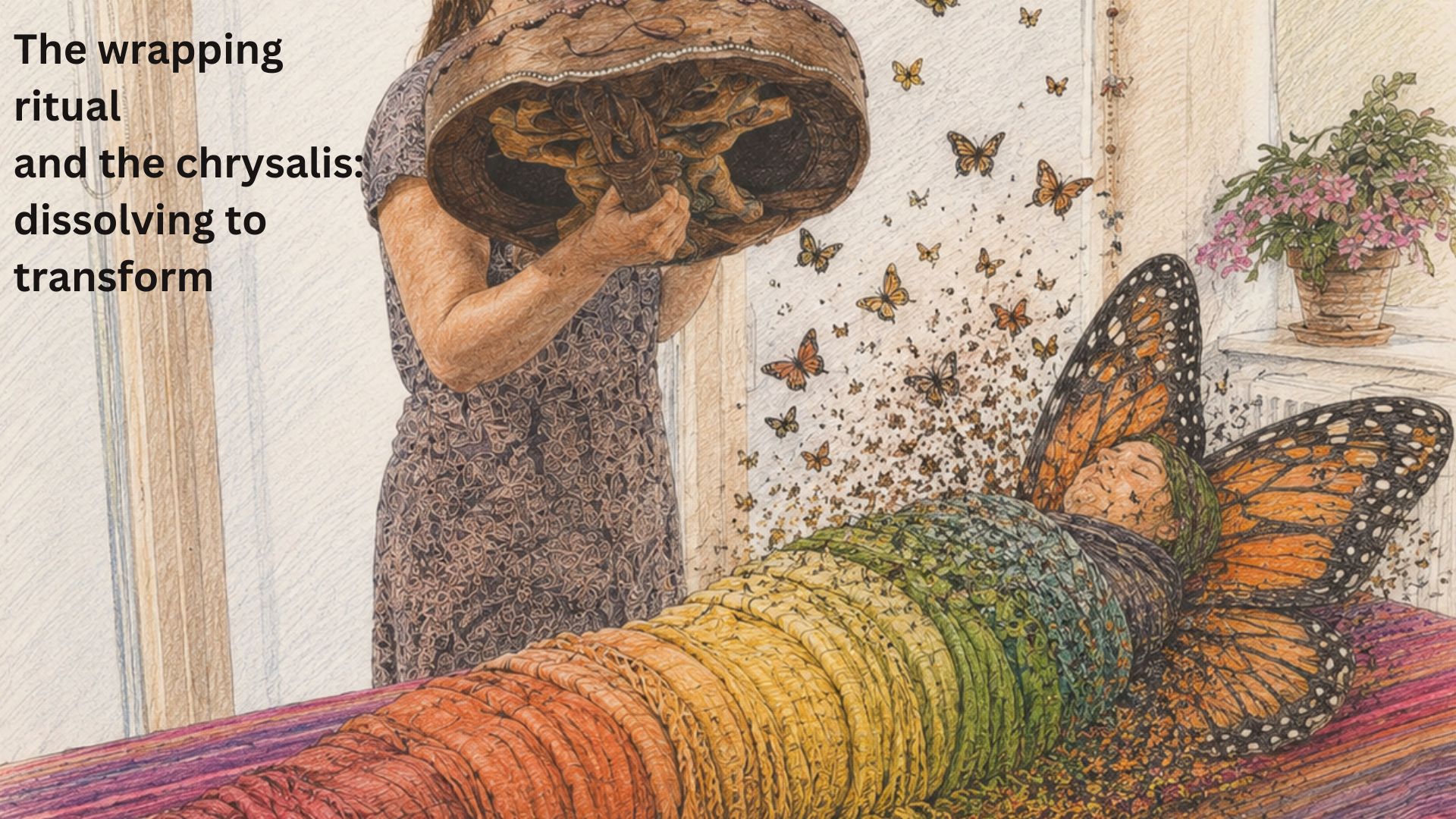
    In 2022, when I was in the middle of a mental health crisis, I attended a 3 day long rebozo training with Mexican midwife Naoli Vinaver. She showed us how to the closing the bones wrapping with 7 rebozos, something I was already doing. However, she showed a slightly different version of what I had been teaching. In particular she wrapped the head and eyes like a cocoon (I had been avoiding wrapping the eyes until then, believing that it might make people feel claustrophobic), and she also instructed us to tighten each rebozo until it was tight enough for the woman, then hold it until she said it was “done” for each wrap. The combination of the tight wrap around the head, helping me to go deeply inwards, and being wrapped and waiting until it was “done” felt incredibly powerful, and healing.

    A couple of weeks after this training, I shared this experience with 30 of my friends in a local community retreat, and I could clearly see how powerful it was for everyone.

    After this I shared it as widely as possible, and I changed the way I taught closing the bones workshops to reflect my new knowledge.

    Towards the end of 2025, I got the sense that change was afoot again and that I was probably teaching the last of the current version of closing the bones in its current inception.

    You see I’m someone who loves doing new things, and I like what I offer to reflect my evolution. I’ve modified my teachings to reflect my evolution countless times, forever creating new teaching plans and handouts as the practice evolves.

    In November 2025, I led a large workshop at the UK convention of women drummers. Being aware that closing the bones can lead to big emotional releases, I has asked to limit my group to 30 women. However, due to venue constraints, I was asked to take half of the attendees (50 women), whilst the other half did a drumming workshop in the other hall. I asked my friend Malwina, who is also experienced in teaching closing the bones, to join me in holding the space for the workshop. It was no mean feat, and I had to bring my entire teaching stock of 47 rebozos, and ask Malwina to bring 10 extras. In the end we had 55 women attending the workshop. I shouldn’t have worried because it was utterly magical. I led women in groups of three, to wrap each other with 3 rebozos (shoulders, hips and lower legs), and then to drum over the wrapped woman. Was it because most women there were already drummers, and skilled at holding space? The energy in the room was so beautiful and healing as they worked. Thanks for over 15 years of facilitation experience, I was able to respond in real time and make changes according to what was happening in the room. I also drummed, played the flute, and sang whilst women were being wrapped. It went better than I could have imagined.  We even had time to show all the women how to wrap their own hips, and we finished singing and swaying in a big circle. Not only did it feel magical but I lost count of how many women came to see me after the workshop, and the following way to tell me it was life changing.

    Why Wrapped in Rhythm Makes Sense

    So I’ve decided to change the way I teach closing the bones, to make more room for the wrapping and the drumming. Instead of teaching a sequence of rocking, abdominal massage and wrapping, I’m going to teach the wrapping in more depth, with more options, and make more room for the drumming.

    There are several reasons for this:

    With my drumming work, I’m very keen to encourage women to drum intuitively rather than using set rhythms. This is because I use the drumming as a tool for self expression rather than a performance. When being asked about rhythms, I always answer that the best rhythm is an intuitive one that responds to the energy of the person drumming, or the person for whom you are drumming.

    This is similar to what Naoli Vinaver said when people asked “How fast, how long, at what amplitude should you rock or wrap the rebozo” and she always replied (something I’ve always done too): you just ask the woman!

    Everything in my work currently is leaning towards more simplicity and accessibility, towards the fact that we already know what to do, we have just forgotten how to do it. In my drum circle, during one of the rounds of drumming, I ask if anybody is particularly in need of healing, then I suggest there people lie down, and that the rest of us drum over them. I purposefully do not give any instructions and people (including people who have never drummed before) always know what to do, and report that they found it incredibly powerful to find out that they can do this.

    With the wrapping is it the same: contrary to the abdominal massage, which requires skill and correction, and a lot of practice to become confident, everyone can immediately do the wrapping, after just a few minutes of demonstration.

    Combined together the wrapping and drumming are powerful. The wrapping provides a deep sense of nervous system safety, brings you back into the present and into your body. The drumming adds to this by putting you into a deeply relaxed state of consciousness (like a deep meditative state), and from this place, the body and mind can reset into a place of calm and grounding. 

    In the workshop I also want to cover both working on a mat on the floor and on massage tables so people can discover what works best for them.

    With my desire to support more women  to go from a place of intuitive knowing rather than structured learning,this new modality, which I called Wrapped in Rhythm, makes a lot of sense.

    Moving Forward

    The essence of healing doesn’t require complexity. It requires presence, intention, and trust.

    By focusing on wrapping and drumming, the two elements that are most accessible, most intuitive, and most transformative, I’m honouring what I’ve learned from over a decade of practice and countless moments of discovery.

    I’m teaching the first taster workshop of Wrapped in Rhythm on Sunday afternoon, 1st February, and the full technique on Saturday 28th February and Sunday 1st March.

    This feels like coming home to what the work has been trying to tell me all along: we already know how to heal each other. We just need to remember, to slow down, and to trust our hands and our rhythm.

    The wrapping holds us. The drumming carries us. Together, they help us return to ourselves.

  • From snake to horse my review of 2025

    From snake to horse my review of 2025

    Moving from limbo to fast powerful action 

    My word for the year 2025 was power, and it didn’t quite work out how I thought it would! When I look back at 2025 I see a year of two halves.The first half of the year I experienced a lack of direction and a lot of shedding, the second half was fast and full of fast action, power and direction.

    During the first half of 2025, I felt lost, directionless, it felt like the extreme culmination of a sense of the void that started 3 years ago when I left doula work behind. I had no idea where I was going professionally, and struggled at deciding what to call myself. When people asked what I do, I would often say “I used to work as a scientist, then as a doula….” and I didn’t know what to say I was doing now, giving some wafty description of supporting women through transitions. With my ADHD mind always focusing on what I’m not doing, I forgot that I was completing the work of birthing my second book into the world. All I could think about was that I didn’t know what I was meant to be doing. For someone who normally has had a clear sense of direction for most of my life, this felt extremely uncomfortable.

    At the end of  2024, I had tried to launch a new program that fell flat on its face (you can read about this in my review of 2024), so instead, I decided to try a few small workshops to test what would land for me and my audience. I ran a number of new online workshops which were well received. I also ran the first of 2 month long drum microdosing circles online. This was actually amazing because over the course of 4 weeks, my students saw a 50 to 80% improvement in their wellbeing intention, which was way beyond what I had imagined it would do. It also meant that I felt a sense of direction during this time. In human design, I’m a generator, and I’m meant to respond, rather than initiate, and this felt really good. As I held the space for the women drumming during that month, I also felt held myself.

    By June, the sense of being directionless reached its peak. I literally felt like I was being stripped of all everything, erased like a blank slate. I could see what was happening but it felt very challenging, and I struggled to trust what was to come. It was made more difficult by the fact that during these two months, my income dropped spectacularly, below anything it had ever done. I noticed that part of me was still equating my worth to my income. I’m so grateful for my husband’s support because when I shared my fears with him, he reassured me that, even if I earned nothing, we would still get by (I’m so grateful that my husband has a steady job and I can’t imagine how stressful it would have been if I’d been a single mum in this scenario). 

    Whilst this was happening, I was also busy building foundations for new things: not only the launch of my book, but the launch of a new website, so there was a lot of important behind the scenes stuff happening (many of which meant that I had to pause doing other things like my podcast, and my blog writing also slowed down this year to about half of what it was). But it felt like I had nothing to show for it yet. My book, The beat of your own drum, prelaunched in June and as well as all the other launch tasks, I also needed to make sure I had created the three preorder freebies before I went on holiday in August. I felt a lot of time pressure.

    When I look back (hindsight is such a wonderful thing isn’t it?), I can see so clearly that the decks were being cleared to make room for new things. One thing that illustrates this beautifully, was in July, when I had a photoshoot with my wonderful photographer friend Ali Dover. Ali has been taking the pictures for all 3 major iterations of my website through the years. First in 2013, when my first website was about doulaing, antenatal education, and babywearing instructor work. Then the second iteration in 2018, when the focus was still very much doula work, and the ritual, spiritual and drum side was starting to show more (but, and I think it shows in the picture below, when I still had some level of impostor syndrome as I didn’t feel I could quite call myself a drum woman yet). Then there is the 2025 picture of me holding my drum in the air, where the wildness is clear and the drum feels like it’s part of my body.

    Evolution of work persona from babywearing to doula to wild woman. Can you see the wildness growth?

    In June, on my way back from a small local festival, I listened to Lucy Pearce’s podcast episode where she interviewed author Coco Oya Cienna-Rey about her new book, Digging for mother’s bones. Coco’s book process was about 3 months ahead of mine, hers just having been published when mine was in preorder. In the podcast episode, she explained that, now she had birthed her book, she was going to take the summer off. I remember thinking: I need to do this too, except in my case it’s more of a “I need to rest before birthing” situation. This is something I wrote about in my previous book, Why postnatal recovery matters, and I wrote a blog post called Entering the Sacred Pause, about the wisdom of resting before birthing my book. You can listen to Lucy’s podcast episode with me about my book in her podcast too.

    The energy moves

    From August onwards, for no clear reason on my part that I could see (except that I’d done a lot of healing work, more about this in the section on self growth), things started to move a-pace. Knowing that I was going to go on holiday for nearly 3 weeks in August, I decided to run a free workshop on closing the bones for life transitions, where I also promoted my existing online courses and upcoming in person closing the bones training. Not only did 115 women register for the workshop, but, despite being on holidays for most of the month, I earned more money that month than any other months during 2025 (a first for August which is usually very quiet).

    From then on, with the launch of the book in September, running events around it, sharing the conversations I’d recorded about women making noise, I surfed on a wave of new, and things felt like they finally moved, fast. In October, I decided to run a second month long drum microdosing course called Drumming as Medicine. 23 women joined me. The transformation was remarkable: participants’ confidence in their practice jumped from 2-4 out of 10 to 8-9. Women who couldn’t pick up their drums at the start were playing daily by week four. The combination of neuroscience, drumming practice, and community created something powerful. Every participant said they would recommend it enthusiastically. This validated what I know: when women are given permission to drum, a simple structure, and witness from other women, something transformative happens.

    After the course ended, the message was unanimous: we want more. Women  said they wanted longer sessions, ongoing circles, continued connection. Many ticked “year-long collective” when asked about future offerings. Four weeks had given them permission and structure, but that was just the beginning. Real transformation, real mastery, real drum keeping – that takes time. Time to explore different ways of working with the drum, to work with seasonal energies, to tend the practice through resistance and return, to move from student to keeper of the beat. 

    So I created a new program called the Women Drum Keepers Collective. It was what they were already asking for : a year-long journey of becoming women who remember the power of the drum. The Women Drum Keepers Collective is an 11-month journey beginning  in February 2026, guiding women from tentative beginners to confident drum keepers through fortnightly live calls. Moving through the wheel of the year from Imbolc to Winter Solstice, the collective explores drumming as medicine through four seasonal phases: Foundations (winter into spring), Expression (spring into summer), Harvest & Release (summer into autumn), and Integration (autumn into winter). Each fortnight alternates between teaching sessions (with technique, neuroscience, and guided drumming) and integration calls (with sharing circles and depth work). This bridges structured curriculum with fortnightly accountability, evidence-based nervous system science with ceremonial practice, progressive skill-building with seasonal wisdom, and women’s empowerment with reclamation. It’s designed for women who refuse to choose between their analytical mind and ancestral knowing, who want a practice that deepens over time, and who are ready to move to embodying medicine. 

    In November, I also led the biggest ever in person workshop of my life: I volunteered to run a closing the bones wrapping and drumming workshop at the women drumming convention in Colchester, and I wanted to limit it to 30 women, but Mel asked me if I to take half of the women coming to the convention whilst as the other half were doing another workshop. Feeling a big worried about holding space for so many with a ritual that I know can lead to deep emotional release, I roped in my friend Malwina to co-host with me. In the end we had 55 women in the workshop and I shouldn’t have worried, because not only did it go extremely well, felt deep and beautiful, and we even had time to show all the women to wrap their hips and finished singing the “let it go” song whilst swaying in a circle, but over the rest of that day and the next I’ve lost count of how many women came to tell me that this was life changing. I’ve decided to offer this workshop again on the afternoon of the 1st of February and also teach it on the week end of the 28th of February and 1st of March.

    At the end of 2025, I ran an online workshop, attended by nearly 100 women, with two drum journeys to walk a time spiral to review 2025, and connect with your future self a year from now in 2026. What fascinated me was that people reported a lot of grief and loss and difficult feelings for 2025 whereas 2026 had a much lighter energy.  The themes were processing loss and finding resilience in 2025 and moving towards grounded expansion in 2026.

    2025 Journey

    2025 emerged as a year of transformation through loss and shedding. Many participants experienced brutal challenges : grief, burnout, depression, and significant life changes that forced them to let go of old identities. Yet within this difficulty came some gifts: the courage to step into full authenticity, to no longer make themselves small for others’ comfort, and to move from head-centered living into heart-led wisdom. Resilience was a central theme, with participants discovering their own strength like diamonds formed under pressure. For some, the year brought rebirth, tender new beginnings, where entire life concepts were reimagined and life began feeling truly their own. 

    2026 Journey

    The energy of 2026 called participants toward grounded expansion and joyful expression. The primary invitation was to grow deep roots, to feel held and trust without worrying about every detail. Freedom emerged as a strong theme: permission to move without fear or compromise, to move forward with one’s mission, and to express fully without holding back. Boundaries and self-care took center stage, with the understanding that personal fire needs careful tending to stay warm without burning out. Creativity and nourishment flows from within, with many called to write, create, and share their gifts. Joy itself becomes the key to manifesting the future, bringing clarity, peace, and spaciousness. The horse energy of 2026 promises heart-healing, movement, and momentum.

    You can watch the recording of this workshop here

    Personal growth in 2025

    Aside from the discomfort and stripping of the first half of the year, I did some serious work on myself last year, and also went through some major milestones.

    To support the discomfort and stripping, and lack of presence to challenges, I carried on working with the psychotherapist and shaman I’d been working with for 18 months. In May I had 4 sessions of extracellular matrix integration technique (a form of fascia release). In June I attended a weekend training called Radical Wholeness (after the book of the same name by Philipp Shepherd), and I found this truly transformative, and by the end of the weekend I could feel the movements in the nature around me in my body. In July I attended well over 10 different workshops, a few of which I found incredibly powerful (in particular, working with the energy of the blue lotus, Biodanza, a group family constellations workshop, and a 2h long Lituanian Sauna ceremony).

    In the Autumn, as well as my weekly 5 rhythms dance session, I also started attending Biodanza classes every fortnight.

    Since October I’ve been working with a functional medicine practitioner, as well as an acupuncturist to rebalance my hormones and energy. 

    In 2025 I also went to two funerals, and accompanied the last few weeks of a dying friend with some drumming and singing.

    A big milestone in 2025 was that my son moved to university in September. I anticipated that I would feel bittersweet, leaving him there at his new uni lodgings, but I never expected how much grief I would feel. Given the date of his moving there was a weekday, I had to drive him alone instead of going with my husband. As I walked away from his new building, I was overtaken by deep sobs, the kind that make your throat close up. I walked to my car and I had to sit there for a while to recover. Over the next few days, I was overcome by grief several times a day every time something in the house or the daily routine reminded me that he wasn’t there. 

    And I also felt proud of my son, especially as he had struggled so much at college before we understood that he too was neurodivergent, and I never thought he’d get where he now was at the time. But my, I never knew the grief would feel so strong, it felt like someone had died. You spend nearly 20 yearsraising a child, and it’s good and healthy that they open their wings and leave the nest, but it also feels so very hard to lose them. At the time a friend reminded me that I was lucky that I had a life for myself outside of being a mother, and I knew this to the true, having met women who entire lives revolved around their children, and who did not know what to do with themselves when they left.

    And luckily for me, I was busy with the launch of my book the week after he left for Uni, and that carried me forward and out of grief pretty fast.

    Since then, he’s been back home twice, and when he’s left I never felt that level of grief again thankfully.

    Interestingly, I was due to hit the menopause milestone (12 months without a period) at the end of September, having been in perimenopause since I was 42 (I’m now 55- that’s a loooong perimenopause), but I had a small bleed on the day I moved him to uni (how’s that for symbolic?), so the clock is reset and I will not be officially menopaused until I’m 56.

    All the things I did in 2025 work wise

    • I ran 5 free workshops online, attended by 436 women
    • I created and delivery 3 new trainings: 2 month long drum microdosing and drumming as medicine courses, and the collective, and my new wrapped in rhythm workshop
    • I delivered 5 in person workshops (Closing the bones and postnatal recovery massage, and wrapped in rhythm)
    • I ran 22 drum circles circles (a mix of in person and online) and 8 wheel of the year ceremonies, as well as attended weekly private drum circles with my drum sisters
    • I launched 3 books (the French translation of my book about postpartum recovery, The Beat of Your Own Drum, and 2 pieces in the Woman Craft Compendium about women circles.
    • I wrote 22 blog posts and 24 newsletters, and recorded 12 podcast episodes.
    • I published an article about postpartum recovery in the international journal of birth and parent education and wrote a massive blog post review all the scientific evidence behind rebozo techniques
    • And I submitted 3 pieces for the next Womancraft compendium about the too much woman (which means that I’ll be published in a 4th book this year)

    And learning wise (CPD): I took part in a year long business mentoring group, I attended 2 drum conventions and one drum flash, a retreat, my first ever festival  (Buddhafield), a radical wholeness workshop, and I took an insight timer course, an instagram course, and a money course.

    and I kind of still feel that I haven’t done much….my ADHD brain always focuses on what I’m NOT doing….but I’m working on that.

    Word of the year

    My word for 2025 was power. My word for 2026 is source. For me this means connecting with the source of power that connects us all, and to trust what the universe has in store for me. I have started expressing desires and letting it to the universe to make it happen for me, without controlling or knowing exactly how it will happen.

  • Why the Drum Reviews Your Year Better Than Bullet Points Do

    Why the Drum Reviews Your Year Better Than Bullet Points Do

    Why the Drum Reviews Your Year Better Than Bullet Points Do

    It’s that time of year again.

    You know the drill: grab your journal, make yourself a cup of tea, and write down your reflections on 2025.

    What went well?
    What didn’t?
    What did you learn?
    What are you grateful for?
    What will you do differently in 2026?

    And if you’re like most self-aware women, you’ll fill pages with thoughtful, articulate insights about your year.

    You’ll make beautiful lists. You’ll identify patterns. You’ll set intentions for next year that sound really, really good.

    Then you’ll close the journal, return to your life, and somehow… nothing actually shifts.

    You’re trying to access body-held wisdom through the thinking mind.

    And your thinking mind is the last place that knows what this year was really about.


    Your Nervous System Has Been Keeping The Score

    While you were managing 2025, your body was tracking everything:

    • Every transition that rattled your sense of identity
    • Every loss you tried to process while still showing up for everyone
    • Every moment of overwhelm you pushed through because you had to
    • Every boundary you crossed or failed to hold
    • Every time you felt joy and second-guessed it
    • Every rage you swallowed
    • Every grief you postponed

    Your nervous system has a detailed record of this year. But it doesn’t speak in bullet points.

    It speaks in:

    • Tension patterns in your shoulders and jaw
    • The way your breath shallows when you think about certain topics
    • The exhaustion that sleep doesn’t touch
    • The restlessness that has nowhere to go
    • The numbness that protects you from feeling too much

    Journalling exercises asks your thinking mind to report on what your body experienced.

    It’s like asking someone who watched a movie through a window to write the review. They saw some things. They missed the audio. They have theories. But they didn’t experience it.

    Your body experienced 2025. Your mind just watched.

    Why Cognitive Reflection Keeps You Safe (And Stuck)

    The thinking mind is brilliant at many things:

    • Making sense of complexity
    • Identifying patterns
    • Planning and strategizing
    • Sounding articulate and insightful

    But it’s also brilliant at:

    • Keeping you comfortable
    • Avoiding what’s actually true
    • Controlling the narrative
    • Protecting you from feelings you’re not ready to feel

    When you sit down with your journal and ask “what did 2025 teach me?”, your thinking mind immediately curates the answer.

    It gives you the lessons you’re READY to hear.
    The ones that make sense.
    The ones that don’t threaten your self-concept.
    The ones that feel manageable.

    It won’t tell you:

    • The grief you’re still not acknowledging
    • The rage that’s calcified into resentment
    • The pattern you keep repeating because facing it would mean changing everything
    • The gift that’s sitting right in front of you that you can’t see because it doesn’t match your story

    Your thinking mind loves you. It’s trying to keep you safe. But safety does not equal truth.


    What Happens When You Bypass the Thinking Mind

    This is where drumming becomes revolutionary.

    When you drum, or when you listen to drumming, especially in a guided journey with intention, something neurologically fascinating happens:

    Your brainwaves shift from beta (normal waking consciousness) to alpha and/or theta (meditative/trance state).

    Alpha and theta are where:

    • The analytical mind quiets
    • The body’s wisdom becomes accessible
    • Symbols and images emerge instead of words
    • Truth that’s been stored somatically can surface
    • You access knowing that thinking can’t reach

    It’s the same state you’re in during REM sleep, deep meditation, or moments of creative flow.

    In this altered state, your body can finally TELL you what 2025 was about.

    Not what you think it should have been about.
    Not the sanitized version.
    Not the narrative that makes sense.

    The actual, embodied, messy, often surprising truth.

    Why This Matters for How You Move Forward

    The thing is about unacknowledged truth: It doesn’t go away just because you wrote a different story in your journal.

    It stays in your body:

    • As tension
    • As exhaustion
    • As patterns you can’t quite break
    • As vague dissatisfaction with your life
    • As a sense that something’s missing but you can’t name what

    And then you carry all of that into 2026.

    You set beautiful intentions based on the curated story.
    You make plans based on what you THINK happened.
    You commit to changes that don’t address what’s actually asking to shift.

    And then you wonder why nothing actually changes.

    The body truth you bypassed? It’s still running the show.

    The Neuroscience of Why This Works

    Let me put on my PhD hat for a moment.

    The thinking mind lives primarily in the prefrontal cortex : planning, analysing, narrating.

    Body wisdom lives in:

    • The limbic system (emotions, memory)
    • The brain stem (survival responses, core regulation)
    • The vagus nerve (gut feelings, somatic knowing)

    These systems don’t speak English.

    They don’t respond to “tell me what you learned this year.”

    But they DO respond to:

    • Rhythm (the drum)
    • Repetition (the steady beat)
    • Resonance (vibration in the body)
    • Trance states (alpha and theta brainwaves)
    • Symbolic language (images, metaphors, sensations)

    When you drum with intention, you’re literally creating the neurological conditions for non-verbal knowing to surface.

    You’re giving your body permission to speak in its own language.

    Your body has been waiting to tell you things your mind wasn’t ready to hear.

    This Isn’t About Drumming Being “Better” Than Journaling

    Both have value. Both are powerful. Both have their place.

    But they serve different purposes:

    Journaling is phenomenal for:

    • Processing thoughts and making meaning
    • Tracking patterns over time
    • Articulating insights once you’ve HAD them
    • Planning and strategising
    • Integration work

    Drumming is phenomenal for:

    • ACCESSING what needs to be known
    • Bypassing the defensive mind
    • Letting the body speak
    • Receiving insight rather than generating it
    • Dropping into truth that thinking obscures

    The most powerful practice? Use both.

    Drum to ACCESS the truth. Journal to INTEGRATE what came through.

    Not the other way around.

    How to Actually Do This

    If you’re reading this thinking “okay, I want to try this, but I don’t know how” – start simple.

    You don’t need to be a “drummer.”
    You don’t need a fancy drum.
    You don’t need to know what you’re doing.

    Here’s a basic practice:

    1. Set an intention: “Show me what 2025 was really about” or “What gift am I meant to receive from this year?”
    2. Find a rhythm: Just a steady beat. Doesn’t have to be complex. Think heartbeat.
    3. Drum for 5-10 minutes: Keep the rhythm going. Close your eyes. Let yourself drop in.
    4. Notice what comes: Images, sensations, memories, emotions, knowing. Don’t judge it. Just notice.
    5. Journal afterward: Not to make sense of it. Just to capture what came through.

    That’s it.

    The sophistication isn’t in the technique.  It’s in the willingness to let your body speak.

    Or Let Me Guide You

    This is exactly why I’m offering a free drum journey workshop next week.

    Not because I think you need another thing to do. But because I KNOW that bullet-point reflection isn’t touching what 2025 actually asked of you.

    (and frankly because I find drumming a whole lot more appealing and fun than sitting down to write)

    We’ll do two guided drum journeys together:

    Journey 1: The Spiral – Walking back through 2025 with a guide who shows you what actually happened (not what you think happened). You’ll receive a gift or lesson.

    Journey 2: Meeting Your Future Self – Traveling forward to December 2026 to meet the transformed version of you. She’ll show you what you need to know right now.

    Between journeys: journaling, sharing, and space to actually FEEL what this year was about.

    No drum required. Just curiosity and willingness.

    Not because I’m promising magic. But because your body already knows what you need to know.

    The drum just helps you hear it.


    The Invitation

    What if 2025 has a gift for you that you can’t see yet?

    What if there’s wisdom in your body that your thinking mind keeps bypassing?

    What if the reason you feel stuck isn’t because you haven’t reflected ENOUGH, but because you’ve been reflecting in the wrong language?

    Your body knows.

    Put down the journal.
    Pick up the drum.
    Let it speak.

    Join my FREE workshop Review Your Year, Reclaim Your Vision: A Free Drum Journey Workshop on Wednesday the 17th of December 2025. No experience necessary. 

    Tell me: What did your journal tell you about 2025? And what is your body trying to tell you that you haven’t been able to hear yet?

  • They took our drums -spoken word

    They took our drums -spoken word

    They took our drums
    and called it civilisation.

    Told us to be quiet,
    to speak when spoken to,
    to lower our voices,
    to stop making a fuss.

    They took our drums
    and replaced them with
    clocks and beeping phones
    and metrics that measure
    everything except
    the beating of our hearts.

    They took our drums
    because they knew:
    a woman with a drum
    cannot be tamed.


    We used to drum to women into labour,
    our rhythms matching contractions,
    our beats saying
    you are not alone
    your body knows

    We used to drum the dying home,
    steady beats that said
    it’s safe to let go
    we are here
    you are held.

    We used to drum for the moon,
    for the harvest,
    for the grief that had no words,
    for the joy that was too big
    to fit inside our chests

    The drum was our medicine.
    Our technology.
    Our prayer.

    Then they took them.


    Banned them first,
    when they wanted control.
    They called our drumming witchcraft.
    Burned the women who wouldn’t stop.

    They removed rhythm from birth
    and replaced it with
    sterile rooms and
    beeping machines and
    women flat on their backs
    told to push
    on someone else’s schedule.

    Made us forget
    that our hands
    once knew how to call forth
    the soul


    And here’s what they knew
    that we forgot:

    Drumming drops you
    out of your thinking mind
    into your body,
    into that place where
    you cannot be sold to
    or marketed at
    or convinced
    that you are not enough.

    Drumming connects you to
    rage (call it hysteria, lock her up)
    intuition (call it irrational, dismiss her)
    power (call it threatening, silence her)
    boundaries (call it difficult, punish her).

    Drumming makes you
    uncontrollable


    And when women drum together?

    When our hearts synchronise
    and our brains entrain
    and we remember
    bone-deep remember
    that we are not alone?

    That’s when the systems shake.

    Because isolated women
    compete.
    compare.
    comply.

    But women in sync?
    Women whose heartbeats match?
    Women who remember
    what they are capable of
    when they move together?

    Those women
    cannot be controlled.


    So they told you:
    you’re not musical
    you can’t keep a beat
    you need training
    you need permission
    you need to be
    quieter
    smaller
    less.


    They told you drumming is:
    New age nonsense
    Hippy bullshit
    Something only men do
      

    They told you this
    because your drum
    is dangerous.


    But here’s what I know:

    Your hands remember.

    Even if your mind forgot,
    even if you think you have no rhythm,
    even if you’ve never touched a drum

    your hands remember.

    Your grandmother’s hands.
    Your great-great-great-grandmother’s hands.
    The hands of every woman
    who came before you,
    drumming in the dark,
    drumming in the light,
    drumming the world
    into being.


    So pick up your drum.

    Pick it up and know
    that every beat says:
    I will not be silenced.

    Every rhythm claims:
    I take up space.

    Every pulse declares:
    I am here,
    I am connected,
    I am powerful,
    and I am done
    asking for permission.


    They took our drums
    thinking they could keep us quiet.

    But the drum lives
    in our blood,
    in our heart,
    in the pulse
    that moves through
    every woman
    who has ever lived.

    They can take the drum
    from our hands.

    But they cannot take
    the drum
    from our bones.


    So drum, sister.


    Drum like your grandmothers are listening

    Drum like your grand-daughters are watching

    Drum like the revolution depends on it

    Drum until you remember
    who you were
    before they taught you
    to be small.

    Drum until the ground
    shakes
    with the sound
    of women
    remembering.


    They took our drums.
    We’re taking them back.

    Play
  • 10 Ways the Drum Slows Your Brain Down (So You Can Access Peace and Wisdom)

    10 Ways the Drum Slows Your Brain Down (So You Can Access Peace and Wisdom)

    Have you ever noticed how hard it is to think your way into calm? The more we try to stop the mind from spinning, the louder it seems to get. The drum offers a different path, one that bypasses the busy mind and leads you straight into stillness.

    Every one of us carries within a deep well of wisdom, shaped by our unique histories, experiences, and bodies. While teachers and mentors can guide us towards possibilities we may not yet see, true transformation begins when we are supported in accessing our own inner knowing.

    There are many doorways to this inner wisdom: journaling, creative expression, meditation, body awareness, mindful movement, being in nature. All of these practices share one thing : they bring us back to the present moment. They quiet the mind’s noise so we can hear the whispers of intuition and connect to the body’s intelligence.

    I’ve explored many of these doorways myself : daily walks in nature, year-round wild swimming (even with water near freezing cold), 5Rhythms dancing, doodle journaling. Each of them opens something valuable. But none have taken me as deep as the drum. As a woman with ADHD, my brain usually has too many tabs open, and nothing calms my brain as fast as drumming does.

    Drumming feels different. It asks for no words, no technique, no analysis — only presence. With every beat, the mind stills and the body listens. The drum entrains brainwaves, gently shifting consciousness, much like breath or meditation — but faster, more effortlessly. It grounds us through movement and vibration, making it easier to stay in the now.

    Why does the drum reach us so deeply?  Here are ten ways drumming slows your brain down and opens the door to inner peace and wisdom:

    1. Brainwave Entrainment – Repetitive rhythm synchronises brainwaves from gamma and beta into slower alpha and theta states, the frequencies linked to meditation and dreaming.
    2. Automatic Presence – The steady beat naturally anchors you in the now. You don’t have to force mindfulness; it happens.
    3. Physical Grounding – The vibration and movement of your hands on the drum connect you to your body, shifting focus from thinking to feeling.
    4. Heartbeat Resonance – The drum mirrors the rhythm of the heart, signalling safety and relaxation to the nervous system.
    5. Stress Release – Hitting the drum provides an outlet for built-up tension and emotion, literally shaking stress out of the body.
    6. Non-Verbal Processing – Sound and rhythm move what words can’t. Drumming lets emotions and insights flow without overthinking.
    7. Right-Brain Activation – The rhythmic, creative side of the brain awakens, bringing intuition, imagination, and new perspectives online.
    8. Community Regulation – When drumming with others, your nervous systems sync through rhythm, creating calm and connection.
    9. Ancient Memory – The drum speaks to something deep and timeless within us — a wisdom older than language or logic.
    10. Playfulness and Joy – The simple act of play lightens the mind. Joy is one of the fastest ways to calm an overactive brain.

    Drumming isn’t about performance or skill. It’s about rhythm as medicine — a way to return to yourself, to peace, and to the wisdom that was always there.

    I’d love to hear from you: Have you ever used drumming to calm your mind and access your own wisdom?

    Share your experience in the comments, even a few words about how it felt, or what you noticed. Let’s start a conversation about the many ways rhythm can guide us back to presence, peace, and insight.

  • Why Drumming Disrupts the Patriarchy: Reclaiming the Ancient Medicine They Made Us Forget

    Why Drumming Disrupts the Patriarchy: Reclaiming the Ancient Medicine They Made Us Forget

    The first time I held a drum, I felt something ancient in my body. A recognition. Something that said: you know this.

    And I did, or rather, my body did. My hands knew the rhythm before my mind. My heart knew this was medicine before I had language for why.

    This was so strong that it led me to acquire my own drum soon after. Drumming grew in my work and life, leading to today: I drum daily on my own, weekly with two other women, monthly in my drum circle, and every 6 weeks in the wheel of the year ceremony (and many other times in between). It has taken such an important role in my life, my path and my growth that I have written a book about it, and that I’m actively working to bring more women to the drum 

    But what I didn’t know then was that my drum was dangerous. That the act of picking it up was an act of rebellion. That by drumming, I was reclaiming something that had been deliberately taken from women for centuries.

    The patriarchy didn’t silence our drums by accident.

    The many women I have drummed for during pregnancies, birth and postpartum, during difficult life transitions, loss, trauma, grief, illness, accidents, changes of circumstances, end of relationships and more, have told me that the drum spoke to something deep within them, something they recognised: a remembering. They spoke of feeling like they were inside of a temple, of feeling their ancestors around them, of being reminded of their strength, of receiving powerful messages of guidance from within, including messages from goddesses and the divine feminine.” Sophie Messager

    The Drums That Went Quiet

    For thousands of years, women drummed.

    We drummed women through birth, our rhythms matching the contractions, guiding them into altered states where their bodies knew exactly what to do. We drummed for the dying, easing their passage with beats that said you are not alone. We drummed for healing, for ceremony, for grief, for celebration, for the turning of seasons and the marking of life’s thresholds.

    The drum was our medicine. Our connection to the sacred and to each other.

    Then the drums went quiet.

    In matriarchal societies, priestresses of the goddess used the drum to enter alerted states and communicate with the spirit world. The rise of patriarchy saw spiritual roles move to men, and with this, objects of power like the drum were removed. When the church consolidated its power throughout Europe, it called drumming witchcraft and heathenism. When colonisers wanted to control indigenous peoples, they banned the practice of traditional religions and drumming. When birth moved from home to hospital, natural rhythms were replaced with machines and protocols.

    This wasn’t cultural evolution. This was systematic suppression.

    Because those in power understood something crucial: women with drums are dangerous.

    As we drum, we don’t just think differently – we experience the world differently. This altered state of being opens doorways to new perspectives, allowing us to imagine and embody alternatives to the limiting narratives that have been unconsciously programmed into us. In essence, drumming doesn’t just challenge the system – it transports us beyond it, offering an experience of what true autonomy and connection feel like.” Sophie Messager

    Why Your Drum Threatens the System

    The patriarchy has a vested interest in keeping you in your head.

    Overthinking. Analyzing. Doubting yourself. Seeking external validation. Second-guessing your intuition. Being “reasonable.” Staying small. Questioning whether you’re “too much” or “too loud” or “too intense”.

    When you’re trapped in mental loops, comparing yourself to others, wondering if you’re good enough, waiting for permission, you’re manageable. Controllable. Easy to market to, easy to exploit, easy to keep in line.

    But drumming short-circuits all of that.

    Within minutes of drumming, your brainwaves shift from beta (the thinking, analysing state) to alpha and theta (embodied, intuitive, present). You literally cannot overthink while drumming. Your thinking mind has to surrender to rhythm, to body, to the present moment.

    And in that space, that drumming space where thinking stops and being begins, you access something the patriarchy desperately doesn’t want you to find:

    Your own knowing.

    The Wisdom They Don’t Want You to Access

    Your body holds truths that the systems of power have spent centuries trying to make you forget:

    Your intuition. That deep, bone-level knowing that they dismiss as “irrational” or “emotional.” The knowing that tells you when something is wrong, when someone is lying, when you need to leave, when you need to stay. Drumming connects you directly to this wisdom.

    Your rage. The righteous anger at injustice, at being diminished, at having your voice taken, at watching other women suffer. You’ve been taught that anger makes you “difficult” or “hysterical.” But your rage is information. It’s power. And drumming lets it move through you instead of hurting you.

    Your power. Not power over others, but power as life force, as creative energy, as sovereignty over your own body and choices. The power to take up space, to be heard, to say no. Drumming reconnects you to the power that you’ve been taught to fear in yourself.

    Your boundaries. The “no” you’re supposed to soften, explain, apologise for. The needs you’re taught to suppress. The space you’re told not to take. The fawning. Drumming teaches your nervous system that you can be loud, take up space, make demands on the world, and survive.

    This is why they took our drums. Because women who are connected to their intuition, their rage, their power, and their boundaries cannot be controlled.

    One of the most powerful aspects of drumming and the reason people have done it since the beginning of being human is that it changes people’s consciousness. Through rhythmic repetition of ritual sounds, the body, the brain and the nervous system are energized and transformed. Layne Redmond

    The Threat of Women in Circle

    But there’s something even more dangerous than a woman with a drum.

    It’s a group of women drumming together.

    The patriarchy’s greatest tool is isolation. Keep women separate. Keep them competing with each other. Keep them comparing themselves. Keep them too busy, too tired, too convinced they’re alone in their struggles.

    Because when women come together, when we sit in circle, when we drum with each other, something magical happens.

    Our brains synchronise. Our breaths synchronise. Our rhythms entrain to each other. We remember, viscerally, that we are social animals. That we are stronger together. That we are not crazy, not alone, not too much.

    We remember what power feels like when it’s shared rather than hoarded.

    And we become ungovernable.

    This is why women’s circles were suppressed. Why gatherings were made suspicious. Why female friendship has been trivialised as “drama” or dismissed as “just chatting.” Why we were made to believe that women are bitchy and not to be trusted.

    Because synchronised women, women who trust each other, support each other, drum together, cannot be controlled by systems that require our disconnection and our compliance.

    The Fear That Lives in Your Bones

    I’m sure many of you feel it when you think about drumming, because I hear almost every women I speak to about drumming say this. The anxiety, that voice that whispers you’re not good enough, you’ll look foolish, you’ll be too loud, someone will be angry.

    This fear isn’t yours alone. It’s ancestral.

    It lives in your bones because it lived in your grandmother’s bones, and her grandmother’s before her. It’s the fear of the woman who was called a witch and lost everything. The fear of the woman whose drums were confiscated and burned. The fear of the enslaved woman who was beaten for making rhythm. 

    This fear was taught to us through violence, through shaming, through punishment. And even though you may never have been directly persecuted for drumming, your body remembers. Your nervous system carries the imprint of what happened to the women who came before you.

    And today? The persecution is more subtle, but it’s still there. It’s in the eye roll when you mention spiritual practices. The “that’s a bit woo-woo, isn’t it?” The suggestion that you should focus on “real” things, that you’re not being a “good girl”, that you’re being ridiculous, too much, taking up too much space, making too much noise.

    It’s in the way we’ve learned to apologise before we speak. To lower our voices in meetings. To second-guess our knowing. To ask permission before we take up room. To shrink to make others comfortable.

    The fear of drumming isn’t about the drum at all. It’s about the deeper terror of being seen, being heard, being powerful, and facing the consequences that powerful women have always faced. And are still facing.

    But something is different now: the fear isn’t ours to carry anymore. We can acknowledge it – honour it as evidence of what our foremothers survived, and then choose differently. We can pick up the drum with trembling hands and drum anyway. Not because we’re fearless, but because we’re done letting ancient persecution dictate our present silence.

    I can see it everywhere in how many women are being called back to the drum.

    “The rhythmic pattern of the mother’s heartbeat is linked to feeling safe, nourished, and calm.  Rhythm is regulating. Patterned, repetitive rhythms—drumming, dancing, or swaying—are central to healing rituals across all cultures.Dr Bruce Perry

    You Don’t Need Permission

    Here’s what the patriarchy taught you about drumming (and most things):

    You need to be “musical.” You need training. You need to be “good at it.” You need expensive equipment. You need a teacher’s approval. You need to earn the right.

    All of this is designed to keep you doubting yourself. To keep you from starting. To keep you seeking external validation instead of trusting your own heart, your own rhythm, your own voice.

    But you don’t need any of that.

    You need a drum. You need five minutes. You need the willingness to make sound, to take up space, to let your hands remember what your mind forgot.

    That’s it.

    No one can give you permission to drum, and no one can take it away. The drum doesn’t care if you’re “musical.” Your nervous system doesn’t check your training before it responds to rhythm.

    Drumming signals safety to your nervous system because this is something humans have done since times immemorial, together, to release trauma and connect with each other.

    Every time you pick up a drum, you are voting with your body for a different way of being. You are saying: I claim space. I claim voice. I claim the right to be loud, to be heard, to take up sonic real estate in the world.

    This physiology (the polyvagal nervous system) is not impacted through traditional ‘talk-based’ therapies […] non-verbal therapies using rhythm, movement, entrainment are more often able to restore equilibrium. […] Many indigenous rituals employ drumming to stimulate the vagal brake”. Simon Faulkner.

    Drumming as Protest

    Make no mistake: your drumming is political. Every beat says: I will not be silenced.

    Every time you drum, you reclaim:

    • Space – refusing to stay small and quiet
    • Time – prioritising your practice over productivity
    • Voice – being heard, not just seen
    • Body – trusting its wisdom over external authorities
    • Lineage – connecting to the women who drummed before you
    • Community – choosing connection over competition

    This is why the establishment will try to dismiss your drumming as frivolous, as “just a hobby.” They’ll tell you it’s new age nonsense, hippy bullshit stuff. They’ll suggest you’re being “too loud” or “disturbing the peace.”

    Good. Disturb the peace.

    The peace you’re being asked to keep is the peace of your own oppression.

    What Happens When We Remember

    I think about what the world would look like if women remembered how to drum.

    If we taught our daughters to pick up drums instead of dimming their voices. If we gathered in circles instead of competing for scraps. If we trusted the wisdom of our bodies instead of outsourcing our knowing to experts and algorithms.

    If we let ourselves be as loud as we actually are.

    The systems that profit from our doubt, our silence, our smallness would crumble. Because those systems require our compliance. They need us believing we’re not enough, that we need fixing, that we should wait for permission.

    Drumming teaches the opposite. It teaches: you are enough. Your body knows. You don’t need permission. You are powerful. You are not alone.

    This is remembering, not learning. Not acquiring a new skill or becoming someone different. Just remembering what they made you forget:

    You are powerful. You are wise. You have a voice. You deserve to be heard.

    Pick Up Your Drum

    So here’s my invitation: pick up your drum.

    Your ancestors are waiting. The women who drummed for birth and death and healing and ceremony – they’re waiting for you to remember. Your body is waiting to drop out of overthinking and into knowing. Your voice is waiting to be heard.

    The patriarchy will tell you it’s silly, that you’re not musical, that it’s just a trend, that you should be quieter, smaller, more reasonable.

    Drum anyway.

    Because every woman who picks up a drum is a threat to systems that require our silence.

    Every woman who drums is a reminder that we are powerful, connected, and ungovernable when we remember who we are.

    Every woman who drums is reclaiming what was taken, speaking what was silenced, and becoming what they feared most:

    Free.

    What we need most at this moment in time, to heal ourselves and to heal the earth, is to support women to stand in their true power. The power that resides within us, in our ability to trust ourselves and know what’s right for us, rather than abdicating knowledge and power over to the system. What we need is to support a feminine way of accessing knowledge… Drumming offers a way back in through the layers of parenting, education and societal conditioning that have eroded our self-knowing. Reclaiming this knowing is critically needed in a culture that conditions women from childhood to seek truth outside rather than within.” Sophie Messager


    why drumming disrupts the patriarchy blog illustration

    Join Me: Drumming as Medicine

    If this stirred something in you, if you felt that ancient recognition, that feeling of you know this, I invite you to join me for Drumming as Medicine: a 4-week live online women’s circle starting October 29th.

    This isn’t about becoming a drummer. It’s about reclaiming a practice that regulates your nervous system, processes stuck emotions, and reconnects you to your inner wisdom, all in just a few minutes a day.

    In this circle, you’ll:

    • Learn drum microdosing: a simple 5-minute daily practice that creates real shifts
    • Experience guided drumming journeys in community
    • Move through resistance with support (not alone)
    • Build a sustainable practice with accountability
    • Connect with women who understand

    What’s included:

    • 4 live weekly circle calls on Zoom (Wednesdays 4pm GMT)
    • Lifetime access to all recordings and extra course materials in my online course platform
    • Private Facebook community for ongoing support
    • Drum microdosing practice guide
    • Exclusive drum journeys

    We start on Wednesday the 29th of October and the course costs £195

    You don’t need to be musical. You just need to be willing to remember.

    [Register for Drumming as Medicine]

    The drum is calling. Your sisters are waiting. Let’s reclaim our power together.

  • Start Drumming: A Guide for Women’s Wellbeing & Inner Wisdom

    Start Drumming: A Guide for Women’s Wellbeing & Inner Wisdom

    “Imagine a practice that calms the nervous system, soothes body and mind, deepens connection and empowerment – that’s drumming.” – Jane Hardwicke Collings

    The Permission You’ve Been Waiting For

    Since sharing my research on women and drumming and publishing The Beat of Your Own Drum, I’ve heard the same thing over and over from women everywhere – podcast hosts, conference attendees, random conversations in the street:

    “I’ve tried drumming, but I’m not very good.” “I have a drum but don’t dare play it.” “I feel like an impostor.” “I don’t have enough rhythm.” “I’m too embarrassed.” “I don’t know where to start.”

    If this sounds familiar, you’re not alone. I used to feel exactly the same way. Now, drumming is as natural to me as breathing, and I want to help you get there too.

    Why You Think You’re “Not Good Enough”

    The biggest block to starting a drumming practice isn’t lack of ability – it’s believing you need permission or training to make noise.

    For most of human history, music-making, dancing, and singing were communal activities, integral to daily life. Nobody questioned whether they were “good enough” to participate. From African drum circles to Native American powwows, from European folk dances to Asian temple chants, music belonged to everyone.

    The discomfort we experience today is recent – the result of a society that professionalised creative expression. We’ve moved from a culture of participation to one of performance and perfectionism, where fear of judgement overshadows the joy of creation.

    And here’s the uncomfortable truth: for centuries, drumming belonged to women – until it was systematically stripped away along with our spiritual authority and leadership.

    It’s time we took it back.

    A Solution for Modern Overwhelm

    Exhausted from overthinking everything? Seeking advice, reading books, trying to think your way to clarity while your mind spins endlessly?

    Drumming bypasses mental chatter. Within minutes, the rhythm shifts your brainwaves, drops you into your body, and opens a channel to inner wisdom that words can’t reach.

    It’s not about becoming “good at drumming.” It’s about remembering a language your body already speaks.

    Sophie Messager standing in a meadow field holding up a drum

    How to Start (It’s Simpler Than You Think)

    There is no “right” way to drum. All you need is a drum (a frame drum with a beater is easiest, but any drum works) and a willingness to play intuitively.

    Commit to just 5 minutes a day with intention, and you’ll see shifts within weeks. Earlier this year, I led women through a 4-week “drum microdosing” practice – 5 minutes of intuitive drumming daily. Every participant reported 50-70% improvement in the wellbeing aspect they’d chosen to focus on.

    Ready to Begin?

    Join my free workshop: “Start Drumming – A Workshop for Women’s Wellbeing & Inner Wisdom” on 15th October.

    You’ll discover:

    • Why drumming was deliberately removed from women’s hands (and why reclaiming it matters now)
    • How rhythm bypasses mental chatter and connects you to inner wisdom
    • The science proving drumming reduces stress and shifts consciousness
    • Simple ways to start a practice – even if you think you’re “not musical”
    • How 5 minutes daily can transform your relationship with yourself

    No drum required. No sense of rhythm required. Just curiosity and willingness to explore something ancient our culture forgot.

    [REGISTER HERE]

    Can’t make the workshop?

    Start your drumming journey now:

    The drum is waiting. Your body remembers. It’s time to reclaim your power.