Author: Sophie Messager

  • What trying ADHD medication has taught me

    What trying ADHD medication has taught me

    A few days ago, a friend suggested that I try taking one of her ADHD meds. I was telling her about my desire to try medication as I felt overwhelmed all the time, and about my frustration at the wait required, even with private psychiatrists. She suggested I try her medication, so that I would know if it worked for me. I took one pill, and it was a revelation. For the first time in years, I felt calm and peaceful for most of the day. It made such a difference that thinking about how I felt before made me want to cry.Ā 

    After taking the medicine, I went for a swim in the river. Usually after my swim I read a book or check stuff on my phone whilst I drink my coffee. This time I felt compelled to take my flask to sit on the stepladder at the water’s edge, without my book or my phone. I noticed this desire because it was really unusual for me.

    As I sat and sipped my coffee, doing nothing else but sitting and contemplating, I noticed things I had seen in so much details before, such as the reflection of the clouds and sun on the water, the dance of the damselflies on the water lilies, and many other details. It was so beautiful I was enthralled. It is not that I hadn’t seen these things before, but rather that I had never seen them in such beautiful mesmerising details. I hadn’t been able to see before because my brain was always so busy.Ā 

    The most noticeable difference, the one that brought me close to tears, was the contrast with before. I felt so content, sitting there, doing nothing else but sitting and watching. I didn’t feel like I ought to be doing anything else. I hadn’t quite realised how fraught I had been feeling for such a long time until then.

    It felt as if before my brain was a train station with far too many trains coming in all at once, and now, fewer trains were coming in in slow and orderly fashion. And I could see them coming, instead of having to react to all of them without warning.

    Later when I came home I noticed that I no longer felt overwhelmed by doing stuff in my house, because rather than seeing the tasks all at once and feeling overwhelmed, the order in which they needed to happen was simple and clear. I also noticed that I was more patient with my family, calmer, had more clarity, and therefore felt able to better articulate my needs instead of feeling reactive.

    I did this experiment because I’ve been considering taking ADHD meds for some time, and I’m also aware, having spoken to my GP about it, that GP cannot prescribe them, it has to be done byĀ  psychiatrist. The GP told me that it would be over a year long wait just to get a diagnosis, let alone prescription. I thought, OK I’m willing to go private for this. Only when I started contacting private psychiatrists, I discovered that they all have weeks long waiting list (the one that I was recommended as perfect for me isn’t taking new clients until at least January 2023!). Before putting energy into the process, I wanted to know if it was worth the effort, the fight, and the wait, and it seems that it might be.

    How I discovered that I had ADHD in my 50s

    If you had told me I have ADHD a year ago I would have laughed. I never did consider myself a neurodivergent person.

    A year ago, it was first suggested to me by a teacher that my youngest child might be autistic, and that this might be the cause of her struggles. I was dismissive at first, as she didn’t fit the image I had of autism in my mind (I now realise that this image was incredibly narrow). However, I started gathering knowledge on this topic. I read books and articles, I joined groups, and I talked to a lot of friends who had autistic kids.

    As I read it became clear that the teacher was right, and this led us down the route of getting a private diagnosis which confirmed this. Amidst the struggle, and the conflicting feelings that came with the diagnosis, the gift of discovering that I have an autistic child, was that the reading led me to discover my own neurodivergence. This is how I came to understand that I have ADHD (Actually I think I have ADD rather than ADHD. I don’t think I have the hyperactive part). I had this narrow view of ADHD being a little boy who fidget and cannot pay attention, so it had never occurred to me that this might be me. I’ve also learnt that it present very differently in female, who often mask it, and it’s very common for it not to be diagnosed until adulthood. I haven’t got a formal diagnosis yet, but I have diagnosed myself by taking self assessment questionnaires and reading and talking to friends who have it. Plus taking the drug was a confirmation as if I had a neurotypical brain it should have made me feel wired rather than calm.Ā 

    There is a saying that what you focus on expand, and as I shared my newly discovered diagnosis with co-working people on the Focusmate app (This coworking app has been a revelation for me to overcome time blindness and procrastination. Perhaps not surprisingly it is full of neurodivergent people), someone suggested I join the Facebook group ADHD for Smart Ass Women.Ā 

    This group was a revelation, and the accompanying podcast is fantastic. It really helped transform my view of ADHD. I learnt about so many high achieving women having it (I fit this bill myself) and it also helped me understand myself better. My ADHD symptoms weren’t that noticeable until I hit my early 40s, and when I listened to the podcast episode where a London doctor, Dr Susan Varghese explains that she didn’t have noticeable ADHD symptoms until the perimenopause, I thought, that’s exactly what happened to me. When I look back I always had ADHD traits, but the symptoms weren’t strong enough for it to be an issue until then.

    Discovering that I have ADHD has been extremely empowering. I’m able to understand myself so much better, and most importantly, be kinder to myself:

    • I understand why I feel so overwhelmed much of the time.Ā 
    • I understand why over the last few years I’ve embarked on so many dopamine raising activities (such as cold water swimming and 5rhythms dancing).
    • I understand why trying to meditate whilst sitting still is so hard for me, and why drumming and movement meditation work better for me. I find it quite telling that I started blogging about my journey to get out of overwhelm about 5 years ago. I understand why working with coaches who have helped me organise my time in a holistic way has been invaluable, and also why working with other more mainstream coaches in the past only increased my overwhelm.
    • I understand why switching to a ketogenic diet 4 years ago has done wonders for my mental health.
    • I understand why even though I’ve put a lot of effort, tried so many lifestyle changes, complementary therapies, supplements and herbs, and that things seemed to be working for a while, as my hormonal profile changes further (I’m at the cusp of the menopause now), things that helped then no longer seem sufficient in helping to manage my symptoms right now.
    • Most importantly, as I’m learning I’m also starting to slowly put strategies and hacks in place to manage my overactive mind, my anxiety, and my overwhelm.

    Recent books I’ve read andĀ  found really helpful:

    (On a side note, I used to find it challenging to find the time to read books, listen to podcasts or videos, and I’ve found it very helpful to listen to these things whilst I drive, prepare food, or do chores-it makes it far less tedious.)

    I’m hoping to explore more things and changes to put in place to manage my emotions and executive functioning better. I’m planning to pursue getting a formal diagnosis with a private psychiatrist and try medication to see if it works for me. I’m also planning to hire a ADHD coach.

    I will carry on sharing my journey to help others who are in the same situation. I’d love to hear if this resonates, or if you are on the same journey, what has worked for you.

    PS: I’m normally quite adverse to taking drugs, and much prefer more holistic options like better nutrition, supplements, and lifestyle changes. I have also tried dozens of complementary therapies. However, I am also in a position where I feel that these are currently not enough and I feel too overwhelmed by normal life most days to function well. For me, it is a tool, a bit like when people are so depressed they cannot function and using anti-depressant short terms can help them rise from the bottom of the abyss enough to make positive changes in their lives. The medication I tried is called Vyvanse (Lisdexanfetamine).

  • Why waiting 6 weeks after birth to have a massage makes no sense

    Why waiting 6 weeks after birth to have a massage makes no sense

    There is a belief in Western culture that a new mother needs to wait until 6 weeks post birth before she has a massage. We believe that we have to wait until we’ve had our 6 weeks check before we receive any treatment, and most people seem to believe this is true. In fact, there is a belief that it is harmful to have any form of treatment until we have been given the green light by a medical professional.

    What puzzles me about this, however, is that, in the UK at least, the 6 weeks ‘check’ with the doctor does not include any kind of physical examination as standard. It’s just a 10 min discussion appointment.

    How did we come to believe that we need to wait, and how did it come to be that we also believe that we are given a clean bill of health once that check which isn’t one, has taken place?

    As someone who has been immersed in postpartum bodywork for nearly 10 years, and because of the research I did for my book, Why postnatal recovery matters, it is clear to me that it makes no sense to wait, but it is potentially harmful, because it means that new mothers miss out on much needed nurturing and healing when they need it the most, during the immediate postpartum period.

    I wanted to know where the idea came from, so I asked massage therapists. From discussions with them it became clear that this is just a belief, and that the restrictions may have come from insurance companies, rather than from medical evidence.

    It’s old and outdated advice although I do think it’s helpful for therapists to have knowledge of how to work postnatally if they are going to work soon after birthing. For example, a level new three therapist with no previous experience would likely feel quite out of their depth. Training schools used to teach (and some probably still do) that the first six weeks were contraindicated and we were to wait for the g.p check before going ahead. It’s due to the ‘complimentary’ nature of the service as opposed to being an ‘alternative’ from allopathic medicine. Emma Kenny, massage therapist

    It is actually really helpful to massage in the first 6 weeks postnatally as long as you know what you are doing. There are many modifications and it is a potentially dangerous time so you need to know the contraindications too. It is also partly because the mum is still under medical care. Main issues are high risk of infection and of course knowing how to modify after different kinds of birth.Ā  Suzanne Yates

    ā€œThe Royal Free London used to offer seated massage within hours of giving birth, in your postnatal ward bay. It was an amazing service and one that I took full advantage of after the birth of son (5yo). Sadly I think this is no longer offered.ā€ Anna

    Beyond the massage therapy aspect itself, I also believe that this fear of having anything done prior to medical approval comes from the fact that we have handed over our wisdom to the medical worlds “experts” and that we lack so much trust in our own bodies, that we need for approval of a medical professional to tell us that something is safe.

    Why bodywork is important for new mothers

    Given the tremendous changes a mother’s body goes through, it is perhaps not surprising that cultures the world around have in common some kind of bodywork to rebalance and restore the new mother. I’m not talking about just any random massage, but a specific kind of bodywork designed to help speed up the healing process and changes that the new mother’s body undergoes after her baby has been born.

    When a woman grows and births a baby, her whole body undergoes remarkable transformations. Her uterus grows from the size of a pear to that of a watermelon. Her pelvis tilts forwards, the curves of her spine increase, the muscles and ligaments around her belly stretch and grow. The organs inside her abdominal cavity get pushed up to accommodate her growing baby. During the birth, her uterus, pelvis, pelvic floor and vagina open and stretch to let the baby out. Then, after the baby is born, her body has to undergo all those changes in reverse. These changes also include tremendous hormonal changes, and the beginning of lactation.

    With this in mind, it feels extremely illogical to me that we no longer have any process in place to ensure that all the bones, soft tissues and organs have gone back in an optimal position. All new mothers would benefit from some kind of ‘MOT’ post birth from a postpartum manual therapist, because it is easier to prevent or treat problems as they arise, rather than letting them set into a pattern that becomes a lot more difficult to resolve. Traditional postpartum wisdom across the world includes massage, binding and manipulations designed to help speed up this healing process and avoid future problems. Besides the therapeutic effect of specific bodywork, any type of massage is good because loving touch raises feel good hormones like oxytocin.

    The lack of bodywork support and the view of the postpartum body in the West.

    There is a lack of postpartum bodywork support, and a lack of understanding of what is normal post birth, and of what constitutes acceptable postpartum ailments. Issues like incontinence, diastasis recti, or uterine or bladder prolapse, receive no pre-emptive screening, and very little skilled support. They are often seen as a normal part of newĀ  motherhood. This contributes to the lack of support for new mothers. In the UK, new mothers are generally given a leaflet about pelvic floor exercises, which can help some women, however, without knowing if you are doing it right, and connecting it with the breath and the rest of the core abdominal muscles, it doesn’t make much of a difference for many. Without support in place, it can also be difficult for new mothers to find the time do to these exercises. And, as I mentioned at the beginning of this post, the check-up that UK women undergo with their doctors at 6 weeks post birth is a 10 min appointment that includes questions but no whole body physical examination.

    When to have postpartum bodywork?

    French medical doctor and yoga teacher Dr Bernadette de Gasquet, who specialises in birth preparation and postnatal rehabilitation, explains in her book Mon corps aprĆØs bĆ©bĆ© that the first 6 weeks after birth is a transitional period, when everything is soft and pliable, and that there is the most opportunity to heal from the birth. She recommends a programme of simple exercises to help make use of this unique time. In another book called Le mois d’or she also explains the importance of closing the pelvis, and quotes the dissertation of a French midwife who chose to study the subject. I read the dissertation in question, which is, as far as I’m aware, the only scientific study of postpartum binding that exists. The author, Juliette Danis, used a simple binding around the pelvis, applied the day after the birth (in hospital) for an hour. In a group of 160 women, 64% of women described an improvement in their pelvic and perineal pain, and 79 out of 80 of the women who received the binding said they would recommend it. Danis concludes that the care given to the women after the birth using massages or wrapping has a positive effect both physically and psychically, and that it symbolically helps to redraw the contours of the body.

    In every continent, postpartum specific bodywork is (or was) part of the normal care for the new mother. This kind of bodywork often includes massage and binding with a cloth. Each culture has a slightly different approach, but the goal is to restore and “close” the mother after the birth, and help speed up the natural healing process. These massages usually encompass the understanding that there is a physical process that needs to be completed (helping return the body to its non-pregnant state), and an emotional/spiritual aspect too (honouring the birth process and the emotions associated with it, as well as the tremendous changes of identity that the new mother undergoes).

    Nearly ten years ago, I learnt a postnatal massage from South America called Closing the bones. The massage includes rocking the pelvis with a rebozo (a traditional Mexican shawl), a series of massage of the abdomen, hips and chest/arms, and finally using the rebozo again to wrap the pelvis, and the rest of the body, tightly. I have been giving this postnatal ritual to hundreds of women, as well as training several hundred people in offering it. More than a massage it is also a ritual that celebrates and honours the new mother, and can be very healing both physically and emotionally (regardless whether the birth was a positive experience or not).

    Postpartum massage rituals, such as closing the bones, are usually done during the first 4 to 6 weeks postpartum. These massages help the body heal faster after birth. They are similar around the world, because the needs of new mothers are the same regardless of their culture, something that Rachelle Seliga explains beautifully in this article.

    Having massaged many new mothers, some as soon as 24h after the birth, I can personally attest that it makes complete sense not to wait to provide some bodywork. Treating the widened pelvis, the flared ribs, the shrinking uterus, the bowels moving back into their original place, the changes in the breasts as the milk comes in, all the amazing transformative processes that the new mother undergoes within the days and weeks after the birth, as they actually occur, facilitates and speed upĀ  healing and recovery.

    Obviously, this needs to be adapted depending on the birth (vaginal or cesarean in particular), and the physical condition of the mother. However, it is also a myth that nothing can be done post caesarean, because binding has been shown to have advantages post abdominal surgery. Cambridge osteopath Teddy Brookes, with whom I developed a massage called the postnatal recovery massage, told me how he massaged a new mother 2 weeks post caesarean to help the passing of retained placenta and membranes. This was for someone who had been told she needed to undergo surgery under general anaesthetic to remove the retained products. She passed the membranes the next day, therefore avoiding the surgery. I had myself had similar experiences with several of my clients.

    Of course each individual mother is unique and the best time for them to have a treatment in when they are ready. I believe, however, that a blanket restriction on the timing of postnatal massage treatments doesn’t serve new mothers. Each individual case needs to be looked, assessing the level of risks and benefits of treatment to each individual mothers, and adapting the treatment as required. When considering having or giving such a treatment, ask yourself: what are the risks of doing it, versus the risks of not doing it, and use this as the basis of a discussion with the person involved.


  • Closing the bones massage: why it is so expensive?

    Closing the bones massage: why it is so expensive?

    I recently massaged a new mother, who told me she felt she could only justify the expense because it was also her birthday.

    I get it, because I charge £150, It seems like a lot right? 

    Despite the fact that I have been offering and teaching this massage for nearly 10 years, and giving it to hundreds of women, there is a voice in my head which worries that I am charging too much.Ā  And this is not even taking into account the huge investment I have taken in both time and money to attend training, and to buy equipment in order to offer the best treatment I can.

    We often take for granted what we are skilled at. And we dismiss the time, training, experience and effort it has taken us to get there. And when we start something new we often have impostor syndrome.

    Because of the new mother who felt she couldn’t quite justify the price, I found myself worrying if I was charging too much, and this led me to a reflection about what I charge for this work.

    I want to explain what goes into the cost to help both clients and therapists understand what is entailed. As well as new mothers struggling to justify spending money on themselves, many of my students struggle to charge enough for this work.

    First, a little of of history about how much I used to charge:

    When I started offering closing the bones in 2013, I gave it to my doula clients for free. Then a client asked me what she owed me for the massage. I said it was part of the services, but that if she wanted to pay me more she could. She added £30 to my postnatal doula fee for that week, so for a while I charged this. I then slowly put my prices up to £40, then slowly worked my way up to £120 over the course of ten years.

    Every time I put my prices up, it was after I had done a much longer massage ritual than I expected, especially when there was a lot of trauma. Often, the whole process would take half a day, including driving to my client and back (but not including packing and washing, more on that below).Ā 

    Until today I had never broken down the price for myself like this,Ā  and to be honest, writing it down came as a bit of a shock, and it was a very useful learning experience for me, as I finally understood how much work and love I put into this.

    For reference, people who offer the closing of the bones or the postnatal recovery massage in the UK charge range from about  £80 to over £300.

    Here is what organising and having a closing the bones or postnatal recovery massage entails.Ā 

    Here is the process :

    1. Before the massage, I exchange calls and/or emails with the mother, about timings, and which version of the massage she prefers. Often this may take a 30 min phone call.
    2. I pack a huge bag of kit every time. I check and refill what needs refilling (like the massage oil, essential oils and herbal tea bags). This can easily take about 30 min.Ā 

    My pack includes the following:

    • 2 memory foam yoga mats (or a massage table and table cover for the postnatal recovery massage) Ā£70
    • A bolster to put under the knees Ā£25
    • A padded memory foam mat to kneel on Ā£20
    • 8 rebozos Ā£250
    • 2 sarongs Ā£10
    • 2 blankets Ā£60
    • A bag full of massage oils, and essential oils, smudging products, herbals teas, and healing toolsĀ  Ā£100
    • An essential oil diffuser Ā£40
    • A Bluetooth speaker Ā£100
    • A frame drum Ā£300
    • A closing stick (I had mine custom hand-painted by an intuitive healer), Ā£100

    Total cost: over £1000.

    Here are pictures of my equipment

    Then here is what I do in order:

    1. I drive to the mother’s house, up to 30 min (I’ve done longer drives on a few occasions too)
    2. When I get to the mother’s house, I listen to her birth story, and what she hopes to get from the massage (at least 30 min)
    3. I setup the mat or massage table and rebozos, the essential oil diffuser, the music, I set the room and myself up energetically and using smudge, 10 min
    4. I do the massage itself: rocking, massaging and binding (60 min or more)
    5. When the mother lays wrapped up, I read a poem, I sing, I drum over her, and I finish with some Reiki on her head and feet. 20 to 30 min or more
    6. While she rests and integrates, I make her a drink and bring it to her. 10 min
    7. I then allow another 30 min to unwrap, release the lower back, then debrief and chat
    8. I pack my gear, and say goodbye (10 min)
    9. I drive home (another 30 min)

    I always say the ritual takes 2h from start to finish but for me it almost always takes longer, because I do not want to rush listening to the birth story, doing the ritual, holding whatever emotions needs to be held, and a debrief afterwards. It’s not unusual for me to spend 3h there. I am generous with my knowledge, and I often also show new mothers to wrap their belly and hips afterwards.Ā 

    When I get home, I unpack my bag. I wash all the rebozos and blankets, then dry them, fold them up, and repack my back. This takes another 20 to 30 min.

    The total time the average process takes is over 5h, which at a cost of £150, is only £30 per hour, which way below the cost of a typical massage per hour. In my area in Cambridge, a one hour massage starts at around £60 per hour. If I was to charge this much, a closing the bones ritual would cost £300. 

    I hope this helps you understand what offering this ritual entails, why it is priced at this cost. And I also hope it inspires you to get together with friends to buy such massages as gifts to new mothers & women.

  • Postnatal bodywork is a need not a luxury

    Postnatal bodywork is a need not a luxury

    I just gave a closing the bones massage to a new mother. She was only one week post birth.

    When we sat down to have the pre-massage chat (I always want to hear about how the birth went, and what the mother is hoping to get from the ritual), she explained that she only felt able to justify the cost of the massage to herself because it happened to be on her birthday.

    I felt so many emotions when I heard her say this. I felt sad for her (she just grew and birthed a whole new person, and yes didn’t feel she deserved nurturing). I also didn’t feel surprised, because in our culture we don’t value motherhood, we place value on the baby only, all the presents are for the baby, and it can be hard to justify spending money on yourself. I also felt brought back to my own experience as a new mother (and so had a lot of empathy for her), and finally I was reminded why we need to change our culture so much around what normal postpartum support looks like.

    There is still so much work to be done so that nurturing new mothers becomes seen as the norm once more, rather than an indulgent luxury.

    When I was a new mother myself, I didn’t feel able to justify hiring a postnatal doula, but I bought tons of useless stuff for my baby. Not having hired my birth doula during the postpartum is one of my biggest regrets, and I wroteĀ  about it in my blog, I wish I had hired a postnatal doula.Ā 

    Before booking the massage, whilst still pregnant, this mother had already voiced her hesitation at paying so much money for a massage.

    Ā£120 might seem like a lot, right? But compare this to the cost of the average pram, or of all the gifts that people buy for the baby. Wouldn’t that money be better spent on nurturing the mother? If a bunch of friends got together to buy a new mother a voucher for this type of bodywork post birth, it would cost them the same amount each as some of the bouquets of flowers or baby toys that most new families receive, and if would have much more of an impact.

    (note: because I too worry about charging too much, and it is a theme I see within the cohort of students I train to offer this ritual, I have also written a separate blog in which I break down the price of the massage, and you’ll see that, for what I provide, it really isn’t a lot of money.)

    Every time I give a closing the bones or a postnatal recovery massage, I can see how it is a need, not a luxury, and this instance was no exception. The changes a mother’s body undergoes whilst pregnant, and somewhat in reverse after birth, plus the process of birthing itself, surely these warrant giving the body some love, some nurturing, some reverence even? And surely, having a treatment designed to help the body feel good and heal faster, and to give a window of deep rest, especially whilst battling with the demands and tiredness that looking after a newborn entails, should be the norm rather than the exception? After all, the mother singlehandedly grew and birthed a whole new person, surely she should be celebrated as the goddess that she is?

    Today, after the massage was finished, the mother said it was amazing, and way beyond her expectations. She said she loved everything, and that she couldn’t find the words. She said that it was so much more than a massage. She mentioned telling quite a lot of people about it. I was grateful that she loved it, and also grateful that it reminded me why this work is so important.Ā 

    Much more than a massage is a word I had heard many times when I had given this ritual. It isn’t something one can be told about, it has to be experienced for oneself. The experience is different for everyone. It is a ritual, a slice of time for yourself, to be held and nurtured, to feel heard, to have your feelings and experience validated, to remember what it feels like to be safe. It is a gentle, nurturing and healing process of rocking, massaging, and wrapping, which can have healing effects at every level, physical, emotional, and spiritual. I should know, especially as I’ve had similar massages done on me recently by other people, and it was deeply healing.

    PS: I was delighted to be booked for a repeat massage by this mother a week later. She said that this time she wanted it just for herself, not because there was a special occasion.

    If you want to learn to offer this ritual, I offer an online course called the Postnatal rebozo massage and closing ritual, and I am running a rare live postnatal recovery massage course near Cambridge on the 18th of July with osteopath Teddy Brookes.

    Here is a little video of what the closing the bones and the postnatal recovery massage look like.

    Play

    Play

  • How to write a postnatal plan

    How to write a postnatal plan

    You may have heard of a birth plan, but have you heard about a postnatal plan?

    In our culture we are often focused on the birth, and most of all, on the baby. It is clear from the focus antenatal classes have, there is preparation for the birth, and also preparation for the postpartum, but the postpartum aspect is usually mostly focusing on babycare rather than on the mother’s needs (and I should know about it because I taught antenatal classes for several years). It is also clear from the presents expectant and new parents receive, which are also usually all for the baby.

    It didn’t used to be this way. In every culture around the world, there used to be (and still is in many cultures even today), a period of at least a month post birth during which the new mother didn’t lift a finger. The community (usually female relatives), rallied round and took care of her household, so all she had to do was rest, eat nutritious food people prepared for her, receive healing bodywork treatments, and get to know her new baby. Compare this to what we get in the Western world: two weeks paternity leave, and then you’ve on your own.

    Because we no longer live in a culture that understands and supports the need for recovery post birth, writing a postnatal plan is a fantastic way to ensure that there is support in place for after the birth, and that you aren’t alone trying to meet your own needs and the intense needs of a newborn baby (as well as running a house, and maybe looking after older children too).

    I love this quote by Jojo Hogan, a postnatal doula who created the Slow postpartum movement.

    If birth is like a wedding day (lots of planning, high expectations, being the centre of attention, lasts for about a day or so, get something special at the end), then the postpartum should be like a honeymoon (Equal amounts of planning and investment. Time, space and privacy to relax, bond and fall in love. Lots of people and services around to care for and look after you and a peaceful and blissful environment where all your needs are met for a few days or weeks).

    As you would plan for your honeymoon, it is well worth putting plans in place for your baby moon, i.e. creating your own postnatal plan. Just like planning for birth, this isn’t about having a rigid plan. The magic isn’t in the finalised plan, or to have a ‘perfect’ plan, it is in the process of exploring options (some of which you may not even know exist) and getting informed so that you can have an experience which is as positive as possible, regardless of what happens.

    I use this analogy: you need to find what’s in a buffet, before you decide what you’d like to eat (I explain this process in my blog called The buffet curator).

    You don’t know how you’ll feel in advance. You don’t know what curveballs life might throw you (for example: your birth might happen sooner or later than you expected, it might unfold differently from what you had hoped, you might need to stay for a while in the hospital, your baby might need to stay for a while in the hospital etc).

    So just like for birth, it’s worth having thought about all the options, so that, regardless of how your birth unfolds, and how your baby comes into the world, and how you end up feeling once you’re home with your baby, you have at least some form of support in place.

    You may encounter people who dismiss your idea. “You can’t plan birth ” is a common phrase used to dismiss birth plans. Because a postnatal plan is an even newer concept than a birth plan, you may encounter some dismissiveness or negativity. People might say “what’s this newfangled thing, we didn’t need that in our time” or “you don’t need that” from people who don’t understand the point, because they did not do it themselves. Some of my clients who have written postnatal plan have encountered reactions from relatives who even said “I didn’t have support, I just got on with it”, implying that they suffered, and you should too. Therefore you might need to choose carefully who will be part of your postnatal support team, who to discuss it with, depending whether they are likely to be supportive or dismissive. In the vulnerable tender state of new motherhood, the last thing you need is being criticised for your choices. After all, you just single handed grew and birthed a whole new human, and you should be revered as the goddess that you are.

    How to you write a postnatal recovery plan? It’s simple really, because a nurturing postpartum boils down to 4 pillars: Social support, Rest, Food and bodywork.

    Here is a list of these topics with prompts, which you can use as basic to start write your postnatal plan.

    Rest

    • Help with household (chores, cooking, cleaning, other children etc make a list of potential helpers)
    • Visitors-list them/how to manage them so they do not interfere with rest/write a “new mother and baby sleeping” note for the door.
    • Naps/sleep when the baby sleeps/early nights/sleep with your baby
    • Relaxation: techniques and apps

    Food

    • Batch cook and freeze
    • Who can make/bring you some/meal trains
    • Deliveries (supermarkets, take away meals, frozen, fresh, meal boxes)
    • Nutritious non perishable snacks
    • Use a sling so you have your hands available to make yourself something to eat.

    Bodywork

    • Postnatal massages/closing the bones massage
    • Specialist manual therapists such as osteopaths, chiropractors, and physiotherapists
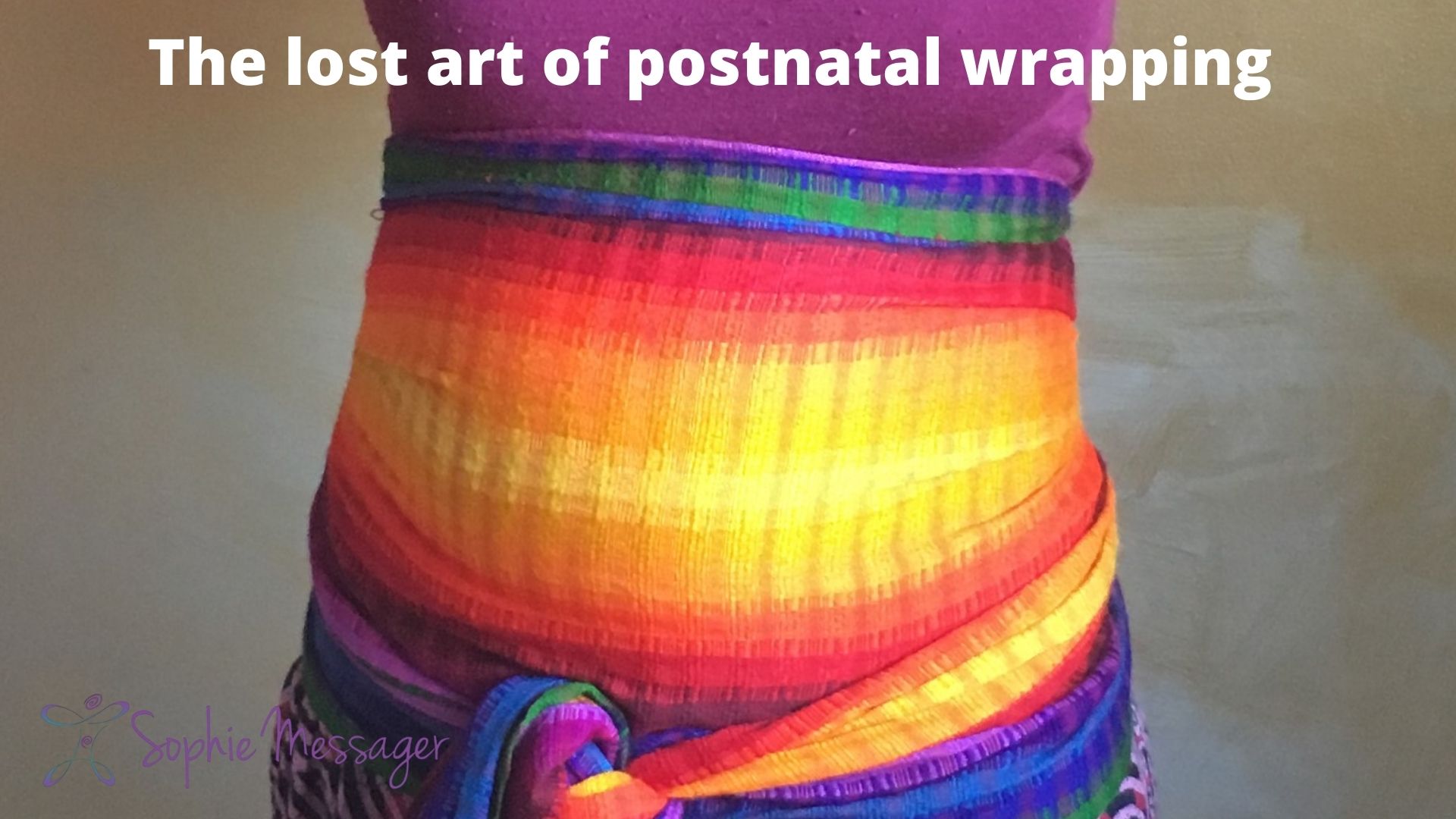
    • Wrapping your pelvis/abdomen
    • Keeping warm

    Social support

    • Friends, family, neighbours
    • Hired help (doulas, nannies, cleaners…)
    • Online support (social media, WhatsApp groups…)

    Planning for the unplanned:

    You might want to include a part on navigating possible curveballs. For instance if you end up giving birth by caesarean when this wasn’t part of your plan and what your recovery might look like if that’s the case.Ā  If you end up having a longer than expected hospital stay after the birth, or if your baby needs to stay in hospital for a while.

    There are many ways to create a postnatal plan. You could write one, and you could also make a mindmap or a vision board, of draw something or whatever other modality appeals to you.

    You can download a free postnatal recovery plan template as a PDF on my website front page.

    If you’d like to learn more about this topic, feel free to browse my blog for more posts on this topic. My book, Why postnatal recovery matters has a whole chapter on writing a postnatal recovery plan, and my online course How to prepare for a nurturing postpartum, has a whole module on it.

    This coming Tuesday 28th of June I am also running a free Webinar called How to prepare for a nurturing postpartum.

  • Embracing the void

    Embracing the void

    Both discomfort and power lies in transitional times.

    Since I decided to stop doulaing in April, I have felt unsettled, agitated and overwhelmed. I’m having a hard time feeling comfortable in this transition time. I’m finding it difficult to surrender to what is, and to trust that the path will unfold before me at the pace it’s meant to.

    I’m an impatient person at heart, and this is a big challenge for me. In previous blogs I have shared about my leaving doula work and the wisdom of fallow times. Today I want to reflect on embracing the void.

    The void is the fertile space in which you are no longer what you were and you are not yet what you are to become. It is a death space of sorts, a bit like the time where you are heavily pregnant and you wish your body would hurry up and give birth. Being heavily pregnant often comes with both physical and emotional discomfort, and this is no different.

    There are many metaphors, from the metaphysical process of transforming lead into gold, which goes through a phase called Massa Enigma (where is it neither lead nor gold), through to the death and rebirth of the mythical phoenix.

    I’m in this space now. And like waiting for birth, I have moments of quiet acceptance and moments of rage and irritation, as well as moments of despair. I notice that I will myself to be further along the path, and there lies the suffering, in not accepting what is.

    I am undergoing a huge transition in my sense of self and my work. There is added discomfort in the complexity of my family situation, with a child who is too anxious to attend school and on behalf of whom we are fighting the education system to get the support needed, and a young dog whose needs are intense, much like a new baby.

    I feel stretched and overwhelmed a lot of the time, with balancing the demands of my family and my work, and end up feeling that I’m not doing any of them very well. The fact that I am nearly menopaused, so going through an inner transition and discomfort at a physical and spiritual level is a big part of it too.

    I notice that there is something in me that wants to be ā€˜ahead’ of where I currently am. That I have impossibly high expectations of myself (of which I mostly fall short). I think this is a very important thing to be curious about and to learn to recognise and tame. I’m currently reading a book called How To Keep House When You are Drowning, by KC Davis. She talks about self-compassion and of recognising when your inner voice isn’t kind.

    Last week-end I met with a young couple who have offered to look after my dog from time to time. My dog is a 6 months old, 25kg, energetic golden retriever puppy. I’ve spent the last 2 months taking him to dog obedience classes, and I’ve been berating myself because I haven’t practised the training exercises enough for my liking. I was worried that the couple would find it hard work (he pulls on the lead and his recall is hit and miss still), but instead they said they found him very well behaved. And these are people who are used to dogs, and the woman is a vet. I felt this deep sense of relief. Then one of my daughter’s tutors commented on how amazing it is that Blue doesn’t jump on visitors. I reflected that, once again, what was stressing me was the impossible expectations I put on myself.

    I told my husband of my overwhelm (thankfully he is a trained counsellor) and he replied that if an athlete was unwell he wouldn’t be expected to run.Ā  And I stopped and nearly laughed because I use this analogy all the time, but I had forgotten to apply it to myself. Isn’t it funny how we have this inner wisdom, yet how blind we are to our own process? Indeed, nobody would expect an injured athlete to train until they had healed. Yet when it comes to mental health challenges we try to push through and force ourselves to carry on, when we need to focus on our healing first, and cut ourselves some slack. After all, we are doing the best we can.

    In her book, Rising Strong, Brene Brown asks herself and people if they believe that people are doing the best they can. At first she believes that no, people aren’t, and that they are annoying on purpose. And then she asks her husband who says ā€œAll I know is that my life is better when I assume that people are doing their best. It keeps me out of judgment and lets me focus on what is, and not what should or could be.ā€

    After the athlete’s conversation, it dawned on me that I was, yet again, trying to force myself out of a funk by working harder. I realised that I needed to surrender to my discomfort and take the time to tend to the struggle and emotions inside. Instead of trying to push through and tackle my ever growing to-do list, I took myself to the office to do some work on what I need to start doing to be more connected to my heart. I will write about why I am doing this and why it is the most important thing I need to do right now in a separate blog.Ā 

    I took this time for myself, about one hour, and I lied down and listened to a drum journey track, asking to be shown how to connect to my heart, and I was shown what to do. I felt much better afterwards.

    A few days later, I was listening to Lee Harris’s energy update for this month (I used to feel I didn’t have the time but now I listen to this kind of things on aĀ  speaker in my kitchen whilst making diner and I love it) and he said that there is wisdom in overwhelm, because it is teaching us what is no longer working for us. I hadn’t thought of it this way, and it helped.

    As serendipity would have it, later that day not one but two people I follow shared a similar message. In my inbox, I received this message from Shelley Young, who channels Archangel Gabriel:

    ā€œDear Ones, you can’t be controlling and guided at the same time. You can’t decide you are going to do it all yourself and be open to receive at the same time. You are going through profound change, both individually and as a collective. You are being made aware of what is not working for you so you can let go of the old and find new solutions and ways of being.

    If you are perpetually exhausted by your life it is a sign that you have outgrown where you are and you are ready for expansion and new discoveries. It is an indicator that you are ready to up-level into something that is a much better match for you and your soul’s agenda. Your soul is beckoning you forward into the new.

    So allow yourself to be led. When you don’t know what to do next, get curious. Ask to be shown what is possible that you aren’t aware of. Give the reins to your team who have the vantage point of being on the other side of the veil and allow them to show you the way.ā€

    And then Toko-Pa Turner, the author of the wonderful book Belonging, Remembering ourselves home, shared this on her Facebook page:

    ā€œDrop your maps and listen to your lostness like a sacred calling into presence. Here, where the old ways are crumbling and you may be tempted to burn down your own house. Ask instead for an introduction to that which endures. This place without a foothold is the province of grace. It is the questing field, most responsive to magic and fluent in myth. Here, where there is nothing left to lose, sing out of necessity that your ragged heart be heard. Send out your holy signal and listen for the echo back.ā€

    These messages were very soothing for me. They were just what I needed to hear. I don’t need to force it, to be further ahead in my path than I am right now. There is power in the in-between now, and power in embracing the void. It is a fertile ground for the new.

  • The importance of switching off when you work for yourself

    The importance of switching off when you work for yourself

    I’ve been working as a solopreneur for 10 years.

    The first year I went away on holiday, as a newly self-employed birth worker, I noticed that I was still responding to work emails, something I never did when I was an employee. I didn’t resent it but I was very conscious of the difference. As an employee, I used to truly switch off when I was away, and I rarely worked outside of my contracted hours.

    Sure, in my pre-parent years whilst working a postdoc and then for a biotech start up I worked very long hours, including weekends and evenings, but chose to do so myself and didn’t resent it. After becoming a parent, I did the odd bit of work in the evenings and at the week end, but mostly I went home and did not work, and certainly never worked whilst on holidays.

    Since I left science and started working for myself, my business has kept growing. There is always stuff to do, and at the beginning I was rarely switching off in the evenings or during the week-end.Ā  I also interact with a lot more people than I did at the beginning, so there are messages coming from many different sources and apps, messages on my business page, comments and questions, and so on, which need replying to.

    In the digital age with live in, where the boundaries between work and home are somewhat blurred, I might have ended up there anyway if I’d remained a scientist. I read Cal Newport’s book, A world without email, and his description of the corporate world of today certainly seems fitting with a constant barrage of messages.

    As I’ve grown older and a more experienced self employed person, I have become more conscious than ever of the need to establish firmer boundaries in my life between work and play, to be more present to myself and my family, and to resist the desire to answer yet one more email or message. The downside of being self employed (the upsides far than make up for it however!) Ā is that I used to have an underlying feeling of guilt when I was not working.Ā  I found myself thinking that I ought to work 9 to 5 and be productive all the time, something that I now see as a hangover of our education and workplace system.

    About 4 years ago I embarked on a journey to get out of this productive overwhelm, and I blogged about it here. I ended up writing a whole collection of posts on the topic, which you can find listed in this post. It has been so utterly transformative that I am think I may end up creating a course to help others do the same.

    The other important aspect to consider is, when you have chosen a path that involves giving and caring for others, you need to spend time away from that, refilling your own tank and giving to myself, before I am ready to give again to others (I wrote a post about that too).

    During my first summer break as a self employed doula/birth educator, I was quite shocked to notice how tired I was, because for the first for the first 3 or 4 nights of my holidays I slept for nearly 12h each night (a normal night for me is usually between 6 and 7h of sleep).

    In recent years, I’ve learnt to plan for time off work by putting in in my diary so I know what my availability is and I also know not to over commit myself. I’ve also become much better at feeling my body’s energy and wellbeing, that when I need to slow down I feel the need before I reach crashing point. February to April this year were an intense time for me, supporting my last doula clients, and having a new puppy to care for, and launching 3 online courses (the postnatal rebozo closing ritual course, updated rebozo for pregnancy and birth course, and my new How to run a mother blessing course). I really feel the need to slow down and recharge deep in my bones.

    Ahead of my holidays, I plan my work so that I can truly switch off. I am going to have long leisurely days with a lot of time outdoors, some long, social family diners, I’m going to read more books and swim in as many bodies of water as I can. Bliss.

    And when I’m back at my desk, I am going to continue refining my work-life balance, so that I am in a state that works for me, keeps me purposeful and happy, to keep putting the things that keep me fuelled like drumming, wild swimming and dancing as the most important things in my to-do list,Ā  and spend as much time as possible being joyfully present.


  • The wisdom of fallow times

    The wisdom of fallow times

    A few weeks ago I attended my last birth as a doula. As I explained in a previous post, this was a long drawn-out decision that took me a couple of years to reach.

    When I wrote the previous blog whilst on-call for the birth, after attending my last birth, I expected to feel relieved, free, elated even. Instead, the month after the birth I feltĀ  unsettled, irritable, anxious, and I have even been physically unwell (I had a nasty fall which left me in pain and unable to move comfortably for a couple of weeks despite 2 osteopathic treatments).

    Transitions aren’t comfortable and the body has a way of forcing us to slow down when we do not heed its wisdom.Ā 

    I experienced a similar time in 2020 after I published my book. Finishing to write the book on time and the whirlwind of promotion, press article and interviews surrounding the book launch were an exciting and high energy time. Then, I had a period of fallowness that lasted months and I beat myself up endlessly about it, as if I ought to be staying in a high energy state all the time.

    I have been reflecting on the cycle of birth and death around us, and in particular, on the importance and wisdom of fallow times. If you look in nature, trees don’t bear fruits all year round. The cycle of birth and death is very visible. Right now the spring energies are rising and it is very clear in the growth ofĀ  plants everywhere around us.

    A few days ago it finally occurred to me: I’m in the same transitional process as a pregnant woman waiting to give birth. The Zwischen, the in-between time where you’re not what you were and not yet what you are about to become. And it’s wholly uncomfortable. And the wait is met some days with patience and acceptance, and some days with irritation and impatience.

    Now that I’ve given up birth doula, my sense of professional identity is shifting.

    I’m not doing nothing, I’m in the process of giving birth to my new self. I need to give myself the same gentle nurturing care as I tell new mothers to give themselves. I remind myself of the words I often speak when a new mum is telling me that she is doing ā€˜nothing’ when caring for a new baby, and I remind her that she is doing the most important task that there is.

    The process is heightened by the fact that I’m transitioning towards the menopause, having been in the perimenopause process for over ten years, which is a transition in itself.

    I had several healing treatments over the last few weeks, including osteopathy and womb massage. Whilst these things help and play a role in recovery, they aren’t enough. I have to make a true commitment to accept the slower, less productive nature of this time, and to stop fighting against it.Ā 

    I reached out to the lovely herbalist who is supporting me through the hormonal challenges of the menopause, and asked what may be causing the resurgence of hot flashes and night sweats despite the support of the herbs, and she said ā€œit’s a sign that your yin is out of balance and that you need to rest moreā€.

    I have written about embracing rest several times in the past (For example in a post called resting after birthing a project, in which you will find links to my other posts on the topic), and I have come a long way from the place where I was before, where I wasn’t even conscious of this pattern of wanting to keep all the time. But it’s still difficult. The pattern is deep, and it is strong, and we are bathing in a culture that worships productivity, and which is completely blind to this pattern.

    It’s a process of continuous self development and growth, to become aware of one’s patterns, of the negative self-talk that come from deep cultural programming that says that your productivity is your worth.

    I like the idea of being more like an egg than a sperm. The egg does not ‘go and get it’, it simply sits there, sending signals that it is ready. In her book, The Anatomy Of A Calling, which tells her process from being a mainstream thinking Obstetrician to becoming a holistic doctor and energy healer, Dr Lissa Rankin tells how Dr Christiane Northrup told her to be more ā€˜eggy’:

    ā€œLissa is brilliant at doing, but she needs to learn how to receive. Lissa needs to be less sperm, more egg. To be ā€˜eggy’ is to set goals but release attachment to outcomes, to surrender to what wants to happen rather than pushing for what you’re trying to make happen, to put your desires out there without doing anything to bring them into being, to simply trust that when you move in the direction of joy, ease, peace, harmony, love, and the highest good for all beings, the Universe, like an army of sperm, falls over itself trying to bring your desires into form.ā€

    I posted this meme on Facebook, to remind myself and others of this truth.

    I still have some work to do before I am freed from beating myself up when I’m in a fallow time, but I am a lot more able to recognise it, and to at least try to embrace it and to trust its wisdom. I have noticed time and time again that the minute I surrender to the wisdom of fallow times, and embrace the need to slow down instead of fighting it, things seem to shift almost instantly, because I finally allow the energy of what wants to move through me instead of trying to direct it.

  • Do you long for more sacredness in your life?

    Do you long for more sacredness in your life?

    Do you long for a more meaningful life, for a sense of connection to something bigger than yourself? Do you feel this longing in your heart, in your bones? Like something is missing but you don’t know what? Do you have this deep knowing inside that life is meant to feel bigger than it does for you now?

    I used to feel the same. I can still see myself witnessing my first closing the bones ceremony and wishing it was me on the floor receiving the ritual. I can still feel the excitement, as I attended my first doula retreat in 2013, how beautiful and sacred it all felt, and then how much returning to my normal life, especially with 2 young children to care for, felt so bland, so lacking in connection and full of drudgery. I longed to go back to the feeling that this amazing, spiritual retreat gave me.

    Now I know that the issue was that I was looking elsewhere, outside of myself, for the sacred. The issue wasn’t’ with the lack of sacred in my life, but with my narrow view of what constituted sacredness.

    When I attended women’s circles, red tents, retreats and such like, something in me believed that the ā€˜sacred’ only happened in this limited container. What took me a long time was to learn to weave the sacred in my everyday life.

    I had the same issue when I started to learn to meditation because I believed that meditation only happened sitting on a special pose on a special cushion in a special room. I was unconsciously victim of a culture that puts form over substance.

    I was missing and longing for more sacredness partly because it IS missing from most of our culture, but also partly because of my own unconscious and narrow definition of what the sacred was.

    It has taken me a long time to create a sense of sacredness in my daily life, in a way where it feels natural and normal and simple. There is a sayingĀ  I love : ā€œBefore enlightenment, chop the wood, fetch the water, after enlightenment, chop the wood, fetch the waterā€ which illustrates this beautifully.Ā 

    As I explained in my previous blog about mother blessings, I started offering such ceremonies to meet my own, and my community’s needs for more rituals and sacred celebrations.Ā 

    I also pursued my own energy healing training, as a Reiki , then Reiki Drum practitioner, then teacher, first and foremost to fulfil my own longing, and for my own development. What came from it though was a lot more than I had hoped for, as it started to reconnect me to my own sense of the sacred.

    I wanted to be part of a shamanic drum circle. There wasn’t one locally so I started my own early in 2020. I had assumed I would gather a handful of friends who already had a drum, so it was a surprise to see that most people who attended didn’t own a drum nor had taken part in a drum circle before. And it was also a surprise to find a lot more people attending than I had expected. Clearly those people also experienced my longing for spiritual connection in community. The pandemic meant that I ended up running circles in a physical venue, then online, then outdoors in the woods, then in a friend’s garden, all of which were diverse and rich experiences which deepened my practise. Now I’m planning to run them in a new venue in the woods, near Cambridge, in a private woodland.Ā  We will drum around a fire and maybe even in the beautiful geodome built by a dear friend of mine. Feel free to contact me if you’d like to join us.

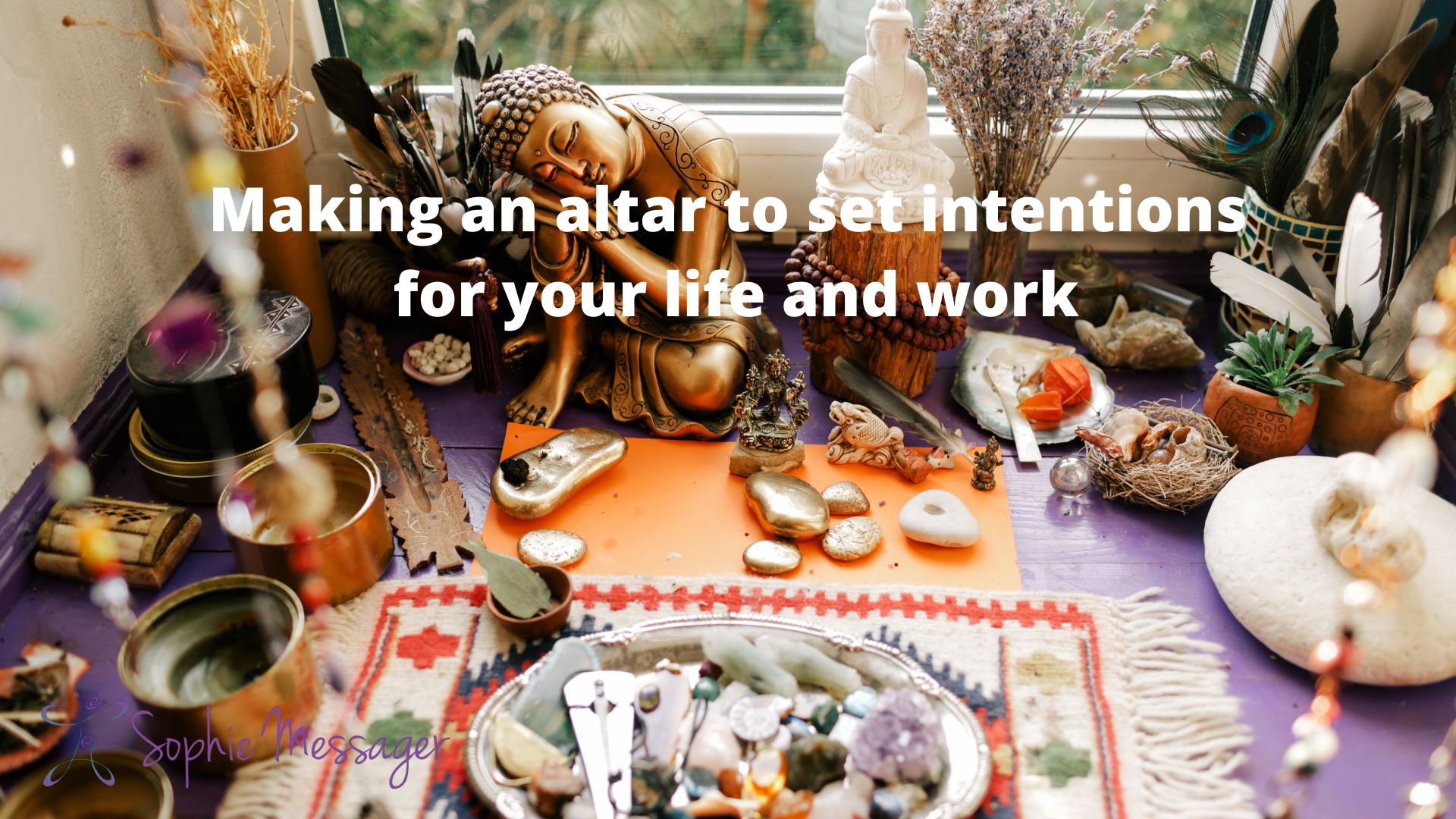
    In 2020, I started a practice of drumming in the woods at dawn weekly or more with 2 other women. We have drummed in all weather, including in driving rain and in the cold and dark before dawn in winter. I am grateful for owning a synthetic drum which can cope with the changing weather! We are still doing it 2 years on. We make an altar, set intentions, smudge, drum, and then we sit down with a flask of tea to chat about more mundane things. I love it.

    The other 2 practises that have transformed my life in terms of sense of connection are year round wild swimming in the local river (read about how I started that here) and 5rhythms dancing.

    Since the Autumn of 2019, every Friday night, I have danced with the Cambsdance community. We dance 5rhythms, ecstatic dance, freedom dance, open floor and other forms of conscious movement. There are no steps, or ā€˜right’ way to dance. Teachers bring a playlist they have created, which moves from slow and flowy music to fast, strong paced music and back again. They hold the space gently, providing limited guidance, a few words here and there to remind you to pay attention to your breath, or your feet, or another body part, or to each other. All that is required is to dance according to what is moving inside of you. It is a moving meditation, in community with others people who also love to dance. It lasts a couple of hours. It is the antithesis of clubbing. There is a wise range of ages and genders, a range of cultures and styles. Everybody dances in their own unique way, and nobody gives a fuck about what you look like when you dance. It is one of the most liberating practices I have taken part in. It is joyful and beautiful and oh so transformative. You can dance your joy, your grief, everything is welcome. It was a big part of my recovery when I suffered from depression in 2019.

    Some of the dancers have become close friends, with whom I take part in regular community gatherings, celebrating the wheel of the year, and generally connecting as humans in a simple, fun and loving way. I especially love that all the gatherings are drug and alcohol free. We are high on connection, feel good hormones and love. There is often some dancing involved, and singing and drumming too.Ā 

    I have been reflecting on the fact that all cultures around the world used to have 3 practices that belonged both to everyday life and to the sacred. But here, today in the modern world, we think that only special people, gifted people can do them. These practices are singing, drumming and dancing.Ā 

    Having taught workshops that involve a big element of spirituality since 2014, I have witnessed the same longing in others again and again, especially when leading people throw circles and ceremonies.

    This longing I sense in others is why I want to offer more ceremonies, more mother blessings, more drum circles, more intuitive healing, and teach more rituals (such as the postnatal closing ritual). We need to create new rituals for our modern times. A sense of spirituality is as important to wellbeing as eating and drinking.

    As I explore what sacredness means to me in my everyday life, I encourage others to follow their own journey of reintroducing sacredness to their own lives.

    If you feel the same longing in your heart and you want to create a more beautiful life for yourself, listen carefully to what your heart is telling you. We aren’t meant to live such disconnected lives. You deserve a life where you feel more connected to yourself, to your community and to the world around you. Start small. Be gentle. Try things and see what works for you.

    ā€œThe worst thing we ever did
    was put God in the sky
    out of reach
    pulling the divinity
    from the leaf,
    sifting out the holy from our bones,
    insisting God isn’t bursting dazzlementĀ 
    through everything we’ve madeĀ 
    a hard commitment to see as ordinary,Ā 
    stripping the sacred from everywhereĀ 
    to put in a cloud man elsewhere,
    prying closeness from your heart.
    The worst thing we ever did
    was take the dance and the song
    out of prayer
    made it sit up straightĀ 
    and cross its legs
    removed it of rejoicing
    wiped clean its hip sway,Ā 
    its questions,Ā 
    its ecstatic yowl,
    its tears.
    The worst thing we ever did is pretendĀ 
    God isn’t the easiest thingĀ 
    in this UniverseĀ 
    available to every soulĀ 
    in every breath”

    ~ Chelan Harkin, in poetry book ‘Susceptible to Light’

  • Why I offer mother blessing ceremonies

    Why I offer mother blessing ceremonies

    I would like to tell the story about how I came to offer mother blessings ceremonies and the journey that led me to do this in the hope that it may inspire others to do the same.

    I’ve always had an intuitive sense of the lack of ceremony and rituals, and sense of everyday sacredness within our culture. And I’ve had a longing for it all my life.Ā 

    I was raised a Catholic. I left this faith behind as a teenager as it didn’t feel right for me. I noticed that, after leaving the church, I was left with nothing in terms of spiritual life. As a culture, it seems to me that we have squashed our innate wonder and unique sense of spirituality and that it’s only allowed to fit in the neat boxes that belong to organised religion.

    It took me many years to re-create a spiritual life that fitted my unique self, and becoming a doula was a big part of the process.

    In 2013, during my first year as a doula, I attended a doula retreat. There I learnt the closing the bones ritual and attended a shamanic drumming workshop. After the retreat I had a deep longing to create more sacredness in my life. I found the return to normal life, especially with 2 small children to look after, full of drudgery and so lacking in the connection I had experienced during the retreat. A doula at the retreat had mentioned that I could create the sacred in my everyday life, but I didn’t know how to do this. My desire to create community ceremonies came from this longing, and to fulfil this need for myself and for my community.

    When I completed my mentored doula journey in the Autumn of 2013, I didn’t want to celebrate with just a meal, but have a meaningful ceremony instead. I asked a couple of friends to help design such a ceremony for me. The ceremony, a small intimate affair with my doula and my doula mentor, and a doula friend, was perfect. I then used the same process to organise recognition ceremonies for other local doulas.

    Altar centerpieceI started offering mother blessings in 2016 to local doulas because I felt that doulas gave a lot to their clients but rarely received the same attention themselves. I felt very strongly that they should be celebrated and nurtured by their community when expecting a baby themselves. You can read about such a gathering in this blog.

    I was blessed to lead many beautiful blessing ceremonies, and sometimes even organised for the same group of women who came to the mother blessing come back after the birth to do a group closing the bones ceremony.

    I had impostor syndrome, so I spent about 3 years doing mother blessings for free to doulas, friends and clients before I felt ready to offer it as a paying service. Even then, when I did get booked for my first paying mother blessing, I worried that my client would not find it good enough. However, she loved it, and she was very happy to pay for it.Ā 

    I’m not someone who does things by half, and I poured my heart and soul into preparing for the ceremony, spending many hours researching activities, discussing options with my client, and preparing equipment to bring to the ceremony. All in all I think I spent well over 15h for this blessing between the prep and the blessing itself.Ā  I hadn’t realised how time consuming it would be and I put my price up afterwards. Luckily my first client was also self-employed and reminded me to make sure I charged her for the time I spent with her on emails and phone calls as well as the face to face meetings.Ā 

    Soon I found myself doing a lot of mother blessings. I loved that, with each new experience, I would learn new things to add to my repertoire of options. One woman asked to have a collage activity to create a vision board for her birth, and I love it so much I have done it ever since.Ā 

    I also learnt about the importance of offering options and let the person choose rather than imposing my kind of ceremony. There was a Christian doula who wanted to make sure nothing in the ceremony would clash with her religious beliefs. There was a client who wanted the full hippy ceremony complete with red fabric, red clothes, smudging and drumming, and painting her belly with henna. There was a client who loved the idea of the a very hippy affair for herself,Ā  but knew that her family members would be put off by it so we toned it down, replacing the smoke smudging by creating a bespoke auric spray, and having a very simple, low key decoration. There was a woman whose partner was very sensitive to smells, so instead of using smoke or sprays, she made little individual essential oil roll-on bottles for people to apply to their wrists at the beginning of the ceremony.

    Last year I organised a ceremony for a pregnant friend, and her partner went off with the rest of the men had their own father blessing in a different location, then we all came together for a meal afterwards. I found this particularly lovely.Ā 

    I also ran the biggest group I had ever run, with about 25 people in a building within a private woodland, with another doula friend to help me, and it was beautiful and very spiritual.Ā 

    Now, with several years of experience behind me, running these ceremonies feel within my comfort zone, and I have so many options and ideas to offer that I can easily create a beautiful bespoke ceremony.

    In 2021 I ran my first live workshop on how to run mother blessingsĀ  for a group of doulas and midwives. I loved teaching it and I got incredible feedback from my students. Several said that they’d found it the best workshop I had ever taught, and that it was hard to believe that I was teaching it for the first time. Here is some of the things they said:

    • ā€œI loved the beautiful energy you created hereā€
    • ā€œThe experiential learning was fabulousā€
    • ā€œI particularly liked the circle energy, the flow, and the drumming, it was all beautifulā€

    I decided to teach people how to offer mother blessings because I want to encourage more sense of sacredness into the lives of pregnant women, more celebration centred towards them and more community building, as well as help put in place postpartum support in place by gathering pledges of support during the ceremony. I’ve just launched a new online course to spread this even further, and I’m delighted to report that I have students from all over the world booked on the course.https:https://sophiemessager.com/how-to-run-a-mother-blessing.

    Today I charge clients but I also still do free ceremonies for friends. I did many of these in 2021. In one of them I remember driving a long distance and asking myself why I’d agreed to do this. However, the ceremony itself was so touching I was moved to tears (and so were all the other guests in the room including the mother’s mother, who told me afterwards that she had found in extraordinary). It made it so worthwhile and left the gathering with a very full heart.

    What do I love about mother blessings? I love that it creates a sense of community and support around the expectant mother. It gives me joy. It make the mother feel very loved and special, and it makes everyone who attends feel this way too. I love that it helps put community support in place for after the birth too. I love that the feeling of belonging lasts beyond the ceremony. I love wearing the red thread on my wrist as a reminder until the baby has been born, and I love telling everyone to light their candle when we hear that labour has started. Most of all I love that I help bring a sense of wonder and sacredness back into people’s lives.

    I love that it spills over into the rest of my life and how I often use some of the honouring activities (like washing someone’s feet and massaging their hands and feet, or telling someone what we love about them) as part of the birthday celebrations of my friends. I love that, with mother blessings, we can help start a cultural shift from a culture where all the attention is focused on the baby, towards one that is more mother centered.

    Understanding what attending such a ceremony feels like isn’t something you can be told about. You have to be there to get it. Often, guests approach me at the end of the gathering to tell me how they had never taken part in something like this, and how much they loved it.I love giving people a positive experience that will remain with them for the rest of their lives.

    How does this post make you feel? Does it resonate? Have you have a mother blessing, wished you had one, or taken part in one, or led one? Please comment below. I would love to hear what you think.