Author: Sophie Messager

  • Baby shower? Have a mother blessing instead.

    Baby shower? Have a mother blessing instead.

    What is a mother blessing?

    You probably have heard of a baby shower, but have you heard of mother blessing? It is a celebration and honouring of a woman’s transition into motherhood. A mother blessing is a celebration that takes place during pregnancy and which is designed to celebrate and support the mother and her upcoming birth and postpartum period. Contrary to a baby shower, where all the focus and presents are on the baby, a mother blessing places the mother at the centre of the attention and support. It is a gathering, usually of women, coming together to celebrate the expectant mother, to honour her and give her loving attention, good wishes and support for the birth and the postpartum period.

    I wrote about this in the past  but I want to expand and explain the process a bit more, as I have gained a lot more experience in running these rituals.

    What happens during a mother blessing?

    Altar centerpiece

    There is no prescriptive recipe. It is about having a gathering to celebrate the mother in a way that feels good for her. The most important aspect is that she feels loved and nurtured, and that the event is tailored to her needs. I used to think that mother blessings where always a hippy affair, but I have come to realize that, whilst they are powerful and spiritual in nature, it is not the way they look like that makes them special but rather it is the intention behind it and how people come together to hold it.

    Offering mother blessings through the years has taught me a lot. For example I organized one for a mother who is Christian, and she was worried that the event would involve spiritual aspects that would be incompatible with her religion. I reassured her that this wouldn’t be the case and that we would make sure that what happened was in line with her beliefs.

    A mother blessing is a gathering a friends and family of the mother. Here are some simple logistical aspects to think about:

    • Discuss the gathering with the mother
    • Plan the structure of the gathering, with a beginning, middle and end
    • Choose a venue and date
    • Invite the guests
    • Ask people to bring things to share such as reading a poem, or a singing a song, and meaningful gifts for the mother, and something to eat at the end
    • Run the event

    Here are some of the things I like to do to make a mother blessing special:

    Setting up the space

    I like to make the space special with colourful fabrics, flowers, candles, and lovely smells and sounds, like a sanctuary. Be guided by what the mother likes and tailor the level of woo accordingly.

    Starting the ceremony

    I like to have a simple ritual to mark the beginning of the ceremony, such as smudging or ringing a bell. Start the process with a short sharing circle, for example, having everyone introducing themselves saying their name, the name of their mother and maternal grandmother (in my case: I am Sophie, daughter of Michelle and granddaughter of Jacqueline).

    If it feels right, singing a short circle song can be lovely too. For example, I like the song The river is flowing.

    The ceremony itself

    Here are some simple ritual activities to build into the ceremony can involve:

    • Ask everyone to bring a bead to give to the mother. As each person presents her bead, they explain why they chose it, and what it represents. The beads get threaded on a string to make a necklace that the mother can wear or use like prayer beads during labour or the postpartum to remind herself of the circle of support around her.
    • Pass some wool or string around the circle and have everyone wrap it a couple of times around one of their wrists. Once everyone is bound by the thread, pass scissors around to cut it and have everyone knot the thread around their wrist or ankle and keep it until the baby has been born.
    • Gift a small candle (like a tealight) to everyone, and a bigger one to the mother. When the mother goes into labour, people will be notified (for example in a WhatsApp group) to light their candle and send love and good wishes for the birth.
    • Have guests read texts, poems or sing songs (some lovely examples here)
    • Do something nurturing for the mother, for example massaging her hands or feet.
    • Have people bring or pledge some gifts for the mother for the postpartum. For example vouchers for postnatal massage or closing the bones ceremony, postnatal doula vouchers, food delivery, feel good products like postnatal herbal baths or massage oils, promise to come and clean her house/hold her baby whilst she sleeps etc.
    • Have a final sharing circle at the end.

    Finally, have some informal time afterwards to share food, some tea and cake (a groaning cake would be lovely) or a potluck meal. It is always lovely to have some informal chatting and eating time after the ceremony.

    What are the advantages of having a mother blessing?

    The main point of the mother blessing, besides making the mother feel loved and cherished, is to redirect the focus of the support towards the mother rather than the baby. Encouraging the mother to write a postnatal recovery plan, and/or using said plan to ask friends to provide pledges for the postartum is a good way to think ahead about what the mother might need after the birth (you can use my free postnatal recovery plan download as a template for this).

    Beyond the mother herself I have found such ceremonies deeply moving for the facilitator and for all the people involved in the gathering. Western societies lack rituals to celebrate life transitions, and bringing this back into our culture is very powerful and meaningful. People often say that they had never taken part in something like this and how much they loved it, and wish they had one themselves.

    I especially love to bring the whole process full circle, by bringing back the same group of people to honour the new mother a few weeks after the birth in a closing the bones ceremony.

    In 2020 I have also participated in mother blessings over zoom. The process was the same e xcept that we sent cards and beads by post ahead of time. It was still very special and meaningful.

    I am offering an online course on how to run mother blessings.

    Here is a short video showing snippet of mother blessings and workshop I have run in the past

    Play

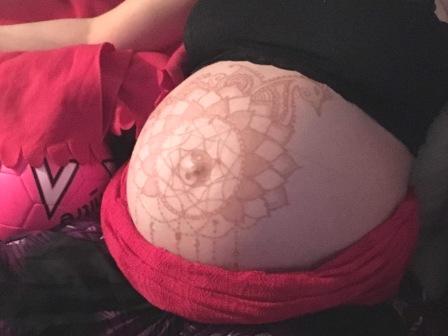
    (The Henna tattoo belly painting on the main picture, was designed by Jo Rogers as part of a mother blessing)

  • The maternity machine

    The maternity machine

    Today I went from a house
    Where a woman swayed as her body opened
    Gently vocalising, in tune with herself
    Warm water ready to embrace her
    With candles as the only light
    And two women sitting quietly
    Watching and waiting
    Whispering words of encouragement
    Holding her and her space
    Today I went from this sacred space
    Where time slowed down
    And all that mattered was this moment
    And this woman
    I went from this sacred space
    Into the belly of the machine
    With its bright lights
    Its beeping tech
    Its dry, cold, clinical rooms
    And its dry, cold, clinical staff
    In this space where everything is timed
    Measured
    Counted
    Calculated
    Where numbers are more important
    Than the person they are supposed to be caring for
    Today I went into the belly of the machine
    That ā€˜saves’ lives
    But destroys spirits
    Where the sense of the sacred is lost
    Where it’s just another day at the office
    Where kind people are a rare find
    And the mother is just a vessel
    Where the machines take over
    Where babies are born distressed
    And nobody comforts them
    The machine eats birthing women
    Like an unsatisfiable beast
    And spits them out, emptied of life
    And emptied of spirit
    Because as long as the baby is alive,
    Who cares if the mother is broken?
    Today I watched in a theatre
    Medical staff milling around
    Like a swarm of busy bees
    Doing the tasks they have been trained to do
    Told to do, programmed to do
    Where nobody saw her
    As she lied on the table
    Reduced to her body parts
    I heard them say ā€œcongratulationsā€
    Like repeating a script, without meaning it
    And as I sat there, I wondered:
    How did they become so dehumanised?
    And as I watched them, I wondered
    How did they forget?
    How to connect and how to be kind?
    And as I watched, I told myself
    I never want to be there again.
    It is too late
    They are too far gone
    Blind to their own conditioning
    In the maternity machine.

    Play

  • Why I am stopping doula work

    Why I am stopping doula work

    As I write this blog I am on-call for my last birth as a doula.Ā  I’ve made the decision to stop doula work.Ā  This might come as a surprise and I’d like to explain the long process that led me to take this decision.

    Being a doula is a very demanding and challenging job. It is not for the faint hearted. The emotional investment in our clients, and the logistical demands of the job are phenomenal. When I support a family during pregnancy, I’m always there for them, often at the expense of my own and my family’s lifeĀ  (Read my blog post about this). The on-call period in particular, as well as not knowing how long I will be gone to support a birth, makes for very challenging juggling, especially with young children. Being a postnatal doula also comes with unpredictable demands as clients may need you at very short notice. The nature of birth and early parenting is unpredictable.Ā 

    When I work with a family as a doula I become very emotionally invested in supporting them. I am 100% there for them. The first year of my doula work, my parents came to stay with me during a school holiday. I was on call and my mum said ā€œYou’re not thereā€, and that was true. I wasn’t. Energetically and emotionally, I was with my client.Ā 

    As doulas we build a deep relationship with the families we support. We are there at every turn of the way. We are there listening to their hopes, their fears, their worries. We become deeply invested in helping them get the birth experience they hope for. We are deeply empathic so their challenges become ours. We share their joys, and their frustrations. Sometimes we share their disappointment, and sometimes we even share their trauma. We cry tears of joy and sorrow with them, or for them.Ā 

    Sometimes people don’t get the birth they hoped for. Sometimes there is hurt, sorrow and trauma. Sometimes we are more traumatised than our clients by what we have witnessed. Because we know, when we witness callous care from medical professionals. We know when people are being pressured into consenting to interventions just because a guideline says so.

    I’ve been a doula for nearly ten years. I attended my first birth in the summer of 2012.

    In the past, the joy of supporting families through birth made up for the challenges. I adored my job. It energised me. It filled my heart. It gave me a deep sense of fulfilment. Because of this it didn’t feel too challenging despite the demands and extreme flexibility and sacrifices it required.

    It is a true privilege to support people when they bring new life into the world. There is nothing quite like the moment of birth, especially when the birth goes well.Ā  No other job has made me cry tears of joy the way being a doula has. After supporting a birth, I often go home with my heart swelled with joy..

    When I started this job I thought that, in my time, I would see improvement in maternity services, but I’ve only witnessed the exact opposite.

    In 2020, it got much worse. The pandemic brought restrictions to visitors, and I wasn’t able to physically attend births in hospital from March 2020 to July 2021. I learnt that I could still make a huge difference even when supporting people remotely, but it robbed me of much of the joy doulaing used to bring. I remember a particular low point in the summer of 2020 when, having just remotely supported a client through a long induction (neither her partner nor myself where allowed in the induction ward-this felt so dehumanising), I met a client I had supported 3 times previously (this was her 4th birth) outside the hospital to give her a hug, and watched her walk inside the hospital alone, without even her husband. I drove home and told my husband I was done.

    Later in the year there were moments that gave me hope again, when I saw how much of a difference I still made, especially for families who had no family nearby and I was the only other adult they saw for weeks. But overall something started to feel amiss.

    Along the pandemic restrictions, and dehumanising decisions of only allowing partners in established labour, as well as many other disproportionate restrictions (my local hospital even stipulated that doulas couldn’t be present at a home birth when the midwife arrived!), the rate of interventions (inductions and caesarean) rose very fast without any evidence to justify it (I wrote about this in my blog: Induction of labour, does it really saves lives?).

    I noticed that, whilst in the past a small proportion of my clients would require support in fighting for their rights to birth the way they wanted, now, every single client fell in this category. The rise in induction rate in particular, saw almost every client being pressured toĀ  consent to an early induction of labour (around 38 or 39 weeks of pregnancy). These clients were being told this at 12 weeks pregnancy because of their ā€˜risk factors’.Ā 

    The energy of doing this work started to feel warrior-like. This was a regular instance before, but suddenly this was all I felt, all of the time. I started to find it exhausting. In 2021 I supported several clients who refused to be induced at 38 weeks and fought extremely hard for the birth they wanted. I saw so much bullying, and so many threats designed to make them comply.Ā 

    I saw a level of bullying the likes of which I had never seen in ten years. I saw doctors scouring old medical records and bringing up historical medical issues against clients. I saw people I used to rely on for being women centred at my local hospital start to toe the line and talk the same fear speech as everyone else. Whilst I loved supporting my clients and seeing them experience positive births against all odds, it took its toll on me. I started to notice that the constant fighting was harming me.

    In a few weeks I’m going to be 52. I am nearly menopaused. Interestingly I started working as a doula when my perimenopause started (it’s normal for the process to take up to 10 years). As I enter this new phase of my life, cronehood, I feel a deep need to be in the energy of support and love. I want to be an elder at the back of the battle line, supporting people with more youthful energy. The energy required for being at the front line of maternity services in its current state feels at odds with who I am now. The maternity system has become so unhealthy and damaged, I no longer have the energy or the desire to fight against it. I want to use my experience in a different way.

    Don’t get me wrong, I am still an activist. I am grateful to my friend Scarlett who pointed this out to me. It started with my blogs and with my book. I can still affect change in a positive manner, by sharing my writing and knowledge with others. But I no longer want to bang against a brick wall all the time. This feels like such a waste of my energy.

    I need to live a quieter life. A slower rhythm. I want to spend more time being connected to nature. Over the last 4 years I have been on a journey of getting out of work overwhelm by immersing myself in nature. This has shown me that having the time and space for this is vital to my wellbeing, and for my business to thrive. I swim in the local river all year round. I drum in the woods with 2 other women. I practise mindful dancing weekly (5rhythms and other styles). I take part in land based rituals which honour the turning of the wheel of the year. These practices are the first things I put on my to-do list. They are the foundations on which I build everything else.

    Many of my doula friends and clients have been shocked when I say I’m going to leave. They say that I’m very experienced, and very good at it. This is true. However, I am not leaving with regrets. And the work I will do going forward will use the skills I have acquired being a doula. As well as finding this work unsustainable over the last couple of years, I also have a strong inner knowing that this work is no longer what I am meant to do, and that, until I leave this work and its very high demands on my time and energy, I will not be able to do what I am called to do right now.Ā 

    Ten years ago I left a 20 year long career as a research scientist behind to embark on my work as a doula. I remember feeling incredibly excited about it. It was a decision that took a long time to enact, because I retrained as a doula and an antenatal teacher and babywearing instructor, whilst working 4 days a week as a scientist. During these 4 years I also changed jobs twice and had my second child. It took me 4 years because I needed to build a new income, as well as wait until my second child was old enough to go to preschool.

    The decision I’m making to leave doulaing has a similar energy to it, at the cusp of something as transformative and different. Except this time there is a sense of calm and trust about it rather than excitement. I am also not leaving employment, but changing the focus of my self employment.

    Last time I had a plan and bidded my time until I had qualified and built a bit of an income. This time I sense that I don’t quite know what shape my new work is going to take. I just know that it is about helping people connect to their heart and inner knowing (which is something that has always been woven in everything I have taught for the last ten years already).

    If you have ever seen the Indiana Jones movie called The Last Crusade, there is a scene towards the end where Indiana has to take a leap of faith and step over a precipice. When he steps into the void, an invisible bridge magically appears underneath his feet. That’s where I feel I am. And surprisingly for someone who used to be a control freak, I feel mostly OK with it.

    What I look forward to:

    After ten years of being on-call on and off for most of the time, I look forward to living without the pressure of knowing that I may need to leave at a moment’s notice. Of not waking up in the middle of the night checking my phone in case I’ve missed a text message. Of not being able to stray far from home in case my client needs me. Of making constant backup plans and warning my friends that I may drop out at the last minute. Of not having to cancel things.

    I look forward to not having to worry about whether the midwives or doctors supporting my client will be kind. I look forward to being able to rest and relax and be present to my family, my friends, my dancing, swimming and drumming. I look forward to being able to serve my community more, both locally and further afield.

    I have had a sense, since I published my book, Why Postnatal Recovery Matters, in 2020, that I am meant to reach a bigger, more international audience. This has been reinforced by the fact that, without me seeking it, my book has been translated in 2 other languages (Italian and German. The French translation is under way too). Since 2020, having been forced to moved to teaching online courses, has also resulted in my gaining an international audience. Leaving doulaing, where all my attention and energy is given to one family only, also feels in alignment as I will then be able to share my knowledge with more people.

    What I will miss:

    I will miss the intimate interactions with families that I experience in this job. I will miss getting to know people deeply as we walk the journey together. I will miss sharing their joys and their sorrows, and rejoicing with them as they find their feet.Ā 

    I know that I may miss seeing the direct impact I have on people’s wellbeing and confidence. This is not a new experience for me. I went through a similar process when I gave upĀ  teaching NCT classes and running a sling clinic in 2016. I had run both of these activities for 6 years when I decided to stop. I gave this things up because they no longer made my heart sing, and because I knew I needed to make room to teach the people who teach to parents, as opposed to parents themselves. This feels similar. I won’t necessarily see the results as I do in one to one work, but I think this will help reach more people and make more of a difference overall. I hope to hear from people who take my courses or read my book what positive impact it has had on them and the families they serve.

    What I’m going to focus on now:

    I am still going to be present in the birth and perinatal world. I am going to carry on offering online courses, and the odd face to face course (I no longer want to run live courses at the frequency I used to before 2020, which was 2 to 3 courses a month). I want to create new online courses, downloading all the knowledge and wisdom I have accumulated through my birthworking years, to share with others. My next online course, on which I am working right now, will be on how to run a mother blessing. I want to carry on offering mentoring for women and for professionals, but not necessarily limit myself to birth professionals. This has already happened in my offering impostor syndrome sessions.

    I want to carry on offering mother blessings and closing the bones ceremonies. I want to offer training in spiritual and intuitive knowledge. To help others develop their inner knowing, intuitive healing and to listen to their hearts. To connect with nature. I want to help more people discover their soul’s purpose. To connect with themselves. I want this to be from a place that doesn’t belong to a prescriptive model, but helps people develop their unique abilities.Ā 

    I want to carry on bringing more of the sacred to my life and help others do the same. I want to run more regular connection and community building activities, like drum circles, in my local community.Ā 

    My word of the year 2022 is Opening. I am excited for what is coming.

  • Resting after birthing a project

    Resting after birthing a project

    Earlier this week, a short text by Sylvester McNutt popped on my feed. How apt, I thought. It said this:

    • ā€œCreative people need to sit around and do nothing
    • Creative people do not need fully booked calendars
    • Creative people need to hear the world’s heartbeat
    • Creative people need stories and words to inspire
    • Creative people need space to feel, think, and beā€

    I thought this was apt because I had just finished launching an online course. I had spent the last couple of weeks focusing exclusively on that, using what short time I currently have (whilst also looking after my new puppy), in short, sharp, focused burst. Then I ran a webinar which over 150 people from several different countries attended. It had been a lot of intense work to get it all done within the deadlines I’d given myself.Ā 

    A day or two before I ran the webinar, I remember thinking: next week I need to rest. I’ve come a long way into accepting this process of growth and rest, but I’m still somewhat experiencing resistance to it. The conditioning of being productive all the is so strong in our culture, and even if my own wisdom speaks louder than ever before (this was the first time that my inner voice had told me ahead of time to prepare for rest), something in me still fights it. Something within me naively believes that I can carry at the same pace all the time.

    My body had other ideas: the day after the webinar I started feeling unwell, exhausted, with chills. This abated when I rested, but, like a convalescent who gets back to work too soon, I thought I could go back to business as normal the following day. My body would have none of it, and I felt unwell again the next day, and had to spend most of the day taking it easy and asking my family to step in and care for the puppy so I could rest.Ā 

    This isn’t the first time this has happened to me. The first time I remember crashing in a spectacular way like this was the day after handing over my completed PhD thesis, 25 years ago. I fell ill and had to be in bed for a few days. Whilst working to a deadline can be exciting, we can only run on adrenaline for so long.

    I have been exploring this topic, and my resistance to it, for years. I’m slowly getting better. At least I’m aware of the pattern. Recently, having a Human Design reading with Bingz Huang was very helpful to cement this knowledge further. In my design, I have the Hermit/Opportunist profile. This means that I need alone time after being with people.

    I have blogged about my process several times over the year. You can read about my journey in chronological order in the following posts:


    I’m going to turn 52 in a couple of months. I’m nearly menopaused. As I get older and more in tune with myself I am much more aware of the need to listen to my body’s needs for quiet and rest. In fact the need for a peaceful and slower pace of life is deep, and one of the reasons I am stopping birth doula work (more on that in a blog post soon), and moving into teaching online rather than face to face and travelling constantly like I used to pre-pandemic. When I give my energy to the world, I need to retreat and rest afterwards. In the past, when I taught face to face, the need for rest afterwards was very clear because it was intense physically as well as energetically and spiritually. When working online however, it was easier to ignore, despite my inner voice’s warning. I fooled myself into believing this didn’t count. However, I connected with a large group of people, and I think energetically it’s very similar in terms of demand to being face to face. I probably need to develop, beyond the post creative rest, techniques to protect my energy when teaching live online. This will be the subject of another post (research it)Ā 

    More recently I wrote a blog about the birth cycle as a model for joyful productivity.Ā 

    As I walked my dog this morning I thought: this is like a mini postpartum. Even the chills caused me to wrap myself with a womb belt and hot water bottle.Ā 

    Going forward, plan to heed my own wisdom and plan for a mini “postpartum rest” after the birth of each new project.

    Since my inner voice warned me this time, I made a vow to plan for such rest in the future after finishing creating something new. To use my own template of the 4 pillars of the postpartum: social support, rest, food and bodywork. To book myself a special treatment ahead of time when planning to launch a new course or any other big creative birthing.

    Does this resonate? Do you experience this need to rest, to slow down, after an intense period of creativity and/or productivity?Ā  Do you plan for the flow of birth and rest?

  • Three rebozo techniques for pregnancy and birth

    Three rebozo techniques for pregnancy and birth

    I’ve had so many positive experiences using rebozo techniques as a doula to support pregnancy, birth, the postpartum and beyond, I’m on a mission to pass on this skill to ask many people as possible.

    Every technique is extremely simple to do, anybody can do it. Yet this humble tool provides an unparalleled a level of comfort and relaxation.

    There are hundred of different things you can do with a rebozo (and it works with other shawls and scarves too). The techniques usually fall within a rocking or a wrapping technique.

    Here I share 3 simple techniques you can use during pregnancy, birth, and the postpartum period

    Pregnancy technique: Hip wrapping

    During pregnancy the rebozo can be wrapped tightly around the hips to provide support to the pelvic girdle. The rebozo can be twisted and tucked at the front or at the back of the pelvis. Whether you are tying at the front or the back will have slightly different effects on the sacro-iliac joints. Try both version and be guided by the feedback fon what feels best.
    Remember whilst this will provide support and comfort, this technique won’t ‘fix’ the underlying cause of the pain/discomfort and therefore won’t replace being treated by a skilled bodyworker (like an osteopath). In situations where pain is present, such as pelvic girdle pain (the Pelvic Partnership is an awesome resource), however it can provide support and comfort whilst awaiting treatment. It should be used mindfully, as a treatment, and not 24/7. You can also use the rebozo to hold an ice pack or a hot pack in place.

    Play

    Teddy the osteopath‘s view of the technique

    Wrapping the hips-supports and stretches the pelvic ligaments (the broad and the round ligament) and helps support weight from the bump on the abdominal muscles and fascia. Many women experience lower pelvic tension and discomfort and band like pain around the front of the pelvis during pregnancy. This technique may also help the ache or soreness in the genitals that can happen during to pregnancy. Wrapping from the back instead of the front provides a similar effect but might be better later on in pregnancy as it provides a broader contact, less pressure at the front and more opening at the back. Both techniques have an impact on the sacro-iliac joints by opening them in slightly different ways. The front tying opens the joints more posteriorally versus anteriorally for the back tying technique.

    Rocking technique (for pregnancy and labour)

    Jiggling the hips or abdomen (or any other part of the body) can relax tight ligaments and may help a baby rotate in pregnancy or labour more easily, as well as provide relaxation and comfort. Being rocked elicits a very primal feeling Ā (reminding us of being in the womb) and it is very calming and soothing for anyone. It can help a pregnant or a birthing woman relax when she is tense or anxious. Generally, these techniques relax the body so that the baby is more likely to take a better position.

    Here I show you how to rock the pelvis whilst standing up. This can also be done with the woman resting her back against a wall for support.

    Play

    Teddy the osteopath‘s view of the technique

    This provides movement between the lower thoracic spine and the lumbar spine, and helps with the compression forces caused by postural changes during pregnancy. It provides a passive articulation, completely removes the pressure, especially in the thoraco-lumbar joint. This can have a positive impact on breathing too as it also releases the diaphragm. Using a faster movement makes it more of a fluid technique/viscera (which can direct movement into the uterus and its ligaments) towards the front rather than the back. On the bump, faster movement again move the uterus rather than slower articulations.

    Fluid health is about transition of fluids. Movement in the body causes pressure changes resulting in fluid pumping in and out of tissues and right down to the cellular level, increased fluid movement leads to more healthy body tissues. Fascial tightness or looseness (connective tissue) can govern the ability of fluid to move in and out.

    Bump rocking on hand and knees

    The woman is on her hands and knees, kneeling over a sofa or birth ball or chair, and the rebozo is wrapped around the bump and lifted gently prior to sifting. When lifting, ask for feedback from the woman so you can lift enough to take all of the weight of her bump from her spine. As well as providing relaxation and comfort, this technique canĀ  help restore balance to the uterus and with the positioning of the baby during pregnancy or labour.

    Play

    Teddy the osteopath‘s view of the technique

    This loosens all the fascial tension from the front to the back: abdominal fascia and muscles, viscera (organ) ligaments, lumbar muscles and fascia. The vibration provides more movement into the uterus and uterine ligaments and helps to take the tension off it.

    All the techniques in this article are a taster version of my Rebozo for an easier birth course. The course contains over 25 techniques for pregnancy, birth and the postpartum.

    I have also made this set of techniques available to download as a handy PDF, you can get it by scrolling to the bottom of the Rebozo for an easier birth course page.

    Watch the video below, where I show examples of more techniques included in the course.

    Play


  • Ceremonial birth food

    Ceremonial birth food

    I have baked groaning cakes for my clients for nearly ten years, since I came across it in the book The Birth House. Before I go on-call for a birth, I bake the cake, and then I freeze it, ready to take with me to the birth when I get the call. Most of the time, with the exception of a couple of super speedy births, the cake is thawed by the time the baby arrives, and I offer the cake to the mother as her first food after the birth (I offer some to the midwives too). I also bake this cake for my postnatal clients.

    It had never occurred to me that this counted as ceremonial food.

    Many of us are blind to our gifts, and take for granted the things we find easy. Baking is such a thing for me. I have loved baking for as long as I can remember. I was baking on my own by the time I was 8 years old. When I moved to university, I had to teach myself to cook savoury food because the only things I had cooked until then were cakes and sweets. Throughout the years I have loved making cakes for people. When I am asked to contribute to a shared meal, bringing something sweet is usually my first choice.

    When something comes easily to us it is easy to forget the love and care we put into it.

    Last week I was chatting with my friend Amanda. I complimented her on the love and care she puts in the stews she cooks. I told her about my groaning cake tradition, and she pointed out that this is ceremonial food. Her words had a big impact on me, because I had never stopped to consider that this was the case.Ā 

    I realised that, for me, ceremonial food was something that happened in a ā€˜special context’, like at a retreat. For instance I have taken part in cacao ceremonies run by others, and this counted as ceremonial food for me. Recently I attended a Cacao ceremony and I was excited because I thought that this was the first time that I would be taking place in a ā€˜proper’ cacao ceremony. Only when it happened I realised that I had already attended several similar ones, and that what I had labelled as ceremony in my head was a very narrow, restricted label.

    I find it fascinating how we pigeonhole things in our heads, despite ourselves, and define whether they fit or not, whether they are worthy. What is ceremony? What is sacred? If not simply the intention put behind the action and the care taken to do it mindfully?

    Until now, had never considered everyday food as ceremonial.

    Reflecting on this was very powerful for me. Many years ago I used to believe that spiritual magic only happened in retreat spaces, outside of the drudgery of everyday life. After attending retreats, I always found re-entering my normal life, especially with small children, hard, full of drudgery and somewhat boring. I longed for the feelings of specialness and connection that came with the retreats. A friend told me that I needed to bring this magic in my everyday life. I didn’t understand how this was even possible and dismissed it as ridiculous. I just didn’t know how.

    A few years ago I started paying attention to the small moments of grace and magic in my life and I finally understood what she meant. It had been right in front of me the whole time, the grace, the beauty and the magic, but I just couldn’t see it, because my mind had put a narrow label on it. Starting a daily gratitude practise really helped.

    In her book, Dare to Lead, Brene Brown use the analogy of a marble jar to symbolise building trust. When someone does something that makes us feel good, it adds a marble in our jar. She is surprised when she asks her daughter, what adds marbles to her jar, because she expected her daughter to talk about grand gestures, but it’s just tiny everyday little things, like someone remembering your name, or something important happening to you, on which trust is built. Brene tells of her research in the topic:

    ā€œAs a researcher, I start looking into the data. And it is crystal clear. Trust is built in very small moments. And when we started looking at examples of when people talked about trust in the research, they said things like, ā€œYeah, I really trust my boss. She even asked me how my mom’s chemotherapy was going.ā€ ā€œI trust my neighbor because if something’s going on with my kid, it doesn’t matter what she’s doing, she’ll come over and help me figure it out.ā€ You know, one of the number one things emerged around trust and small things? People who attend funerals. ā€œThis is someone who showed up at my sister’s funeral.ā€

    You can read the full story here.Ā 

    With food it is the same. What makes it a ceremonial, jar building process, is that it someone has made it for you for a special reason.

    Have you ever eaten food that has been cooked especially for you, and found it to be really special? Have you ever had this feeling that it was more than just food, that it was imbued with love? That it nourished the soul as well as the body?

    I remember eating such foods several times in my life. When I gave birth to my daughter, my midwife, Siobhan, brought a fruit cake she had baked for me. This was the first thing I ate after the birth, and it tasted like the most delicious thing I had ever eaten.

    Once, unexpectedly, a Chinese mum at my children school gifted me a Pandan cake she had baked especially for me. She said that I deserved it for all that I did for new mothers. I was very surprised, and very touched. This cake has also become a family favourite, and, when my new Chinese neighbours moved in a few weeks ago, I baked them the very same cake to welcome them. Kindness has a way to pay it forward.

    I also remember times in my life when I cooked food with love for others, in situations where nourishing was needed.Ā 

    When I was pregnant with my son, a new friend from my antenatal class gave birth unexpectedly at 32 weeks pregnancy. I visited her in the NICU, and I brought her a box of homemade beef bourguignon, because I knew that hospital food wasn’t the tastiest food, and I wanted to do something caring for her. 16 years late, Suzanne and I are still friends, and she recently told me that she still remembers that, out of all the people who visited, I was the only one who brought a casserole. Until she spoked these words, I hadn’t realised how much of an impact it had on her.

    More recently, my friend Amber was sick with Covid. I made her a traditional postpartum dish of a Chinese chicken and red dates soup for her, and I left the soup on her doorstep. Two years later, she tells me she still remembers how nourishing it had felt for her.

    It is easy to dismiss and to forget, but ceremonial food isn’t just something that happens in spiritual spaces and retreats. More than the special space in which it is shared, it is the intention behind creating the food that makes it sacred.

    Now that I know this, I look forward to putting even more intention when making nourishing food for others. I want to try and bring more of this in my everyday life too, when I cook for my family.

    I invite you to do the same. As you bake or cook for your clients, your friends or your family, tune into the intention and the love that you are imbuing into it. You too can make ceremonial food and bake sacred cakes. All you need is intention.

  • How I went from overwhelm to joyful productivity and authentic marketing

    How I went from overwhelm to joyful productivity and authentic marketing

    I became a self-employed perinatal educator and doula in 2013 after 20 years working as a biology research scientist. I loved my new job, but I had zero training in running a business. After 3 years, I found myself fully booked, overworked, and yet not earning enough to make my business sustainable.Ā 

    Scrambling for solutions, I booked an expensive mastermind with a business coach. Whilst this did wonders for my visibility and income, it also resulted in making me more overwhelmed. It took me two years of struggle, feeling guilty when I wasn’t productive every minute of the day, and not doing all the activities the coach had suggested, to understand that something had to change. There was a defining moment when I stopped to collect some berries on my way home from a meeting, and I felt rushed and stressed because I thought I ought to be at my desk, doing work stuff.

    In 2018 I worked with another coach (free, as a case study) who encouraged me to find balance. This led to my current practice of year round wild swimming, 5rhythms dancing and drumming in the woods. These are the first things on my to-do list, because let’s face it, if you wait until you have done all your work on your list before doing the self-care tasks, the time never comes, and you just end up more stressed. Putting these things in the diary first ensures wellbeing and balance. I blogged about this here. Ā And you know what? These days when I pick berries I am calm, present and enjoying the moment fully.Ā 

    I realise now that I was trying to put the cart before the horses, and sort out my overwhelm by working harder and believing that if I found the right technique, some kind of magic wand to fix the problem, everything would be all right. Now I know that running a business is a marathon not a sprint, and that trying to run one without slowly learning and training only results in frustration and feelings of failure. I have helped others do the same process of understanding how to tend to the roots of their business in mentoring sessions. It feels very good to use my experience to help others on their journey.

    I got the overwhelm sorted, but I still didn’t know how to market myself.Ā 

    In January 2021, I discovered authentic business and joyful productivity coach George Kao, felt a huge resonance, and booked onto his authentic content course (which only cost £80).

    What a revelation! I realised with immense relief that what George was advocating exactly what I was already enjoying doing : sharing for sharing’s sake, rather than for selling’s sake. I had been blogging prolifically since 2015, I just never thought that this counted as marketing. Before meeting George, I always felt uncomfortable doing marketing because authenticity and integrity are my top 2 values. Old school, lizard brain marketing made me squirm!Ā 

    Thanks to George’s knowledge, I realised that a lot of what I thought I was not good at (like my newsletter opening rate, or the reach from selling as opposed to sharing posts) was actually normal! This removed so much of the pressure I was putting on myself.

    Within a month of joining George’s course, I ran my first free webinar to launch a online course. 115 people attended, and I sold about ten courses and a flurry of physical products. But the most important aspect for me was that, for the first time in my life, when I reached the part of my webinar when I mentioned selling my course, no longer felt yucky, because I talked about it from a genuine place of gentle offering as opposed to trying to manipulate people in buying it.

    As an energy worker, I always felt that if the energy that was behind an offer wasn’t genuine or positive, then it wouldn’t attract people. Suddenly I was able to bring ease and flow into my offering, and from then on, the universe responded with abundance.Ā This ease has carried on since, and for the first time in my life, I feel like creating a sustainable income without working myself into the ground is not only possible but I can see how I am going to make it happen.

    Another mistake I used to make was creating courses based on what I thought my audience would like, which resulted in my spending hours creating an online course based on my book, which hasn’t been successful. In Autumn 2021, for the first time I sold a face to face workshop on creating mother blessings,Ā  before creating the content for it. For control freak me this was a big step! Then, bearing in mind George’s words of ā€œyou know enoughā€ in my head, I created the entire workshop contents within 2 weeks from my own knowledge alone. People attending the workshop, most of whom had already trained with me before, told me that they found it hard to believe that this was the first time I taught it, and that was the best workshop I had taught so far.

    George encourages his trainees to share with their audience as a ministry. Since January 2021 I have kept a rhythm of sharing a minimum of one article and one video every week. I have increased my audience and I get more engagement. I no longer feel that whether my posts receive a lot of likes or not is a reflection of my worth.

    In 2021 I launched an online course and it has earned me almost as much money in 6 months as the previous course did in 3 years.Ā 

    The move to online teaching means that, not only am I no longer overworked like when I travelled all over the UK to teach 2 or 3 live workshops a month, but I am getting an international audience as opposed to a UK one. In the last webinar I ran, I had attendees from 7 different countries, from Europe to America to Australia. The book I published in 2020, Why postnatal recovery matters, is now being translated in 3 other languages.

    Over the last month, because I got a new puppy, and my working hours have been extremely reduced (probably a maximum of 2 to 3 hours a day whilst the pup naps). Yet I’ve launched a new online course, and earned the same amount of money that I expect to get each month.Ā 

    As I embark on learning to do netcaring as the next steps towards gently promoting my work, and as I prepare to leave being a birth doula behind to focus exclusively on teaching and writing, I see a potential for growing my business further, gently and slowly, from a place of authentic, joyful flow and ease.

    If you are interested in checking if George Kao’s approach resonates with you, he has written several brilliant books, such as Joyful Productivity for Solopreneurs, and the kindle version only costs Ā£5.


  • Embracing your unique, quirky self

    Embracing your unique, quirky self

    This morning, a memory just popped on my Facebook feed about a blog I wrote in 2016 called Confessions of a hippy scientist. It helped me reflect on how far I’ve come in embracing my unique, quirky self. Back then, I felt that I had to hide my energy work practise because it didn’t fit with my science self.

    Prospective clients kept telling me they had picked me because of my PhD in biology. They felt safe because of my scientific background. They could relate with what I appeared to offer on the surface. They said things like ā€˜you’ve not the kind of person who is going to suggest using crystals’, or ā€œeveryone else is a hippyā€.Ā 

    Yet, it was attending births, and feeling the incredible shift of energy in the room when the baby emerged, that led me down the energy work knowledge further. I felt a hunger for it. I took Reiki training from Reiki 2 to Master in less than a year because of this. I loved my Reiki training and practise, but for a while I agonised over the fact that it would put off my prospective clients. I even considered creating a separate website for my healing work. I felt ashamed about my energy practise.

    In 2016 I wrote the blog above and I ā€˜came out’ about my Reiki work. Publishing the blog felt vulnerable and I worried about potential backlash. Instead what I received was an incredible response. Many people replied to my post on social media, or messaged me privately, to thank me. They said they felt the same as me. It was clear from people’s replies that my coming out helped them feel more comfortable with themselves too. I hadn’t anticipated this at all. This was the first time I experienced the power of sharing one’s journey to empower others to feel good about who they are.

    Our culture likes to put us in boxes. We ask people what they do work wise and we think that we know everything about them. I have done this so many times myself. For example I spent years thinking the accountant of a charity I was a trustee of was just a man in a suit. Then I discovered he could see ghosts and did work around this. Later on, his wife, also an accountant, started coming to my shamanic drum circles.Ā  Thankfully being a doula exposed me to a wide enough variety of people to help broaden my mind. I quickly learnt that people don’t behave according to what they look like on paper, and that nobody fits into a neat little box.

    Today, it feels silly that I once worried about embracing the my whole self for fear of putting off potential clients. I now understand that putting people off is part of the process, because these are not the people I want to work with. I feel very comfortable in my own skin now and I am more my whole self than when I was a scientist. I no longer feel the need to justify my offerings either, nor take personally the judgement of others when it comes to practises that don’t fit their view of the world.

    I am grateful that my embracing this helps others to do the same. I feel this hunger for embracing themselves, spirituality and energy in many people. I understand this longing because I used to have it. I always felt that there was more to life than what we can see and what science tells us is true. I love to help nourish this hunger in others. To help them experience energy work and ceremonial spaces. I love to help people explore this and trust themselves in their journey in feeling and working with subtle energies.

    I feel that the foremost disease of our world is disconnection. Disconnection to the self, to the world, and to each other. We live in a world where we are encouraged to seek answers outside of ourselves all the time, from ā€˜experts’. We learn to distrust our instincts, and tune out rather than in. I believe that this not only harms us and decreases our vitality and joy. Mass education formats us into narrow versions of ourselves instead of embracing our unique gifts. It can cut us up from our own gifts and from growing into who we are meant to be.

    At this particular moment in time, helping others explore their spiritual nature, listen to their hearts and trust themselves feels like the more important task there is. It feels like a revolutionary act.

    If you feel uncomfortable about embracing a side of yourself that doesn’t fit with what mainstream society believes to be good or valuable, validated or worthy but you feel this burning desire to explore, trust yourself in the journey.Ā  We aren’t meant to be stagnant, but always evolve and grow. Embrace your whole evolving self. If faced between the choice of disappointing yourself or others, always choose others.

    I love the Blacksheep Gospel from Toko-Pa Turner’s book Belonging:

    1. Give up your vows of silence which only serve to protect the old and the stale.
    2. Unwind your vigilance, soften your belly, open your jaw and speak the truth you long to hear.
    3. Be the champion of your right to be here.
    4. Know that it is you who must first accept your rejected qualities, adopting them with the totality of your love and commitment. Aspire to let them never feel outside of love again.
    5. Venerate your too-muchness with an ever-renewing vow to become increasingly weird and eccentric.
    6. Send out your signals of originality with frequency and constancy, honouring whatever small trickle of response you may get until it becomes a momentum.
    7. Notice your helpers and not your unbelievers.
    8. Remember that your offering needs no explanation. It is its own explanation.
    9. Go it alone until you are alone with others. Support each other without hesitation.
    10. Become a crack in the network that undermines the great towers of Establishment.
    11. Make your life a wayfinding, proof that we can live outside the usual grooves.
    12. Brag about your escape.
    13. Send your missives into the network to be reproduced. Let your symbols be adopted and adapted and transmitted broadly into the new culture we’re building together.
  • How baby books ‘experts’ harm new parents

    How baby books ‘experts’ harm new parents

    I hate so-called ‘baby experts’ who promise that your baby will be happy and super easy to look after if you follow their rigid ‘schedule’. Gina Ford is the most famous one in the UK, but there are plenty of similar ones all over the world. Many of these so-called ‘experts’ are just self professed experts cashing in on new parents worries.

    The reason I dislike them so much is because I’ve seen so many new parents lose confidence in their parenting skills because they couldn’t get their baby do what the book said. For many new parents, these books are actually harmful.

    Having a baby is like having a new guest in your house. You need to get to know them, their likes and dislikes, so you can make their stay as comfortable as possible.

    Imagine for a second that you had never had an adult guest in your house. Because you didn’t know what to do, you bought a book on the topic. Imagine that the book suggested a really rigid schedule such as the one below :

    • Wake your guest up at 7am exactly every morningĀ  (what if they aren’t a morning person?)
    • Serve them a full English breakfast with bacon, eggs and beans at 7h15 exactly (what if they are vegetarian, or if they need a bit more time after waking up before they feel hungry. Or would prefer a slice of toast. Or prefer to get washed and dressed before breakfast, etc)
    • After breakfast take them immediately to the bathroom for a shower
    • Then play a game of monopoly with them for 23 minutes exactly
    • Take them out for a 20 min walk
    • Give them a snack of a banana and biscuit at 10h30 exactly
    • Take them to a darkened bedroom and insist they lay down for Ā a nap
    • Wake them up at 12h exactly even if they are deeply asleep

    Do you think your guest would feel good? Do you think you would feel good? What are the odds that you would both enjoy the experience? How would you get to know each other? It sounds pretty ridiculous doesn’t it? And yet this is similar to what is advocated in many baby books.

    Professor Amy Brown published a great piece of research that shows that reading books that recommend strict routines for babies is associated with poor mental health.

    “New research from academics in theĀ Department of Public Health, Policy and Social SciencesĀ has explored the link between parenting books that encourage parents to try and put their babies into strict sleeping and feeding routines and maternal wellbeing.Ā  The study found that the more mothers read these books, the more likely they were to have symptoms of depression, low self-efficacy and not feel confident as a parent.”

    I am glad this research is now here to prove what I have witnessed for years. I tell new parents to read as many books as they like, but to check in whether they feel right, and only follows the suggestions if they fit with their instincts and their family routine. I also tell parents to check the credentials on the author. Often the authors come from a nanny background. Nannies are hired to look after babies by parents who do not look after their babies themselves. Nannies do not have the bond and emotional connection that a parent has with their baby, and it is a very different story for someone who looks after their baby themselves. The authors of these books may have experience in nannying, but seldom have a scientific background, or solid evidence to backup their claims, which are often just personal opinions which fly in the face of evidence. And finally, and maybe more importantly, they do not know you or your baby.

    And I have seen many times exactly what the study says: new parents who buy those books promising that if you follow their rigid, strict routines, you’ll be rewarded with an easy going, predictable baby, but only end up feeling more inadequate when they cannot make their babies fit into what the books prescribe.

    Dr Brown’s research states that:

    “Many of these books suggest goals that go against the normal developmental needs of babies. They suggest stretched out feeding routines, not picking up your baby as soon as they cry and that babies can sleep extended periods at night. But babies need to feed lots because their tummy is tiny and they want to be held close as human babies are vulnerable – far more so compared to lots of mammals that can walk and feed themselves shortly after birth. Waking up at night is normal too – after all, many adults wake up at night but babies need a bit more help getting back to sleep.”

    This is also what I’ve seen. Whilst routine, as in the normal daily rhythms most of us tend to adopt, can be quite healthy, strict schedules do not fit with normal life. These books often set up abnormal expectations about infant sleeping and feeding patterns. Exhausted new parents try and fail to make their baby fit into the schedule and end up feeling like failures.

    How on earth are we supposed, as new parents, to navigate the maze of conflicting advice, and listen to our own voice in the middle of it? This is one of the many reasons why hiring a postnatal doula is invaluable. A doula will often be the only person whose sole interest is to help you listen to yourself and support you in developing your own, unique style of parenting.

    As I wrote in this blog before : who else is going to truly listen without an agenda? This is the heart of counselling, or coaching-helping someone listen to the voice within. From childhood onwards we are led to believe that the answers lie outside ourselves-with the ‘experts’ . The parenting world is awash with self proclaimed gurus cashing in on new parents insecurities-people who promise the holy grail of a baby who sleeps through the night, and have rigid quick fixes answers to every problem.

    To grow and learn to trust your own instincts and ability to parent, having someone who helps you see your strength, as opposed to insisting that you do things their way, is truly invaluable.


  • What getting a puppy has taught me about doulaing, pregnancy, birth and the postpartum

    What getting a puppy has taught me about doulaing, pregnancy, birth and the postpartum

    I’m the new mum of a 10 weeks old golden retriever who came to live with my family about a week ago. I feel a lot of similarity with someone who just had a baby. I’m tired. I’m in love. I’m overwhelmed. I’m not sure I’m doing things right and I’m second guessing myself.Ā 

    I’m also fascinated by how much I’ve grown and learnt in my ability to trust myself, and I’ve marvelled at how much more relaxed I am about it all than when I became a mother for the first time 16 years ago.

    In this post I am dividing the topics in the cycle of pregnancy.

    Conception

    Just as when one starts considering the idea of having a baby, I have had a slow process into deciding to bring a dog into my family. I even got to try it for size, which isn’t something that most parents get to do! My daughter has been begging for a dog for years, and with my doula work and my husband working full time outside the home, it didn’t feel possible. However, with lockdown, my husband working from home, my daughter suffering from severe anxiety, it seemed like something we’d like to try. Last summer a friend had to go abroad for several weeks so I offered to look after her dog. Incredibly my husband agreed (he was really against the idea of getting a dog). We looked after this dog for 5 weeks, and within 48h my husband admitted that he was convinced that having a dog was lovely. It helped the whole family enjoy nature and time together more.Ā 

    I set the intention of getting a dog after that. For a while it looked like we might get a puppy from the dog we looked after, but it didn’t happen. I hired a dog behaviourist to come to visit us and make suggestions of breeds based on our family’s needs. This reminded me of times when I had been hired as a doula prior to conception, by people who felt anxious about pregnancy. I too felt excited but anxious about certain aspects of having a dog, in particular the fact that I knew the brunt of the work would be mine and that my family would help but not take charge of the whole thing.Ā 

    The dog behaviourist suggested we get an adult rescue dog. I had misgivings but he reassured me. So I put the wheels in motion in contacting a local shelter and started looking at the dogs they had.

    I’m a knowledge freak and I like to acquire a lot of information whenever I’m embarking on something new. I started asking everyone I knew about their experiences of older rescue dogs versus puppies. This convinced me that, despite the extra work involved, having a puppy was the right thing to do.

    The universe heard my intention loud and clear. In September as I was going swimming at my usual river spot, I met a gorgeous female golden retriever, who felt extra special. As I petted her and chatted to the person walking her, and expressed that this was my favourite kind of dog and I would love to have one, the person walking her told me that she the owner was planning to breed her. I gave her my card. Two months later I got a text from the owner telling me her dog was pregnant.

    Pregnancy

    Once we committed to getting this puppy, I felt a similar sense of excitement and anxiety as I had during pregnancy. There was so much to know, I wish I had a dog doula. As I started to read books and articles on the topic, ask questions to many dog owner friends, and to people on social media, one thing soon became clear: just like for all things birth and parenting, there is a plethora of conflicting advice from everything from food to sleeping arrangements.Ā  I discovered the breadth of the topic, which was entirely unknown to me until then, I felt quite overwhelmed by all the options available and how to choose.

    Ā As I explored options, I was fascinated by the parallels between them and perinatality. As my Facebook feed filled with ads for dog products, I noticed how products were marketed similarly to baby products, by subtly implying that you weren’t a good parent if you didn’t buy said product.Ā 

    Searching for weaning advice for puppies returned links for dog food companies at the top of the google page, as opposed to balanced overview pages (just like searching for weaning for babies returns the links of baby food companies).

    I felt quite overwhelmed, and this gave me a whole new respect for what I do for pregnant women as a doula. I realised that, by offering my experience and curating information tailored to the person, I saved them a whole lot of research and helped bring calm instead of overwhelm. As I thought to myself, I need a dog doula, I also realised how much work I do to help empower people to make their own choices, as opposed to being led by others.

    I reflected on my own growth and ability to follow my instincts. It’s like I had my own doula in my head reminding me that I would muddle through, find my way, and that there wasn’t such a thing as the perfect right choice.

    Getting ready (aka waiting for the birth)

    About 6 weeks before we got our puppy, we started the long overdue process of clearing our entire house, and puppy proofing it. This was a welcome impetus and our house hasn’t been this tidy in years!

    I also bought a fairly large amount of kit, and it reminded me of the first trip we took to a baby superstore when I was pregnant with my son. Now the puppy is there I realise I got convinced to buy some stuff that isn’t actually working for us or our dog.Ā 

    I’m hearing myself ask similar questions to what new mums ask: what’s the best product for xyz? I am hoping for a magic wand solution to everything. Only there is no such thing…I have to constantly remind myself of my own doula wisdom.

    Birth

    Obviously I didn’t give birth to my pup, and I wasn’t on call for the mama dog either, so this wasn’t the same as what I normally do as a doula. However, I received pictures and videos of the litter, and it had a similar flavour to new baby pictures and videos I receive from parents.

    We were lucky that the family who bred our puppy’s mother lived locally, so, from 2 weeks post birth onwards, we visited weekly or more and were able to start developing a bond with our pup. This was extra lovely and the visits were the highlight of my week.

    I had interesting conversations on the idea of carrying my puppy in a sling, in that, just like for babies, people had different opinions on whether this was right or not, and which was the best carrier to use. Researching dog carriers online brought back terribly unergonomic carriers, just like for human babies. Marketing over quality was a theme that ran through my research on doggy stuff, like it does for baby stuff.

    Another similar aspect to birth was the unpredictability. We were supposed to get our pup when he would be ten weeks old, just before half term. However the person looking after the litter had a bereavement and we had to take the pup home a week earlier than planned. This at first made me feel quite stressed as it added pressure on finishing to get the house ready in time and on my work. I had planned to slow down a week later, and I was busy preparing for the launch of a new online course when the puppy arrived.

    My anxiety rose as the deadline of the puppy’s arrival loomed, very much like when I was pregnant. I worried about the change of lifestyle, about house training, about how we’d cope with broken nights etc. I worried about a lot of ā€œwhat ifsā€. I mentioned it to my husband who didn’t share these anxieties. He asked me if any of the ones I had whilst pregnant had come true, and I said ā€œno but others that were just as bad happened!ā€, and I realised I was worrying myself for no good reason. Isn’t it funny how we try to manage future emotions ahead of time, despite not having any idea what they’ll be when the times come?

    I like to make plans, but like I tell expectant parents, I reminded myself that I didn’t know how things would actually go and what kind of personality my puppy would have. So flexible plans were needed.

    PostpartumĀ 

    The dog came to live with us about 10 days ago. It’s been a hectic ride, and so many aspects are similar to having a new baby: the puppy needs constant supervision and confinement to an easily cleanable surface, so I’ve been mostly living in the kitchen.Ā 

    Like new parents I discovered that some equipment that seemed a good idea in theory just didn’t work for us.Ā  Many families I support often discover with dismay that their new baby refuses to sleep in the cute cosleeping cot they bought (an idea that works in theory, but in my experience the majority of these cots end up being used as a bedside or changing table), I had this idea that I would put my puppy in a portable playpen and carry on with my work in my office when he was asleep (after all the books I read said that new puppies sleep as much as 20h a day). Except the puppy hates the playpen, barks, jumps and topple it up!

    I should have heeded my own wisdom and plan to take immediate pupternity leave! Making some kind of postpartum plan to slow down and look after myself more wouldn’t have gone amiss either.

    My morning routine has been turned upside down. I’m used to getting up at 6 and swimming/swinging some kettlebells/drumming in the woods. These things have had to take a step back for the time being. Instead I wake up around 6 with the sounds of the puppy waking, and take him to do his business in the garden immediately. As he needs regular trips there in order to teach him not to do said business in the house, everything I do is done in short, interrupted chunks, which reminds me of babyhood. Even getting washed or going to the toilet is a challenge, unless someone else is available to look after the puppy.

    My sleeping habits have changed too. In order to ease the transition from leaving his mum and littermates, I am sleeping on the sofa bed downstairs with the dog in his crate nearby, to ease the separation from his mother and littermates, until he is used to living with us and feels safe enough to sleep alone.

    There has been some nice surprises as well as challenges. Every book I read told me to expect to need to get up in the middle of the night for pee trips in the garden, but my pup has slept in his crate from 10h30 to between 5h30 and 6h30 am since he arrived. I’ve had to take a nap of two in the afternoon to make up for the reduced sleep, like when I was a new mum. All in all, though, it’s been much less tiring than waking up at night to care for a baby.

    I have carried my puppy in a sling on short walking trips in the neighbourhood to expose him to as many sights and sounds as possible (there is a window during which this needs to happen, lest the puppy becomes fearful later of things he hasn’t been exposed to). He’s about over 5kg so I’ve found myself avoiding to carry him more than once a day as my body isn’t used to carrying a child anymore. It has brought back a lot of memories of carrying my kids in a sling as babies and toddlers.

    Overall, whilst the intensity was a shock for the first 2 or 3 days (and because of mismatched expectations), I’ve also been pondering how I’ve been able to accept the change in routine without feeling too upset about it. This wasn’t the case when I became a mother for the first time, and I battled against it at the time.Ā 

    This time, something in me is surrendering to the flow of my new rhythm, dictated by the intense needs of this new tiny being. There are frustrating moments but I am mostly trusting that things will work out, and learning to adapt my work, as I type this blog post from a laptop in my kitchen, with the pup asleep by my feet.

    As with new babies, having this little pup in our lives has also brought me and my family a lot of joy. He truly is a bundle of unadulterated love and joy, and I really appreciate how caring for his needs is utterly grounding and a useful lesson in presence living in the now. It is, as I hoped, increasing connection within my family, and we spend more time outdoors and sharing the fun moments together. My daughter’s anxiety is being helped by his presence.

    I also look forward to quieter days and to the joy of seeing him grow into a calmer adult dog (which, mercifully, is a lot quicker than with babies).