Category: Postnatal

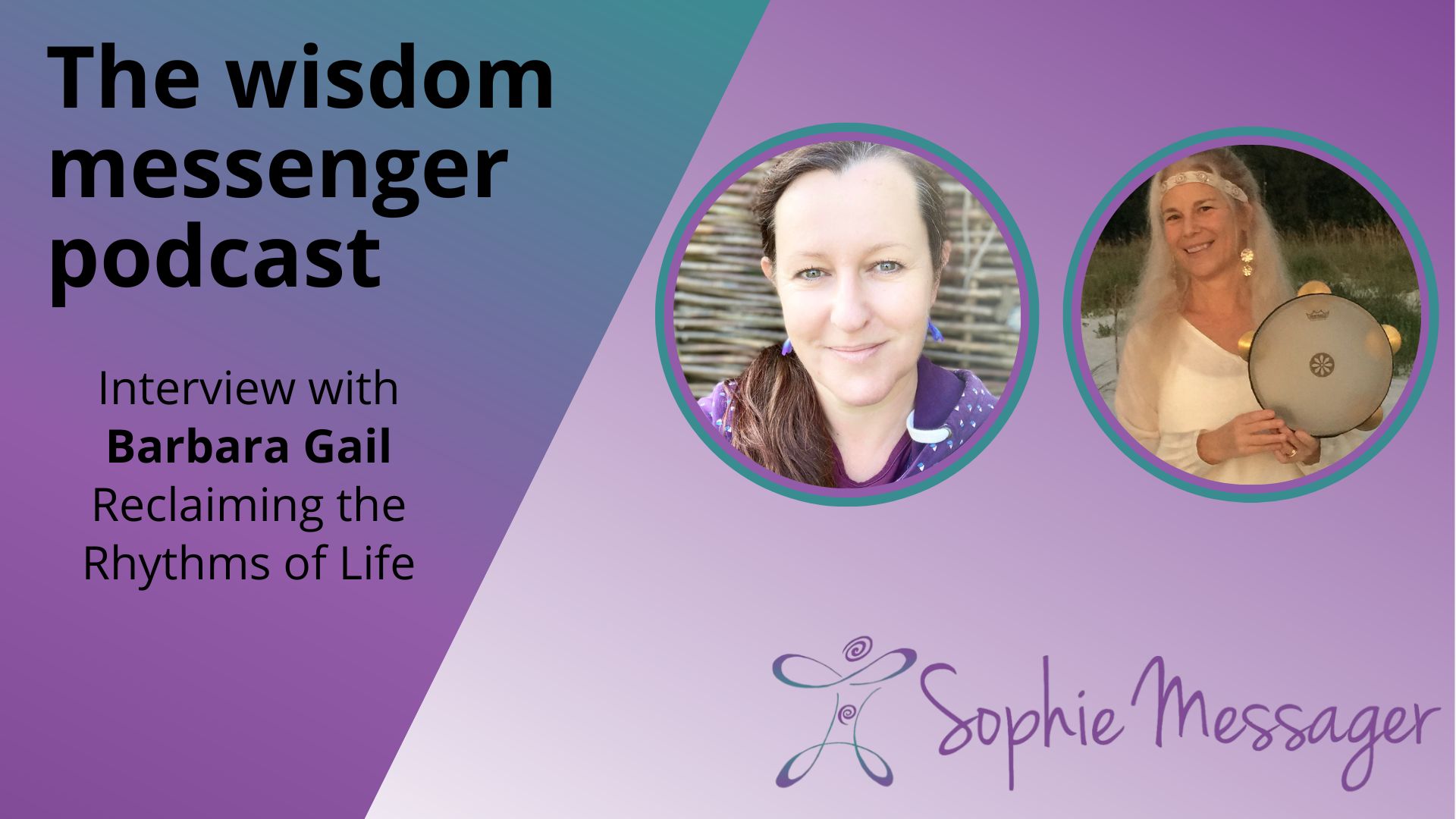
  • The wisdom messenger podcast episode 9: An interview with Barbara Gail: Reclaiming the Rhythms of Life

    The wisdom messenger podcast episode 9: An interview with Barbara Gail: Reclaiming the Rhythms of Life

    In this Episode I interview Barbara Gail. Barbara Gail is a dancer, percussionist, and mentor in rhythm and hand-drum teaching. 

    As a visionary, and inspired by Layne Redmond’s Mob of Angels, she created Moonrise: Daughters of an Ancient Pulse and DrumRise! The Art of Women’s Drumming, where women experienced transformation through sisterhood, by sharing the drum with one another and in the greater community.  Women, Rhythm & Ritual and The Tambourine Path are recent incarnations of her ancient future wisdom teachings.  With her husband and partner in all things, Jeff Hanna, she’s co-owner of The Rhythm Inlet and The Ukulele Place music retail stores and teaching studios (which morphed in 2022). 

    Barbara’s been sharing the joys of rhythm and movement, hand-drumming and dance, in her award-winning programs full-time for 30 years, and has facilitated hundreds of groups and thousands of people, of all ages, abilities and challenges, in over 400 venues and in 13 states. She also teaches online.

    In this episode we have wide-ranging discussion covering various topics related to drumming, music, dance, education, cultural traditions, and empowering women. We explore the therapeutic benefits of participatory rhythm and movement practices across different cultures. We also discussed Sophie’s upcoming book project, share resources and wisdom from influential figures like Lane, and delved into the complexities of respectfully sharing cultural knowledge. Throughout our conversation, we exchange insights from our experiences and highlight the value of collaboration in drumming.

    Highlights include:

    • We discuss shared interests in education, dance, yoga, and various wisdom traditions focused on the transformative power of rhythm and movement practices.
    • We explore the origins and development of 5Rhythms dance, the importance of cultural exchange through playful learning, and the universal appeal of drumming across cultures.
    • We highlight the universality of participatory music and dance for connecting people, fostering community, while emphasising respect for cultural origins
    • We share experiences using drumming therapeutically to promote relaxation, release, self-awareness, facilitate multigenerational gatherings, and encourage cultural sensitivity.
    • We discuss the value of participatory drum circles, the significance of repetition in learning, and creating judgement-free spaces for expressive drumming and dancing.

    Can you listen to the episode on Spotify, Youtube, or Apple Podcast

    You can find Barbara at

  • The Sound of Life: Making a Drum with Amniotic Membranes

    The Sound of Life: Making a Drum with Amniotic Membranes

    I’ve felt drawn to craft a unique instrument from the most primal source, the womb, for years now. It feels like a mystical calling – taking the amniotic caul that cushions a baby’s and giving it new sound and purpose. I’ve longed to feel the energy and listen to the drum beats rhythms these tissues might produce. To honour the mysteries of birth through percussion and song. Now, finally, I’m able to share the wonder of this dream realised. Of a drum birthed from the womb. The experience has resonated within me in ways deeper than expected. Let me tell you how it came to be.

    Last week, I was honoured to be invited into the sacred space of a friend after birth, just hours after she brought her baby into the world. As I held this tender space for the new family, listening to their birth story and first moments together, my heart swelled with the beauty of it all. I remembered at that moment how much I missed this aspect of supporting women through the birth journey.

    The exciting reason for my visit that day was to collect the placenta. For years I had dreamed of crafting a drum made from amniotic membranes, and my friend was generously letting me use her membranes for this magical purpose. I left eager to begin a powerful ritual, transforming this tissue that had nurtured new life into an instrument that would continue honouring the rhythm of life.

    The idea of crafting a drum from amniotic membranes had occurred to me 5 years ago. After reaching out to a few people whom I thought could help, I realised I had ventured into unchartered territory, as no one I asked seemed to know how what to do. The one doula I found who had made such a drum said that they broke after a few days. 

    So I assumed it wasn’t possible and parked the idea for now. However, I set an intention to find a way, and gathered materials in the hope that this would become possible. I attended the birth of a friend in 2020 and we dried her membranes together in the hope of making a drum with it someday. I also saved another set of membranes in 2022, keeping it in my freezer until the time would be right.

      Fate put Melonie Syrett, aka The Drum Woman, in my path. I met Melonie a few years ago, and started attending her drum circles. I also did her sacred women drum circle facilitator training this year. In November 2022, Melonie shared the following on Facebook:

    So, I’d like to share something hugely magical that happened recently. A friend of mine had a baby ‘en caul’ – born in the amniotic sac! What an auspicious occasion indeed.

    I arrived the next day and took the caul that had been stored in water in the fridge. Late that night, three of us sat together as I connected to this caul, like I would with a hide for a drum. I hadn’t ever felt anything like it. The energy in the bowl was fizzy, alive for sure, sparky.

    I tentatively held the sac. It was the hugest of honours. I opened it up and gently laid it over a small drum frame. I thought it would be slimy but it felt different… Wet, strong but super thin, barely there under my fingertips.I softly rolled the caul over the edges, trying to tighten and tension it over the frame, all the while quite fearful of it breaking.

    Once over as much as I could bear to pull it, I used some hide lacing to tie the caul in place and gently propped it up to begin its drying process.

    It was a huge honour to be asked to work with such precious materials. I’ve worked with nothing like it before and am so grateful I was asked to do so.And if you tap it, it has the best sound. It’s deep, like a heartbeat.”

    I spoke with both Melonie and Jessica (who gave birth to baby Evelyn, whose caul membrane was used to make the drum), and started working out how I could make a drum with the extra knowledge. Jessica shared that the membrane had been floating around in her birth pool, only noticed and picked up when they had emptied the pool. From this I concluded that rinsing the membranes may play a role in the lasting power of the drum.

    I also found the work of Colombian medicine woman Laura Torres in the French book “Accoucher dans un Temazacal” (Giving birth in a sweat lodge). I saw on social media that she’d made such a drum. This gave me the idea to look for the Spanish version. Where the English or French searches had returned nothing beyond Melonie’s post,  searching for Tambor de membrana amniotica returned several South American doulas, midwifes and medicine women who had made such a drum, usually using a coconut shell or a small hollowed gourd. Here are examples of such drums

    I even found an Instagram account called Tamborcito.de.placenta that seems to specialise in making such drums. I reached out to a few of these women, and one replied, explaining that she uses saline to rinse the membranes. 

    After I collected my friend’s placenta, I set to work the very same day. It felt important not to set it aside, to work with it as soon as possible, still in the space of the magic I felt after visiting my friend.

    1. I laid the placenta out on a tray, and gently cut out the membranes (both amnion and chorion) with scissors. I immediately noticed how thin and smooth the amnio was, compared to the chorion which was more rough and “meaty”. 
    2. I then placed both membranes in a bowl of water. I had to change the water several times to remove all the blood, and despite this there were still little pockets of blood which I could not remove for fear of tearing the membranes. I suspect baby Evelyn’s drum is so clear and perfect because of the pool en caul birth, and the fact that her membranes never sat in coagulated blood like the ones I used.
    3. Whilst I rinsed the membranes, I held them, expressed my reverence, and asked them if they needed anything further to be honoured. They told me that the drum making was honouring enough.
    4. Whilst the membranes were soaking, I spent some time preparing small hoops (I ordered cheap toy drums online and removed the plastic head from them) and spent some time sanding them down to make sure no splinters would catch and rip the membranes.
    5. Finally I gently laid the membranes over the hoops, gingerly pulling on them gently to tension them over the hoops. I found it a challenging thing to do, as I wanted enough tension so the finished drum would resonate, and yet I also feared ripping the membranes if I pulled too much. The amnion was so thin and smooth, it did not need much to keep it in place, so I just used a piece of string, whereas the chorion, being heavier, needed something stronger to give it taught, so I used a leftover piece of horse hide lacing from my drum.
    6. I then propped them up on a tray and left them to dry for a few days. I was pleasantly surprised by how deep their sound was when I tapped them with my fingers (see videos below).

    In this video you can see the different steps I used to make the drums and also hear what the drums sound like.

    After a few days of drying, I tentatively and very gently tapped the drums with my fingers. I was amazed by how strong and deep the sound was, despite the small size of the drum. I own many drums, and the diameter of the hoop is usually indicative of the depth of the sound (the bigger the hoop the deeper the sound), and none of my drums of similar diameter sound near as deep as these drums. Both drums have a different sound and resonance. Here is the Amnion drum, and here is the Chorion drum.

    It has now been a week since I made the drums. The Amnion drum membrane cracked because I did not manipulate it carefully enough (it is VERY delicate, and I made the mistake to turn it face down on an outdoor wooden table to take a picture of the underside of it, and it cracked). My chorion drum is still intact and playable. Time will tell if it stands the trials of time. I know that Jessica’s drum is still intact, 8 months after her birth. She has shared with me that she keeps it wrapped in tissue a tin and manipulates it extremely gently when she wants to look at it. 

    It has felt like a powerful , magical and huge honour to be trusted to craft such a drum with such a special membrane.

    Do you feel the call to craft such drums or offer them to mothers? How would you use such a special drum, and what would this drummaking process mean for you symbolically?

  • Drumming for Birth: The Wisdom and Science of How Drum Beats Support the Brain and Body to Empower the Birth Journey

    Drumming for Birth: The Wisdom and Science of How Drum Beats Support the Brain and Body to Empower the Birth Journey

    Pregnancy, birth and the postpartum constitute a profound rite of passage. Expectant families are often guided to seek holistic approaches to enhance their birth experience. One such approach, which is gaining recognition, is the ancient practice of drumming. Rhythm is innate, and every culture around the world has (or has had) drumming traditions. 

    Beyond its musical and cultural significance, drumming offers a unique potential to support and empower and heal during pregnancy, birth, and the postpartum period. In this post, I explain some of the ways in which drumming can positively influence the birth process.

    Creating Sacred Space

    Drumming can be part of bringing more sacredness to the pregnancy and birth journey. Pregnancy and birth are sacred processes which deserve reverence and a sense of ritual. In today’s modern healthcare system, where many births take place in hospital settings, it is essential to find ways to re-infuse the birthing process with a sense of sacredness. Drumming is a powerful way to create a sacred atmosphere, adding a ritualistic element that can positively impact the birth experience.

    “At home I felt in my own space, but in the hospital I felt at the mercy of the system, with a lot of vulnerability. The drumming stirred up my sense of empowerment and of standing up for myself” Leigh

    Tuning in

    Drumming taps into the innate rhythms within us, synchronising the body, mind, and spirit. When expectant parents listen or engage in drumming, it helps them connect with their own internal rhythm and intuitive knowledge, promoting a sense of calm, focus, and empowerment. By embracing these qualities, individuals can navigate the various stages of the pregnancy and birth journey with greater ease and confidence. During labour, drumming can also support the mother into entering an altered state of consciousness that facilitates the birth process.

    In the book “When the drummers were women” Layne Redmond explains:

    “Priestesses of the Goddess were skilled technicians in its (the frame drum) uses. They knew which rhythms quickened the life in freshly planted seeds; which facilitated childbirth; and which induced the ecstatic trance of spiritual transcendence. Guided by drumbeats, these sacred drummers could alter their consciousness at will, travelling through the three worlds of the Goddess: the heavens, the earth and the underworld”

    “I had some gentle drumming at beginning of pregnancy. I found it very calming and healing. The effect lasted a couple of weeks.” Leigh

    The main thing I remember was my consciousness ascending with the drumbeat and connecting with my baby’s consciousness and bringing him into this reality before I did it physically.” Ailsa

    Relaxation and Alleviating Anxiety

    The repetitive beats of a drum have a soothing effect on the nervous system, inducing a trance-like state of deep relaxation. Drumming can help reduce stress, and ease the anxiety commonly experienced during pregnancy and birth. This relaxation response not only promotes a more peaceful birth environment but also allows the mother to surrender to the flow of the process. Heartbeat-like drumming reminds us of our time in the womb, and promotes a sense of safety.

    “I wanted a doula who could drum to help me remain calm (I had massive anxiety going into my second birth, for lots of reasons). “ Ailsa

    Increasing Endorphin Release

    Drumming stimulates the release of endorphins, which are natural pain-relieving and mood-enhancing hormones. During labour, the intensity of contractions can be accompanied by discomfort and pain. Drumming can help activate the body’s own pain management system, creating a more positive birth experience.

    During my birth, the drumming felt a bit like when you are jogging and you have power music on, it gave me a power boost. It felt like it was saying “open up, relax, trust your body, have faith in the journey”. It made me feel more confident in my abilities.”  Leigh

    Facilitating a Sense of Community and Support

    Drumming can be a communal activity, bringing together partners, doulas, midwives, and other birth supporters. Creating a drumming circle during pregnancy or birth fosters a sense of community and support, allowing individuals to feel held and encouraged throughout the birthing journey. 

    I came to the drum circle on my due date, to ground myself, to feel the vibrations from the drums, and because I felt that it would call my baby into going into our world, to feel welcomed. Kamila

    Connecting with Spirituality

    Throughout history, drumming has been used as a spiritual practice, connecting individuals to their ancestral roots and the wisdom of past generations. By incorporating drumming into the birth process, expectant parents can tap into this ancient wisdom, accessing a deep sense of spirituality and connection. Drumming can serve as a bridge between the physical and the spiritual realms and can also help parents connect more easily with their unborn baby. Drumming helps create a sense of sacredness and people help turn inwards. 

    I wanted a doula who could drum for me during birth for many reasons, to mark a huge initiation, welcome my baby into the world to the sound of the universe’s heartbeat, to have something of me present in a medical situation, a reminder of the vast context of the process I was going through” Ailsa

    Nurturing the postpartum transition:

    Drumming continues to be a valuable practice beyond the birth itself, offering support and nurturing during the postpartum period. The beats of the drum can provide a soothing and grounding presence, helping new parents navigate the emotional and physical changes that accompany the postpartum transition. Drumming can serve as a form of self-care, allowing individuals to release tension, process emotions, and find inner peace during this transformative phase.

    A week after giving birth, during the closing the bones ceremony, the drumming helped me release something and really opened up the gates to my connection as a mother. The realisation that I’d arrived as a mother really landed. It was beautiful, I cried tears of joy.” Leigh

    Conclusion

    Drumming offers a unique and multifaceted approach to supporting the birthing process. By listening or practising drumming, expectant parents can tap into their inner strength, find deep relaxation, alleviate anxiety, enhance endorphin release, foster a sense of community, and connect with their baby and spiritual dimensions. 

    Incorporating drumming into the birth journey holds potential for supporting transformative and empowering experiences. 

    If you have drummed during the pregnancy, birth or postpartum journey, or have had drumming during these times, please comment below, I’d love to hear your stories.

    Note:

    I am in the process of collating a lot of drumming research, experience and stories related to the birthing process and women life transitions. If you have stories to share, I’d love to hear them, as I am writing a book about women and drumming.

    Read more: I have published an article about drumming for pregnancy and birth for the International Journal of Birth and Parent Education, which you can download for free here. I wrote another article about it in the Green Parent Magazine, which can be downloaded for free here. I offer an online course called drumming for birth. I gave a talk about the science of shamanic drumming at the convention of women’s drummers in Colchester in November 2023 and will do the same again in 2024. I run monthly drum circles near Cambridge which everyone is welcome to attend. No experience necessary.

  • The lost art of postnatal wrapping

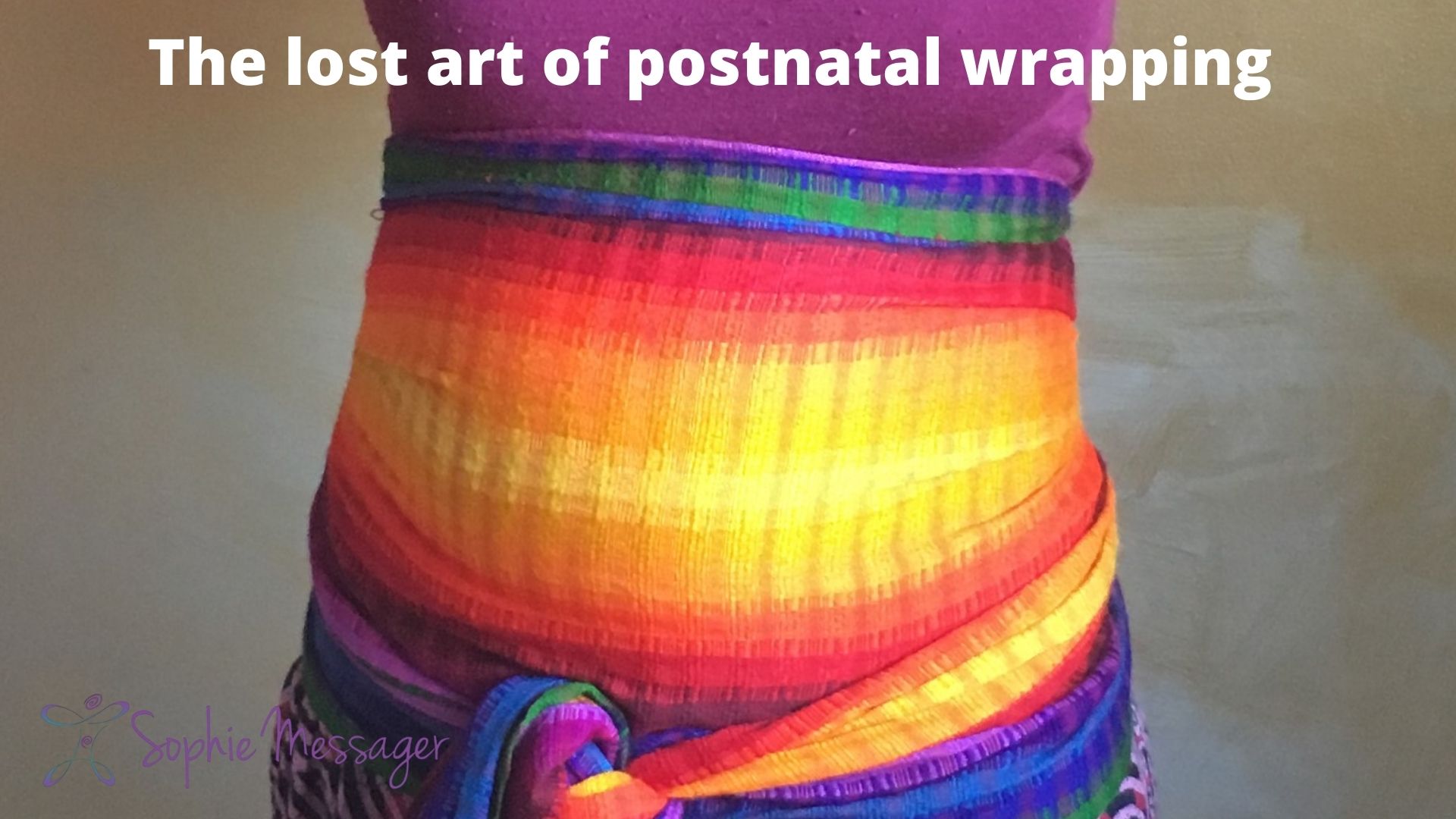
    The lost art of postnatal wrapping

    All around the world, there is a custom of binding the hips and/or the belly for the first few weeks after birth.

    It makes sense when you think about the changes the body undergoes. During pregnancy, the body adapts to accommodate the growing baby: the pelvis tilts and widens, the spine curvature increases, the abdomen stretches to accommodate the growing uterus, which in turn also pushes all the internal abdominal organs up. During the birth the pelvis opens. Then after the birth all of this has to happen in reverse. In particular, as the uterus shrinks back to its pre-pregnancy size, and the abdominal organs descend back into place.

    New mothers are  also open physically, emotionally and spiritually, and therefore the wrapping is part of the nurturing support to bring them back to their centre. On a simple physical level wrapping provides support to unstable joints and muscles. It also provides comfort and warmth. On an emotional level it brings us back to our bodies and provides a sense of being contained. On a spiritual level it feels containing and helps us come back to ourselves.

    An example which illustrates this beautifully is the story of Rowena Hazell who gave birth to triplets vaginally. She found that she couldn’t breathe properly after the birth: ” As I tried to get back out of the pool, I had a weird sensation of not being able to breathe, as if all my body was suddenly too heavy. That was odd. On the postnatal ward I couldn’t sit up or stand for more than five minutes without finding breathing difficult. I was having to be wheeled across to NICU in a wheelchair because I couldn’t walk far. The midwives didn’t know why, didn’t take it seriously, and looked at me quite oddly when I said I needed to use a wheelchair. One of the other mums I met had brought a corset in, because she said that she had had severe diastasis recti before. This is when the stomach muscles have separated so much that for a while after birth they simply don’t hold your organs properly in the right place. The mum described it to me as your diaphragm not holding everything in, so it falls out of the bottom of your tummy. This was exactly what it felt like was happening to me! The midwives on the ward didn’t seem to have heard of this, but they did send a physio to see me. The physio made a corset out of a double layer of their largest Tubigrip, and immediately I could breathe, sit up, and walk again with ease”. (you can read her birth story here)

    Postnatal binding used to be part of Western culture too. Whilst doing the research for my book, Why postnatal recovery matters, I found a UK midwifery book from the beginning of the 20th century (An introduction to midwifery”, Donald, 1915) which says: “The binder should consist of a piece of stout calico, or other strong material, about 18 inches wide and 4 feet long. When applied, the lower border should reach a hand’s breadth below the widest part of the hips and should be drawn tightly and fastened securely with a safety pin or long straight pin, so that it may not work up above the hips. The middle part of the binder must be made sufficiently tight to give a sense of support, but the upper border should be rather lose as to not interfere with the patient’s respiration. The binder is used merely to give external support to the loose abdominal wall.”

    In the western world we abandoned the practice of binding, it fell out of fashion somehow. Sadly this means that it is now seen as an old wife’s tale. Midwife Siobhan Taylor tells me that when she gave birth in the 1980s, her grandmother told her to wrap her belly, but that everyone else dismissed it as old fashioned and unnecessary. I fell prey to this belief myself, before I discovered the stories and research that showed me how compelling this practice is.

    In the book Le mois d’or, medical doctor and yoga teacher Bernadette de Gasquet explains the importance of closing the pelvis, and quotes the dissertation of a French midwife who chose to study the subject. I obtained a copy the dissertation, and as far as I’m aware this is the only scientific study of postpartum binding that exists. The author, Juliette Danis, used a simple binding around the pelvis, applied the day after the birth for an hour. She used a set of written and visual questionnaires to evaluate its effect on pain in the pelvic area on a group of 160 women (80 receiving the wrapping and 80 controls). 64% of women described an improvement in their pelvic and perineal pain after the treatment. 79 out of 80 of the women who received the binding said they would recommend it. The author concludes that the care given to the women after the birth using massages or wrapping has a positive effect both physically and psychically, and that it symbolically helps to redraw the contours of the body. She concludes her dissertation saying that midwives should suggest the wearing of pelvic belts for 21 days after birth as recommended by traditional societies.

    I have also found evidence of the usage of pelvic belt in ancient Greece, via French ancient Greece historian Odile Tresch.

    I see postpartum wrapping as a source of comfort, support and warmth. Done in accordance with the mother’s comfort and preferences, it can feel very good indeed.

    This matches my experience of giving closing the bones massages to new mothers: the binding provides much needed nurturing and relaxation. The purpose of the binding is one of wellbeing and nurturing rather than to help new mothers look slimmer. The focus is on healing and comfort. It is part of a process which put the new mother at the centre of receiving loving support, and of postpartum attention to be focused on the new mother and her well-being, rather than on the baby. I talk about it at length in my book Why Postnatal Recovery Matters. Postpartum wrapping is a source of comfort, support and warmth. Done right, in accordance with the mother’s preferences, it can feel very good indeed.

    How do you wrap?

    I want to demystify the process and show you that it is simple and something that doesn’t require expert knowledge, and that you can do yourself. I also want to show you why it isn’t a one size fits all process, and that there isn’t a kind of binding that is better than the others. For example, one kind of binding that seems to be especially popular is an Indonesian type of binding called Bengkung belly binding. Bengkung is sometimes perceived as ‘the’ binding to aspire for. However, as I have done in my book, I want to encourage people to move away from the idea that one type of binding is ‘right’, or better than the others. Choosing a method of binding is like choosing a pair of jeans: you cannot be prescriptive about what fits one person, and you may have to try before you buy. It needs to fit with your lifestyle, and it needs to feel good and comfortable for you as a unique person with a unique body and needs.

    I used to believe that soft fabric was best, until I realised that it didn’t suit everybody. I supported a new mother of twins who was already used to carrying her first child in a woven wrap, therefore already experienced in manipulating fabric. She asked me to show her how to wrap her belly post birth using a rebozo. However, regardless how much we tried, she just couldn’t get it tight enough by herself. She loved one of my velcro wraps, however, so she ordered one.

    We need to remember that many traditional binding methods are usually done by someone else for you. Since few of us have the luxury to have someone come wrap us every day at home after birth, it makes sense that we learn techniques we can use on our own.

    What can you use?

    There is a plethora of tools to use-from simple pieces of cloth, scarves, rebozos, pashmina, babywearing wraps (both stretchy and woven ones) and more. There are also many different velcro belts and girdles, and other simple tools to use, like supportive underwear and clothing.

    I am going to list a collection of types of wrapping that I have tried. You cannot go wrong if you start with what appeals to you more and try that first. You can wrap your abdomen or hips by using a scarf (such as a rebozo, a pashmina, of any scarf you happen to have that does the job). You wrap the fabric around you and either twisting and tucking the fabric, or twisting and knotting it, depending on how much tension you prefer, how long your scarf is, and what feels good. I show one way of doing it in the video below.

    Play

    With a long enough cloth, you can wrap your belly, twist at the back, then wrap your hips and tie a knot at the front, wrapping your hips as well as your belly. If you’d like to wrap with a Mexican rebozo, I have some in my online  shop. You can also use a babywearing wrap to wrap your belly and hips after the birth.

    I have had Womb belts specially woven for me by a rebozo supplier, based on the design of the traditional Colombian Chumbe belt that my friend Laura Leongomez introduced me to. It feels incredibly supportive and my postpartum clients love it too. You can see me demoing it in the video below. and Laura and I did a long video about pelvis wrapping where we talk about this belt. which you can watch here.

    Play

    With a very long, narrow cloth (about 15cm wide and 7 m long), you can do the Bengkung style binding, which goes from the hips to the ribs. Here is a video tutorial for it. If you like the idea of the Indonesian belly binding but not the process of wrapping a long cloth around you, there are Dutch postpartum girdles, called sluitlakens, some of which look uncannily like the Indonesian binding. Australian brand Unina has created a Velcro wrap (pictured on the left) which reproduces the effect of the Benkung binding, and which is very easy to use and adjust, and is very pretty.

    If you prefer something a bit more structured, there are many velcro belts and girdles. From what I have experienced, you really get what you pay for: cheap ones are often made of scratchy and/or uncomfortable material. Also a good postpartum belt won’t be too tight at the top, supporting the lower abdomen and pelvis without adding pressure to the pelvic floor. The easiest and comfiest belts also have a double velcro system that allows you to tighten the belt/girdle effortlessly (an important point when one has weak core muscles).

    There are two brands I really like and recommend for pelvic and or pelvic/abdominal support: For pelvic support only : The sacroiliac pelvic belt from Belly Bands, or the Serola sacroiliac belt. For both pelvic and abdominal support : the pregnancy and caesarean 3 in 1 belly band from Belly Band, which can be used for pregnancy support, postpartum support, and post caesarean too. This is a truly amazing product which has been designed especially with mothers in mind. It is extremely comfy and easy to use, and its standard size fits from a size 6 to 16 (they have smaller and bigger sizes too).

    You can see me demonstrate this velcro belt as well as rebozo wrapping in the video below

    Play

    Talking about caesarean, I was surprised about the post caesarean binding myself, as I didn’t know it was a thing. When my friend Kate had her baby by caesarean in Bangkok, they bound her abdomen the next day. She says she healed much better than when she had her next child in Norway, were there was no binding. I found a published paper which shows that binding post caesarean reduces pain. The Belly Band caesarean wrap has a video explaining how you can use it in a hospital setting.

    There are a couple of gentle support options available to you if you’d rather not use a scarf or a wrap: You could use a belly band like a Haramaki. A Haramaki is a Japanese belly warmer. It’s like a boob tube for your waist. Or you could buy a belly band such as the ones that some people use during pregnancy. H&M sells a pack of three.

    You could try high waisted postpartum support underwear, and there are also some brands that offer postpartum support shorts or leggings. Just make sure you don’t use something too tight to avoid putting pressure on your pelvic floor. If you used maternity leggings, they might still work to provide some gentle support after the birth too. H&M has a pair which costs under £10.

    How to choose the right way to wrap/bind for you?

    If you can, try before you buy. With online items, you can try and return items if needed. Only you can tell whether it is comfortable and right for you, so it’s worth trying a couple of options to see which you find easiest to use and most comfy. Some women prefer using a soft piece of cloth, and some women get on better with a velcro belt.

    How long to wear it for?

    Use it like a treatment ie not 24/7, see how it makes you feel, and probably not any longer than for the first 4 to 6 weeks postpartum.

    PS: I have been working with wraps, rebozos, shawls and scarves for several years now and I see them as something that has a lot of use beyond the childbearing years. When it comes to wrapping for example, I now see my period as a mini postpartum time with similar needs, and I find that wrapping my hips or my abdomen or both during this time is extremely comforting. Try it and tell me what you think.

    If you feel drawn to learning more, my book Why postnatal recovery matters has a chapter on postpartum bodywork. I have an online course dedicated to The Art and Science of Postpartum wrapping. I also offer a rebozo online course , a closing the bones rebozo massage online course.

     

  • Why waiting 6 weeks after birth to have a massage makes no sense

    Why waiting 6 weeks after birth to have a massage makes no sense

    There is a belief in Western culture that a new mother needs to wait until 6 weeks post birth before she has a massage. We believe that we have to wait until we’ve had our 6 weeks check before we receive any treatment, and most people seem to believe this is true. In fact, there is a belief that it is harmful to have any form of treatment until we have been given the green light by a medical professional.

    What puzzles me about this, however, is that, in the UK at least, the 6 weeks ‘check’ with the doctor does not include any kind of physical examination as standard. It’s just a 10 min discussion appointment.

    How did we come to believe that we need to wait, and how did it come to be that we also believe that we are given a clean bill of health once that check which isn’t one, has taken place?

    As someone who has been immersed in postpartum bodywork for nearly 10 years, and because of the research I did for my book, Why postnatal recovery matters, it is clear to me that it makes no sense to wait, but it is potentially harmful, because it means that new mothers miss out on much needed nurturing and healing when they need it the most, during the immediate postpartum period.

    I wanted to know where the idea came from, so I asked massage therapists. From discussions with them it became clear that this is just a belief, and that the restrictions may have come from insurance companies, rather than from medical evidence.

    It’s old and outdated advice although I do think it’s helpful for therapists to have knowledge of how to work postnatally if they are going to work soon after birthing. For example, a level new three therapist with no previous experience would likely feel quite out of their depth. Training schools used to teach (and some probably still do) that the first six weeks were contraindicated and we were to wait for the g.p check before going ahead. It’s due to the ‘complimentary’ nature of the service as opposed to being an ‘alternative’ from allopathic medicine. Emma Kenny, massage therapist

    It is actually really helpful to massage in the first 6 weeks postnatally as long as you know what you are doing. There are many modifications and it is a potentially dangerous time so you need to know the contraindications too. It is also partly because the mum is still under medical care. Main issues are high risk of infection and of course knowing how to modify after different kinds of birth.  Suzanne Yates

    “The Royal Free London used to offer seated massage within hours of giving birth, in your postnatal ward bay. It was an amazing service and one that I took full advantage of after the birth of son (5yo). Sadly I think this is no longer offered.” Anna

    Beyond the massage therapy aspect itself, I also believe that this fear of having anything done prior to medical approval comes from the fact that we have handed over our wisdom to the medical worlds “experts” and that we lack so much trust in our own bodies, that we need for approval of a medical professional to tell us that something is safe.

    Why bodywork is important for new mothers

    Given the tremendous changes a mother’s body goes through, it is perhaps not surprising that cultures the world around have in common some kind of bodywork to rebalance and restore the new mother. I’m not talking about just any random massage, but a specific kind of bodywork designed to help speed up the healing process and changes that the new mother’s body undergoes after her baby has been born.

    When a woman grows and births a baby, her whole body undergoes remarkable transformations. Her uterus grows from the size of a pear to that of a watermelon. Her pelvis tilts forwards, the curves of her spine increase, the muscles and ligaments around her belly stretch and grow. The organs inside her abdominal cavity get pushed up to accommodate her growing baby. During the birth, her uterus, pelvis, pelvic floor and vagina open and stretch to let the baby out. Then, after the baby is born, her body has to undergo all those changes in reverse. These changes also include tremendous hormonal changes, and the beginning of lactation.

    With this in mind, it feels extremely illogical to me that we no longer have any process in place to ensure that all the bones, soft tissues and organs have gone back in an optimal position. All new mothers would benefit from some kind of ‘MOT’ post birth from a postpartum manual therapist, because it is easier to prevent or treat problems as they arise, rather than letting them set into a pattern that becomes a lot more difficult to resolve. Traditional postpartum wisdom across the world includes massage, binding and manipulations designed to help speed up this healing process and avoid future problems. Besides the therapeutic effect of specific bodywork, any type of massage is good because loving touch raises feel good hormones like oxytocin.

    The lack of bodywork support and the view of the postpartum body in the West.

    There is a lack of postpartum bodywork support, and a lack of understanding of what is normal post birth, and of what constitutes acceptable postpartum ailments. Issues like incontinence, diastasis recti, or uterine or bladder prolapse, receive no pre-emptive screening, and very little skilled support. They are often seen as a normal part of new  motherhood. This contributes to the lack of support for new mothers. In the UK, new mothers are generally given a leaflet about pelvic floor exercises, which can help some women, however, without knowing if you are doing it right, and connecting it with the breath and the rest of the core abdominal muscles, it doesn’t make much of a difference for many. Without support in place, it can also be difficult for new mothers to find the time do to these exercises. And, as I mentioned at the beginning of this post, the check-up that UK women undergo with their doctors at 6 weeks post birth is a 10 min appointment that includes questions but no whole body physical examination.

    When to have postpartum bodywork?

    French medical doctor and yoga teacher Dr Bernadette de Gasquet, who specialises in birth preparation and postnatal rehabilitation, explains in her book Mon corps après bébé that the first 6 weeks after birth is a transitional period, when everything is soft and pliable, and that there is the most opportunity to heal from the birth. She recommends a programme of simple exercises to help make use of this unique time. In another book called Le mois d’or she also explains the importance of closing the pelvis, and quotes the dissertation of a French midwife who chose to study the subject. I read the dissertation in question, which is, as far as I’m aware, the only scientific study of postpartum binding that exists. The author, Juliette Danis, used a simple binding around the pelvis, applied the day after the birth (in hospital) for an hour. In a group of 160 women, 64% of women described an improvement in their pelvic and perineal pain, and 79 out of 80 of the women who received the binding said they would recommend it. Danis concludes that the care given to the women after the birth using massages or wrapping has a positive effect both physically and psychically, and that it symbolically helps to redraw the contours of the body.

    In every continent, postpartum specific bodywork is (or was) part of the normal care for the new mother. This kind of bodywork often includes massage and binding with a cloth. Each culture has a slightly different approach, but the goal is to restore and “close” the mother after the birth, and help speed up the natural healing process. These massages usually encompass the understanding that there is a physical process that needs to be completed (helping return the body to its non-pregnant state), and an emotional/spiritual aspect too (honouring the birth process and the emotions associated with it, as well as the tremendous changes of identity that the new mother undergoes).

    Nearly ten years ago, I learnt a postnatal massage from South America called Closing the bones. The massage includes rocking the pelvis with a rebozo (a traditional Mexican shawl), a series of massage of the abdomen, hips and chest/arms, and finally using the rebozo again to wrap the pelvis, and the rest of the body, tightly. I have been giving this postnatal ritual to hundreds of women, as well as training several hundred people in offering it. More than a massage it is also a ritual that celebrates and honours the new mother, and can be very healing both physically and emotionally (regardless whether the birth was a positive experience or not).

    Postpartum massage rituals, such as closing the bones, are usually done during the first 4 to 6 weeks postpartum. These massages help the body heal faster after birth. They are similar around the world, because the needs of new mothers are the same regardless of their culture, something that Rachelle Seliga explains beautifully in this article.

    Having massaged many new mothers, some as soon as 24h after the birth, I can personally attest that it makes complete sense not to wait to provide some bodywork. Treating the widened pelvis, the flared ribs, the shrinking uterus, the bowels moving back into their original place, the changes in the breasts as the milk comes in, all the amazing transformative processes that the new mother undergoes within the days and weeks after the birth, as they actually occur, facilitates and speed up  healing and recovery.

    Obviously, this needs to be adapted depending on the birth (vaginal or cesarean in particular), and the physical condition of the mother. However, it is also a myth that nothing can be done post caesarean, because binding has been shown to have advantages post abdominal surgery. Cambridge osteopath Teddy Brookes, with whom I developed a massage called the postnatal recovery massage, told me how he massaged a new mother 2 weeks post caesarean to help the passing of retained placenta and membranes. This was for someone who had been told she needed to undergo surgery under general anaesthetic to remove the retained products. She passed the membranes the next day, therefore avoiding the surgery. I had myself had similar experiences with several of my clients.

    Of course each individual mother is unique and the best time for them to have a treatment in when they are ready. I believe, however, that a blanket restriction on the timing of postnatal massage treatments doesn’t serve new mothers. Each individual case needs to be looked, assessing the level of risks and benefits of treatment to each individual mothers, and adapting the treatment as required. When considering having or giving such a treatment, ask yourself: what are the risks of doing it, versus the risks of not doing it, and use this as the basis of a discussion with the person involved.


  • How to write a postnatal plan

    How to write a postnatal plan

    You may have heard of a birth plan, but have you heard about a postnatal plan?

    In our culture we are often focused on the birth, and most of all, on the baby. It is clear from the focus antenatal classes have, there is preparation for the birth, and also preparation for the postpartum, but the postpartum aspect is usually mostly focusing on babycare rather than on the mother’s needs (and I should know about it because I taught antenatal classes for several years). It is also clear from the presents expectant and new parents receive, which are also usually all for the baby.

    It didn’t used to be this way. In every culture around the world, there used to be (and still is in many cultures even today), a period of at least a month post birth during which the new mother didn’t lift a finger. The community (usually female relatives), rallied round and took care of her household, so all she had to do was rest, eat nutritious food people prepared for her, receive healing bodywork treatments, and get to know her new baby. Compare this to what we get in the Western world: two weeks paternity leave, and then you’ve on your own.

    Because we no longer live in a culture that understands and supports the need for recovery post birth, writing a postnatal plan is a fantastic way to ensure that there is support in place for after the birth, and that you aren’t alone trying to meet your own needs and the intense needs of a newborn baby (as well as running a house, and maybe looking after older children too).

    I love this quote by Jojo Hogan, a postnatal doula who created the Slow postpartum movement.

    If birth is like a wedding day (lots of planning, high expectations, being the centre of attention, lasts for about a day or so, get something special at the end), then the postpartum should be like a honeymoon (Equal amounts of planning and investment. Time, space and privacy to relax, bond and fall in love. Lots of people and services around to care for and look after you and a peaceful and blissful environment where all your needs are met for a few days or weeks).

    As you would plan for your honeymoon, it is well worth putting plans in place for your baby moon, i.e. creating your own postnatal plan. Just like planning for birth, this isn’t about having a rigid plan. The magic isn’t in the finalised plan, or to have a ‘perfect’ plan, it is in the process of exploring options (some of which you may not even know exist) and getting informed so that you can have an experience which is as positive as possible, regardless of what happens.

    I use this analogy: you need to find what’s in a buffet, before you decide what you’d like to eat (I explain this process in my blog called The buffet curator).

    You don’t know how you’ll feel in advance. You don’t know what curveballs life might throw you (for example: your birth might happen sooner or later than you expected, it might unfold differently from what you had hoped, you might need to stay for a while in the hospital, your baby might need to stay for a while in the hospital etc).

    So just like for birth, it’s worth having thought about all the options, so that, regardless of how your birth unfolds, and how your baby comes into the world, and how you end up feeling once you’re home with your baby, you have at least some form of support in place.

    You may encounter people who dismiss your idea. “You can’t plan birth ” is a common phrase used to dismiss birth plans. Because a postnatal plan is an even newer concept than a birth plan, you may encounter some dismissiveness or negativity. People might say “what’s this newfangled thing, we didn’t need that in our time” or “you don’t need that” from people who don’t understand the point, because they did not do it themselves. Some of my clients who have written postnatal plan have encountered reactions from relatives who even said “I didn’t have support, I just got on with it”, implying that they suffered, and you should too. Therefore you might need to choose carefully who will be part of your postnatal support team, who to discuss it with, depending whether they are likely to be supportive or dismissive. In the vulnerable tender state of new motherhood, the last thing you need is being criticised for your choices. After all, you just single handed grew and birthed a whole new human, and you should be revered as the goddess that you are.

    How to you write a postnatal recovery plan? It’s simple really, because a nurturing postpartum boils down to 4 pillars: Social support, Rest, Food and bodywork.

    Here is a list of these topics with prompts, which you can use as basic to start write your postnatal plan.

    Rest

    • Help with household (chores, cooking, cleaning, other children etc make a list of potential helpers)
    • Visitors-list them/how to manage them so they do not interfere with rest/write a “new mother and baby sleeping” note for the door.
    • Naps/sleep when the baby sleeps/early nights/sleep with your baby
    • Relaxation: techniques and apps

    Food

    • Batch cook and freeze
    • Who can make/bring you some/meal trains
    • Deliveries (supermarkets, take away meals, frozen, fresh, meal boxes)
    • Nutritious non perishable snacks
    • Use a sling so you have your hands available to make yourself something to eat.

    Bodywork

    • Postnatal massages/closing the bones massage
    • Specialist manual therapists such as osteopaths, chiropractors, and physiotherapists
    • Wrapping your pelvis/abdomen
    • Keeping warm

    Social support

    • Friends, family, neighbours
    • Hired help (doulas, nannies, cleaners…)
    • Online support (social media, WhatsApp groups…)

    Planning for the unplanned:

    You might want to include a part on navigating possible curveballs. For instance if you end up giving birth by caesarean when this wasn’t part of your plan and what your recovery might look like if that’s the case.  If you end up having a longer than expected hospital stay after the birth, or if your baby needs to stay in hospital for a while.

    There are many ways to create a postnatal plan. You could write one, and you could also make a mindmap or a vision board, of draw something or whatever other modality appeals to you.

    You can download a free postnatal recovery plan template as a PDF on my website front page.

    If you’d like to learn more about this topic, feel free to browse my blog for more posts on this topic. My book, Why postnatal recovery matters has a whole chapter on writing a postnatal recovery plan, and my online course How to prepare for a nurturing postpartum, has a whole module on it.

    This coming Tuesday 28th of June I am also running a free Webinar called How to prepare for a nurturing postpartum.

  • Three rebozo techniques for pregnancy and birth

    Three rebozo techniques for pregnancy and birth

    I’ve had so many positive experiences using rebozo techniques as a doula to support pregnancy, birth, the postpartum and beyond, I’m on a mission to pass on this skill to ask many people as possible.

    Every technique is extremely simple to do, anybody can do it. Yet this humble tool provides an unparalleled a level of comfort and relaxation.

    There are hundred of different things you can do with a rebozo (and it works with other shawls and scarves too). The techniques usually fall within a rocking or a wrapping technique.

    Here I share 3 simple techniques you can use during pregnancy, birth, and the postpartum period

    Pregnancy technique: Hip wrapping

    During pregnancy the rebozo can be wrapped tightly around the hips to provide support to the pelvic girdle. The rebozo can be twisted and tucked at the front or at the back of the pelvis. Whether you are tying at the front or the back will have slightly different effects on the sacro-iliac joints. Try both version and be guided by the feedback fon what feels best.
    Remember whilst this will provide support and comfort, this technique won’t ‘fix’ the underlying cause of the pain/discomfort and therefore won’t replace being treated by a skilled bodyworker (like an osteopath). In situations where pain is present, such as pelvic girdle pain (the Pelvic Partnership is an awesome resource), however it can provide support and comfort whilst awaiting treatment. It should be used mindfully, as a treatment, and not 24/7. You can also use the rebozo to hold an ice pack or a hot pack in place.

    Play

    Teddy the osteopath‘s view of the technique

    Wrapping the hips-supports and stretches the pelvic ligaments (the broad and the round ligament) and helps support weight from the bump on the abdominal muscles and fascia. Many women experience lower pelvic tension and discomfort and band like pain around the front of the pelvis during pregnancy. This technique may also help the ache or soreness in the genitals that can happen during to pregnancy. Wrapping from the back instead of the front provides a similar effect but might be better later on in pregnancy as it provides a broader contact, less pressure at the front and more opening at the back. Both techniques have an impact on the sacro-iliac joints by opening them in slightly different ways. The front tying opens the joints more posteriorally versus anteriorally for the back tying technique.

    Rocking technique (for pregnancy and labour)

    Jiggling the hips or abdomen (or any other part of the body) can relax tight ligaments and may help a baby rotate in pregnancy or labour more easily, as well as provide relaxation and comfort. Being rocked elicits a very primal feeling  (reminding us of being in the womb) and it is very calming and soothing for anyone. It can help a pregnant or a birthing woman relax when she is tense or anxious. Generally, these techniques relax the body so that the baby is more likely to take a better position.

    Here I show you how to rock the pelvis whilst standing up. This can also be done with the woman resting her back against a wall for support.

    Play

    Teddy the osteopath‘s view of the technique

    This provides movement between the lower thoracic spine and the lumbar spine, and helps with the compression forces caused by postural changes during pregnancy. It provides a passive articulation, completely removes the pressure, especially in the thoraco-lumbar joint. This can have a positive impact on breathing too as it also releases the diaphragm. Using a faster movement makes it more of a fluid technique/viscera (which can direct movement into the uterus and its ligaments) towards the front rather than the back. On the bump, faster movement again move the uterus rather than slower articulations.

    Fluid health is about transition of fluids. Movement in the body causes pressure changes resulting in fluid pumping in and out of tissues and right down to the cellular level, increased fluid movement leads to more healthy body tissues. Fascial tightness or looseness (connective tissue) can govern the ability of fluid to move in and out.

    Bump rocking on hand and knees

    The woman is on her hands and knees, kneeling over a sofa or birth ball or chair, and the rebozo is wrapped around the bump and lifted gently prior to sifting. When lifting, ask for feedback from the woman so you can lift enough to take all of the weight of her bump from her spine. As well as providing relaxation and comfort, this technique can  help restore balance to the uterus and with the positioning of the baby during pregnancy or labour.

    Play

    Teddy the osteopath‘s view of the technique

    This loosens all the fascial tension from the front to the back: abdominal fascia and muscles, viscera (organ) ligaments, lumbar muscles and fascia. The vibration provides more movement into the uterus and uterine ligaments and helps to take the tension off it.

    All the techniques in this article are a taster version of my Rebozo for an easier birth course. The course contains over 25 techniques for pregnancy, birth and the postpartum.

    I have also made this set of techniques available to download as a handy PDF, you can get it by scrolling to the bottom of the Rebozo for an easier birth course page.

    Watch the video below, where I show examples of more techniques included in the course.

    Play


  • How baby books ‘experts’ harm new parents

    How baby books ‘experts’ harm new parents

    I hate so-called ‘baby experts’ who promise that your baby will be happy and super easy to look after if you follow their rigid ‘schedule’. Gina Ford is the most famous one in the UK, but there are plenty of similar ones all over the world. Many of these so-called ‘experts’ are just self professed experts cashing in on new parents worries.

    The reason I dislike them so much is because I’ve seen so many new parents lose confidence in their parenting skills because they couldn’t get their baby do what the book said. For many new parents, these books are actually harmful.

    Having a baby is like having a new guest in your house. You need to get to know them, their likes and dislikes, so you can make their stay as comfortable as possible.

    Imagine for a second that you had never had an adult guest in your house. Because you didn’t know what to do, you bought a book on the topic. Imagine that the book suggested a really rigid schedule such as the one below :

    • Wake your guest up at 7am exactly every morning  (what if they aren’t a morning person?)
    • Serve them a full English breakfast with bacon, eggs and beans at 7h15 exactly (what if they are vegetarian, or if they need a bit more time after waking up before they feel hungry. Or would prefer a slice of toast. Or prefer to get washed and dressed before breakfast, etc)
    • After breakfast take them immediately to the bathroom for a shower
    • Then play a game of monopoly with them for 23 minutes exactly
    • Take them out for a 20 min walk
    • Give them a snack of a banana and biscuit at 10h30 exactly
    • Take them to a darkened bedroom and insist they lay down for  a nap
    • Wake them up at 12h exactly even if they are deeply asleep

    Do you think your guest would feel good? Do you think you would feel good? What are the odds that you would both enjoy the experience? How would you get to know each other? It sounds pretty ridiculous doesn’t it? And yet this is similar to what is advocated in many baby books.

    Professor Amy Brown published a great piece of research that shows that reading books that recommend strict routines for babies is associated with poor mental health.

    “New research from academics in the Department of Public Health, Policy and Social Sciences has explored the link between parenting books that encourage parents to try and put their babies into strict sleeping and feeding routines and maternal wellbeing.  The study found that the more mothers read these books, the more likely they were to have symptoms of depression, low self-efficacy and not feel confident as a parent.”

    I am glad this research is now here to prove what I have witnessed for years. I tell new parents to read as many books as they like, but to check in whether they feel right, and only follows the suggestions if they fit with their instincts and their family routine. I also tell parents to check the credentials on the author. Often the authors come from a nanny background. Nannies are hired to look after babies by parents who do not look after their babies themselves. Nannies do not have the bond and emotional connection that a parent has with their baby, and it is a very different story for someone who looks after their baby themselves. The authors of these books may have experience in nannying, but seldom have a scientific background, or solid evidence to backup their claims, which are often just personal opinions which fly in the face of evidence. And finally, and maybe more importantly, they do not know you or your baby.

    And I have seen many times exactly what the study says: new parents who buy those books promising that if you follow their rigid, strict routines, you’ll be rewarded with an easy going, predictable baby, but only end up feeling more inadequate when they cannot make their babies fit into what the books prescribe.

    Dr Brown’s research states that:

    “Many of these books suggest goals that go against the normal developmental needs of babies. They suggest stretched out feeding routines, not picking up your baby as soon as they cry and that babies can sleep extended periods at night. But babies need to feed lots because their tummy is tiny and they want to be held close as human babies are vulnerable – far more so compared to lots of mammals that can walk and feed themselves shortly after birth. Waking up at night is normal too – after all, many adults wake up at night but babies need a bit more help getting back to sleep.”

    This is also what I’ve seen. Whilst routine, as in the normal daily rhythms most of us tend to adopt, can be quite healthy, strict schedules do not fit with normal life. These books often set up abnormal expectations about infant sleeping and feeding patterns. Exhausted new parents try and fail to make their baby fit into the schedule and end up feeling like failures.

    How on earth are we supposed, as new parents, to navigate the maze of conflicting advice, and listen to our own voice in the middle of it? This is one of the many reasons why hiring a postnatal doula is invaluable. A doula will often be the only person whose sole interest is to help you listen to yourself and support you in developing your own, unique style of parenting.

    As I wrote in this blog before : who else is going to truly listen without an agenda? This is the heart of counselling, or coaching-helping someone listen to the voice within. From childhood onwards we are led to believe that the answers lie outside ourselves-with the ‘experts’ . The parenting world is awash with self proclaimed gurus cashing in on new parents insecurities-people who promise the holy grail of a baby who sleeps through the night, and have rigid quick fixes answers to every problem.

    To grow and learn to trust your own instincts and ability to parent, having someone who helps you see your strength, as opposed to insisting that you do things their way, is truly invaluable.


  • Preparing for the postpartum : it works!

    Preparing for the postpartum : it works!

    In the West, after a new mother has her baby, the focus shifts entirely on the baby, and the mother receives very little support. This is not normal for our species to be in this situation, and everywhere around the world, there is, or used to be, a period of about a month post birth when new mothers were treated like goddesses, supported, fed, and nurtured by the community and didn’t lift a finger!

    I wrote my book, why postnatal recovery matters, to raise awareness about the lack of support new mothers get during the postpartum in the UK, and to offer practical solutions to change this.

    I suggested in the book that we prepare for the postpartum like we do for birth: by writing a postnatal recovery plan, using the four pillars of the postpartum (social support, rest, food and bodywork) as a blueprint.

    Since the book was published, and the feedback I have received, I can report that preparing for the postpartum is not only worthwhile, but it works!

    The message in the book is doing exactly what I hope it would do, which is help families prepare for the postpartum, get more support, and have a better experience all round. In fact it has gone further than my wildest expectations in how it has positively impacted families.

    It has also helped many families who didn’t have a great experience the first time have a much better one for their next one.

    It has not only transformed the lives of many new mothers, but it has also transformed how I support the postpartum myself, because I now talk about it antenatally. I have also run a lot more mother blessings (a mother centred version of the baby showers), during which I have asked people to pledge support for the new mother in the 4 pillars above).

    Here are some of the things that have been shared with me:

    • Several people have told me that, rather than buying gifts for the baby, they have decided to organise food deliveries for the new parents instead.
    • A new mother I’m supporting as a doula, and for whom I organized a mother blessing, shared that food parcels keep turning up on her doorstep.
    • “After reading the book, I felt much less guilty about letting other people look after me this time around”
    • “I am so grateful for someone finally voicing how I felt as a new mother, but couldn’t put into words myself. We are living in very different times from when (even) our parents gave birth, and the recommendations of this book could not be more relevant to new families now – and especially those struggling with loneliness and isolation due to COVID related restrictions.”
    • “I bought your book, read it and passed it on to my daughter. Wow! It has made such an impact on her as she plans ahead. As she suffers with OCD and anxiety, your book gives her the tools so she knows how she can plan ahead and manage others‘ expectations. For example she has made a list of ways in which supporters (as oppose to visitors) can help during the postpartum.”
    • “Reading it has made my recovery after having my 4th baby so much easier and relaxed. Without the guilt that I should be doing more. I also feel that my bond with my baby was better, I suffered with depression and anxiety which came on during pregnancy.”
    • “It helped me see what I could have done differently after my first child was born and made me feel so much more confident in preparing for number two. I had never even considered some of the ideas she presents for post-natal recovery, but after reading about them I realized that they sound like just what I need.“
    • “I ordered this book 3 weeks before my due date hoping this would help. I read it in 2 days and was able to action some of the advice straight away. I love that is it so readable and go to the point, and above all that is written in such a kind, gentle, non-judgemental way. It really helped me to reframe my expectations for these first few weeks/months after birth”
    • “Sophie Messager writes with such empathy for new mothers that I found her words hit me in a very raw place. She has put her finger on a particular type of pain that (in my experience) has gone unrecognised. Her simple validation that for weeks after giving birth, a mother needs and deserves rest, attentive care, reverence, good food, emotional and physical holding and nurturing by others and by society, is profoundly moving and not rocket science”

    If you want to learn more about this topic, I have a whole host of resources available:

    Free resources like my postnatal recovery plan template, and many blogs on the topics.

    My book, why postnatal recovery matters, which costs £10 including UK postage.

    The book is also available in French (Mères nouvelles, traditions ancestrales : Restaurer les rituels de soin du post-partum), in Italian (Il Postparto,Cosa serve a una neomamma), and German (Was im Wochenbett wichtig ist).

    You can read why I wrote the book in this blog post. This page has all the clickable links from the book available for free

    My online course, How to prepare for a nurturing postpartum, is for birthworkers and families who want to take a more in depth journey in how to prepare, or help others prepare, for a nurturing postpartum. Read about what’s special about it in this blog post.

    And, because bodywork seems to be the most neglected aspect of the postpartum, I have created an online course on postnatal rebozo massage and closing ritual. You can read why I created this course in this blog post.

  • What is postpartum bodywork and why we need it back.

    What is postpartum bodywork and why we need it back.

    All around the world there are (or used to be) traditional practices to help a new mother’s body heal after birth.

    Regardless of the continent, these traditions usually include some massage and wrapping rituals, as well as binding the belly and pelvis, and keeping the mother warm.

    When you think about the tremendous changes a mother’s body undergoes, it makes so much sense! During pregnancy, the uterus grows from the size of a pear to that of a watermelon, the pelvis tilts forward and becomes wider, the ribs open, the spine curves increase, the abdominal organs get pushed up etc. To give birth, the mother’s body opens up on a physical and energetic level. After birth, these changes need to happen in reverse, whilst the body also undergoes the beginning of lactation.

    It seems crazy that we no longer have processes in place to support these changes, or at the very least, some kind of physical examination to make sure everything has returned to a healthy place. At the 6 weeks doctor “check” in the UK, there is no overall physical examination of the mother.

    With no checkup, and no sense of what is normal, we have a perfect storm of issues not being treated. The statistics are very telling: 1 in 3 new mothers experience urinary incontinence at 3 months postpartum and nearly one in 2 still has diastasis recti at 6 months postpartum. Research shows that it takes on average 8-10 years post birth for women to seek help for such issues.

    Yet, during the first 4-6 weeks postpartum, when the body is still plastic and resetting itself post birth, there is a unique opportunity for healing.

    Traditional massages and rituals, such as closing the bones, understand this need and the window of opportunity, and are designed to “close” a new mother physically, emotionally and energetically, after the widening and opening of pregnancy and birth. Because the needs of new mothers are the same regardless of where they are from, it makes sense all cultures have similar processes to support postpartum healing. This article from Innate traditions provides a beautiful overview of the topic.

    As no such treatment is available as standard within the health system, it makes sense to seek bodywork and healing from people who can provide it.

    What kind of postnatal bodywork can you have?

    When can you have postnatal bodywork?

    As soon as possible during the first 6-8 weeks postpartum or as soon as you are ready. In traditional wisdom, there is a window of healing opportunity and plasticity during this time when the body is designed to heal faster. The strange “don’t do anything before you’ve had your 6 weeks check” isn’t based on any evidence. Moreover, it makes no sense because the 6 weeks check doesn’t include a physical examination. Having massaged many new mothers, some as soon as 24h post birth, I can attest that this is when the bodywork is the most effective to speed up healing.

    What can you do for yourself?

    • Use the 4 pillars of postnatal recovery (Social support, rest, food and bodywork) to write a postnatal recovery plan (you can download a free template here) to include bodywork. You can ask for gifts vouchers towards postnatal bodywork.
    • Wrap your belly and hips. I wrote a blog about it which includes tutorials.
    • Keep warm (like a convalescent person would: wrap up, and consume warming foods and drinks)

    What can you do for new mothers?

    • If you know someone who is pregnant or recently had a baby, it would be a wonderful gift to give them a voucher towards such a treatment.