Category: Postnatal

  • Postpartum support and butterflies: what do they have in common?

    Postpartum support and butterflies: what do they have in common?

    In my book, Why postnatal recovery matters, I explain that postnatal recovery boils down to 4 pillars: social support, rest, food and bodywork.

    Social support is the foundation on which everything else is built. If you are going to rest, have some great nourishing, food and some bodywork after birth, it’s kind of impossible to do this alone. You need other adults around to be supporting you in order to do this.

    But postpartum support goes beyond the simple practical aspect of having other pairs of hands to hold the baby, cook you food or give you a massage.

    Yes, having another adult in the house means that there is someone to help with house stuff, but most importantly, it means that we aren’t alone. It means that there is someone else to keep us company, listens, and reassure us when we doubt ourselves.

    It means, most importantly, that there is someone to hold the space for us.

    Holding the space looks like someone is doing nothing, but it might be the most important aspect of all. Heather Plett explains this concept beautifully in her article.

    In the episode of the Midwives’s Cauldron podcast I did about postnatal recovery, I tell a story that illustrates this beautifully (you can listen to it here). When my daughter was a baby, she suffered from painful gas at night which left her inconsolable. I became aware that she reacted to certain foods I ate and had to eliminate these from my diet. On a holiday to France when she was 3 months old, I unknowingly ate some food she reacted really badly to, and she woke up in the middle of the night and cried for over an hour. As I got out of her bed to rock and soothe her, my mother heard her cry, and she came to keep me company. She didn’t do much; she just sat with me whilst I rocked my baby. But having another adult there, just being present for me, meant that I felt much stronger and able to support my daughter.

    Recently a new mother I supported as a doula told me something similar: she said you have help during the day, but at night, you’re alone and it’s so hard. I helped her find a night doula, and it made a world of difference to her wellbeing.

    As humans we are a social species, and we kind of intuitively know that we need community support through life transitions. This is why every culture used to have (and many still have) a set of rituals around big life transitions life becoming a parent.

    The polyvagal nervous system theory tells her that we need each other to regulate our stress levels, especially at times when we are vulnerable.

    Postpartum rituals around the world all have in common a period of about a month during which the new mother is nurtured and looked after, almost like a child, because there is an innate understanding that she needs to be surrounded and supported by experienced adults as she navigates her new role and identity.

    Western societies are so focused on productivity that we tend to only plan for practical things. I see a parallel with what people ask me about my doula role. They ask what does a doula do, yet most of my role isn’t easily quantified, because it is more about being than doing.

    An analogy often used for the transition to motherhood is that the change from a caterpillar to a butterfly.

    If you have ever seen a butterfly emerge from its cocoon, you’ll know that as the butterfly first comes out, its wings are crumpled and soft. The butterfly needs to hang upside down from its cocoon or a nearby branch, whilst it waits for the wings to unfold, dry and strengthen. Only then can it take its first flight. If you’ve ever witnessed this you may also know that if the butterfly falls before the wings are dried, the wings are usually damaged.

    Postpartum support is the same. It is about providing stable ground. One cannot help or speed up the wings unfolding and drying process, but they can be the strong cocoon on which the butterfly hangs whilst they unfurl.

    We need to introduce this concept in the postpartum too: that what new mothers need, most of all, are people to hold the space for them, and who trust that they can find their own path, and unfold and spread their wings by themselves, in their own time, once there have become strong enough.

    (PS: if you’re a birth geek like me you’ll be fascinated like I was to learn that there is a substance called meconium, which sounds quite similar to the human version, which the butterfly pushes through its wings to unfurl them.)

  • How to normalise rest and support after birth

    How to normalise rest and support after birth

    One of the reasons I wrote my book, Why postnatal recovery matters, is because I got fed up of witnessing new mothers struggle and blame themselves for it.

    As a society we are blind to the needs of new mothers. When they struggle to adapt and adjust to the intense demands of new motherhood, new mothers tend to think that something is wrong with them, rather than placing the blame where it belongs, which is in a culture that totally fails to support them.

    We also place an abnormal value on independence, which means that new mothers often hide their struggle as feel shame and guilt, mistakenly believing that they are the only ones who struggle. It’s a vicious circle.

    Since I published my book, I have been heartened by positive stories about it. One second time mother in particular, said that because of the book she didn’t feel guilty letting other people look after her after the birth this time around. But there is still SO MUCH we need to do to change things. In my doula work I still witness new mothers blaming themselves for their struggles, and who feel guilty asking for help, who feel guilty at having me to supporting them even!

    We need to normalize rest and support after birth. I believe than when as little as 15% of new families get given the support they need, this will become. I need your help in doing this.

    Please share the message that resting and being looked after the birth isn’t selfish but that it is the norm for our species.

    Encourage expectant families to plan for the postpartum as well as the birth. It’s easier to have support when you put plans in place in advance.

    Play your part in the revolution by giving gifts that actually support the new family, like food delivery, vouchers for a postnatal doula or mother’s help, or voucher for a postnatal massage.

    The more people experience true nurturing postpartum, the closer we will get to the goal of transforming our culture.


    If you’d like to read more, I started blogging about this topic in 2016, and you can read more posts below:

    What new mothers really need

    Motherhood is fucking hard and you aren’t meant to be doing this on your own

    Have you heard of a postnatal plan?


  • Why postnatal recovery matters online course: what’s so special about it?

    Why postnatal recovery matters online course: what’s so special about it?

    My name is Sophie Messager and I am on a mission to revolutionise the postpartum.

    Everywhere around the world, there used to be a period of about a month after birth during which the new mother was taken care of completely. Family members, or members of the community, used to take charge of the household (chores, older kids etc), make sure the mother rested, provided specific nourishing foods, and well as give or organise some bodywork, such as postpartum binding or massage. It was a ubiquitous practice in every continent (and still is in many parts of the world today). In the Western world, we used to have this too in living memory.

    I do not know why we forgot, but I know that what we have isn’t adequate, and that our lack of understanding of this fundamental need puts new mothers under intense stress. As a doula I have been witnessing new mothers struggle alone, trying to meet their own needs and the intense needs of their newborn babies. Not only this, but there is also intense pressure for new mothers to “go back to normal” as fast as possible, which contributes to feelings of inadequacy and suffering. Because we have lost sight of the needs of new mothers, mothers often blame themselves for their suffering, wondering what is wrong with them, instead of seeing that their struggle is caused by a culture that fails to understand and support them.

    Having witnessed this struggle over 10 years, I have wanted to do something to change it.

    In 2020 I published a book called Why postnatal recovery matters, which is a call to action for a change towards a more nurturing postpartum. I wrote it because I wanted to provide knowledge and practical ideas for both new families and the people who support them.

    I decided to create an online course based on the principles highlighted in the book. The course provides more of a held experience, as it is divided into bite sized modules and lessons, and because in each module there is a video where I introduce the topic. I have also expanded on the knowledge I gathered over many years as a doula and perinatal educator, and expanded to write the book and which I have carried on acquiring since. As well as all the videos and text to read, one of the entirely new aspects that the course provides are questionnaires in each of the modules, which you can download and print. These questionnaires encourage you to explore your beliefs and your hopes and fears on each particular topic. You can then revisit the questionnaire after each module, to see if anything has changed. This provides a deep enquiry process which can be transformative.

    After completing this course you will have:

    • Learnt about traditional postpartum wisdom, and why we need it back
    • Gained a solid understanding of why preparing for the postpartum is essential
    • Learnt about your own beliefs and needs for the postpartum.
    • Learnt about the 4 pillars of the postpartum: Social support, rest, food and bodywork, and how to make them work for you
    • Learnt why hiring help, in particular a doula, can be a game changer
    • Learnt how to write a postnatal recovery plan
    • Learnt about preparing for every eventuality, including the unexpected

    By the end of this course, you will feel confident and armed with the tools your need to have a supportive the postpartum recovery, one that places the new mother firmly at the centre.

    This course is for you if you are an expectant or new parent, or if you are someone who supports expectant and new parents.

    What makes this course, and my approach, unique?

    • I have a unique blend of scientific, theoretical and practical experience. I was a biology research scientist for 20 year prior to reconverting to being a doula. What I bring is my unique signature mix of scientific, traditional, and practical knowledge.
    • The course is full of scientific references, with clickable links you can follow, and also full of traditional wisdom.
    • I have extracted the fundamental principles of what constitues a good postpartum recovery, looking at what is common between cultures rather than specific in each individual culture, and divided them into 4 simple principles which are easy to apply. This means that you can make it work for you and your unique family and circumstances.
    • The course is full of stories from my clients and from mothers and birth professionals, which help illustrate the topic with real life examples, as well as give you ideas that you may want to try.
    • As well as being a scientist, I have gained practical experience in many traditional techniques, such as wrapping the hips and belly, which I share with you in the course.
    • Having gained a DiPhe in antenatal education, as well as facilitating hundred of courses and workshops for expectant parents and birth professionals over 10 years, I know how present information in a way that allows students to learn easily and enjoyably.
    • The course has also been co-developed with a group of 85 birth professionals, so you know that the content have been tried and tested by experts in the field.


    What’s in the course?

    • The course is divided in 11 bite size Modules
      • Introduction
      • History
      • What we are missing
      • Social support
      • Rest
      • Food
      • Bodywork
      • Hiring help
      • Postnatal recovery plan
      • Special circumstances
      • Conclusion
    • Each module is presented with an introduction video, and a mix of text, pictures, videos, and questionnaires for optimal learning, and to investigate your own beliefs and revisit them as your go through the course.
    • The course includes access to a private Facebook group for sharing knowledge and ongoing support.

    FAQ:

    How long do I have to do the course?

    As long as you need. You get to do the course in your own time.

    In which order do I do the modules?

    As you prefer. You can go through the course in a linear fashion, or go straight to a particular module you are interested in.

    How much does it cost?

    ÂŁ119

    How do I access the course?

    Here 

  • A guide to postpartum recovery during lockdown

    Updated January 2021 (originally published in March 2020)

    The lockdown inspired me to write a mini emergency postnatal recovery plan, as for the foreseeing future, most new families in the UK (and in many other places in the world) are likely to be at home alone with their babies, with support from only a very limited number of persons (Doulas and certain therapists are still able to work during lockdown so do not hesitate to contact them for support).

    Traditional postpartum recovery the world around includes a period of at least a month during which the mother does nothing but rest and get to know her baby, whilst other people look after her, cook her warming, nourishing foods, massage and wrap her, and provide essential social support.

    After all, your body has done something truly amazing by growing and birthing a whole new person, so it makes sense that it needs some TLC to recover as well as possible. Even marathon runners take a couple of weeks off training after an event!

    I wrote my book, Why Postnatal Recovery Matters,  to encourage a return of these practises to the Western world.

    But during lockdown I am aware that the full version of this isn’t going to be possible.

    So when we boil it down to its bare bones, what does a DIY postnatal recovery plan look like?

    The four pillars of postpartum recovery are social support, rest, food, and bodywork.

    Social support

    I hope you have a partner or another adult  with you. It is unlikely you’ll have much direct support from people face to face, however you can get a lot of online/virtual/video support. Many doulas have switched to offering remote support via phone or video calls (doulas offer postnatal support as well as birth support). You can find a doula here .

    There are online support groups, and you can find local or national ones on Facebook. If you search for something like mums in XXX (town’s name) or “XXX parents”, you’ll find groups, and from these groups and the people in them, you’ll be able to find out other sources of support. In fact the pandemic has seen the creation many new local support groups created to help support vulnerable people, so help is paradoxically easier to find than it was before. There are are also some apps such as Mush or Peanut which are designed to help mums to connect with other mums.

    Rest:

    Aim to stay in bed for a few days, or if being in bed drives you crazy, or if this isn’t possible, around the bed or the sofa as much as you can. Try to take at least one nap a day (early afternoon is the time that most people find that comes naturally), or if you can, a couple of naps a day, sleeping when the baby is sleeping. Even a 20 min power nap can make a world of difference. Try to go to bed earlier than you normally would a few times a week. If you cannot sleep, try to lie down and rest (some mums find it easier to drop off if they listen to a guided meditation. There are plenty of free apps for that). If you’re alone and have other kids to look after, drop your standard for a while and have lazy days around the sofa, making free use of screen entertainment.

    Food:

    If you can, batch cook and freeze ahead of time before the birth. Ideally you’ll want to have a mix of sources for food, from self prep, to food prepped for you by friends and neighbours, to food deliveries. You could organise a meal train or better still ask a kindly neighbour or friend to organise one for you (or use this website https://www.mealtrain.com/). Since there are many free support groups online now, including street whasapp group (why not start one if there isn’t one in your street yet),it that it might be easier than before to get the support.

    There are companies such as cook that deliver good quality frozen meals that you can just stick in the oven like lasagna (https://www.cookfood.net/). I am seeing more local delivery initiatives before so I’m hopeful that you’ll find them locally. Some local shops offering delivery services. As well as fresh food, get some easy to eat, stock on non perishable snacks if you can.

    Bodywork

    Another ubiquitous practise is to massage and wrap the abdomen and/or the pelvis of the new mother. It is trickier than before as access to massage therapists is limited, however, such therapists are still allowed to practise when the clinical need is deemed sufficient (see guidance here https://www.fht.org.uk/news-item/fht-statement-on-coronavirus-covid-19). Manual therapists such as osteopaths, chiropractors, and physiotherapists are still open. There are things you can do for yourself, such a giving your lower abdomen a gentle massage, and wrapping your pelvis and/or abdomen with a scarf or a velcro belt. I’ve written a blog about how to do this, complete with some tutorials.


    Get yourself a sling or baby carrier. This will allow you to meet your baby’s needs for closeness whilst being able to relax and still have your arms available to fix yourself a snack or a meal. Carrying matters has just published a blog about babywearing during the pandemic, and they also run the sling pages directory (Babywearing consultants are able to support you remotely).
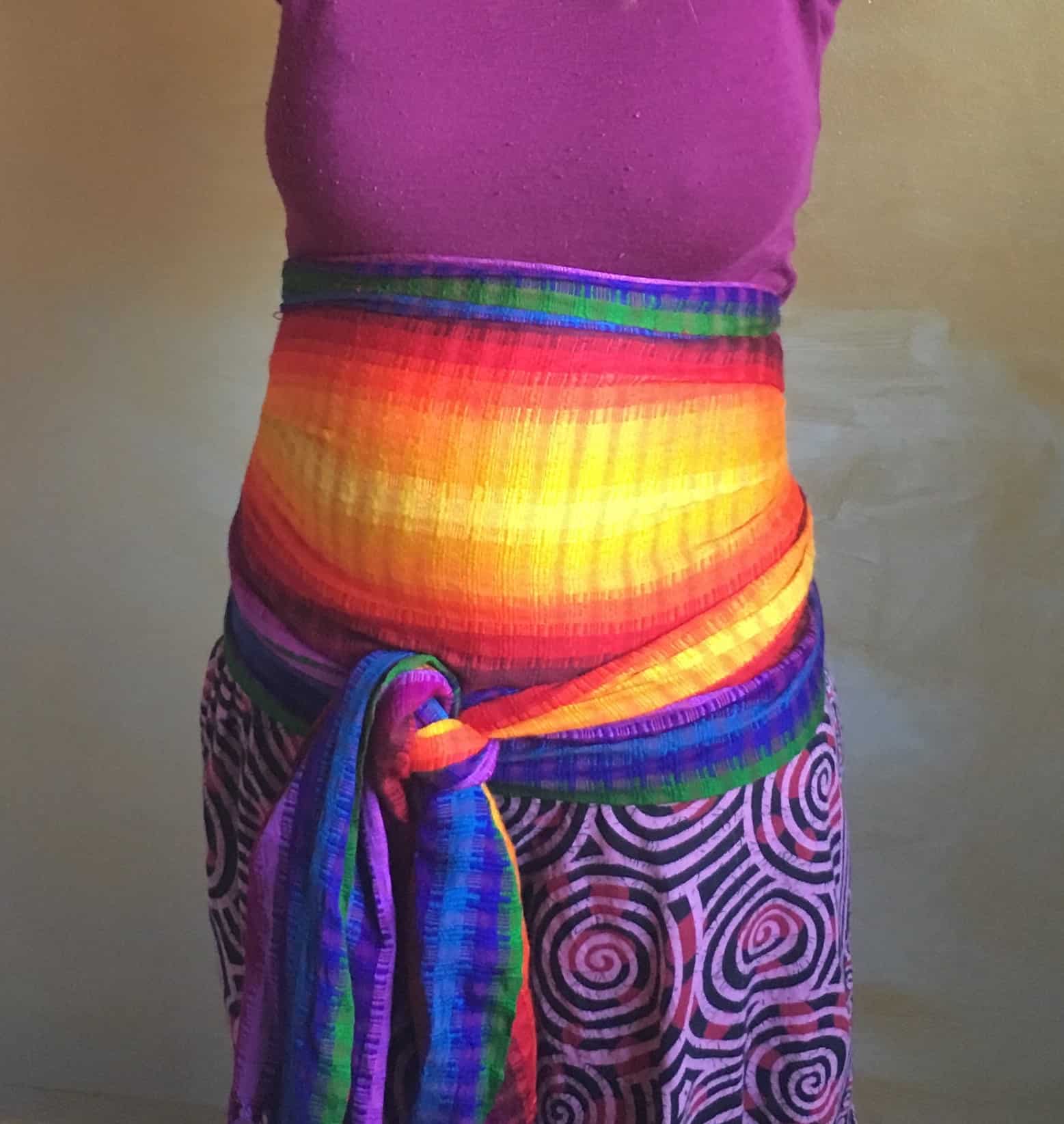
    Try and plan as much as possible whilst pregnant so you have support in place after the birth.

    I’ve made a free postnatal recovery plan PDF to download with prompts. You can find it here.

    If this inspires you and you’d like to find out more, you can buy a signed copy of my book, Why postnatal recovery matters, here, or find out more about my online courses, or the one to one sessions I offer.

  • A little bit of background about rebozos and their use to support women

    A little bit of background about rebozos and their use to support women

    I was introduced to the art of using the traditional Mexican shawl called the rebozo back in 2013 when I attended a workshop by doula Stacia Smales Hill on rebozo use for labour and birth. During the same year I also attended a workshop by Dr Rocio Alarcon, who taught a postnatal massage technique called closing the bones, some elements of which included rocking and binding with a rebozo.

    Over the course of the following years I pursued my knowledge further by doing several more workshops with Rocio, and several other rebozo workshops with different focuses, such as the rebozo for labour progress and malposition with Selina Wallis, micromovements with Francoise Freedman, 2 different spinning babies with Jennifer Walker and Gail Tully, and a workshop on healing diastasis recti  with Birthlight which included many rebozo techniques.

    I am also a babywearing instructor, and as such use rebozos and wraps to carry babies too.

    As I started teaching workshops around closing the bones and rebozo work as well as babywearing, the incredibly versatile use of the cloth really blew my mind.

    As I met people through teaching, I constantly questioned people I met about their culture’s practises, I started to build a picture in my mind of something much more universal than the rebozo.

    It seems that every culture had a piece of cloth of some kind, call it a shawl, a sarong, a scarf, or a wrap.

    Whilst the rebozo is a traditional shawl from Mexico and some South American countries, I found that other cultures used different pieces of cloths in the same fashion.

    Cold countries often us thick, woollen fabrics (think Welsh Shawl or Scottish plaid), and warmer countries, cooler, thin, cotton fabric (think African Kanga or Indonesian Sarong).

    There are almost too many fabrics to count, but one thing is for sure, women have used all sorts of cloths in incredibly versatile ways, and what I’m going to say below about the rebozo is true for many other cultures too. It’s a truly universal practise.

    I spent a few years believing that the use of the rebozo during labour was uniquely South American but I have since met a Somalian midwife who told me how they use their traditional shawl, called a Garbasar, in a similar way during labour. Supporting a pregnant woman from the same country confirmed this, and in fact her mother even showed me how it is used to bind the abdomen post birth.

    I trained a Moroccan birth worker in doing closing the bones, and she was surprised when she started offering the massage that women came forward and told her they’d had a similar treatment in the local hammam (Steam bath/wet room) after birth (using a traditional Moroccan cloth called a Mendil).  Tunisia offers a similar practise called a fouta massage (the fouta is a hammam towel, which is very similar in nature to the Turkish towel-it has become a very popular alternative to beach towels in France recently).

    I am lucky to be part of a multicultural family, being French and married to a man from Hong Kong. In Hong Kong I’ve been told they use a long piece of muslin cloth to bind the woman’s hips and abdomen after birth, and my mother in law showed me how the midwifes taught her to wrap her belly with a towel post birth.

    It’s also quite fascinating to see how contact with foreign cultures can influence each other. For example I recently acquired a Dutch postpartum girdle called a Sluitlaken. I couldn’t help but notice how similar to Indonesian postpartum binding it looks, then a friend pointed out than Holland used to have Indonesian colonies!

    So, what can you do with a rebozo (or a scarf of shawl)?

    Pretty much all cultures on the planet, some kind of cloth is used to cradle and carry a baby. In some cultures is used to rock and soothe the baby too. Rocking is such a primal rhythm we all experienced it in our mother’s womb, that we find it soothing all through our lives.  Even in Europe there are pictures of women wearing their babies in Welsh shawls which date from the 1940s.

    Later, when the baby grew into a toddler and child, she would use the cloth to dress up, pretend play (including carrying toys and/or animals, pretending to carry a baby), make a den etc.

    As the child grew into a young woman she would use the cloth as a shawl to keep warm, as a clothing accessory, a blanket, to carry siblings ( in traditional cultures women learn baby care from a very young age as they tend to live with extended families), and to carry loads on her back or head.

    Later still when she became a woman, she might have been given her own shawl as part of a menarche ceremony. She might have worn a special cloth on her wedding day.

    When she became pregnant, she would have used the shawl to support her belly, and her midwives would have used it to alleviate the aches and pains of pregnancy, and maybe to help the baby move into the best position for birth.

    During labour she would have used the shawl to hang from, to pull on, and her birth attendants would have used it to provide comfort measures, such as sifting, rocking, shaking, and wrapping.

    After the birth she would have had a “baby moon”. Again this is something pretty much universal in the world-women the world around have been alleviated from household tasks and cared for by family members for the first 30 to 40 days postpartum. During this time they would rest so they could recover from growing and birthing their baby and get to know their baby and learn to care for them. Her birth attendants and the community of women would have come to feed her nourishing food, and help her body heal from the pregnancy and birth by using  a combination of their hands, massage techniques and using the cloth to help move and bind her hips and abdomen to help them back into place. In the West we used to have this practise called “churching” whereby the new mother was expected to rest for a month before rejoining the community and be welcome back during a special blessing at the church (you can read about it here). The research I have done for my upcoming book “Why postnatal recovery matters” has also shown me that the rest AND the binding still used to be part of the UK culture, less than 70 years ago.

    She then would have start to use the cloth to carry her baby and start the cycle all over again.

    Later as she grew old, her family members would have used the cloth to rock and soothe aches and pain.

    Women would have been buried with their shawl using it as a shroud.

    So you see, a traditional cloth, rebozo, shawl or cloth can be used to support a woman throughout her whole life. It is a universal phenomenon on our planet.

    As the shawl came out of fashion and modern practises like using pushchairs became seen as more fashionable and desirable, this skill was soon lost, and because like most traditional women-only practises, it was just passed on orally rather than written about, the knowledge was lost very quickly, in one or two generations. We also tend to embrace “modern” practises mindlessly, seeing traditional ones as backwards and old fashioned.

    Mexican and Chinese friends tell me that nobody wants to use the traditional shawl or carrier these days as only remote farmers or beggars still use them.

    This is  something that we need to reclaim and teach all women, as it is part of the essence of women circles and supporting women through life transitions.

    This is why I am so passionate about passing this skills to both expectant and new mothers, and to anybody who works with expectant and new mothers. It is our birthright!

    You can learn more about the Rebozo and its many wonderful uses to support pregnancy, birth and the postpartum in my online rebozo course.

    (This is an update  from a blog I published originally in 2018)

    If you have found this blog helpful and would like to support my work and help me continue provide valuable free information to birthworkers and expectant and newborn families, you can donate to my paypal account paypal.me/SophieMessager.

  • Why I want to change the nature of postnatal support

    Why I want to change the nature of postnatal support

    [et_pb_section fb_built=”1″ admin_label=”section” _builder_version=”3.22″][et_pb_row admin_label=”row” _builder_version=”3.25″ background_size=”initial” background_position=”top_left” background_repeat=”repeat”][et_pb_column type=”4_4″ _builder_version=”3.25″ custom_padding=”|||” custom_padding__hover=”|||”][et_pb_text admin_label=”Text” _builder_version=”3.27.4″ background_size=”initial” background_position=”top_left” background_repeat=”repeat”]

    Earlier this week I wrote a blog that’s been playing on my mind for many years. It’s called “why I wish I had hired a postnatal doula

    In this blog I explain how challenging I found new motherhood, how lonely and upset I felt through those early weeks and how I longed for some support but failed to reach out because of a mix of shame for not loving every minute of being a mother, and feeling like I couldn’t justify the expense.

    As a doula, I witness the same challenge in new mothers. Sometimes I do not even know they are struggling until weeks later, because, whilst they sit in the same pit of discomfort and shame as I did, thinking they are the only one that struggle, they don’t usually reach out for help do they?

    I have written before about the topic of making a postnatal recovery plan, and about what new mothers really need, and you’re not meant to be doing this on your own (hint: it’s not flowers or stuffed bears).

    The wisdom in traditional postpartum practises around the world is very simple really, it boils down to 4 main elements of support for the mother:

    • Rest (someone takes care of the chores)
    • Food ( someone takes care of cooking good, nutritious meals)
    • Social support (the new mother is never alone at home with a baby)
    • Bodywork (someone massages the new mother, along with wrapping her hips/abdomen)

    I have a strong urge to write more about this, to spread the word further, I have a list of blogs as long as my arm about this topic, and in fact I now am thinking I need to write a book, or possibly more than one book, about this topic. Something easy to share, I might start with an ebook, like the one I have already written about rebozo techniques.

    I’m a knowledge junkie, so since I started learning about some postpartum practises, I’ve asked everybody I’ve met about the traditional practices from their country, and you know what, every continent in the world has some form of specific nurturing, specific foods, and bodywork and wrapping.

    After all, you’ve not only grown and birthed a whole new human, your body has accommodated this through tremendous changes.

    During pregnancy, the uterus grows from the size of a pear to the size of a watermelon (pushing abdominal organs out of the way, changing the shape of your muscles, ligaments and spine as it does so), then back again after birth.

    It seems crazy to me that nobody makes sure that all the organs, muscles, joints and ligaments have safely returned where they belong.

    I bake a groaning cake for all mothers I support, and sometimes make a traditional Chinese chicken soup too (my husband is from Hong Kong, and there is still a very strong postpartum nurturing culture there)

    Learning to massage and wrap new mothers had lead me onto a journey of discovery about postpartum practises, got me to work closely with an osteopath, create a new type of massage, and develop my skills in an apprenticeship manner. The two combined led me to develop a deep practical knowledge of what happens to women bodies after birth.

    This has fuelled a fire that makes me want to shout from the rooftops that what we get in the Western world just isn’t good enough, and want to work hard to change that.

    If this resonates with you, and you would like to learn some of these nurturing skills, I am running some Rebozo and Postnatal Recovery Massage courses in July-see https://sophiemessager.com/workshops-birth-professionals/

    [/et_pb_text][/et_pb_column][/et_pb_row][/et_pb_section]

  • Why I wish I had hired a postnatal doula

    Why I wish I had hired a postnatal doula

    When I was pregnant with my first child, I hired a birth doula.

    This was the best thing I have ever done and it has had positive effects beyond anything I could have expected, because it didn’t just impact how positive my pregnancy and birth were, it led to a complete transformation of who I was, both personally and professionally (read about that here  and here)

    But my biggest regret is that I didn’t hire my birth doula as a postnatal doula.

    Today, these feelings were re-triggered by reading this article called self care with a newborn.

    I wish, and I have wished so many times that I could go back to my newborn mother self and tell her to hire my doula for postnatal support.

    I cannot change that, but at least I can try and help other mothers understand why it’s so worth it.

    You see when my son was born, I struggled massively with the changes having a newborn baby brought to my life.

    I went from being an independent, successful, corporate woman, at the peak of my career in science, to being at home, alone, all day, with a helpless and very needy infant.

    And nothing had prepared me for how challenging this would be.

    My son was one of those “velcro babies”. He wouldn’t be put down without screaming for the first 3 months of his life. Today, I can see how this was helpful, as it was instrumental in my becoming a babywearing instructor, but at the time it was so fucking hard! Not only did he cry every time I tried to put him down, but I also needed to be moving constantly whilst he was in the sling, otherwise he still cried.

    It was exhausting. I couldn’t rest, I couldn’t sit down to eat, I couldn’t look after myself.

    Helping him sleep took hours, and I paced and paced whilst longing to sit down and rest.

    After my husband had gone back to work, I longed for another adult to just take the baby away so I could shower or sleep without worrying about the baby crying. Or simply have my arms baby free for an hour or two, or to have some adult company during the day.

    I felt utterly lonely, because my social circle was at work from 9 to 5, and whilst I did eventually re-create a new mummyhood social circle, this took months, during which I felt miserable, at home all day or walking by myself in parks, feeling pangs of envy when I saw other mums hanging out together.

    I also spent weeks struggling to make my son fit within the constraints of what I thought I “ought to do” (pushing him in a pram which he hated instead of the sling he loved, trying to make him sleep on his own in a moses basket for hours without success etc). This just resulted in a lot of tears and frustration.

    When I look back (hindsight is such a wonderful thing isn’t it?), especially through the lens of my 13 years as a mother, combined with my 8 years as a doula, it’s easy to see that most of the problem stemmed from my being a control freak, from desperately trying to live my life like I did before I had a baby, from a loss of identity, and from a inability to make sense of the whole experience.

    I had a really hard time adjusting to motherhood, and those feelings had nowhere to go, because I wasn’t even able to articulate them and understand what I was going through.

    I also felt somewhat guilty that I wasn’t enjoying being alone with my baby, and that I wasn’t feeling “fulfilled” by motherhood.

    I didn’t know at the time, but there was an element of shame there.

    Now I know how much hiring my birth doula for just a few hours of postnatal support would have made a world of difference.

    Sadly at the time I felt I could not justify the expense.

    It felt selfish, and unjustifiable, somehow, to spend money on myself, especially when I had a much reduced maternity pay salary.

    Yet I bought tons of crap I didn’t need for my baby. That I felt was OK to spend money on. When I look back, all I feel is sadness for my newborn mother self about it. I wish I could go back and tell her.

    Because, when I look back at the cost of raising a child, over the course of the last 13 years, I really wish I had been able to see that spending a bit of money towards a few hours’ worth of postnatal support would have been SO worth it.

    If I had hired my doula as a postnatal doula, she would listened to me deeply, she would have reassured me that it was NORMAL not to enjoy every minute of being a mother.

    By actively listening to me, and holding the space for my thoughts and feelings to come out, she have been able to reflect back them back to me, and help me identify them and untangle the complex and conflicting emotions I was feeling.

    She would have helped me understand the delicate process of transition I was undergoing, like a caterpillar becoming a butterfly.

    She would have empathised.

    She would have helped name and validate those emotions.

    She would have helped me understand why it was so hard, and helped me to not feel so guilty about it.

    She would have helped reframe those feelings of not being useful, of not having achieved anything with my day (and that I see so often in other mums).

    She would have encouraged me to rest more and not run around like a headless chicken trying to do all the chores I did before the baby was born.

    She would have explained the wisdom in postpartum rest traditions, and help me see how short changed we are with this in the Western world.

    She would have helped me see that things would get easier and not constantly stay in this unbearable intensity of early motherhood.

    She would have been someone I trusted to look after my baby whilst I slept, or had a much needed moment of me time.

    She would have prepared me something nice to eat, and held the baby whilst I ate it (whilst it was still hot).

    She would have sat down next to me during those endless feeds, and made me a drink and a snack and listened to me, making me feel like me and my feelings mattered.

    She would have helped reframe what normal newborn behaviour was, as opposed to the fear of “bad habits” our screwed up culture had instilled in me, and encouraged me to follow my instincts.

    She would have helped me find ways of managing my time and relax more.

    She would have signposted me to local mother groups, where I could have found other mums to hang out with a lot faster than it happened organically.

    She might even have given me a nurturing and much needed massage designed for new mums like closing the bones.

    In short, I know she would have helped transform my early postpartum weeks from a difficult and uncomfortable period of growth to one of understanding and acceptance.

    She would have helped the transition.

    I know it’s easy for me to say all this, because I’m a doula myself, and often I shy away from telling this to new mums, because I don’t want them to think I’m just doing it to tout my business.

    I just want you to have a better experience than I did.

    I want you to put your needs first, because you matter.

    Because trust me, I know what a difference it would have made.

  • Postnatal Recovery Massage, a new kind of postnatal massage inspired by closing the bones.

    Postnatal Recovery Massage, a new kind of postnatal massage inspired by closing the bones.

    I’ve been offering and teaching a postnatal massage called closing the bones since 2014.

    I never intended to teach this technique, I just wanted to share it with my community as we had been urged to do.

    But then women started to ask us to show them. So we put together a workshop.

    Since we started we have grown organically and have now trained nearly 400 people in providing this amazing nurturing ritual.

    I hope to use this media to help change the face of the postnatal support in the UK with this, towards a mother centered one.

    Over the last couple of years more and more people who had trained to do the massage started contacting me, asking if it would be possible to provide a version of the massage on a massage table instead of on the floor (we normally practise on yoga mats), because they had bad knees, or bad backs, and found working on the floor difficult.

    I have a bit of a theme in my professional life, that I seem to always end up teaching stuff because people ask me to!

    So I had a chat with my lovely local osteopath friend Teddy (who had already provided all the anatomical and effectiveness knowledge for the workshop handout, and therefore already knew the technique inside out), if he fancied the idea of developing a massage table version of the technique with me.

    He liked the idea a lot so we started working on it. This was about 18 months ago, in summer 2017.

    This was a true work of love, and in the end it took us over a year and many sessions of practise and hours of trial and error to get it working.

    This is how each session would go: I would setup both a massage table and a yoga mat on the floor. Teddy and I would try each technique on the floor then on the table, taking turns giving and receiving each technique.

    I would record the session and make some notes. After each session I’d listen to the recording paying attention to what Teddy said, and write down questions and make more notes for what to practise/change at the next session.

    At the beginning we did get plenty of stuff wrong. I think I was so intent of getting the exact same treatment on the table as on the floor, that this got in the way. Teddy has much deeper knowledge of body function than I do, so he had to explain to me repeatedly why some of the stuff that was done standing up or crouching over a person lying down simply couldn’t be done from the side of a table, due to biomechanics.

    We tried and tried. The most challenging part were the rebozo rocking and the hip squeezing. It was challenging because of the biomechanics (you can’t produce much force when you’re on the side compare to standing above a person), and because I wanted the technique to do the same thing to the body, but also to feel good.

    Teddy wanted to make sure the technique was safe and effective but also easy on the body of the therapist (a basic rule for bodyworkers).

    It proved extremely frustrating at time. Many times we thought we had got it but when we revisited it didn’t feel right and so we were back to square one. Some techniques worked mechanistically but just didn’t feel nice so they were discarded.

    It was also a fun experience and a huge learning curve for me, especially as Teddy educated me on how to position my body for maximum power and effectiveness around the table, something I am still learning to master.

    The real magic happened when I finally let go of it being exactly the same. Teddy had tried to explain to me repeatedly that it wasn’t necessary (that we were aiming for the same effect) but I am a perfectionist and like things to be “just right”

    One day we finally worked out a way to make the rocking work from the side.

    From then on everything seemed to flow magically.

    As we progressed we also ended up modifying and adding several elements to the massage.

    Some were based on discussion about the effectiveness of a technique and how to make it work more easily.

    Some were based on the changes in the pregnant body that weren’t treated as part of the original massage, namely treating the ribs (which flare during pregnancy), and the shoulders (which hunch during pregnancy and often during breastfeeding as well).

    Some just happened because it felt logical to add them to the flow of the movements we had created.

    In the end we ended up with a massage which is inspired from the original technique but is really quite different. I did it for the first time on a doula friend and she loved it. We added a few more movements after that. I also practised on my massage therapists friend Emma Kenny, a massage therapist, who loved it too.

    We named it the Postnatal Recovery Massage (PRM).

    We finished our individual practise work at the beginning of October, and we then went on teaching it to a small group of guinea pigs, composed of 2 doulas and 2 massage therapists.

    We all had a very fun morning of practise teaching this new techniques, and all our guinea pigs loved it.

    This is what they said:

    “Knowing Sophie and Teddy as I do, I knew they would design something that is both relaxing and effective. I was not prepared for how beautifully the movements flow into each other, and how true to the spirit of Closing the Bones they have stayed. For people who find floor work tiring or painful, I highly recommend learning these new techniques” Maddie, Doula.

    ” This new version of the postnatal ceremony blends effective rebozo (shawl) massage techniques and lymphatic drainage massage to support post natal mamas. Rather fabulous it is too!” Emma Kenny, Massage therapist.

    “I think one if the reasons I like the massage that you have developed for the table as it feels like a modern way of adapting the traditional massage. It feels like a new technique, a therapists technique. I also like being able to connect to the anatomical benefits. I want to practise giving the massage and feel newly inspired.” Katie, Doula

    We are now putting the final touches to the handout for this new technique, complete with my signature set of description, pictures, videos, and an explanation of the effect of each movement on the body by Teddy.

    This should be ready by sometimes in December and we are looking forward to teaching this workshop together in the new year.

    The first workshop will take place in Cambridge on Saturday the 5th of January.

    I can’t wait to introduce more people to this amazing technique!

    Update January 2019.

    Teddy and I taught our first course last Saturday. The course was extremely well received by our trainees. Here is some of the feedback they gave us

    “What a wonderful, professional, well constructed and instructive course with plenty of time for step by step practical, complemented by Teddy’s expertise and Sophie’s organic shamanism and such a wonderful community of like minded body workers. Thank you. Thoroughly recommended” Jenni Tribe, Therapist

    “Thank you so much for an informative and inspiring day. I can’t wait to use the techniques on my clients and support women more effectively. You are doing an amazing work and I’m so grateful ad excited to be part of it!” Grace Lillywhite, Pilates teacher.

    “I loved this course. It is just as nurturing as the closing the bones massage but much easier to do. Sophie and Teddy worked amazingly well together” Michelle Parkin, doula.

    “The course was well organised, very informative and easy to follow. The level of practical support was fantastic and I feel confident to take what I  have learnt and help local women postnatally. Thank you!” Becki Scott, doula and massage therapist.

    “Amazing workshop! Loved being in a small group to work through techniques in enough details. As an osteopath this experience has been invaluable in improving my practise if postnatal patient , in fact all of my patients!” Rob Ballard, osteopath

    “Amazing. Thank you both so much. More than the sum of the parts. Just lovely” Charlotte Filcek, doula.

    “The tutoring, the technique, the group, just exceptional!” Alison Duff, therapist and therapy centre owner.


  • Rebozos, shawls and scarves : the lost art of supporting women through the childbearing years

    Rebozos, shawls and scarves : the lost art of supporting women through the childbearing years

    RebozosI was introduced to the art of using a traditional Mexican shawl called a rebozo to comfort birthing women at my doula course by Maddie McMahon in 2008.

    Whilst I developed my antenatal and doula career, in my usual, knowledge junkie style, whislst I learn to use the tool for myself, I decided to learn as much as I could about this magic tool by attending training.

    Over the my first few years as a doula, I pursued my knowledge further by learning from several doula colleagues (I am especially grateful to doula Bridget Baker who showed me how to properly wrap a rebozo around a pregnant woman’s belly during a doula UK AGM).

    I attended my first formal workshop with Stacia Smales Hill on rebozo use for labour and birth in 2013. In the same year I also attended a workshop by Rocio Alarcon called closing the bones, a postnatal massage technique  which included rocking and binding with a rebozo.

    Frustration over long and difficult labours, and especially malpositioned babies led me to seek more specialist training,  such as the rebozo for labour progress and malposition with Selina Wallis, micromovements with Francoise Freedman, and 2 iterations of different levels of spinning babies with Jennifer Walker and Gail Tully.

    As my experienced developed I also brought more focus towards postpartum support, and recently attended a workshop on healing diastasis recti with Birthlight which included many rebozo techniques.

    I am also a babywearing instructor and tutor, and as such use rebozos and wraps to carry babies too.

    I started facilitating workshops around this topic because people asked me to. Repeatedly.  At first, I refused, as I didn’t feel qualified or experienced enough. But after a few years of constantly using this amazing tool in my birth work and my antenatal and babywearing classes, and seeing how the incredibly versatile such a simple piece cloth could be, and the miraculous experiences that ensued, I finally felt ready to start teaching workshops around this topic, because I had so many positive experiences I felt I needed to share this skill with others.

    As I met people through teaching, I constantly questioned people I met about their culture’s practises, I started to build a picture in my mind of something much more universal than the rebozo.

    It seems that every culture has (or had) a piece of cloth of some kind, call it a shawl, a sarong, a scarf, or a wrap.

    Cold countries have thick, woollen fabrics (think Welsh Shawl or Scottish plaid), and warmer countries, cooler, thin, cotton fabric (think African Kanga or Indonesian Sarong).

    There are almost too many fabrics to count, but one thing is for sure, women have used all sorts of cloths in incredibly versatile ways, and what I’m going to say below about the rebozo is true for many other cultures too. It’s a truly universal practise.

    I spent a few years believing that the rebozo use for labour was uniquely South American but I have since met a Somalian midwife who told me how they use their traditional shawl, called a Garbasar, in a similar way during labour.

    I trained a Moroccan birth worker in doing closing the bones, and she was surprised when she started offering the massage that women came forward and told her they’d had a similar treatment in the local hammam after birth (using the traditional Moroccan cloth called a Mendil).  Tunisia offers a similar practise called a fouta massage (the fouta is a hammam towel, which is very similar in nature to the Turkish towel).

    I am lucky to be part of a multicultural family, being French and married to a man from Hong Kong. In Hong Kong I’ve been told they use a long piece of muslin cloth to bind the woman’s hips and abdomen after birth, and my mother in law also showed me how she was taught how to use a towel to bind her hips and abdomen after birth.

    It’s also quite fascinating to see how contact with foreign cultures can influence each other. For example I recently acquired a Dutch postpartum girdle called a Sluitlaken. I couldn’t help but notice how similar to Indonesian postpartum binding it looks, then a friend pointed out than Holland used to have Indonesian colonies!

    So, what can you do with a rebozo, shawl or scarf of shawl?

    Pretty much all cultures on the planet, some kind of cloth is used to cradle and carry a baby. In some cultures is used to rock and soothe the baby too. Rocking is such a primal rhythm we all experienced it in our mother’s womb, that we find it soothing all through our lives.  Even in Europe there are pictures of women wearing their babies in Welsh shawls which date from the 1940s.

    Later, when the baby grew into a toddler and child, she would use the cloth to dress up, pretend play (including carrying toys and/or animals, pretending to carry a baby), make a den etc.

    As the child grew into a young woman she would use the cloth as a shawl to keep warm, as a clothing accessory, a blanket, to carry siblings ( in traditional cultures women learn baby care from a very young age as they tend to live with extended families), and to carry loads on her back or head.

    Later still when she became a woman, she might have been given her own shawl as part of a menarche ceremony. She might have worn a special cloth on her wedding day.

    When she became pregnant, she would have used the shawl to support her belly, and her midwives would have used it to alleviate the aches and pains of pregnancy, and maybe to help the baby move into the best position for birth.

    During labour she would have used the shawl to hang from, to pull on, and her birth attendants would have used it to provide comfort measures, such as sifting, rocking, shaking, and wrapping.

    After the birth she would have had a “baby moon”. Again this is something pretty much universal in the world-women the world around have been alleviated from household tasks and cared for by family members for the first 30 to 40 days postpartum. During this time they would rest so they could recover from growing and birthing their baby and get to know their baby and learn to care for them. Her birth attendants and the community of women would have come to feed her nourishing food, and close her bones and help her body heal from the pregnancy and birth by using  a combination of their hands, massage techniques and using the cloth to help move and bind her hips and abdomen to help them back into place. In the UK we used to have this practise called “churching” you can read about it here 

    She then would have started to use the cloth to carry her baby and start the cycle all over again.
    Later as she grew old, her family members would have used the cloth to rock and soothe aches and pain.

    Women would have been buried with their shawl using it as a shroud.

    So you see, a traditional cloth, rebozo, shawl or cloth can be used to support a woman throughout her whole life. It is a universal phenomenon on our planet.

    As the shawl came out of fashion and modern practises like using pushchairs became seen as more fashionable and desirable, this skill was soon lost, and because like most traditional women-only practises, it was just passed on orally rather than written about, the knowledge was lost very quickly, in one or two generations. We also tend to embrace “modern” practises mindlessly, seeing traditional ones as backwards and old fashioned.

    Mexican and Chinese friends tell me that nobody wants to use the traditional shawl or carrier these days as only remote farmers or beggars still use them. And certainly my recent trip to Hong Kong showed me that it took less than 15 years for the traditional baby carriers to have been almost forgotten and  superseded by more modern, yet less ergonomical, models.

    This is  something that we need to reclaim and teach all women, as it is part of the essence of women circles and supporting women through life transitions.

    This is why I am so passionate about passing this skill to both expectant and new mothers, and to anybody who works with expectant and new mothers. It is our birthright!

    How fitting is it that my friend Awen Clement just wrote this poem, for me it sums up everything the use of the rebozo is about.

    We are all weavers

    Life is a cloth
    our stories the threads
    carried across the warp by breath 
    and memory
    Every soul
    unique in its tapestry
    with tangles unpicked 
    and rewoven anew
    A rainbow of colour
    where our threads meet others
    and when we take our last breath
    love will weave the ends”

    (C) Awen Clement 2018

    You can learn more about rebozo and its many wonderful uses in my online course

  • Closing bones, the completion of one cycle and growth of a new cycle

    Closing bones, the completion of one cycle and growth of a new cycle

    Sophie Fletcher attended the closing the bones training in 2017. This is her account what the ritual did for her.

    https://www.closingthebonesmassage.com/closing-bones-freedom-movement/