Category: drumming

  • What Happens When Women Refuse to Stay Quiet? A Conversation Series on Reclaiming Our Right to Make Noise

    What Happens When Women Refuse to Stay Quiet? A Conversation Series on Reclaiming Our Right to Make Noise

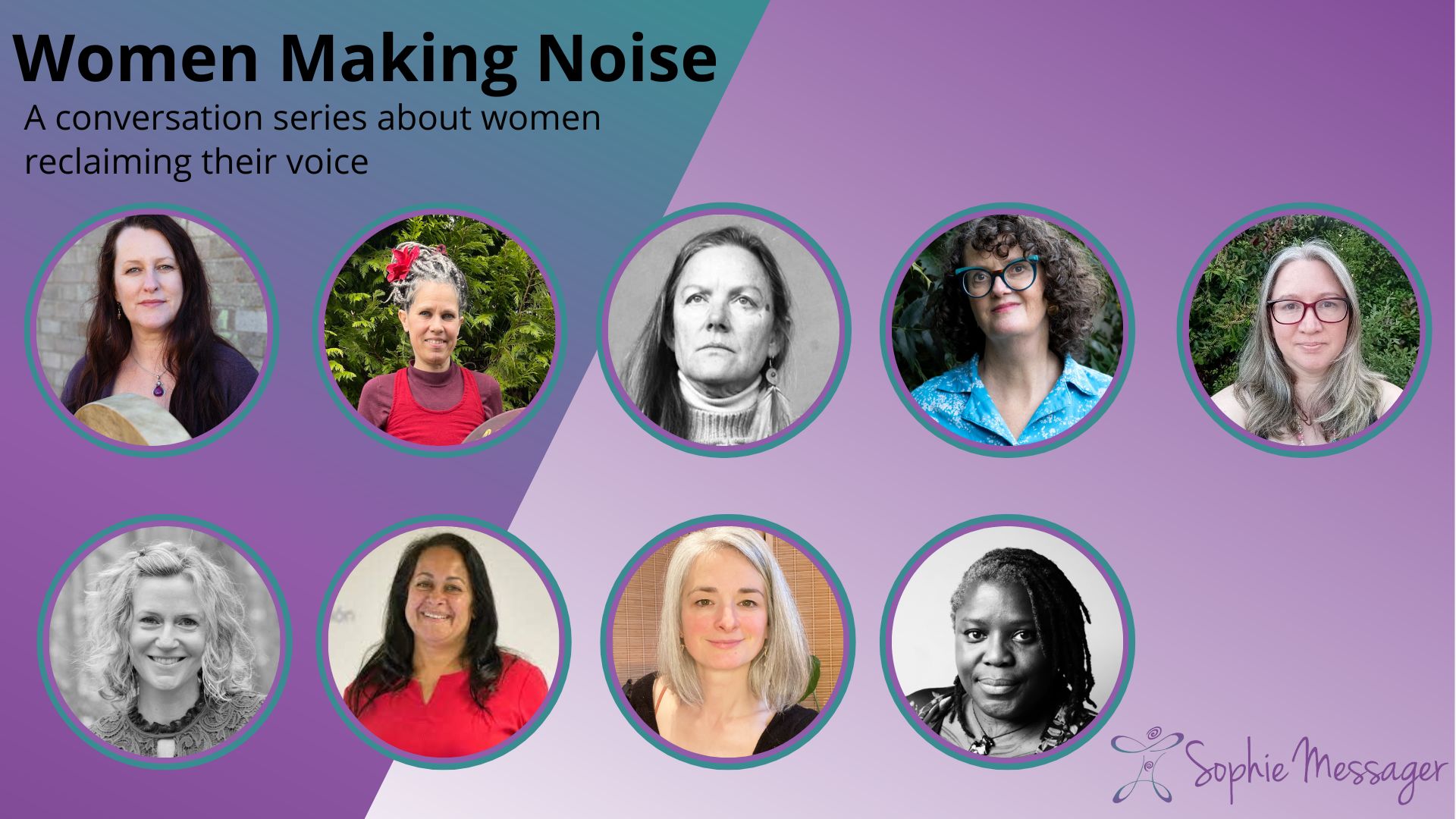
    To accompany the launch of my new book, The Beat of your Own Drum, the history, science and contemporary use of drumming as a path for women’s wisdom, health, and transformation,Ā  I have recorded this series of conversations with 9 change making, pattern disrupting women who have experienced this tension between silencing and expression in their lives.


    Why am I offering this?

    Throughout history, women who made themselves heard, whether through drumming, speaking out, or simply taking up space with their voices, have faced silencing, ridicule, and even persecution. From ancient prohibitions against women using drums in various cultures to the labelling of vocal women as hysterical, to the recent banning of women singing by the Taliban, women have been systematically discouraged from creating sound and expressing power through noise.

    Despite these restrictions, women have continued to find ways to make themselves heard.


    The conversation series

    I’m delighted to share nine powerful conversations with extraordinary change-making women who have experienced this tension between silencing and expression.

    Our conversations explore how women can reclaim their voices and power through drumming, sound and through overcoming societal conditioning that has taught us to suppress our natural expression.

    These intimate dialogues explore the questions that have been on my mind throughout the writing of my book:

    • How have you experienced the freedom or restriction to make yourself heard?
    • What relationship do you have with creating sound, whether through voice, music, drumming, or other means?
    • How has cultural conditioning around ā€œappropriateā€ feminine behaviour affected your expression?
    • What has helped you reclaim your right to make noise and be heard?


    The voices in this series

    I’ve had the honour of speaking with nine change making and pattern disrupting women whose work and lives embody the spirit of making noise and claiming space:

    • Jane Hardwicke CollingsĀ 
    • Rachael Crow
    • Lucy PearceĀ 
    • Melonie Syrett
    • Kate CodringtonĀ 
    • Liz Childs Kelly
    • Joyce Harper
    • Carly Mountain
    • Coco Oya Cienna-Rey


    Ready to join the rebellion?

    Starting September 19th, I’m releasing these conversations as a daily email series. Nine days of raw truth about what it means to make noise in a world that wants us quiet.

    This isn’t just about drumming. It’s about reclaiming the power that’s been stolen from us, one voice at a time.

    Click here to sign up and prepare to be inspired to make some beautiful, rebellious noise.

  • Drum Microdosing: The Simple 5-Minute Ritual That Can Change Your Life

    Drum Microdosing: The Simple 5-Minute Ritual That Can Change Your Life

    You may have heard of microdosing of plant medicine, a grassroot movement, driven by communities rather than corporations, where people take sub-perceptual amounts of a psychedelic plant or plant substance (for example psylocibin or LSD) without experiencing hallucinogenic effects. People who microdose report benefits such as improved mood, energy levels, cognition, creativity, and reduced depression and anxiety. Scientific research on microdosing is emerging, with some studies showing improvements in mood and mental health.

    I microdosed psylocibin for a couple of years to support my mental health during a time of struggle. It had very positive effects very quickly, when antidepressants had failed me. It allowed me to become aware of negative thought patterns I was not previously aware of, and modify them. I wrote about this in my article Dancing with chaos: my review of 2022.

    About a year ago, deep into the process of writing my book about women and drumming (the book will be published this year by Womancraft publishing), I started a practise of beginning my working day with 5 minutes of drumming. I simply set an intention, put a timer on my phone for 5 min and drummed.

    Within a couple of weeks, I noticed the exact same phenomenon of awareness and reframing of negative thought patterns I had noticed within 2 weeks after starting to microdose plant medicine. I noticed a negative, judgmental voice in my head, but this time there was an immediate reframing of the negative thought, which had not happened before.Ā 

    One morning, whilst sitting down having breakfast, I started feeling grumpy because my husband had not expressed gratitude about the many things I had organised for him on his birthday the day before. In the past I would have verbalised this disappointment to him, and, as you can imagine, it would not have been received well. Nobody responds to criticism by being grateful. This time, as soon as the thought of unappreciation appeared, I heard a voice in my head saying ā€œwhat’s really happening here is that you aren’t appreciating yourselfā€. The truth of this resonated so deeply that I sat there for quite some time digesting it. As I did this, I noticed that the tension and unpleasant feelings created by the negative thoughts had evaporated, as if by magic. Then, my husband appeared in the kitchen, and told me how much he appreciated all the things I had organised for him the day before.

    I wrote about this in my article Beating the ā€˜shroom : Drumming as a safer alternative to psychedelics. Here I’d like to go further and explain how transformative it can be.

    In the process of preparing for a talk about drumming and women’s wellbeing I gave at theĀ  convention of women drummers and makers in Colchester, UK, I came up with the term drum microdosing, to describe this practice I had discovered.


    How drum microdosing works

    When you drum (or listen to drumming-but I find drumming myself more powerful), your brainwaves entrain to the sound waves created by the drum. It is a phenomenon known as auditory entrainment. Put simply, when you listen to the drum, the speed of your brainwaves align with the speed of the drumming. The type of drumming I use, known as shamanic drumming, at around 3 to 4 beats per seconds, results in brain waves slowing down. That slowing down is associated with meditative states. With the sound of the drum, I can enter this deeply aware yet relaxed state very quickly and effortlessly, contrary to when I try to sit still and meditate. Students of mine have reported the same effect, including people who, like me, find meditation difficult, and people who are skilled meditators, who report going much deeper into their meditative state when accompanied by the drum.

    For me, what clearly happens is that not only does it calm my brain and nervous system down from a stressed to a calm state, but it then also leads to an immediate loosening of my thought patterns, which results in creativity and solution finding. You know when you are looking for a word and cannot find it, and the more you scramble and try to find it, the more it eludes you, only to find that it often appears once you stop trying? That’s what the drum does for me. I liken it to having a massage, but inside my brain instead of my body.

    There is plenty of scientific evidence demonstrating this, so much in fact that the chapter on the science of drumming I wrote for my book was so big that the publisher asked me to subdivide it into two separate chapters!

    If you want to see a cool example of this, watch this video which shows the effect of shamanic drumming on brainwaves, by drummer and researcher Jeff Strong, who has been studying the effects of drumming on the brain and wellbeing since the 1990s.


    How to get started with drum microdosing

    There are two ways you could do it: either drum live if you have a drum (or get a drum), or listen to drumming tracks designed to change consciousness. I find the live drumming more powerful, I suspect it is something to do with the more active aspect of it, and the involvement of movement, rather than the passive listening.

    If you already have a drum, set an intention to drum for just 5 min each day. Set a timer on your phone for that time and drum.

    If you do not have a drum, the drums I use are frame drums (drums that are made of a wooden hoops with a natural or synthetic hide stretched over it, and played either with a beater or by hand). It works with any drums, but these are easiest to use technically.

    A really affordable frame drum option is the Remo Fiberskyn or Rennaissance frame drum. Anything from 12 to 16 inches diameter. They cost about Ā£30 to Ā£40. They do not come with a beater, but you can play by hand or make a beater by wrapping a couple of socks around a stick and securing them with string or an elastic band. Or you could look on Ebay or Facebook Marketplace for a second hand Irish Bodhran, some are available for about the same price. If you’d like to explore drum options more widely, I have written an article called How to choose and buy a shamanic drum.

    If you’d like to try the drumming tracks: there are plenty of shamanic drumming tracks on YouTube or Spotify, and the best resource by far is Jeff Strong’s Brain Stim Audio website, which has a wide range of tracks to change your brain state at will (free for 2 weeks without entering payment details, and around Ā£9 a month if you decide to carry on using it after that).

    Regardless of how you do it, you’ll get a more powerful effect if you commit to doing this practice mindfully, with clear intention setting and conscious integration, very much like it is done with microdosing substances.

    How to drum mindfully:

    • Set an overarching intention for a cycle of about 4 for 6 weeks. What do you want to improve/feel better about? Perhaps emotional balance, creativity, clarity, or focus. Be specific.Ā 
    • Choose a dedicated time each day for your drumming practice, for example the start or the end of the day.Ā 
    • Before each session, take a moment to ground yourself, set an intention for this specific session, one that naturally flows from your overarching intention. Create sacred space in whatever way feels authentic to you (it could be as simple as lighting a candle, a stick of incense, or diffusing some essential oils).Ā 
    • Keep a simple journal to track your experiences: note how you feel before and after drumming, any insights that arise, shifts in your energy or mood, and patterns you observe over time.Ā  Like any medicine, drumming works best when approached with respect, consistency, and awareness.Ā 
    • After each session, take a few minutes to integrate – sit quietly for a few minutes, or journal about your experience. This mindful container will allow the healing benefits of drumming to work more deeply in your system.


    Conclusion

    Drum microdosing offers an easy, powerful, accessible, and natural path towards better mental health, emotional balance, wellbeing, and personal transformation. Unlike plant microdosing, it’s legal, easily accessible, affordable, and has no physical side effects.Ā 

    With a small consistent, mindful practice, the drum is a wonderful tool for consciousness, expansion and personal growth. Whether you’re seeking alternatives to Western mental health approaches, plant medicine, getting unstuck, wanting to explore new ways of working with your mind, drum microdosing provides a simple path forward.Ā 

    If you would like to explore this further:

    One-to-One Drum-Assisted Mentoring : personalised guidance combining drumming with transformational mentoring. These sessions offer a sacred space for deep insight and personal breakthrough, tailored to your unique journey.

    Group Drum Microdosing Circle starting on the 23rd of July.Ā  Join an intimate circle of women exploring this transformative practice together. Meeting weekly on Zoom over 3 weeks, we’ll develop our practice, share experiences, and support each other’s growth. The course will provide structure, accountability, and a sacred container for your journey into drum medicine.Ā  message me if you have any questions.

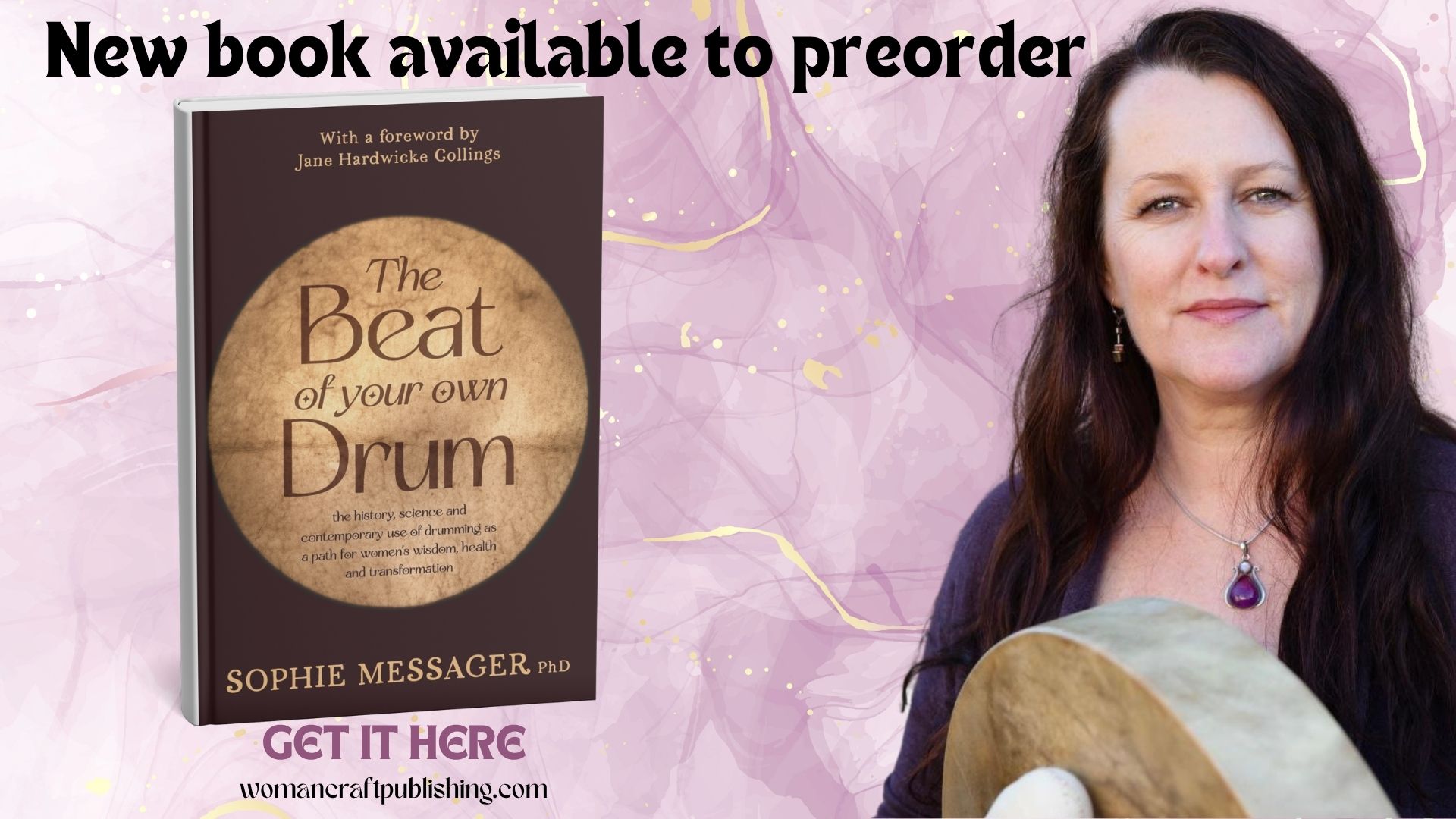
    My new book, The Beat of your Own Drum, the history, science and contemporary use of drumming as a path for women’s wisdom, health, and transformation, is available to preorder from Womancraft publishing


  • Rhythm as Medicine: The Transformative Power of Daily Drumming

    Rhythm as Medicine: The Transformative Power of Daily Drumming

    You may have heard about various approaches to mental health – from talking therapy to medication to meditation. But there’s a powerful, ancient practice that’s gaining recognition in modern science: drumming. Research shows that drumming can profoundly impact our mental health, emotional wellbeing, and sense of connection to others.

    I discovered the therapeutic power of drumming through my own experimenting with drumming. What started as an experimental approach revealed itself as a transformative tool for healing. When I started including drumming in my healing and mentoring work , within just a few sessions, I observed changes in people that sometimes months of therapy hadn’t achieved.

    The Science Behind Rhythm

    When you drum (alone orĀ  in a drum circle), something remarkable happens in your brain and body. Studies have shown that just 20 minutes of group drumming can significantly lower stress and anxiety levels. The rhythmic percussion creates a form of brain entrainment –Ā  our brainwaves literally sync with the drum’s rhythm, leading to deeper states of relaxation and awareness. This synchronisation helps rewire neural pathways, enhancing neuroplasticity – your brain’s ability to form new connections and adapt. It is literally changing your brain.

    But it goes beyond just relaxation. Research has demonstrated that drumming can:

    • Reduce depression and anxiety
    • Improve overall mental wellbeing
    • Boost self-esteem and motivation
    • Help in addiction recovery
    • Create deeper social connections

    What’s particularly fascinating is how drumming helps people process emotions that are difficult to express in words. Many participants report being able to “drum out” their anger, sadness, or frustration in a safe, contained way. It’s as if the drum becomes an extension of their emotional voice.

    I collected most of the evidence and wrote it for my upcoming book about drumming and women (to be published in September 2025). There is so much research about the positive effects of drumming on the mind and body, that I had to write not one but two whole chapters about it.

    If you want to read a paper that explains the effects on mental health really well, read Drumming Through a Polyvagal Lens by Simon Faulkner.

    The Power of Community Rhythm

    While individual drumming is powerful, group drumming adds another dimension entirely. Studies have shown that when people drum together, it activates parts of the brain associated with empathy and understanding others’ emotions. This explains why after a group drumming session, participants often report feeling more connected and understanding of each other, even if they started as strangers.

    In one particularly moving study, researchers found that people drumming in pairs had higher activation in the right temporoparietal junction – a brain region crucial for empathy and social connection – compared to when they were just talking to each other.

    This breakthrough has become permanent for me – when I feel overwhelmed, weak or numb, especially in therapy, I take off my socks, connect to the ground and stand up, remembering the feeling of rising power. My therapist says there has been a huge change in me within the few short months that I have been drumming, which I feel too: more unity within myself, a sense of my own power, a sense of belonging with others and more capacity for joy. Anna, describing what the sense of rising power she experienced after her first drum circle session.

    How to Start Your Drumming Journey

    You don’t need any musical experience to benefit from drumming. Here’s how you can begin:

    1. Join a Drum Circle: Many communities have regular drum circles that welcome beginners. These provide a supportive environment to learn and experience group drumming.
    2. Individual Practice: Even a simple frame drum and 5 minutes a day can create positive changes surprisingly quickly. Start with simple, heartbeat-like rhythms and let your intuition guide you.
    3. Therapeutic Drumming: Look for facilitators who offer drumming for mental health and wellbeing.


    Creating a Small, Regular Practice, ie Drum Microdosing

    What it can be used for:

    • Mental health/wellbeing
    • Anxiety
    • Overwhelm
    • Regulate your nervous system
    • Feeling stuck
    • Overcome procrastination
    • Navigating change/challenging time
    • Increase your creativity
    • Increase your ability to focus

    And much more

    To make the most of your drumming practice:

    • Set aside dedicated time in a quiet space
    • Begin with an overarching intention for a course of 4 to 6 weeks, and one for each daily session
    • Allow yourself to express whatever emotions arise
    • Stay present with the rhythm and your body’s response
    • End with a moment of reflection, either silently, or in writing


    Beyond Traditional Therapy

    What makes drumming particularly valuable in mental health is its holistic nature. Unlike traditional talking therapy, drumming engages the body, mind, and spirit simultaneously. It bypasses the analytical mind and speaks directly to our emotional and physical selves.

    As one participant in a drumming program shared: One of my key struggles has been a lack of self-belief, doubts about my worthiness and the value of my being. The drumming practice helps me break through self-limiting ideas, uncover challenges and find the courage to express myself more freely. Philippe.

    Conclusion

    In our increasingly disconnected and mentally challenging world, drumming offers a path back to ourselves and each other. It’s not just about making music – it’s about creating a space for healing, connection, and transformation. Whether you’re dealing with stress, anxiety, depression, feeling stuck, or simply seeking a deeper sense of wellbeing, drumming might be the medicine you never knew you needed.

    If you’d like to explore drumming for mental health:

    T simplest practice can create the most profound change. Your healing journey begins with that first beat.

  • When life strips you bare: 10 ways drumming can provide support for you through life transitions

    When life strips you bare: 10 ways drumming can provide support for you through life transitions

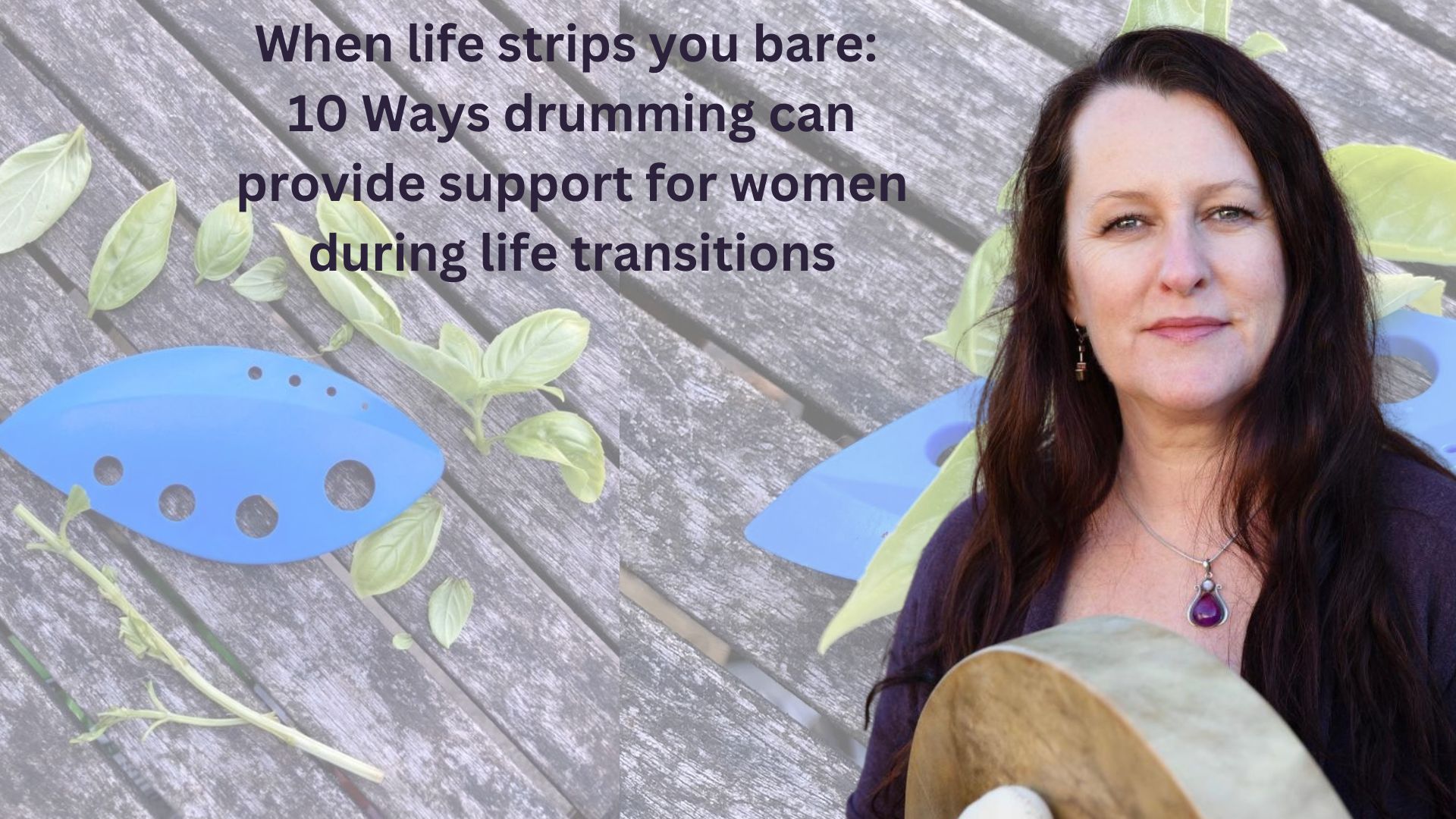
    Last week, I had the vision of this herb stripping tool pop in my mind. It’s a little gadget with different sized holes in it, through which you pull a strip of herbs to remove the leaves. This felt particularly weird because I had completely forgotten that I had it and hadn’t used it for years.

    The vision clearly showed me that I was being stripped. Stripped of what no longer serves belongs. And that’s how I’ve been feeling for the last couple of months.

    This feels both scary and exciting, like I’m being remade and remodelled into a new version of myself. The focus of my work is changing direction completely, going from being focused on mostly birth to supporting women to trust themselves, and I do not yet know what my new offerings will look like.

    And of course, it’s doing it in its own sweet time (a bit like waiting to go into labour). There is nothing to do but wait, and trust. It feels really uncomfortable, and I oscillate between excitement and fear, quiet acceptance, and frustration. It’s a daily practice for me to work with the resistance, and to surrender into the unknown.

    Being stripped is a normal, regular occurrence.

    It is a fact for many of us, life has a way of stripping us down. If you’re navigating new motherhood, menopause, career changes, or any other major life shift, there are times when everything you thought you knew about yourself gets turned upside down. I know this very well myself, as someone who evolved from a scientist to an antenatal teacher and doula, to an energy healer and shamanic drummer, and mentor/guide to women during life transitions.

    During my own journey from scientist to spiritual guide, I discovered that drumming is one of my most powerful practices. What started with scepticism and disbelief evolved into understanding of how drumming can literally rewire our nervous systems and help us reconnect with our authentic selves.

    If you are feeling overwhelmed and disconnected, if it feels like you’re losing yourself in the chaos of change, drumming might be just the thing you need to reconnect with your inner wisdom. In this space, you can reconnect with a sense of presence and inner peace, from which you can navigate change without the sense of being overwhelmed and scrambling for quick solutions that come from a dysregulated nervous system.Ā 

    Here are ten ways drumming can support you through life transitions.

    1. Nervous system regulation

    When life feels out of control, our nervous system often gets stuck in fight-or-flight mode. From that place you can not feel safe, be creative, or think rationally. Drumming helps to regulate your autonomic nervous system, shifting you from hypervigilance to a calmer, more grounded state. The repetitive rhythm literally entrains your brainwaves, moving you from gamma/beta (stress) to alpha (relaxed alertness) state.

    This is particularly powerful for women experiencing perimenopause, new motherhood, or any major life metamorphosis where stress hormones can run high.

    ā€œMost studies have shown an improvement in psychological health of an individual, with lower stress levels, less anxiety, better mood, higher energy levels and feelings of empowerment.ā€Ā  Yap et al. A systematic review on the effects of active participation in rhythm-centred music making on different aspects of health, 2017

    2. Accessing your inner wisdom

    Many accomplished women (myself included) have learned to rely almost entirely on our analytical minds. But during major transitions, logic alone doesn’t work. Drumming bypasses the prefrontal cortex and engages deeper brain regions (and the body!) where intuition lives. Percussion rhythms create a trance-like state that allows you to tap into your inner knowing.

    Imagine a murky pond with sediment clouding the water: this is your analytical mind, cluttered with thoughts that obscure clarity.

    When you strain to see through the murky depths, forcing answers to emerge, you only stir up more sediment. The harder you grasp for insights, the cloudier everything becomes, like when you are frantically searching for a forgotten word.

    Drumming creates gentle ripples on the surface that gradually allow the sediment to settle rather than stirring it up. As you stop straining to find answers, they become visible on their own. Your inner wisdom emerges as your analytical mind relaxes its grip.

    The drum effortlessly stills the waters of the mind, allowing insights to surface naturally. The answers were always there, waiting for your mind to settle.Ā 

    3. Release of trauma and tension

    Drumming is a full-body experience that helps release trauma stored in your nervous system. The act of striking the drum, combined with the sounds and vibrations, helps your body to move stuck energy and emotions. This somatic release is particularly important for women who’ve experienced birth trauma, relationship endings, or other life upheavals.

    One of the most powerful sets of associations created in utero is the association between patterned repetitive rhythmic activity from maternal heart rate, and all the neural patterns of activity associated with not being hungry, not being thirsty, and feeling ā€˜safe’ (in the womb)… Rhythm is regulating. All cultures have some form of patterned, repetitive rhythmic activity as part of their healing and mourning rituals – dancing, drumming, and swaying. Dr Bruce Perry

    4. Rebuilding your sense of power

    There’s something primal and empowering about drumming. When life has left you feeling powerless, it reconnects you with your strength. The act of making sound and rhythm, reminds you that you have autonomy and agency—that you can create, influence, and direct energy.

    This is especially healing for women who’ve been in situations where they felt voiceless or powerless.

    At home, I felt in my own space but in the hospital, I felt at the system’s mercy and a lot of vulnerability. The drumming stirred up the empowerment and standing up for myself. The drum calls upon strength and authenticity and celebration. The drumming felt like when you are jogging and you have power music on, it gave me a power boost, like it was saying, ā€˜Open up, relax, trust your body, have faith in the journey.’ It made me feel more confident in my abilities. Leigh (about how having me drumming during her birth made her feel).

    5. Creating space for grief and processing

    Transitions always involve loss, and even positive changes require us to let go of who we used to be. Drumming creates a sacred container for grief, allowing you to honour what you’re leaving behind while opening space for what’s emerging. It holds you safe as you feel deeply.

    I’ve seen women use drumming to process everything from divorce to career changes to the loss of their pre-motherhood identity.

    When drumming, the drum becomes an extension of your body. Each beat, when we drop into it, tells the story of how we are feeling, what we are going through and what we need without words. As we drum, particularly with other women in a safe space, that freedom of expression seems to spread into the body itself, creating movement, shaking, dancing, stamping – somatically allowing emotion, trauma and tension to move, be seen and perhaps released. Then that beat and safe space spreads to the voice. It opens up the throat, our space of authentic truth. It allows us to let out that which is held within – in roars, tears, tones, words and song. Melonie Syrett

    6. Connecting with your authentic self

    When you’re stripped of familiar roles and identities, drumming helps you reconnect with your authentic self, with the part of you that exists beyond the mother, the wife, the professional, the daughter, or any other roles. In the beat of the drum, you meet yourself as pure creative energy, beyond societal expectations.

    This is transformative for women who’ve lost themselves in pleasing others or conforming to external expectations.

    7. Building resilience

    Like meditation, drumming builds your capacity to stay present with difficult feelings and emotions. As you learn to come back to the beat, to the rhythm, when your mind wanders or emotions arise, you develop the same skill for navigating real life challenges. This becomes a resource you can draw upon during tough times.

    The drum becomes a teacher in staying grounded when everything else feels unstable.

    8. Activating your creativity

    Many women in transition feel stuck, creatively blocked or uninspired. Drumming allows you to tap into your creativity, the same energy that births babies, builds businesses, and creates art. This spills over into other areas of life, helping you imagine new possibilities for your future.

    The trance-like state can open up channels for intuitive insights and creative inspiration. People can experience heightened intuition, artistic expression, or innovative solutions to problems during or after a drum session or journey. These days when I encounter a problem, I make a mental note to ā€œdrum on itā€.

    I’ve seen women rediscover their artistic gifts, start new businesses, and make bold life changes after beginning a drumming practice.

    9. Connecting with something greater than yourself

    Drumming has been used for thousands of years to connect with the divine, the ancestors, and the natural world. When you’re feeling isolated or questioning your place in the world, drumming can restore your sense of connection to something larger than yourself, whether you call it God, the universe, or your own inner knowing.

    This spiritual connection provides comfort and guidance during times of uncertainty.

    10. Integrating science and spirituality

    For analytical women who are opening to spiritual dimensions (like I was), drumming offers the perfect bridge. Drumming is backed by cutting edge neuroscience research showing its benefits for brain health, stress reduction, and emotional regulation, while also being a deeply spiritual practice. You don’t have to choose between your rational mind and your spiritual heart, you can integrate both.

    This integration is particularly powerful for women, who like me, have been taught that science and spirituality are incompatible.

    How do I begin?

    If you’re in a life transition and feeling overwhelmed, disconnected, or like you’re losing yourself, I’m inviting you to explore drumming. You don’t need to be musical or have any experience, just an openness to try and let it guide you back to yourself.

    It is simple: find a drum (even tapping on a book or desk will work), put on a timer for 5 minutes, sit quietly, and begin with an intuitive, heartbeat-like rhythm. Let yourself feel the sounds and vibrations, notice what emotions arise, and trust the process.

    Your authentic self is waiting to meet you in the drumming. Sometimes, when the analytical mind fails and logic falls short, the wisdom of the drum can guide you back to yourself.

    Remember: You’re not broken, you’re breaking open. The drum can help you trust that process.

    If this resonates with you, I’d love to hear what that feels like. Please comment below. And you’d like to explore how drumming, along with other neuroscience-backed holistic practices, can support your journey through life transitions, I’d love to connect with you. Or check out my drum mentoring sessions, or my new book, The Beat of Your Own Drum.

  • My new book, The Beat of Your Own Drum, is available to preorder from Womancraft Publishing

    My new book, The Beat of Your Own Drum, is available to preorder from Womancraft Publishing

    It’s book pre-launch day and I need your help!
    After a long wait I can finally reveal the cover and announce that my new book, The Beat of Your Own Drum, the history, science and contemporary use of drumming as a path for women’s wisdom, health, and transformation, is now available to pre-order from Womancraft Publishing.
    When you pre-order, you do not only support myself and a wonderful small independent publisher in launching the book, you get a bunch of exclusive freebies carefully crafted by me.
    Here are the exclusive freebies that accompany the pre-order:
    1) Playlist
    A Spotify playlist of songs about drumming, women and power. Each song is associated with a specific chapter of the book, and you may want to play each song before or as you start reading each chapter, or afterwards, to tune into its energy..
    2) Drum microdosing guide
    Drum microdosing is a practice I created. I discovered this practice whilst writing the book. Having microdosed mushrooms for a couple of years I was intuitively guided to start a drum microdosing practice. Drumming for just 5 min a day with intention can rewire the brain into more positive patterns, and works in a way that is both accessible and gentle. In this guide, I take you through the all practicalities of starting your drum microdosing practice from choosing a drum to creating an altar to journaling prompts.
    3) Journey to the Heart of the Drum
    A shamanic drum journey, where I guide you to connect with the heart of the drum. Discover what healing insights, guidance, or clarity wants to come through for you right now.
    Pre-order the book before September to get these bonuses. You will receive them a few days before the publication date, which is on the 12th of September.
    I need your help!
    To Ā help support the birth of this new book into the world, here are 3 things you can do to help:
    1) Pre-order the book (you’ll receive 3 exclusive bonuses)
    3) Forward this email to 2 or 3 friends who might be interested in the book.
    What is the book about?
    Part practical guide, part scholarly exploration, and part inspirational journey, The Beat of your own Drum invites women to reclaim their rhythmic heritage and harness the healing power of percussion for personal and collective transformation.
    Weaving together science and sacred wisdom, Sophie Messager explores the transformative power of drumming for women’s wellbeing. Written by a former biological research scientist turned holistic women mentor, this ground-breaking text bridges the gap between evidence-based research and ancient feminine wisdom.
    Drawing on historical evidence, cutting-edge research, and personal experience, Sophie weaves together a compelling narrative that reveals drumming as far more than a musical practice. She explores its role in everything from supporting neurodivergent individuals to offering a natural alternative to psychedelics, from easing birth journeys to facilitating social change.
    Sophie’s expertise in supporting women’s life transitions – from birth to perimenopause – enriches her investigation of how drumming can support these crucial thresholds. Her research spans from the historical significance of women drummers to contemporary applications in healthcare and ceremony, creating a comprehensive guide for anyone interested in the intersection of rhythm and wellbeing.
    Whether you’re a seasoned drummer, a curious beginner, or a professional interested in innovative wellbeing approaches, this book offers practical guidance alongside fascinating insights. Discover how the simple act of drumming can regulate your nervous system, enhance your spiritual practice, and help you navigate life’s transitions with greater ease and authenticity.
    The book contains the following chapters:
    Foreword by Jane Hardwicke Collings
    Introduction: The First Beat
    1 – Rhythms of Awakening: My journey with the drum
    2 – Echoes Through Time:
    A short history of women and drumming
    3 – Vibrations of Wellbeing:
    The science of drumming and physical health
    4 – Percussion and the Psyche:
    Drumming’s resonance in brain, nerves and healing
    5 – Diverse Frequencies:
    How drumming supports people who are neurodivergent
    6 – Beating the ā€˜Shroom:
    Drumming as an alternative to psychedelics
    7 – Sacred Circles: Drumming, rituals and ceremonies
    8 – The Rhythm of New Life:
    Drumming to support the birth journey
    9 – Tuning into Your Instrument: Finding a drum
    10 – Rhythmic Practices:
    Ways to work with the drum and drumming
    Conclusion: Echoes into the Future
    Appendix
    Here’s a short sample of the book (you can read an entire chapter for free here)

    It’s early morning in a woodland. The air feels like it’s been washed clean overnight. It’s got that special lightness that only exists at dawn, before the day’s heat settles in. The sunlight dapples through the trees, making beautiful patterns on the mossy ground. Birds are singing their dawn choruses.

    In the middle of a clearing, a woman stands, ready to drum. She holds the drum’s handle in one hand. On its circular wooden frame, a taut supple skin is stretched. The beater sits in her other hand, ready. As she pauses, the air seems to hold its breath in anticipation.

    With a flick of her wrist, the beater connects with the drum’s skin. A “BOOM” pierces the silence, sharp and clear. The drum’s skin ripples from the impact, sending out invisible waves and suddenly the air is alive. The deep “BOOM” rolls through the space, through her body. She feels it in her chest, in her belly and hips, in the soles of her feet. It’s not just a sound – it’s a force, a presence.

    She finds her rhythm. BOOM-Boom-Boom. BOOM-Boom-Boom. The beater dances across the drum’s surface, sometimes striking the edge, sometimes the centre, creating different tones. Each beat resonates through the skin, the frame and into her body, as if the drum was speaking directly to her bones.

    The tempo increases. Her arm moves faster, the beater a blur. Boom-Boom-Boom-BOOM, Boom-Boom-Boom-BOOM. The rhythm becomes a pulsing energy, flowing from the drum and into the space around her.

    Her eyes are closed, and she is lost in the rhythm. Her body sways gently. The beater seems to move of its own accord, as if guided by an unseen force. She can no longer hear the birds or see the forest around her. She is no longer playing the drum – she is the drum, the beater, the rhythm. Past and future melt away, leaving only the now of the beat.

    The beat shifts, slows. Now it’s a gentle pulse. Boom…Boom, like a heartbeat… Each strike is deliberate, mindful. She feels her breathing deepen; her muscles relax. The world outside disappears, leaving only this moment, this connection between her, the frame, the skin and the beater.

    As the final beat fades, its echo seems to linger in the air. The silence that follows is rich and full, vibrating with otherworldly energy. The nature around her is grateful for this honouring and even the birds are quietly listening. She is left with a profound sense of peace, of presence, of connection to something ancient and powerful that continues to resonate within her long after the drum has gone quiet.

    This is what I have been doing weekly for the last four years: drumming at dawn in a woodland with two other women. This practice has given me more gifts than I can count: a deeper connection to nature, to myself, a sense of sisterhood and belonging. It has fulfilled my longing for more connection to the sacred. But perhaps most importantly, it has given me a growing sense of peace and spaciousness in my heart, something to hold on to in the midst of life’s busyness and challenges. What my ever-busy mind could not achieve with meditation, the drum gives to me without my even having to try.”

  • Entering the sacred pause: what I’m learning about rest before I prepare to birth my new book.

    Entering the sacred pause: what I’m learning about rest before I prepare to birth my new book.

    Sometimes the most profound wisdom comes from practicing what we preach. As my book launch approaches, I find myself in a familiar space—one I’ve guided countless women through as a doula, but now must navigate myself.

    The limbo before the birth

    Lately I’ve been feeling in a sort of limbo-in between 2 worlds. The prelaunch of my book is looming (a week days to go), so I’m busy doing a lot of behind the scenes stuff and I’m also having a completely new website built over the summer to reflect my new focus.

    I’ve been having not so positive feelings of lack of “doing”, lack of “putting things out there”, I even have just had to cancel 2 in person courses due to lack of bookings (something that’s not happened like this ever before), and a general sense of lack of direction. I’ve had to work at reminding myself that there is rich fertile soil in period of fallowness and void. But in a culture that glorifies busy and “productivity”, even though it’s been over 8 years that I’ve started my journey of reclamation of spaciousness within, it’s still something I struggle with.

    So the last few days I’ve been surrendering as much as I can, and making a point to do things that give me joy, such as swimming in the river (which is wonderful as we’re having a heatwave in the UK right now)

    One of the things several people I work with have told me is to trust the process of where the book launch is going to take me-somewhere completely new. It’s scary to trust this at time, even though I can feel the energy of what’s coming and it’s f*cking huge.

    When I chose to publish my new book with Womancraft Publishing, what attracted me most to them was their values of women supporting women.

    So in preparation for the launch, I’ve been busy recording a bunch of conversations about Women Making Noise (reclaiming our right to make noise).

    In one of these conversations yesterday we talked about the “limbo” that women experience in the days before they go into labour. I know this, yes, I’m familiar with supporting this as a doula, I told myself, this is what I’m experiencing now. I should heed my own wisdom.

    This morning, out of these conversations, I’ve been offered to come and run a bunch of events in Brighton (and down the line maybe even some retreats), and in another we’re started to put in place the process of doing published research on what drumming does for women. This feels so exciting! My heart sings at the prospect of doing many new (ground breaking) things in this field.

    Learning to trust the void

    But for now I wait. I wait and try to surrender, telling myself the things I used to tell myself when waiting for my ā€œoverdueā€ baby to arrive, and the pregnant women when they entered their ā€œin between timeā€. I have plenty of experience supporting this time, and I also experienced it for myself, as a doula, whilst waiting for labour to start.

    This week, I was struck by listening to another Womancraft author, Coco Oya -Cienna-Rey, in her episode of the Creative Magic podcast. Her book is published today. In the podcast Coco said that after the publication she was going to take the summer off. Then it became very clear that I needed to do something similar.

    When my first book, Why Postnatal Recovery Matters, was published in 2020, I did not understand that, after riding the wave of the publication, after the flurry of the launch, the signing and posting hundreds of books, writing articles etc, after all the excitement, I would crash and experience a long fallow period. And crash I did, spectacularly. I did not understand the natural cycles of growth and decay, of birth and death, of summer and winter, the way I am now. I felt extremely guilty and uncomfortable in that state, because I was unconsciously driven by modern society’s belief that productivity = worth. I could not understand what one of my drum sisters said about the need for me to acknowledge the enormity of what I’d done and receive the book. The irony for someone whose book was about postpartum recovery!

    Giving myself permission to pause

    In the past, I also wrote about the importance of resting before birth, and of the importance of resting after birthing a project. So this time (thank you, Coco!) I am going to heed my own wisdom and give myself the gift of rest and recovery, before the big launch and busyness that will accompany it.

    Because it’s true. I’m due to have a baby soon. Not a physical baby, but I’m ā€œgiving birthā€ to my new book. It’s been a long gestation, with conception starting over 2 years ago, the process of writing, then editing and correcting the book, and finally the ā€œbabyā€ will soon be ready to be born. It will not arrive in physical form until the 12th of September, but pre-ordering (which comes with a bunch of goodies exclusive to people who are pre-ordering), is only a week away, on the 27th of June. I’ll share as soon as it becomes available. You could say I’m entering my 3rd trimester.

    Ā Between now and the Autumn all of my energy is going to be focused on preparing for the birth, in supporting this new baby in entering the world and then in sharing and nurturing it. I will need to slow down, need to recover from birthing, and nurture myself too.Ā 

    Therefore I will not be offering any new courses or programs in the next 2 to 3 months. However, my many pre-recorded courses , webinars, and workshops are still available (scroll down for these below, these include many drum based trainings).Ā 

    I would also love to support women who feel called to the drum but do not know how to start or want to overcome procrastination or impostor syndrome through my mentoring sessions.

    Here’s some short excerpts from the book:

    • The many women I have drummed for during pregnancies, birth and postpartum, during difficult life transitions, loss, trauma, grief, illness, accidents, changes of circumstances, end of relationships and more, have told me that the drum spoke to something deep within them, something they recognised: a remembering. They spoke of feeling like they were inside of a temple, of feeling their ancestors around them, of being reminded of their strength, of receiving powerful messages of guidance from within, including messages from goddesses and the divine feminine.
    • As we drum, we don’t just think differently – we experience the world differently. This altered state of being opens doorways to new perspectives, al- lowing us to imagine and embody alternatives to the limiting narratives that have been unconsciously programmed into us. In essence, drumming doesn’t just challenge the system – it transports us beyond it, offering an experience of what true autonomy and connection feel like.
    • Drumming, because of its ability to modify our state of consciousness, can help us get out of a rational, masculine-centric way of thinking and re-learn how to access a more intuitive, more feminine way of knowing. Drumming can provide an antidote, not only to the ever-increasing speed and business of our world, but also to the systematic destruction of women’s power and autonomy.

    And a video of me reading another excerpt:

    Play

    Conclusion

    This limbo, this in-between time, is teaching me that the pause before emergence is as sacred as the emergence itself. Just as I’ve witnessed with the women I’ve supported, this waiting isn’t empty time—it’s a space where something beautiful is preparing to unfold.

    I’m choosing to trust the process, to honour the natural rhythms of creation and rest, and to model what I’ve long taught others: that our worth isn’t measured by our productivity, but by our willingness to dance with the ever moving energies within us.

    Does this resonate? Do you experience discomfort during periods of fallowness? If yes I’d love to hear from you-just comment below.

    If you’re feeling called to the drum but don’t know how to start, or if you’re struggling with impostor syndrome around your own emergence, I’d love to support you through individual mentoring sessions.

    Ready to begin your own drumming journey? Explore my pre-recorded courses and workshops below, including drum-based training that will help you access your own inner wisdom and power.

    Mark your calendars: Pre-orders for my new book open on June 27th, with exclusive goodies for early supporters. I’ll share the link as soon as it’s available—this book baby is almost ready to meet the world, and I can’t wait to share it with you.

    Sometimes the most revolutionary act is to rest.

    Pre-recorded online courses (clickable titles)

      • How to use shamanic drumming to support the birth journey.
      • A beautiful rebozo massage ritual to nurture and heal new mothers.
      • Rebozo techniques to facilitate a easier birth, pregnancy, and postpartum period.
      • Learn how to wrap the belly and hips after birth.
      • How to run a ceremony to celebrate pregnancy and prepare for the postpartum

    Pre-recorded workshops

      • Feel safe and confident and offer your gifts to the world
      • Break Free from Procrastination with the Power of the Drum
      • Learn ADHD-specific strategies that work with your brain
  • The medicine of rhythm: My journey between drumming and ADHD medication

    The medicine of rhythm: My journey between drumming and ADHD medication

    Introduction


    When I received my ADHD diagnosis at 53, it wasn’t a surprise but rather a confirmation of something my hyperfocused research had already revealed. Unlike many who experience conflicting emotions upon diagnosis, I only felt empowered – finally understanding why certain environments dysregulated me, why focus sometimes flowed and other times vanished completely, and why my brain seemed to operate so differently from others.Ā 


    What I didn’t expect was how my deepening relationship with drumming would become not just a passion or spiritual practice, but essential medicine for my neurodivergent mind. The delay in my ADHD medication journey opened an unexpected doorway, leading me to discover how drumming could offer my brain the regulation, focus and calm that pharmaceutical interventions couldn’t meet sustainably. This is the story of how my drum became my teacher and healer on my midlife neurodivergent journey.


    Diagnosis as empowerment


    2 years ago, aged 53, I was diagnosed with ADHD. This wasn’t a surprise as I had already done some hyperfocus on the subject, after my youngest child had been diagnosed with autism the previous year.

    I’ve heard a lot of people say they struggled with a lot of conflicting feelings when they got their diagnosis. Not me. I had already done the work after struggling with my child’s diagnosis, because there is still so much negative stigma attached to being neurodivergent, and because I had so much to learn about what being neurodivergent meant.

    For me, being diagnosed was empowering, and empowering only. It meant that I stopped beating myself up with stuff that I found hard to do. It meant that I finally got support for my business in the form of an Access to Work grant. It meant that I started to understand what dysregulate me (hello noises and changes in temperature) when I didn’t before and got to put supportive measures in place (noise cancelling headphones, earplugs, a fan…). And it meant that I got to try ADHD medication.

    I first tried ADHD medication once 2 years before I got diagnosed as it was recommended as a sure way to establish whether I had ADHD or not. The experience was very positive and you can read about that here. I also tried antidepressants, and microdosing mushrooms. I hated the antidepressants, and the mushrooms helped me a lot in uncovering unhelpful thought patterns I had.

    Having had such a positive experience with the ADHD medication, I was keen to get prescribed the drugs, so after my diagnosis I applied to start titration (a process of trying different drugs at different doses to establish what’s right for you) with the right to choose company that had diagnosed me, psychiatry UK.


    The unexpected medication delay: a blessing in disguise


    I was told it could take 7 months of waiting. In the end, due to a communication mistake (I wasn’t told I needed an ECG and my GP did not take action), I ended up waiting more than a year. This turned out to be a blessing in disguise.

    As I was busy writing my book about women and drumming, and desperately needing better focus to write effectively, I came across Jeff Strong’s book, Different Drummer. Jeff is a drummer and clinical researcher with ADHD, who has been using drumming to change brain states since the 1990s. In his book Jeff explained how you could use some rhythms to change your brain waves, including to help focus. I found Jeff’s on demand drumming website, Brain Stim Audio. I signed up for his free 2 weeks trial (no payment methods are required to try it). I started using his focus tracks and was amazed to notice a similar sensation in my brain as when I had taken ADHD drugs. When my free trial ran out, I bought a monthly subscription (which only costs $10 a month). I started using the tracks every day, to great effects on my ability to focus and write my book.


    The medication experience: benefits and warning signs

    A few months later, psychiatry UK told me they were ready to start my ADHD medication titration. This was a bumpy journey. I told the nurse that I was very sensitive to medication and asked to start on the lowest dose possible, lower than what was normally recommended. The first medication I tried (Ritalin), really did not agree with me. I just could not sleep whilst on it, and was getting more and more wired each day. I only took it for 3 days before stopping. After a break, I started on the lowest dose possible of Elvanse (lisdexamfetamine), at 20mg. With hindsight this was still too high.

    On this drug I was able to focus really well, in fact too well. For example I could stay seated at my desk and write for 4h solid without a break, sometimes not even stopping to drink water. I have to admit I loved it. I also experienced an elevated mood. This helped me immensely to help finish my new book on time. However, even from the start there were concerning side effects, in particular a slightly elevated heart rate. When the prescriber suggested I try a higher dose of 30mg, my heart rate went up to 115 beats per minute. I stayed on the 20mg despite the slight rise in my heart rate, for the duration of the titration, and the few months after. I also loved that, whilst taking this drug I was never tired. I could go all day. I had no desire or need to nap in the afternoon during our holiday, despite the heat (my parents live in the South of France). My mother mentioned this whilst we were on holiday, she found it concerning, she said I wasn’t my normal self. One day, I forgot to take the meds, and I felt completely exhausted by mid morning, like a crash. The drug also made me lose weight. When I look back there were many red flags right from the start, but the positive effects made me ignore them.

    One of the other positive side effects was that titration required giving up alcohol. After a few weeks, I noticed that not drinking was actually good for me, and I haven’t drank any alcohol since.

    Back from holidays in September, even whilst I loved the hyper productivity the drug afforded me, I started getting a niggling sense that this wasn’t sustainable. That same month, I started getting serious side effects from the HRT medication I was taking (constant bleeding). I went on HRT a year prior against everything I normally believe in, to heal from a chronic stress situation I was in- you can read about this here. Looking back now, I believe that this was the first sign that my body gave me to tell me that the ADHD medication wasn’t good for me. During the Autumn, I stopped the medication during the weekend to give my body a break but this led to an unpleasant energy and mood crash on the first day I stopped. I must admit the way the meds make me feel was quite addictive.


    When my body said “enough”

    A couple of months later, I started getting very severe gastrointestinal side effects, eventually leading to a diagnosis of ulcerative colitis. I refused to take the anti-inflammatory drugs and oral steroids that I got prescribed because they would not treat the root cause, but just put a lid on the symptoms. Instead, I meditated on what my gut was trying to tell me: you need to slow down, it replied very clearly. I was worried about how I would feel if I stopped the ADHD meds but the side effects I was now experiencing worried me more. I joined several patient groups, and did some research andĀ  found evidence of stimulants causing such gut symptoms. This led me to stop the ADHD meds. I also saw my homeopath and started taking healing herbs (slippery elm and aloe). And I slowed right down. I nearly stopped working for 6 weeks, doing only the bare minimum. After the Christmas holiday, I tried to get back to work but my body wouldn’t let me, so I kept the slower pace for a bit longer (this was hard-despite having worked deeply on the ability to rest without guilt for many years, I still experience some level of resistance). Within a couple of weeks, symptoms were much reduced, and I was symptom free within 6 weeks. Tests later on would prove that a particular gut inflammation marker had gone below detectable levels (it had been extremely high before), something unheard of happening so quickly.


    Rediscovering my natural rhythm

    When I eventually got back to work, I had to re-learn to work with my natural ebb and flow ADHD energy-one that has two modes: either full throttle, do a week’s work in 2h hyperfocus, or nearly catatonic. That was hard. And yet, deep down I kind of knew that was healthier and would allow me to do some healing work. It’s not been easy or plain sailing. Interestingly, I’m also almost entirely convinced that I’m done with my cycle now, though I will not know for sure until I haven’t bled for a year.

    The perimenopause process, which I have been undergoing for 13 years now, has felt on many levels like puberty, with a complete change of identity. Perimenopause is also what brought my ADHD symptoms to light, and led to my diagnosis.


    The drum as daily medicine


    Taking the ADHD meds somewhat disconnected me to my regular drumming practice because I felt so focused and positive on them I did not really need it. I still kept my weekly drumming practice in the woods with my drum sisters, and led my monthly drum circle, and drummed occasionally on top of that, but it wasn’t a regular occurrence.Ā 

    Since I stopped the meds I’ve reconnected with it for myself, and supported others to do the same, in fact I led a couple of workshops using the drum (one about overcoming procrastination with the drum, and the other a drum microdosing workshop, followed by a month long drum microdosing circle).

    I’ve also resumed using Brain Stim Audio’s focusing drum tracks on a daily basis.

    In my upcoming book (prelaunch is next month!) about how drumming supports women’s wellbeing and power, there is an entire chapter dedicated to how drumming can support people who are neurodivergent. I wrote it because of the work I was doing with the drum, discovering Jeff Strong, taking his course and interviewing him, and using his tracks to fuel my focus.Ā  If my medication journey hadn’t been delayed, this chapter might not have existed.

    Jeff Strong has even done some research that shows that drumming is more effective than ritalin.:

    • Adult ADHD Study: A comparison between Rhythmic Entrainment Intervention (REI) drumming and Ritalin showed that drumming produced better results on the Test of Variables of Attention (T.O.V.A.). While 10mg of Ritalin improved the subject’s score from -12.74 to -6.60 and 20mg improved it to -3.47, listening to REI drumming tracks achieved a near-normal score of -1.87— almost 50% better than the medication.
    • Elementary School Study: In a double-blind, placebo-controlled study with 100 children, those listening to REI drumming scored significantly higher (68) on attention tests compared to silence (23) or placebo music (31).
    • Brain Shift Radio’s Continuous Performance Test: Large-scale testing with thousands of participants showed drumming reduced error rates by an average of 36.73% across multiple attention metrics. Specifically, detection errors decreased by 30%, commission errors by 46.5%, and omission errors by 33.7%. Response times also improved with drumming.


    I’ve discovered both from personal experience and research that drumming offers unique support for ADHD and autism. As a woman diagnosed with ADHD at 53, while navigating perimenopause, I’ve found that drumming provides effortless nervous system regulation that meditation alone cannot match. Drumming increases dopamine, provides an outlet for emotions and energy, and creates a beautiful stillness in overactive minds through what I call “a massage in your brain.” Research by Friedman, Strong, and others confirms drumming’s benefits: improved focus, reduced anxiety and enhanced social connection.Ā 

    For me personally, drumming has become an essential tool for managing ADHD symptoms, helping me find calm amidst overwhelm through daily practice, listening to entrainment tracks while working, and connecting with others through my drum circles. Unlike other pursuits I’ve quickly abandoned, drumming has remained and grown in my life for eleven years, testifying to its profound power to support neurodivergent minds.


    Conclusion


    The dance between my ADHD diagnosis, medication experience, and deepening drumming practice continues to evolve as I move through the end of perimenopause. What began as a spiritual practice has revealed itself as medicine for my neurodivergent brain – a way to find focus without the toll of stimulant medications, and to regulate my nervous system.Ā 

    The drum speaks a language my brain and spirit intrinsically understands: rhythm, presence, and the permission to both flow with intense energy and find stillness within rhythm. While trying ADHD medication offered a window into what focused attention could feel like, drumming has become my sustainable path toward the same clarity – honouring my natural ebb and flow rather than overriding it.Ā 

    As I continue leading circles, teaching workshops, and using rhythmic entrainment in my daily work, I am deeply grateful for this ancient technology that serves my modern neurodivergent needs. The drum has taught me that sometimes the most powerful medicines aren’t found in prescriptions, but in practices that have supported human brains and hearts for thousands of years.

    If you’re intrigued by how drumming might support your own neurodivergent brain, I invite you to join me for my upcoming workshop “Beat Distraction: Drumming for ADHD” on Thursday, May 22nd, 2025 at 4pm UK time. No musical experience or drum required—just bring your curiosity and openness to experience how rhythm can regulate your nervous system and enhance your focus.

    During this workshop, you’ll:

    • Experience firsthand how specific drumming rhythms can shift your brain state
    • Learn simple techniques you can incorporate into your daily routine
    • Discover how to use rhythm to transition between hyperfocus and rest states
    • Connect with others exploring drumming as medication-free ADHD support


  • Spring Equinox: Connecting with Dandelion Wisdom

    Spring Equinox: Connecting with Dandelion Wisdom

    [et_pb_section admin_label=”section”]
    [et_pb_row admin_label=”row”]
    [et_pb_column type=”4_4″][et_pb_text admin_label=”Text”]

    The spring equinox marks that perfect moment of balance when day and night stand equal, inviting us to pause and reflect on balance, and opposing forces in our lives. This weekend, I’ll be leading an equinox ceremony for my local community, centred around the wisdom of plants native to our land – this time, the humble dandelion.

    Why Local Plants?

    I’ve chosen to work with local plants for our ceremony because they carry the specific medicine and wisdom needed for those living on this land. There’s a beautiful reciprocity in honouring the plants that grow naturally in our immediate environment – they’ve adapted to our specific soil, climate, and conditions, just as we have. Working with local plants connects us to the wisdom of the land in a way that imported or exotic plants/herbs simply cannot.

    The plants growing around us are offering their gifts freely. By acknowledging and working with them, we deepen our relationship with the land we inhabit and strengthen our sense of belonging to place.

    Dandelion: The Perfect Equinox Teacher

    Dandelion embodies the balance of equinox energy perfectly. With its surprisingly deep roots reaching into the earth and its golden flower mirroring the sun above, it demonstrates the harmony between below and above, darkness and light.

    During winter, dandelions store their energy in their roots, sending their life force deep into the earth. As spring arrives, this energy begins to flow upward, creating the perfect balance between grounding and outwards expansion.

    Dandelion’s Healing Properties

    This common weed is anything but ordinary. Dandelions offer remarkable healing properties:

    • Roots: Rich in inulin, dandelion roots support liver function, aid digestion, and help clear toxins from the body – perfect for spring cleansing after winter’s heaviness.
    • Leaves: High in vitamins A, C, and K, potassium, calcium, and iron, the leaves act as a gentle diuretic (in my native France, they are called pissenlit, which literally translates as “pee in the bed”, because its diuretic properties) helping to reduce water retention while replenishing potassium.
    • Flowers: Contain antioxidants and anti-inflammatory compounds that support immune function and skin health.

    Dandelion reminds us that what appears ordinary often holds extraordinary gifts – we need only the wisdom to recognise them.

    Dandelion Meditation

    As part of our ceremony, I’ll be guiding a special meditation that invites participants to embody dandelion energy, feeling the balance between the grounding force of roots and the radiant expression of the golden bloom. This practice helps us recognize how we can draw upon winter’s stored wisdom while simultaneously opening to spring’s expansive potential. All you need to do is set about 5 min to sit or lie quietly and listen to it. You may want to have a notebook ready if any wisdom rises as you listen to the meditation.

    Play

    Dandelion Tea Ceremony

    During my community’s sharing circle, as well as the meditation, I will share dandelion tea. A tea made from all parts of this remarkable plant – dried and roasted root, fresh leaves, and flowers – symbolising the integration of our whole selves at this balanced time of the year.

    Spring Equinox Dandelion Tea

    Ingredients:

    • 1 tablespoon roasted of dandelion root (earthy, slightly bitter). You can make your own, or buy this online or in heath food shops.
    • 1 handful of fresh dandelion leaves (green, slightly tangy)
    • 1 handful of dandelion flowers (sweet, delicate)
    • Honey or lemon to taste
    • 4 cups water

    Instructions:

    1. Gather dandelion parts from pesticide-free areas
    2. To roast roots: Clean thoroughly, chop, and dry in a low oven (120 degrees C) until dark and fragrant
    3. Bring water to boil in a pot
    4. Add roasted dandelion root, reduce heat, and simmer for 10-15 minutes
    5. Remove from heat and add leaves and flowers
    6. Cover and steep for 5-10 minutes
    7. Strain and serve with honey or lemon if desired

    This tea supports gentle spring detoxification while nourishing the body with minerals and vitamins – the perfect balance of cleansing and nourishing energies that mirror the equinox itself.

    Honouring Life’s Thresholds

    As someone who guides women through life’s major transitions, I find particular resonance in these seasonal threshold moments. The equinox teaches us that balance isn’t static – it’s a dynamic dance between opposing forces, a momentary alignment that reminds us of our place in the cycles of nature.

    By connecting with dandelion wisdom at this equinox, we learn to honour both our depths and our radiant outward expression, our roots and our blooms, our past wisdom and future potential.

    May this equinox bring you perfect balance between all aspects of your being.


    If you’d like to join future seasonal ceremonies, please reach out. I offer both community circles and individual mentoring for those navigating life’s significant thresholds.

    [/et_pb_text][/et_pb_column]
    [/et_pb_row]
    [/et_pb_section]

  • Beat Procrastination with the Drum: How Rhythm Can Help You Take Action

    Beat Procrastination with the Drum: How Rhythm Can Help You Take Action

    If I show you a frame drum and tell you it can help with procrastination, does it make you roll your eyes? Does it trigger thoughts like, ā€œWhat’s this hippy nonsense?ā€ And yet, you might be surprised to learn that drumming has a solid scientific foundation. Years of research show how rhythmic drumming can influence your consciousness and nervous system, helping you shift out of procrastination and into flow.

    What is procrastination?

    Procrastination is the act of delaying or postponing tasks, decisions, or actions, even when you know it could lead to negative consequences. It often involves choosing short-term comfort or avoidance over the effort, discipline, or focus needed to complete a task—despite the long-term benefits of getting it done.

    Why do we procrastinate?

    Procrastination isn’t just about poor time management—it’s a self-regulation challenge. We procrastinate to avoid uncomfortable feelings such as:

    • Fear of failure, judgment, or being seen
    • Perfectionism
    • Difficulty managing emotions

    At its core, procrastination stems from a dysregulated nervous system. When we’re overwhelmed or afraid, our brains seek comfort and safety, making it harder to focus or take action.

    How drumming can help

    This is where the drum becomes an unlikely yet powerful ally. Through a process called auditory entrainment, drumming can shift your state of consciousness and soothe your nervous system.

    Shamanic drumming, which typically maintains a rhythm of around 4 beats per second, is especially effective. This rhythm slows your brain waves, moving you into a relaxed, semi-meditative state. In this state:

    • Your nervous system calms down.
    • Fear and constriction ease, allowing for more open and creative thinking.
    • You can look at problems differently, with a ā€œrelaxedā€ brain that makes moving forward feel easier and less overwhelming.

    How to use drumming to overcome procrastination

    If you have a drum:
    Set a timer and drum intuitively for just five minutes. This is usually enough to release mental tension and get you unstuck.

    If you don’t have a drum:
    You can achieve the same thing by drumming on a book, on a table or on your body. Percussion causes the brain changes, so it does not matter what you use.

    Listen to drumming
    There are plenty of free shamanic drumming tracks available on platforms like YouTube and Spotify. You can do this with drumming in the background whilst you do something else, and you do not even need headphones.

    For a more targeted approach:
    Check out Brain Stim Audio by ADHD drummer Jeff Strong. He has developed specific focus tracks designed to overcome procrastination using the same principles of auditory entrainment. You can try Brain Stim Audio free for two weeks without providing payment details, and Jeff also shares some rhythm samples on YouTube. From personal experience, I can vouch for their effectiveness!

    Want to dive deeper?

    If you’d like to explore this further, I recently hosted a low cost workshop (Ā£25) called Beat Procrastination with the Drum which is available as a recording.

    In this 90-minute session, you’ll learn:

    • The science behind procrastination and how it affects the brain and body.
    • Practical ways to use drumming to move from stuck to flow.
    • Guided drum exercises to help you shift your mindset.

    No drum is needed—I provide live drumming during the session, along with tips and resources you can use afterward.

    Join me and discover how the power of rhythm can help you soothe your nervous system and overcome procrastination.

  • The Wisdom of Winter: Embracing Natural Rhythms in a ‘Always-On’ World

    The Wisdom of Winter: Embracing Natural Rhythms in a ‘Always-On’ World

    In early January, I felt a familiar disconnect: while my body craved hibernation, the world buzzed with “new year, new you” messaging. This jarring contrast led me to reflect on our relationship with rest, productivity, and natural cycles – both as a scientist and as someone learning to honour my body’s wisdom, and also to offer a workshop using the drum to manage this.


    The Biology behind winter rest

    First let me make something clear: making resolutions in early January makes no sense on an energetic and biological level. We’re in midwinter. It is still dark and cold. We are meant to rest at this time.Ā 

    It’s a fact, biologically. I did my PhD and 2 postdocs on chronobiology. Evidence shows that when nights are longer we have less energy. In fact as a species we used to work a lot harder during the time of the year when nights were short, but the advent of mass schooling (and people needing the kids back to help during the harvest) led to what we have now: holidays at a time (summer) when we need the least rest.


    What Celtic Wisdom Teaches Us About Seasons

    It is also a fact in nature. Just look around, nature is still mostly hibernating, even though tiny signs of Spring can already be visible. I celebrate the festivals of the celtic wheel of the year, and it would make much more sense to wait to plan goals/do resolutions etc starting from Imbolc (end of January/early February), when the energy of Spring is starting to rise.

    Despite taking a really long break over Christmas, the first week when we were supposed to be back at work, I noticed that I was still very sluggish. Getting back to work after holidays is something I’ve learnt that I need to do progressively, and I did, but this was next level. I just wanted to hibernate. I did very little work that week, I just couldn’t get going.

    I noticed something really interesting happening. Whilst I’ve always known in my head that winter is for rest, I still struggled with some level of guilt about not being productive that week. This I expect is due to my upbringing, and belonging to a culture that sees ā€œbeing productiveā€ all the time as a sign of worth, and resting as a sign of laziness.

    Nature likes balance. What comes up must go down. The cycle of growth and decay is very clearly evidence in nature. Trees don’t bear flowers or fruits all year round. But still, it is hard when the ā€œproductivityā€ belief has been so ingrained in us since childhood. This also makes it hard to know when we truly need to rest or we are simply experiencing a disconnect, a resistance between our inner state and what we think we ought to be ā€œdoingā€.

    That first week of January, my body simply would not let me work. So I leaned into that, and lo and behold, the following week my energy was back to a much more functional level. And projects started to pull me forward once more: this week I received the mock up of both the French translation of my first book (Why postnatal recovery matters), and of my new book about women and drumming, on the same day!


    When Productivity Becomes Unsustainable: My ADHD Medication Journey

    In my case, it is probably not surprising that I needed some extra rest. In July 2024 I started taking ADHD stimulant medication (Elvanse/Lisdexamfetamine). Whilst part of me loved the hyper productive experience the medication gave me (and it sure was fantastic in helping me finish my book in time), by September, I started noticing that I was working at a level that wasn’t natural or sustainable. I was working at a constant level. There were no ā€œdown daysā€Ā  , something that used to be normal for me. I not only finished the book about drumming, and did all the edits and corrections, but I also finished correcting the French translation of my first book, and also did all the work to launch my first group program.

    In September I experienced constant bleeding, which led me to stop taking HRT after 18 months (when I look back, this was probably also related to overworking). By November I was also experiencing severe gut symptoms. When I meditated with my gut, the answer came loud and clear: you need to slow down. I did not really want to but the symptoms were severe enough for me not to be able to ignore them. It was as if my gut was literally screaming at me.Ā 

    After researching the subject and finding evidence that there is a link between the meds I was taking and the symptoms I was experiencing, I decided to stop taking the ADHD meds, and did so at the end of November.Ā  I also took healing herbs and saw a homeopath, but listening to my body’s cry for rest really felt key. I was prescribed typical Western medicine, drugs that I knew would not heal, but just put a temporary lid on my symptoms, and also stop me from listening to my body’s needs.

    So I slowed right down, winding my work from early December onwards, and stopping completely by mid December, and really not properly resuming a sense of readiness to work until mid January. When I look back, having spent 5 months working at an abnormally high pace, it’s not surprising that I would need a much longer break than normal to recover.


    Learning to Listen: The Different Faces of Rest

    Now that I’m meds free, I’m back to having my normal ebb and flow, with the ups days and the down days. I’m working at trusting the wisdom of that. I know that, in typical ADHD fashion, when I get up on days I often accomplish several days of work in a few hours. And I need to trust and lean into the down days (I call them ā€œfuck-itā€ days-and usually give up on trying to work and do something nourishing instead).

    However, I also experience procrastination that is not down to having an energetic down day. It’s more that there is something blocking me underneath. A sense of stagnancy, of stuckness.Ā 

    I feel it’s really important to be able to distinguish between the two: is this really my body trying to tell me to rest, or am I running away from something uncomfortable? The two feel completely different. The key is to lean into the embodied experience.


    Finding Flow Through Rhythm: How Drumming Breaks Stagnation

    When I am procrastinating, the one thing that seems to help me faster than any other tools I’ve tried is my drum. Whenever I’m experiencing resistance or feeling stuck, I put a timer on for 5 min and play my drum. It’s amazing how quickly it shifts me from stuck more into movement and ideas. I also often listen to some drumming tracks designed to modify my consciousness/state of mind whilst working/getting started.


    Conclusion

    As we navigate the pressure to maintain constant productivity, perhaps the greatest wisdom lies in trusting our natural rhythms. Whether it’s honouring winter’s call for rest or using tools like drumming to move through genuine blocks, the key is learning to distinguish between our body’s true needs and conditioned resistance. This journey has taught me that productivity isn’t about maintaining constant output, but about flowing with our natural cycles.

    I am aware that many of us are experiencing similar issues to the ones I describe above at this moment in time and feeling difficulties in getting going. I’d love to hear what your experience has been.

    To support this, I’ve decided to offer a workshop called Beat procrastination with the drum, on the 29th of January.