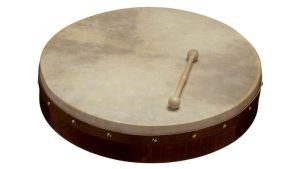
Category: drumming

  • Why I created a podcast called The Wisdom Messenger

    Why I created a podcast called The Wisdom Messenger

    I just launched a new podcast. It took me a while to decide on the name because I wanted the name to reflect the eclectic range of topics that I intend to cover. I didn’t want to niche myself. I’m a multi-passionate person with a multilayered, forever evolving business (the official name is a polymath but I find that term too dry), and therefore the podcast needs to reflect this.

    I’m a sharer. I always have been. It’s in my name after all, Sophie is the French version of the Greek name Sophia means wisdom, and Messager means messenger in French. If you know me you know I can talk the hind leg off a donkey. I share because I want to help make the world a better place. I started blogging in 2015 and I’ve written about 200 posts, with an acceleration at a rate of a post every week or every other week since 2021. I published my first book, Why Postnatal Recovery Matters in 2020. The book has now been translated into 2 other languages, and soon will be available in a third. I’m writing my second book about how drumming can support the birth journey and life transitions.Ā 

    For every person or family who reads my writing and feels heard, supported and helped by it, I feel I’m achieving my soul purpose.

    Over the last couple of years I’ve discovered that consuming knowledge via audio works better for me than reading, because I can listen whilst doing other tasks such as driving, or cooking. It has changed long boring drives into transformative moments. I’ve got a Bluetooth speaker in my kitchen and it has transformed prepping meals from something tedious into something I’m looking forward to. I’ve listened to countless books and podcasts episodes, and it’s a great way to feed my ADHD hyper focus when it drives me to explore new topics in extreme depth.

    So it makes sense that I chose to share my stuff via audio too. I didn’t do it sooner because I didn’t know how and I thought it would be really complicated. Mastering new tech is my nemesis, and I often procrastinate for ages when an element of this is involved. I am very grateful for authentic business coach George Kao, because last week I started his new course called Interview Mastery, and it gave me the impetus to start the podcast.

    Once I started, I realised (this has been true pretty much every time I’ve procrastinated over tech stuff) that the process was actually a lot easier and faster than I had expected. I like to compare processes to giving birth, with conception, gestation, birth and the postpartum (read my post about this here). I had a long conception and gestation, then the birth had some stop starts (mastering adding music to the beginning and end of the episodes took a lot of trials and errors, it felt like a stop start labour!), but in the end it was a fairly speedy, smooth and joyful birth. I’m now basking in the afterglow of high oxytocin and dopamine.

    My signature approach, what I feel I am really gifted at, beyond sharing stuff, is bridging the scientific and the spiritual. I feel humanity is at a crossroad and unless we re-learn to become connected to each other, our inner wisdom, and the planet, we are headed for extinction.Ā 

    In this podcast I am going to share conversations with pioneers in women’s health and personal development to reclaim lost knowledge and restore inner wisdom. I want to help bridge insights from ancient traditions and modern research, question stale cultural narratives and midwife a new paradigm around birth, life transitions, and women’s autonomy. Expect stories and studies that empower women to reconnect with their inner voice and live their truths, to fully trust ourselves and shape our collective future.

    With this in mind, what better first guest could I have asked for than Jane Hardwicke Collings. Jane is a grandmother, former homebirth midwife for 30 years, a teacher, writer and menstrual educator and the founder of the school of Shamanic WomanCraft. Join us as we discuss how drumming can support the birth journey. Highlights of this episode include how making a drum can provide the medicine a woman needs during pregnancy birth and life; Jane’s own birth story and how drumming helped her experience an ecstatic birth; how drumming can help us communicate with our babies during pregnancy, and can effectively reduce pain during birth, and how it can help us connect with our great great grandchildren to know what do to now change the world to become a better place.

    My podcast is called The Wisdom Messenger, a literal translation of my name. You can find it on Spotify, Apple Podcast and YouTube.Ā 

    I would love to hear what you think of the first episode, and also please get in touch if you fit the description of my ideal guest and would like me to interview you.


    Play


  • The Sound of Life: Making a Drum with Amniotic Membranes

    The Sound of Life: Making a Drum with Amniotic Membranes

    I’ve felt drawn to craft a unique instrument from the most primal source, the womb, for years now. It feels like a mystical calling – taking the amniotic caul that cushions a baby’s and giving it new sound and purpose. I’ve longed to feel the energy and listen to the drum beats rhythms these tissues might produce. To honour the mysteries of birth through percussion and song. Now, finally, I’m able to share the wonder of this dream realised. Of a drum birthed from the womb. The experience has resonated within me in ways deeper than expected. Let me tell you how it came to be.

    Last week, I was honoured to be invited into the sacred space of a friend after birth, just hours after she brought her baby into the world. As I held this tender space for the new family, listening to their birth story and first moments together, my heart swelled with the beauty of it all. I remembered at that moment how much I missed this aspect of supporting women through the birth journey.

    The exciting reason for my visit that day was to collect the placenta. For years I had dreamed of crafting a drum made from amniotic membranes, and my friend was generously letting me use her membranes for this magical purpose. I left eager to begin a powerful ritual, transforming this tissue that had nurtured new life into an instrument that would continue honouring the rhythm of life.

    The idea of crafting a drum from amniotic membranes had occurred to me 5 years ago. After reaching out to a few people whom I thought could help, I realised I had ventured into unchartered territory, as no one I asked seemed to know how what to do. The one doula I found who had made such a drum said that they broke after a few days.Ā 

    So I assumed it wasn’t possible and parked the idea for now. However, I set an intention to find a way, and gathered materials in the hope that this would become possible. I attended the birth of a friend in 2020 and we dried her membranes together in the hope of making a drum with it someday. I also saved another set of membranes in 2022, keeping it in my freezer until the time would be right.

    Ā Ā Fate put Melonie Syrett, aka The Drum Woman, in my path. I met Melonie a few years ago, and started attending her drum circles. I also did her sacred women drum circle facilitator training this year. In November 2022, Melonie shared the following on Facebook:

    ā€œSo, I’d like to share something hugely magical that happened recently. A friend of mine had a baby ‘en caul’ – born in the amniotic sac! What an auspicious occasion indeed.

    I arrived the next day and took the caul that had been stored in water in the fridge. Late that night, three of us sat together as I connected to this caul, like I would with a hide for a drum. I hadn’t ever felt anything like it. The energy in the bowl was fizzy, alive for sure, sparky.

    I tentatively held the sac. It was the hugest of honours. I opened it up and gently laid it over a small drum frame. I thought it would be slimy but it felt different… Wet, strong but super thin, barely there under my fingertips.I softly rolled the caul over the edges, trying to tighten and tension it over the frame, all the while quite fearful of it breaking.

    Once over as much as I could bear to pull it, I used some hide lacing to tie the caul in place and gently propped it up to begin its drying process.

    It was a huge honour to be asked to work with such precious materials. I’ve worked with nothing like it before and am so grateful I was asked to do so.And if you tap it, it has the best sound. It’s deep, like a heartbeat.ā€

    I spoke with both Melonie and Jessica (who gave birth to baby Evelyn, whose caul membrane was used to make the drum), and started working out how I could make a drum with the extra knowledge. Jessica shared that the membrane had been floating around in her birth pool, only noticed and picked up when they had emptied the pool. From this I concluded that rinsing the membranes may play a role in the lasting power of the drum.

    I also found the work of Colombian medicine woman Laura Torres in the French book ā€œAccoucher dans un Temazacalā€ (Giving birth in a sweat lodge). I saw on social media that she’d made such a drum. This gave me the idea to look for the Spanish version. Where the English or French searches had returned nothing beyond Melonie’s post,Ā  searching for Tambor de membrana amniotica returned several South American doulas, midwifes and medicine women who had made such a drum, usually using a coconut shell or a small hollowed gourd. Here are examples of such drums

    I even found an Instagram account called Tamborcito.de.placenta that seems to specialise in making such drums. I reached out to a few of these women, and one replied, explaining that she uses saline to rinse the membranes.Ā 

    After I collected my friend’s placenta, I set to work the very same day. It felt important not to set it aside, to work with it as soon as possible, still in the space of the magic I felt after visiting my friend.

    1. I laid the placenta out on a tray, and gently cut out the membranes (both amnion and chorion) with scissors. I immediately noticed how thin and smooth the amnio was, compared to the chorion which was more rough and ā€œmeatyā€.Ā 
    2. I then placed both membranes in a bowl of water. I had to change the water several times to remove all the blood, and despite this there were still little pockets of blood which I could not remove for fear of tearing the membranes. I suspect baby Evelyn’s drum is so clear and perfect because of the pool en caul birth, and the fact that her membranes never sat in coagulated blood like the ones I used.
    3. Whilst I rinsed the membranes, I held them, expressed my reverence, and asked them if they needed anything further to be honoured. They told me that the drum making was honouring enough.
    4. Whilst the membranes were soaking, I spent some time preparing small hoops (I ordered cheap toy drums online and removed the plastic head from them) and spent some time sanding them down to make sure no splinters would catch and rip the membranes.
    5. Finally I gently laid the membranes over the hoops, gingerly pulling on them gently to tension them over the hoops. I found it a challenging thing to do, as I wanted enough tension so the finished drum would resonate, and yet I also feared ripping the membranes if I pulled too much. The amnion was so thin and smooth, it did not need much to keep it in place, so I just used a piece of string, whereas the chorion, being heavier, needed something stronger to give it taught, so I used a leftover piece of horse hide lacing from my drum.
    6. I then propped them up on a tray and left them to dry for a few days. I was pleasantly surprised by how deep their sound was when I tapped them with my fingers (see videos below).

    In this video you can see the different steps I used to make the drums and also hear what the drums sound like.

    After a few days of drying, I tentatively and very gently tapped the drums with my fingers. I was amazed by how strong and deep the sound was, despite the small size of the drum. I own many drums, and the diameter of the hoop is usually indicative of the depth of the sound (the bigger the hoop the deeper the sound), and none of my drums of similar diameter sound near as deep as these drums. Both drums have a different sound and resonance. Here is the Amnion drum, and here is the Chorion drum.

    It has now been a week since I made the drums. The Amnion drum membrane cracked because I did not manipulate it carefully enough (it is VERY delicate, and I made the mistake to turn it face down on an outdoor wooden table to take a picture of the underside of it, and it cracked). My chorion drum is still intact and playable. Time will tell if it stands the trials of time. I know that Jessica’s drum is still intact, 8 months after her birth. She has shared with me that she keeps it wrapped in tissue a tin and manipulates it extremely gently when she wants to look at it.Ā 

    It has felt like a powerful , magical and huge honour to be trusted to craft such a drum with such a special membrane.

    Do you feel the call to craft such drums or offer them to mothers? How would you use such a special drum, and what would this drummaking process mean for you symbolically?

  • How to choose and buy a shamanic drum

    How to choose and buy a shamanic drum

    In this article I want to share the options available if you’d like to get your own frame/shamanic drum. There are many options to choose from and I hope I’ll make nagivating that decision easier for you!

    As I created the content for my Drumming for Birth course, I had one of those beautiful “aha” moments while explaining how to choose a drum. You know those times when you suddenly realise just how much expertise you’ve accumulated, but you did not know until you stopped to reflect on it ? As someone with ADHD, one of my superpowers is the ability to hyperfocus on subjects that fascinate me – and drums have certainly been one of those subjects! 

    At the time of writing this, I own over 30 drums. I’m going to tell you about the categories, the pros and cons of each, and how much a drum cost to buy, including some real unexpected bargains. I’m also going to tell you about what to avoid.

    The type of drums I use are frame drums. One of the oldest known musical instruments, frame drums are found in various forms across many cultures worldwide and play significant roles in spiritual or ceremonial contexts. They are sometimes referred to as shamanic drums. A frame drum is a simple percussion instrument, typically circular in shape, consisting of a round wooden frame 2-4 inches deep, with a single drumhead stretched over one side. They can be played with the hand, or with a beater. The drumhead is traditionally made from animal skin, but synthetic materials are also used. The skin is usually secured to the frame with lacing. Frame drums produce a warm, resonant tone and are capable of a wide range of sounds, from deep booms to crisp, high-pitched tones.

    In my work I use frame drums with a handle, the kind that is played by hitting it with a soft beater.

    Frame drum categories:

    Frame drums come into 2 main categories: the ones that are made of animal skin (known as hide), and ones that are made of synthetic skin (plastic material, or sometimes canvas type fabric). 

    Size matters: the bigger the drum, the deeper the sound. As a rule of thumb, I would suggest you start with something no smaller than 14 or 16 inches for a good sound. Tiny drums do not usually sound great. Really big drums  (20 inches and above) have a beautiful deep sound by they can be unwieldy to carry and hold.

    Synthetic drums

    I have 2 main synthetic drums: A 16 inches Remo Buffalo drum (A misnomer as the drum is made of a synthetic skin) and a 16 inches Remo Bahia Bass Buffalo drum (it has a deeper sound than the normal Remo Buffalo). I also have a couple of synthetic Kanjiras (a small Indian drum with a jingle), and a small 8 inches hand held synthetic Remo which I mostly use for travel.

    Synthetic drum Advantages

    • Good, reliable sound (this applies only to reputable brands, see below on what to avoid)
    • Sounds remains the same regardless of weather/water/temperature
    • If you play outdoors like I do, and live in a cold and wet country, you’ll be grateful to have a synthetic drum. You can play it in all weathers, even in the pouring rain, without the sound being affected. I’ve even taken mine inside sweat lodges and saunas.
    • These drums are typically cheaper than a skin drum, a Remo Buffalo Drum costs about Ā£115 for a 16 inches drum

    Synthetic drum disadvantages

    German company Thomann has sound samples of Remo drums (and many other drums) on their website. 

    Drums made from animal hide

    I own 24 different skin drums, 7 of which I made myself in drum birthing workshops or on my own, and the others I bought or received as gifts.

    Skin drums advantages

    • Unique, beautiful, individual drums
    • Handmade by cottage industry businesses or with your own hands
    • Unique spirit and energy (and different hides from different animals, each with their own unique energy)
    • You can buy them ready made, have them custom made, or make them yourself to your own preference and style (including adding symbols, crystals, painting them etc)

    Skin drums disadvantages

    • The quality can vary a lot & there are fakes (more on that below)
    • They are sensitive to weather, moisture & temperature. In winter you need a fire to warm them up if outdoors or in cold weather
    • They can get damaged by heat or moisture (you cannot play them in the rain and you have to the careful not to leave them somewhere hot, for example in the car)
    • Because they are handmade, they tend to be pricey (from Ā£150 to Ā£300 or more)


    I have skin drums from the following makers, and I trust and recommend their work:

    There are many other makers of drums both in the UK and around the world. Ask for recommendations and see whose work you resonate with.


    One affordable skin drum option I often recommend is the Irish Bodhran. Whilst it is not officially designed as a shamanic drum it works perfectly for that purpose (read my article where I share how I overcame the misguided idea that there was only one right way to play this drum). A bodhran usually comes with a wooden stick called a tipper, and you’ll need a soft beater instead but these are very easy to make (a foraged stick and a stuffed sock or piece of felt attached to the stick with a string or elastic, or watch this video). Or you could buy a beater to go with your drum. Drum beaters come in factory or handmade versions. There are plenty of handmade ones on Etsy.

    My first drum was a Bodhran, bought by my parents in Ireland from the oldest bodhran maker in Ireland, Malachy Kearns, and gifted to me. Malachy Kearns bodhrans start at 130 euros, however I have found such bodhrans available second hand on Ebay or Facebook marketplace for as little as £30 to 40. Another well known bodhran brand is Waltons. Just make sure to buy one that is a decent size, at least 12 to 14 inches.

    When it comes to acquiring a skin drum, you can either buy one ready made, have something make a custom drum for you, or (the ultimate experience in my opinion), attend a workshop with a skilled drum making teacher, and make your own. When someone makes a drum for you, or you make your own drum, this drum carries the medicine that you need.

    Size matters

    With any drum, the bigger the drum, the deeper the sounds ( though I have sometimes seen smallish drums with surprisingly deep sound). For a starter drum I recommend something between 12 and 16 inches diameter. Really big drums (20 to 22 inches diameter) have beautiful, deep, resonant sound, but they can be tricky to hold and carry.

    A few other people I have either seen drums made by (some run drum birthing workshops and also sell kits to make your own drum)

    General instruments shops that sell drums and other musical instruments in the UK:

    A list of makers recommended by knowledgeable friends (but I haven’t seen these drums myself)

    What to avoid when buying a drum

    Quality matters. If at all possible try to listen to the sound of the drum before you buy. There are many cheap drums on Amazon for example, which are poor quality. They would be ok for a small child to play with. I was surprised when visiting Djoliba, a big percussion shop in Toulouse, France, to see a tiny drum cost more than some much bigger ones. The shop keeper explained that the tiny one I was looking at was handmade by a very well known drum company called Cooperman in the US, whereas the shelf of bigger drums I was looking at where factory made in India.

    Sadly there are also fake drums. A lot of what’s sold on Facebook ads, Ebay or Amazon are often fakes/copies of real drum, made in China. People simply copy the artist’s pictures, and print and glue them on a plastic drum the size of my hand. Because they use the real artist pictures in the listing, what you think you’re getting and the reality are completely different, The drums made by Velenslav Voron for example, are so distinctive in style that I  instantly recognised one of his designs on a Facebook ad for Ā£30 on Facebook. I knew something wasn’t right, so I contacted him and he told me about the stealing of pictures, and the cheap copies, and about not being able to do anything about it because if he reports a shop, another shop pops up the next day. A friend bought such a drum and she sent me pictures of a crappy plastic drum not even good  enough for a child, with the picture and surrounding tape peeling off. Currently you can buy drums that look like the Shaman Drums from Ukraine for under Ā£10 on Aliexpress.  Remember: if it’s too good to be true, it probably is.  Get recommendations, and if possible, get to see and try before you buy.

    I hope this is helpful, and if you end up buying a drum with the help of this post I’d love it if you posted a picture of your drum in the comments

    Happy drumming!

    If this speaks to you and you’d like to find out more about the work I offer with the drum, from one to one work, to healing, drum circles, workshops, and courses, you can find out more on this page.

    Or you find out more about how drumming supports your wellbeing in my new book, The Beat of Your Own Drum (the link includes a free sample chapter).

    drum book
  • Drumming for Birth: Reclaiming Our Ancestral Wisdom

    Drumming for Birth: Reclaiming Our Ancestral Wisdom

    I have been deeply immersed in research on the history of drumming, and how it was used for the pregnancy, birth and postpartum journey. I’ve not been able to find much, apart from Layne Redmond’s book, When The Women Were Drummers, and a couple of blog posts and scholarly articles. So little has been written on the topic that the blog post I wrote two weeks ago about the science of drumming and how it helps support the birth process, is now coming up first when I search for the topic online!

    We have no recollection of our shamanic and wise women roots, because Western women’s wisdom and authority have been systematically suppressed, devalued and marginalised AND shamanism has also been actively destroyed.

    I’m going to cover the 2 separate topics: the erasure of women’s wisdom, and the erasure of shamanism, then finish by joining them.

    The erasure of women’s wisdom

    This happened in 3 separate waves.

    First, around 5000 years BC, the beginning of the patriarchy saw the removal of the spiritual roles and power of women. Layne Redmond in her book, When the Women Were Drummers, explains that:

    ā€œThe rituals of the earliest known religions evolved around the beat of frame drums. These regions were founded on the worship of female deities…Women became the first technicians of the sacred, performing religious functions we would today associate with the clergy….Sacred drumming was one of their primary skills.ā€

    ā€œPriestesses of the Goddess were skilled technicians in its (the frame drum) uses. They knew which rhythms quickened the life in freshly planted seeds; which facilitated childbirth; and which induced the ecstatic trance of spiritual transcendence. Guided by drumbeats, these sacred drummers could alter their consciousness at will, travelling through the three worlds of the Goddess: the heavens, the earth and the underworldā€

    With the transition from nomadic hunter-gatherer lifestyles to settled farming communities, property ownership and inheritance became important, leading to the consolidation of power within male lineages, instead of the previous matrilineal system. This shift marked a turning point in societal organisation, as men gained control over land, resources, and social structures, while women’s roles were increasingly confined to domestic and reproductive spheres.

    Secondly, during the witch hunts that took place in Europe (and America) from around 1400 to 1800, countless women were accused of practicing witchcraft and subsequently persecuted, leading to their torture and execution. Many of these women were healers, midwives, or possessed knowledge about herbal remedies and folk medicine. I assume that they may have been drummers amongst them too. The persecution of witches was, in part, an attempt to undermine women’s traditional roles as spiritual leaders, as well as to exert control over their bodies and reproductive capacities. The witch hunts resulted in the murder of between tens of thousands and hundreds of thousand women in Europe alone, creating a void in that knowledge.

    Thirdly, from around the 18th and 19th century, the rise of the scientific and medical fields further contributed to the side-lining of women’s wisdom. As these disciplines became professionalised, women were excluded from formal education and professional opportunities. This exclusion limited their ability to participate in scientific and medical advancements and denied society the benefit of their unique perspectives and expertise.

    The systematic exclusion of women from the medical field and science, and in particular childbirth, was done deliberately, with the portraying of wise women such as midwives and healers as unsafe, and dirty, and ignorant (so that male doctors could keep the lucrative business of birth for themselves alone-see the books Birth, A History By Tina Cassidy, and The Birth house by Ami MacKay).

    The erasure of shamanism in Europe

    The history of shamanic drumming in Europe is rich and varied, spanning back thousands of years. Various European cultures, such as the Celtic, Viking, Germanic, and SƔmi people, practised shamanism, which involved connecting with the spiritual realms through drumming, chanting, and other rituals. Shamans, known by different names in different cultures (e.g., druids, seidhr practitioners), used drums as a tool for trance induction and journeying to commune with spirits, seek guidance, and perform healing ceremonies to accompany life and death.

    With the spread of Christianity across Europe, shamanic traditions and practices were suppressed and demonised as pagan or heretical. Shamanic drumming, along with other shamanic rituals, faced persecution and was actively discouraged by religious authorities. Many indigenous cultures had their spiritual practices suppressed, and knowledge of shamanic drumming was lost or went underground.

    In her book, Les Esprits de la Steppe, Shaman and researcher Corinne Sombrun (the founder of the Trance Science Research institute), explains that Russia made practising shamanism illegal in Mongolia as little back in time as the late 1960s. Shaman’s drums were destroyed and the shamans sent to prison. Some, however, carried on practising in secret.

    In Europe too, remnants of shamanic traditions persisted in some regions, particularly in remote areas. In the northern parts of Europe, such as Lapland and Siberia, the SƔmi people continued their shamanic practices, including drumming..

    In the late 20th century, there was a resurgence of interest in shamanic practices and spirituality in Europe. Influenced by a growing recognition of the value of indigenous knowledge, shamanic drumming began to experience a revival. Today, shamanic drumming circles and workshops can be found in various European countries, providing individuals with a means to explore altered states of consciousness, connect with their inner selves, and tap into spiritual dimensions. This revival often draws inspiration from both indigenous European traditions and broader shamanic practices worldwide.

    ā€œWomen often feel that, along with a portion of their history, they’re missing a part of their psyche. They have lost access to important regions of their minds. Until they can reclaim those parts of themselves, they are not wholeā€ Layne Redmond

    Joining back the two threads

    There is a part of these two threads that is still going on today in the Western world, in the attempt at destroying anything seen as ā€œnot scientificā€ or ā€œnot evidence basedā€. For instance, when something hasn’t been published about, it is assumed not to be effective (which is ridiculous because lack of evidence is not the same as proof of a lack of effectiveness). Our culture reveres science like a religion, and in some aspects our scientific or medical world behaves like a mediaeval church. Rupert Sheldrake explains this in his banned TED talk.

    If this seems far-fetched to you, did you know that today in the UK, there are charitable organisations (which I won’t name because I don’t want to give them traffic), whose sole purpose is to destroy all forms of healing and traditional medicine that they consider to be pseudoscience. They target osteopathy, homeopathy, aromatherapy, reiki, the list goes on and on. Such an organisation successfully prevented osteopaths from saying that they can treat any condition for which the published evidence isn’t solid enough (for example, they are no longer allowed to say that they can treat colic). One such organisation managed to get a job offer post for a Reiki healer inside an NHS clinic removed.

    Similarly, modern maternity care behaves in accordance with patriarchy, where the ā€œexpertsā€ hold the power, and the pregnant woman is seen as ignorant (and potentially dangerous), and where when a conflict arises between rigid maternity guidelines (not themselves based on any solid evidence ironically) and women’s wishes, this usually results in coercive behaviour on the part of health professionals. As a doula I have witnessed this often, in particular with the rise of induction of labour, and women being coerced to consent to induction (without being counselled on any of the risks of the intervention) by using the threat of their baby dying.Ā 

    As Dr Rachel Reed explains in her book, Reclaiming Childbirth As A Rite of Passage,Ā  where ancestral knowledge aimed at protecting pregnant women against the environment, the current system aims to protect the baby against its mother.Ā 

    The reason I feel so strongly that drumming needs to be re-introduced to women and birth is because it can help us tune back into our intuitive wisdom. Bringing back drumming as a support tool during pregnancy and birth is not only an important part of bringing back our lost knowledge, but a powerful way for women to be able to be able reclaim their power and stand up to the ā€œexpertsā€.

    ā€œSo often women feel disconnected from their babies and their own bodies and this process helps work toward healing or dealing with whatever it is that blocks that connection.Ā  Shamanic journeying during pregnancy offers great preparation for labour and birth as both are best approached from a similar altered state of consciousness.”Ā Jane Hardwicke Collings

    Ā  Ā  Ā  Ā  Ā  Ā  Ā  Ā  Ā  Ā  Ā  Ā  Ā  Ā  Ā  Ā  Ā  Ā  Ā  Ā  Ā  Ā  Ā  Ā  Ā  Ā  Ā  Ā  Ā  Ā  Ā  Ā  Ā  Ā  Ā  Ā  Ā  Ā  Ā  Ā  Ā  Ā  Ā  Ā  Ā  Ā  Ā  Ā  Ā  Ā  Ā  Ā  Ā  Ā  Ā  Ā  Ā  Ā  Ā  Ā  Ā  Ā  Ā  Ā  Ā  Ā  Ā  Ā  Ā  Ā  Ā  Ā  Ā 


  • Drumming for Birth: The Wisdom and Science of How Drum Beats Support the Brain and Body to Empower the Birth Journey

    Drumming for Birth: The Wisdom and Science of How Drum Beats Support the Brain and Body to Empower the Birth Journey

    Pregnancy, birth and the postpartum constitute a profound rite of passage. Expectant families are often guided to seek holistic approaches to enhance their birth experience. One such approach, which is gaining recognition, is the ancient practice of drumming. Rhythm is innate, and every culture around the world has (or has had) drumming traditions.Ā 

    Beyond its musical and cultural significance, drumming offers a unique potential to support and empower and heal during pregnancy, birth, and the postpartum period. In this post, I explain some of the ways in which drumming can positively influence the birth process.

    Creating Sacred Space

    Drumming can be part of bringing more sacredness to the pregnancy and birth journey. Pregnancy and birth are sacred processes which deserve reverence and a sense of ritual. In today’s modern healthcare system, where many births take place in hospital settings, it is essential to find ways to re-infuse the birthing process with a sense of sacredness. Drumming is a powerful way to create a sacred atmosphere, adding a ritualistic element that can positively impact the birth experience.

    ā€œAt home I felt in my own space, but in the hospital I felt at the mercy of the system, with a lot of vulnerability. The drumming stirred up my sense of empowerment and of standing up for myselfā€ Leigh

    Tuning in

    Drumming taps into the innate rhythms within us, synchronising the body, mind, and spirit. When expectant parents listen or engage in drumming, it helps them connect with their own internal rhythm and intuitive knowledge, promoting a sense of calm, focus, and empowerment. By embracing these qualities, individuals can navigate the various stages of the pregnancy and birth journey with greater ease and confidence. During labour, drumming can also support the mother into entering an altered state of consciousness that facilitates the birth process.

    In the book ā€œWhen the drummers were womenā€ Layne Redmond explains:

    ā€œPriestesses of the Goddess were skilled technicians in its (the frame drum) uses. They knew which rhythms quickened the life in freshly planted seeds; which facilitated childbirth; and which induced the ecstatic trance of spiritual transcendence. Guided by drumbeats, these sacred drummers could alter their consciousness at will, travelling through the three worlds of the Goddess: the heavens, the earth and the underworldā€

    ā€œI had some gentle drumming at beginning of pregnancy. I found it very calming and healing. The effect lasted a couple of weeks.ā€ Leigh

    ā€œThe main thing I remember was my consciousness ascending with the drumbeat and connecting with my baby’s consciousness and bringing him into this reality before I did it physically.ā€ Ailsa

    Relaxation and Alleviating Anxiety

    The repetitive beats of a drum have a soothing effect on the nervous system, inducing a trance-like state of deep relaxation. Drumming can help reduce stress, and ease the anxiety commonly experienced during pregnancy and birth. This relaxation response not only promotes a more peaceful birth environment but also allows the mother to surrender to the flow of the process. Heartbeat-like drumming reminds us of our time in the womb, and promotes a sense of safety.

    ā€œI wanted a doula who could drum to help me remain calm (I had massive anxiety going into my second birth, for lots of reasons). ā€œ Ailsa

    Increasing Endorphin Release

    Drumming stimulates the release of endorphins, which are natural pain-relieving and mood-enhancing hormones. During labour, the intensity of contractions can be accompanied by discomfort and pain. Drumming can help activate the body’s own pain management system, creating a more positive birth experience.

    ā€œDuring my birth, the drumming felt a bit like when you are jogging and you have power music on, it gave me a power boost. It felt like it was saying ā€œopen up, relax, trust your body, have faith in the journeyā€. It made me feel more confident in my abilities.ā€Ā  Leigh

    Facilitating a Sense of Community and Support

    Drumming can be a communal activity, bringing together partners, doulas, midwives, and other birth supporters. Creating a drumming circle during pregnancy or birth fosters a sense of community and support, allowing individuals to feel held and encouraged throughout the birthing journey.Ā 

    I came to the drum circle on my due date, to ground myself, to feel the vibrations from the drums, and because I felt that it would call my baby into going into our world, to feel welcomed. Kamila

    Connecting with Spirituality

    Throughout history, drumming has been used as a spiritual practice, connecting individuals to their ancestral roots and the wisdom of past generations. By incorporating drumming into the birth process, expectant parents can tap into this ancient wisdom, accessing a deep sense of spirituality and connection. Drumming can serve as a bridge between the physical and the spiritual realms and can also help parents connect more easily with their unborn baby. Drumming helps create a sense of sacredness and people help turn inwards.Ā 

    ā€œI wanted a doula who could drum for me during birth for many reasons, to mark a huge initiation, welcome my baby into the world to the sound of the universe’s heartbeat, to have something of me present in a medical situation, a reminder of the vast context of the process I was going throughā€ Ailsa

    Nurturing the postpartum transition:

    Drumming continues to be a valuable practice beyond the birth itself, offering support and nurturing during the postpartum period. The beats of the drum can provide a soothing and grounding presence, helping new parents navigate the emotional and physical changes that accompany the postpartum transition. Drumming can serve as a form of self-care, allowing individuals to release tension, process emotions, and find inner peace during this transformative phase.

    ā€œA week after giving birth, during the closing the bones ceremony, the drumming helped me release something and really opened up the gates to my connection as a mother. The realisation that I’d arrived as a mother really landed. It was beautiful, I cried tears of joy.ā€ Leigh

    Conclusion

    Drumming offers a unique and multifaceted approach to supporting the birthing process. By listening or practising drumming, expectant parents can tap into their inner strength, find deep relaxation, alleviate anxiety, enhance endorphin release, foster a sense of community, and connect with their baby and spiritual dimensions.Ā 

    Incorporating drumming into the birth journey holds potential for supporting transformative and empowering experiences.Ā 

    If you have drummed during the pregnancy, birth or postpartum journey, or have had drumming during these times, please comment below, I’d love to hear your stories.

    Note:

    I am in the process of collating a lot of drumming research, experience and stories related to the birthing process and women life transitions. If you have stories to share, I’d love to hear them, as I am writing a book about women and drumming.

    Read more: I have published an article about drumming for pregnancy and birth for the International Journal of Birth and Parent Education, which you can download for free here. I wrote another article about it in the Green Parent Magazine, which can be downloaded for free here. I offer an online course called drumming for birth. I gave a talk about the science of shamanic drumming at the convention of women’s drummers in Colchester in November 2023 and will do the same again in 2024. I run monthly drum circles near Cambridge which everyone is welcome to attend. No experience necessary.

  • Drum healing, bullshit?

    Drum healing, bullshit?

    I have been on a journey from dismissal to powerful experience, and I want to tell my story with the hope that it may encourage others to explore this modality too. The first time I heard about drum healing from a friend my reaction was: drum healing? bullshit! It didn’t occur to me to be curious and ask my friend questions about what he did. All I felt was judgement and dismissal. It’s a funny thing isn’t it? We all accept that sounds can do medical stuff (how does a doppler work?), but because shamanic drumming has been mostly erased from our culture, we dismiss it as hippy, non evidence based woo.

    My journey into drumming as a practise came from first hand experience. In 2013 when I attended a doula retreat, and there was a drum workshop called Shamanic Work for Doulas. Amongst other things that day, the teacher led a drum journey. I was very sceptical, thinking “this isn’t going to work”. And yet, as I relaxed into the journey, I had the most vivid visions of what felt like past lives to me. The experience blew my mind and unlocked a part of me that I didn’t know about. It left me yearning for more, and I left the retreat with a desire to own a drum. I told my mother, about it, and she gifted me a Bodhran she has bought on a trip to Ireland.

    I brought the Bodhran back home, but I felt out of my comfort zone playing it. because I didn’t know how. My brother,Ā  a professional musician, showed me how to play it with the traditional stick. I I couldn’t play it well with the stick and felt disheartened. When I returned to Cambridge with my drum, I visited my friend Peter, a scientist, shaman and drum maker. I explained my quandary to him. Peter asked me what I wanted to do with this drum. “Do you want to play in an Irish band?” he asked. I said “no, I want to do some shamanic drumming”. Then he explained I didn’t need to use the stick and showed me how to make a felt beater, and how to use it. This was a very empowering moment, because Peter gave me the confidence to experiment and start drumming. It also helped shape who I am, and how to help others learn and explore in non prescriptive ways. I like to encourage people to develop skills in a way that works for them.

    I started playing my Bodhran and experimenting with it. I did this by myself and with no guidance, a way of exploring things which I now realise is quite natural for me, as a kinaesthetic learner. I have found that, whilst getting tuition from more experienced people is valuable, there is also value in exploring what a new modality feels like for you, without another person’s views affecting your experience.

    The following year, at the doula retreat there was a drumming workshop with Carolyn Hillyer, where we all drummed as a group. I absolutely loved it and wowed to make drumming a regular practise.

    That year I also ended up giving someone a closing the bones massage at the retreat. My friend Rebecca drummed in the background whilst we rocked and massaged and held the women receiving the ceremony. This felt very powerful and I asked questions to Rebecca about it and she suggested I buy a particular drum a maker on Etsy. I bought this drum shortly afterwards.

    Drumming soon became something I added to the ceremony at the end of my closing the bones workshops. I also started offering it to clients who received the ritual and who liked the idea. I loved introducing women to the powerful mind altering state that drumming provides. I had a bit of a drumming hiatus after that. Growth paths aren’t linear. I struggled with some lack of belief in my abilities to drum for a while

    In 2016 I attended another doula retreat, there was more drumming involved with a workshop that included a journey to meet our power animal. It rekindled my love of drumming big time and I felt drawn to birth my own drum. A few weeks later in July 2016, I attend a drumming making workshop with Jo Gray in Essex, Ā It was a wonderful day. I made a drum, and the most gorgeous drum beater, complete with wood burning decorations and crystals embedded in the beater’s handle. Slowly, drumming became more of a normal practise for me, thought I still had a small element of impostor syndrome about it.

    I birthed another drum at the 2017 doula retreat, where we spent 2 days making a drum with Carolyn Hillyer.Ā  13 of us doulas made this drum together. The following year we brought back our drums and drummed together which was magical. This drum became my favourite and I have used it for healing ever since. In 2017 I also felt drawn to get more learning behind my drum healing practise. I attended the Reiki Drum technique training with Sarah Gregg , during which I experienced some deep healing. The Reiki Drum techniques uses the drum to channel Reiki healing onto the person receiving the treatment.

    Joining the Reiki Drum family meant that I also got to attend Sarah’s Spring Equinox Gathering the following year. Drumming together with 60 other reiki drum practitioners was a powerful experience I will never forget. Sarah made a video of the day and if you watch carefully you can spot me in it.

    After that, drumming became something I do, and no longer felt weird. I started offering it as standard as part of my closing the bone treatments and rituals. I also used it as part of women circles, and mother blessings and group closing the bone ceremonies. I love drumming alone, but but group drumming is even more special.

    In 2019 I was lucky to become the owner of a handcarved wolf drum (my spirit animal) from the incredible talented finish drum maker Juha Jarvinen.

    In 2019 I also ticked one of my bucket list wishes: Ā to drum at a birth. I actually got to drum during a two births that year. The first one was a home birth, which felt quite natural to do. The second time, I was specifically hired by a woman who wanted me to drum at her birth. I got to drum in the hospital for the first time. There were two of us drumming during this birth. It was in the birth centre, which is staffed by midwifes who are generally more on board with natural birth than in the obstetric unit.Ā  I was still aware that it could raise some eyebrows, in a “what’s that weird hippy shit they are doing over there?”. It felt very helpful for the mothers to have drumming whilst they laboured, and I was delighted with the experience.

    In November 2019 I felt a pull to take my drum work further and I decided to train to become a Reiki Drum teacher. I did 24 reiki drum sessions in the space of a couple of months as part of my case studies. Some of my case studies had mind blowing healing experiences through it, way beyond my expectations. It only strengthened my desire to carry on. I attended the training in February 2020 and loved it. I haven’t had the opportunity to teach this modality yet due to the lockdowns, but I have found that it has had tremendous effects on my personal growth.

    Early in 2020 I also started attending a gong bath in Cambridge, which has 12 enormous gongs and some giant chimes. I had amazing experiences of relaxation from it, including feeling the ground move under my body, and I could still feel the benefits the next day. If you have never had a drum journey or healing session, I truly recommend it. It is incredibly relaxing, I liken it to having a massage in your brain. It frees your way of thinking and allows you to look at problems and issues sideways and find your own creative solutions.

    In 2020 I also started running monthly drum circles in Cambridge. It went better than I could have imagined. 14 people turned up to the first 2 live sessions, many of which had never done any drumming before. It worked extremely well and all where delighted by the experience. During the first lockdown I ran it on zoom, and then outdoors in the woods over the summer. I am still running these circles 3 years on, and this has included running them online (during lockdowns) as well as in person.

    In May 2020 I turned 50. I started the day drumming in the woods with two other women, and we have been drumming twice a week together ever since. It has been utterly supportive and transformative. It ticks all three boxes of wellbeing for me : me connection to myself, to nature, and to people I love. I link a lot of my personal growth and development to this practise. I’ve also reached the point where drumming feels like a completely normal activity for me.

    If after reading this you still think that drum healing is bullshit, it might help you to know that there is some cool published research on the effect of drumming on the brain, completed with EEG measurement showing an altered state of consciousness. You can find a review of some of these papers hereĀ .

    French shaman and researcher Corinne Sombrun has co-created an institute of research called the Science Trance research institute , and works with neurobiologists to understand the effect of drumming sound on trance like states. One of their published papers states that:

    We present the first neurophysiological study of a normal subject and our co-author, who had received extensive training in the Mongolian shamanic tradition and is capable of inducing a shamanic trance state at will. We integrate original research with literature review and suggest a unified psychobiological model for ā€˜altered’ modes of consciousness. This model incorporates objective, subjective and intersubjective science within a broad evolutionary framework to provide a non-reductionist account of psychological, biological and social determinants of self experience that helps to bridge Western and traditional healing techniques.”