Category: rebozo

  • What is closing the bones?

    What is closing the bones?

    Closing the bones is a traditional postpartum massage ritual. It is most known for its Mexican and South American heritage, but versions of it exist on all continents.

    Depending on the culture, a closing the bones ritual involves different elements. There is a massage, done using scarves or with the hands or both, and a ritual tightening of scarves around the body. In some cultures, such as the Mexican, North African, and Russian version, the ritual also includes the use of a steam bath.

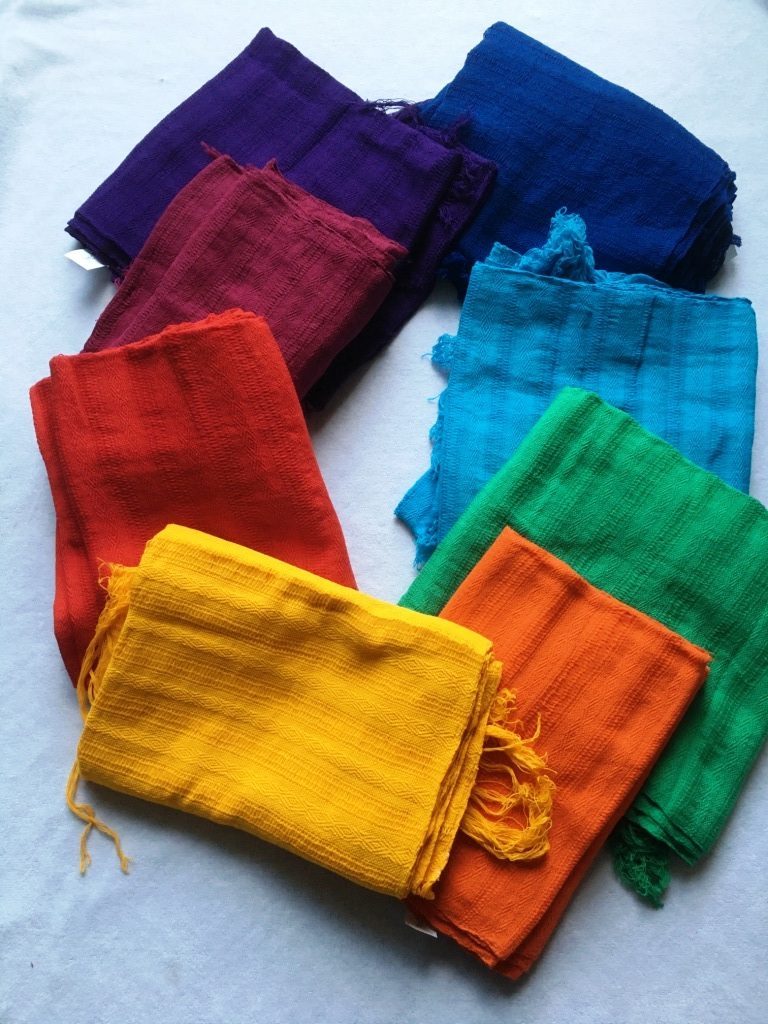
    The closing the bones I offer is a blend of Ecuadorian and Mexican traditions, with modifications created together with osteopath Teddy Brookes. The ritual starts with rocking the whole body with rebozos (a type of Mexican shawl), massaging of the abdomen, hips, ribs, chest, and shoulders, followed by more rocking of the pelvis, and finally wrapping the body tightly with 7 rebozos. The video below gives you a taster of what the ritual looks like.

    Play


    In the Mexican version of the ritual, as shown in this video by Mexican midwife Naoli Vinaver, the ritual starts with a whole body massage, followed by a steam bath, a period of sudation under lots of blankets, and finally the sequential tightening using rebozos.

    What does closing the bones do?

    Closing the bones is not just a massage, but a specific kind of bodywork designed to help speed up and enhance the healing process and changes that the new mother’s body undergoes after her baby has been born. A closing the bones massage helps healing by providing healing movement in the joints, muscles, tissues and fluids. It provides much needed space to simply rest and be and be held, as well as for emotions to be honoured, witnessed and released. Finally, it provides closure, and brings the energy back to the mother.

    Having massaged hundreds of women for over ten years, some as early as 24h post birth, and some as late as 47 years post birth, I know the following: This ritual provides a space for physical nurturing, but also maybe more importantly, holds a space for whatever needs to be expressed, witnessed and released. It is different for every person, depending on what has happened to them. For some it is a joyful honouring, for others it is a space to acknowledge and let go of difficult emotions. 

    I have seen very significant shifts happen in people after it, either physically or emotionally or both. 

    Physical aspects:

    • Very early post birth, it speeds up the healing process. When the uterus is still high in the abdomen and the internal organs are still working their way down in the abdomen, I can feel under my hands how ‘open’ the new mother is, how everything is shifting.
    • Many women have told me that their hips, or back, or both felt much better, more mobile, comfortable and more ‘together’ after the massage. 
    • It is a very relaxing and nurturing treatment and people look more ‘glowy’ and relaxed afterwards.
    • Sometimes the level of healing is so powerful it is difficult to believe. Once I massaged someone who had had a caesarean 15 years ago and whose skin had been numb between her pubic bone and belly button since then. The day after the massage, sensation returned to her skin. I have also seen years old diastasis recti (separation of the stomach muscles) disappear after the massage.

    Emotional aspects

    • People often have big emotional releases during the ritual. It helps whatever emotion pain was held to come out.
    • Many times after the massage people tell me that something significant happened in terms of transition: They got their period back for the first time since the birth, they moved their toddler into their own room, they had a big row with their partner which cleared the air etc.

    Spiritual/energetic aspects

    • It can help move energy that is stuck and therefore provide very deep healing. Once a mother told me that she felt the “brain fog” she had had since her toddler was born 2 years ago being lifted after receiving the massage.
    • Once I massaged a mother who was stooped forward since the birth like an old lady and couldn’t stand up straight. During the massage she had a big emotional release. Afterwards she could immediately stand up straight again.

    Loss, and baby loss

    • Women have repeatedly told me it was extremely helpful for them to integrate a loss, and particularly for perinatal loss. 

    “I came along to the Closing the Bones Training about a year after my baby had died. Towards the end of the ceremony, as I was being rocked deep shudders started going through my body and as the rebozo was pulled tight around my pelvis I felt a huge emotion that even now I am not sure what to call it. It felt as though the protective bubble I had formed around myself moved away and with that my baby – as if I was releasing him. Sobs racked my body. All the grief, the anger, the exhaustion, all the disbelief of what had happened came pouring out. I hadn’t realised how much I was holding on to. I felt the women form a circle around me and felt what it was like to have a safe space held for me, allowing me to just be there in my wild tumult of emotion. I heard someone singing the most beautiful song and someone stroking my hair, hands touching me sending love and support”  Rosie

    • Being the older sister of a stillborn baby and someone who had recurrent miscarriages I have somewhat specialised in giving this ritual after loss. I massaged my own mother, over 40 years after the loss of my baby brother, on the anniversary of his birth, and it was very healing. I wrote a blog about how closing the bones can help after baby loss.

    Not just for new mothers

    • I have given this massage to maidens, to new and not so new mothers, and to crones. I believe it can benefit anyone of any age or gender.

    When is closing the bones done?

    There are variations depending on the culture, but is it usually done within the first 4 to 6 weeks postpartum. The version I learnt is done as soon as possible after the birth, and with straightforward vaginal births, I have done it as soon as 24h post birth, and that’s when I found that it was the most beneficial. However it is never too late and I’ve seen women having very powerful healing experiences with it years after birth.

    What does science says about it?

    As you can imagine and as is the case with much traditional wisdom around the postpartum, there isn’t a lot of published research or written words on the subject. In the research for my book I found a couple of pieces of published evidence to back up this process:

    French midwife Juliette Danis, chose to study the subject in her thesis. Juliette used a simple binding around the pelvis, applied the day after the birth for an hour. She used questionnaires to evaluate its effect on pain in the pelvic area on a group of 160 women. 64% of women described an improvement in their pelvic and perineal pain after the treatment. 79 out of 80 of the women who received the binding said they would recommend it. Juliette explains that the care given to the women after the birth using massages or wrapping has a positive effect both physically and psychically, and that it symbolically helps to redraw the contours of the body. 

    Wrapping after the postpartum used to be recommended in the UK too. In the book ‘An Introduction To Midwifery’ (Donald 1915) the authors explain in detail how to bind the pelvis and abdomen and says that “The binder is used merely to give external support to the loose abdominal wall.”

    To have some form of validation behind the techniques, I practised the techniques extensively with osteopath Teddy Brookes, who gave me some wonderful insight about the effect of each of the massage mouvements on the various joints and organs, how the body benefits from them, as well as reassurance about how effective and gentle they are. 

    In conclusion

    Closing the bones is a beautiful healing ritual, and the most powerful form of postpartum bodywork I know. I want as many people as possible to know about this. My vision is a world where postpartum bodywork becomes the norm once more, and closing the bones something every new mother expects and receives after birth.

  • Belly binding made easy

    Belly binding made easy

    When you think about belly binding after birth, what pops into your mind? Do you see a long thin cloth wrapped many times in a complex way around the abdomen? Do you imagine something complex that takes a long time to learn? Do you believe that there is a “right” way to do it, and that you don’t know how to do that, and therefore cannot help others? Do you believe that it could be damaging?

    I used to believe this myself, I’ve lost count of how many times people have asked me if the type of binding described above is the “best” kind of binding. I’ve also helped many new mothers who were gifted such a long cloth and didn’t use it because they didn’t know how to, to learn that binding can be really simple.

    Belly binding, or postnatal wrapping as I like to call it, is the process of using a piece of fabric, a wrap or belt, to support the abdomen, or pelvis, or both, during the postpartum. It is a worldwide practice, even though it has fallen out of fashion in the Western world.

    I first learnt to wrap myself 10 years ago. As I offered it to my clients, and later started to teach it, I saw how much women, regardless of age, or whether postpartum or not, loved it. it became so present in my life that I started using it for myself at different times, such as when I was on my period, or when I was teaching, and I realised how comforting it was.

    I still had a misguided belief that it would not be helpful during the postpartum because my grandmother wore a corset and it made her muscles weak. My osteopath reassured me that it was safe to use mindfully for a few weeks during the postpartum. The research I did for my book, Why Postnatal Recovery Matters, led me to discover how universal it was, including finding references to it in old British and French midwifery and medical books.

    Wrapping the abdomen and hips during the postpartum is very beneficial because it provides much needed nurturing support.. Physically, wrapping provides support to unstable joints and muscles, as well as comfort and warmth. Emotionally, it brings us back to our bodies and provides a sense of being contained. Energetically and spiritually, it also helps us come back to ourselves.

    I want to demystify the process and help you see that it really is simple. 

    Wrapping tools fall into 3 categories: 

    • Scarves (such as rebozos, pashminas, babywearing wraps, and other pieces of cloth)
    • Velcro wraps and belts (such as belly wraps and sacroiliac belts)
    • Items of clothing (such as Haramakis, support underwear and support leggings)

    Some methods are super easy (you already know how to put on clothing 😉 ) and some methods (wrapping a long cloth around yourself) require a bit more practise and skills.

    Wrapping is like choosing a pair of jeans, so there is no “right” tool, just a range of tools to choose from. It’s very much like choosing a baby carrier: some people prefer wraps, and some prefer more structured carriers. If you are someone who wants to help new mothers choose a method of wrapping, knowing this removes the  pressure to get it right, or find the “best” method of wrapping. All you need to do is offer a range of wrapping options to choose from and let them decide what feels good. How liberating is this?

    Read more, including tutorials, research and links to various wrapping tools in my blog post The Lost Art of Postnatal Wrapping.

    If you would like to learn how to offer wrapping to new mothers and feel confident in using all the tools described above, checkout my new online course, The Art and Science of Postpartum Wrapping.


  • The lost art of postnatal wrapping

    The lost art of postnatal wrapping

    All around the world, there is a custom of binding the hips and/or the belly for the first few weeks after birth.

    It makes sense when you think about the changes the body undergoes. During pregnancy, the body adapts to accommodate the growing baby: the pelvis tilts and widens, the spine curvature increases, the abdomen stretches to accommodate the growing uterus, which in turn also pushes all the internal abdominal organs up. During the birth the pelvis opens. Then after the birth all of this has to happen in reverse. In particular, as the uterus shrinks back to its pre-pregnancy size, and the abdominal organs descend back into place.

    New mothers are  also open physically, emotionally and spiritually, and therefore the wrapping is part of the nurturing support to bring them back to their centre. On a simple physical level wrapping provides support to unstable joints and muscles. It also provides comfort and warmth. On an emotional level it brings us back to our bodies and provides a sense of being contained. On a spiritual level it feels containing and helps us come back to ourselves.

    An example which illustrates this beautifully is the story of Rowena Hazell who gave birth to triplets vaginally. She found that she couldn’t breathe properly after the birth: ” As I tried to get back out of the pool, I had a weird sensation of not being able to breathe, as if all my body was suddenly too heavy. That was odd. On the postnatal ward I couldn’t sit up or stand for more than five minutes without finding breathing difficult. I was having to be wheeled across to NICU in a wheelchair because I couldn’t walk far. The midwives didn’t know why, didn’t take it seriously, and looked at me quite oddly when I said I needed to use a wheelchair. One of the other mums I met had brought a corset in, because she said that she had had severe diastasis recti before. This is when the stomach muscles have separated so much that for a while after birth they simply don’t hold your organs properly in the right place. The mum described it to me as your diaphragm not holding everything in, so it falls out of the bottom of your tummy. This was exactly what it felt like was happening to me! The midwives on the ward didn’t seem to have heard of this, but they did send a physio to see me. The physio made a corset out of a double layer of their largest Tubigrip, and immediately I could breathe, sit up, and walk again with ease”. (you can read her birth story here)

    Postnatal binding used to be part of Western culture too. Whilst doing the research for my book, Why postnatal recovery matters, I found a UK midwifery book from the beginning of the 20th century (An introduction to midwifery”, Donald, 1915) which says: “The binder should consist of a piece of stout calico, or other strong material, about 18 inches wide and 4 feet long. When applied, the lower border should reach a hand’s breadth below the widest part of the hips and should be drawn tightly and fastened securely with a safety pin or long straight pin, so that it may not work up above the hips. The middle part of the binder must be made sufficiently tight to give a sense of support, but the upper border should be rather lose as to not interfere with the patient’s respiration. The binder is used merely to give external support to the loose abdominal wall.”

    In the western world we abandoned the practice of binding, it fell out of fashion somehow. Sadly this means that it is now seen as an old wife’s tale. Midwife Siobhan Taylor tells me that when she gave birth in the 1980s, her grandmother told her to wrap her belly, but that everyone else dismissed it as old fashioned and unnecessary. I fell prey to this belief myself, before I discovered the stories and research that showed me how compelling this practice is.

    In the book Le mois d’or, medical doctor and yoga teacher Bernadette de Gasquet explains the importance of closing the pelvis, and quotes the dissertation of a French midwife who chose to study the subject. I obtained a copy the dissertation, and as far as I’m aware this is the only scientific study of postpartum binding that exists. The author, Juliette Danis, used a simple binding around the pelvis, applied the day after the birth for an hour. She used a set of written and visual questionnaires to evaluate its effect on pain in the pelvic area on a group of 160 women (80 receiving the wrapping and 80 controls). 64% of women described an improvement in their pelvic and perineal pain after the treatment. 79 out of 80 of the women who received the binding said they would recommend it. The author concludes that the care given to the women after the birth using massages or wrapping has a positive effect both physically and psychically, and that it symbolically helps to redraw the contours of the body. She concludes her dissertation saying that midwives should suggest the wearing of pelvic belts for 21 days after birth as recommended by traditional societies.

    I have also found evidence of the usage of pelvic belt in ancient Greece, via French ancient Greece historian Odile Tresch.

    I see postpartum wrapping as a source of comfort, support and warmth. Done in accordance with the mother’s comfort and preferences, it can feel very good indeed.

    This matches my experience of giving closing the bones massages to new mothers: the binding provides much needed nurturing and relaxation. The purpose of the binding is one of wellbeing and nurturing rather than to help new mothers look slimmer. The focus is on healing and comfort. It is part of a process which put the new mother at the centre of receiving loving support, and of postpartum attention to be focused on the new mother and her well-being, rather than on the baby. I talk about it at length in my book Why Postnatal Recovery Matters. Postpartum wrapping is a source of comfort, support and warmth. Done right, in accordance with the mother’s preferences, it can feel very good indeed.

    How do you wrap?

    I want to demystify the process and show you that it is simple and something that doesn’t require expert knowledge, and that you can do yourself. I also want to show you why it isn’t a one size fits all process, and that there isn’t a kind of binding that is better than the others. For example, one kind of binding that seems to be especially popular is an Indonesian type of binding called Bengkung belly binding. Bengkung is sometimes perceived as ‘the’ binding to aspire for. However, as I have done in my book, I want to encourage people to move away from the idea that one type of binding is ‘right’, or better than the others. Choosing a method of binding is like choosing a pair of jeans: you cannot be prescriptive about what fits one person, and you may have to try before you buy. It needs to fit with your lifestyle, and it needs to feel good and comfortable for you as a unique person with a unique body and needs.

    I used to believe that soft fabric was best, until I realised that it didn’t suit everybody. I supported a new mother of twins who was already used to carrying her first child in a woven wrap, therefore already experienced in manipulating fabric. She asked me to show her how to wrap her belly post birth using a rebozo. However, regardless how much we tried, she just couldn’t get it tight enough by herself. She loved one of my velcro wraps, however, so she ordered one.

    We need to remember that many traditional binding methods are usually done by someone else for you. Since few of us have the luxury to have someone come wrap us every day at home after birth, it makes sense that we learn techniques we can use on our own.

    What can you use?

    There is a plethora of tools to use-from simple pieces of cloth, scarves, rebozos, pashmina, babywearing wraps (both stretchy and woven ones) and more. There are also many different velcro belts and girdles, and other simple tools to use, like supportive underwear and clothing.

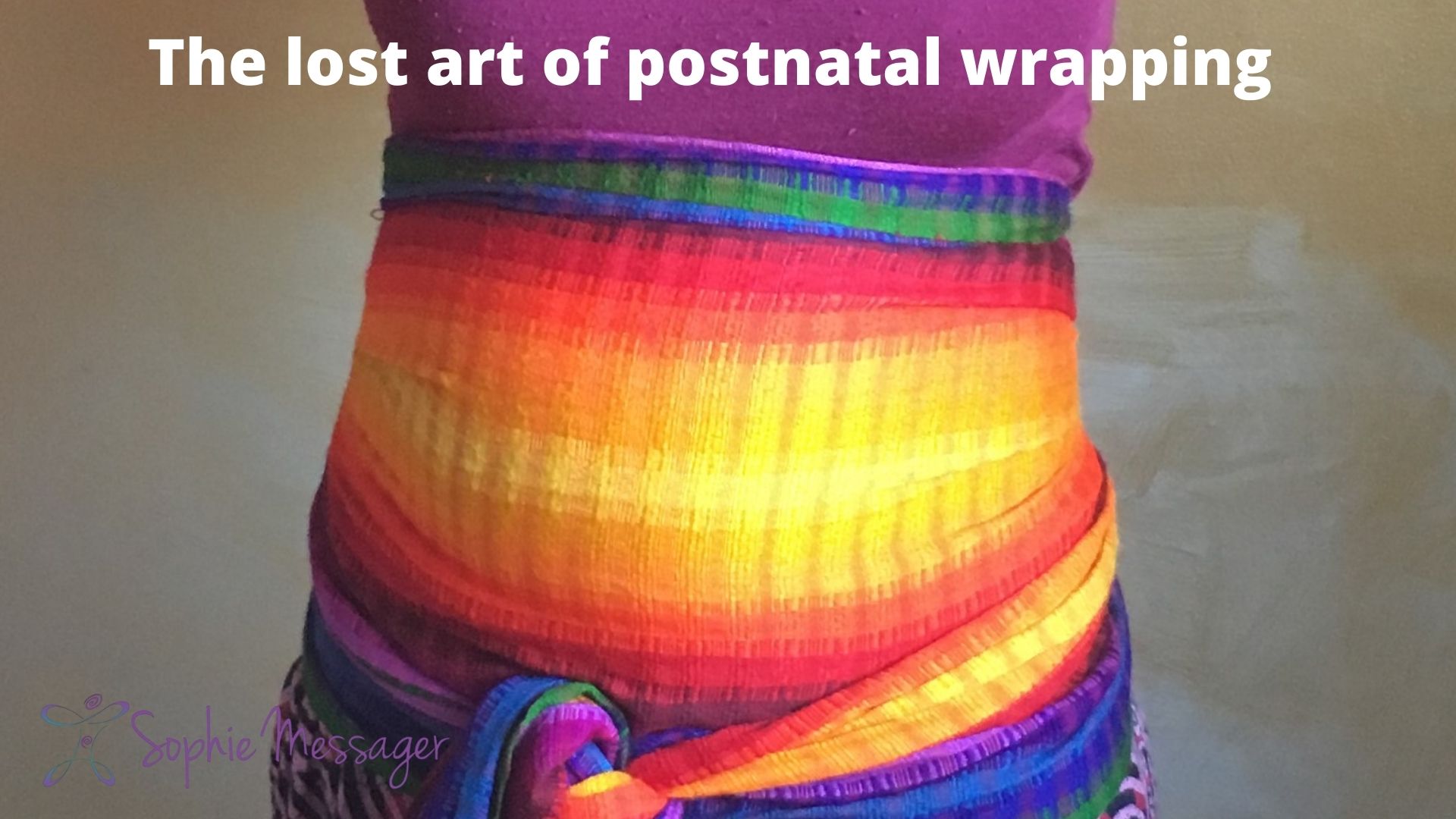
    I am going to list a collection of types of wrapping that I have tried. You cannot go wrong if you start with what appeals to you more and try that first. You can wrap your abdomen or hips by using a scarf (such as a rebozo, a pashmina, of any scarf you happen to have that does the job). You wrap the fabric around you and either twisting and tucking the fabric, or twisting and knotting it, depending on how much tension you prefer, how long your scarf is, and what feels good. I show one way of doing it in the video below.

    Play

    With a long enough cloth, you can wrap your belly, twist at the back, then wrap your hips and tie a knot at the front, wrapping your hips as well as your belly. If you’d like to wrap with a Mexican rebozo, I have some in my online  shop. You can also use a babywearing wrap to wrap your belly and hips after the birth.

    I have had Womb belts specially woven for me by a rebozo supplier, based on the design of the traditional Colombian Chumbe belt that my friend Laura Leongomez introduced me to. It feels incredibly supportive and my postpartum clients love it too. You can see me demoing it in the video below. and Laura and I did a long video about pelvis wrapping where we talk about this belt. which you can watch here.

    Play

    With a very long, narrow cloth (about 15cm wide and 7 m long), you can do the Bengkung style binding, which goes from the hips to the ribs. Here is a video tutorial for it. If you like the idea of the Indonesian belly binding but not the process of wrapping a long cloth around you, there are Dutch postpartum girdles, called sluitlakens, some of which look uncannily like the Indonesian binding. Australian brand Unina has created a Velcro wrap (pictured on the left) which reproduces the effect of the Benkung binding, and which is very easy to use and adjust, and is very pretty.

    If you prefer something a bit more structured, there are many velcro belts and girdles. From what I have experienced, you really get what you pay for: cheap ones are often made of scratchy and/or uncomfortable material. Also a good postpartum belt won’t be too tight at the top, supporting the lower abdomen and pelvis without adding pressure to the pelvic floor. The easiest and comfiest belts also have a double velcro system that allows you to tighten the belt/girdle effortlessly (an important point when one has weak core muscles).

    There are two brands I really like and recommend for pelvic and or pelvic/abdominal support: For pelvic support only : The sacroiliac pelvic belt from Belly Bands, or the Serola sacroiliac belt. For both pelvic and abdominal support : the pregnancy and caesarean 3 in 1 belly band from Belly Band, which can be used for pregnancy support, postpartum support, and post caesarean too. This is a truly amazing product which has been designed especially with mothers in mind. It is extremely comfy and easy to use, and its standard size fits from a size 6 to 16 (they have smaller and bigger sizes too).

    You can see me demonstrate this velcro belt as well as rebozo wrapping in the video below

    Play

    Talking about caesarean, I was surprised about the post caesarean binding myself, as I didn’t know it was a thing. When my friend Kate had her baby by caesarean in Bangkok, they bound her abdomen the next day. She says she healed much better than when she had her next child in Norway, were there was no binding. I found a published paper which shows that binding post caesarean reduces pain. The Belly Band caesarean wrap has a video explaining how you can use it in a hospital setting.

    There are a couple of gentle support options available to you if you’d rather not use a scarf or a wrap: You could use a belly band like a Haramaki. A Haramaki is a Japanese belly warmer. It’s like a boob tube for your waist. Or you could buy a belly band such as the ones that some people use during pregnancy. H&M sells a pack of three.

    You could try high waisted postpartum support underwear, and there are also some brands that offer postpartum support shorts or leggings. Just make sure you don’t use something too tight to avoid putting pressure on your pelvic floor. If you used maternity leggings, they might still work to provide some gentle support after the birth too. H&M has a pair which costs under £10.

    How to choose the right way to wrap/bind for you?

    If you can, try before you buy. With online items, you can try and return items if needed. Only you can tell whether it is comfortable and right for you, so it’s worth trying a couple of options to see which you find easiest to use and most comfy. Some women prefer using a soft piece of cloth, and some women get on better with a velcro belt.

    How long to wear it for?

    Use it like a treatment ie not 24/7, see how it makes you feel, and probably not any longer than for the first 4 to 6 weeks postpartum.

    PS: I have been working with wraps, rebozos, shawls and scarves for several years now and I see them as something that has a lot of use beyond the childbearing years. When it comes to wrapping for example, I now see my period as a mini postpartum time with similar needs, and I find that wrapping my hips or my abdomen or both during this time is extremely comforting. Try it and tell me what you think.

    If you feel drawn to learning more, my book Why postnatal recovery matters has a chapter on postpartum bodywork. I have an online course dedicated to The Art and Science of Postpartum wrapping. I also offer a rebozo online course , a closing the bones rebozo massage online course.


  • Closing the bones : a universal postpartum healing practise

    Closing the bones : a universal postpartum healing practise

    Closing the bones is a postpartum ritual that is designed to help nurture  and heal a new mother. It usually involves a massage followed by a tightening of scarves around several points on the body. Depending on the culture it can also incorporate bathing and sweating rituals. At its heart, it is a process to bring the mother back to herself after the birth.

    I first learnt Mexican and Ecuadorian versions about 10 years ago. Doing research over this time has shown me that it is not restricted to South America, and is present around the world. In this article I share the countries in which I have found versions of this ritual ,along with links illustrating this.

    It makes sense to have the same practice around the world, because the changes new mothers undergo are the same regardless of culture. During pregnancy, the body undergoes tremendous modifications to accommodate the growing baby: the pelvis tilts and widens, the spine curvature increases, the abdomen stretches to accommodate the growing uterus, which in turn also pushes all the internal abdominal organs up. The ribs also flare up to make room for this. During the birth the pelvis opens. Then after the birth all of this has to happen in reverse: the uterus shrinks back to its pre-pregnancy size, and the abdominal organs descend back into place. 

    Closing the bones rituals are designed to provide much needed nurturing, as well as speed up the healing process on a physical, emotional and energetic/spiritual level. New mothers are very open, as the bones and soft tissues are stretched and loose after the birth. On the physical level, the massage and the tightening helps to move the tissues around and support the process of moving from opening to closure.

    New mothers are also open emotionally and spiritually, and the tightening of scarves around the body helps on this level too.  The wrapping helps us feel the contour of our bodies, provides a sense of being contained, and brings us back to ourselves. On an energetic and spiritual level, the ritual helps new mothers come back to themselves, and provide a much needed space to process the complex feelings and emotions that can accompany new motherhood.

    American continent

    • Mexico
      • The Mexican postpartum ritual that I learnt from Mexican midwife Naoli Vinaver includes a full body massage, followed by a steam bath (called a Temazcal), a period of sweating under blankets, and finally the tightening with rebozos around 7 points on the body.
    • Ecuador
      • I learnt the closing the bones ritual from Dr Rocio Alarcon.
      • The ritual involves a rocking of the pelvis with a rebozo (or Manta as its called in Ecuador), followed by a massage of the abdomen, chest and arms, and then the tightening of scarves around the pelvis (or around several points around the body)
      • Gabi Pezo, a doula from Ecuador also shares this comment: Closing of the Bones (Encaderamiento) Fajada is something that has been practised for millenia in Ecuador. In rural parts of my country (Ecuador) Traditional Midwives have done this. 
    • Colombia
      • My friend Laura Leongomez, a doula from Colombia told me the following: I learned this technique in Colombia where it is practised by different indigenous groups and traditional Afro-Colombian communities. 
      • Laura also introduced me to the Chumbe belt which is used during menstruation, pregnancy and the postpartum and was the inspiration for my womb belts.
      • I have heard accounts of various versions being practised in most countries in South America.

    European continent

    • UK
      • In an old midwifery book I found this reference to the use of a binder during the postpartum
      • “The binder should consist of a piece of stout calico, or other strong material, about 18 inches wide and 4 feet long. When applied, the lower border should reach a hand’s breadth below the widest part of the hips and should be drawn tightly and fastened securely with a safety pin or long straight pin, so that it may not work up above the hips. The middle part of the binder must be made sufficiently tight to give a sense of support, but the upper border should be rather lose as to not interfere with the patient’s respiration. The binder is used merely to give external support to the loose abdominal wall.”
    • France
      • I found reference to postnatal binding in an old French medical dictionary, which talks about applying cotton on the belly then a bandage around the whole belly.
      • I have also talked to Doula Celia , who has done extensive research and found evidence of a European version of the traditional ancestral postpartum traditions, including closing the bones, called Le soin des matrones (Matrones being the equivalent of traditional midwives). Her instagram account is full of knowledge around these practices. (use google translate or AI for translation from French into your language). It includes a steam bath, a full body massage, and tightening of a cloth around the pelvis.
    • Holland
      • Dutch friends mentioned an old fashioned binder called sluitlakens, and acquired such a wrap myself. It looks a lot like the traditional Malaysian binding, which is perhaps not surprising given the  colonisation of Malaysia by the Duch.
    • Malta
      • A massage therapist friend has worked there and found reference to it being practised in the past
    • Greece
      • Odile Tresch, an ancient Greece historian, mentions a traditional Greek postpartum belt. She has teamed up with a French seamstress to recreate it and she offers training in using it. 

    African continent

    • Morocco
      • I attended a workshop in London with Layla B who explained and demonstrated the process. The wrapping is preceded by some time in the traditional wet room/steam bath (called a Hammam), and the scarves used are called Kourziyas. I have also found reference to the Moroccan tradition in the thesis of French midwife Juliette Danis
    • Somalia
      • I was the doula of a Somalian mother and her mother showed me how to do the binding after birth. I also met a Somalian midwife who told me the traditional shawl, called a Garbasar, is used in very much the same way as rebozos.
    • Ghana
      • I met a new mother who told me of steam baths, vaginal steaming, and binding done with the sarong type fabric used to carry babies 
      • I have also found accounts of it in Ivory Coast, South Africa, and Uganda (from books, blog posts, and articles)
    • Tunisia
      • The closing the bones massage and wrapping is done using Fouta towels (similar to Turkish towels)
    • Mauritius
      • I massaged a new mother from Mauritius. Her grandmother was present and she told me the practice back home was quite similar to what I did.

    Asian Continent

    • Israel
      • An Israeli doula told me of finding out it was practised back home after learning the practise with me
    • Afghanistan
      • This article shows closing the bones with cloths done in a very similar way to the Mexican ritual.
    • Russia
      • There is a similar practice to the Mexican closing which is called seven locks. The text is in Russian but you can see the process in the video.
    • India
      • I have massaged several Indian mothers who told me of similar practises.
    •  Malaysia
      • The Bengkung belly binding treatment involves a massage, herbal paste applied to the belly and binding of the hips and belly with a long cloth.
      • A similar massage/binding combos called Jamu which origin from Malaysia is found in most of SouthEast Asia (Hong Kong, and Singapore in particular)
      • My husband is from Hong Kong and when I visited I found out that the Jamu massages are available in packages of 5, 10, 15 and 20 massages during the postpartum. My mother in law also showed me how she had been shown how to wrap herself with a towel in the hospital after she gave birth.
    • Thailand
      • A mother who gave birth in Thailand told me how they wrapped her in the hospital the day after her caesarean.
      • I have also found evidence of uterine massage and binding in Vietnam (from midwife Juliette Danis’s thesis), and in Thailand, Cambodia and Burma wrapping (scientific papers)
    • Japan
      • The binder used which is called a Sarashi. 


    Here is a couple of other overview articles that cover the same overview topic as this blog post:

    I hope you find this as inspiring as I did, and if you know of other countries or stories, I would love you to share them so I can add them to this post.

  • Learning with Mexican midwife Naoli Vinaver

    Learning with Mexican midwife Naoli Vinaver

    I’m back from spending 3 intense days learning about the art of birth, rebozo techniques and Mexican postpartum (including closing the bones) with Mexican midwife Naoli Vinaver.

    Naoli had been in the back of my mind for many years. I had heard about her via French doulas a long time ago, because she is very well known in France (she speaks Fluent French as well as Spanish, English and Portuguese). I also read the book she co-authored about rebozo. I remember thinking how lovely it would be to meet her.

    In 2021 I discovered that Naoli was active on Instagram. This led me to discover her online platform. I signed up, and I have been learning from her for 18 months.

    When I found out Naoli was planning a tour of Europe this summer I was very keen to meet her, and I even started the process of organising for her to come to Cambridge. I was delighted when I found out that someone else had organised for Naoli to come to the UK in September, because running training for other people is something I have done in the past and found quite stressful (the admin side isn’t my strength, and I get stressed feeling responsible for everybody’s wellbeing).

    The 3 days training was about the art of birth, rebozo techniques for birth, and the traditional Mexican postpartum ritual, which included closing the bones with the rebozo.

    Having trained with Naoli online since early 2021, including attending several live zoom calls with her, I knew her to be a wise, deeply knowledgeable, yet humble and approachable woman. I have found that true masters of their craft usually have these qualities. I was delighted to meet her in real life. She as she was as warm, wise, kind and easy to talk to as I had hoped she would be.

    Twenty two of us met with Naoli for 3 days in a beautiful barn in a place called the Fold in Malvern.

    The first day was about the art of birth. We learnt about the importance of presence, of being versus doing, or tuning into the mother and of not having set ideas about how to support her. Naoli also explained about the importance of moving “cold” from the mother, that is stuck energies or upsets that prevent the labour from progressing. She illustrated this with many birth stories. She then showed us rebozo techniques to relax the mother, release stuckness, and help stimulate labour, as well as help reposition a baby during labour when labour stalls or takes too long. Naoli invited me to lead a song with my drum at the end of the workshop which I loved.

    On day 2 we worked further into this topic, exploring ways to move “cold” feelings from ourselves, talking about sexuality and birth, and looking at more techniques to help engage a baby, stimulate labour, and unblock stuck labour. We finished the day singing and drumming together, and Naoli played one of my drums as we did 🙂

    Day 3 was my favourite, because we worked on many more rebozo techniques in the morning, including techniques invented by Naoli to realign a malpositioned baby, and to unblock the second stage of labour. My favourite part was the afternoon, as Naoli explained what the traditional Mexican postpartum ritual entails (a whole body massage, followed by a steam herbal bath, followed by a sweating session under blankets, and finally the closing ritual with rebozos. You can watch a beautiful video about it here. We practised the rebozo closing ritual in groups. As someone who teaches and gives this ritual to others, it is quite rare for me to be at the receiving end of this ritual and it felt very special and quite powerful.

    I found that words don’t do justice to this workshop as it was a deep, emotional, and spiritual workshop. I hope the pictures below convey better than words of the spirit of what was shared during these 3 days.

    If you’d like to learn from Naoli, her online platform contains over 40 videos and include a monthly zoom meeting, and is very affordable at $19.5 a month (or $195 a year).

    A side note:

    Yesterday and today I feel quite tired. It was a busy week-end. I left on Friday morning, spent the last 3 days in deep intensive learning, and also drove 3h both Friday and last night, only getting home at 9h30 in the evening. The workshop was exhilarating. It fed my soul and I thoroughly enjoyed the learning and the company of the women who attended the course.  It meant that I didn’t get the normal rest that I get at the week-end. So as I was driving home I made a mental note to get it very easy the next day or two. It feels very important to give myself the time to recuperate. I have blogged about this in the past .

  • Closing the bones massage: why it is so expensive?

    Closing the bones massage: why it is so expensive?

    I recently massaged a new mother, who told me she felt she could only justify the expense because it was also her birthday.

    I get it, because I charge £150, It seems like a lot right? 

    Despite the fact that I have been offering and teaching this massage for nearly 10 years, and giving it to hundreds of women, there is a voice in my head which worries that I am charging too much.  And this is not even taking into account the huge investment I have taken in both time and money to attend training, and to buy equipment in order to offer the best treatment I can.

    We often take for granted what we are skilled at. And we dismiss the time, training, experience and effort it has taken us to get there. And when we start something new we often have impostor syndrome.

    Because of the new mother who felt she couldn’t quite justify the price, I found myself worrying if I was charging too much, and this led me to a reflection about what I charge for this work.

    I want to explain what goes into the cost to help both clients and therapists understand what is entailed. As well as new mothers struggling to justify spending money on themselves, many of my students struggle to charge enough for this work.

    First, a little of of history about how much I used to charge:

    When I started offering closing the bones in 2013, I gave it to my doula clients for free. Then a client asked me what she owed me for the massage. I said it was part of the services, but that if she wanted to pay me more she could. She added ÂŁ30 to my postnatal doula fee for that week, so for a while I charged this. I then slowly put my prices up to ÂŁ40, then slowly worked my way up to ÂŁ120 over the course of ten years.

    Every time I put my prices up, it was after I had done a much longer massage ritual than I expected, especially when there was a lot of trauma. Often, the whole process would take half a day, including driving to my client and back (but not including packing and washing, more on that below). 

    Until today I had never broken down the price for myself like this,  and to be honest, writing it down came as a bit of a shock, and it was a very useful learning experience for me, as I finally understood how much work and love I put into this.

    For reference, people who offer the closing of the bones or the postnatal recovery massage in the UK charge range from about  £80 to over £300.

    Here is what organising and having a closing the bones or postnatal recovery massage entails. 

    Here is the process :

    1. Before the massage, I exchange calls and/or emails with the mother, about timings, and which version of the massage she prefers. Often this may take a 30 min phone call.
    2. I pack a huge bag of kit every time. I check and refill what needs refilling (like the massage oil, essential oils and herbal tea bags). This can easily take about 30 min. 

    My pack includes the following:

    • 2 memory foam yoga mats (or a massage table and table cover for the postnatal recovery massage) ÂŁ70
    • A bolster to put under the knees ÂŁ25
    • A padded memory foam mat to kneel on ÂŁ20
    • 8 rebozos ÂŁ250
    • 2 sarongs ÂŁ10
    • 2 blankets ÂŁ60
    • A bag full of massage oils, and essential oils, smudging products, herbals teas, and healing tools  ÂŁ100
    • An essential oil diffuser ÂŁ40
    • A Bluetooth speaker ÂŁ100
    • A frame drum ÂŁ300
    • A closing stick (I had mine custom hand-painted by an intuitive healer), ÂŁ100

    Total cost: over ÂŁ1000.

    Here are pictures of my equipment

    Then here is what I do in order:

    1. I drive to the mother’s house, up to 30 min (I’ve done longer drives on a few occasions too)
    2. When I get to the mother’s house, I listen to her birth story, and what she hopes to get from the massage (at least 30 min)
    3. I setup the mat or massage table and rebozos, the essential oil diffuser, the music, I set the room and myself up energetically and using smudge, 10 min
    4. I do the massage itself: rocking, massaging and binding (60 min or more)
    5. When the mother lays wrapped up, I read a poem, I sing, I drum over her, and I finish with some Reiki on her head and feet. 20 to 30 min or more
    6. While she rests and integrates, I make her a drink and bring it to her. 10 min
    7. I then allow another 30 min to unwrap, release the lower back, then debrief and chat
    8. I pack my gear, and say goodbye (10 min)
    9. I drive home (another 30 min)

    I always say the ritual takes 2h from start to finish but for me it almost always takes longer, because I do not want to rush listening to the birth story, doing the ritual, holding whatever emotions needs to be held, and a debrief afterwards. It’s not unusual for me to spend 3h there. I am generous with my knowledge, and I often also show new mothers to wrap their belly and hips afterwards. 

    When I get home, I unpack my bag. I wash all the rebozos and blankets, then dry them, fold them up, and repack my back. This takes another 20 to 30 min.

    The total time the average process takes is over 5h, which at a cost of £150, is only £30 per hour, which way below the cost of a typical massage per hour. In my area in Cambridge, a one hour massage starts at around £60 per hour. If I was to charge this much, a closing the bones ritual would cost £300. 

    I hope this helps you understand what offering this ritual entails, why it is priced at this cost. And I also hope it inspires you to get together with friends to buy such massages as gifts to new mothers & women.

  • Postnatal bodywork is a need not a luxury

    Postnatal bodywork is a need not a luxury

    I just gave a closing the bones massage to a new mother. She was only one week post birth.

    When we sat down to have the pre-massage chat (I always want to hear about how the birth went, and what the mother is hoping to get from the ritual), she explained that she only felt able to justify the cost of the massage to herself because it happened to be on her birthday.

    I felt so many emotions when I heard her say this. I felt sad for her (she just grew and birthed a whole new person, and yes didn’t feel she deserved nurturing). I also didn’t feel surprised, because in our culture we don’t value motherhood, we place value on the baby only, all the presents are for the baby, and it can be hard to justify spending money on yourself. I also felt brought back to my own experience as a new mother (and so had a lot of empathy for her), and finally I was reminded why we need to change our culture so much around what normal postpartum support looks like.

    There is still so much work to be done so that nurturing new mothers becomes seen as the norm once more, rather than an indulgent luxury.

    When I was a new mother myself, I didn’t feel able to justify hiring a postnatal doula, but I bought tons of useless stuff for my baby. Not having hired my birth doula during the postpartum is one of my biggest regrets, and I wrote  about it in my blog, I wish I had hired a postnatal doula. 

    Before booking the massage, whilst still pregnant, this mother had already voiced her hesitation at paying so much money for a massage.

    £120 might seem like a lot, right? But compare this to the cost of the average pram, or of all the gifts that people buy for the baby. Wouldn’t that money be better spent on nurturing the mother? If a bunch of friends got together to buy a new mother a voucher for this type of bodywork post birth, it would cost them the same amount each as some of the bouquets of flowers or baby toys that most new families receive, and if would have much more of an impact.

    (note: because I too worry about charging too much, and it is a theme I see within the cohort of students I train to offer this ritual, I have also written a separate blog in which I break down the price of the massage, and you’ll see that, for what I provide, it really isn’t a lot of money.)

    Every time I give a closing the bones or a postnatal recovery massage, I can see how it is a need, not a luxury, and this instance was no exception. The changes a mother’s body undergoes whilst pregnant, and somewhat in reverse after birth, plus the process of birthing itself, surely these warrant giving the body some love, some nurturing, some reverence even? And surely, having a treatment designed to help the body feel good and heal faster, and to give a window of deep rest, especially whilst battling with the demands and tiredness that looking after a newborn entails, should be the norm rather than the exception? After all, the mother singlehandedly grew and birthed a whole new person, surely she should be celebrated as the goddess that she is?

    Today, after the massage was finished, the mother said it was amazing, and way beyond her expectations. She said she loved everything, and that she couldn’t find the words. She said that it was so much more than a massage. She mentioned telling quite a lot of people about it. I was grateful that she loved it, and also grateful that it reminded me why this work is so important. 

    Much more than a massage is a word I had heard many times when I had given this ritual. It isn’t something one can be told about, it has to be experienced for oneself. The experience is different for everyone. It is a ritual, a slice of time for yourself, to be held and nurtured, to feel heard, to have your feelings and experience validated, to remember what it feels like to be safe. It is a gentle, nurturing and healing process of rocking, massaging, and wrapping, which can have healing effects at every level, physical, emotional, and spiritual. I should know, especially as I’ve had similar massages done on me recently by other people, and it was deeply healing.

    PS: I was delighted to be booked for a repeat massage by this mother a week later. She said that this time she wanted it just for herself, not because there was a special occasion.

    If you want to learn to offer this ritual, I offer an online course called the Postnatal rebozo massage and closing ritual, and I am running a rare live postnatal recovery massage course near Cambridge on the 18th of July with osteopath Teddy Brookes.

    Here is a little video of what the closing the bones and the postnatal recovery massage look like.

    Play

    Play

  • Why I offer mother blessing ceremonies

    Why I offer mother blessing ceremonies

    I would like to tell the story about how I came to offer mother blessings ceremonies and the journey that led me to do this in the hope that it may inspire others to do the same.

    I’ve always had an intuitive sense of the lack of ceremony and rituals, and sense of everyday sacredness within our culture. And I’ve had a longing for it all my life. 

    I was raised a Catholic. I left this faith behind as a teenager as it didn’t feel right for me. I noticed that, after leaving the church, I was left with nothing in terms of spiritual life. As a culture, it seems to me that we have squashed our innate wonder and unique sense of spirituality and that it’s only allowed to fit in the neat boxes that belong to organised religion.

    It took me many years to re-create a spiritual life that fitted my unique self, and becoming a doula was a big part of the process.

    In 2013, during my first year as a doula, I attended a doula retreat. There I learnt the closing the bones ritual and attended a shamanic drumming workshop. After the retreat I had a deep longing to create more sacredness in my life. I found the return to normal life, especially with 2 small children to look after, full of drudgery and so lacking in the connection I had experienced during the retreat. A doula at the retreat had mentioned that I could create the sacred in my everyday life, but I didn’t know how to do this. My desire to create community ceremonies came from this longing, and to fulfil this need for myself and for my community.

    When I completed my mentored doula journey in the Autumn of 2013, I didn’t want to celebrate with just a meal, but have a meaningful ceremony instead. I asked a couple of friends to help design such a ceremony for me. The ceremony, a small intimate affair with my doula and my doula mentor, and a doula friend, was perfect. I then used the same process to organise recognition ceremonies for other local doulas.

    Altar centerpieceI started offering mother blessings in 2016 to local doulas because I felt that doulas gave a lot to their clients but rarely received the same attention themselves. I felt very strongly that they should be celebrated and nurtured by their community when expecting a baby themselves. You can read about such a gathering in this blog.

    I was blessed to lead many beautiful blessing ceremonies, and sometimes even organised for the same group of women who came to the mother blessing come back after the birth to do a group closing the bones ceremony.

    I had impostor syndrome, so I spent about 3 years doing mother blessings for free to doulas, friends and clients before I felt ready to offer it as a paying service. Even then, when I did get booked for my first paying mother blessing, I worried that my client would not find it good enough. However, she loved it, and she was very happy to pay for it. 

    I’m not someone who does things by half, and I poured my heart and soul into preparing for the ceremony, spending many hours researching activities, discussing options with my client, and preparing equipment to bring to the ceremony. All in all I think I spent well over 15h for this blessing between the prep and the blessing itself.  I hadn’t realised how time consuming it would be and I put my price up afterwards. Luckily my first client was also self-employed and reminded me to make sure I charged her for the time I spent with her on emails and phone calls as well as the face to face meetings. 

    Soon I found myself doing a lot of mother blessings. I loved that, with each new experience, I would learn new things to add to my repertoire of options. One woman asked to have a collage activity to create a vision board for her birth, and I love it so much I have done it ever since. 

    I also learnt about the importance of offering options and let the person choose rather than imposing my kind of ceremony. There was a Christian doula who wanted to make sure nothing in the ceremony would clash with her religious beliefs. There was a client who wanted the full hippy ceremony complete with red fabric, red clothes, smudging and drumming, and painting her belly with henna. There was a client who loved the idea of the a very hippy affair for herself,  but knew that her family members would be put off by it so we toned it down, replacing the smoke smudging by creating a bespoke auric spray, and having a very simple, low key decoration. There was a woman whose partner was very sensitive to smells, so instead of using smoke or sprays, she made little individual essential oil roll-on bottles for people to apply to their wrists at the beginning of the ceremony.

    Last year I organised a ceremony for a pregnant friend, and her partner went off with the rest of the men had their own father blessing in a different location, then we all came together for a meal afterwards. I found this particularly lovely. 

    I also ran the biggest group I had ever run, with about 25 people in a building within a private woodland, with another doula friend to help me, and it was beautiful and very spiritual. 

    Now, with several years of experience behind me, running these ceremonies feel within my comfort zone, and I have so many options and ideas to offer that I can easily create a beautiful bespoke ceremony.

    In 2021 I ran my first live workshop on how to run mother blessings  for a group of doulas and midwives. I loved teaching it and I got incredible feedback from my students. Several said that they’d found it the best workshop I had ever taught, and that it was hard to believe that I was teaching it for the first time. Here is some of the things they said:

    • “I loved the beautiful energy you created here”
    • “The experiential learning was fabulous”
    • “I particularly liked the circle energy, the flow, and the drumming, it was all beautiful”

    I decided to teach people how to offer mother blessings because I want to encourage more sense of sacredness into the lives of pregnant women, more celebration centred towards them and more community building, as well as help put in place postpartum support in place by gathering pledges of support during the ceremony. I’ve just launched a new online course to spread this even further, and I’m delighted to report that I have students from all over the world booked on the course.https:https://sophiemessager.com/how-to-run-a-mother-blessing.

    Today I charge clients but I also still do free ceremonies for friends. I did many of these in 2021. In one of them I remember driving a long distance and asking myself why I’d agreed to do this. However, the ceremony itself was so touching I was moved to tears (and so were all the other guests in the room including the mother’s mother, who told me afterwards that she had found in extraordinary). It made it so worthwhile and left the gathering with a very full heart.

    What do I love about mother blessings? I love that it creates a sense of community and support around the expectant mother. It gives me joy. It make the mother feel very loved and special, and it makes everyone who attends feel this way too. I love that it helps put community support in place for after the birth too. I love that the feeling of belonging lasts beyond the ceremony. I love wearing the red thread on my wrist as a reminder until the baby has been born, and I love telling everyone to light their candle when we hear that labour has started. Most of all I love that I help bring a sense of wonder and sacredness back into people’s lives.

    I love that it spills over into the rest of my life and how I often use some of the honouring activities (like washing someone’s feet and massaging their hands and feet, or telling someone what we love about them) as part of the birthday celebrations of my friends. I love that, with mother blessings, we can help start a cultural shift from a culture where all the attention is focused on the baby, towards one that is more mother centered.

    Understanding what attending such a ceremony feels like isn’t something you can be told about. You have to be there to get it. Often, guests approach me at the end of the gathering to tell me how they had never taken part in something like this, and how much they loved it.I love giving people a positive experience that will remain with them for the rest of their lives.

    How does this post make you feel? Does it resonate? Have you have a mother blessing, wished you had one, or taken part in one, or led one? Please comment below. I would love to hear what you think.

  • Why I am stopping doula work

    Why I am stopping doula work

    As I write this blog I am on-call for my last birth as a doula.  I’ve made the decision to stop doula work.  This might come as a surprise and I’d like to explain the long process that led me to take this decision.

    Being a doula is a very demanding and challenging job. It is not for the faint hearted. The emotional investment in our clients, and the logistical demands of the job are phenomenal. When I support a family during pregnancy, I’m always there for them, often at the expense of my own and my family’s life  (Read my blog post about this). The on-call period in particular, as well as not knowing how long I will be gone to support a birth, makes for very challenging juggling, especially with young children. Being a postnatal doula also comes with unpredictable demands as clients may need you at very short notice. The nature of birth and early parenting is unpredictable. 

    When I work with a family as a doula I become very emotionally invested in supporting them. I am 100% there for them. The first year of my doula work, my parents came to stay with me during a school holiday. I was on call and my mum said “You’re not there”, and that was true. I wasn’t. Energetically and emotionally, I was with my client. 

    As doulas we build a deep relationship with the families we support. We are there at every turn of the way. We are there listening to their hopes, their fears, their worries. We become deeply invested in helping them get the birth experience they hope for. We are deeply empathic so their challenges become ours. We share their joys, and their frustrations. Sometimes we share their disappointment, and sometimes we even share their trauma. We cry tears of joy and sorrow with them, or for them. 

    Sometimes people don’t get the birth they hoped for. Sometimes there is hurt, sorrow and trauma. Sometimes we are more traumatised than our clients by what we have witnessed. Because we know, when we witness callous care from medical professionals. We know when people are being pressured into consenting to interventions just because a guideline says so.

    I’ve been a doula for nearly ten years. I attended my first birth in the summer of 2012.

    In the past, the joy of supporting families through birth made up for the challenges. I adored my job. It energised me. It filled my heart. It gave me a deep sense of fulfilment. Because of this it didn’t feel too challenging despite the demands and extreme flexibility and sacrifices it required.

    It is a true privilege to support people when they bring new life into the world. There is nothing quite like the moment of birth, especially when the birth goes well.  No other job has made me cry tears of joy the way being a doula has. After supporting a birth, I often go home with my heart swelled with joy..

    When I started this job I thought that, in my time, I would see improvement in maternity services, but I’ve only witnessed the exact opposite.

    In 2020, it got much worse. The pandemic brought restrictions to visitors, and I wasn’t able to physically attend births in hospital from March 2020 to July 2021. I learnt that I could still make a huge difference even when supporting people remotely, but it robbed me of much of the joy doulaing used to bring. I remember a particular low point in the summer of 2020 when, having just remotely supported a client through a long induction (neither her partner nor myself where allowed in the induction ward-this felt so dehumanising), I met a client I had supported 3 times previously (this was her 4th birth) outside the hospital to give her a hug, and watched her walk inside the hospital alone, without even her husband. I drove home and told my husband I was done.

    Later in the year there were moments that gave me hope again, when I saw how much of a difference I still made, especially for families who had no family nearby and I was the only other adult they saw for weeks. But overall something started to feel amiss.

    Along the pandemic restrictions, and dehumanising decisions of only allowing partners in established labour, as well as many other disproportionate restrictions (my local hospital even stipulated that doulas couldn’t be present at a home birth when the midwife arrived!), the rate of interventions (inductions and caesarean) rose very fast without any evidence to justify it (I wrote about this in my blog: Induction of labour, does it really saves lives?).

    I noticed that, whilst in the past a small proportion of my clients would require support in fighting for their rights to birth the way they wanted, now, every single client fell in this category. The rise in induction rate in particular, saw almost every client being pressured to  consent to an early induction of labour (around 38 or 39 weeks of pregnancy). These clients were being told this at 12 weeks pregnancy because of their ‘risk factors’. 

    The energy of doing this work started to feel warrior-like. This was a regular instance before, but suddenly this was all I felt, all of the time. I started to find it exhausting. In 2021 I supported several clients who refused to be induced at 38 weeks and fought extremely hard for the birth they wanted. I saw so much bullying, and so many threats designed to make them comply. 

    I saw a level of bullying the likes of which I had never seen in ten years. I saw doctors scouring old medical records and bringing up historical medical issues against clients. I saw people I used to rely on for being women centred at my local hospital start to toe the line and talk the same fear speech as everyone else. Whilst I loved supporting my clients and seeing them experience positive births against all odds, it took its toll on me. I started to notice that the constant fighting was harming me.

    In a few weeks I’m going to be 52. I am nearly menopaused. Interestingly I started working as a doula when my perimenopause started (it’s normal for the process to take up to 10 years). As I enter this new phase of my life, cronehood, I feel a deep need to be in the energy of support and love. I want to be an elder at the back of the battle line, supporting people with more youthful energy. The energy required for being at the front line of maternity services in its current state feels at odds with who I am now. The maternity system has become so unhealthy and damaged, I no longer have the energy or the desire to fight against it. I want to use my experience in a different way.

    Don’t get me wrong, I am still an activist. I am grateful to my friend Scarlett who pointed this out to me. It started with my blogs and with my book. I can still affect change in a positive manner, by sharing my writing and knowledge with others. But I no longer want to bang against a brick wall all the time. This feels like such a waste of my energy.

    I need to live a quieter life. A slower rhythm. I want to spend more time being connected to nature. Over the last 4 years I have been on a journey of getting out of work overwhelm by immersing myself in nature. This has shown me that having the time and space for this is vital to my wellbeing, and for my business to thrive. I swim in the local river all year round. I drum in the woods with 2 other women. I practise mindful dancing weekly (5rhythms and other styles). I take part in land based rituals which honour the turning of the wheel of the year. These practices are the first things I put on my to-do list. They are the foundations on which I build everything else.

    Many of my doula friends and clients have been shocked when I say I’m going to leave. They say that I’m very experienced, and very good at it. This is true. However, I am not leaving with regrets. And the work I will do going forward will use the skills I have acquired being a doula. As well as finding this work unsustainable over the last couple of years, I also have a strong inner knowing that this work is no longer what I am meant to do, and that, until I leave this work and its very high demands on my time and energy, I will not be able to do what I am called to do right now. 

    Ten years ago I left a 20 year long career as a research scientist behind to embark on my work as a doula. I remember feeling incredibly excited about it. It was a decision that took a long time to enact, because I retrained as a doula and an antenatal teacher and babywearing instructor, whilst working 4 days a week as a scientist. During these 4 years I also changed jobs twice and had my second child. It took me 4 years because I needed to build a new income, as well as wait until my second child was old enough to go to preschool.

    The decision I’m making to leave doulaing has a similar energy to it, at the cusp of something as transformative and different. Except this time there is a sense of calm and trust about it rather than excitement. I am also not leaving employment, but changing the focus of my self employment.

    Last time I had a plan and bidded my time until I had qualified and built a bit of an income. This time I sense that I don’t quite know what shape my new work is going to take. I just know that it is about helping people connect to their heart and inner knowing (which is something that has always been woven in everything I have taught for the last ten years already).

    If you have ever seen the Indiana Jones movie called The Last Crusade, there is a scene towards the end where Indiana has to take a leap of faith and step over a precipice. When he steps into the void, an invisible bridge magically appears underneath his feet. That’s where I feel I am. And surprisingly for someone who used to be a control freak, I feel mostly OK with it.

    What I look forward to:

    After ten years of being on-call on and off for most of the time, I look forward to living without the pressure of knowing that I may need to leave at a moment’s notice. Of not waking up in the middle of the night checking my phone in case I’ve missed a text message. Of not being able to stray far from home in case my client needs me. Of making constant backup plans and warning my friends that I may drop out at the last minute. Of not having to cancel things.

    I look forward to not having to worry about whether the midwives or doctors supporting my client will be kind. I look forward to being able to rest and relax and be present to my family, my friends, my dancing, swimming and drumming. I look forward to being able to serve my community more, both locally and further afield.

    I have had a sense, since I published my book, Why Postnatal Recovery Matters, in 2020, that I am meant to reach a bigger, more international audience. This has been reinforced by the fact that, without me seeking it, my book has been translated in 2 other languages (Italian and German. The French translation is under way too). Since 2020, having been forced to moved to teaching online courses, has also resulted in my gaining an international audience. Leaving doulaing, where all my attention and energy is given to one family only, also feels in alignment as I will then be able to share my knowledge with more people.

    What I will miss:

    I will miss the intimate interactions with families that I experience in this job. I will miss getting to know people deeply as we walk the journey together. I will miss sharing their joys and their sorrows, and rejoicing with them as they find their feet. 

    I know that I may miss seeing the direct impact I have on people’s wellbeing and confidence. This is not a new experience for me. I went through a similar process when I gave up  teaching NCT classes and running a sling clinic in 2016. I had run both of these activities for 6 years when I decided to stop. I gave this things up because they no longer made my heart sing, and because I knew I needed to make room to teach the people who teach to parents, as opposed to parents themselves. This feels similar. I won’t necessarily see the results as I do in one to one work, but I think this will help reach more people and make more of a difference overall. I hope to hear from people who take my courses or read my book what positive impact it has had on them and the families they serve.

    What I’m going to focus on now:

    I am still going to be present in the birth and perinatal world. I am going to carry on offering online courses, and the odd face to face course (I no longer want to run live courses at the frequency I used to before 2020, which was 2 to 3 courses a month). I want to create new online courses, downloading all the knowledge and wisdom I have accumulated through my birthworking years, to share with others. My next online course, on which I am working right now, will be on how to run a mother blessing. I want to carry on offering mentoring for women and for professionals, but not necessarily limit myself to birth professionals. This has already happened in my offering impostor syndrome sessions.

    I want to carry on offering mother blessings and closing the bones ceremonies. I want to offer training in spiritual and intuitive knowledge. To help others develop their inner knowing, intuitive healing and to listen to their hearts. To connect with nature. I want to help more people discover their soul’s purpose. To connect with themselves. I want this to be from a place that doesn’t belong to a prescriptive model, but helps people develop their unique abilities. 

    I want to carry on bringing more of the sacred to my life and help others do the same. I want to run more regular connection and community building activities, like drum circles, in my local community. 

    My word of the year 2022 is Opening. I am excited for what is coming.

  • Resting after birthing a project

    Resting after birthing a project

    Earlier this week, a short text by Sylvester McNutt popped on my feed. How apt, I thought. It said this:

    • “Creative people need to sit around and do nothing
    • Creative people do not need fully booked calendars
    • Creative people need to hear the world’s heartbeat
    • Creative people need stories and words to inspire
    • Creative people need space to feel, think, and be”

    I thought this was apt because I had just finished launching an online course. I had spent the last couple of weeks focusing exclusively on that, using what short time I currently have (whilst also looking after my new puppy), in short, sharp, focused burst. Then I ran a webinar which over 150 people from several different countries attended. It had been a lot of intense work to get it all done within the deadlines I’d given myself. 

    A day or two before I ran the webinar, I remember thinking: next week I need to rest. I’ve come a long way into accepting this process of growth and rest, but I’m still somewhat experiencing resistance to it. The conditioning of being productive all the is so strong in our culture, and even if my own wisdom speaks louder than ever before (this was the first time that my inner voice had told me ahead of time to prepare for rest), something in me still fights it. Something within me naively believes that I can carry at the same pace all the time.

    My body had other ideas: the day after the webinar I started feeling unwell, exhausted, with chills. This abated when I rested, but, like a convalescent who gets back to work too soon, I thought I could go back to business as normal the following day. My body would have none of it, and I felt unwell again the next day, and had to spend most of the day taking it easy and asking my family to step in and care for the puppy so I could rest. 

    This isn’t the first time this has happened to me. The first time I remember crashing in a spectacular way like this was the day after handing over my completed PhD thesis, 25 years ago. I fell ill and had to be in bed for a few days. Whilst working to a deadline can be exciting, we can only run on adrenaline for so long.

    I have been exploring this topic, and my resistance to it, for years. I’m slowly getting better. At least I’m aware of the pattern. Recently, having a Human Design reading with Bingz Huang was very helpful to cement this knowledge further. In my design, I have the Hermit/Opportunist profile. This means that I need alone time after being with people.

    I have blogged about my process several times over the year. You can read about my journey in chronological order in the following posts:


    I’m going to turn 52 in a couple of months. I’m nearly menopaused. As I get older and more in tune with myself I am much more aware of the need to listen to my body’s needs for quiet and rest. In fact the need for a peaceful and slower pace of life is deep, and one of the reasons I am stopping birth doula work (more on that in a blog post soon), and moving into teaching online rather than face to face and travelling constantly like I used to pre-pandemic. When I give my energy to the world, I need to retreat and rest afterwards. In the past, when I taught face to face, the need for rest afterwards was very clear because it was intense physically as well as energetically and spiritually. When working online however, it was easier to ignore, despite my inner voice’s warning. I fooled myself into believing this didn’t count. However, I connected with a large group of people, and I think energetically it’s very similar in terms of demand to being face to face. I probably need to develop, beyond the post creative rest, techniques to protect my energy when teaching live online. This will be the subject of another post (research it) 

    More recently I wrote a blog about the birth cycle as a model for joyful productivity. 

    As I walked my dog this morning I thought: this is like a mini postpartum. Even the chills caused me to wrap myself with a womb belt and hot water bottle. 

    Going forward, plan to heed my own wisdom and plan for a mini “postpartum rest” after the birth of each new project.

    Since my inner voice warned me this time, I made a vow to plan for such rest in the future after finishing creating something new. To use my own template of the 4 pillars of the postpartum: social support, rest, food and bodywork. To book myself a special treatment ahead of time when planning to launch a new course or any other big creative birthing.

    Does this resonate? Do you experience this need to rest, to slow down, after an intense period of creativity and/or productivity?  Do you plan for the flow of birth and rest?