After supporting hundreds of women, teaching over 1,400 practitioners, and continuing to evolve my work through years of practice, I’ve realised something important:
Healing doesn’t have to be complicated.
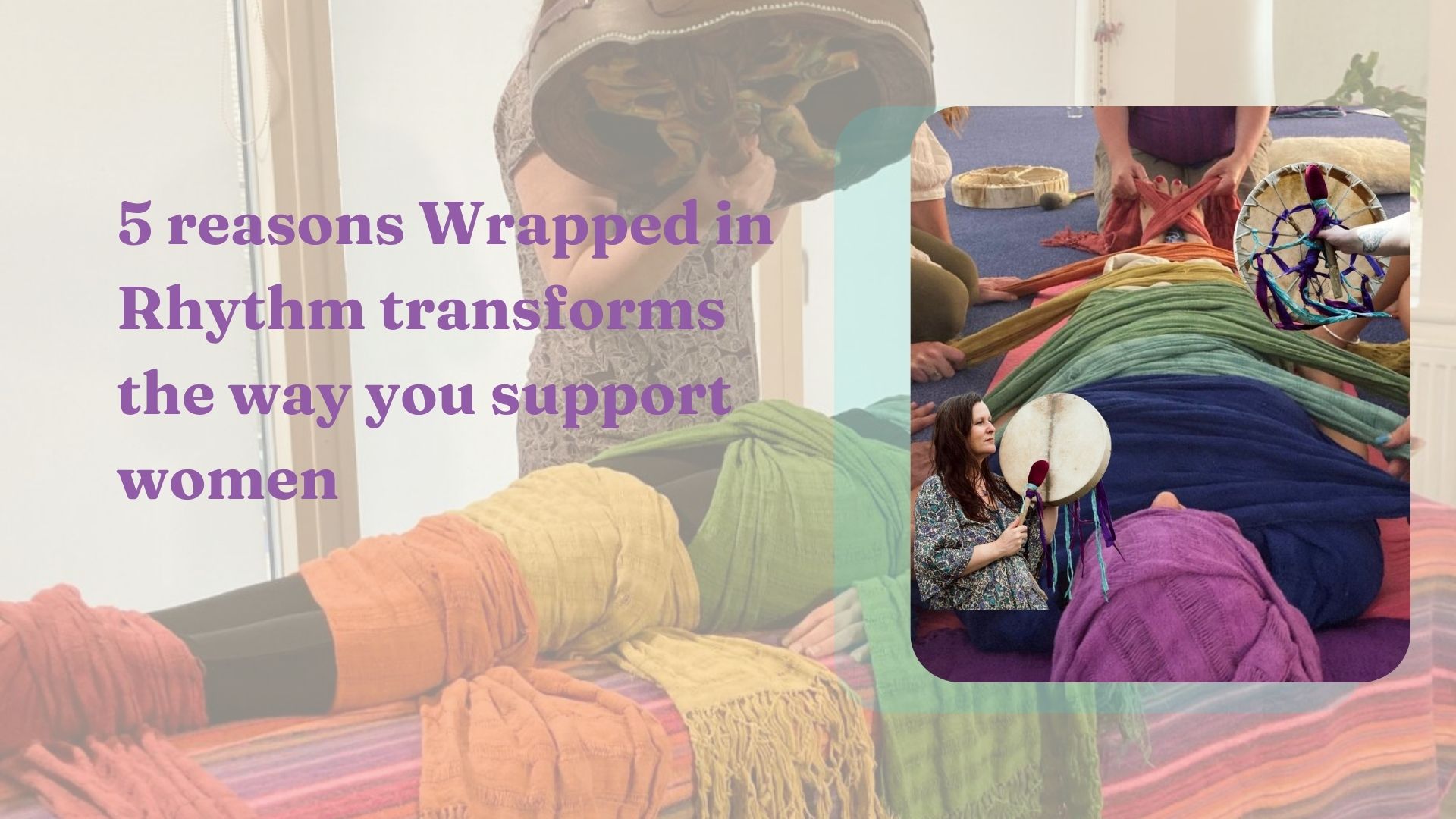
Wrapped in Rhythm combines intuitive rebozo wrapping with intuitive therapeutic drumming to create a deeply restorative ceremony for the nervous system. It’s simple to learn, very effective, and transformative, not only for the people you support, but for you as a practitioner too.
Here are five reasons practitioners choose this training:
1. You’ll learn a treatment you can use far beyond birth. Students now offer Wrapped in Rhythm for menopause, divorce, burnout, loss, milestone birthdays, illness recovery, nervous system regulation, rites of passage, and so much more.
2. It develops your intuition. Rather than teaching rigid techniques, this training helps you trust what you already know. As one student, Kristina Turner, shared: “It has made me so much more confident in trusting my intuition, and that makes me a much better companion to the women I support.”
3. It brings your work together. Many practitioners tell me this training became the missing thread that connected all the different parts of their work into one coherent offering.
As Ruth puts it: “I felt like I had strands of my work all over the place and I wasn’t sure what to focus on. I started with birth, supporting couples to prepare, and have done that for 15 years, then I moved into supporting mothers, then realised I needed to go back to the start and work with young girls at menarche. The wrapping arrived at just the right time for me because it’s something I can use through all of these transitions, and it allows me to fully lean into my intuition with both the wrapping and the drum. Something magical happens every time I offer the treatment, and I’m just leaning into it all and not overthinking any of it anymore, which is such a relief for me.”
4. It’s grounded in both science and tradition. My background as a biology research scientist allows me to explain why deep pressure, rhythm, and ceremony support nervous system regulation, while honouring the traditional wisdom these practices come from. As one student described it: “Sophie has a gift for making complex things accessible while keeping the sacred intact.“
5. You’ll experience the work yourself. Throughout the weekend you’ll both give and receive the ceremony, because the deepest learning comes from feeling what it is like to be completely held.
If you’re longing for work that is intuitive, embodied, and deeply nourishing, for both you and your clients, I would love to welcome you.
We have been taught that learning looks like a straight line.
Step one, step two, step three. Get it right before you move on. Follow the method. Master the technique.
But that is not how women have ever really learned, or shared, or passed wisdom to each other.
Our way is more like a spiral. More like a web. Like a circle. We learn through story and through body and through being in the room together. We teach each other without hierarchy. We remember things we were never formally taught.
The idea that there is a right order, a correct technique, a linear path to mastering the drum, that is an institutionalised belief. And like so many institutionalised beliefs, it was not designed with us in mind.
And the cost of that is real. When the system tells you there is one right way to learn and you are not following it, the conclusion you draw is not that the system is wrong, but that you are. Not ready yet. Not far enough along. Not enough. Women carry this quietly for years, doing more training, seeking more credentials, waiting for a feeling of readiness that the system is never going to give them, because the system was never built to tell women they are enough.
So if you have ever felt like you are doing it wrong, or not ready yet, or not far enough along, I want you to consider that you might just be learning in a way the system was never built to recognise. And that the problem was never you.
A word that changed everything
Last weekend I was teaching a Wrapped in Rhythm course, and afterwards my dear friend Claire Graziano told me that she loved how deinstitutionalised my training was.
I was extremely grateful for this word, because it describes exactly what I have been trying to do. When I look back, it was always how I wanted to teach.
Eleven years ago I was teaching Closing the Bones alongside someone more experienced than me, and I was taken aback when my mentor told me she much preferred my style. When I asked why, she said: your colleague’s teaching style is “this is my box.” Yours is “this is my box, take what you need from it.”
That has stayed with me ever since. And I have been trying to move further and further from institutionalised ways of learning ever since.
Simplifying Closing the Bones
I have been teaching Closing the Bones and rebozo techniques in various forms since 2014. I have trained over 1500 professionals in person and over 700 online.
The question people keep asking is: how do I do this? They want a precise, metric-measured answer. When teaching rebozo rocking, for example, they ask: how fast, and for how long? And they expect me to give them a number.
Except that is not how it works. Every woman is unique. The speed, the amplitude, the length of time all depend on what she needs and what she wants.
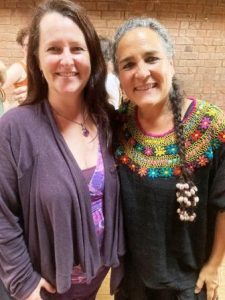
I was delighted when I attended a rebozo training with Mexican midwife Naoli Vinaver and she was asked exactly the same question. Her answer was: you just ask the woman.
How empowering is that? Instead of worrying about the right way to do this, which I know from experience is an incredibly common fear (and one I used to have myself), you realise you can never get it wrong. Because all you need to do is ask, and do what the woman wants.
And this points to something I have come to believe more and more the longer I have taught.
There is no single perfect way of learning. I have met people who had never massaged anyone in their lives and were clearly, immediately gifted. I have trained experienced therapists who struggled. And the opposite of both. What determines whether someone can offer this work well is not how many courses they have done or how precisely they follow a technique. It is something harder to measure and impossible to teach through prescription. A quality of presence. A willingness to listen to the person in front of them. An ability to trust what they already know.
That is what I am trying to make room for.
And there is something else I have noticed over years of teaching, and it took me a while to find the words for it.
Most of the women who come to learn with me already know how to hold space. They have been doing it their whole lives, in their homes, in their friendships, in their work with their clients, and in the ways they support the people around them. They just do not see it in themselves. They have been so taught to look for the credential, the technique, the external validation of their readiness, that they walk past their own gifts without recognising them.
What my way of teaching tries to do is not give them something they do not have. It is to get out of the way long enough for them to notice what was already there.
When I hand someone a drum with no instructions and they find themselves instinctively knowing how to move it over someone’s body, adjusting without being told, that is not beginner’s luck. That is a woman finally being given permission to trust herself.
That is what I am really teaching. Not a technique. A coming home to yourself.
Finding my own way with the drum
My journey with drumming followed a similar path.
I practised and learned almost entirely by myself for the first three years, and I am so glad I did. It meant I found my own way of doing it, rather than absorbing someone else’s idea of the only right way.
And after three years, I decided to take formal drum healing training by attending a Reiki Drum course. I gained some useful things from it, including a particular way of holding the drum to send vibrations through the body. But I found a lot of what was taught far too prescriptive.
And something else started to bother me. Before you can learn Reiki Drum, you have to first complete two levels of Reiki. The more I sat with this, the more it bothered me. Not because Reiki isn’t valuable, but because it felt like such a linear and patriarchal way of gatekeeping knowledge. You must do this before that. You must earn the right to the next level. You are not ready yet.
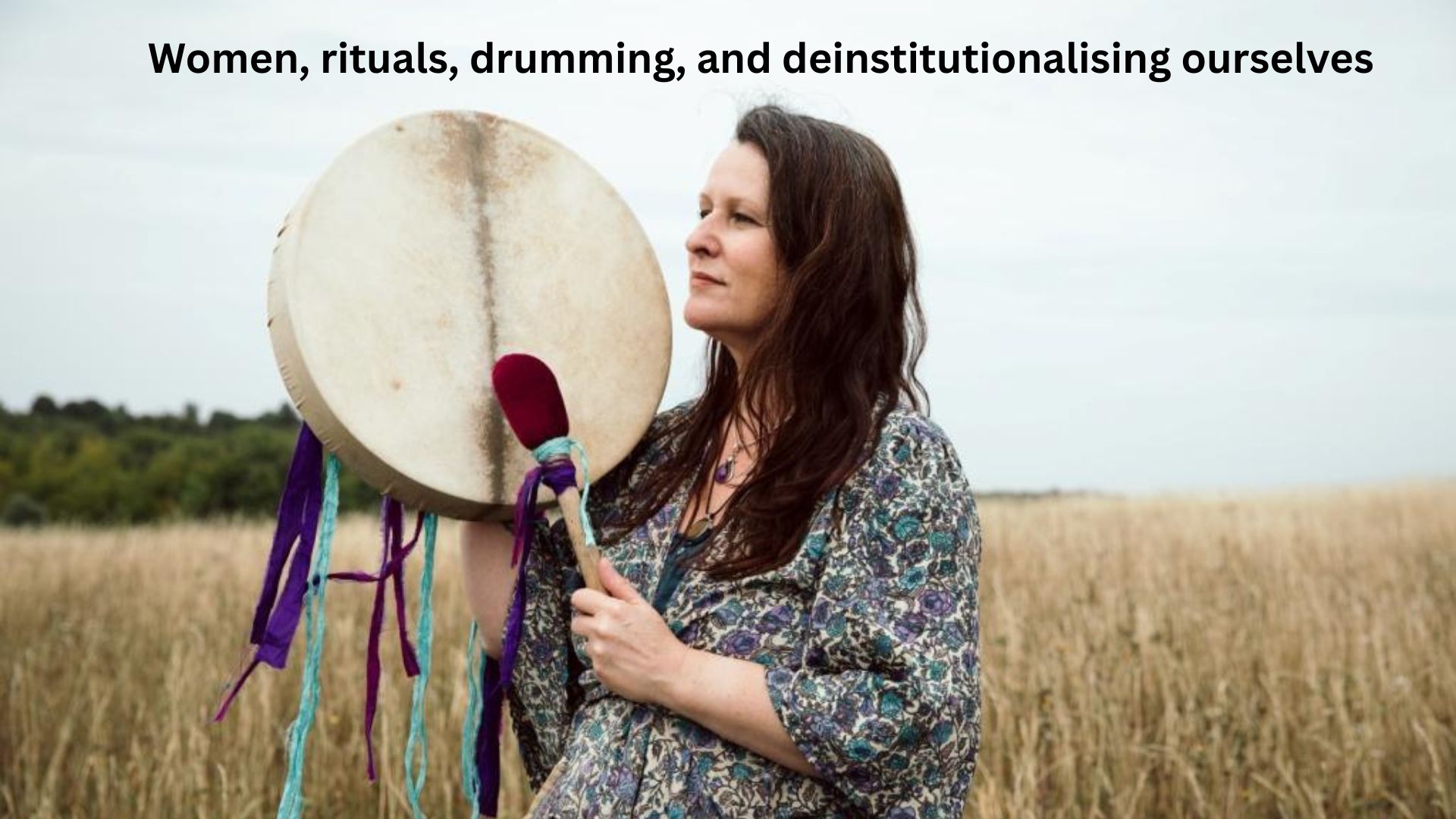
And then a few years later, when I started running a drum circle in Cambridge. I began suggesting that people drum for each other for healing, with no instructions at all. And I discovered something: they all knew what to do.
I had already been demoing drumming during my Closing the Bones training for years, and this often led students to want to learn drumming themselves. So I started handing students a drum with no instructions other than: just drum for the person you have just wrapped.
And again, they all knew what to do.
This is women’s wisdom in action. Not a linear staircase with prerequisites and gatekeepers, but an immediate, embodied knowing that was already there.
The birth of Wrapped in Rhythm
At the end of 2025 I facilitated a Closing the Bones wrapping and drumming workshop for 55 women at a drum convention. I lost count of how many approached me afterwards to say: this is life changing.
A couple of weeks later, as I taught a Closing the Bones workshop, I realised it was the last time I would teach it in its current form. I felt a deep need to simplify, and to make more room for the drum, and for women’s innate wisdom.
There are two reasons for this.
When I teach the hands-on massage techniques, they are quite technical. I spend a lot of time correcting people, and they spend a lot of time worrying they are doing it wrong. Very few women walk away immediately feeling confident. The wrapping and the rocking, on the other hand, everyone can do immediately without difficulty.
And the second reason is this: when I am correcting technique, I stay in my head. But when I facilitated the Drum Con workshop, I was able to drop into an altered state of consciousness, feel what was happening in the room, and respond from that place. That is the quality of presence I want to teach from, and the quality of presence I want to help others find.
As I write this, I have taught one taster workshop and two full Wrapped in Rhythm weekend workshops. The energy in the room has been extraordinary. Women who have never touched a drum feel they can. Women who have never touched a rebozo feel they can. Women feel safe enough to add their own unique gifts to the ritual. By the end, everyone feels ready to take this back to their communities and make their own magic with it.
That is what deinstitutionalised learning looks like. Not a staircase. Not a prerequisite. Not a moment when you are finally ready enough.
A spiral. A web. A group of women who already know, and simply needed someone to help them remember.
If this speaks to you, I teach Wrapped in Rhythm workshop regularly near Cambridge, UK. You can find out more here.
My word for the year 2025 was power, and it didn’t quite work out how I thought it would! When I look back at 2025 I see a year of two halves.The first half of the year I experienced a lack of direction and a lot of shedding, the second half was fast and full of fast action, power and direction.
During the first half of 2025, I felt lost, directionless, it felt like the extreme culmination of a sense of the void that started 3 years ago when I left doula work behind. I had no idea where I was going professionally, and struggled at deciding what to call myself. When people asked what I do, I would often say “I used to work as a scientist, then as a doula….” and I didn’t know what to say I was doing now, giving some wafty description of supporting women through transitions. With my ADHD mind always focusing on what I’m not doing, I forgot that I was completing the work of birthing my second book into the world. All I could think about was that I didn’t know what I was meant to be doing. For someone who normally has had a clear sense of direction for most of my life, this felt extremely uncomfortable.
At the end of 2024, I had tried to launch a new program that fell flat on its face (you can read about this in my review of 2024), so instead, I decided to try a few small workshops to test what would land for me and my audience. I ran a number of new online workshops which were well received. I also ran the first of 2 month long drum microdosing circles online. This was actually amazing because over the course of 4 weeks, my students saw a 50 to 80% improvement in their wellbeing intention, which was way beyond what I had imagined it would do. It also meant that I felt a sense of direction during this time. In human design, I’m a generator, and I’m meant to respond, rather than initiate, and this felt really good. As I held the space for the women drumming during that month, I also felt held myself.
By June, the sense of being directionless reached its peak. I literally felt like I was being stripped of all everything, erased like a blank slate. I could see what was happening but it felt very challenging, and I struggled to trust what was to come. It was made more difficult by the fact that during these two months, my income dropped spectacularly, below anything it had ever done. I noticed that part of me was still equating my worth to my income. I’m so grateful for my husband’s support because when I shared my fears with him, he reassured me that, even if I earned nothing, we would still get by (I’m so grateful that my husband has a steady job and I can’t imagine how stressful it would have been if I’d been a single mum in this scenario).
Whilst this was happening, I was also busy building foundations for new things: not only the launch of my book, but the launch of a new website, so there was a lot of important behind the scenes stuff happening (many of which meant that I had to pause doing other things like my podcast, and my blog writing also slowed down this year to about half of what it was). But it felt like I had nothing to show for it yet. My book, The beat of your own drum, prelaunched in June and as well as all the other launch tasks, I also needed to make sure I had created the three preorder freebies before I went on holiday in August. I felt a lot of time pressure.
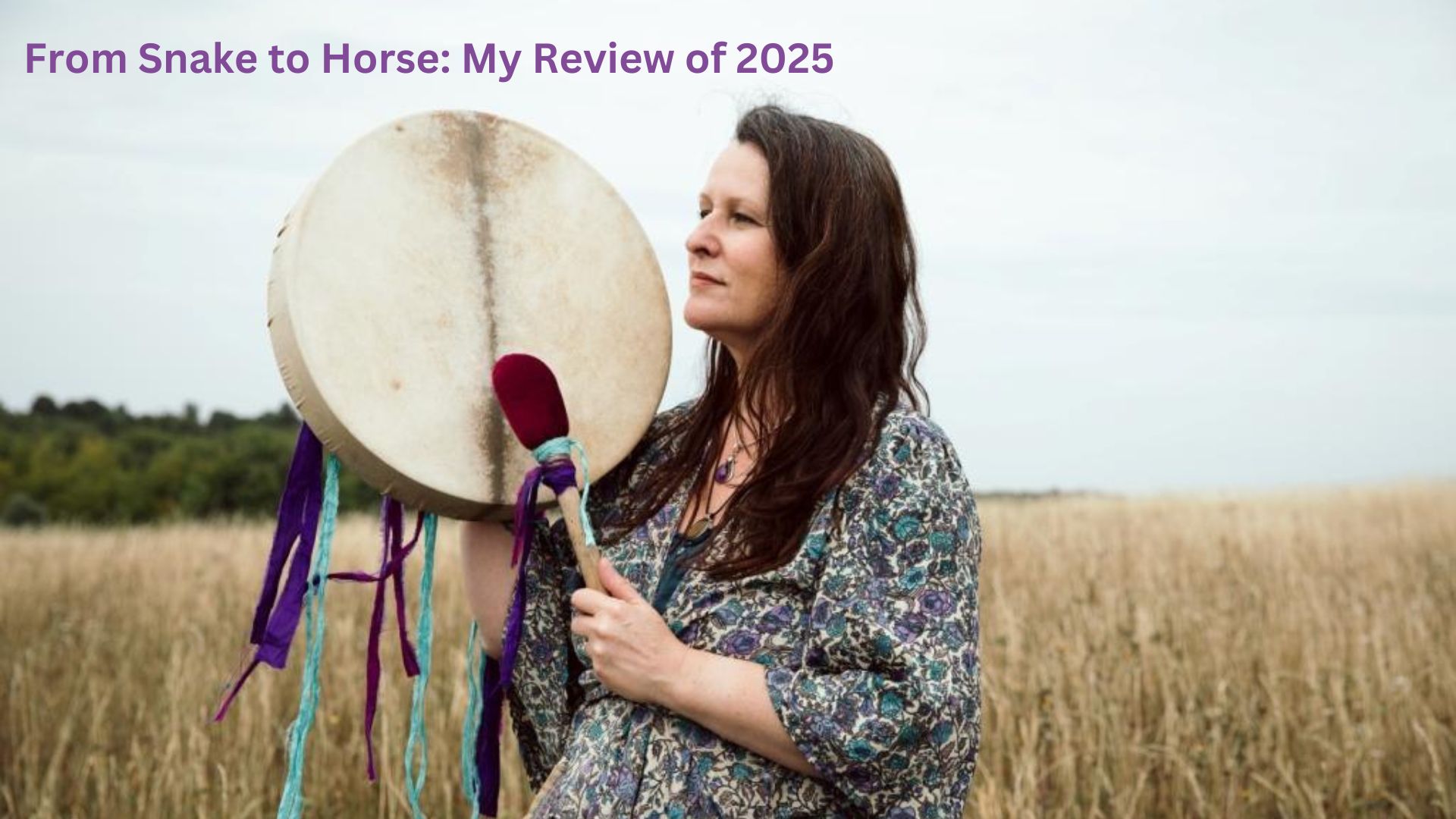
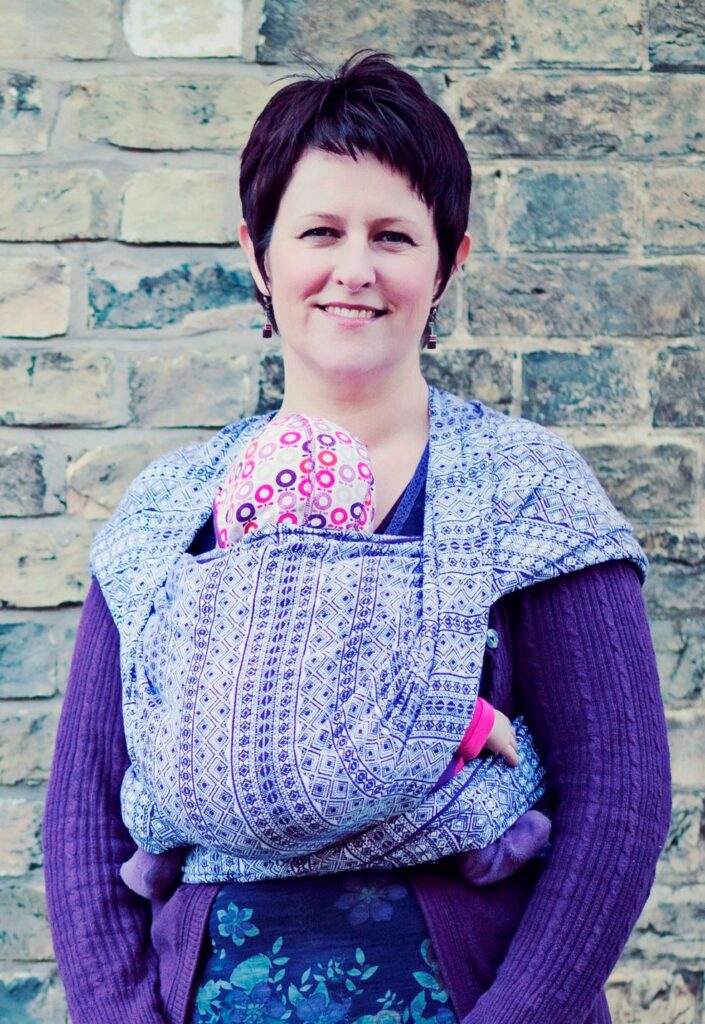
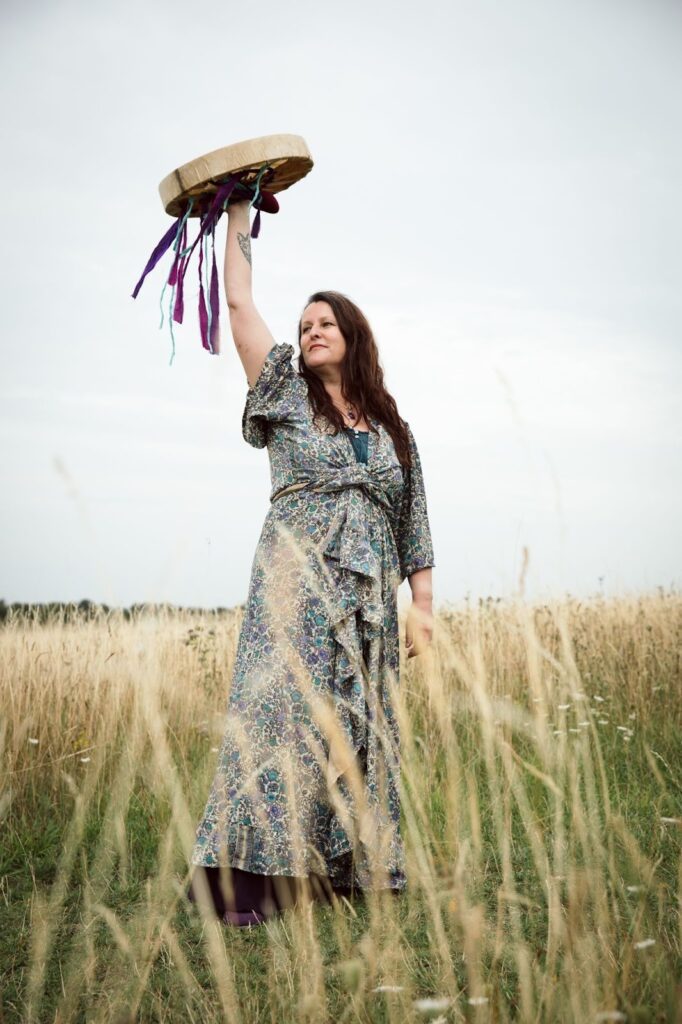
When I look back (hindsight is such a wonderful thing isn’t it?), I can see so clearly that the decks were being cleared to make room for new things. One thing that illustrates this beautifully, was in July, when I had a photoshoot with my wonderful photographer friend Ali Dover. Ali has been taking the pictures for all 3 major iterations of my website through the years. First in 2013, when my first website was about doulaing, antenatal education, and babywearing instructor work. Then the second iteration in 2018, when the focus was still very much doula work, and the ritual, spiritual and drum side was starting to show more (but, and I think it shows in the picture below, when I still had some level of impostor syndrome as I didn’t feel I could quite call myself a drum woman yet). Then there is the 2025 picture of me holding my drum in the air, where the wildness is clear and the drum feels like it’s part of my body.
Evolution of work persona from babywearing to doula to wild woman. Can you see the wildness growth?
In June, on my way back from a small local festival, I listened to Lucy Pearce’s podcast episode where she interviewed author Coco Oya Cienna-Rey about her new book, Digging for mother’s bones. Coco’s book process was about 3 months ahead of mine, hers just having been published when mine was in preorder. In the podcast episode, she explained that, now she had birthed her book, she was going to take the summer off. I remember thinking: I need to do this too, except in my case it’s more of a “I need to rest before birthing” situation. This is something I wrote about in my previous book, Why postnatal recovery matters, and I wrote a blog post called Entering the Sacred Pause, about the wisdom of resting before birthing my book. You can listen to Lucy’s podcast episode with me about my book in her podcast too.
The energy moves
From August onwards, for no clear reason on my part that I could see (except that I’d done a lot of healing work, more about this in the section on self growth), things started to move a-pace. Knowing that I was going to go on holiday for nearly 3 weeks in August, I decided to run a free workshop on closing the bones for life transitions, where I also promoted my existing online courses and upcoming in person closing the bones training. Not only did 115 women register for the workshop, but, despite being on holidays for most of the month, I earned more money that month than any other months during 2025 (a first for August which is usually very quiet).
From then on, with the launch of the book in September, running events around it, sharing the conversations I’d recorded about women making noise, I surfed on a wave of new, and things felt like they finally moved, fast. In October, I decided to run a second month long drum microdosing course called Drumming as Medicine. 23 women joined me. The transformation was remarkable: participants’ confidence in their practice jumped from 2-4 out of 10 to 8-9. Women who couldn’t pick up their drums at the start were playing daily by week four. The combination of neuroscience, drumming practice, and community created something powerful. Every participant said they would recommend it enthusiastically. This validated what I know: when women are given permission to drum, a simple structure, and witness from other women, something transformative happens.
After the course ended, the message was unanimous: we want more. Women said they wanted longer sessions, ongoing circles, continued connection. Many ticked “year-long collective” when asked about future offerings. Four weeks had given them permission and structure, but that was just the beginning. Real transformation, real mastery, real drum keeping – that takes time. Time to explore different ways of working with the drum, to work with seasonal energies, to tend the practice through resistance and return, to move from student to keeper of the beat.
So I created a new program called the Women Drum Keepers Collective. It was what they were already asking for : a year-long journey of becoming women who remember the power of the drum. The Women Drum Keepers Collective is an 11-month journey beginning in February 2026, guiding women from tentative beginners to confident drum keepers through fortnightly live calls. Moving through the wheel of the year from Imbolc to Winter Solstice, the collective explores drumming as medicine through four seasonal phases: Foundations (winter into spring), Expression (spring into summer), Harvest & Release (summer into autumn), and Integration (autumn into winter). Each fortnight alternates between teaching sessions (with technique, neuroscience, and guided drumming) and integration calls (with sharing circles and depth work). This bridges structured curriculum with fortnightly accountability, evidence-based nervous system science with ceremonial practice, progressive skill-building with seasonal wisdom, and women’s empowerment with reclamation. It’s designed for women who refuse to choose between their analytical mind and ancestral knowing, who want a practice that deepens over time, and who are ready to move to embodying medicine.
In November, I also led the biggest ever in person workshop of my life: I volunteered to run a closing the bones wrapping and drumming workshop at the women drumming convention in Colchester, and I wanted to limit it to 30 women, but Mel asked me if I to take half of the women coming to the convention whilst as the other half were doing another workshop. Feeling a big worried about holding space for so many with a ritual that I know can lead to deep emotional release, I roped in my friend Malwina to co-host with me. In the end we had 55 women in the workshop and I shouldn’t have worried, because not only did it go extremely well, felt deep and beautiful, and we even had time to show all the women to wrap their hips and finished singing the “let it go” song whilst swaying in a circle, but over the rest of that day and the next I’ve lost count of how many women came to tell me that this was life changing. I’ve decided to offer this workshop again on the afternoon of the 1st of February and also teach it on the week end of the 28th of February and 1st of March.
At the end of 2025, I ran an online workshop, attended by nearly 100 women, with two drum journeys to walk a time spiral to review 2025, and connect with your future self a year from now in 2026. What fascinated me was that people reported a lot of grief and loss and difficult feelings for 2025 whereas 2026 had a much lighter energy. The themes were processing loss and finding resilience in 2025 and moving towards grounded expansion in 2026.
2025 Journey
2025 emerged as a year of transformation through loss and shedding. Many participants experienced brutal challenges : grief, burnout, depression, and significant life changes that forced them to let go of old identities. Yet within this difficulty came some gifts: the courage to step into full authenticity, to no longer make themselves small for others’ comfort, and to move from head-centered living into heart-led wisdom. Resilience was a central theme, with participants discovering their own strength like diamonds formed under pressure. For some, the year brought rebirth, tender new beginnings, where entire life concepts were reimagined and life began feeling truly their own.
2026 Journey
The energy of 2026 called participants toward grounded expansion and joyful expression. The primary invitation was to grow deep roots, to feel held and trust without worrying about every detail. Freedom emerged as a strong theme: permission to move without fear or compromise, to move forward with one’s mission, and to express fully without holding back. Boundaries and self-care took center stage, with the understanding that personal fire needs careful tending to stay warm without burning out. Creativity and nourishment flows from within, with many called to write, create, and share their gifts. Joy itself becomes the key to manifesting the future, bringing clarity, peace, and spaciousness. The horse energy of 2026 promises heart-healing, movement, and momentum.
Aside from the discomfort and stripping of the first half of the year, I did some serious work on myself last year, and also went through some major milestones.
To support the discomfort and stripping, and lack of presence to challenges, I carried on working with the psychotherapist and shaman I’d been working with for 18 months. In May I had 4 sessions of extracellular matrix integration technique (a form of fascia release). In June I attended a weekend training called Radical Wholeness (after the book of the same name by Philipp Shepherd), and I found this truly transformative, and by the end of the weekend I could feel the movements in the nature around me in my body. In July I attended well over 10 different workshops, a few of which I found incredibly powerful (in particular, working with the energy of the blue lotus, Biodanza, a group family constellations workshop, and a 2h long Lituanian Sauna ceremony).
In the Autumn, as well as my weekly 5 rhythms dance session, I also started attending Biodanza classes every fortnight.
Since October I’ve been working with a functional medicine practitioner, as well as an acupuncturist to rebalance my hormones and energy.
In 2025 I also went to two funerals, and accompanied the last few weeks of a dying friend with some drumming and singing.
A big milestone in 2025 was that my son moved to university in September. I anticipated that I would feel bittersweet, leaving him there at his new uni lodgings, but I never expected how much grief I would feel. Given the date of his moving there was a weekday, I had to drive him alone instead of going with my husband. As I walked away from his new building, I was overtaken by deep sobs, the kind that make your throat close up. I walked to my car and I had to sit there for a while to recover. Over the next few days, I was overcome by grief several times a day every time something in the house or the daily routine reminded me that he wasn’t there.
And I also felt proud of my son, especially as he had struggled so much at college before we understood that he too was neurodivergent, and I never thought he’d get where he now was at the time. But my, I never knew the grief would feel so strong, it felt like someone had died. You spend nearly 20 yearsraising a child, and it’s good and healthy that they open their wings and leave the nest, but it also feels so very hard to lose them. At the time a friend reminded me that I was lucky that I had a life for myself outside of being a mother, and I knew this to the true, having met women who entire lives revolved around their children, and who did not know what to do with themselves when they left.
And luckily for me, I was busy with the launch of my book the week after he left for Uni, and that carried me forward and out of grief pretty fast.
Since then, he’s been back home twice, and when he’s left I never felt that level of grief again thankfully.
Interestingly, I was due to hit the menopause milestone (12 months without a period) at the end of September, having been in perimenopause since I was 42 (I’m now 55- that’s a loooong perimenopause), but I had a small bleed on the day I moved him to uni (how’s that for symbolic?), so the clock is reset and I will not be officially menopaused until I’m 56.
All the things I did in 2025 work wise
I ran 5 free workshops online, attended by 436 women
I created and delivery 3 new trainings: 2 month long drum microdosing and drumming as medicine courses, and the collective, and my new wrapped in rhythm workshop
I delivered 5 in person workshops (Closing the bones and postnatal recovery massage, and wrapped in rhythm)
I ran 22 drum circles circles (a mix of in person and online) and 8 wheel of the year ceremonies, as well as attended weekly private drum circles with my drum sisters
I launched 3 books (the French translation of my book about postpartum recovery, The Beat of Your Own Drum, and 2 pieces in the Woman Craft Compendium about women circles.
I wrote 22 blog posts and 24 newsletters, and recorded 12 podcast episodes.
I published an article about postpartum recovery in the international journal of birth and parent education and wrote a massive blog post review all the scientific evidence behind rebozo techniques
And I submitted 3 pieces for the next Womancraft compendium about the too much woman (which means that I’ll be published in a 4th book this year)
And learning wise (CPD): I took part in a year long business mentoring group, I attended 2 drum conventions and one drum flash, a retreat, my first ever festival (Buddhafield), a radical wholeness workshop, and I took an insight timer course, an instagram course, and a money course.
and I kind of still feel that I haven’t done much….my ADHD brain always focuses on what I’m NOT doing….but I’m working on that.
Word of the year
My word for 2025 was power. My word for 2026 is source. For me this means connecting with the source of power that connects us all, and to trust what the universe has in store for me. I have started expressing desires and letting it to the universe to make it happen for me, without controlling or knowing exactly how it will happen.
Throughout history, women who made themselves heard, whether through drumming, speaking out, or simply taking up space with their voices, have faced silencing, ridicule, and even persecution. From ancient prohibitions against women using drums in various cultures to the labelling of vocal women as hysterical, to the recent banning of women singing by the Taliban, women have been systematically discouraged from creating sound and expressing power through noise.
Despite these restrictions, women have continued to find ways to make themselves heard.
The conversation series
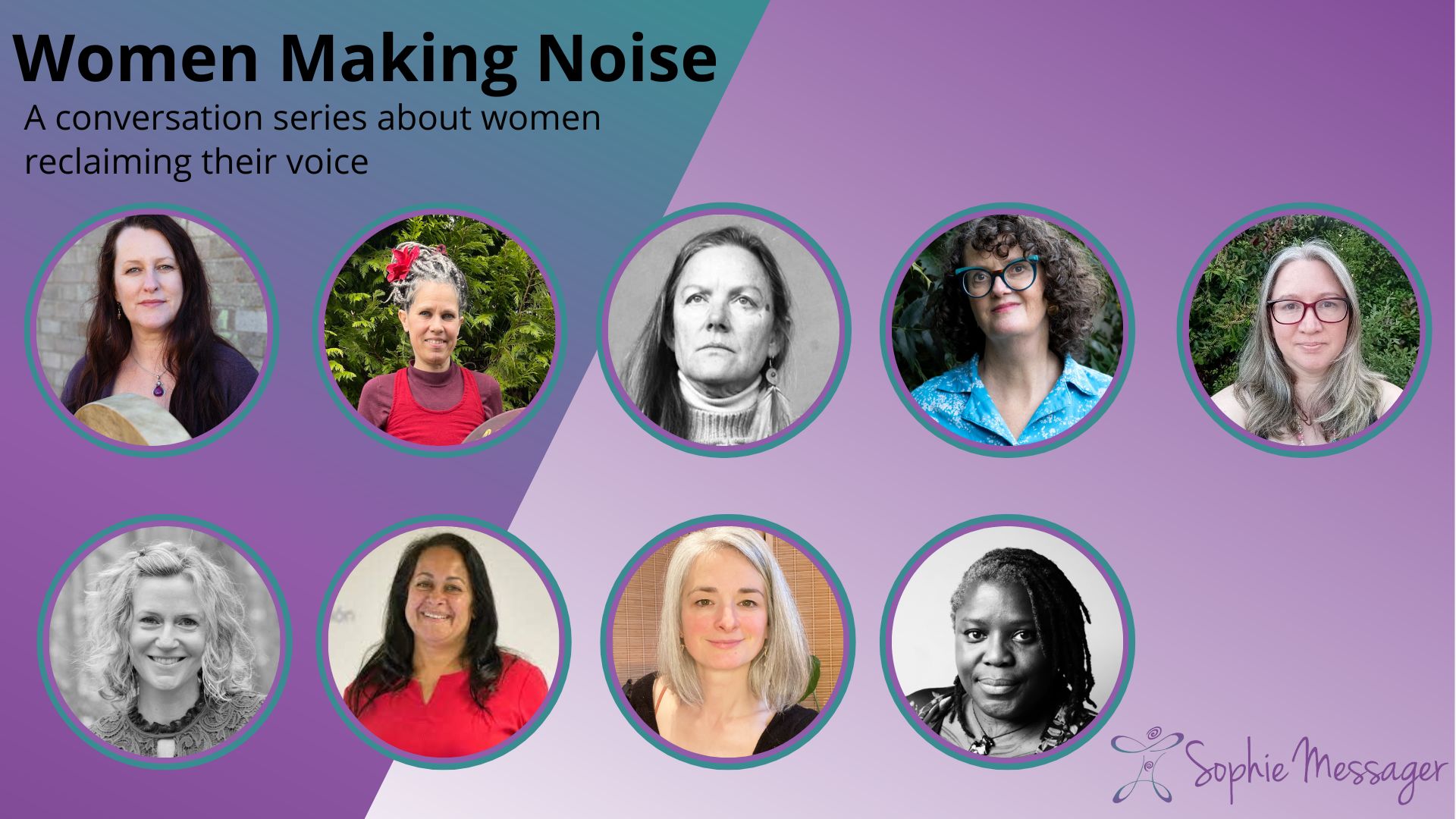
I’m delighted to share nine powerful conversations with extraordinary change-making women who have experienced this tension between silencing and expression.
Our conversations explore how women can reclaim their voices and power through drumming, sound and through overcoming societal conditioning that has taught us to suppress our natural expression.
These intimate dialogues explore the questions that have been on my mind throughout the writing of my book:
How have you experienced the freedom or restriction to make yourself heard?
What relationship do you have with creating sound, whether through voice, music, drumming, or other means?
How has cultural conditioning around “appropriate” feminine behaviour affected your expression?
What has helped you reclaim your right to make noise and be heard?
The voices in this series
I’ve had the honour of speaking with nine change making and pattern disrupting women whose work and lives embody the spirit of making noise and claiming space:
Jane Hardwicke Collings
Rachael Crow
Lucy Pearce
Melonie Syrett
Kate Codrington
Liz Childs Kelly
Joyce Harper
Carly Mountain
Coco Oya Cienna-Rey
Ready to join the rebellion?
Starting September 19th, I’m releasing these conversations as a daily email series. Nine days of raw truth about what it means to make noise in a world that wants us quiet.
This isn’t just about drumming. It’s about reclaiming the power that’s been stolen from us, one voice at a time.
Click here to sign up and prepare to be inspired to make some beautiful, rebellious noise.
In postpartum care and trauma healing, ancient wisdom is meeting modern neuroscience to create powerful, holistic approaches. Somatic rituals like closing the bones are gaining recognition for their profound impact on both physical and emotional well-being.
At the heart of these rituals lie two seemingly simple yet deeply effective techniques: rocking and wrapping. In this article I look at the science behind these practices, exploring how they tap into our primal comfort mechanisms to regulate the nervous system, promote healing, and offer a symbolic journey of rebirth after trauma.
Whether you’re a new mother, a trauma survivor, or a holistic or healthcare professional, understanding the transformative power of these rituals can open new pathways to healing and self-discovery.
What happens during a closing the bones ritual?
The ritual includes rocking the entire body with scarves (I use Mexican shawls called Rebozos), following by an abdominal massage sequence, and finally a process of tightening the rebozos around the body in sequence from the head to the toes.
For a longer explanation, read my article What is closing the bones. And, because a pictures speaks a thousand words, watch the short video below to get a taster of what it looks and feels like:
Play
How closing the bones supports healing and nervous system re-regulation
Rocking and wrapping
Rocking and wrapping, two key elements of the closing the bones and postnatal recovery massage ritual, play a crucial role in calming the nervous system and healing from stress/trauma. These seemingly simple actions tap into deep, primal comfort mechanisms that can profoundly impact both our nervous system and emotional state.
The soothing power of rocking
Rocking is a universal comfort measure, instinctively used by mothers to soothe infants. This rhythmic motion has several benefits for trauma recovery:
Nervous system regulation: The gentle, repetitive movement of rocking helps activate the parasympathetic nervous system, our body’s “rest and digest” mode. This counteracts the hyperarousal often associated with trauma.
Grounding and presence: Rocking encourages a focus on bodily sensations, helping individuals connect with the present moment rather than being caught in traumatic memories.
Emotional release: The soothing motion can create a sense of safety, allowing suppressed emotions to surface and be processed gently.
Vestibular stimulation: Rocking stimulates the vestibular system, which is linked to our sense of balance and spatial orientation. This can help individuals feel more centered and embodied.
The comforting effect of wrapping
Wrapping, another key component of these rituals, offers its own set of benefits for trauma recovery:
Deep pressure therapy: The firm, encompassing pressure of wrapping, activates the body’s deep pressure receptors. This stimulation can reduce anxiety and increase feelings of security.
Boundary reinforcement: For those who have experienced boundary violations, wrapping can provide a tangible sense of where the body ends and the outside world begins, reinforcing a sense of self.
Containment: The physical containment offered by wrapping can symbolically represent emotional containment, helping individuals feel safe enough to process difficult emotions.
Proprioceptive input: Wrapping provides strong proprioceptive input, which can help individuals feel more present in their bodies – particularly beneficial for those who dissociate as a trauma response.
Neurodivergence and Sensory Regulation
For neurodivergent individuals with autism or ADHD, rocking and wrapping can be particularly beneficial:
Sensory regulation: These actions provide predictable, controllable sensory input, which can be calming for those who struggle with sensory processing.
Self-stimulatory behaviour: Rocking, in particular, mimics self-stimulatory behaviours often used by neurodivergent individuals for self-regulation.
Anxiety reduction: The deep pressure from wrapping can significantly reduce anxiety, a common co-occurring condition in neurodivergence.
Symbolic Rebirth and Integration
Beyond their physiological benefits, rocking and wrapping carry powerful symbolic meaning:
Womb-like experience: these processes can recreate a womb-like environment, symbolically offering a chance for rebirth or a fresh start after trauma.
Ritual transformation: The process of being wrapped and then unwrapped can represent a journey through trauma and emerging anew.
In conclusion, the rocking and wrapping elements of closing the bones and postnatal recovery massage offer a unique blend of physiological regulation and symbolic transformation. By tapping into these primal comfort mechanisms, these rituals provide a gentle yet powerful approach to trauma healing, honouring the body’s innate wisdom and capacity for recovery.
Conclusion
The practices of rocking and wrapping, central to rituals like closing the bones, offer a potent blend of physiological and psychological benefits. By harnessing the body’s innate healing mechanisms, these techniques provide a gentle yet effective approach to trauma recovery and nervous system regulation. Their universal appeal lies in their ability to create a sense of safety, groundedness, and renewal – essential elements for healing after birth or traumatic experiences.
The adaptability of these practices makes them valuable tools for a wide range of individuals, including people who are neurodivergent. Rituals like these remind us of the profound connection between body and mind in the healing process.
For professionals in the field of women’s health and trauma recovery, incorporating these techniques into your practice can offer clients a unique and deeply nurturing path to healing.
In embracing these ancient yet innovative practices, we open doors to holistic healing that honours the body’s wisdom and the power of gentle, intentional care. As we rock and wrap away the pain, we create space for a profound sense of coming home to ourselves.
Learn to offer the ritual
If you are a holistic professional who supports women through birth, other life transitions or healing and you would like to be able to offer this ritual, I have 3 in person trainings near Cambridge this summer. I also offer an online course version of the ritual which makes it possible to learn this ritual anywhere in the world.
For centuries, birthing women around the world have been supported through labour using traditional techniques that modern obstetrics is only beginning to rediscover. Among these, the rebozo—a traditional Mexican shawl—is one of the most versatile and effective tools for supporting physiological birth. As rates of medical interventions continue to rise globally, these ancient practices are more needed than ever because of their effectiveness in addressing common challenges during labour.
In this article, I explore the history, techniques, and growing research evidence behind the use of rebozo techniques during birth. As both a scientist and birth worker with over 15 years of experience, I have witnessed firsthand the remarkable effects these simple techniques can have, often transforming challenging labours and helping women avoid unnecessary interventions.
The rebozo’s effectiveness isn’t mystical; it’s based on sound biomechanical principles that facilitate optimal fetal positioning and maternal comfort. This article is both a personal journey and an evidence-based exploration of how a humble woven cloth can revolutionise birth support in modern settings
History & background
I feel it is important to start with a bit of history and background (and feel free to skip this and go straight to the analysis of the published rebozo research in the second part of this article if you prefer)
What is a rebozo
A rebozo is a handwoven shawl from Mexico, traditionally used as an item of clothing, for massage and support during pregnancy, labour, birth and the postpartum, as well as to carry babies.
What are rebozo techniques
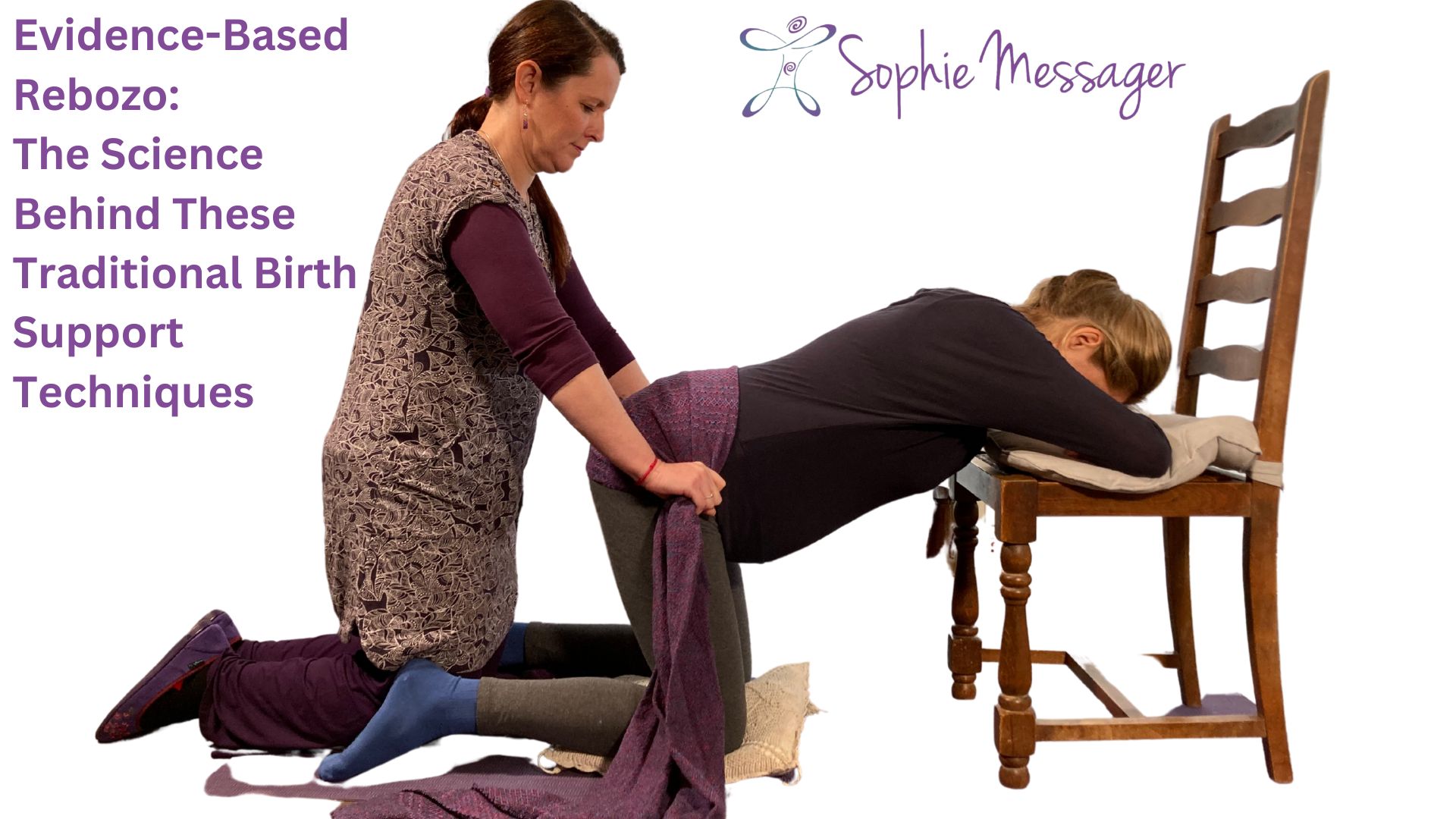
Rebozo techniques are a mix of rocking, jiggling, and wrapping techniques, where the rebozo scarf is placed on specific areas around the body.
The techniques have 3 main aims:
To provide relaxation and comfort.
To support the baby to be in an optimal position for birth
To support moving out of a situation where labour is not progressing (caused by something in the woman’s body or the baby).
How are they used?
Rebozos have been used to support childbirth for hundreds of years, likely dating back to pre-Columbian Mesoamerica. The exact historical origins are unclear, but it became a versatile tool in the hands of midwives (parteras) in traditional Mexican cultures. Midwives used it for various purposes, such as aiding in fetal positioning, relieving labor discomfort, and offering emotional and physical support during birth.
There are tens of different rebozo techniques in existence. I personally know over 40 techniques, including several original techniques that were created by Mexican Midwife Naoli Vinaver.
Rebozo techniques have become known in the birth professional community because Mexican midwives started sharing them with an international audience.
Rebozo techniques have gained international recognition in recent decades as part of a broader revival of traditional and non-invasive childbirth techniques, because they have been shared with international audiences by Mexican midwives such as Naoli Vinaver and Angelina Martinez.
Midwives and doulas worldwide now incorporate rebozo techniques within their birth support, because they provide gentle yet incredibly effective alternatives to obstetric interventions, something that is more needed than ever before in the face of ever rising rates of induction of labour, and cesareans.
My story
I came to rebozo training out of frustration. During my first year as a doula, back in 2013, I witnessed many first time mothers have long labours lasting 30+ hours. At some point the woman would start to push, after a couple of hours of no baby, a midwife would do a vaginal exam and find the woman to be 6cm dilated with a “back to back” baby. Most of the time another exam later would reveal no further dilation. The midwife would then insist that the mother stops pushing, for fear of causing trauma to the cervix. The mother couldn’t stop pushing, by this time she was usually very tired and vulnerable, and the “lack of progress” aspect was very difficult to cope with. So an epidural was “offered”. She ended up in bed on her back. The baby could not rotate, and this was always followed by a trip to the theatre, with the baby being born by either forceps or a cesarean.
I became increasingly frustrated by this for two reasons; I felt frustrated on behalf of the mothers, because I knew that the intervention offered would only make things worse (how on earth is a baby taking a while to rotate in an optimal position for birth is supposed to be helped by making a woman lie on her back in bed?). And I also felt frustrated for myself, because this meant that I supported long, challenging births, that did not end up the way the mother wanted it, and also without me being able to support them when they needed me the most (my local hospital applied a strict one partner only rule in theatre-this is something I tried but failed to change, which never had anything to do with safety but with control-but this would be another blog post entirely).
I knew that there had to be another way, one that supported physiology and allowed women to remain in their power. That’s how I discovered rebozo techniques.
I started training in 2013, and trained with the following people:
Osteopath Teddy Brookes (he taught me what the techniques do to various joints and organs)
Francoise Freedman (One to one Rebozo techniques workshop & Birthlight workshop)
Jennifer Walker and Gail Tully (Spinning babies workshops, 2016 & 2017)
Doula Gena Kirby (Rebozo online course, 2017)
Midwife Molly O’Brien (Biomechanics for birth workshop 2019)
Midwife Naoli Vinaver (Rebozo techniques online from 2020 and 3 days in-person workshop 2022).
The women I’ve supported through pregnancy birth and the postpartum with rebozo techniques.
The professionals who have attended my rebozo workshops and rebozo for an easier birth online course (I started teaching these techniques in person in 2016 and online in 2018).
I also read the following books on rebozo techniques:
Le Rebozo: Bien l’utiliser au quotidien et dans sa vie professionnelle by Virginie Mandin
The rebozo technique unfolded by Mirjam de Keijzer , Thea Van Tuyl and Naoli Vinaver
The Easy Guide to Rebozo for Pregnancy and Birth: 3 simple techniques to increase your comfort by Nicola Nelson
Rebozo me mummy and Rebozo Basic book, by Gena Kirby.
“The rebozo is an extension of our hands, driven by our warmth, focus & intention” Naoli Vinaver
Witnessing Miracles
As soon as I started using rebozo techniques, I saw miracles happen. During pregnancy, the techniques often helped rotate a baby from OA to OP in a few minutes. But it was during birth that the effect was the most amazing. Where before the typical OP scenario I described above would unfold, this time, using the shaking the apples technique, combined with belly rocking during a few contractions would change things completely. I have more examples than I can count, but the three births below are the ones that stick to mind.
First time mother
After 24h of labour, the dreaded “stuck at 6cm” situation happened. The mother refused to transfer from the birth centre to the delivery unit for an epidural, but the midwife pushed hard for diamorphine to prevent the involuntary pushing (note: the issue here is with the belief within mainstream maternity care that this early pushing is harmful-this isn’t true, nor based on evidence Learn more about this in the book Birthing your baby-the second stage of labour, by Nadine Edwards). The mother was exhausted and agreed to the diamorphine. I explained that after receiving the drug she would probably fall asleep, and asked if she would be happy to try some rebozo (shaking the apples and belly sifting) whilst we waited for the midwife to prepare the drug. She agreed. Within 2 or 3 contractions I knew something had shifted because her contractions felt completely different, more powerful and productive. The midwife came back and explained that she needed to examine her again before administering the drug. She had gone from 6cm to fully dilated in less than 30 minutes. She never got the diamorphine and started to push and birthed her baby shortly after. To say that I was elated was an understatement.
Birth Centre VBAC
This mother had had the typical back to back labour scenario during her first labour, ending in a cesarean. SHe expressed that she was very worried about this happening again. When I joined them in labour at the birth centre, she was on her hands and knees, having the typical OP pattern of one long-contraction followed by one short contraction, and back pain during and between contractions. Knowing that letting her know that her baby might be OP would not feel good, I asked if I could try some rebozo techniques to ease her back pain. Within 3 contractions each of shaking the apples and belly sifting, her contractions were even and she no longer had back pain. She birthed her baby in the pool a few hours later.
In this home birth VBAC, after 4 long days of labour, the mother found herself with the “stuck at 6cm” scenario again (with no progress over a period of several hours), this time with an asynclitic baby as well. Having experienced this very scenario before and asked specifically what to do to Gail Tully at a Spinning Babies workshop, I knew exactly what to do. I helped the mother get into an inversion position, and shook the apples during 3 contractions. The mother said she felt the baby turn during the process, and when she came back up, her back was no longer hurting. She started to push soon afterwards, and had her baby in the pool in her lounge a couple of hours later. When the baby was born I was so exhausted and elated I cried and laughed at the same time.
The evidence behind rebozo techniques
Even though it is a traditional practice, there is nothing “woo” about the way rebozo techniques work. They simply work on the principles of biomechanics. When something is stuck, gently jiggling it will help it come unstuck. Jiggling helps move things when they are stuck as well as provide relaxation because it is impossible to stay tense when being jiggled.
Why there was so little research
Before I share this I feel it is important to address the elephant in the room: in our modern world, unless something is published about in a peer reviewed journal, people often believe that it is not “evidence based”. From this misguided viewpoint, people often assume that it is a proof that the untested techniques are ineffective. However, lack of evidence isn’t equal to lack of effectiveness, it just means that it hasn’t been studied!
There are three main reasons why rebozo techniques haven’t been extensively studied (until recently-read more below) :
1) We have an unconscious, biased, colonialist mindset which is very prevalent in modern science and medicine. This mindset assumes that what hasn’t come from modern science is both uneducated and ineffective. If the rebozo techniques were applied with a fancy piece of technology instead of with handwoven scarves, people’s reactions to it would be very different.
2) There is no financial gain in using rebozo techniques. Nobody is going to make big bucks from them and they cannot be patented.
3) There are tens of different techniques and each one would need to be studied individually. Dr Sara Wickham explains this well in her article, The evidence for rebozos.
“The rebozo evolved as a tool rather than being invented to solve a specific, measurable problem. But the difficulty in evaluating rebozo effectiveness isn’t a reflection of the inappropriateness of tools such as rebozos. It reflects the uneasy relationship that exists between the very rigid thinking and evaluation means of western medicine and the more fluid knowledge that exists within and around other healing modalities, such as traditional midwifery.”
Dr Sara Wickham
Rebozo techniques used in the research
In the research papers listed below, the 3 techniques most common techniques used are rocking the hips (lying down), shaking the apples, and bump rocking.
Hip Rocking (this can be done standing up or lying down)
This consists in gently rocking the hips of a pregnant woman with a rebozo. This can be used for comfort, to help labour start or to adjust fetal malposition by adding a tug in the direction desired.
This provides movement between the lower thoracic spine and the lumbar spine, and helps with the compression forces caused by postural changes during pregnancy. It provides a passive articulation, completely removes the pressure, especially in the thoraco-lumbar joint. This can have a positive impact on breathing too as it also releases the diaphragm. Using a faster movement makes it more of a fluid technique/viscera (which can direct movement into the uterus and its ligaments). Movement in the body causes pressure changes resulting in fluid pumping in and out of tissues and at cellular level, increased fluid movement leads to more healthy body tissues. Fascial tightness or looseness can govern the ability of fluid to move in and out.
Bump rocking
The mother is on her hands and knees, kneeling over a sofa or birth ball or chair, and the rebozo is wrapped around the bump and lifted gently, then rocked. As well as providing relaxation and comfort, this technique can help restore balance to the uterus and therefore the positioning of the baby during pregnancy or labour.
This loosens all the fascial tension: abdominal fascia and muscles, viscera (organ) ligaments, lumbar muscles and fascia. The vibration provides more movement into the uterus and uterine ligaments and helps to take the tension off it.
Shaking the apples
The woman is on her hands and knees (or standing up), kneeling over a sofa or birth ball or chair, and the rebozo is wrapped around her buttocks, applied tightly to the hip bones, and a jiggle is applied. This technique helps relax the pelvis ligaments and muscles (including the pelvic floor) and provide pain relief during contractions.
This provides a fluid vibration technique and helps with pelvic ligaments and to vibrate the viscera. The jostling can help resettle things and can encourage the baby to move.
Review of the research
Until recently there was almost no published evidence behind the effectiveness of rebozo techniques to support labour and birth.
The last time I wrote about this, there were literally 3 papers: one story of a midwife’s experience in using rebozo within the NHS, one that looked at how rebozo techniques could help turned OP babies (but this was a descriptive paper rather than an experimental one) , and one about the satisfaction of women receiving a rebozo intervention during labour.
However this has changed, with 11 new papers being published since 2022, and it is time for this evidence to be reviewed, so it can be shared, so we can help break the misguided belief that rebozo techniques are just not effective.
Below you will find a summary of all the published scientific papers (I have only included the papers in English) I have found about rebozo techniques, in chronological order, with a link to each of the papers, should you be a geek like me and want to read them.
Techniques : sifting, shaking the apples, and head massage.
Summary: The article explains what a rebozo is, how the author was introduced to rebozo techniques, and how she has incorporated them into her midwifery practice in the UK. The author shares her journey from being hesitant to use these techniques in hospital settings to eventually teaching them in active birth workshops. There is an emphasis on the fact that these techniques should be used appropriately and that any intervention is still an intervention.
Techniques: hip rocking lying down, shaking the apples, and belly sifting.
Summary and outcomes :The paper explains the background for the techniques and how to carry them out. The article outlines practical considerations for implementing rebozo techniques in a hospital setting. The paper includes a case study of a woman in labour with an OP baby for whom using the belly sifting techniques lead to a more comfortable and effective labour.
Techniques: Sifting and jiggling (both hips and belly, either standing up/ lying down or on hands and knees)
Summary and outcomes: Techniques were mostly used with suspected malposition. In more than half of the cases, the midwife answered that a change in the labour was observed after rebozo use. Most women reported positive bodily sensations, pain relief, and described the techniques as user-friendly and non-invasive. The techniques were well-received as a supportive measure during labour.
Study type: Multicenter randomised controlled trial
Location: Danemark
Number of women: 372 (women with a singleton breech presentation at 35-36 weeks pregnancy)
Techniques: Sifting and jiggling (both hips and belly, either standing up/ lying down or on hands and knees), combined with Spinning babies type positioning (open-knee
chest, breech tilt, and crawling on all fours).
Summary and outcomes: Techniques were mostly used with suspected malposition. Most women reported positive bodily sensations, pain relief, and described the techniques as user-friendly and non-invasive. The techniques were well-received as a supportive measure during labour.
This is the only published randomized controlled trial to date examining the effect of rebozo techniques as an adjunct to ECV. Contrary to expectations, the addition of rebozo techniques before ECV did not improve, but rather reduced, the likelihood of achieving a cephalic presentation at birth (51% vs 62%). The intervention was found to be safe, with no adverse events reported.
Note : the paper states that despite initial consent to refrain from performing rebozo, 32 women from the control group reported to have performed rebozo exercises at home or had consultations with a private provider outside the hospitals.
Techniques: Unspecified, but assumed to be the trio above, combined with light touch massage
Summary and outcomes: Before intervention, most women reported moderate (53.3%) or severe (20%) pain. Afterward, the majority experienced only mild pain (60%) or no pain (26.7%), with just 13.3% reporting moderate pain and none reporting severe pain. Every participant experienced pain reduction.
Techniques: Belly sifting, shaking the apples and double hip squeeze with rebozo
Summary and outcomes: Statistically significant reduction of both pain (a 20% reduction on average) and anxiety (average of 17%) in the rebozo group. The majority of the rebozo group reported a positive experience with labour, compared to the control group.
Summary and outcomes: The rebozo group had, on average, a shorter first stage of labour than the control group (measured by the number of women having a labour under 6h versus over 6h).
Techniques: not specified but assumed to be sifting and jiggling based on references, using either combined rebozo and hypnobirthing, or just hypnobirthing as a control group.
Summary and outcomes: The rebozo and hypnobirthing was associated with a shorter second stage of labour, and no difference in Agpar score.
Techniques: Shaking the apples or Zilgrei method (a breathing technique)
Summary and outcomes: Both the rebozo and Zilgrei interventions reduced the length of the first stage of labour, and the rebozo group had on average a shorter first stage of labour than in the Zilgrei group.
Techniques: Hip rocking lying down and shaking the apples with rebozo compared with oxytocin massage (light touch spine massage)
Summary and outcomes: Significant difference between the massage and rebozo group, with the rebozo group having a shorter average second stage of labour (58 min) than the massage group (67 min) .
Techniques: Rebozo techniques (not specified in the paper, but assumed to be the same as in the other papers) versus relaxing massage.
Summary and outcomes: Women in the rebozo group had lower pain levels during birth and greater birth satisfaction, as well as a shorter duration of labour.
Number of women: 1500 in prospective cohort (before the techniques were used) and 779 in retrospective cohort (after the techniques were used regularly)- 2279 in total
Techniques: Rebozo combined with Spinning babies techniques
Summary and outcomes: Reduction of persistence of OP position during labour. About 35% of babies in both groups started labour with an OP position. In the control group about 36% of those babies remained OP until birth. In the study group, only about 28% remained OP, a statistically significant reduction of 8%.
Summary of the research
Studies have been conducted in the USA, Egypt, Turkey, Indonesia, Italy, and Denmark.
Sample sizes are small (range from 14 to 2,279 women)
Techniques: Most studies used rebozo sifting (rocking/jiggling the pelvis or belly), sometimes combined with maternal postures or combined or compared to other pain-relief methods.
Outcomes:
Consistent findings of reduced perceived labour pain and improved birth satisfaction.
Some evidence of shorter labour and improved fetal positioning.
High acceptability and positive feedback from women using the technique.
No significant adverse outcomes reported.
Strength of the research:
Growing international interest with studies from diverse healthcare settings
Consistent positive findings for pain reduction and maternal satisfaction across multiple studies
Some larger sample sizes in more recent studies (notably the Italian study with 2,279 women)
Evolution from purely observational to experimental and randomized controlled designs
Limitations of the research:
Small sample size in most studies
Inconsistent methodology: Techniques vary significantly between studies, making direct comparison difficult
Many studies combine rebozo with other techniques (Massage, positions…) making isolating effects difficult
Limited blinding: Due to the nature of the intervention, proper blinding is challenging, increasing risk of bias
The current body of research evidence indicates that rebozo techniques are an effective, safe, and well-accepted non-pharmacological intervention for reducing labour pain, improving the birth experience, and potentially facilitating labour progress. The integration of rebozo techniques into modern maternity care is supported by both quantitative and qualitative evidence. Bigger and more rigorous studies would help to strengthen the evidence base and guide standardised practice.
Conclusion
As you can see, through both my personal account and emerging research, rebozo techniques offer a transformative approach to supporting physiological birth in an era of increasing medicalisation. The growing body of evidence, spanning multiple countries and methodologies, consistently shows benefits for pain reduction, maternal satisfaction, labour duration, and potentially fetal positioning.
What makes rebozo techniques particularly valuable is their simplicity, accessibility, and safety. Unlike many medical interventions, they work with the body’s natural physiological processes rather than overriding them. They empower both birthing women, their partners and supporters with practical tools that can be applied in virtually any birth setting, from hospitals to home births.
Ideally, there would need to be larger, more standardised studies. But we must also be careful not to fall into the trap of dismissing traditional wisdom simply because rebozo techniques haven’t been subjected to large double blind clinical trials. The absence of these does not indicate a lack of effectiveness : it reflects historical biases about which knowledge systems are deemed worthy of scientific attention. (And I also want to point out that a published review of UK maternity care guidelines showed that only 9 to 12% of them are based on this kind of evidence….)
As birth professionals and maternity care systems continue to seek balance between technology and physiological support, rebozo techniques are a powerful symbol of integration, honouring traditional wisdom while meeting contemporary standards for evidence-based care. Through this integration, my hope is that we may move closer to a model of birth that places the needs and experiences of birthing women at the centre.
If you want to learn more
I offer an online course called Rebozo for an easier birth, which contains written explanations of 25 rebozo techniques, with video tutorials and an explanation of what each techniques does to the body by an osteopath.
I offer one to one mentoring sessions. These sessions are ideal if you are a birth professional and want to extend your confidence and knowledge about how/when to use the techniques. I also offer a 3 months mentoring package for perinatal and holistic professionals. I create a space where your inner wisdom can emerge and be recognised. Through deep listening, embodied practices, and ritual, we’ll walk together on this path of discovery.
If you’d like me to come and teach these techniques to you, I am happy to offer training up to 2h from Cambridge, UK. I am especially keen to train more NHS midwives (I have already delivered several workshops within the NHS). Sharing these tools with healthcare providers creates powerful ripple effects, enhancing care for birthing families throughout the system. This allows us to re-integrate traditional wisdom into standard practice, benefiting both providers and the families they serve. Contact me to explore training opportunities for your team or unit.
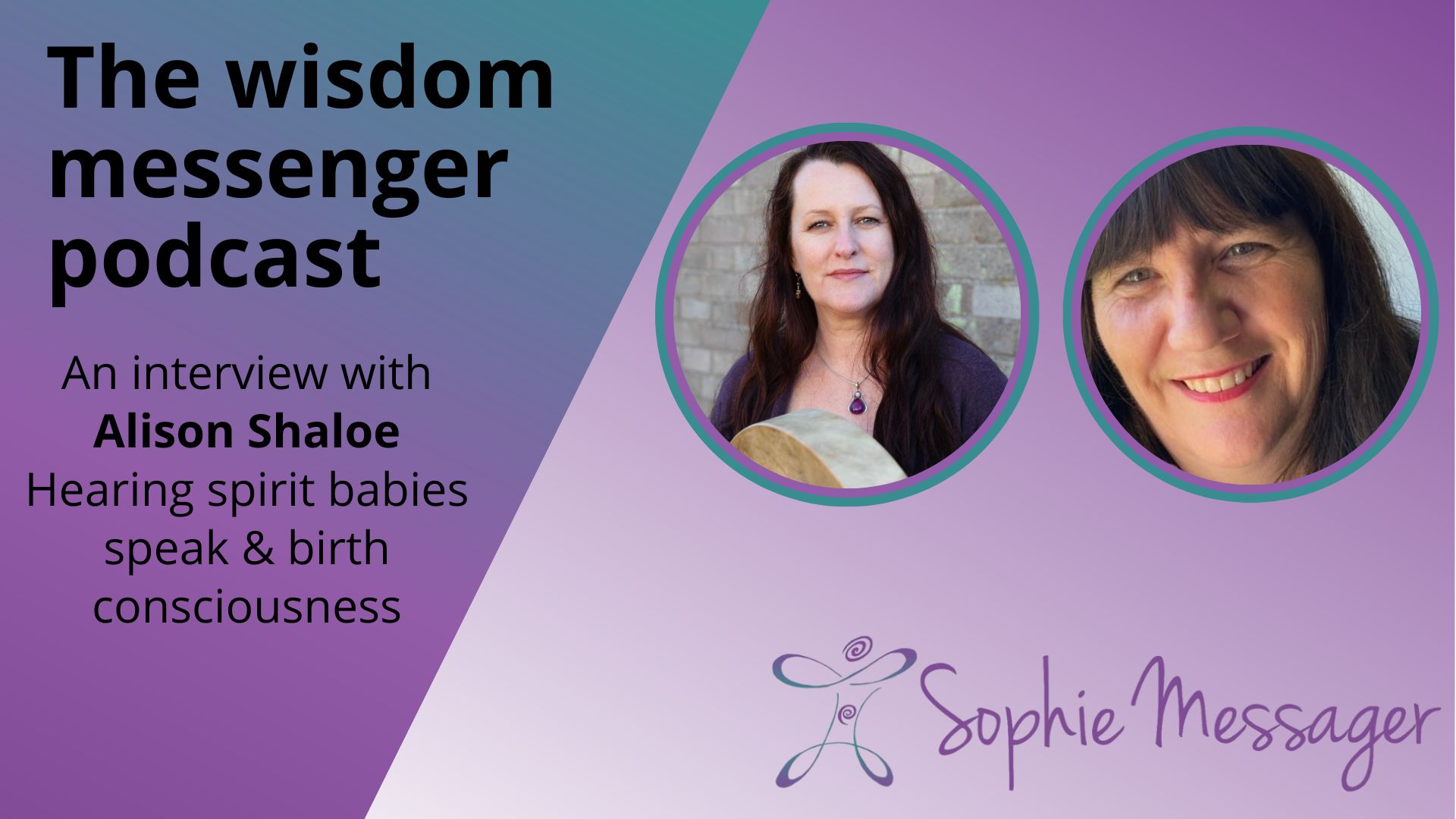
In this insightful conversation, midwife and lactation consultant Alison Shaloe shares her 30-year journey supporting women through pregnancy and birth. She discusses her work at the Sacred Fertility and Birth Sanctuary and offers a refreshing perspective on how childbirth can be approached as a transcendent, empowering experience rather than a medical event.
Key Highlights:
A Spiritual Awakening: Alison reveals her personal challenges with cesarean births and breastfeeding that led to specialising in tongue-tie support, and how Reiki opened her to spiritual dimensions of birth, including the ability to hear messages from babies.
Breaking Through Dogma: Alison discusses the challenges of speaking about spiritual aspects of birth in a society dominated by scientific dogma and fear, sharing how her book evolved from clinical focus to include channeled information from spirit babies.
Altered States of Consciousness: The conversation explores how women naturally enter altered states during labour—a necessary surrender that’s rarely taught in midwifery education but is essential to the birth process.
Patriarchal Systems in Birth: Alison highlights how current birth practices often reflect patriarchal attitudes that interrupt women’s natural birthing processes, from computerised systems to unnecessary interventions that disempower women.
Honouring Women Through Ritual: The importance of ceremonies like “mother blessing” and “closing the bones” is discussed as essential cultural practices that honour women’s journey into motherhood and support significant life transitions.
Creating Sacred Birth Spaces: Alison shares her vision for birth environments that honour the spiritual and emotional connection between mother and baby, emphasizing the need for privacy, respect, and gentle first moments after birth.
You may have heard of the closing the bones massage ritual for postpartum recovery, but did you know that it also supports healing loss and trauma, supports endings and beginning through life’s transitions & helps regulate the nervous system, including for people who are neurodivergent?
In our modern times, we often overlook the profound wisdom of ancient healing traditions passed down over generations. The closing the bones ritual offers a transformative path to healing that transcends physical and emotional boundaries.
Rooted in diverse cultural practices worldwide, this powerful ritual has supported women through life’s most pivotal transitions and traumas for centuries. From the journey of motherhood to experiences of loss, it provides a nurturing space to process, integrate and heal mind, body and spirit.
But this ritual’s impact extends far beyond the postpartum period. It offers a unique approach to supporting mental health, emotional wellbeing and overall vitality. Through gentle movements, symbolic elements and connection to the body’s wisdom, it empowers women to reclaim their bodies as vessels for healing.
Prepare to be captivated as you discover how this ancient tradition is profoundly relevant in today’s world in supporting women through every facet of their life’s journey.
What is closing the bones?
Closing the bones is a traditional postpartum massage ritual. It is mostly known for its Mexican and South American roots, but versions of it exist (or used to exist) on all continents (including in Europe).
A closing the bones ritual involves the rocking of the body using scarves, a massage of the abdomen and chest (and sometimes the whole body), and a sequence of tightening scarves around the body. Some traditions also add a steam bath or sweat lodge. I use drumming in my rituals as well.
A closing the bones massage supports healing:
Physically, by providing movement in the joints, muscles, tissues and fluids.
Emotionally, by providing space to rest, be witnessed and held safely, as well as for emotions to be honoured and released.
Spiritually, by providing closure, a space to let go of what was, and bringing energy back to the person receiving it.
I have written many posts on closing the bones and you can find them below:
A closing the bones ritual holds immense significance beyond the postpartum period, serving as a profound way to honour and facilitate healing through various transitions and rites of passage in a woman’s life. Rituals play a vital role in these contexts, as they provide a sacred and intentional space for individuals to process and integrate profound experiences.
In our modern culture, where life’s significant milestones are often overlooked or minimised, rituals offer a much-needed opportunity to pause, reflect, and honour the depth of these transformative moments. They create a container for personal growth, healing, and transformation, allowing individuals to navigate life’s transitions with intention and reverence.
Rituals have the power to calm the nervous system and facilitate a sense of grounding and connection. By incorporating symbolic elements, movements, and practices that resonate with the individual, rituals tap into the depths of our collective unconscious, providing a sense of meaning and belonging. This can be particularly powerful during times of trauma or upheaval, as rituals offer a structured and supportive framework for processing and integrating difficult experiences.
Rituals also foster a sense of community and shared understanding. They create a space for individuals to come together, share their experiences, and offer mutual support and validation. This communal aspect is particularly relevant in the context of life transitions, where individuals may feel isolated or disconnected from their support systems. What is true for the lack of support women experience in the modern world during the postpartum period is also true during other significant life transitions.
By embracing rituals like closing the bones, we reclaim a sense of sacredness and reverence for the journeys that women undertake throughout their lives. These rituals serve as a bridge between the physical and spiritual realms, honouring the profound transformations that occur within the body, mind, and spirit. They offer a space for healing, integration, and celebration, reminding us of the intrinsic value and beauty of life’s transitions and the growth that can emerge from them.
Important life transitions times during women’s lives include:
Menarche, Motherhood, Menopause
Conception and fertility
New beginnings or endings
Loss: baby loss (miscarriage, abortion stillbirth), and any form loss
Trauma (birth trauma, sexual trauma, shock…)
Regulating nervvous system overwhelm (especially helpful for neurodivergent women)
Recovering from illness
Menarche, Motherhood, Menopause
The 3 big transitions of a woman’s life, adolescence, matrescense and sagescence, are systematically dismissed, shamed, downplayed, feared, presented as only scary and/or inconvenient, and in modern cultures instead of the powerful rite of passage that they are.
As Jane Hardwicke Collings says “Anything to do with women, or the feminine that is put down, ridiculed, feared, or made invisible, is a clue that it holds great power. Think menstrual blood, think childbirth, think menopause…”
A closing the bones ritual (especially one held in ceremony with a group of other women) provides a way to empower, witness and honour these passages.
Conception and fertility
Not only is this ritual a powerful healing experience for the postpartum but I have plenty of personal experience (and other practitioners too) of women overcoming fertility issues after this ritual. It can also be part of a conscious conception process.
New beginnings or endings
A closing of the bones is beautifully suited to support and ritualistically mark new beginnings and endings, such as mariage, divorce, a new career or job (or the end of one). I now use it as part of birthday celebrations for friends, and because I have trained many people in my community in offering this ritual, people tend to ask for it or offer it when people are struggling or when it’s their birthday.
Loss
I have supported many women through loss, from miscarriage to abortion and stillbirth, and I have written a blog post called How closing the bones can support babyloss.
I have also used it to support people through the loss of a loved one, the loss of a community, a relationship etc. It is a perfect way to honour and support grieving and healing through difficult times in life
Trauma
I have used this ritual many times to support birth and sexual trauma, including during pregnancy.
I have also used it to support people through all sorts of other situations causing trauma and or shock, including recently for a friend after she had been in a car accident.
I was myself the recipient of such a ritual last year when I was in a very difficult family situation, and it was instrumental in my recovery. You can read about this in my post, ADHD and the kindness boomerang.
Regulating nervous system overwhelm & neurodivergent regulation
Through the ten years I have trained people in giving this massage, many told me how helpful it was for their kids who were autistic, especially the wrapping. My own daughter loved it and it never occurred to me until she was diagnosed with autism to put two and two together. This year I was diagnosed with ADHD myself, and I have been on a big journey to understand what this means. One of the things I have discovered is that people who are neurodivergent are very easily dysregulated. Closing the bones not only soothes the nervous system deeply but it also helps teach the body what it feels like to be safe. This is also helpful for anyone who is experiencing nervous system dysregulation.
Recovering from illness
In the past I have used this ritual to support people through severe illness, including chronic lyme disease, and more recently, terminal cancer. Every time I can see how the effects of the ritual are incredibly supportive in this context too.
A different approach to supporting mental health and wellbeing
The closing the bones ritual stands as a powerful antidote to the limitations of the Western model of mental health, which often treats the mind as separate from the body. This holistic practice recognises that trauma and emotional wounds are not confined solely to the mind but are deeply embedded within the body.
Western approaches to mental health tend to focus heavily on talk therapy and cognitive-behavioural techniques, which, while valuable, usually fail to address the somatic aspects of trauma and emotional distress. Trauma, in particular, is known to have a profound impact on the body, manifesting as physical tension, disrupted nervous system regulation, and even chronic pain or illness.
Closing the bones offers a refreshing departure from this compartmentalised view by acknowledging the intrinsic connection between the mind, body, and spirit. Through its gentle, nurturing movements, deep pressure and symbolic elements, this ritual creates a safe and supportive space for women to process and release trauma without the need to relive their experiences.
One of the profound strengths of this ritual lies in its nonverbal nature. By avoiding the need to share personal stories, it circumvents the potential for re-traumatisation that can occur in some talk therapy settings. Instead, it allows the body to express and integrate traumatic experiences through the language of sensation, movement, and energy.
The ritual’s emphasis on holding, rocking, and massaging specific areas of the body facilitates a deep sense of grounding and embodiment. The gentle, safe touch and rhythmic movement can help regulate the nervous system, providing a sense of safety and allowing the body to release deeply held tensions and patterns associated with trauma.
Moreover, the ritual’s incorporation of symbolic and ritual elements, such as setting intentions, the tightening and releasing with scarves around the body (a symbolic rebirth), the adding of drumming or energy work, can resonate on a profound level, facilitating the integration of experiences that may be difficult to articulate verbally.
By embracing the closing the bones ritual, women have the opportunity to reclaim their bodies as vessels for healing and transformation. This ritual empowers them to process and integrate trauma in a holistic, non-retraumatizing way, honouring the wisdom of the body and the interconnectedness of physical, emotional, and spiritual well-being.
Learning or receiving the ritual
If you are a professional who supports women through life transitions or healing and you would like to be able to offer this ritual, I have 3 in person trainings near Cambridge in June, July and October.
If you want to experience the ritual for yourself, feel free to get in touch with me. I’m based in Cambridge, UK, but I have trained over 1000 people in offering this ritual, and I may be able to help you find a practitioner near you.
Since 2014, I have been teaching the closing the bones postnatal massage ritual to perinatal professionals. What started with a small workshop in my home grew organically. Over the last 10 years, I have trained over 800 professionals to provide this amazing ritual. Postpartum specific bodywork is something that exists (or used to exist) all over the world and I’m on a quest to make it the norm once more.
The catalyst for evolution
Within a couple of years of teaching, a growing number of students who had trained in the closing the bones ritual reached out, asking for a version adapted for a massage table instead of the traditional floor setting. They asked for this because several of them faced challenges like bad knees or backs, making floor work difficult.
This call to action resonated deeply with me, and I consulted with my trusted friend and osteopath, Teddy Brookes, who was very familiar with the massage, having helped me understand its effects on the various joints and organs from an anatomical standpoint.
Together, we embarked on an ambitious journey to develop a massage table version of this ritual, a true labour of love that took over a year and a half of dedicated trial and error.
The creation process
Each session was a meticulous exploration, meticulously recorded and analysed. Teddy and I would alternate between giving and receiving each technique, first on the floor, then on the massage table. We encountered numerous challenges, from biomechanical limitations to the struggle of preserving the ritual’s essence while adapting it to a new form.
There were a lot of frustrations as we grappled with the intricacies of rebozo rocking and hip squeezing. Teddy’s deep knowledge of body function guided my perfectionist desire to create something true to the original ritual, whilst ensuring the technique’s safety, effectiveness, and ease on the therapist’s body.
The breakthrough
Just when we thought we had hit an impasse, the magic happened. I let go of my need for an exact replication of the original ritual, embracing Teddy’s guidance that we were aiming for the same effect, not an identical experience.
With this breakthrough, everything seemed to flow effortlessly. We modified and added elements, treating areas like the ribs and shoulders that were overlooked in the original massage. The movements felt logical, seamlessly blending into a new, inspired ritual.
The Postnatal Recovery Massage (PRM) was born, a fusion of tradition and innovation, embodying the essence of the closing the bones ritual.
The first training
After unveiling the PRM to a small group of local doulas and massage therapists, the feedback was overwhelmingly positive. The movements flowed beautifully, resonating with the spirit of the original ritual while offering a modern, therapist-friendly approach.
As we put the final touches on our comprehensive handout, complete with descriptions, pictures, videos, and anatomical explanations, we looked forward to introducing this transformative technique to the world.
The first workshop took place Cambridge in January 2019, and was a resounding success, with trainees expressing gratitude, excitement, and confidence in their newfound ability to support women postnatally. They spoke of the magical blend of science and spiritual knowledge we’d created and also expressed that this new massage would appeal to a wider range of women, due to it being done on a massage table instead of on the floor.
Joining the movement
The journey Teddy and I have taken has been one of passion, perseverance, and a deep commitment to nurturing the postpartum experience. With the Postnatal Recovery Massage, we have created a powerful ritual that harmonises tradition and innovation, empowering birth workers and therapists to provide profound healing and support to new mothers and support healing for women through life transitions. Since 2019 we have taught this massage to over 120 students.
Because we teach this workshop together, we offer a unique blend of healing approach together with solid anatomical knowledge, a lot of hands-on practice, personalised feedback and support during the training, and any additional resources or support provided to ensure students feel fully supported to offer the ritual after the workshop.
Here is some of the feedback we received from our students:
What a wonderful, professional, well constructed and instructive course with plenty of time for step by step practical, complemented by Teddy’s expertise and Sophie’s organic shamanism and such a wonderful community of like minded body workers. Thank you. Thoroughly recommended. Jenni Tribe, Therapist
Amazing workshop! Loved being in a small group to work through techniques in enough details. As an osteopath this experience has been invaluable in improving my practices of postnatal patients, in fact all of my patients! Rob Ballard, osteopath
The course was well organised, very informative and easy to follow. The level of practical support was fantastic and I feel confident to take what I have learnt and help local women postnatally. Thank you! Becki Scott, doula and massage therapist
The massage is a wonderful reworking of the traditional Closing The Bones massage performed on a couch rather than the floor. Sophie and Teddy have taken all that is special about it and fused her energy-work approach with his osteopathic technique to create something extraordinary. It incorporates binding, rocking, jiggling and specific tension releases, with massage of the chest, abdomen and pelvis with warming oil. It is truly a celebration of the postpartum body! Charlotte Filcek, doula
Since developing this massage, both Teddy and myself have had repeatedly amazing results when offering this ritual to women, both in terms of physical healing (in particular, its incredible effectiveness at closing separation of the abdominal muscles, known as diastasis recti. This proved very effective for new mothers, I had a woman with an inch gap from her birth 4 years prior.
Questions and answers about the postnatal recovery massage
What are the benefits of the postnatal recovery massage over closing the bones?
It is much easier on the body of the therapist. Working on the table allows you to use your body weight to provide the strength needed to rock the body with the rebozo, and to do the massage movements. You can move easily around the table, staying comfortable, without needing to kneel or squat as you do on the floor. Recently, I was delighted to hear from a friend who had a knee injury that learning the ritual meant that she could offer the massage again, much to her delight, and with amazing results.
It requires less space than a mat on the floor, making it more suited to a small therapy room.
There are more massage techniques than in the original massage, and they are more technical (for example: one is designed to help reduce the rib flare after birth, one to close the diastasis recti and one to pump lymphatic fluid around the chest), and some of the original massage movements have been modified to make them more effective.
Some women may feel more appealing to be massaged on a table rather than on the floor because being massaged on a table is the norm in the Western world. In this respect this massage may appeal to a broader audience than the floor work.
Are there any disadvantages?
This is a very personal preference, but since I do both the floor version and the table version of the massage (and blend some of the techniques together), there are aspects of both I wish I could do in both settings and this just isn’t possible. So there are aspects of the treatment I like more on the floor (for example, the rebozo rocking, because standing over the person means that you can cocoon the body in a way you cannot do from the side of a table), and there are also movements can only be done easily on the massage table due to the need to use one’s body weight to do them (for example the rib massage or collarbone massage, are much more effective on the table)
The rocking with the rebozo is quicker on the floor as it rocks both sides of the body at once, instead of one side at a time on the table.
Some women prefer the floor version of the ritual as they find it more “earthy”.
Are we going to offer an online version of the massage?
Many people have contacted me to ask for this. As the massage techniques are quite technically precise, we do not feel that we could teach this effectively without being present to demonstrate and correct our students.
If you feel the call to be part of this transformative movement, to embrace the nurturing power of the Postnatal Recovery Massage, and to change the face of postnatal support, one ritual at a time, contact me to find out when the next workshop is taking place.
You may have heard of closing the bones for postpartum recovery, but did you know that it also supports healing through life transitions, physical and emotional health, and helps regulate the nervous system, including for people who are neurodivergent?
Closing the bones is a traditional postpartum massage ritual. It is mostly known for its South American roots, but versions of it exist (or used to exist) on all continents (including in Europe).
The ritual involves a massage/rocking of the body using scarves, a hands on skin massage, and a sequence of tightening scarves around the body. I use drumming in my rituals as well.
Closing the bones supports healing:
Physically, by providing movement in the joints, muscles, tissues and fluids.
Emotionally, by providing space to simply rest and be and be held, as well as for emotions to be honoured, witnessed and released.
Spiritually, by providing closure, and bringing energy back to the person receiving it.
I have written many posts on closing the bones for the postpartum and you can find them below:
Beyond the postpartum, this ritual supports healing through women’s life transitions and rites of passage, as well as healing trauma and calming the nervous system.
This includes:
Menarche, Motherhood, Menopause
Conception and fertility
New beginnings or endings
Loss: baby loss (miscarriage, abortion stillbirth), and any form loss
Trauma (birth trauma, sexual trauma, shock…)
Regulating neurodivergent overwhelm (ASD/ADHD)
Recovering from illness
Menarche, Motherhood, Menopause
The 3 big transitions of a woman’s life, adolescence, matrescense and sagescence, are systematically dismissed, shamed, downplayed, feared, presented as only scary and/or inconvenient, and in modern cultures instead of the powerful rite of passage that they are.
As Jane Hardwicke Collings says “Anything to do with women, or the feminine that is put down, ridiculed, feared, or made invisible, is a clue that it holds great power. Think menstrual blood, think childbirth, think menopause…”
A closing the bones ritual (especially one held in ceremony with a group of other women) provides a way to empower, witness and honour these passages.
Conception and fertility
Not only is this ritual a powerful healing experience for the postpartum but I have plenty of personal experience (and other practitioners too) of women overcoming fertility issues after this ritual. It can also be part of a conscious conception process.
New beginnings or endings
A closing of the bones is beautifully suited to support and ritualistically mark new beginnings and endings, such as mariage, divorce, a new career or job (or the end of one). I now use it as part of birthday celebrations for friends, and because I have trained many people in my community in offering this ritual, people tend to ask for it or offer it when people are struggling or when it’s their birthday.
Loss
I have supported many women through loss, from miscarriage to abortion and stillbirth, and I have written a blog post called How closing the bones can support babyloss.
I have also used it to support people through the loss of a loved one, the loss of a community, a relationship etc. It is a perfect way to honour and support grieving and healing through difficult times in life
Trauma
I have used this ritual many times to support birth and sexual trauma, including during pregnancy.
I have also used it to support people through all sorts of other situations causing trauma and or shock, including recently for a friend after she had been in a car accident.
I was myself the recipient of such a ritual last year when I was in a very difficult family situation, and it was instrumental in my recovery. You can read about this in my post, ADHD and the kindness boomerang.
Regulating neurodivergent overwhelm
Through the ten years I have trained people in giving this massage, many told me how helpful it was for their kids who were autistic, especially the wrapping. My own daughter loved it and it never occurred to me until she was diagnosed with autism to put two and two together. This year I was diagnosed with ADHD myself, and I have been on a big journey to understand what this means. One of the things I have discovered is that people who are neurodivergent are very easily dysregulated. Closing the bones not only soothes the nervous system deeply but it also helps teach the body what it feels like to be safe.
Recovering from illness
In the past I have used this ritual to support people through severe illness, including chronic lyme disease, and more recently, terminal cancer. Every time I can see how the effects of the ritual are incredibly supportive in this context too.