In this show, I interview pioneers in women’s health and personal development about ground-breaking concepts that help women reclaim lost knowledge and inner wisdom.
By bridging insights from ancient traditions and modern research, we’ll question stale cultural narratives and midwife a new paradigm around birth, life transitions, and women’s autonomy. Join me as we delve into stories and studies that empower women to reconnect with their inner voice.
In the second episode of the Wisdom Messenger Podcast, I interview Naomi Tolson about microdosing can support the pregnancy, birth and postpartum journey.
Naomi is a microdosing coach, psychedelic guide, advocate and community science researcher. She specialises in supporting parents who choose to microdose during their pregnancy and postpartum journey. Join us as we discuss how microdosing can support the pregnancy, birth and postpartum journey.
Highlights include:
Naomi’s personal journey of discovering microdosing and the way pregnant and postpartum women in the eco spiritual community she visited used microdosing as a tool for spiritual growth and transformation during their pregnancy and postpartum journeys and why she could no longer work as a birth doula in the current maternity system
The benefits of microdosing, and how mushrooms may have contributed to the evolutionary leap in human history
Dispelling common myths about microdosing
How microdosing can support the birth journey
How microdosing can help heal birth trauma
Labour and altered states of consciousness, and how supporting people through psychedelic crisis is similar to supporting women in labour
In this show, I interview pioneers in women’s health and personal development about ground-breaking concepts that help women reclaim lost knowledge and inner wisdom.
By bridging insights from ancient traditions and modern research, we’ll question stale cultural narratives and midwife a new paradigm around birth, life transitions, and women’s autonomy. Join me as we delve into stories and studies that empower women to reconnect with their inner voice.
In the first episode of the Wisdom Messenger Podcast, I interview Jane Hardwicke Collings about drumming to support pregnancy and birth. Jane is a grandmother, former homebirth midwife for 30 years, a teacher, writer and menstrual educator and the founder of the school of Shamanic WomanCraft. We discuss how drumming can support the birth journey.
Highlights include:
How Jane was introduced to drum journeying and how it gave her a new way to related to the world (you can listen to Jane’s recorded drum journey to the womb on Spotify or YouTube)
How drum journeying helps women connect with their unborn baby, and how they no longer need the drum to connect after a while, because they have learnt how to do it.
How this can also be used to ask babies were and how they need to be born
How making a drum helps women reexperience their own birth, the blueprint it provides and how the drum then becomes the medicine a woman needs
How connecting with your cervix during pregnancy can give you the instructions you need to help it open during birth
Jane’s own birth story and how drumming helped her move from pain and not coping during transition to experiencing an ecstatic birth
How we can use drumming to communicate with our future great great grandchildren to know what to do to change the world today.
I just launched a new podcast. It took me a while to decide on the name because I wanted the name to reflect the eclectic range of topics that I intend to cover. I didn’t want to niche myself. I’m a multi-passionate person with a multilayered, forever evolving business (the official name is a polymath but I find that term too dry), and therefore the podcast needs to reflect this.
I’m a sharer. I always have been. It’s in my name after all, Sophie is the French version of the Greek name Sophia means wisdom, and Messager means messenger in French. If you know me you know I can talk the hind leg off a donkey. I share because I want to help make the world a better place. I started blogging in 2015 and I’ve written about 200 posts, with an acceleration at a rate of a post every week or every other week since 2021. I published my first book, Why Postnatal Recovery Matters in 2020. The book has now been translated into 2 other languages, and soon will be available in a third. I’m writing my second book about how drumming can support the birth journey and life transitions.
For every person or family who reads my writing and feels heard, supported and helped by it, I feel I’m achieving my soul purpose.
Over the last couple of years I’ve discovered that consuming knowledge via audio works better for me than reading, because I can listen whilst doing other tasks such as driving, or cooking. It has changed long boring drives into transformative moments. I’ve got a Bluetooth speaker in my kitchen and it has transformed prepping meals from something tedious into something I’m looking forward to. I’ve listened to countless books and podcasts episodes, and it’s a great way to feed my ADHD hyper focus when it drives me to explore new topics in extreme depth.
So it makes sense that I chose to share my stuff via audio too. I didn’t do it sooner because I didn’t know how and I thought it would be really complicated. Mastering new tech is my nemesis, and I often procrastinate for ages when an element of this is involved. I am very grateful for authentic business coach George Kao, because last week I started his new course called Interview Mastery, and it gave me the impetus to start the podcast.
Once I started, I realised (this has been true pretty much every time I’ve procrastinated over tech stuff) that the process was actually a lot easier and faster than I had expected. I like to compare processes to giving birth, with conception, gestation, birth and the postpartum (read my post about this here). I had a long conception and gestation, then the birth had some stop starts (mastering adding music to the beginning and end of the episodes took a lot of trials and errors, it felt like a stop start labour!), but in the end it was a fairly speedy, smooth and joyful birth. I’m now basking in the afterglow of high oxytocin and dopamine.
My signature approach, what I feel I am really gifted at, beyond sharing stuff, is bridging the scientific and the spiritual. I feel humanity is at a crossroad and unless we re-learn to become connected to each other, our inner wisdom, and the planet, we are headed for extinction.
In this podcast I am going to share conversations with pioneers in women’s health and personal development to reclaim lost knowledge and restore inner wisdom. I want to help bridge insights from ancient traditions and modern research, question stale cultural narratives and midwife a new paradigm around birth, life transitions, and women’s autonomy. Expect stories and studies that empower women to reconnect with their inner voice and live their truths, to fully trust ourselves and shape our collective future.
With this in mind, what better first guest could I have asked for than Jane Hardwicke Collings. Jane is a grandmother, former homebirth midwife for 30 years, a teacher, writer and menstrual educator and the founder of the school of Shamanic WomanCraft. Join us as we discuss how drumming can support the birth journey. Highlights of this episode include how making a drum can provide the medicine a woman needs during pregnancy birth and life; Jane’s own birth story and how drumming helped her experience an ecstatic birth; how drumming can help us communicate with our babies during pregnancy, and can effectively reduce pain during birth, and how it can help us connect with our great great grandchildren to know what do to now change the world to become a better place.
My podcast is called The Wisdom Messenger, a literal translation of my name. You can find it on Spotify, Apple Podcast and YouTube.
I would love to hear what you think of the first episode, and also please get in touch if you fit the description of my ideal guest and would like me to interview you.
When I attended my last birth as a doula, it was such a stark example of how broken, dehumanised, and beyond repair maternity care is in the UK. The woman I was supporting, having planned a homebirth, transferred to the hospital for an emergency caesarean. The surgical birth was needed, and this wasn’t an issue. What shocked me, despite 10 years of experience as a doula, was the total absence of humanity displayed towards her and her baby in the theatre. I wrote a poem about this called the maternity machine, which you can see me read here.
Leaving birth doula work behind, after being so deeply embedded in the birth world for 14 years, has given me several things: some much needed distance and reflection space, and the freedom to express myself more fully. I’m still a birthworker, an activist, a writer and educator in the birth world, but not being at the coal face anymore was something I needed to do because it was harming me. I explain why I left in this blog.
Throughout my years as a doula I experienced a lot of vicarious trauma when witnessing obstetric violence that is so deeply embedded within the system, that people within it cannot even see they are doing it (for instance, a doctor attempting to do a vaginal exam without even introducing themselves, talking to the mother, let alone gaining consent for the procedure). This isn’t the worst. I’ve witnessed appalling things and sometimes I’ve been more traumatised by what I saw than the mother was, because she had no idea that what had happened was completely dehumanising and unacceptable.
I’ve noticed since I left how much this has impacted me personally and created such a deep distrust of medical care. Navigating the needs my of 2 neurodivergent children within a broken health and education system has not exactly supported rebuilding trust. Attending A&E for myself with a kidney stone a few months ago only reinforced this: a care assistant asked if he could take my blood pressure whilst I was bent over in agony and vomiting. When I refused, attempted to coerce me by saying that, if I let him do it, he might be able to ask for me to get more pain relief. I was too sick to use the appropriate expletives at the time but the parallel between this situation and what I had witnessed in maternity care was really striking.
Putting space between myself and the system has given me much needed perspective, and time to think and reflect. Another reason I left doula work was because, as I approached the menopause (I still haven’t quite crossed that bridge yet despite being 53), I felt a deep sense of shift within myself. I felt the need to become an elder, holding the back of the battle line, rather than wielding the sword.
Over the last few months I have become convinced that Western maternity care is damaged beyond redemption and that change will not come from within the system, nor from the thinking that created it. I have also become convinced that fighting against the system is no longer the solution.
The rates of interventions are going up at the rate of knots, yet keep going up some more, defying logic and evidence, and yet still going up, whilst the system remains underfunded. Some UK hospitals have 47% induction of labour rates for first time mothers. How on earth are hospitals, already crumbling under the pressure, going to accommodate over half of women having their labour induced. We are headed that way sooner than you think. Some UK hospitals already have reached that rate for first time mothers. It’s not about to improve, and I expect it’s going to get a lot worse before it gets better.
What we need is a completely new paradigm, a new system, emerging from outside the system and outside the thinking that belongs to the system.
As a doula and birth educator, I often came across women who told me that they were planning to attend a meeting with an obstetrician armed with peer reviewed papers to justify their birth choices. I always reminded them that this wasn’t going to work in their favour, because the obstetrician would most likely try to pick holes in their research, and that they didn’t need to justify their choices, but stand firm in them.
The same applies here. As much as I believe educating people that their choices are valid and that the guidelines are rarely as clear cut as presented by maternity care professionals (or even based on any solid evidence at all), this type of left brain, rational thinking, which is so pervasive in Western culture, is unlikely to provide solutions to the maternity care crisis we are finding ourselves in.
What we need is to support women to stand in their power. The power that resides within themselves, in their ability to trust themselves and know what’s right for them and their babies, rather than abdicating knowledge and power over to the system. What we need is to support a feminine way of accessing knowledge.
I know it’s easier said than done, and yet there are tools available to help support this. Over the last few weeks I have been gathering information about using shamanic drumming as such a tool. What interviewing women and birthworkers has shown me is that the change in consciousness provided by drumming can act as a conduit to access inner knowledge and power.
I have taught a course to a group of pioneering birth workers, written several blog posts, one article for the International journal of birth and parent education (out in October), and an episode in the Fear Free Childbirth podcast. I am writing a book about it.
Does this resonate? What other tools do you think our world needs right now to rehumanise birth? I’d love to hear your ideas.
As an ex-scientist turned doula and healer, and as someone whose signature approach is to blend scientific and spiritual knowledge, I love above all else to help others embrace their woo. I also like give people a embodied experiences, because I believe that we learn best by experiencing things (especially things we might be skeptical about!).
Using drum healing, and in particular, using drum journey (listening to drumming as a tool to unlock your brain, set intentions, and find answers) is such an experience.
If you are a skeptic, I get you. I used to think drum healing was bullshit, and I explain my journey, which started with experiencing it for the first time in an unplanned manner, in this blog.
You might be surprised to hear that repetitive, heartbeat-style drumming has been shown in published research to slow down brain waves, as well as to synchronise different parts of the brain and even to stimulate your immune system! For me it’s simply a faster way to enter a meditative state, and make my thoughts more fluid and creative. I find it particularly helpful to find the answer to a question I may have. A bit like having a massage can loosen your muscles or any tightness you may have, listening to repetitive drum beats can loosen your brain, making it easier to access knowledge.
I’ve recorded a 20 min drum journey called “birthing something new”. I used a very powerful carved birth drum created by drum artist Juha Jarvinen to record this journey. I included a short guided introduction and conclusion.
To best enjoy this process, set an intention (for example, an answer to a question you may have, or a solution to a problem), and then set aside 20 min (or even only 5 to 10 min-you do not have to do the entire journey to get the benefits) during which you will not be disturbed, and either sit or lie down comfortably. You may find that the sound works best using headphones. Relax and enjoy the journey. I’d love to hear what you think of it!
Originally published in 2019, and updated in 2023 (see end of post for update)
I am a birth educator. I also have a PhD in physiology of reproduction, and 20 years of research experience and I have a confession to make: I get REALLY irate when women get given poor quality evidence (or no evidence at all) in support of a recommendation for inducing labour.
Whether I’m wearing my doula hat, or my scientist hat, I have to admit to getting really fed up with the growing epidemic of induction of labour for dubious reasons. This article is going to explore one of the most common stated reasons for induction of labour at term : The idea that labour should be induced before a certain point in pregnancy is reached because the ‘older’ placenta is not as efficient.
I want to clarify one thing before we start: I am NOT anti induction, when it is justified by solid medical evidence and when a woman weighs up the evidence and decides that the risk of continuing the pregnancy is higher than the risk of inducing labour (like for example pre-eclampsia or reduced fetal movements, or when there are psychological reasons for the woman to choose to be induced).
Over the last 15 years, between teaching antenatal classes and supporting women a a doula, I have heard and witnessed hundreds of stories of induction, the majority of which ended up being traumatic for the mother.
In my area of work we often refer to this as the “car crash”, which goes something like this: 3 days of prostaglandin induction (often made more stressful because the woman cannot be with her family for much of the time), followed by 24 hours of syntocinon and a caesarean at the end for either fetal distress or “failure to progress” (if only women were told : We’re really sorry, we didn’t manage to get you into labour with our drugs, so now the only option is a cesarean, maybe women wouldn’t feel as traumatised as when they are labelled a failure. Language matters).
I have listened and held women (and their partners) as they told me of their upset, their grief, their disbelief, lack of preparation and their feelings of failure.
One of the top quoted reasons for inducing women when pregnancy goes beyond 41 weeks is the idea that the placenta somehow stops working after pregnancy reaches a certain number of weeks.
The implication is that the placenta has a sell by date, like a piece of meat in the supermarket.
Recently yet more papers have been published claiming as a fact that placentas “age”, “degrade” and “fail” in older mothers and after a certain number of weeks of pregnancy.
I don’t normally like to write solely about science stuff these days. I like to write about how I feel about issues, and stick a few references in for people who want to read them. I spent 20 years doing scientific research in the academic and industry setting. I’ve moved on from this, I find most of the scientific world too dry and frankly, too blinkered.
But I’m losing patience with this so-called science causing so much damage to women.
I was very concerned a few weeks ago to watch a heated debate on social media about this topic; seeing many of my colleagues being gaslighted into believing the so-called science by people who claim to have all the answers, using jargon that they do not understand.
I believe that my scientific background combined with my experience as antenatal educator and doula gives me a unique, broad perspective on this topic.
So it’s time to put my scientific hat back on, analyse the papers in question, and offer my rather alternative interpretation of the current evidence, so that women and birth workers can make truly informed decisions, not one-sided ones based on the opinions of a few so-called experts whose views are based on their existing belief and opinion rather than a considered weighing-up of the evidence in this area.
I suggest you grab yourself a cup of tea, because this is going to be a long one!
Before I start I want to make an important point: even experts in a field often disagree with one another.
When I was working in the academic field during my PhD and 2 postdocs, working in a small niche area of biology research (clock genes, the genes which control rhythms, such as waking and sleeping), I published in fairly high ranking scientific papers, and became quickly perceived as an expert in my field. This led me to be invited as a guest speaker at conferences. I remember arguing until I was blue in the face about the interpretation of certain data with other experts in the field. It was done passionately, but it was entertaining, good humoured and fun. It happened because, as I will explain below, good scientists understand that science isn’t black and white.
The conversations I see on social media about this research aren’t like this. I see experts pretending to have all the answers, presenting themselves as the only ones who have all the knowledge, and frankly bamboozling and bullying non scientists with jargon.
In this particular case, they take the moral high ground, presenting themselves as saviours, as if stillbirths could be guaranteed to be prevented if only we induced all women at a certain number of weeks of pregnancy. They attack other people whose views are different, even when these people are equally or more qualified and hold PhDs in relevant fields.
This isn’t right. This harms women, and this harms the people who are supporting them too.
Even in science, things are never black and white. Nothing is guaranteed. There are many shades of grey. And pretending that things are this way isn’t science, it is delusion, and it is treating science as a dogma. If you want to find out more about this way of thinking, watch Cambridge scientist Dr Rupert Sheldrake’s banned TED talk on the topic.
Now that’s out of the way, back to the subject at hand: do placentas really age? Do they stop functioning correctly towards the end of pregnancy? And most importantly, are they solely responsible for the (let’s remember, tiny) rise in stillbirth towards the end of pregnancy? These are the assumptions that currently underpin our induction policies.
I feel I need to explain first that the risk of increased stillbirth at term, which is the main reason behind induction policy, is actually very small, rising from about 0.1% (1 in a 1000) at 40-41 weeks, to about 0.3% (3 in a 1000) at 42 weeks and about 0.5% (5 in a 1000) at 43 weeks (from this paper). The Cochrane review on induction beyond term , found that induction before 42 weeks reduced the risk of perinatal death from 0.3% to 0.03%, and that the authors of the review concluded that:
” A policy of labour induction compared with expectant management is associated with fewer perinatal deaths and fewer caesarean sections. Some infant morbidities such as meconium aspiration syndrome were also reduced with a policy of post-term labour induction although no significant differences in the rate of NICU admission were seen. However, the absolute risk of perinatal death is small. Women should be appropriately counselled in order to make an informed choice between scheduled induction for a post-term pregnancy or monitoring without induction (or delayed induction).”
In practice I almost never see the part highlighted in bold being presented as an option to women (read my previous blog about it here)
” A review of the available evidence indicates that the placenta does not undergo a true aging change during pregnancy. There is, in fact, no logical reason for believing that the placenta, which is a fetal organ, should age while the other fetal organs do not: the situation in which an individual organ ages within an organism that is not aged is one which does not occur in any biological system. The persisting belief in placental aging has been based on a confusion between morphological maturation and differentiation and aging, a failure to appreciate the functional resources of the organ, and an uncritical acceptance of the overly facile concept of “placental insufficiency” as a cause of increased perinatal mortality.”
Whilst I am fully aware that this paper is dated, having being published in 1997, and that much more research has been carried out since, I still believe his conclusion stands, the last sentence in particular.
I’ve heard many maternity care providers coerce expectant mothers to accept induction (remember, if you feel coerced, this isn’t consent) to the cries of “your placenta is failing right now”. Yet, even today, we do not know what accounts for the tiny rise in neonatal mortality after 40 weeks.
There seems to be a strong desire to prove the causality between placental aging and the increase in stillbirth and this desire is guided by a positive drive, which is to reduce stillbirth.
I empathise with this drive better than you know, because my younger brother was stillborn so I fully understand the devastating effects the death of a new baby has on a family.
But for the moment it’s just this: a theory.
And anyone can invent a theory about anything, but that doesn’t make it true.
We need to find a balance between the real statistics and women’s wishes for a positive birth experience. Because there is no doubt from the evidence in this area that, as long as mother and baby are well, it is better for all involved for labour to start on its own.
Because we mustn’t forget that inductions can be very traumatic for women and they can cause fetal distress in babies.
It’s quite simple, really: let the mothers decide what they want. And for this, they need real facts and numbers, not emotive coercion.
First, a bit of history
How did the whole concept of placental failure ever come about?
In her book “Inducing labour, making informed decisions” , Dr Sara Wickham explains that this theory came about first via the work of Ballantyne who described a wasting condition of the newborn in 1902, followed by Runge in 1958 who coined the term placental insufficiency. This became known as the Ballantyne-Runge syndrome, and led to the assumption of a relationship between the length of pregnancy and placental failure.
Dr Wickham goes on to explain that this theory has never been proven and that there is no evidence behind it. She explains that, while we know that some women’s placentas do sometimes fail to provide sufficient nutrients for their baby, this doesn’t mean that all women’s placentas routinely fail at a certain point in time. Further evidence of how much those who are challenging this theory really do care about the wellbeing of babies can be seen where Dr Wickham notes in her talks that the concern is not just about preventing unnecessary inductions for women who do not need them. By trying to make standardised, population-level recommendations (or a ‘one size fits all’ approach), we not only lead many women to have inductions that they do not need, but we may also fail to identify and help the small number of babies who truly do need help but at a point earlier than the current population-level cut-off point for induction.
Even in the papers claiming that there is a relationship between the length of pregnancy and the state of the placenta, when you dig into them, the conclusion reached is always that there is a “possible link” rather than a proven one.
And as I explained before, experts in the field do not agree with one another. In her book “Why induction matters“, Dr Rachel Reed quotes a couple of prominent papers, in particular a paper by Maiti et al which claims a direct link between placental aging and stillbirth, and a paper by Mazzurato et al ” Guidelines for the management of postterm pregnancy” which states that:
” Although the fetal, maternal and neonatal risks increase beyond 41 weeks, there is no conclusive evidence that prolongation of pregnancy, per se, is the major risk factor. Other specific risk factors for adverse outcomes have been identified, the most important of which are restricted fetal growth and fetal malformations. In order to prevent PT (Post term) and associated complications routine induction before 42 weeks has been proposed. There is no conclusive evidence that this policy improves fetal, maternal and neonatal outcomes as compared to expectant management.”
The nitty gritty of the arguments behind the aging placenta theory
Some of the technical terms I see bandied around a lot, and which bamboozle many of my colleagues because they do not understand their meaning, are morphological changes in the placenta such as apoptosis, autophagy, syncytial knots, reduction in telomere length and so on. In many papers, the authors claim that these are key features of aging, and observed in post-term placentas.
Yet there is more than one interpretation of these morphological changes so often lauded as proof of a placental ‘sell-by date’. They do not automatically mean that there is a problem. In many ways, our understanding of this area is in its infancy, and we would do better to take a position of scientific humility while we try to determine the meaning of these findings.
One of the most striking examples of a study which makes suggestions that aging of the placenta at term is a fait accompli is this study, with its sensational title: “Evidence that fetal death is associated with placental aging” by Maiti et al.
I find one of the statements in this paper extremely concerning:
” The known exponential increase in unexplained intrauterine death that occurs >38 weeks of gestation may therefore be a consequence of aging of the placenta and decreasing ability to adequately supply the increasing needs of the growing fetus. This knowledge may impact on obstetric practice to ensure infants are born before the placenta ages to the point of critical failure“
I fear such a statement will be used to pressure yet more women into being induced earlier, without any concerns for their personal decision or well being. And yet, as I will keep saying, this is still an unproven theory and different experts have different opinions about whether it is true or not. The medical profession is based on the tenet of ‘first do no harm’ and my understanding is that this means that we should not intervene unless we have good evidence to support doing so.
I will go through clarifying the differential interpretation of some of the changes observed in the placenta.
One of the changes they observe in this paper is decreased autophagy. Autophagy is a kind of cellular recycling system. The authors infer that these changes are a proof of aging. Yes, autophagy decrease has been associated with aging in some studies. Some other authors, however, are suggesting that the reduction in autophagy in the placenta may be part of the process that actually starts labour and so it may be a normal and important part of a physiological process rather than a sign that something is ‘wrong’.
Another placental change, quoted in the paper by Maiti cited above, is apoptosis (also known as programmed cell death). Apoptosis isn’t just a proof of senescence (aging). Apoptosis also happens during fetal development and during adolescence. It is as much as sign of change as it is a sign of ageing, and of course change and growth are very important at this time; the whole point of pregnancy is that the baby grows and changes
“The role of apoptosis in normal physiology is as significant as that of its counterpart, mitosis. It demonstrates a complementary but opposite role to mitosis and cell proliferation in the regulation of various cell populations. It is estimated that to maintain homeostasis in the adult human body, around 10 billion cells are made each day just to balance those dying by apoptosis (Renehan et al., 2001). And that number can increase significantly when there is increased apoptosis during normal development and aging or during disease.”
“Trophoblast apoptosis is a physiologic event in normal pregnancy, increases with advancing gestational age and is higher in post- term pregnancies and therefore is considered as a normal process in the development and ageing of the placenta.”
Again and again we see that the processes which are claimed by some to be evidence of aging could also be interpreted to be signs of the normal growth and change which are the very function of pregnancy.
Syncytial knots (SNAs, an accumulation of cell nuclei (the centre of cells) inside placenta cells) are another change quoted as a proof of ageing:
” SNAs may form to structurally reinforce the placenta and minimise damage from shear stresses or other mechanical sources, reduce the proportion of nuclei in highly active vasculo-syncytial membranes or result from cell turnover in the placenta without an apoptotic trigger or shedding process. Ultimately, a better understanding of the processes leading to SNA formation will give insight into their significance in pregnancy complications.”
So again, what we are seeing could just as well be an adaptation rather than a sign of ageing.
“Telomeres, the DNA–protein structures located at the ends of chromosomes, have been proposed to act as a biomarker of aging. In this review, the human evidence that telomere length is a biomarker of aging is evaluated. Although telomere length is implicated in cellular aging, the evidence suggesting telomere length is a biomarker of aging in humans is equivocal. More studies examining the relationships between telomere length and mortality and with measures that decline with “normal” aging in community samples are required. These studies would benefit from longitudinal measures of both telomere length and aging-related parameters.”
“Multiple studies have demonstrated that telomere length predicts mortality and that telomeres shorten with age. Although rarely acknowledged these associations do not dictate causality. In addition, the causality hypothesis assumes that there is a critical telomere length at which senescence is induced. This generates the prediction that variance in telomere length decreases with age. In contrast, using meta-analysis of human data, I find no such decline. Inferring the causal involvement of telomeres in aging from current knowledge is therefore speculative and could hinder scientific progress.”
What I find of particular interest, is that the authors of this paper also speculate that these cellular changes may form part of what starts labour:
” Placental senescence raises several important questions that need to be addressed experimentally. While fusion-induced senescence appears to be required for syncytiotrophoblast formation, it is likely that senescence of both fetal tissues and the maternal decidua play at least a part in determining timing of labour onset”
So what if what is seen in the placenta and interpreted as a sign of aging, are in fact normal, healthy changes, which are a sign of healthy growth and development and which may also play a role in the start of labour?
Another “older” sign of placental aging is calcifications. I’ve been guilty myself of believing people who told me it was a sign of ageing and it was good that the baby had been born because the placenta was “old”. I recently came across this blog (which has published references to back up all its claims):
“So while calcification of a placenta at term – around 39-42 weeks is part of the normal appearance of a full-term placenta and has no clinical significance in a healthy pregnancy, the appearance of significant calcification earlier in pregnancy is associated with risks to both the mother and baby. Just like we would be concerned about a very young person with wrinkles – it could be a sign of something significant happening (…) So, in essence, when a mother is healthy and full term, calcification and infarcts are normal features of a healthy placenta – just like your healthy mother has some wrinkles and a few grey hairs.
Yet another myth blown out of the water.
In conclusion, whilst there is evidence of cellular changes in the placenta throughout the course of pregnancy, there still isn’t any solid evidence to prove that it is indeed aging rather than an adaptation, or that these changes are truly accountable for the tiny rise in stillbirth when pregnancies continue beyond 42 weeks.
The concept of the aging placenta is still just that, a theory. Unfortunately the majority of the publications cited in this post fail to acknowledge this, and take this theory as proven.
What worries me even more, is that no consultation of women’s view on the induction process usually takes place, and these publications will form the basis of the new NICE guidelines, then the local hospital guidelines, and therefore more and more women will be induced needlessly, and have negative or traumatising experiences.
This is underpinning a current trend towards inducing women even earlier, at 39 weeks instead of the current 41 to 42 weeks.
I hope that reading this blog will help families and their supporters make informed decisions.
I also would like to encourage scientists and policy makers to stay curious about the wider picture and to engage more with pregnant women and their views on the induction process.
Update August 2023
Having reviewed more recent evidence since I published the blog in 2019, I still stand by what I wrote above. I cannot see anything in the more recent literature that has changed. What strikes is that all the research is looking at proving that placentas age, but no one is looking at it from another angle: the fact that it made simply be changes, a process of maturation, necessary as part of the birth process. This is a case of culture leading science. As Dr Sara Wickham says :
“our modern culture is not very tolerant of the concept of aging generally, especially in women, so it is not that surprising that we so easily accept the idea that the aging placenta is unwanted and problematic.”
“Given the close relationship between placental structure, cell processes and placental function these changes would be expected to lead to a reduction in placenta function. However, we have not been able to identify any studies which have examined this link.”
My review of the latest evidence led me to find a paper called Aging of the Placenta, published in the journal Aging in 2022. The paper contained the following paragraph :
“As gestation progresses, the placenta undergoes senescence. Generally, this process is necessary to detach the placenta from the uterine wall following parturition, eventually allowing blood vessels to close (to prevent haemorrhage) and the uterus to regain pre-pregnancy size and shape”
I researched this and found publications that show that the very processes that the publications that talk about aging describe: inflammation, apoptosis, may actually be part of the normal process the placentas need to do to detach.
Therefore my suggestion that what is interpreted as aging may be a normal physiological and maturation process now has some evidence behind it.
This also made me wonder: If we induce labour, may we be interfering with this maturation process, and would induction results in more difficulties birthing the placenta? Reading around this subject shows that induction of labour is a known risk factor for retained placenta.
Feel free to signup to receive my newsletters by using the signup form at the bottom of this page
A Note to Readers
Thank you for reading my article on The Myth of the Aging Placenta. While I’m passionate about sharing evidence-based information on this topic, please note that I cannot provide personalised support or respond to individual questions in the comments section.
For those seeking individualised guidance related to pregnancy and birth, whether you are pregnant or a birth professional, I offer individual mentoring sessions, as well as mentoring packages. During these sessions, I can offer more tailored information based on your specific situation.
A couple of days ago, I got a call from a woman in early labour. Her waters had broken a few hours before, and she was having mild contractions. She wanted to give birth at home, and was reluctant to let her midwife know about her waters breaking, because she knew that after 24h, there would be pressure to go to the hospital to induce labour. I reminded that it was her right to choose to stay at home, even if induction was offered. I also explained that she could either tell the truth (and be prepared to stand her ground), or chose not to, if having to argue during labour felt like too much.
She went into established labour shortly after our call. When her midwife arrived, she told her that her waters had broken 3h prior. The midwife said that she needed to transfer her to the hospital immediately for induction because, she said “your waters are GONE and there is a high risk of infection”.
This woman was a second time mum, and was having strong contractions every ⅔ minutes at this stage. She refused to transfer, insisting she wanted to give birth at home. The midwife left shortly afterwards, saying that she wasn’t in established labour. Five minutes after the midwife left, the woman started to push. She gave birth at home in the end, and the midwife came back, but what should have been a beautiful and joyful experience left her feeling angry and stressed instead.
The induction coercion
Over the last few weeks, I supported several births even though I’m not officially working as a doula anymore. People find me and I just can’t leave them without support in such a damaged system. Everytime I find myself supporting people, it is because they are being coerced by the system. In some cases I do home visits, officially to offer techniques for labour, but in reality I spend most of my time reminding people of their human rights.
The women I supported recently were either “late” to give birth, having a long prodromal labour, or had their waters break before contractions started.
What was the answer to all of these situations? You guessed it, induction of labour.
What prompted me to write this was the extreme unusual circumstance of the birth in the intro paragraph. The midwife who turned up at her homebirth was adamant that she needed to go to hospital to be induced, but there was no clinical rationale to do so, even within the very tight hospital guidelines.
In my nearly 15 years in birth work, I had never heard something as ludicrous. I suspect the midwife was a delivery unit midwife sent to cover for community midwives, and that she was not feeling safe supporting a homebirth. When this had happened in the past, and I saw spurious reasons used to suggest hospital transfer, at least there was some tiny something that was outside of guidelines, like an increased temperature 0.5 degrees over the upper limit. But here there was none, zero, nada.
The rise of induction of labour
When you have been around this field for as long as I have, you can see trends in plain sights.
Birth centre rates are dropping. In my local hospital, when the birth centre opened in 2012, the goal was that 30 to 40% of all births would take place there. In 2014, the rate of labour started in the birth centre was over 30%, and 25% of births taking place there. Based on the last 3 years of infographics, the current birth centre rate is only 13%.
Homebirth rates are also at an all time low. Before my local birth centre opened, the local homebirth rate was 6%. It is now below 1%. This is despite plenty of evidence showing that homebirth, for healthy pregnancies, is as safe as hospital birth, and with a much lower rate of intervention than in the hospital (90% chance of vaginal birth at home versus 58% in an obstetric unit, for the same category of low risk women). When the birth place study was published in 2012, I rejoiced thinking that we would see homebirths and birth centre births skyrocket. Instead, the exact opposite has happened.
This means that 85% of births are taking place inside an obstetric unit, an environment completely ill-suited to supporting the physiology of birth. Bright lights, no curtains, noise, tiny cramped rooms with no ensuite bathrooms, and staffed by people who have become deskilled at supporting physiological birth.
This also means that the percentage of women going into labour naturally is only 47%, the rate of vaginal birth is only 47%, and the rate of caesarean birth is 41%.
We are in the midst of an epidemy of unjustified induction of labour. With the recently updated NICE induction of labour guidelines, it is only going to get worse. My local hospital had an induction rate of 38% in their last infographic, and with the new guidelines making induction happen earlier in pregnancy, because induction doubles the change of having a caesarean, it is likely to be over 50% within the next few years.
Logically, it makes no sense. It is not biologically possible that less than half of women are able to start labour by themselves or give birth vaginally.
Scientifically it makes no sense, because the main reason to induce labour is to avoid stillbirth, yet rates have remained the same over the last ten years, despite rates of induction in the UK going up from around 21% to 34% on average (the latest UK maternity statistic available are from 2021, I suspect it’s already higher than this now).
The trauma induction causes
Induction of labour is not a benign intervention.
Recent research shows that induction can cause harm to both women and children
“Women with uncomplicated pregnancies who had their labour induced had higher rates of epidural/spinal analgesia, CS (except for multiparous women induced at between 37 and 40 weeks gestation), instrumental birth, episiotomy and PPH than women with a similar risk profile who went into labour spontaneously.
“Between birth and 16 years of age, and controlled for year of birth, their children had higher odds of birth asphyxia, birth trauma, respiratory disorders, major resuscitation at birth and hospitalisation for infection.”
“IOL for non-medical reasons was associated with higher birth interventions, particularly in primiparous women, and more adverse maternal, neonatal and child outcomes for most variables assessed.”
Induction of labour can also be long, painful and traumatising. This isn’t explained to family when this option is “offered”. Nobody explains that it might take 5 days and you have about 50% chance to end up with a caesarean at the end. Nobody explains the process in detail, and the fact that the hospital is so busy, that they often stop the process half way through because there is no space in the obstetrics unit, leaving women in the ward, in limbo, sometimes for as long as 3 days. I wrote about this in my article, Induction of labour, do you know what you’re letting yourself in for?
Families I’ve supported have sometimes gone home for 24h in the middle of an induction, so they could rest, because nothing was happening. They were told off for this, told this was dangerous. Yet they were just being parked there, to quote a local midwife, “little cattle”.
How to push back
The system is so unfit for purpose, and the level of coercion is so rife within it (it’s gotten much worse since 2020 and this was one of the reason I stopped working as a birth doula) that whenever families call me for support, I have to tell them how to counter coercion with extremely assertive statements, lies, or legal threats. This is so wrong.
Educating yourself or people you support about your human rights, and reading or listening to people who look at the research and challenge medical guidelines, especially when they are harmful, can really help you feel stronger in sticking to what’s right for you.
Change will not come from within the system. Reading the book Closure really cemented this. I am no longer willing to waste my precious time and energy trying to make change happen from within. I have given 10 years of my life to maternity patient committees. It was an incredibly frustrating experience. I used to feel bad because I mistakenly believed that things didn’t change because I didn’t work hard enough.
I recently listened to podcasts from Australian midwife Jane Hardwick Collings. What is happening to women during birth, she said, is “institutionalised acts of abuse and violence on women and babies masquerading as safety.”
This really hit me hard. I had to pause and rewind and re-listen this sentence as I let it land. Because it felt so hard, and yet so true.
In my work I have heard and seen it so many times. The coercion, the abuse, so many horror birth stories. I hold trauma from witnessing these. It’s so ingrained that people inside the system do not even see it.
Over ten years ago, traumatised by the second birth I supported as a doula, I read Marsden Wagner’s paper, Fish can’t see water: The need to humanize birth in Australia. The paper was published in 2000, and yet everything he wrote is still true:
“Humanizing birth means understanding that the woman giving birth is a human being, not a machine and not just a container for making babies. Showing women – half of all people – that they are inferior and inadequate by taking away their power to give birth is a tragedy for all society. On the other hand, respecting the woman as an important and valuable human being and making certain that the woman’s experience while giving birth is fulfilling and empowering is not just a nice extra, it is absolutely essential as it makes the woman strong and therefore makes society strong”
in 2002, and her conclusion is also more apt than ever:
“Sadly most midwives and doctors working today have trained and worked for most of their lives in that laboratory: and in that laboratory – which is of course, a modern consultant maternity unit – childbirth is a mess. In this day and age of evidence-based practice, we talk so much of the importance of evaluating every intervention. Yet, no one is saying that we desperately need to evaluate the biggest intervention of them all – asking women in labour to get into their cars and drive to a large hospital where a stranger takes care of them.”
I used to try and make change happen from the inside, now my perspective has changed, I want to use my precious time and energy to facilitate change from outside the system. To help people stand up to institutionalised abuse. This is why I still support families, this is why I share rebozo techniques.
When I receive quotes like these, I know I am making a difference:
“My daughter is a week old and my wife’s labour went like this: contractions started at 6am one morning and at 9pm our midwife came to see us and my wife was only 1cm dilated. She said baby wasn’t in a great position and that we would wait until morning to see how things were going. Before she left she mentioned about ‘rebozo’ which we had both never heard of.
This led to us searching for the technique where we stumbled upon your website. A quick look at one video and a bit of information I attempted this on my wife. The next contraction she had we heard an audible clunk and her water broke. Contractions instantly got longer and stronger. This was about 10pm and 2 hours later we were holding our baby girl. Dan
This is why I write articles like this one, or like The Myth of the aging placenta. This is why I am currently teaching about using shamanic drumming to support pregnancy and birth. Because once a woman has, through the change of consciousness that drumming helps facilitate, communicated with her baby repeatedly, she has access to her intuitive knowledge and power. She knows she doesn’t need a machine to connect with her baby, and is therefore not likely to let an “expert” stranger dictate what she should do.
There is change brewing, and people are starting to take matters into their own hands. As my Chinese husband says, when you push the pendulum too far one way, it always swings back the other way.
I invite you to look at things from a bird’s eye perspective, and ask yourself: what can I do to facilitate a shift. I would love to hear your ideas.
I’ve felt drawn to craft a unique instrument from the most primal source, the womb, for years now. It feels like a mystical calling – taking the amniotic caul that cushions a baby’s and giving it new sound and purpose. I’ve longed to feel the energy and listen to the drum beats rhythms these tissues might produce. To honour the mysteries of birth through percussion and song. Now, finally, I’m able to share the wonder of this dream realised. Of a drum birthed from the womb. The experience has resonated within me in ways deeper than expected. Let me tell you how it came to be.
Last week, I was honoured to be invited into the sacred space of a friend after birth, just hours after she brought her baby into the world. As I held this tender space for the new family, listening to their birth story and first moments together, my heart swelled with the beauty of it all. I remembered at that moment how much I missed this aspect of supporting women through the birth journey.
The exciting reason for my visit that day was to collect the placenta. For years I had dreamed of crafting a drum made from amniotic membranes, and my friend was generously letting me use her membranes for this magical purpose. I left eager to begin a powerful ritual, transforming this tissue that had nurtured new life into an instrument that would continue honouring the rhythm of life.
The idea of crafting a drum from amniotic membranes had occurred to me 5 years ago. After reaching out to a few people whom I thought could help, I realised I had ventured into unchartered territory, as no one I asked seemed to know how what to do. The one doula I found who had made such a drum said that they broke after a few days.
So I assumed it wasn’t possible and parked the idea for now. However, I set an intention to find a way, and gathered materials in the hope that this would become possible. I attended the birth of a friend in 2020 and we dried her membranes together in the hope of making a drum with it someday. I also saved another set of membranes in 2022, keeping it in my freezer until the time would be right.
Fate put Melonie Syrett, aka The Drum Woman, in my path. I met Melonie a few years ago, and started attending her drum circles. I also did her sacred women drum circle facilitator training this year. In November 2022, Melonie shared the following on Facebook:
“So, I’d like to share something hugely magical that happened recently. A friend of mine had a baby ‘en caul’ – born in the amniotic sac! What an auspicious occasion indeed.
I arrived the next day and took the caul that had been stored in water in the fridge. Late that night, three of us sat together as I connected to this caul, like I would with a hide for a drum. I hadn’t ever felt anything like it. The energy in the bowl was fizzy, alive for sure, sparky.
I tentatively held the sac. It was the hugest of honours. I opened it up and gently laid it over a small drum frame. I thought it would be slimy but it felt different… Wet, strong but super thin, barely there under my fingertips.I softly rolled the caul over the edges, trying to tighten and tension it over the frame, all the while quite fearful of it breaking.
Once over as much as I could bear to pull it, I used some hide lacing to tie the caul in place and gently propped it up to begin its drying process.
It was a huge honour to be asked to work with such precious materials. I’ve worked with nothing like it before and am so grateful I was asked to do so. And if you tap it, it has the best sound. It’s deep, like a heartbeat.”
I spoke with both Melonie and Jessica (who gave birth to baby Evelyn, whose caul membrane was used to make the drum), and started working out how I could make a drum with the extra knowledge. Jessica shared that the membrane had been floating around in her birth pool, only noticed and picked up when they had emptied the pool. From this I concluded that rinsing the membranes may play a role in the lasting power of the drum.
I also found the work of Colombian medicine woman Laura Torres in the French book “Accoucher dans un Temazacal” (Giving birth in a sweat lodge). I saw on social media that she’d made such a drum. This gave me the idea to look for the Spanish version. Where the English or French searches had returned nothing beyond Melonie’s post, searching for Tambor de membrana amniotica returned several South American doulas, midwifes and medicine women who had made such a drum, usually using a coconut shell or a small hollowed gourd. Here are examples of such drums
I even found an Instagram account called Tamborcito.de.placentathat seems to specialise in making such drums. I reached out to a few of these women, and one replied, explaining that she uses saline to rinse the membranes.
After I collected my friend’s placenta, I set to work the very same day. It felt important not to set it aside, to work with it as soon as possible, still in the space of the magic I felt after visiting my friend.
I laid the placenta out on a tray, and gently cut out the membranes (both amnion and chorion) with scissors. I immediately noticed how thin and smooth the amnion was, compared to the chorion which was more rough and “meaty”.
I then placed both membranes in a bowl of water. I had to change the water several times to remove all the blood, and despite this there were still little pockets of blood which I could not remove for fear of tearing the membranes. I suspect baby Evelyn’s drum is so clear and perfect because of the pool en caul birth, and the fact that her membranes never sat in coagulated blood like the ones I used.
Whilst I rinsed the membranes, I held them, expressed my reverence, and asked them if they needed anything further to be honoured. They told me that the drum making was honouring enough.
Whilst the membranes were soaking, I spent some time preparing small hoops (6 and 8 inches diameter). The membranes are too small for standard drum hoops which are both too wide and too deep, so on the suggestion of Melonie, I ordered a couple of cheap toy drums online and removed the plastic head from them. This was a job as they were stappled onto the frame and I had to remove each staple with a staple remover. Thand spent some time sanding them down to make sure no splinters would catch and rip the membranes.
Finally I gently laid the membranes over the hoops, gingerly pulling on them gently to tension them over the hoops. I found it a challenging thing to do, as I wanted enough tension so the finished drum would resonate, and yet I also feared ripping the membranes if I pulled too much. The amnion was so thin and smooth, it did not need much to keep it in place, so I just used a piece of string, whereas the chorion, being heavier, needed something stronger to give it taught, so I used a leftover piece of horse hide lacing from my drum.
I then propped them up on a tray and left them to dry for a few days. I was pleasantly surprised by how deep their sound was when I tapped them with my fingers (see videos below).
In this video, you can see the different steps I used to make the drums and also hear what the drums sound like.
After a few days of drying, I tentatively and very gently tapped the drums with my fingers. I was amazed by how strong and deep the sound was, despite the small size of the drum. I own many drums, and the diameter of the hoop is usually indicative of the depth of the sound (the bigger the hoop the deeper the sound), and none of my drums of similar diameter sound near as deep as these drums. Both drums have a different sound and resonance. Here is the Amnion drum, and here is the Chorion drum.
It has now been a week since I made the drums. The Amnion drum membrane cracked because I did not manipulate it carefully enough (it is VERY delicate, and I made the mistake to turn it face down on an outdoor wooden table to take a picture of the underside of it, and it cracked). My chorion drum is still intact and playable. Time will tell if it stands the trials of time. I know that Jessica’s drum is still intact, 8 months after her birth. She has shared with me that she keeps it wrapped in tissue a tin and manipulates it extremely gently when she wants to look at it.
It has felt like a powerful , magical and huge honour to be trusted to craft such a drum with such a special membrane.
Do you feel the call to craft such drums or offer them to mothers? How would you use such a special drum, and what would this drummaking process mean for you symbolically?
I’ve just taken a much needed break, as I do every summer, visiting my family in France. I did a lot of catching up with my family, a lot of swimming (including in the sea-bliss!) a lot of reading, and mostly a lot of just being and relaxing.
In the past, I found returning to work after a break stressful, because of the accumulation of messages and tasks whilst I was away. Every year the weight of the many tasks, combined with the change of pace, and the struggle to return to a “normal” working rhythms meant that I used to feel a lot of pressure. Now I do things differently. I want to share some simple things I do to make returning to work less stressful :
Before the break
Put your holidays in your diary a long time in advance. This way you can plan your work around the breaks. There are 2 main reasons for this: 1) to know your capacity around that time and not over plan a number of unachievable tasks 2) to make sure that you can truly relax (and avoid feeling guilty about not doing work) whilst on holiday. In a previous blog I explained the importance of truly switching off as a solopreneur. This goes a long way in building confidence, being realistic about what you can achieve, and avoid guilt.
Planning ahead means that I sometimes do more work in advance, to make sure that there aren’t major tasks needing to be done during my break, and to plain my income around the break. When you work for yourself, you don’t earn money whilst on holiday and this can be difficult if income is tight. I often launch new courses ahead of breaks, in order to feel content and secure during the break. It also gives me a much needed deadline to complete the course by, which really helps me produce the course content on time. This year I started teaching a course before my holiday and I factored in the break within the course, which gave my students times to practise. It also gives me something driving me forward when I return.
During the break
Make a conscious decision not to do to anything work wise unless it 1) cannot wait 2) It gives you joy and you don’t resent it. This is especially important as, since 2020 there has been numerous occasions where many of us could not be away from home during breaks. I made the mistake to carry on working several times, albeit at a lower pace, and didn’t feel refreshed by the end of the break. I’ve learnt over and over that stepping out of work completely and adopting a different, more relaxed pace of life, is a great source of renewed creativity for everyone.
After the break
Be gentle with yourself. After a change of rhythm it can take a few days before you feel like you are back into the swing of things. The change of pace combined with accumulated tasks can feel stressful and overwhelming.
Allow extra time for planning. It is easy to try and get back into ‘doing’ and losing sight of what is really important. Tune in how you want your month, week or day to feel rather than getting bogged down into lots of tiny little tasks. I find the 3 things model very helpful. When feeling overwhelmed, ask yourself, if I could only do 3 things, what would these things be? Apply the same model for longer term planning as well as shorter term (I do a 3 months, then a monthly, then weekly and daily plan).
Give yourself 2 or 3 days of gently easing back into work. Doing some planning and dealing with the stuff that accumulated whilst you were away. I try to ease gently into my normal work rhythm, at a slower pace than normal. I like to think about it the same way I look at physical fitness: if you had taken a break from running for a couple of weeks, you would restart your training gradually again, and not expect to be able to run a marathon on the first day!
I hope this helps you be kind to yourself, and ease your back from holiday overwhelm. I would love to hear if you have any other tips or suggestions.
In this article I want to share the options available if you’d like to get your own frame/shamanic drum. There are many options to choose from and I hope I’ll make nagivating that decision easier for you!
As I created the content for my Drumming for Birth course, I had one of those beautiful “aha” moments while explaining how to choose a drum. You know those times when you suddenly realise just how much expertise you’ve accumulated, but you did not know until you stopped to reflect on it ? As someone with ADHD, one of my superpowers is the ability to hyperfocus on subjects that fascinate me – and drums have certainly been one of those subjects!
At the time of writing this, I own over 30 drums. I’m going to tell you about the categories, the pros and cons of each, and how much a drum cost to buy, including some real unexpected bargains. I’m also going to tell you about what to avoid.
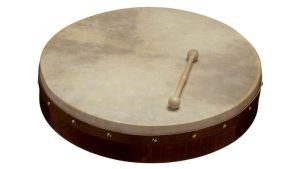
The type of drums I use are frame drums. One of the oldest known musical instruments, frame drums are found in various forms across many cultures worldwide and play significant roles in spiritual or ceremonial contexts. They are sometimes referred to as shamanic drums. A frame drum is a simple percussion instrument, typically circular in shape, consisting of a round wooden frame 2-4 inches deep, with a single drumhead stretched over one side. They can be played with the hand, or with a beater. The drumhead is traditionally made from animal skin, but synthetic materials are also used. The skin is usually secured to the frame with lacing. Frame drums produce a warm, resonant tone and are capable of a wide range of sounds, from deep booms to crisp, high-pitched tones.
In my work I use frame drums with a handle, the kind that is played by hitting it with a soft beater.
Frame drum categories:
Frame drums come into 2 main categories: the ones that are made of animal skin (known as hide), and ones that are made of synthetic skin (plastic material, or sometimes canvas type fabric).
Size matters: the bigger the drum, the deeper the sound. As a rule of thumb, I would suggest you start with something no smaller than 14 or 16 inches for a good sound. Tiny drums do not usually sound great. Really big drums (20 inches and above) have a beautiful deep sound by they can be unwieldy to carry and hold.
Synthetic drums
I have 2 main synthetic drums: A 16 inches Remo Buffalo drum (A misnomer as the drum is made of a synthetic skin) and a 16 inches Remo Bahia Bass Buffalo drum (it has a deeper sound than the normal Remo Buffalo). I also have a couple of synthetic Kanjiras (a small Indian drum with a jingle), and a small 8 inches hand held synthetic Remo which I mostly use for travel.
Synthetic drum Advantages
Good, reliable sound (this applies only to reputable brands, see below on what to avoid)
Sounds remains the same regardless of weather/water/temperature
If you play outdoors like I do, and live in a cold and wet country, you’ll be grateful to have a synthetic drum. You can play it in all weathers, even in the pouring rain, without the sound being affected. I’ve even taken mine inside sweat lodges and saunas.
These drums are typically cheaper than a skin drum, a Remo Buffalo Drum costs about £115 for a 16 inches drum
I own 24 different skin drums, 7 of which I made myself in drum birthing workshops or on my own, and the others I bought or received as gifts.
Skin drums advantages
Unique, beautiful, individual drums
Handmade by cottage industry businesses or with your own hands
Unique spirit and energy (and different hides from different animals, each with their own unique energy)
You can buy them ready made, have them custom made, or make them yourself to your own preference and style (including adding symbols, crystals, painting them etc)
Skin drums disadvantages
The quality can vary a lot & there are fakes (more on that below)
They are sensitive to weather, moisture & temperature. In winter you need a fire to warm them up if outdoors or in cold weather
They can get damaged by heat or moisture (you cannot play them in the rain and you have to the careful not to leave them somewhere hot, for example in the car)
Because they are handmade, they tend to be pricey (from £150 to £300 or more)
I have skin drums from the following makers, and I trust and recommend their work:
There are many other makers of drums both in the UK and around the world. Ask for recommendations and see whose work you resonate with.
One affordable skin drum option I often recommend is the Irish Bodhran. Whilst it is not officially designed as a shamanic drum it works perfectly for that purpose (read my article where I share how I overcame the misguided idea that there was only one right way to play this drum). A bodhran usually comes with a wooden stick called a tipper, and you’ll need a soft beater instead but these are very easy to make (a foraged stick and a stuffed sock or piece of felt attached to the stick with a string or elastic, or watch this video). Or you could buy a beater to go with your drum. Drum beaters come in factory or handmade versions. There are plenty of handmade ones on Etsy.
My first drum was a Bodhran, bought by my parents in Ireland from the oldest bodhran maker in Ireland, Malachy Kearns, and gifted to me. Malachy Kearns bodhrans start at 130 euros, however I have found such bodhrans available second hand on Ebay or Facebook marketplace for as little as £30 to 40. Another well known bodhran brand is Waltons. Just make sure to buy one that is a decent size, at least 12 to 14 inches.
When it comes to acquiring a skin drum, you can either buy one ready made, have something make a custom drum for you, or (the ultimate experience in my opinion), attend a workshop with a skilled drum making teacher, and make your own. When someone makes a drum for you, or you make your own drum, this drum carries the medicine that you need.
Size matters
With any drum, the bigger the drum, the deeper the sounds ( though I have sometimes seen smallish drums with surprisingly deep sound). For a starter drum I recommend something between 12 and 16 inches diameter. Really big drums (20 to 22 inches diameter) have beautiful, deep, resonant sound, but they can be tricky to hold and carry.
A few other people I have either seen drums made by (some run drum birthing workshops and also sell kits to make your own drum)
Quality matters. If at all possible try to listen to the sound of the drum before you buy. There are many cheap drums on Amazon for example, which are poor quality. They would be ok for a small child to play with. I was surprised when visiting Djoliba, a big percussion shop in Toulouse, France, to see a tiny drum cost more than some much bigger ones. The shop keeper explained that the tiny one I was looking at was handmade by a very well known drum company called Cooperman in the US, whereas the shelf of bigger drums I was looking at where factory made in India.
Sadly there are also fake drums. A lot of what’s sold on Facebook ads, Ebay or Amazon are often fakes/copies of real drum, made in China. People simply copy the artist’s pictures, and print and glue them on a plastic drum the size of my hand. Because they use the real artist pictures in the listing, what you think you’re getting and the reality are completely different, The drums made by Velenslav Voron for example, are so distinctive in style that I instantly recognised one of his designs on a Facebook ad for £30 on Facebook. I knew something wasn’t right, so I contacted him and he told me about the stealing of pictures, and the cheap copies, and about not being able to do anything about it because if he reports a shop, another shop pops up the next day. A friend bought such a drum and she sent me pictures of a crappy plastic drum not even good enough for a child, with the picture and surrounding tape peeling off. Currently you can buy drums that look like the Shaman Drums from Ukraine for under £10 on Aliexpress. Remember: if it’s too good to be true, it probably is. Get recommendations, and if possible, get to see and try before you buy.
I hope this is helpful, and if you end up buying a drum with the help of this post I’d love it if you posted a picture of your drum in the comments
Happy drumming!
If this speaks to you and you’d like to find out more about the work I offer with the drum, from one to one work, to healing, drum circles, workshops, and courses, you can find out more on this page.
Or you find out more about how drumming supports your wellbeing in my new book, The Beat of Your Own Drum (the link includes a free sample chapter).


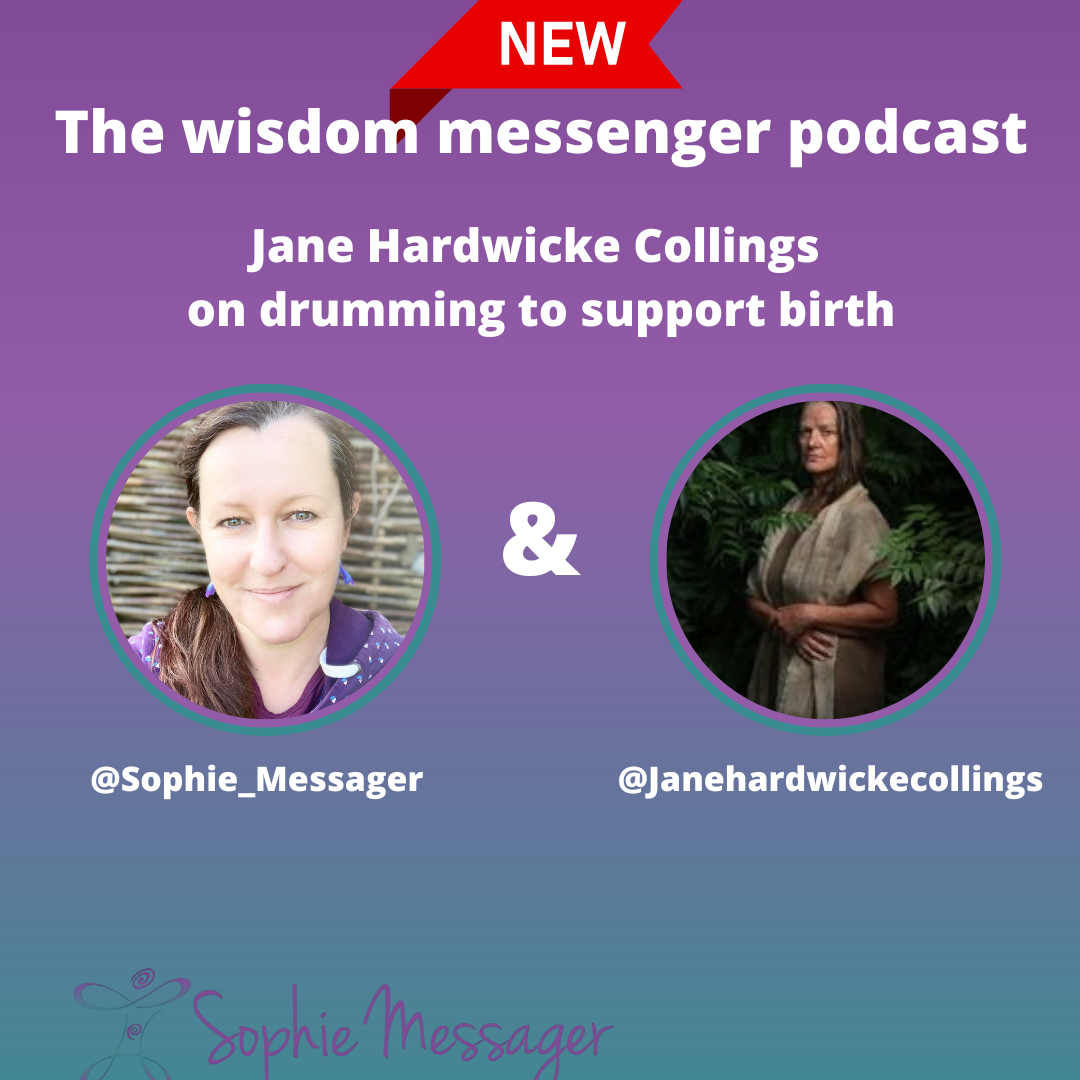

 With this in mind, what better first guest could I have asked for than