

It’s a very strange and stressful time we are living right now, especially if you are pregnant.
There is, understandably, a lot of anxiety about the unpredictable and fast changing nature of maternity services.
I am seeing a lot of comments on social media about people wanting free antenatal classes (because their hospital ones got cancelled), and also questioning why people should still charge for online work, as well as accusing people who charge for online services of taking advantage of vulnerable people
So I wrote this blog to explain, and debunk myths.
I have written in the past about why doulas charge for what they do , and also the amazing lengths they go through to help their clients . The same rules apply here.
Those “free” NHS classes were not actually free. The people delivering those classes were paid to teach them. Whilst the NHS is free at the point of contact, it isn’t “free” (because you pay for it with your taxes) and the people who staff it aren’t volunteers.
Whilst I understand that many people might be struggling financially, many are also still employed and earning a salary, or at least 80% of it.
Most of the people who provide perinatal education and support are self employed and run micro-businesses. I’m talking about doulas, independent midwifes, antenatal teachers, antenatal and postnatal exercise instructors, manual therapists etc. These people are it, i.e. their whole business is composed of one person. If they do not teach or do what they normally provide paid services for face to face, they don’t earn any money. Zip, nada. Right now, most of them are also trying to juggle doing this whilst having kids at home full time.
I am one of those people. My income has almost entirely disappeared. I still feel grateful, because my husband is working part time in an employed position and working from home. Still, this crisis means that my little, successful-ish, micro business, which took me 7 years to build up, has been reduced to nearly nothing. But at least I know I don’t have to worry about having food on the table. Many of my birthworker and perinatal educator friends aren’t so lucky, because they are single mothers, or their partner also runs a self employed micro business.
Yet I am also seeing that most of these people (myself included) are still giving a lot of their time for free right now, running free Facebook groups for pregnant women (believe me these are busy right now), answering worried messages, speaking to anxious women on the phone, running free zoom drop ins etc .
It is the same as in real life: people should run free/charity stuff if they can and want to, but it shouldn’t be a obligatory or expected thing. If people cannot earn a living, they simply will not be able to carrying providing these services.
So why should you pay for antenatal education, birth support, or postnatal education/support, if it’s moved online? For the same reason as when would when you pay for support : you pay for the time and money the person supporting you has spent training, the time they have spent prepping the class or one to one, and the years of knowledge and expertise they have built.
 Right now the people delivering these online classes are spending a lot of time thinking and prepping for these to make sure they work online (because making it work online isn’t the same as making it work IRL).
They are also spending a lot of time self teaching themselves how to use online delivery systems they had never used before (like Zoom), without any support through it.
Many are also spending money buying extra equipment (like video cameras and microphones or even laptop computers etc) to allow them to run their online services.
They are all having to manage this whilst having to deal with their own anxieties about the unusual situation we are all in, their own families’ needs, and worrying about their client’s well being.
I’m an experienced doula, and since I have been working in the birth and postnatal education for ten years, I feel confident and competent in delivering this to families. Yet, at the moment providing Skype or Zoom support to my clients is taking A LOT more time than when I’m doing it face to face.
This is because when I’m face to face I no longer need to prepare much ahead. I have enough knowledge to deliver at the drop of a hat, I have a small bag of props than I can use to deliver almost every aspect of birth and postnatal education, and I can react to my clients feelings and adapt accordingly.
This isn’t the case with the Skype or the Zoom stuff, because not only do I have to think and prep in advance how to deliver stuff that is easy face to face but much more complex online (for example teaching someone how to use a sling), but I also have to constantly keep up with the forever changing medical guidelines (the Royal College of Obstetrician has published 8 updates to their guidelines since they published the first one on the 9th of March, that’s 2 to 3 updates a week!). I am also having to keep up with local trust changing guidelines, as well as rake my brain to think about how my clients can support themselves after the birth in the hospital when I know I won’t be able to be there with them physically. Believe me this takes a lot of head space.
 I am not complaining, mind you, because I love learning new skills and this sure is keeping my brain on its toes!
But if I wanted to be totally fair, I should actually be charging MORE money for all of my time, to reflect all the extra time spent preparing. Instead because most of us want to support women regardless of their circumstances, many of us are offering discounts, payment plans, pay what you can, or indeed free services.
I am worried that some of these valuable micro businesses, run by passionate people who do it because they care rather than wanting to make a quick buck, will simply disappear.
Yes, many celebrities are offering free online classes, but these celebrities are likely to have plenty of money. They are also likely to receive revenue through advertisement, so, again, these free classes may not be actually “free”. Whilst their offer is laudable, is it also sadly contributing to the idea that all online stuff should be free. You simply cannot extrapolate what celebrities are doing to micro businesses which are only known to their local community.
Another thing I have seen is that people say you don’t need the paid services, because you can teach yourself, with these free/cheap resources. Whilst this is true : you can indeed learn from a book, free courses etc, this isn’t the same as getting into a live course or one to one work with an expert in the field. The main ways you can educate yourself about anything fall into 3 categories: DIY, group courses, and one to one tuition. Each one of them has pros and cons, but it isn’t necessarily fair to compare the DIY approach to what you’ll get if you hire someone to work with you one to one. I have explained the pros and cons of this in a previous blog called three ways to educate yourself about birth.
So if you still have a salary, please consider paying for support rather than just doing free classes. If you are doing free classes with a micro business person and enjoying it, consider giving them a donation, or hiring them for their paid services.
I promise you that you will still get value for money and incredible support. You will also contribute to keeping someone’s only way of earning a living afloat. And if you worry that online support doesn’t work, I have addressed it in this blog (along with plenty of free classes links). My blog is also full of free recently added resources for pregnancy birth and beyond, including a recent post on how to have a positive birth in unpredictable times.
I wrote this blog to explain, and debunk the myth, please feel free to share it widely.
If you have found this blog helpful and would like to support my work and help me continue provide valuable free information to birthworkers and expectant and newborn families, you can donate to my paypal account paypal.me/SophieMessager.

 Here are some example of things you could bring to make the room as cosy as possible:
 Regardless of how and where you hope/plan to give birth: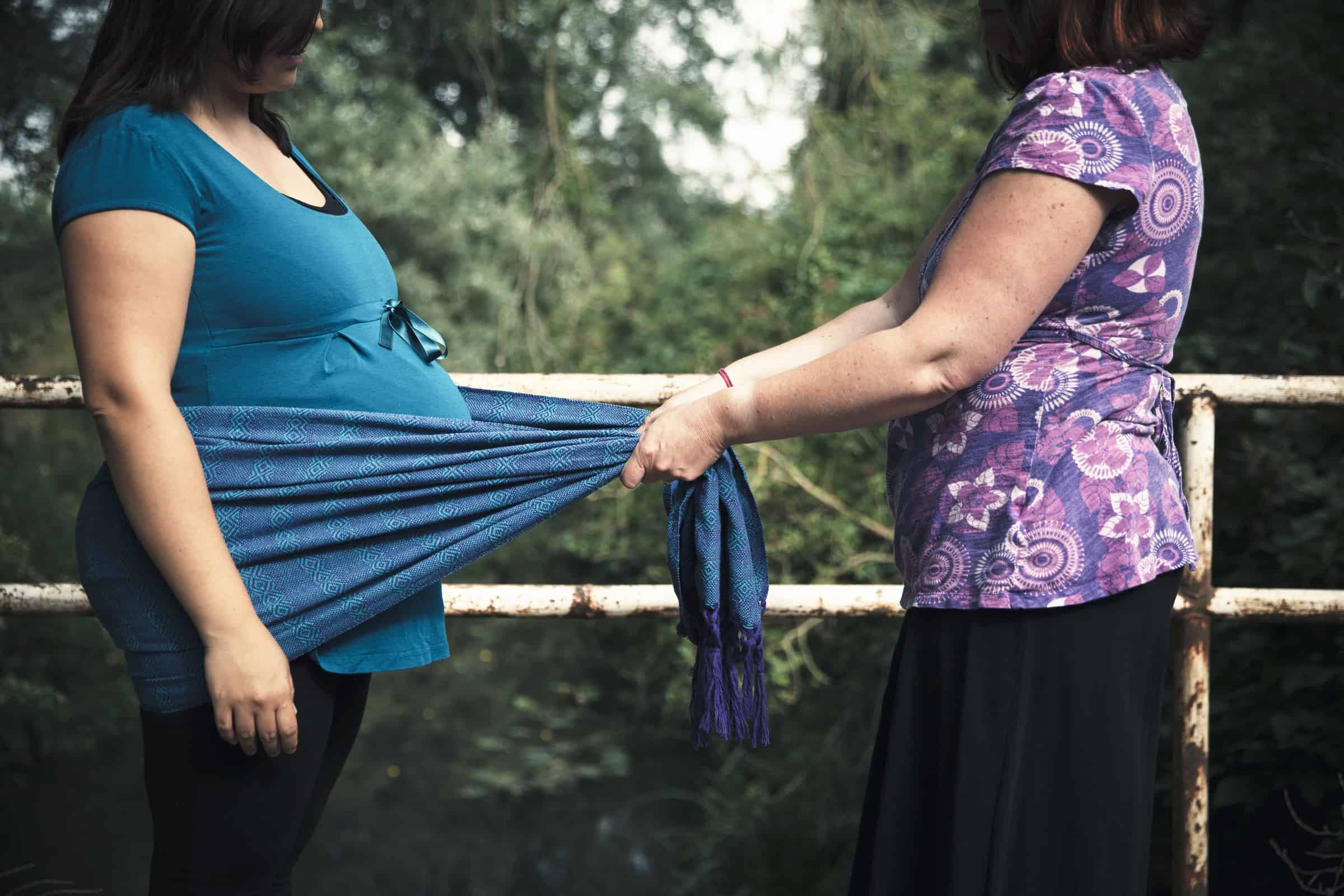

 Here is a list of organisations you can get support from:
 Becky joined us around 7am. At day break things slowed right down. Max and Caro’s mother got up and join us . We shared a lovely breakfast of scones and jam.
 Becky and I came back to her house around midnight. We spent another night of supporting her, both in and out of the pool. At some point in the night Caro experienced a lot of pressure in her bottom, and we got quite excited believing that baby was on his way, but it wasn’t time yet.
 Becky supported Caro by saying ” longgg deeep slowwww breaths” as she had a few wobbles. Eventually Caro started to show signs of pushing 🙂
 Caro’s baby son Leo was born in the pool in her living room around 6h30 pm, after 4 days of labour. When he was born, the emotion in the room was incredible. There wasn’t a dry eye in the room, even the midwives were crying.
 I left around 9pm with a huge smile on my face.

 Yet, even in our modern world, we still experience this annual peak and through of energy.
 There is true magic in stopping, resting and taking stock and seeing the forest for the trees.
 I was introduced to the art of using a traditional Mexican shawl called a rebozo to comfort birthing women at my doula course by Maddie McMahon in 2008.
 Cold countries have thick, woollen fabrics (think Welsh Shawl or Scottish plaid), and warmer countries, cooler, thin, cotton fabric (think African Kanga or Indonesian Sarong).
 It’s also quite fascinating to see how contact with foreign cultures can influence each other. For example I recently acquired a Dutch postpartum girdle called a
  During labour she would have used the shawl to hang from, to pull on, and her birth attendants would have used it to provide comfort measures, such as sifting, rocking, shaking, and wrapping.
 She then would have started to use the cloth to carry her baby and start the cycle all over again.
 Why a shawl or scarf might be the most powerful tool in your tool box
 “Recently, I supported an amazing woman through a very long birth at home, which also happened to be a VBAC. She laboured for 4 whole days. Through the early parts of her labour, I used my trusted rebozo scarf to relax her belly and help engage her baby. On the last day, when she got the dreaded “stuck at 6cm” situation (her cervix seemed to remain dilated at 6cm for several hours, with no further progress), a simple inversion with sifting on the buttocks through a few contractions, completely changed the pattern of her contractions for the better. In fact, when she got back her from her inversion, she said “My back doesn’t hurt anymore”, the midwife confirmed shortly afterwards that her baby had turned in a more optimal position, and she roared her baby out in the pool a few hours later. There wasn’t a dry eye in the room when that baby was born. I have no doubt that the rebozo technique made a big difference to her labour progress.”
 Recently, after sending a rebozo to a mum who suffered from PGP, I got the following message the next day ” It’s the second time I’ve had pgp. I was induced early because it was so bad and this time is even worse! Your videos were the first time I had ever heard of rebozo or using the shawls to wrap your hips and thought that anything was worth a try as I am in such horrendous pain. Since using the wrap I have been able to do shopping and walk around without crying in pain, it makes a huge difference, so easy to use, looks pretty and I love that I can use it during labour and after the birth as a sling!” Hannah
 Here are some examples of what women have said after receiving it:


 During labour she would have used the shawl to hang from, to pull on, and her birth attendants would have used it to provide comfort measures, such as sifting, rocking, shaking, and wrapping.


 only had a 2 day week as school finished on Tuesday, and I had much to do before starting the holidays.