

Play
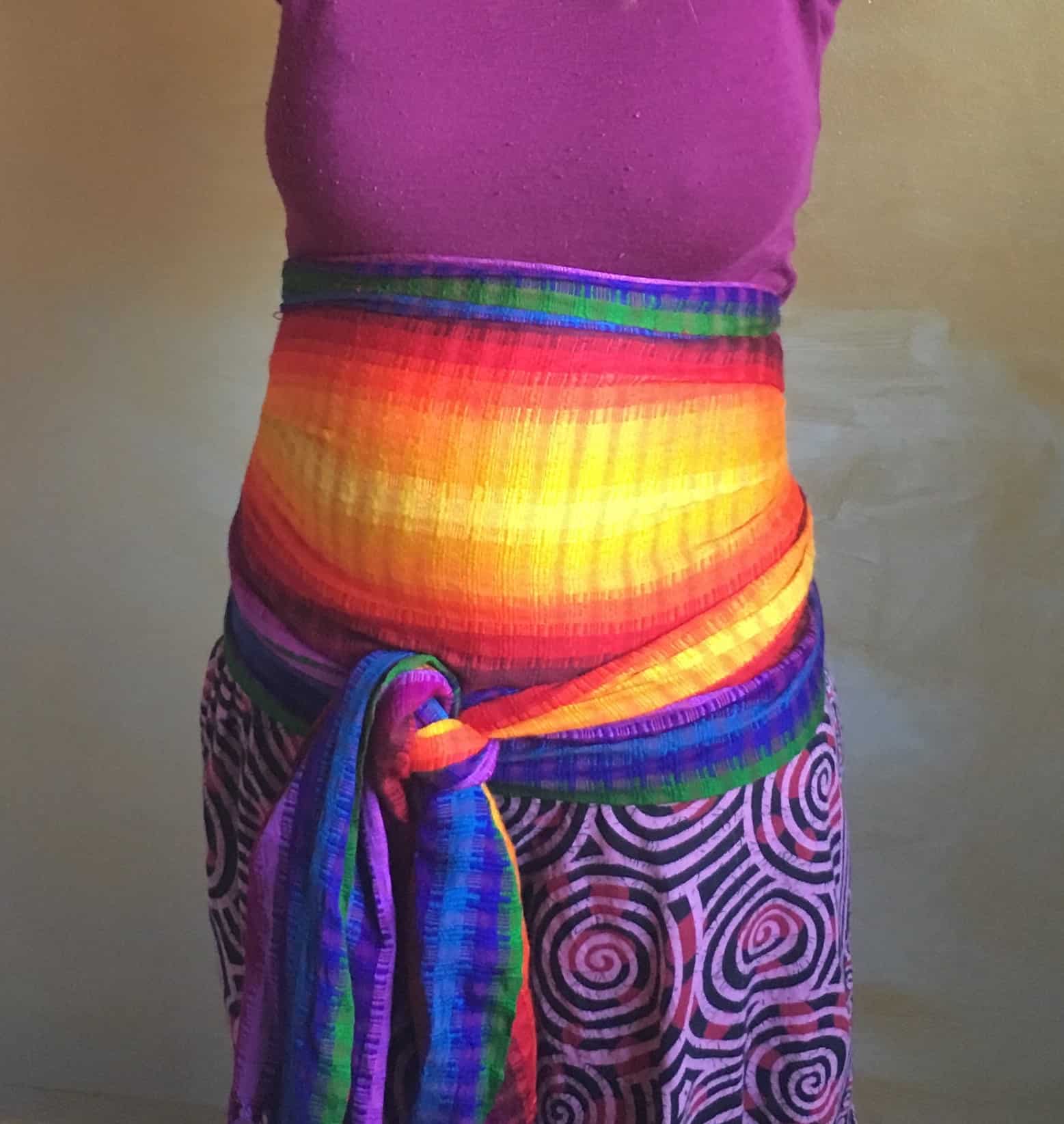
I was introduced to the art of using the traditional Mexican shawl called the rebozo back in 2013 when I attended a workshop by doula Stacia Smales Hill on rebozo use for labour and birth. During the same year I also attended a workshop by Dr Rocio Alarcon, who taught a postnatal massage technique called closing the bones, some elements of which included rocking and binding with a rebozo.
Over the course of the following years I pursued my knowledge further by doing several more workshops with Rocio, and several other rebozo workshops with different focuses, such as the rebozo for labour progress and malposition with Selina Wallis, micromovements with Francoise Freedman, 2 different spinning babies with Jennifer Walker and Gail Tully, and a workshop on healing diastasis recti with Birthlight which included many rebozo techniques.
I am also a babywearing instructor, and as such use rebozos and wraps to carry babies too.
As I started teaching workshops around closing the bones and rebozo work as well as babywearing, the incredibly versatile use of the cloth really blew my mind.
As I met people through teaching, I constantly questioned people I met about their culture’s practises, I started to build a picture in my mind of something much more universal than the rebozo.
It seems that every culture had a piece of cloth of some kind, call it a shawl, a sarong, a scarf, or a wrap.
 Whilst the rebozo is a traditional shawl from Mexico and some South American countries, I found that other cultures used different pieces of cloths in the same fashion.
Cold countries often us thick, woollen fabrics (think Welsh Shawl or Scottish plaid), and warmer countries, cooler, thin, cotton fabric (think African Kanga or Indonesian Sarong).
There are almost too many fabrics to count, but one thing is for sure, women have used all sorts of cloths in incredibly versatile ways, and what I’m going to say below about the rebozo is true for many other cultures too. It’s a truly universal practise.
I spent a few years believing that the use of the rebozo during labour was uniquely South American but I have since met a Somalian midwife who told me how they use their traditional shawl, called a Garbasar, in a similar way during labour. Supporting a pregnant woman from the same country confirmed this, and in fact her mother even showed me how it is used to bind the abdomen post birth.
I trained a Moroccan birth worker in doing closing the bones, and she was surprised when she started offering the massage that women came forward and told her they’d had a similar treatment in the local hammam (Steam bath/wet room) after birth (using a traditional Moroccan cloth called a Mendil). Tunisia offers a similar practise called a fouta massage (the fouta is a hammam towel, which is very similar in nature to the Turkish towel-it has become a very popular alternative to beach towels in France recently).
I am lucky to be part of a multicultural family, being French and married to a man from Hong Kong. In Hong Kong I’ve been told they use a long piece of muslin cloth to bind the woman’s hips and abdomen after birth, and my mother in law showed me how the midwifes taught her to wrap her belly with a towel post birth.
It’s also quite fascinating to see how contact with foreign cultures can influence each other. For example I recently acquired a Dutch postpartum girdle called a Sluitlaken. I couldn’t help but notice how similar to Indonesian postpartum binding it looks, then a friend pointed out than Holland used to have Indonesian colonies!
So, what can you do with a rebozo (or a scarf of shawl)?

Pretty much all cultures on the planet, some kind of cloth is used to cradle and carry a baby. In some cultures is used to rock and soothe the baby too. Rocking is such a primal rhythm we all experienced it in our mother’s womb, that we find it soothing all through our lives. Even in Europe there are pictures of women wearing their babies in Welsh shawls which date from the 1940s.
Later, when the baby grew into a toddler and child, she would use the cloth to dress up, pretend play (including carrying toys and/or animals, pretending to carry a baby), make a den etc.
As the child grew into a young woman she would use the cloth as a shawl to keep warm, as a clothing accessory, a blanket, to carry siblings ( in traditional cultures women learn baby care from a very young age as they tend to live with extended families), and to carry loads on her back or head.
Later still when she became a woman, she might have been given her own shawl as part of a menarche ceremony. She might have worn a special cloth on her wedding day.
When she became pregnant, she would have used the shawl to support her belly, and her midwives would have used it to alleviate the aches and pains of pregnancy, and maybe to help the baby move into the best position for birth.

During labour she would have used the shawl to hang from, to pull on, and her birth attendants would have used it to provide comfort measures, such as sifting, rocking, shaking, and wrapping.
After the birth she would have had a “baby moon”. Again this is something pretty much universal in the world-women the world around have been alleviated from household tasks and cared for by family members for the first 30 to 40 days postpartum. During this time they would rest so they could recover from growing and birthing their baby and get to know their baby and learn to care for them. Her birth attendants and the community of women would have come to feed her nourishing food, and help her body heal from the pregnancy and birth by using a combination of their hands, massage techniques and using the cloth to help move and bind her hips and abdomen to help them back into place. In the West we used to have this practise called “churching” whereby the new mother was expected to rest for a month before rejoining the community and be welcome back during a special blessing at the church (you can read about it here). The research I have done for my upcoming book “Why postnatal recovery matters” has also shown me that the rest AND the binding still used to be part of the UK culture, less than 70 years ago.
She then would have start to use the cloth to carry her baby and start the cycle all over again.
Later as she grew old, her family members would have used the cloth to rock and soothe aches and pain.
Women would have been buried with their shawl using it as a shroud.
So you see, a traditional cloth, rebozo, shawl or cloth can be used to support a woman throughout her whole life. It is a universal phenomenon on our planet.

As the shawl came out of fashion and modern practises like using pushchairs became seen as more fashionable and desirable, this skill was soon lost, and because like most traditional women-only practises, it was just passed on orally rather than written about, the knowledge was lost very quickly, in one or two generations. We also tend to embrace “modern” practises mindlessly, seeing traditional ones as backwards and old fashioned.
Mexican and Chinese friends tell me that nobody wants to use the traditional shawl or carrier these days as only remote farmers or beggars still use them.
This is something that we need to reclaim and teach all women, as it is part of the essence of women circles and supporting women through life transitions.
This is why I am so passionate about passing this skills to both expectant and new mothers, and to anybody who works with expectant and new mothers. It is our birthright!
You can learn more about the Rebozo and its many wonderful uses to support pregnancy, birth and the postpartum in my online rebozo course.
(This is an update from a blog I published originally in 2018)
If you have found this blog helpful and would like to support my work and help me continue provide valuable free information to birthworkers and expectant and newborn families, you can donate to my paypal account paypal.me/SophieMessager.
I’m seeing a lot of understandably anxious pregnant women since the beginning of the Covid-19 crisis. What will happen to my appointments and when I go into labour? Will I have to give birth alone? What will happen after the birth?
I’ve tried to address as many of these questions in this blog about pregnancy and the pandemic, this one about postnatal recovery, and this one about online support.
But I’d also like to offer a simple practical way to relax that you may not know about.
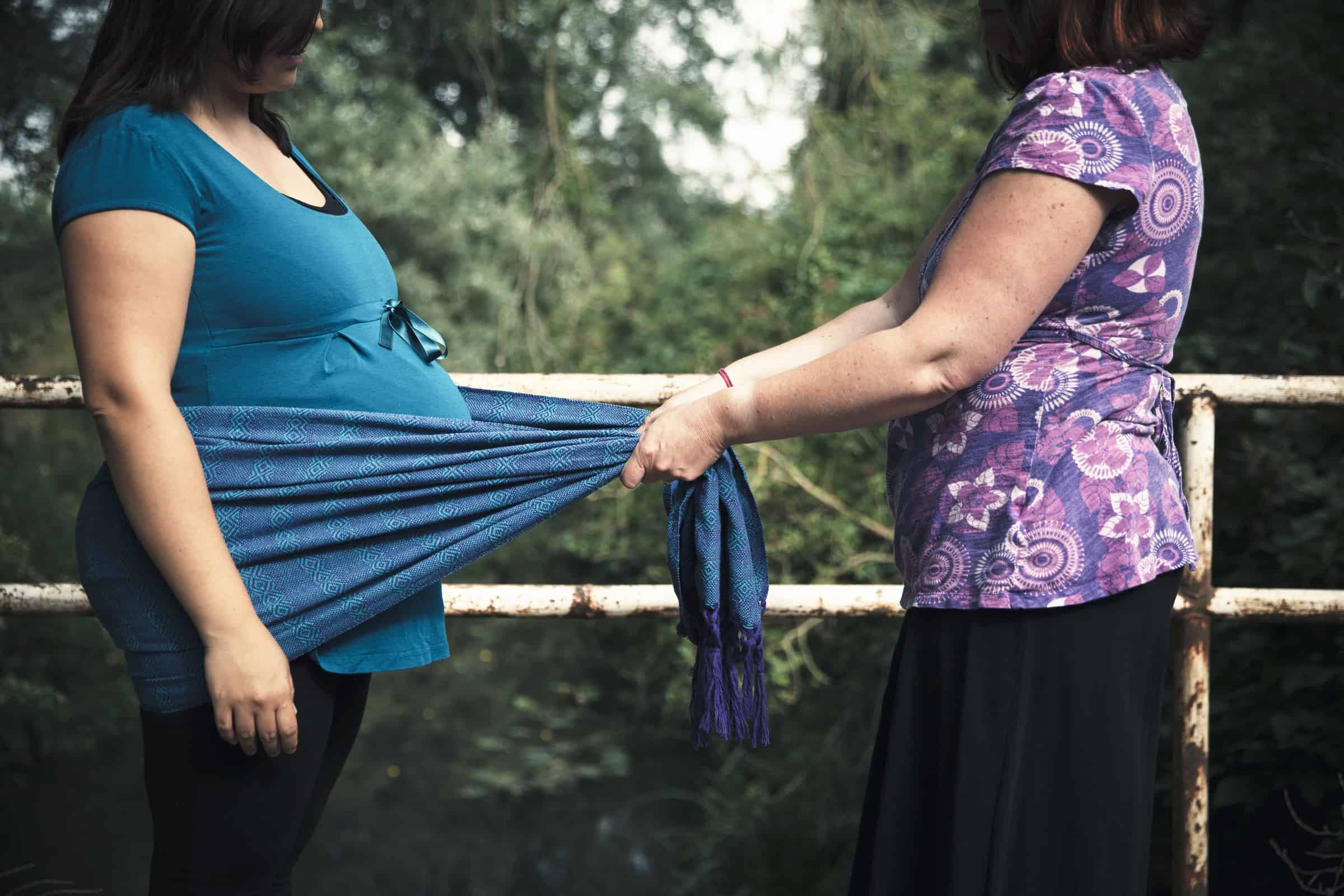
A rebozo is a traditional Mexican shawl, which, besides being used as an item of clothing, is use to provide great comfort by rocking, jiggling and wrapping a woman’s body, especially during pregnancy, birth and the postpartum.
I’ve been using rebozos for 7 years, as well as teaching the techniques to parents and birthworkers.
I have had so many mind blowing experience using rebozos shawls and scarves in my work to support women through pregnancy, birth, the postpartum and beyond, I’m on a mission to pass on this skill to ask many people as possible.
What the rebozo does, by gently rocking and wrapping you, is calm you right down and bring you back to you body.
As a species we exist in two extreme opposite states: the fight or flight, and the rest and relaxation stage.
Right now, understandably, many of you are stuck in the fight or flight state. It’s made worse by the fact that you literally cannot “flight” because we are all stuck at home.
The simple techniques I describe in this blog are incredibly effective, yet super simple to do, and anybody can do them. You don’t even need a rebozo to do them, something simple like a scarf or a pashmina will do.
Here are 3 simple relaxation techniques you can use during pregnancy, birth, and the postpartum period (or at any other time! These aren’t limited to pregnancy-anybody regardless of gender or age can benefit from their relaxing effect).
Self-care technique
Wrapping the shoulders
Rocking the pelvis
This is a taster version of the full version of my self-study rebozo ebook, or in my rebozo online course. If you would like to buy a rebozo, I have them in my online shop.
If you have found this blog helpful and would like to support my work and help me continue provide valuable free information to birthworkers and expectant and newborn families, you can donate to my paypal account paypal.me/SophieMessager.

[et_pb_section fb_built=”1″ admin_label=”section” _builder_version=”3.22″][et_pb_row admin_label=”row” _builder_version=”3.25″ background_size=”initial” background_position=”top_left” background_repeat=”repeat”][et_pb_column type=”4_4″ _builder_version=”3.25″ custom_padding=”|||” custom_padding__hover=”|||”][et_pb_text admin_label=”Text” _builder_version=”3.27.4″ background_size=”initial” background_position=”top_left” background_repeat=”repeat”]
 Earlier this week I wrote a blog that’s been playing on my mind for many years. It’s called “why I wish I had hired a postnatal doula“
In this blog I explain how challenging I found new motherhood, how lonely and upset I felt through those early weeks and how I longed for some support but failed to reach out because of a mix of shame for not loving every minute of being a mother, and feeling like I couldn’t justify the expense.
As a doula, I witness the same challenge in new mothers. Sometimes I do not even know they are struggling until weeks later, because, whilst they sit in the same pit of discomfort and shame as I did, thinking they are the only one that struggle, they don’t usually reach out for help do they?
I have written before about the topic of making a postnatal recovery plan, and about what new mothers really need, and you’re not meant to be doing this on your own (hint: it’s not flowers or stuffed bears).
The wisdom in traditional postpartum practises around the world is very simple really, it boils down to 4 main elements of support for the mother:
I have a strong urge to write more about this, to spread the word further, I have a list of blogs as long as my arm about this topic, and in fact I now am thinking I need to write a book, or possibly more than one book, about this topic. Something easy to share, I might start with an ebook, like the one I have already written about rebozo techniques.
 I’m a knowledge junkie, so since I started learning about some postpartum practises, I’ve asked everybody I’ve met about the traditional practices from their country, and you know what, every continent in the world has some form of specific nurturing, specific foods, and bodywork and wrapping.
After all, you’ve not only grown and birthed a whole new human, your body has accommodated this through tremendous changes.
During pregnancy, the uterus grows from the size of a pear to the size of a watermelon (pushing abdominal organs out of the way, changing the shape of your muscles, ligaments and spine as it does so), then back again after birth.
It seems crazy to me that nobody makes sure that all the organs, muscles, joints and ligaments have safely returned where they belong.
I bake a groaning cake for all mothers I support, and sometimes make a traditional Chinese chicken soup too (my husband is from Hong Kong, and there is still a very strong postpartum nurturing culture there)
 Learning to massage and wrap new mothers had lead me onto a journey of discovery about postpartum practises, got me to work closely with an osteopath, create a new type of massage, and develop my skills in an apprenticeship manner. The two combined led me to develop a deep practical knowledge of what happens to women bodies after birth.
This has fuelled a fire that makes me want to shout from the rooftops that what we get in the Western world just isn’t good enough, and want to work hard to change that.
If this resonates with you, and you would like to learn some of these nurturing skills, I am running some Rebozo and Postnatal Recovery Massage courses in July-see https://sophiemessager.com/workshops-birth-professionals/
[/et_pb_text][/et_pb_column][/et_pb_row][/et_pb_section]

Caro and Santi (both from Argentina) had hired me and my co-doula Becky as their doulas. They were planning a HBAC (home birth after cesarean) after having had what they knew to be an unnecessary elective caesarean with their first child.
We met several times during Caro’s pregnancy, and built a lovely rapport together, getting to know them and their toddler son Max. They were both delightful and warm and friendly, and very well informed and researched. As Santi stayed at home to look after Max, I accompanied Caro to her hypnobirthing classes. This is the story of their birth, shared with their permission. It lasted 4 days, the longest birth I have ever attended in my 6 years as a doula.
Day 1
Caro texted us on Saturday morning (40 weeks and 5 days) to let us know that her waters had just broken. We kept in touch throughout the day.
She lost some mucus around 10am, and started having mild, period cramp like contractions, soon after. She napped and ate, and rested throughout the day, keeping us updated.
On their request I provided Caro and Santiago with evidence based papers to read about the risks of induction versus caesarean should they go beyond the 48h deadline after her waters had broken. Caro called the hospital around 10pm. They asked her to go in, which she declined. The hospitals send midwives to her home to listen to the baby’s heart instead.
Caro declined a vaginal examination at this stage. The midwives booked an appointment for her on Monday afternoon at the hospital.
Day 2
Sunday morning around 2:30 am Caro texted us a screen shot of her contraction timer showing 40 sec to 1 min long contractions about 3 to 6 min apart. I called her. We agreed I should come and support her. I arrived at her house around 3am.
She was having quite regular contractions but she was very “with it” and alert and I could tell this was early labour still. We filled the pool. Caro got in but things slowed down so she got out.
 Becky joined us around 7am. At day break things slowed right down. Max and Caro’s mother got up and join us . We shared a lovely breakfast of scones and jam.
We hung out in the house/garden throughout the morning. It was a gorgeous, warm and sunny spring day.
Caro was still having regular contractions but there were only 5/10 min apart. Santi and I went to get a takeaway lunch from a local South American restaurant.
I went home around 3pm to get some sleep and spend some time with my family (it was my husband’s birthday that day). Becky spent some time lying in the garden with Caro, and rubbing her back during contractions.
Caro messaged me around 9pm, contractions still irregular, and about one min long. I went to sleep after that. Becky had gone back home by then to rest too.
Caro texted us around 10pm as her contractions were about 1 min long and 5/7 min apart. She found them harder to cope with. She messaged again around 11pm,by then her contractions were 4/6 min apart and 1 min long.
Day 3
 Becky and I came back to her house around midnight. We spent another night of supporting her, both in and out of the pool. At some point in the night Caro experienced a lot of pressure in her bottom, and we got quite excited believing that baby was on his way, but it wasn’t time yet.
I was amazed that Caro wasn’t exhausted at this stage, but somehow she managed to sleep between contractions and recover enough to cope. In the morning Becky went to sleep upstairs and I had a nap on the sofa.
A midwife came in the morning to assess things. Caro agreed to a vaginal examination (she had been in labour for nearly 48h by now) and was found to be only 2/3cm dilated. I had a big wobble at this point. I also believed her baby to be back to back, hence the pressure in her bottom. The midwife also said that her baby was only 3/5 engaged.
I suggested to Caro that she does some engagement spinning babies techniques, namely a technique called the bump lift, consisting in flattening her back against the wall and lifting her bump, and we also did some rebozo sifting on her belly. It seemed to help a bit, and her contractions got stronger. Becky and I had a chat and agree we should tag team and she sent me home to rest. At home I had some food then a nap, then came back at 2pm.
I brought some loo roll with me as I’d noticed they’d run out, and I knew they wouldn’t find the time to go out shopping for some!
Caro and Santi were snoozing upstairs when I got back. Becky told me they have agreed to a visit from the midwives, but that they only wanted to check the baby’s heart rate and mum’s vitals but not have any vaginal examinations, nor hear any talk about risks.
Becky left and the midwives arrived. I met them downstairs and explained Caro’s wishes. They weren’t pleased by my request, and one of them said sharply that she had to tell her (about the risks) as she had a duty to protect the baby. I explained that after the previous talk of risks, Caro’s contractions stopped for over 2h, and therefore it really wasn’t a good idea. The midwives came upstairs. I crouched on the floor feeling like a mama bear, ready to pounce if the talk of risks rears its ugly head. Surprisingly, they did the checks and only mentioned to Caro and Santi that they needed to know that they are going against medical advice.
At this stage, Caro and Santi agreed that they would go for a caesarean early the next morning (Tuesday) should she not have given birth yet. The midwives left.
I carried on supporting Caro through the afternoon. Her contractions were still spaced out. Santi had a good long nap with Max Late afternoon I spoke to Becky and she told me to go home. We agreed we could have another night and day, possibly in hospital with a caesarean, after today.
When I relayed our plan to Caro and Santi, Caro got upset and told me that I had lost faith in her, and she was right. I was by this point extremely weary and tired, and this affected my emotions a lot. I apologised profusely. Santi was also worried about doing bedtime without our support. I explained that we were happy to help but really need some sleep ourselves and Caro’s mum could support her during that time. I went home to sleep around 8pm.
Day 4
Becky called me around 1h30 am saying Caro was pushing. I got dressed and drove very quickly as I was worried I might miss the birth! When I got there I could tell Caro was nowhere near birthing yet. Her contractions were still not quite strong enough.
Two midwives arrived at around 2am, both really lovely community midwives, calm and compassionate. One of them examined Caro and she was 5/6 cm dilated. This was hard for me to hear as I was really hoping she was ready to push her baby out! Caro carried on labouring through the night.
When shift change was due to happen I explained to the midwives how important it was to have a supportive, confident midwife just like them replacing them. I asked for a particular community midwife whom I knew, and who Caro liked a lot. They organised for her to come :-). She was incredibly calm and supportive.
We had a chat with Santi explaining that Caro’s mother needed to take Max out of the house for the day because Caro really needs some peace and quiet to get on with her labour. She left for the day soon after that. I went shopping for some food as we hadn’t got much left in the house.
Sometimes in the morning, the midwife did another vaginal examination (in the pool!) and Caro was still only 6cm dilated and hadn’t progressed. This was a down point. I asked specific questions to the midwife, especially if baby was back to back and asynclitic, and she confirmed this. Her baby seemed to have completely more than one turn around the pelvis several times already, from being OP, then OA then OP again.
I took my spinning babies handbook out of my bag again, and with Becky’s help (and Caro’s consent!) we helped Caro into an inversion. During about 3 contractions, I used my rebozo to do vigorously do shaking the apples on her bottom. It took all of us to support her through it, as you can imagine this wasn’t the comfiest thing to do at this stage. Then I did a sacro-tuberous ligament release and also a standing sacral release. Caro immediately said that she has felt the baby turn and that her back pain was gone. Her contractions cranked up big time and I knew we had changed things for the better.
A vaginal examination around 3pm showed that she was 7cm dilated. Caro got back into the pool and carried on labouring. Contractions were really powerful at this stage, and I was feeling very hopeful.
 Becky supported Caro by saying ” longgg deeep slowwww breaths” as she had a few wobbles. Eventually Caro started to show signs of pushing 🙂
Around 5 pm there was another shift change, I am worried because one of the midwives is the one who talked about risks the day before. I was worried that the change of midwives at such a crucial time could upset Caro’s labour. The midwife in question hadn’t given me a good vibe the day before. By then Caro has been pushing for a while.
I suggested to Santi that he supports her pushing by standing on the edge of the pool with a rebozo around his shoulders for her to pull on. Becky tried to make sure that the other midwife, not the one we had a bad gut feeling about, came into the room instead but that didn’t work.
So I worked hard on changing my feelings towards her to positive ones. Luckily she turned out to be much more relaxed than I thought. Caro carried on pushing.
At some point she shouted “I’m fucking doing it”, and she sure was! She soon started feeling some stinging.
 Caro’s baby son Leo was born in the pool in her living room around 6h30 pm, after 4 days of labour. When he was born, the emotion in the room was incredible. There wasn’t a dry eye in the room, even the midwives were crying.
I cried and laughed at the same time for the first time in my life, with the cheer joy and relief. It was the most incredible feeling. Becky and I hugged each other like loonies. I sobbed some more. I literally shook with it. This was one of the most emotional births I have ever been at.
After the birth I suggested to Becky that she goes home to sleep straight away as she was still on call for someone else. I stayed to support Caro and make sure she and baby were comfy
I help her take a shower, and she was elated by the fact that she could walk around straight after the birth- a stark contrast to her previous caesarean.
Caro was soon tucked up in bed with her new son Leo, and a nice chunk of groaning cake.
 I left around 9pm with a huge smile on my face.
Reflection
When I reflect on this birth several months later, I am still amazed at Caro’s resilience, at her belief in herself, and at the unwavering support of her husband.
I also can’t believe I managed to support them for that long, with so little sleep, if I had been told that the birth would have been this long in advance I’m not sure I could have coped with it. But in the middle of it you just dig deep and get on with it.
This is also the first birth where I experienced my first true miracle with the spinning babies and rebozo techniques.
I teach rebozo techniques workshops, and Caro’s birth completely changed my outlook and the way I teach. It really anchored in my heart that this simple tool can really work miracles.
I went on to have several similar miracles with such techniques at other births (though not quite at long!) since. This birth also illustrates to the extreme the commitment doulas make to their clients, and how much emotional investment be put in this job.
I asked Caro to share her incredible birth story because I hope it will give other women the belief that they too can have an incredibly empowering birth after caesarean. For doulas, this birth illustrates how awesome shared care doula support can be. I can’t imagine how I would have survived without Becky, both in the fact that we supported each other, and the ability to tag team and get some rest!
The day after the birth, Becky went to a study day at the hospital, and she lost count of how many midwives approached her and asked “what did you do?” about the amazing effect of the inversion with the rebozo. I am hoping to train the midwives in my local hospital to do this too. Caro is now a life long friend and is planning to become a doula. When I think back about her birth, all I feel is tremendous gratitude and joy.


 I was introduced to the art of using a traditional Mexican shawl called a rebozo to comfort birthing women at my doula course by Maddie McMahon in 2008.
Whilst I developed my antenatal and doula career, in my usual, knowledge junkie style, whislst I learn to use the tool for myself, I decided to learn as much as I could about this magic tool by attending training.
Over the my first few years as a doula, I pursued my knowledge further by learning from several doula colleagues (I am especially grateful to doula Bridget Baker who showed me how to properly wrap a rebozo around a pregnant woman’s belly during a doula UK AGM).
I attended my first formal workshop with Stacia Smales Hill on rebozo use for labour and birth in 2013. In the same year I also attended a workshop by Rocio Alarcon called closing the bones, a postnatal massage technique which included rocking and binding with a rebozo.
Frustration over long and difficult labours, and especially malpositioned babies led me to seek more specialist training, such as the rebozo for labour progress and malposition with Selina Wallis, micromovements with Francoise Freedman, and 2 iterations of different levels of spinning babies with Jennifer Walker and Gail Tully.
As my experienced developed I also brought more focus towards postpartum support, and recently attended a workshop on healing diastasis recti with Birthlight which included many rebozo techniques.
I am also a babywearing instructor and tutor, and as such use rebozos and wraps to carry babies too.
I started facilitating workshops around this topic because people asked me to. Repeatedly. At first, I refused, as I didn’t feel qualified or experienced enough. But after a few years of constantly using this amazing tool in my birth work and my antenatal and babywearing classes, and seeing how the incredibly versatile such a simple piece cloth could be, and the miraculous experiences that ensued, I finally felt ready to start teaching workshops around this topic, because I had so many positive experiences I felt I needed to share this skill with others.
As I met people through teaching, I constantly questioned people I met about their culture’s practises, I started to build a picture in my mind of something much more universal than the rebozo.
It seems that every culture has (or had) a piece of cloth of some kind, call it a shawl, a sarong, a scarf, or a wrap.
Cold countries have thick, woollen fabrics (think Welsh Shawl or Scottish plaid), and warmer countries, cooler, thin, cotton fabric (think African Kanga or Indonesian Sarong).
There are almost too many fabrics to count, but one thing is for sure, women have used all sorts of cloths in incredibly versatile ways, and what I’m going to say below about the rebozo is true for many other cultures too. It’s a truly universal practise.
I spent a few years believing that the rebozo use for labour was uniquely South American but I have since met a Somalian midwife who told me how they use their traditional shawl, called a Garbasar, in a similar way during labour.
I trained a Moroccan birth worker in doing closing the bones, and she was surprised when she started offering the massage that women came forward and told her they’d had a similar treatment in the local hammam after birth (using the traditional Moroccan cloth called a Mendil). Tunisia offers a similar practise called a fouta massage (the fouta is a hammam towel, which is very similar in nature to the Turkish towel).
I am lucky to be part of a multicultural family, being French and married to a man from Hong Kong. In Hong Kong I’ve been told they use a long piece of muslin cloth to bind the woman’s hips and abdomen after birth, and my mother in law also showed me how she was taught how to use a towel to bind her hips and abdomen after birth.
 It’s also quite fascinating to see how contact with foreign cultures can influence each other. For example I recently acquired a Dutch postpartum girdle called a Sluitlaken. I couldn’t help but notice how similar to Indonesian postpartum binding it looks, then a friend pointed out than Holland used to have Indonesian colonies!
So, what can you do with a rebozo, shawl or scarf of shawl?
Pretty much all cultures on the planet, some kind of cloth is used to cradle and carry a baby. In some cultures is used to rock and soothe the baby too. Rocking is such a primal rhythm we all experienced it in our mother’s womb, that we find it soothing all through our lives. Even in Europe there are pictures of women wearing their babies in Welsh shawls which date from the 1940s.
Later, when the baby grew into a toddler and child, she would use the cloth to dress up, pretend play (including carrying toys and/or animals, pretending to carry a baby), make a den etc.
As the child grew into a young woman she would use the cloth as a shawl to keep warm, as a clothing accessory, a blanket, to carry siblings ( in traditional cultures women learn baby care from a very young age as they tend to live with extended families), and to carry loads on her back or head.
Later still when she became a woman, she might have been given her own shawl as part of a menarche ceremony. She might have worn a special cloth on her wedding day.
When she became pregnant, she would have used the shawl to support her belly, and her midwives would have used it to alleviate the aches and pains of pregnancy, and maybe to help the baby move into the best position for birth.
 During labour she would have used the shawl to hang from, to pull on, and her birth attendants would have used it to provide comfort measures, such as sifting, rocking, shaking, and wrapping.
After the birth she would have had a “baby moon”. Again this is something pretty much universal in the world-women the world around have been alleviated from household tasks and cared for by family members for the first 30 to 40 days postpartum. During this time they would rest so they could recover from growing and birthing their baby and get to know their baby and learn to care for them. Her birth attendants and the community of women would have come to feed her nourishing food, and close her bones and help her body heal from the pregnancy and birth by using a combination of their hands, massage techniques and using the cloth to help move and bind her hips and abdomen to help them back into place. In the UK we used to have this practise called “churching” you can read about it here
 She then would have started to use the cloth to carry her baby and start the cycle all over again.
Later as she grew old, her family members would have used the cloth to rock and soothe aches and pain.
Women would have been buried with their shawl using it as a shroud.
So you see, a traditional cloth, rebozo, shawl or cloth can be used to support a woman throughout her whole life. It is a universal phenomenon on our planet.
As the shawl came out of fashion and modern practises like using pushchairs became seen as more fashionable and desirable, this skill was soon lost, and because like most traditional women-only practises, it was just passed on orally rather than written about, the knowledge was lost very quickly, in one or two generations. We also tend to embrace “modern” practises mindlessly, seeing traditional ones as backwards and old fashioned.
Mexican and Chinese friends tell me that nobody wants to use the traditional shawl or carrier these days as only remote farmers or beggars still use them. And certainly my recent trip to Hong Kong showed me that it took less than 15 years for the traditional baby carriers to have been almost forgotten and superseded by more modern, yet less ergonomical, models.
This is something that we need to reclaim and teach all women, as it is part of the essence of women circles and supporting women through life transitions.
This is why I am so passionate about passing this skill to both expectant and new mothers, and to anybody who works with expectant and new mothers. It is our birthright!
How fitting is it that my friend Awen Clement just wrote this poem, for me it sums up everything the use of the rebozo is about.
“We are all weavers
Life is a cloth
our stories the threads
carried across the warp by breath
and memory
Every soul
unique in its tapestry
with tangles unpicked
and rewoven anew
A rainbow of colour
where our threads meet others
and when we take our last breath
love will weave the ends”
(C) Awen Clement 2018
You can learn more about rebozo and its many wonderful uses in my online course

I did a 45 min rebozo master class on facebook yesterday and I have uploaded it so you can watch it here

 Why a shawl or scarf might be the most powerful tool in your tool box
Over the last 8 years, since I started my reconversion in the world of science to that of a birthworker, the one tool that has amazed me the most is the humble shawl or scarf.
You might know it foremost as a rebozo, which is a Mexican shawl, traditionally used by Mexican midwives to provide comfort and support to pregnant and birthing mothers.
But to me, it’s much more universal than that.
All through history, women have traditionally used shawls and scarves for all sort of purposes, from clothing to carrying and indeed providing comfort, but not just for the childbearing year.
Lately I have felt a drive, actually a real sense of duty, to pass on this skill.
This is because I have been having one amazing experience after the other using shawls of scarves.
 “Recently, I supported an amazing woman through a very long birth at home, which also happened to be a VBAC. She laboured for 4 whole days. Through the early parts of her labour, I used my trusted rebozo scarf to relax her belly and help engage her baby. On the last day, when she got the dreaded “stuck at 6cm” situation (her cervix seemed to remain dilated at 6cm for several hours, with no further progress), a simple inversion with sifting on the buttocks through a few contractions, completely changed the pattern of her contractions for the better. In fact, when she got back her from her inversion, she said “My back doesn’t hurt anymore”, the midwife confirmed shortly afterwards that her baby had turned in a more optimal position, and she roared her baby out in the pool a few hours later. There wasn’t a dry eye in the room when that baby was born. I have no doubt that the rebozo technique made a big difference to her labour progress.”
I had heard of amazing stories like this one at the various rebozo and Spinning Babies trainings I had attended, but this was the first time I had my own experience of a miraculous difference like this, and it really drove the message home.
Since I starting showing families how to use a shawl or scarf for their own comfort, I have received many more testimonials of the same nature.
Jess used a shawl to great use to comfort herself during labour
” I was in labour recently, homebirth, my husband squeezing my hips was helping so much to keep me grounded. At one point our younger son woke up, this was late at night, and my husband had to go to him to settle him. Right at the same time I had a massive contraction while I was bouncing away on the ball and desperately thought, “OMG, I need pressure on my hips now!” I also happened to be sitting next to a box of wraps, so I grabbed one out and did the hip squeeze on myself. It was super helpful and really empowering at that point to remember I had so many tools in my tool kit to draw on and I totally could rock this birth”
 Recently, after sending a rebozo to a mum who suffered from PGP, I got the following message the next day ” It’s the second time I’ve had pgp. I was induced early because it was so bad and this time is even worse! Your videos were the first time I had ever heard of rebozo or using the shawls to wrap your hips and thought that anything was worth a try as I am in such horrendous pain. Since using the wrap I have been able to do shopping and walk around without crying in pain, it makes a huge difference, so easy to use, looks pretty and I love that I can use it during labour and after the birth as a sling!” Hannah
I also offer and teach a postnatal ritual called closing the bones, which involves some hip rocking with a rebozo shawl (or a manta as it is called in Ecuador, which is where this particular massage comes from) a massage of the abdomen and wrapping. The experiences women have with this ritual can be life changing.
 Here are some examples of what women have said after receiving it:
“The massage felt incredibly calming and nurturing and I felt very relaxed (almost went to sleep!) I felt a lot of tension which I was holding from the birth just disappear. “
“Amazing, emotional and cleansing. I feel very supported as a new mum and feel hugged by the love this ceremony brings.”
The massage and rebozo wraps not only felt absolutely amazing, they also helped remind me of the importance of caring for myself. During the ceremony, I felt so safe and comfortable and at peace, and I was aware of how strong, resilient and loved I am. “
You can read more here
In terms of using it to carry and calm babies, I have also lost count of how many times I’ve seen parents with this wonderful look on their face when they realise they can meet their baby’s needs for closeness AND get their hands back. And, as a doula myself, I recently supported a mum of twins,and I found it pretty elating to be able to carry both twins together in a stretchy wrap!

So you see I have accumulated many more stories like these, more than I can share here.
I have a innate desire to share knowledge (funnily, it’s even in my name, Messager means Messenger in French) so others can benefits from it too.
I started teaching live rebozo workshops a couple of years ago but there is only one of me and whilst I travel up and down the UK to offer it, I wanted it to be available to a wider audience.
Today I am proud to announce that my rebozo, shawls and scarves course is now available as an online course-which you can find here.
This means that I am now offering 3 different levels of training, an ebook, the online course, and a live course (link coming up at 9pm tonight!). (and of course, I also have a my online rebozo shop too)
If you’d like a short taster of what’s available in my training, just sign up to receive a free guide with 3 different rebozos techniques on my website here

I was introduced to the art of using the traditional Mexican shawl called the rebozo back in 2013 when I attended a workshop by doula Stacia Smales Hill on rebozo use for labour and birth. During the same year I also attended a workshop by Dr Rocio Alarcon, who taught us a postnatal massage technique called closing the bones, some elements of which included rocking and binding with a rebozo.
Over the course of the following years I pursued my knowledge further by doing several more workshops with Rocio, and several other rebozo workshops with different focuses, such as the rebozo for labour progress and malposition with Selina Wallis, micromovements with Francoise Freedman, and 2 iterations of spinning babies with Jennifer Walker and Gail Tully, and a workshop on healing diastasis recti with Birthlight which included many rebozo techniques, and training with Mexican midwife Naoli Vinaver.
I am also a babywwearing instructor and tutor, and as such use rebozos and wraps to carry babies too.
When I started teaching workshops around closing the bones and rebozo work as well as babywearing, the incredible versatility of the cloth really blew my mind.
As I met people through teaching, I constantly ask questions to people I met about their culture’s practises, I started to build a picture in my mind of something much more universal than the rebozo.
It seems that every culture had a piece of cloth of some kind, call it a shawl, a sarong, a scarf, or a wrap.
Cold countries have thick, woollen fabrics (think Welsh Shawl or Scottish plaid), and warmer countries, cooler, thin, cotton fabric (think African Kanga or Indonesian Sarong).
There are almost too many fabrics to count, but one thing is for sure, women have used all sorts of cloths in incredibly versatile ways, and what I’m going to say below about the rebozo is true for many other cultures too. It’s a truly universal practise.
I spent a few years believing that the rebozo use for labour was uniquely South American but I have met a Somalian midwife who told me how they use their traditional shawl, called a garbasar, in a similar way during labour. I also had a birth client from Somalia who confirmed this, and her mother showed me how to wrap her belly with the garbasar after birth.
I trained a Moroccan birth worker in doing closing the bones, and when she started offering the massage, women came forward and told her they’d had a similar treatment in the local hammam (using a Moroccan cloth called a mendil). Tunisia offers a similar practise called a fouta massage (the fouta is a hammam towel, which is very similar in nature to the Turkish towel).
I am lucky to be part of a multicultural family, being French and married to a man from Hong Kong. In Hong Kong, they use a long piece of muslin cloth to bind the woman’s hips and abdomen after birth, and my mother in law also showed me how to do it with a towel.
It’s also quite fascinating to see how contact with foreign cultures can influence each other. For example I acquired a Dutch postpartum girdle called a sluitlaken. I couldn’t help but notice how similar to Indonesian postpartum binding it looks, then a friend pointed out than Holland used to have Indonesian colonies.

What can you do with a rebozo (or a scarf of shawl)?
Pretty much all cultures on the planet, some kind of cloth is used to cradle and carry a baby. In some cultures is used to rock and soothe the baby too. Rocking is such a primal rhythm we all experienced it in our mother’s womb, that we find it soothing all through our lives. Even in Europe there are pictures of women wearing their babies in Welsh shawls which date from the 1940s.
Later, when the baby grew into a toddler and child, she would use the cloth to dress up, pretend play (including carrying toys and/or animals, pretending to carry a baby), make a den etc.
As the child grew into a young woman she would use the cloth as a shawl to keep warm, as a clothing accessory, a blanket, to carry siblings ( in traditional cultures women learn baby care from a very young age as they tend to live with extended families), and to carry loads on her back or head.
Later still when she became a woman, she might have been given her own shawl as part of a menarche ceremony. She might have worn a special cloth on her wedding day.
When she became pregnant, she would have used the shawl to support her belly, and her midwives would have used it to alleviate the aches and pains of pregnancy, and maybe to help the baby move into the best position for birth.
 During labour she would have used the shawl to hang from, to pull on, and her birth attendants would have used it to provide comfort measures, such as sifting, rocking, shaking, and wrapping.
After the birth she would have had a “baby moon”. Again this is something pretty much universal in the world-women the world around have been alleviated from household tasks and cared for by family members for the first 30 to 40 days postpartum. During this time they would rest so they could recover from growing and birthing their baby and get to know their baby and learn to care for them. Her birth attendants and the community of women would have come to feed her nourishing food, and close her bones and help her body heal from the pregnancy and birth by using a combination of their hands, massage techniques and using the cloth to help move and bind her hips and abdomen to help them back into place. In the West we used to have this practise called “churching” you can read about it here.
She then would have start to use the cloth to carry her baby and start the cycle all over again.
Later as she grew old, her family members would have used the cloth to rock and soothe aches and pain.
Women would have been buried with their shawl using it as a shroud.
So you see, a traditional cloth, rebozo, shawl or cloth can be used to support a woman throughout her whole life. It is a universal phenomenon on our planet.
Mexican and Chinese friends tell me that nobody wants to use the traditional shawl or carrier these days as only remote farmers or beggars still use them.
This is something that we need to reclaim and teach all women, as it is part of the essence of women circles and supporting women through life transitions.
This is why I am so passionate about passing this skills to both expectant and new mothers, and to anybody who works with expectant and new mothers. It is our birthright!
You can learn more about Rebozo and its many wonderful uses in my online courses: Rebozo for an Easier Birth and Postnatal Rebozo Massage and Closing Ritual.

I did a live video class this week on how to use a rebozo shawl to support yourself and your clients through pregnancy, labour and birth, the postnatal period and beyond. Here is it 🙂