Tag: recovery

  • Rebozo techniques for relaxation during uncertain times

    Rebozo techniques for relaxation during uncertain times

    I’m seeing a lot of understandably anxious pregnant women since the beginning of the Covid-19 crisis. What will happen to my appointments and when I go into labour? Will I have to give birth alone? What will happen after the birth?

    I’ve tried to address as many of these questions in this blog about pregnancy and the pandemic, this one about postnatal recovery, and this one about online support.

    But I’d also like to offer a simple practical way to relax that you may not know about.

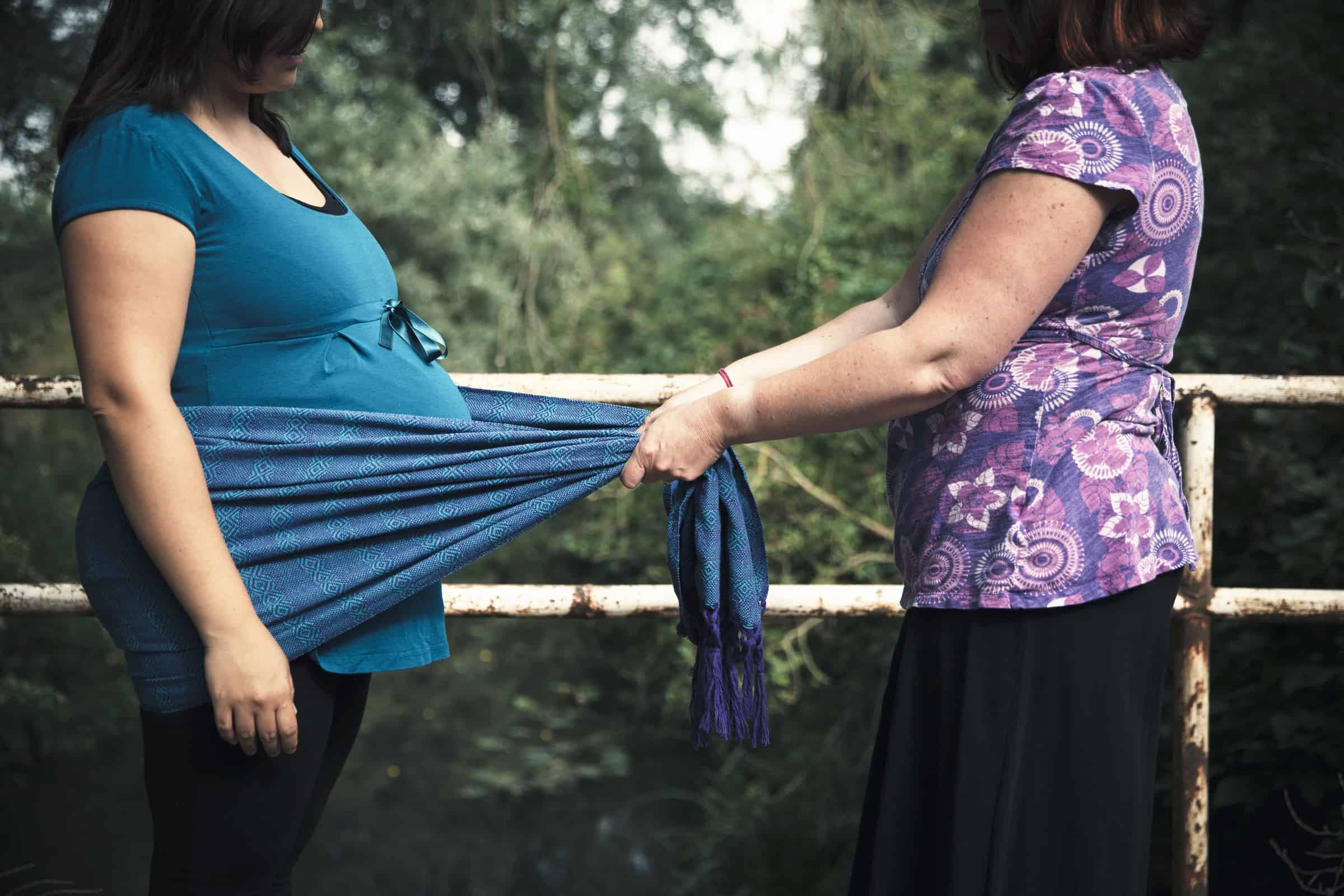
    A rebozo is a traditional Mexican shawl, which, besides being used as an item of clothing, is use to provide great comfort by rocking, jiggling and wrapping a woman’s body, especially during pregnancy, birth and the postpartum.

    I’ve been using rebozos for 7 years, as well as teaching the techniques to parents and birthworkers.

    I have had so many mind blowing experience using rebozos shawls and scarves in my work to support women through pregnancy, birth, the postpartum and beyond, I’m on a mission to pass on this skill to ask many people as possible.

    What the rebozo does, by gently rocking and wrapping you, is calm you right down and bring you back to you body.

    As a species we exist in two extreme opposite states: the fight or flight, and the rest and relaxation stage.

    Right now, understandably, many of you are stuck in the fight or flight state. It’s made worse by the fact that you literally cannot “flight” because we are all stuck at home.

    The simple techniques I describe in this blog are incredibly effective, yet super simple to do, and anybody can do them. You don’t even need a rebozo to do them, something simple like a scarf or a pashmina will do.

    Here are 3 simple relaxation techniques you can use during pregnancy, birth, and the postpartum period (or at any other time! These aren’t limited to pregnancy-anybody regardless of gender or age can benefit from their relaxing effect).

    Self-care technique

    • A quick 5 min “reboot” to get you out of your head and into a more relaxed state
    • This is an easy routine to warm and loosen your muscles. It is especially helpful if your energy could do with a boost or if you feel stiff from having sat down for too long (especially after working at a computer), or if you feel anxious or stressed. The technique starts with some shoulder stretches, followed by a shoulder, back and buttocks rub, and finishes with a foot rub. After doing this quick and easy routine you may find that you feel happier, warmer, more relaxed, and more energised 🙂

    Play

    Wrapping the shoulders

    • Wrap the rebozo or scarf around the shoulders, cross the ends, then gently tighten and hold. This can be done standing up, sitting down, or lying down. It is a very calming and grounding technique, because the gentle tightening around the ribcage encourages you to breathe deeper into your belly.

    Play


    Rocking the pelvis

    • This consists in wrapping the rebozo or scarf around the pelvis, then  gently rocking the pelvis. This can also be done with the woman resting her back or arms against a wall for support, as well as lying down on the floor, or sitting on a couch.

    Play

    This is a taster version of the full version of my self-study rebozo ebook, or in my rebozo online course. If you would like to buy a rebozo, I have them in my online shop.

    If you have found this blog helpful and would like to support my work and help me continue provide valuable free information to birthworkers and expectant and newborn families, you can donate to my paypal account paypal.me/SophieMessager.

  • Nurturing postpartum recipes-Chicken and red date soup

    Nurturing postpartum recipes-Chicken and red date soup

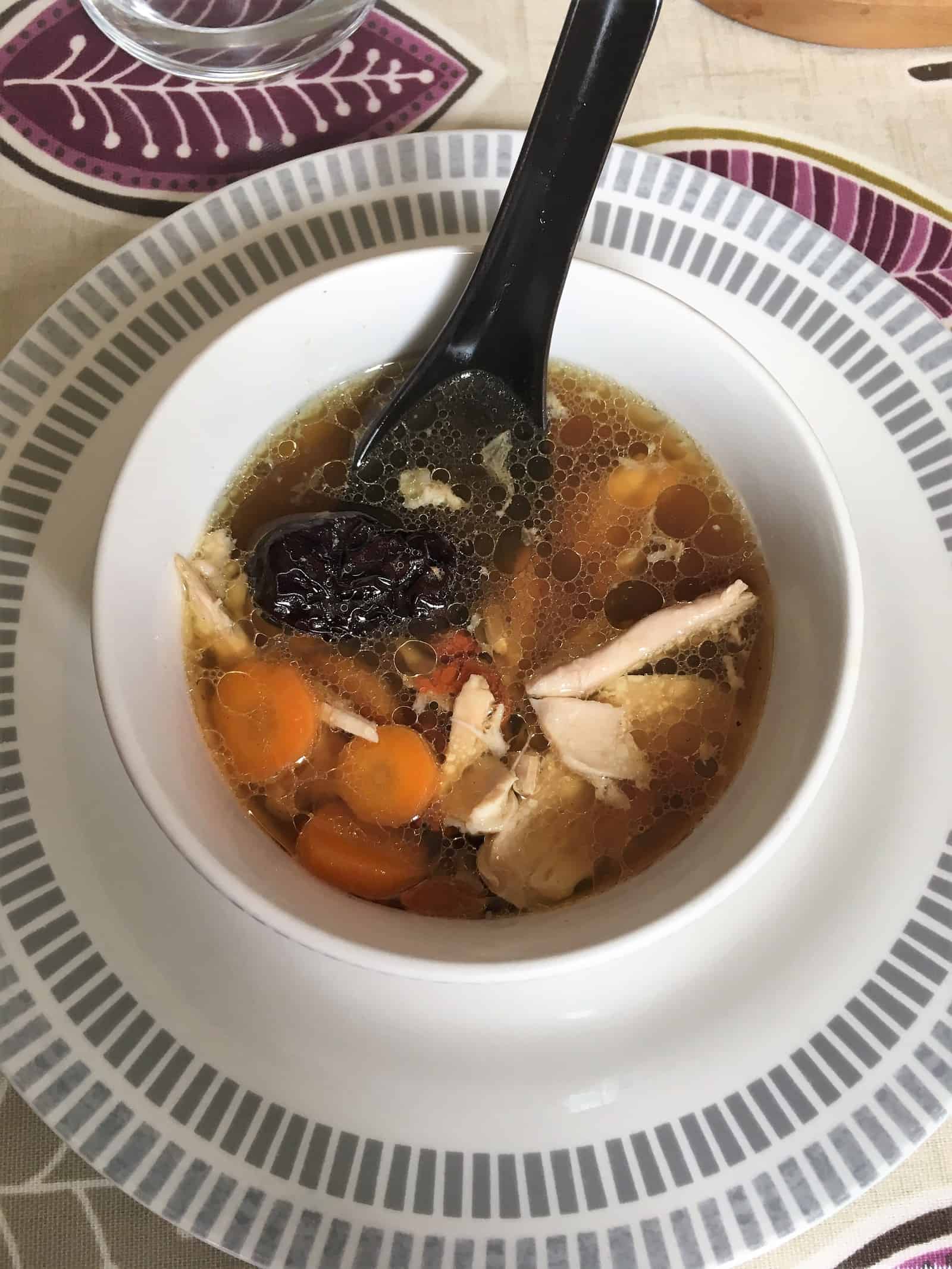
    Yesterday I cooked and delivered a traditional Chinese postpartum dish called chicken and red date soup to a new mother.

    It is a tradition I started a few years ago when I supported my first Chinese client as a birth doula. She found me by asking if there was a Chinese doula in the local community, because she wanted to follow the traditional Chinese postpartum tradition, known as “doing the month”.

    There was no Chinese doula in Cambridge, but someone told her there was a doula who was married to a Chinese and she found me.

    My Chinese husband proved unknowledgeable when it came to the dishes in question, so, in my usual birth and postpartum geek fashion, I set out to read as much as I could on the topic, and taught myself to cook a whole new bunch of traditional Chinese recipes (much to my husband’s delight).

    The first time I made the soup, my husband tasted it, looked delighted, and declared that it was “proper soup”. Then my client told me that it tasted just like what her grandma used to make. This felt like the ultimate compliment.

    I have been making that soup for some years now. I’ve made it for several new mums, who have all loved it. I’ve made it for friends post surgery as well as it’s very good for recovery and healing.

    As I made it again yesterday, I thought it would be nice to share, so others can benefit too. I also experimented for the first time making it in my instant pot (an electric pressure cooker), because it normally takes a couple of hours to make and I was pressed for time. I’m pleased to report the instant pot version tastes just as nice, so I’ll be sharing how I made that too.

    It’s made from very simple ingredients, yet it tastes delicious, and feels cleansing too.

    It has 6 ingredients: Chicken, onion, carrots, ginger, red dates (also known as jujubes-you can find these online or in Asian supermarkets), and goji berries.

    In my usual fashion, I also set out to find some science behind the ingredients, especially the red dates and goji berries. My research left me somewhat disappointed because I’ve found lots of references to traditional Chinese medicine, and also some published research showing what nutrients are available in them, but nothing bridging the gap, i.e. explaining how those nutrients affect hormones and blood flow and healing.

    The Chinese medicine states that red dates are known to increase Qi (life energy), and help nourish  the blood and bring relaxation. Another important aspect of the Chinese postpartum (which I have found to be a worldwide practise), is to keep the new mother warm, and the ginger, red dates and goji berries do just that, as they are considered to be warming to the body. The traditional Chinese postpartum guidelines stress the importance of avoiding cold (literally, no cold drinks), as well as foods considered “cold” after birth.

    Here is an article explaining their health benefits from the Chinese medicine perspective

    I’ve also found some published research that red dates are sedative, anti-oxidant, and anti-inflammatory

    How to make the soup

    I use a modified version of the recipe from the book “The first 40 days” by Heng Ou.  You can also find it in my book Why Postnatal Recovery Matters

    Ingredients

    • 2 pounds whole chicken or chicken parts (I like to use thighs as they are easier to shred than drumsticks, it’s best if they have bones)
    • 1 onion, peeled
    • 2 inches fresh ginger, peeled and halved
    • 3 medium carrots, peeled and thinly sliced
    • 5 Chinese red dates (you can find these online or in Asian supermarkets, you need these to get the benefits as normal dates do not have the same medicinal properties)
    • 3 tablespoons dried goji berries
    • salt to taste

    Preparation (the slow, stovetop way)

    1. Place the chicken in a medium pot, and add enough cold water to cover the meat. Bring to a boil over medium-high heat, uncovered.
    2. Once boiling, add the onion and ginger. Season to taste. Reduce the heat to medium, cover, and cook for 40 minutes. Remove the lid occasionally to skim any foam off the top and discard.
    3. Remove from the heat. Move the chicken to a plate to cool. Shred the chicken meat with 2 forks. Place 1-2 cups of the shredded chicken back in the pot.
    4. Add the carrots and dates to the pot, and simmer over low heat, uncovered, for 45 minutes. Add the goji berries and cook an additional 15 minutes. Season with salt to taste.
    5. To serve, remove the chicken, shred the meat, discard the bones and return the shredded meat to the pan. Serve in bowls

    Preparation (the fast, instant pot, or pressure cooker way)

    1. Put all the ingredients in the pot, cover with water
    2. Cook (using soup mode on your instant pot) for 35 min
    3. Do a quick steam release.
    4. Shred the chicken meat, and place back into the soup.
    5. Taste for seasoning as add salt as needed
    6. Serve in bowls, making sure each bowl has a red date in it

    I had a go at making a veggie version too :

    Whilst you cannot quite replace chicken in terms of taste, I experimented with adding several ingredients I knew would add umami flavours so the soup, so it still tasted nourishing and delicious:

    Ingredients (feel free to use diffferent vegs):

    • one leek
    • 3 medium sized carrots
    • 2 onions (1 red, 1 yellow)
    • a few cabbage leaves
    • a tablespoon of miso paste
    • a tablespoon of dark soy sauce
    • a tablespoon of marmite
    • a dash of Worcestershire sauce
    • 5 Chinese red dates
    • 3 tablespoons dried goji berries
    • salt to taste

    Preparation

    1. Peel, prep and chop veggies
    2. Add all ingredients together to a saucepan
    3. Cover with water
    4. Heat up until boiling then cook covered on low for 40 min
    5. You can either serve as is, or you could strain and just serve the broth (in this case put one of the red dates in each bowl)

    If you are a new mum, and you’d like the benefits of the red dates without the time prep of the soup, you can also make red date tea, by placing 2 or 3 red dates (you can add goji berries and ginger too) in a cup of boiling water, and steeping for a few minutes. You can eat them afterwards too.

    It is also supposed to be a good support to menstruation.

    If you are vegetarian or vegan and fancy trying this soup, you could replace the chicken by some tofu or vegetables of your choice.

    I have found that traditional postpartum practises the world over include rest, support, good nutrition and postpartum specific bodywork. One of my goals is to try and find out what traditional English and French dishes would have been served to new mothers, so please comment if you know, and I’d love to hear about any traditional dishes from around the world too.

    If you would like to learn more about preparing for the postpartum, as well as my book, Why postnatal recovery matters, I have created an online course called How to prepare for a nurturing postpartum.

    Here’s what’s included in How to Prepare for a Nurturing Postpartum:

    • Understanding the postpartum period – Why this time is crucial for long-term well-being.
    • Essential postpartum needs – Learn the key elements that support deep recovery.
    • Practical planning – How to create a postpartum plan that truly nurtures.
    • Food & nourishment – Discover the best foods and drinks for healing and energy.
    • Physical recovery & rest – Tips for supporting the body’s healing journey.
    • Emotional well-being – Strategies to navigate the emotions of new motherhood.
    • Support network – How to ask for and receive help with confidence.
    • Honouring cultural traditions – Insights into postpartum care from around the world.

    This course gives you everything you need to feel held, nourished, and prepared for a truly restorative postpartum.

  • Why I want to change the nature of postnatal support

    Why I want to change the nature of postnatal support

    [et_pb_section fb_built=”1″ admin_label=”section” _builder_version=”3.22″][et_pb_row admin_label=”row” _builder_version=”3.25″ background_size=”initial” background_position=”top_left” background_repeat=”repeat”][et_pb_column type=”4_4″ _builder_version=”3.25″ custom_padding=”|||” custom_padding__hover=”|||”][et_pb_text admin_label=”Text” _builder_version=”3.27.4″ background_size=”initial” background_position=”top_left” background_repeat=”repeat”]

    Earlier this week I wrote a blog that’s been playing on my mind for many years. It’s called “why I wish I had hired a postnatal doula

    In this blog I explain how challenging I found new motherhood, how lonely and upset I felt through those early weeks and how I longed for some support but failed to reach out because of a mix of shame for not loving every minute of being a mother, and feeling like I couldn’t justify the expense.

    As a doula, I witness the same challenge in new mothers. Sometimes I do not even know they are struggling until weeks later, because, whilst they sit in the same pit of discomfort and shame as I did, thinking they are the only one that struggle, they don’t usually reach out for help do they?

    I have written before about the topic of making a postnatal recovery plan, and about what new mothers really need, and you’re not meant to be doing this on your own (hint: it’s not flowers or stuffed bears).

    The wisdom in traditional postpartum practises around the world is very simple really, it boils down to 4 main elements of support for the mother:

    • Rest (someone takes care of the chores)
    • Food ( someone takes care of cooking good, nutritious meals)
    • Social support (the new mother is never alone at home with a baby)
    • Bodywork (someone massages the new mother, along with wrapping her hips/abdomen)

    I have a strong urge to write more about this, to spread the word further, I have a list of blogs as long as my arm about this topic, and in fact I now am thinking I need to write a book, or possibly more than one book, about this topic. Something easy to share, I might start with an ebook, like the one I have already written about rebozo techniques.

    I’m a knowledge junkie, so since I started learning about some postpartum practises, I’ve asked everybody I’ve met about the traditional practices from their country, and you know what, every continent in the world has some form of specific nurturing, specific foods, and bodywork and wrapping.

    After all, you’ve not only grown and birthed a whole new human, your body has accommodated this through tremendous changes.

    During pregnancy, the uterus grows from the size of a pear to the size of a watermelon (pushing abdominal organs out of the way, changing the shape of your muscles, ligaments and spine as it does so), then back again after birth.

    It seems crazy to me that nobody makes sure that all the organs, muscles, joints and ligaments have safely returned where they belong.

    I bake a groaning cake for all mothers I support, and sometimes make a traditional Chinese chicken soup too (my husband is from Hong Kong, and there is still a very strong postpartum nurturing culture there)

    Learning to massage and wrap new mothers had lead me onto a journey of discovery about postpartum practises, got me to work closely with an osteopath, create a new type of massage, and develop my skills in an apprenticeship manner. The two combined led me to develop a deep practical knowledge of what happens to women bodies after birth.

    This has fuelled a fire that makes me want to shout from the rooftops that what we get in the Western world just isn’t good enough, and want to work hard to change that.

    If this resonates with you, and you would like to learn some of these nurturing skills, I am running some Rebozo and Postnatal Recovery Massage courses in July-see https://sophiemessager.com/workshops-birth-professionals/

    [/et_pb_text][/et_pb_column][/et_pb_row][/et_pb_section]

  • Why I wish I had hired a postnatal doula

    Why I wish I had hired a postnatal doula

    When I was pregnant with my first child, I hired a birth doula.

    This was the best thing I have ever done and it has had positive effects beyond anything I could have expected, because it didn’t just impact how positive my pregnancy and birth were, it led to a complete transformation of who I was, both personally and professionally (read about that here  and here)

    But my biggest regret is that I didn’t hire my birth doula as a postnatal doula.

    Today, these feelings were re-triggered by reading this article called self care with a newborn.

    I wish, and I have wished so many times that I could go back to my newborn mother self and tell her to hire my doula for postnatal support.

    I cannot change that, but at least I can try and help other mothers understand why it’s so worth it.

    You see when my son was born, I struggled massively with the changes having a newborn baby brought to my life.

    I went from being an independent, successful, corporate woman, at the peak of my career in science, to being at home, alone, all day, with a helpless and very needy infant.

    And nothing had prepared me for how challenging this would be.

    My son was one of those “velcro babies”. He wouldn’t be put down without screaming for the first 3 months of his life. Today, I can see how this was helpful, as it was instrumental in my becoming a babywearing instructor, but at the time it was so fucking hard! Not only did he cry every time I tried to put him down, but I also needed to be moving constantly whilst he was in the sling, otherwise he still cried.

    It was exhausting. I couldn’t rest, I couldn’t sit down to eat, I couldn’t look after myself.

    Helping him sleep took hours, and I paced and paced whilst longing to sit down and rest.

    After my husband had gone back to work, I longed for another adult to just take the baby away so I could shower or sleep without worrying about the baby crying. Or simply have my arms baby free for an hour or two, or to have some adult company during the day.

    I felt utterly lonely, because my social circle was at work from 9 to 5, and whilst I did eventually re-create a new mummyhood social circle, this took months, during which I felt miserable, at home all day or walking by myself in parks, feeling pangs of envy when I saw other mums hanging out together.

    I also spent weeks struggling to make my son fit within the constraints of what I thought I “ought to do” (pushing him in a pram which he hated instead of the sling he loved, trying to make him sleep on his own in a moses basket for hours without success etc). This just resulted in a lot of tears and frustration.

    When I look back (hindsight is such a wonderful thing isn’t it?), especially through the lens of my 13 years as a mother, combined with my 8 years as a doula, it’s easy to see that most of the problem stemmed from my being a control freak, from desperately trying to live my life like I did before I had a baby, from a loss of identity, and from a inability to make sense of the whole experience.

    I had a really hard time adjusting to motherhood, and those feelings had nowhere to go, because I wasn’t even able to articulate them and understand what I was going through.

    I also felt somewhat guilty that I wasn’t enjoying being alone with my baby, and that I wasn’t feeling “fulfilled” by motherhood.

    I didn’t know at the time, but there was an element of shame there.

    Now I know how much hiring my birth doula for just a few hours of postnatal support would have made a world of difference.

    Sadly at the time I felt I could not justify the expense.

    It felt selfish, and unjustifiable, somehow, to spend money on myself, especially when I had a much reduced maternity pay salary.

    Yet I bought tons of crap I didn’t need for my baby. That I felt was OK to spend money on. When I look back, all I feel is sadness for my newborn mother self about it. I wish I could go back and tell her.

    Because, when I look back at the cost of raising a child, over the course of the last 13 years, I really wish I had been able to see that spending a bit of money towards a few hours’ worth of postnatal support would have been SO worth it.

    If I had hired my doula as a postnatal doula, she would listened to me deeply, she would have reassured me that it was NORMAL not to enjoy every minute of being a mother.

    By actively listening to me, and holding the space for my thoughts and feelings to come out, she have been able to reflect back them back to me, and help me identify them and untangle the complex and conflicting emotions I was feeling.

    She would have helped me understand the delicate process of transition I was undergoing, like a caterpillar becoming a butterfly.

    She would have empathised.

    She would have helped name and validate those emotions.

    She would have helped me understand why it was so hard, and helped me to not feel so guilty about it.

    She would have helped reframe those feelings of not being useful, of not having achieved anything with my day (and that I see so often in other mums).

    She would have encouraged me to rest more and not run around like a headless chicken trying to do all the chores I did before the baby was born.

    She would have explained the wisdom in postpartum rest traditions, and help me see how short changed we are with this in the Western world.

    She would have helped me see that things would get easier and not constantly stay in this unbearable intensity of early motherhood.

    She would have been someone I trusted to look after my baby whilst I slept, or had a much needed moment of me time.

    She would have prepared me something nice to eat, and held the baby whilst I ate it (whilst it was still hot).

    She would have sat down next to me during those endless feeds, and made me a drink and a snack and listened to me, making me feel like me and my feelings mattered.

    She would have helped reframe what normal newborn behaviour was, as opposed to the fear of “bad habits” our screwed up culture had instilled in me, and encouraged me to follow my instincts.

    She would have helped me find ways of managing my time and relax more.

    She would have signposted me to local mother groups, where I could have found other mums to hang out with a lot faster than it happened organically.

    She might even have given me a nurturing and much needed massage designed for new mums like closing the bones.

    In short, I know she would have helped transform my early postpartum weeks from a difficult and uncomfortable period of growth to one of understanding and acceptance.

    She would have helped the transition.

    I know it’s easy for me to say all this, because I’m a doula myself, and often I shy away from telling this to new mums, because I don’t want them to think I’m just doing it to tout my business.

    I just want you to have a better experience than I did.

    I want you to put your needs first, because you matter.

    Because trust me, I know what a difference it would have made.

  • How a doula can support you if you are having a planned cesarean birth

    How a doula can support you if you are having a planned cesarean birth

    It’s a commonly held belief that there is no point having a doula if you are having a planned cesarean, and I want to debunk this myth.

    I too, once believed that I couldn’t justify charging to support a woman who was having a planned caesarean.

    There would be no on call period, no phone call in the middle of the night, no unpredictable length of birth care.

    Or would there?

    Last year I got called unexpectedly (as I was busy packing the car for a week end away) by a client, pregnant with twins, who was only in the 32nd week of her pregnancy. She said “they are taking them out now”. I abandoned my week end plans and made it to the hospital with 15 min to spare.

    I was also called by a woman who unexpectedly found that they were moving her cesarean a week earlier. She asked if I could come to the hospital immediately.

    I have also been hired just to cover the on call period for a mother planning a cesarean, just in case she would go into labour before the scheduled date.

    I have worked as a doula for 7 years, and having supported several planned cesareans births, I’ve learnt that there isn’t such a thing as predictability, and also that doula support can be just as needed, just as useful as it is for a planned vaginal birth.

    I’ve learnt that, as every woman who births vaginally has her own set of individual needs, so do women who are having a planned cesarean birth.

    So, if you are having a planned cesarean birth, you can benefit from the exact same support you get from your doula as you would if you were hiring her for a planned vaginal birth.

    Doula support is a three legged stool of support, emotional, practical and informational support.

    This support applies regardless of the way your baby is born.

    So what can a doula do to help you before, during and after a planned cesarean?

    Pregnancy-the preparation

    When you are having a planned cesarean ,there are still many aspects of what will happen before, during and after the birth to think about.

    Having someone at your side who knows the hospital system in and out and how to navigate it, and help you push for what’s important for you, is very valuable.

    It is very much like going to a restaurant : you need know everything that’s on the menu to make your choice. If you’re a vegetarian and I only offer you meat stew this isn’t a great option for you isn’t it?

    I once supported a friend who was very keen on having what is known as a gentle cesarean. Her local hospital completely refused to support her choices, so I suggested she might want to try another more supportive hospital. I pointed out that, as she was having a planned cesarean birth, she could go where she wanted. She ended up finding the perfect hospital and obstetrician and having a beautiful and empowering birth.

    Sometimes, women who prefer to have a planned cesarean for all sorts of very valid reasons, can find themselves having a battle on their hands to get this choice respected. Having a doula on your side to help you navigate your rights can be invaluable in this situation too.

    So knowing all the options and having help navigating them and knowing how to get what you want is what having a doula is all about.

    A doula can also help prepare you emotionally for what is going to happen which can help you feel more in control.

    She can help you plan for your recovery after the surgery and how best to manage life with a new baby post cesarean.

    She can help you access a whole network of medical and complementary practitioners too.

    Alex Heath, doula

    “Doulas definitely help clients to negotiate an elective cesarean in the first place. Using knowledge of hospital pathways, language and mindset to support them in asking for an elective cesarean if that’s what they want…”

    Pippa Moss, doula

    “Helping with any preferences/alternative birth plan. Letting their clients know there are “gentle” cesarean options they may not know about, optimal cord clamping, gown on back to front to facilitate skin to skin etc. Calming nerves before surgery”

    Kristina McKeown, doula

    “Being aware that as a doula you may be one of few people fully supporting them in their choice. There still a lot of judgement in choosing a cesarean birth and just having someone to talk that through can be really helpful.”

    Ceci Goldaracena, doula

    “My client was booked for a elective cesarean. “Past Due date” and with a preview cesarean. She could not have an induction. We worked a lot in the birth plan for a gentle cesarean. Went together to hospital that morning and started to work in keeping oxytocin and happiness in high levels. Turns out that after a couple of hours when the medical team was ready they did a last monitor and she was having labour contractions. We asked to stop the A plan. Lots of walks , stairs,dancing and laugh…baby was born that night naturally.”

    On the day-waiting for the cesarean

    When you get scheduled for a cesarean birth, you get told to come to the hospital at a certain time, without having eaten any food. It is not uncommon for the wait to be longer than expected-because emergency cesareans can take priority, so having a doula at your side whilst you wait can help you stay as calm and relaxed as possible whilst you wait.

    Sarah Budden, doula

    “My role was all about the before. I spent 5 hours pre surgery distracting – playing cards, talking about Homes under the hammer, looking at pictures of their first born, getting dad involved in some foot massaging. She was scared. I was there to make the wait less intense, to stop her legs from shaking and discharge some adrenalin.”

    During the cesarean

    Having a doula there means that there is a familiar, friendly face to keep you calm in theatre. Your doula can hold you whilst they place the spinal anesthesia. She can hold your hand during the surgery. The birth itself is usually quite quick, but the longest part is the stitching afterwards. Is you are having your baby skin to skin in theatre she can help facilitate this too, and even help you to feed your baby then if you wish to do so.

    Most hospitals have a one partner policy only, however hospital policies are only guidelines and should be adapted to the need of the birthing family.

    I have been present in theatre with a couple.

    I have also been present with the mother when there was no partner, and I have been present with the mother when it felt like the right choice for a couple (for example when the father felt uncomfortable being in theatre, or when the father needed to stay at home to look after other children).

    Nicola Collins, doula

    “I supported an elective as one of my first births and it was so calm and beautiful. I helped with putting birth preferences together and going to appointments. Worked through any worries and concerns she had before the birth. On the day she was fourth down and we just chatted and laughed and I reassured her and reminded her of the golden thread breath when she was a little anxious. She had a bit of a tricky start as couldn’t get the spinal working properly for 40mins and all I could be was a voice of reassurance and give her my support. Finally got going and section went great and I just kept talking to her and keeping her informed about what was happening. Then I got to take photos of the baby being lifted out which was amazing and then mama got skin to skin straight away and even baby had latched on just before we left theatre. Back in ward, I helped with anything that mum needed. Breastfeeding support, got her food and drink. Called her parents and kept them updated. Let her have a little rest and just sat with her while she slept”

    Claire Walker, mother

    “When I got pregnant with my twins I knew I would have a planned c-section due to an emergency c-section with my first daughter. I had no hesitation in hiring a doula as the emotional support on the day was what kept me calm and relaxed as I could be. Having someone that is just there to support you before and after who will listen and comfort you is priceless.

    My twins were born 8 weeks early so had to go straight to NICU. I wanted my partner to go with them as I didn’t want them to be alone and also to make sure our wishes for them where kept. I also didn’t want to be left alone in the theatre so asked for my doula to be around in when my partner left. This really helped me to stay calm as I knew my babies had dad with them and I also had someone to support me as it can be very lonely even in a theatre full of doctors and nurses. Having someone to talk to and hold my hand stopped me panicking. It also meant that when I was taken to recovery I wasn’t by myself. It was very hard being wheeled past other mothers with their babies, I don’t think I would of have coped if I didn’t have my doula with me. She also helped me hand express my colostrum into syringes. Just having someone with my while my partner was with the babies was amazing, she kept me calm just by being by my side and holding my hand.”

    Nuria Pozas, doula, from her client

    Nuria who accompanied me was very helpful, caring and professional. Even though I had a cesarean she helped me all the way through specially with my fear and later on with my emotion. She was also a great support after the birth and gave me useful advice regarding to breastfeeding and newborn baby.”

    Beau, mother

    “I had planned a home birth but knew if my labour was anything less than ‘perfect’, I would need another c-section, so the presence of a doula was necessary (no other support was possible as both our families are far away). There was meconium in my trickling waters so I was sent to the hospital. There was no question about it – my doula, who had been with me since 2h after labour started, came with me (my husband stayed at home to be with our first daughter) and it was the most amazing experience because, unlike my husband, my doula wasn’t squeamish (obviously!) so I asked for the drape to be lowered and saw my baby come out. I didn’t have to keep chatting to my doula to prevent her from fainting, as I had done with my husband with our first daughter. She took pictures and films. Having a doula was a no-brainer in pregnancy, and it was the best decision ever considering how my birth panned out 🙂

    Emilia, mother

    “My decision to seek the support of a doula was driven by the fact that I wanted a vbac in the face of a number of “risk factors” and to help me navigate and to support me through a medically complex pregnancy. The anomaly scan revealed that my son would be born with a complex health condition. After the diagnosis, my pregnancy became enormously stressful, requiring regular monitoring and checks, and involving the healthcare professionals who would be involved in my son’s postnatal care strongly advocating a range of birth interventions that I had always intended to avoid. In the final month leading up to the birth, we came across more complications, which led to me reluctantly deciding that an elective cesarean birth was the safest mode of arrival for both me and my baby. My birth doula was incredible. She helped me research my “risk factors” and the options open to me, knowing how important to me it was that my birth choices were well informed. I felt empowered and heard out, and although I was sad to abandon my vbac plans, with her help I felt at peace with my decision.”

    Immediately after the cesarean

    In the recovery room, your doula can help support you to to feel comfortable, look after you and help you to feed your baby. You will be having cannula in your hand still, and be hooked to equipment like fluid delivery, blood pressure monitors etc which can make handling a newborn a little trickier.

    If your baby has to go to the NICU (which can be more common with elective cesareans as they often occur earlier in pregnancy), then your partner can go with the baby, and this means that you aren’t alone in recovery. In this situation, your doula can also help support you to express colostrum to feed your baby.

    Recovery nurses will look after your vitals etc, but they won’t stay with you every minute of the few hours post surgery, and they won’t be a familiar face, someone you know and feel safe with. Your doula’s presence can help you feel more comfortable and safer. I have had women hiring me for this reason alone.

    Bryony Vickers, doula

    “Calming nerves after surgery. Having someone to sit with you in a dedicated way after you have had surgery is invaluable. I think women forget that they can feel not great after surgery. We can help to hold the baby, get skin to skin, help other parent with learning baby care – dressing, nappies, holding etc. Helping with getting food, drinks, with knowing what is normal, what will happen next.”

    Jo McCracken, doula

    “I was touched once when a client of mine had to have a section and, once she was in recovery, she did nothing but moan for me to be there. Finally a midwife came to get me and said, ‘We need you in recovery. She won’t listen to any of us’. When I arrived, she burst into tears and said, ‘thank goodness you are here now’. So, maybe, calming nerves after surgery too.”

    Emilia, mother

    On the day, we knew that only one birth partner would be able to accompany me into the theatre. Nonetheless, my doula was waiting for us in the lobby at the crack of dawn. Her presence helped to diffuse and lighten the atmosphere. I was nervously anticipating and looking forward to the birth rather than dreading it. Knowing what was really important to me, she was able to prompt discussions on the day. It had previously been agreed that my newborn would be taken away to nicu. We agreed that my partner would accompany him. The team agreed that my doula could enter once my partner left to take his place and to keep me company. She remained with me in recovery when I otherwise would have been left alone. She maintained contact with my partner and gave me regular updates on how my baby was getting on. She advocated for me with the midwives in recovery, passed me drink and food, talked to me, made me laugh. Having my birth doula made my pregnancy and my caesarean birth a very positive experience, despite it being complex, stressful, and not what I had wanted it to be, and I am completely convinced that it would not have been so positive if it wasn’t for her wonderful support and friendship.

    In the postnatal ward

    A few hours after the birth, once your vitals have stabilised, you will be transferred to the postnatal ward, where you will stay usually a minimum of 24h or so.

    Postnatal wards are often understaffed, especially at night, and it can feel very frustrating if your baby is crying and you can’t pick her up (you’re still immobile due to the spinal or epidural anaesthesia for a few hours), and if you ring the bell, it can take a while for someone to come.

    Having a doula supporting you there means that someone can help you with simple tasks like getting you a drink or a snack, passing your baby to you, changing your baby’s nappy, helping with feeding, and generally making sure you are comfortable.

    Sometimes the partner can do this, but sometimes the woman has no partner, or the partner may need a rest, or need to go home to look after other children etc, so having a doula there means that you won’t be alone whilst you cannot move whilst the spinal or epidural wears off. It also means that someone can be there to support you whilst you take your first wobbly steps or have your first shower.

    If you end up staying in the postnatal ward for a few days, then having a doula can also mean that someone can give your partner a much needed break, that your doula can hold your baby whilst you have a nap, or even bring you some much needed home cooked food.

    After the cesarean-at home

    When you get home, your doula can help you with settling in at home with your new baby (or babies!), helping you with feeding, with finding positions that feel comfortable to do so (feeding lying down can be a godsend for some post cesarean mums), and generally being a much needed extra pair of hands around the house,  so you can rest, get to know your baby, and recover from the surgery.

    I have supported many mothers post cesarean, both as a birth and as a postnatal doula. This has taught me that, similarly to a vaginal birth, everybody’s experience of recovery is very widely varied. I have seen mums bounce around 3 days for cesarean looking pink and healthy, and also at the other end of the spectrum, mums having issues with retained placentas and/or scar infections which meant that their recovery journey was long and protracted.

    Partners usually only get a couple of week’s parental leave, and post cesarean mums are more likely to need antibiotics and have a longer stay in the hospital. On many occasions I have seen mums stay in the hospital for 3 to 5 days, so by the time they got home their partner only had about a week’s leave left. It can feel very scary indeed to be alone at home with a new baby when you are not only recovering from surgery, learning to look after a new baby, but also are more limited in your ability to get around (I’ve seen mums who lived in a remote areas getting very lonely as they couldn’t drive their cars for several weeks).

    Ultimately no new mum should ever be alone coping by herself in the first few weeks post birth, she needs a  community around her to support her, and this is even more true for post cesarean mums.

    Kate wilson, mother

    Our doula, Candie, provided us with a huge amount of support both before and after the birth. She was with us in recovery and helped us to initiate breast feeding – which was so important after a traumatic experience with our first child. She then visited us at home and provided lots of support in helping us to adjust to life as a family of four. She supported me with breast feeding as Charlie had a tongue tie, she played with my older children and made sure I rested.”

    Georgia Wakins, doula

    I supported a third time mum after a cesearean recently and there were lots of practical things I could help with for all three kids, but the most satisfying thing was the blissed out expression she had after I gave her a back and shoulder massage. The oxytocin and endorphins released with physical touch can be amazing for post-op discomfort, just like for labour.

    If this resonates with you and you would like to work with me, head over here if you’re an expectant or new mum, or here if you are a birthworker

    Also feel free to signup to my mailing list to receive my newsletters by using the signup form at the bottom of this page

  • January :  a time for rest and reflection

    January : a time for rest and reflection

    I’ve just had a lovely catchup with fellow doula Hazel Acland Tree with whom I have fortnightly accountability calls (I can’t recommend doing this enough by the way).

    During our call I expressed how frustrated I am with my desire to go forward and make plans now that we’re at the beginning of the year, and the energy I’m feeling instead, which is quite inward and not at all forward at the moment.

    Whilst chatting to Hazel I had a realisation that the energies right now, during the winter time, are indeed inwards, and that it doesn’t make sense that we are expected to make our yearly plans in January. We ought to make them in spring or summer, when our energy is high, and outwards looking.

    When I was a biology student, I went to a lecture on chronobiology, the science of “when” rather than “why” and “what”. This made so much sense to me and attracted me so much I ended up specialising in it, and doing my PhD and 2 postdocs on the genes the regulate our seasonal reproductive clock.

    I remember during the introduction lecture, the speaker explained that since we are regulated by daylight, our energy is naturally higher in the summer when days are longer, and that in the past, as most people farmed the land, they worked much harder during spring and summer than during the winter months when nothing grew. When school became obligatory, the farmers agreed to send their kids to school but said they’d need them back for the harvest, which is how the tradition of summer holidays started.

    Yet, even in our modern world, we still experience this annual peak and through of energy.

    Like trees losing their leaves and returning their energies inwards before the new growth can occur, we too, during winter, need this inwards and more restful time.

    As I talked about my plans and my frustration in trying to push through, but also about my knowledge that I want to lay down some feelings for the year ahead, meditate and make a vision board before I start getting down to the nitty gritty of what I’m going to do in 2019, my friend suggested very wisely suggested that rather than looking for the fruit I needed to tend to my roots first.

    I loved this very powerful image, especially as our culture is all focused on results, ie the fruits.

    But you can bear no fruits if you do not tend to, or nourish the roots.

    This also reminded me of another powerful story in the (surprisingly spiritual) book “The 7 habits of highly effective people” by Stephen Covey.

    ” Suppose you were to come upon someone in the woods working feverishly to saw down a tree.

    “What are you doing?” you ask.

    “Can’t you see?” comes the impatient reply. “I’m sawing down this tree.”

    “You look exhausted!” you exclaim. “How long have you been at it?”

    “Over five hours,” he returns, “and I’m beat! This is hard work.”

    “Well, why don’t you take a break for a few minutes and sharpen that saw?” you inquire. “I’m sure it would go a lot faster.”

    “I don’t have time to sharpen the saw,” the man says emphatically. “I’m too busy sawing!”

    Stephen Covey goes further in saying that

    ” Sharpen the Saw means preserving and enhancing the greatest asset you have–you. It means having a balanced program for self-renewal in the four areas of your life: physical, social/emotional, mental, and spiritual.”

    You can read example of such activities here

    There is true magic in stopping, resting and taking stock and seeing the forest for the trees.

    I have written about this topic before, but today I feel that I have embedded this knowledge at a deeper level.

    So I’m going to take my own counsel today and only attend to what really needs to be done, so I can rest and retreat inside myself a little, so I can tend to my roots.

    I know that doing this will allow for more beautiful flowers and fruits in the future.

  • The amazing effects of wild swimming

    The amazing effects of wild swimming

    I’ve been a swimmer for most of my life.

    I’ve always loved water.

    I started regular swimming as a teen as I never really stopped except for the early years when my children were tiny (I’m an early morning person so I like my swimming first thing, something that was kind of difficult with tiny children. During those years I started running instead but it never made me feel awesome the way swimming does).

    On a typical week I swim 40 lanes of front crawl/drills about 3 times a week in an indoor swimming pool.

    This year for some reason I started getting a yearning for wild swimming here in Cambridge, something I normally only do whilst on holidays in the South of France where it’s warm.

    I developed a kind of fascination with the idea and started asking everybody I knew about wild swimming spots around Cambridge.

    In the running up to the summer this year I promised myself that I would do some wild swimming in Cambridge.

    As I made my intention in my mind, friends started sharing local swimming spots.

    Various places got mentioned, including the Milton Country park, and also the Shelford Recreation ground.

    Then several friends started mentioning the swimming club in Newnham.

    So one gorgeous July morning I went there with a friend and it was a revelation.

    It wasn’t just the river swimming, though this was gorgeous too, it was how peaceful the place was.

    I fell in love with the energy of the place.

    As the summer went on, I started going nearly every day, and it started to feel like I was on holidays, even though I was still working.

    We had many weeks of exceptionally warm weather, and immersing myself in the cool water was a welcome relief at the end of a hot day.

    I took my family there, and introduced a few friends to it too.

    I met lots of lovely fellow wild swimmers. This place seemed to attract like minded people and soon felt like I’d not only found a new hobby, I’d found a whole new bunch of friends too.

    I also noticed was the positive effect it had on my mental health.

    Swimming there just made me feel happier, more balanced, and more content, and able to take things in my stride.

    I read an article about a woman who had managed to stop her depression medication, and chatting to fellow swimmers every single one of them reported similar positive mental effects.

    To put it simply, whenever I went for a swim, I felt like I washed all my shit off, like a mental equivalent to a shower after exercise.

    I started researching the subject online, and found stuff on the effect of swimming on the body, the effect on the immune system etc.

    But to me, it felt much deeper than this.

    It felt cleansing on a spiritual level.

    My theory about it goes like this: we live lifestyles which are very removed from nature. One of the side effects of this is, in particular, a lack of direct contact with the earth.

    This means that we often lack grounding.

    There is some cool science behind grounding. It decreases inflammation, pain, and stress, and improves sleep, energy, wound healing, and blood flow in particular (read this paper)

    It has even been shown to increase vagal tone (the activity of the part of the nervous system that keeps us calm).

    You can read a brilliant review paper here.

    The review paper has a statement that particularly tickled me :

    One overlooked element in the human environment— the surface of Planet Earth, including its landmasses and bodies of water—may provide a potent and surprising natural remedy for this challenge and the alarming rise in chronic inflammatory-related diseases.”

    This is how I see it myself : when I feel tired or grumpy, walking barefoot on the grass helps me feel instantly better.

    The more I swam in the river, the more I felt like this was like a full body grounding experience.

    I’m an energy worker, I practise Reiki and other healing modalities. This means that I already have tools to improve my well-being and mood. But since doing the wild swimming I’ve noticed that I can boost my well-being within literally seconds of dunking myself in the water, something that takes me a lot longer using self healing.

    So I swam all summer, which was really easy and pleasurable as we had an exceptionally warm summer this year, and the water was a balmy 23 degrees.

    As the summer turned into Autumn I found myself pre-mourning the end of the river days.

    Except I didn’t stop swimming.

    As I chatted to older members of the swimming club I discovered many go all year round, so I started asking them for tips on how to keep going.

    I joined a Facebook group called Outdoor Swimming Society, and asked for more tips there.

    I invested in a wetsuit, neoprene gloves and socks, and a neoprene hat.

    I dug out my old hot water bottle from the cupboard.

    It’s been fairly easy so far as the weather has mostly been mild.

    I had a break in September after getting a tattoo, then another one during a trip to a warm country (Dubai) in November and worried whether I’d be able to get back in afterwards but it was easier than I thought.

    More importantly, I teamed up with a friend and we promised to go together at least once a week. It really helps me feel more motivated and also feels safer.

    At the moment I average a couple of swims a week.

    The wellbeing effect continues despite the cold temperatures.

    Or maybe it is because of it? There are also publications about the positive effects of cold water swimming on the body. It really does boost your immune system and gives you an endorphin high apparently.

    I can relate.

    It’s not just the swim, it’s the whole experience.

    After the swim, as I sit near the river sipping my steaming tea and clutching my hot water bottle, and either chat with my friend or sit in quiet contemplation looking at the peaceful river (often sharing my snack with a robin), I marvel at how wonderful I feel.

    Last week the water temperature dropped to 5 degrees (this officially qualifies as an ice swim), my friend and I only managed a short dip rather than a swim, so when I went on my own a few days later, I used my wetsuit for the first time, as being alone made me a bit more weary.

    I’m proud to say I went swimming today which is my first December swim in my whole life. The water was back to nearly 10 degrees so I had a proper swim (probably about a hundred meters).

    The club has hard going veterans who swim every day all year round.

    I’m hoping to become one of them.

    I’m really looking forward to the new year swim. Last new year apparently there were over 60 swimmers.

    Update January 2020.

    I didn’t stop swimming and made it through the winter, the following summer, and back again. The coldest swim, in January 2019, was minus seven outside, white with frost and glorious sunshine, and with 1.5 degrees water.

    A couple of days ago I attended my second new year swim. I was really looking forward to it and it didn’t disappoint. I went in wearing only a swimsuit and some neoprene booties and gloves.

    I’ve mellowed into it and it no longer feels weird and scary, to swim in cold water. I don’t mind going alone, in fact sometimes I relish the quiet.

    I’ve met a community of like minded people, both in real life and online. It’s a like a weird group of friends who share the same secret, and within witch it’s considered completely normal. I love it.


  • Postnatal Recovery Massage, a new kind of postnatal massage inspired by closing the bones.

    Postnatal Recovery Massage, a new kind of postnatal massage inspired by closing the bones.

    I’ve been offering and teaching a postnatal massage called closing the bones since 2014.

    I never intended to teach this technique, I just wanted to share it with my community as we had been urged to do.

    But then women started to ask us to show them. So we put together a workshop.

    Since we started we have grown organically and have now trained nearly 400 people in providing this amazing nurturing ritual.

    I hope to use this media to help change the face of the postnatal support in the UK with this, towards a mother centered one.

    Over the last couple of years more and more people who had trained to do the massage started contacting me, asking if it would be possible to provide a version of the massage on a massage table instead of on the floor (we normally practise on yoga mats), because they had bad knees, or bad backs, and found working on the floor difficult.

    I have a bit of a theme in my professional life, that I seem to always end up teaching stuff because people ask me to!

    So I had a chat with my lovely local osteopath friend Teddy (who had already provided all the anatomical and effectiveness knowledge for the workshop handout, and therefore already knew the technique inside out), if he fancied the idea of developing a massage table version of the technique with me.

    He liked the idea a lot so we started working on it. This was about 18 months ago, in summer 2017.

    This was a true work of love, and in the end it took us over a year and many sessions of practise and hours of trial and error to get it working.

    This is how each session would go: I would setup both a massage table and a yoga mat on the floor. Teddy and I would try each technique on the floor then on the table, taking turns giving and receiving each technique.

    I would record the session and make some notes. After each session I’d listen to the recording paying attention to what Teddy said, and write down questions and make more notes for what to practise/change at the next session.

    At the beginning we did get plenty of stuff wrong. I think I was so intent of getting the exact same treatment on the table as on the floor, that this got in the way. Teddy has much deeper knowledge of body function than I do, so he had to explain to me repeatedly why some of the stuff that was done standing up or crouching over a person lying down simply couldn’t be done from the side of a table, due to biomechanics.

    We tried and tried. The most challenging part were the rebozo rocking and the hip squeezing. It was challenging because of the biomechanics (you can’t produce much force when you’re on the side compare to standing above a person), and because I wanted the technique to do the same thing to the body, but also to feel good.

    Teddy wanted to make sure the technique was safe and effective but also easy on the body of the therapist (a basic rule for bodyworkers).

    It proved extremely frustrating at time. Many times we thought we had got it but when we revisited it didn’t feel right and so we were back to square one. Some techniques worked mechanistically but just didn’t feel nice so they were discarded.

    It was also a fun experience and a huge learning curve for me, especially as Teddy educated me on how to position my body for maximum power and effectiveness around the table, something I am still learning to master.

    The real magic happened when I finally let go of it being exactly the same. Teddy had tried to explain to me repeatedly that it wasn’t necessary (that we were aiming for the same effect) but I am a perfectionist and like things to be “just right”

    One day we finally worked out a way to make the rocking work from the side.

    From then on everything seemed to flow magically.

    As we progressed we also ended up modifying and adding several elements to the massage.

    Some were based on discussion about the effectiveness of a technique and how to make it work more easily.

    Some were based on the changes in the pregnant body that weren’t treated as part of the original massage, namely treating the ribs (which flare during pregnancy), and the shoulders (which hunch during pregnancy and often during breastfeeding as well).

    Some just happened because it felt logical to add them to the flow of the movements we had created.

    In the end we ended up with a massage which is inspired from the original technique but is really quite different. I did it for the first time on a doula friend and she loved it. We added a few more movements after that. I also practised on my massage therapists friend Emma Kenny, a massage therapist, who loved it too.

    We named it the Postnatal Recovery Massage (PRM).

    We finished our individual practise work at the beginning of October, and we then went on teaching it to a small group of guinea pigs, composed of 2 doulas and 2 massage therapists.

    We all had a very fun morning of practise teaching this new techniques, and all our guinea pigs loved it.

    This is what they said:

    “Knowing Sophie and Teddy as I do, I knew they would design something that is both relaxing and effective. I was not prepared for how beautifully the movements flow into each other, and how true to the spirit of Closing the Bones they have stayed. For people who find floor work tiring or painful, I highly recommend learning these new techniques” Maddie, Doula.

    ” This new version of the postnatal ceremony blends effective rebozo (shawl) massage techniques and lymphatic drainage massage to support post natal mamas. Rather fabulous it is too!” Emma Kenny, Massage therapist.

    “I think one if the reasons I like the massage that you have developed for the table as it feels like a modern way of adapting the traditional massage. It feels like a new technique, a therapists technique. I also like being able to connect to the anatomical benefits. I want to practise giving the massage and feel newly inspired.” Katie, Doula

    We are now putting the final touches to the handout for this new technique, complete with my signature set of description, pictures, videos, and an explanation of the effect of each movement on the body by Teddy.

    This should be ready by sometimes in December and we are looking forward to teaching this workshop together in the new year.

    The first workshop will take place in Cambridge on Saturday the 5th of January.

    I can’t wait to introduce more people to this amazing technique!

    Update January 2019.

    Teddy and I taught our first course last Saturday. The course was extremely well received by our trainees. Here is some of the feedback they gave us

    “What a wonderful, professional, well constructed and instructive course with plenty of time for step by step practical, complemented by Teddy’s expertise and Sophie’s organic shamanism and such a wonderful community of like minded body workers. Thank you. Thoroughly recommended” Jenni Tribe, Therapist

    “Thank you so much for an informative and inspiring day. I can’t wait to use the techniques on my clients and support women more effectively. You are doing an amazing work and I’m so grateful ad excited to be part of it!” Grace Lillywhite, Pilates teacher.

    “I loved this course. It is just as nurturing as the closing the bones massage but much easier to do. Sophie and Teddy worked amazingly well together” Michelle Parkin, doula.

    “The course was well organised, very informative and easy to follow. The level of practical support was fantastic and I feel confident to take what I  have learnt and help local women postnatally. Thank you!” Becki Scott, doula and massage therapist.

    “Amazing workshop! Loved being in a small group to work through techniques in enough details. As an osteopath this experience has been invaluable in improving my practise if postnatal patient , in fact all of my patients!” Rob Ballard, osteopath

    “Amazing. Thank you both so much. More than the sum of the parts. Just lovely” Charlotte Filcek, doula.

    “The tutoring, the technique, the group, just exceptional!” Alison Duff, therapist and therapy centre owner.


  • Rebozos, shawls and scarves-the lost art of supporting women through the childbearing years

    Rebozos, shawls and scarves-the lost art of supporting women through the childbearing years


    I was introduced to the art of using the traditional Mexican shawl called the rebozo back in 2013 when I attended a workshop by doula Stacia Smales Hill on rebozo use for labour and birth. During the same year I also attended a workshop by Dr Rocio Alarcon, who taught us a postnatal massage technique called closing the bones, some elements of which included rocking and binding with a rebozo.

    Over the course of the following years I pursued my knowledge further by doing several more workshops with Rocio, and several other rebozo workshops with different focuses, such as the rebozo for labour progress and malposition with Selina Wallis, micromovements with Francoise Freedman, and 2 iterations of spinning babies with Jennifer Walker and Gail Tully, and a workshop on healing diastasis recti  with Birthlight which included many rebozo techniques, and training with Mexican midwife Naoli Vinaver.

    I am also a babywwearing instructor and tutor, and as such use rebozos and wraps to carry babies too.

    When I started teaching workshops around closing the bones and rebozo work as well as babywearing, the incredible versatility of the cloth really blew my mind.

    As I met people through teaching, I constantly ask questions to people I met about their culture’s practises, I started to build a picture in my mind of something much more universal than the rebozo.

    It seems that every culture had a piece of cloth of some kind, call it a shawl, a sarong, a scarf, or a wrap.

    Cold countries have thick, woollen fabrics (think Welsh Shawl or Scottish plaid), and warmer countries, cooler, thin, cotton fabric (think African Kanga or Indonesian Sarong).

    There are almost too many fabrics to count, but one thing is for sure, women have used all sorts of cloths in incredibly versatile ways, and what I’m going to say below about the rebozo is true for many other cultures too. It’s a truly universal practise.

    I spent a few years believing that the rebozo use for labour was uniquely South American but I have met a Somalian midwife who told me how they use their traditional shawl, called a garbasar, in a similar way during labour. I also had a birth client from Somalia who confirmed this, and her mother showed me how to wrap her belly with the garbasar after birth.

    I trained a Moroccan birth worker in doing closing the bones, and when she started offering the massage, women came forward and told her they’d had a similar treatment in the local hammam  (using a Moroccan cloth called a mendil).  Tunisia offers a similar practise called a fouta massage (the fouta is a hammam towel, which is very similar in nature to the Turkish towel).

    I am lucky to be part of a multicultural family, being French and married to a man from Hong Kong. In Hong Kong, they use a long piece of muslin cloth to bind the woman’s hips and abdomen after birth, and my mother in law also showed me how to do it with a towel.

    It’s also quite fascinating to see how contact with foreign cultures can influence each other. For example I acquired a Dutch postpartum girdle called a sluitlaken. I couldn’t help but notice how similar to Indonesian postpartum binding it looks, then a friend pointed out than Holland used to have Indonesian colonies.

    Hip carry with a rebozo

    What can you do with a rebozo (or a scarf of shawl)?

    Pretty much all cultures on the planet, some kind of cloth is used to cradle and carry a baby. In some cultures is used to rock and soothe the baby too. Rocking is such a primal rhythm we all experienced it in our mother’s womb, that we find it soothing all through our lives.  Even in Europe there are pictures of women wearing their babies in Welsh shawls which date from the 1940s.

    Later, when the baby grew into a toddler and child, she would use the cloth to dress up, pretend play (including carrying toys and/or animals, pretending to carry a baby), make a den etc.

    As the child grew into a young woman she would use the cloth as a shawl to keep warm, as a clothing accessory, a blanket, to carry siblings ( in traditional cultures women learn baby care from a very young age as they tend to live with extended families), and to carry loads on her back or head.

    Later still when she became a woman, she might have been given her own shawl as part of a menarche ceremony. She might have worn a special cloth on her wedding day.

    When she became pregnant, she would have used the shawl to support her belly, and her midwives would have used it to alleviate the aches and pains of pregnancy, and maybe to help the baby move into the best position for birth.

    During labour she would have used the shawl to hang from, to pull on, and her birth attendants would have used it to provide comfort measures, such as sifting, rocking, shaking, and wrapping.

    After the birth she would have had a “baby moon”. Again this is something pretty much universal in the world-women the world around have been alleviated from household tasks and cared for by family members for the first 30 to 40 days postpartum. During this time they would rest so they could recover from growing and birthing their baby and get to know their baby and learn to care for them. Her birth attendants and the community of women would have come to feed her nourishing food, and close her bones and help her body heal from the pregnancy and birth by using  a combination of their hands, massage techniques and using the cloth to help move and bind her hips and abdomen to help them back into place. In the West we used to have this practise called “churching” you can read about it here.

    She then would have start to use the cloth to carry her baby and start the cycle all over again.

    Later as she grew old, her family members would have used the cloth to rock and soothe aches and pain.

    Women would have been buried with their shawl using it as a shroud.

    So you see, a traditional cloth, rebozo, shawl or cloth can be used to support a woman throughout her whole life. It is a universal phenomenon on our planet.

     As the shawl came out of fashion and modern practises like using pushchairs became seen as more fashionable and desirable, this skill was soon lost, and because like most traditional women-only practises, it was just passed on orally rather than written about, the knowledge was lost very quickly, in one or two generations. We also tend to embrace “modern” practises mindlessly, seeing traditional ones as backwards and old fashioned.

    Mexican and Chinese friends tell me that nobody wants to use the traditional shawl or carrier these days as only remote farmers or beggars still use them.

    This is  something that we need to reclaim and teach all women, as it is part of the essence of women circles and supporting women through life transitions.

    This is why I am so passionate about passing this skills to both expectant and new mothers, and to anybody who works with expectant and new mothers. It is our birthright!

    You can learn more about Rebozo and its many wonderful uses in my online courses: Rebozo for an Easier Birth and Postnatal Rebozo Massage and Closing Ritual.


  • What new mothers really need

    What new mothers really need

    I’ve just finished looking after a new mum as a postnatal doula.

    As I supported the new mother, once again I was reminded of the fact that our culture’s focus, when it comes to postnatal recovery, is completely wrong.

    Our culture got it wrong because it focuses entirely on the new baby, when it should be focusing on the new mother.

    I have touched on this before when talking about postnatal recovery, but I need to dedicate a whole post about this topic.

    What it boils down to is in fact very simple.

    A new baby’s needs, too, are very simple: food, warmth and shelter.

    But those needs are also incredibly intense and time consuming, because babies need a lot of cuddles, and feeding little and often.

    Traditional wisdom around the world understands this well, and new mothers are nurtured, and are not expected to cook, do chores and or look after other children etc for at least a month after the birth of a baby.

    The support often comes in the form of extended family and local community, or an older woman or young girl is hired to help.


    This happens because these cultures understand how important it is for a mother to recover physically and emotionally after growing and birthing a baby- and also how important it is for her to have time to get to know her new baby.

    The nurturing takes place in the form of special nourishing dishes, as well as physical practises such as massage and/or binding of the abdomen or hips with a cloth (again many cultures are very specific about this, understanding how vulnerable the new mother is).

    Since I started teaching the closing the bones postnatal massage 4 years ago, and started learning about the importance of this practise to help a new mother regain her strength and energy, I have taken it upon myself to ask every foreigner I meet what the traditional postpartum practises of his or her culture entails, and I have found that some form of nurturing practise of this kind (usually involving massage and/or binding of the abdomen hips )is ubiquitous around the world.

    An Indian mum told me how her mother hired an old lady from the village who came and gave her a full body massage EVERY DAY for a month after the birth of her twins. A Kenyan mum told me how people would fight over whose turn it was to cook her food, and how she was so well looked after, she didn’t even wash herself.

    What do we get, in the Western world today, on the other hand? As clinical psychologist Mia Scotland said at the doula UK conference, “Two weeks paternity leave and sleep when the baby sleeps”. We get presents that are entirely focused on the baby (bar the odd bouquet of flowers maybe-but you can’t eat those sadly), which again is very telling about what our culture considers important.

    New mums aren’t nurtured, quite the opposite, in fact, their needs are ignored, nobody is admiring and respecting them for the amazing feat they just accomplished (growing and birthing a whole new person!), and they are even encouraged to “get back to normal” as soon as possible and admired if they do so.

    This is SO wrong.

    It also means that women feel guilty for seeking support for themselves, because of this bullshit,  superwoman, “I can do it all by myself” crap that is peddled by our culture.

    As I mentioned above, a new baby’s needs are simple, but they are also intense, and so what the baby really needs is for his mum to feel strong and nurtured enough to be able to meet those needs.

    The needs of a new mother too, are incredible simple when it comes to it.

    She needs good food, and she needs rest.

    She needs not to worry about meeting anybody else’s needs for a while, but her own (and her baby’s).

    But those simple needs, in our nuclear family culture, can be incredibly hard to meet.

    So as I mentioned in my post “why you need to write a postnatal recovery plan”  before, I would like to encourage expectant parents to plan a few weeks of support after the birth of their baby, thinking about how they are going to eat, rest and look after their house/family for the first 4-6 weeks after the birth.

    You could call upon your family for support if this is a good option for you. When my children were born, my parents came from France for 2 weeks under the agreement that they would take care of all the shopping, all the cooking and cleaning etc and that my husband and I wouldn’t lift a finger. I get on very well with them so for me, this was heaven. I know, however, that many new parents do not have any family nearby, or that the family’s company may not necessarily be the kind that brings, calm peace and rest, and it will only work if that is the case.

    You could plan ahead and batch cook and freeze food, or order some in.

    If you can afford it, getting some support in the form of a postnatal doula, a cleaner (even if only for a short while), a mother’s help, or any other extra pair of adult hands which can take the weight of for a bit is completely priceless.

    I just supported a new mum, and during the first 2 weeks postpartum, I gave her the closing the bones massage 4 times. It felt great to be able to nurture her this way, and it also felt very much needed. But I am also aware that, whilst I offered this to her as part of my postnatal doula package, not many mums who haven’t got a doula skilled in doing this would feel they can justify the expense, because of the misplaced cultural focus I mentioned above.

    So if you are reading this and you’re an expectant mother, I urge you to write a postnatal recovery plan, and demand presents that support you and your growing family rather than your baby.

    If you are reading this and you know a new mum who could do with some support, either give her that support directly if you can, in the form of some nourishing home cooked food delivered to her house with no expectation of entertainment in return, in the offer to play with her kids or hold her baby whilst she naps (tidy her house up, fold some laundry and empty her dishwasher whilst you’re at it), or if alternatively, buy her some help-a few hours of support from a postnatal doula, a delivery of frozen dishes that she can just pop in the oven (my client used this company ), or a closing the bones massage or 3!

    Together, we can slowly help change our culture’s focus to one that honours and support new families.

    If this resonates and you would like to work with me, head over here if you’re an expectant or new mother, and here if you are a birthworker