Tag: pregnancy

  • Online services-why should you pay for them?

    Online services-why should you pay for them?

    It’s a very strange and stressful time we are living right now, especially if you are pregnant.

    There is, understandably, a lot of anxiety about the unpredictable and fast changing nature of maternity services.

    I am seeing a lot of comments on social media about people wanting free antenatal classes (because their hospital ones got cancelled), and also questioning why people should still charge for online work, as well as accusing people who charge for online services of taking advantage of vulnerable people

    So I wrote this blog to explain, and debunk myths.

    I have written in the past about why doulas charge for what they do , and also the amazing lengths they go through to help their clients . The same rules apply here.

    Those “free” NHS classes were not actually free. The people delivering those classes were paid to teach them. Whilst the NHS is free at the point of contact, it isn’t “free” (because you pay for it with your taxes) and the people who staff it aren’t volunteers.

    Whilst I understand that many people might be struggling financially, many are also still employed and earning a salary, or at least 80% of it.

    Most of the people who provide perinatal education and support are self employed and run micro-businesses. I’m talking about doulas, independent midwifes, antenatal teachers, antenatal and postnatal exercise instructors, manual therapists etc. These people are it, i.e. their whole business is composed of one person. If they do not teach or do what they normally provide paid services for face to face, they don’t earn any money.  Zip, nada. Right now, most of them are also trying to juggle doing this whilst having kids at home full time.

    I am one of those people. My income has almost entirely disappeared. I still feel grateful, because my husband is working part time in an employed position and working from home. Still, this crisis means that my little, successful-ish, micro business, which took me 7 years to build up, has been reduced to nearly nothing. But at least I know I don’t have to worry about having food on the table. Many of my birthworker and perinatal educator friends aren’t so lucky, because they are single mothers, or their partner also runs a self employed micro business.

    Yet I am also seeing that most of these people (myself included) are still giving a lot of their time for free right now, running free Facebook groups for  pregnant women (believe me these are busy right now), answering worried messages, speaking to anxious women on the phone, running free zoom drop ins etc .

    It is the same as in real life: people should run free/charity stuff if they can and want to, but it shouldn’t be a obligatory or expected thing. If people cannot earn a living, they simply will not be able to carrying providing these services.

    So why should you pay for antenatal education, birth support, or postnatal education/support, if it’s moved online? For the same reason as when would when you pay for support : you pay for the time and money the person supporting you has spent training, the time they have spent prepping the class or one to one, and the years of knowledge and expertise they have built.

    Right now the people delivering these online classes are spending a lot of time thinking and prepping for these to make sure they work online (because making it work online isn’t the same as making it work IRL).

    They are also spending a lot of time self teaching themselves how to use online delivery systems they had never used before (like Zoom), without any support through it.

    Many are also spending money buying extra equipment (like video cameras and microphones or even laptop computers etc) to allow them to run their online services.

    They are all having to manage this whilst having to deal with their own anxieties about the unusual situation we are all in, their own families’ needs, and worrying about their client’s well being.

    I’m an experienced doula, and since I have been working in the birth and postnatal education for ten years, I feel confident and competent in delivering this to families. Yet, at the moment providing Skype or Zoom support to my clients is taking A LOT more time than when I’m doing it face to face.

    This is because when I’m face to face I no longer need to prepare much ahead. I have enough knowledge to deliver at the drop of a hat, I have a small bag of props than I can use to deliver almost every aspect of birth and postnatal education, and I can react to my clients feelings and adapt accordingly.

    This isn’t the case with the Skype or the Zoom stuff, because not only do I have to think and prep in advance how to deliver stuff that is easy face to face but much more complex online (for example teaching someone how to use a sling), but I also have to constantly keep up with the forever changing medical guidelines (the Royal College of Obstetrician has published 8 updates to their guidelines since they published the first one on the 9th of March, that’s 2 to 3 updates a week!). I am also having to keep up with local trust changing guidelines, as well as rake my brain to think about how my clients can support themselves after the birth in the hospital when I know I won’t be able to be there with them physically. Believe me this takes a lot of head space.

    I am not complaining, mind you, because I love learning new skills and this sure is keeping my brain on its toes!

    But if I wanted to be totally fair, I should actually be charging MORE money for all of my time, to reflect all the extra time spent preparing. Instead because most of us want to support women regardless of their circumstances, many of us are offering discounts, payment plans, pay what you can, or indeed free services.

    I am worried that some of these valuable micro businesses, run by passionate people who do it because they care rather than wanting to make a quick buck, will simply disappear.

    Yes, many celebrities are offering free online classes, but these celebrities are likely to have plenty of money. They are also likely to receive revenue through advertisement, so, again, these free classes may not be actually “free”. Whilst their offer is laudable, is it also sadly contributing to the idea that all online stuff should be free. You simply cannot extrapolate what celebrities are doing to micro businesses which are only known to their local community.

    Another thing I have seen is that people say you don’t need the paid services, because you can teach yourself, with these free/cheap resources. Whilst this is true : you can indeed learn from a book, free courses etc, this isn’t the same as getting into a live course or one to one work with an expert in the field. The main ways you can educate yourself about anything fall into 3 categories: DIY, group courses, and one to one tuition. Each one of them has pros and cons, but it isn’t necessarily fair to compare the DIY approach to what you’ll get if you hire someone to work with you one to one. I have explained the pros and cons of this in a previous blog called three ways to educate yourself about birth.

    So if you still have a salary, please consider paying for support rather than just doing free classes. If you are doing free classes with a micro business person and enjoying it, consider giving them a donation, or hiring them for their paid services.

    I promise you that you will still get value for money and incredible support. You will also contribute to keeping someone’s only way of earning a living afloat. And if you worry that online support doesn’t work, I have addressed it in this blog (along with plenty of free classes links). My blog is also full of free recently added resources for pregnancy birth and beyond, including a recent post on how to have a positive birth in unpredictable times.

    I wrote this blog to explain, and debunk the myth, please feel free to share it widely.

    If you have found this blog helpful and would like to support my work and help me continue provide valuable free information to birthworkers and expectant and newborn families, you can donate to my paypal account paypal.me/SophieMessager.

  • How to have a positive birth in unpredictable times

    How to have a positive birth in unpredictable times

    I am writing this because I know that if you are pregnant right now, the lack of information combined with the unpredictability what maternity care might look like when you give birth might be making you anxious.

    I am seeing a lot of worried pregnant women and new mothers asking worried questions on social media at the moment.

    So I am going to try and give you some ways to prepare.

    I have already collated all the information produced by the royal college of obstetricians in this blog.

    Here is a summary of what restrictions are in place right now (I will aim to update it as it changes):

    • No partners or visitors are allowed to accompany women at antenatal appointments (such as blood tests, scans etc).
    • No partners or visitors in antenatal or postnatal wards.
    • Only one partner during labour. This only includes established labour, so if you start labour at home you’ll be able to go with your birth partner of choice to the hospital (as long as you are both symptom free), if your labour is induced, because this is taking place in the antenatal ward, your partner will only be able to join you once you are in established labour and you transfer to the labour ward.
    • Your birth partner can only accompany you if they are well, i.e. free of COVID-19 symptoms (so it might be a good idea to plan for a backup person if you can).
    • Several trusts have suspended homebirth services due to ambulance services being stretches.
    • Because staffing levels are stretched, some trusts have also closed their birth centres.

    Because of the above, it is likely that the only option available for the majority of mothers will be giving birth inside an obstetric unit, or to give birth at home unassisted (something known as freebirth-which is legal in the UK- see Birthright’s fact sheet on unassisted birth , and AIMS’s articles. If this is something you are considering, educating yourself deeply on the topic is paramount).

    I’m aware that this may feel like a rock and hard place situation for many women.

    Whilst I am seeing a lot of anxious mothers on social media groups, I am also reading a lot of positive birth stories, with women relating stories of incredibly supportive midwifes in the face of stretches circumstances, as well as being apologetic about the current restrictions.

    As someone who has been supporting pregnant, birthing and new families for over 10 years, I am accustomed to the fact that birth in unpredictable, and that what makes a good birth experience isn’t what the birth looks like on paper, but rather how the parents were made to feel during the birth.

    I encourage all the families I support antenatally to write 3 birth plans: Plan A which is your ideal scenario, plan B for curve balls such as when induction of labour is needed, and plan C for a caesarean. I wrote a blog about this here .

    I have supported plenty of women who told me that they didn’t like the idea of writing a caesarean birth plan just in case, but that when it came to it made all the difference because it meant they still got some aspects of what was important to them (such as skin to skin in theatre). The situation we are facing now is similar.

    I also encourage women to think about what is really important to them, i.e. I know that there will be plenty of things in their birth plans that they aren’t particularly bothered about, but to highlight in bold or red the stuff that really matters.

    This doesn’t mean that losing your preferred birth options doesn’t matter. It does, and so does grieving the loss of said options. Your feelings matter, and I know this is a very unusual and stressful time.

    Just like I encourage expectant parents to cover all possible scenarios ahead of the birth (because deciding whether you are happy for a major medical intervention to happen during birth is easier to ponder whilst you aren’t in the middle of labour), I know that by getting prepared as much as you can for all possible scenarios, you are more likely to have a positive experience, and to have put things in place that will allow you to retain some elements of control and decision making, regardless of how your birth circumstances unfold.

    Since it is likely you might give birth in an hospital labour ward/obstetric unit, think about how you can make the space as private and homely as possible.

    Here are some example of things you could bring to make the room as cosy as possible:

    • Dim the Lights/use fairy lights/LED candles. A great tip to darken a room without curtains is to bring a couple of rolls of foil: moisten the widows and you can stick the foil to them, making instant black out (make sure to have a torch in case staff doesn’t have one). Another option is to use a sleep mask.
    • Bring some pillows from home/some blankets (they’ll smell like home and be softer/nicer than hospital ones)
    • Bring something nice to smell, such as pregnancy safe essential oils, which you can put on a tissue.
    • Your own music/noise cancelling headphones, some people like to make a playlist.
    • Create a playlist of your favourite music, whether it’s calm or upbeat. Music can help reduce stress and the perception of pain during labour. Start working on that playlist while you are in birth preparations by finding what genres or artists are soothing/relaxing to you. Listen to those tracks or stations throughout your pregnancy; it’ll be familiar during labour and help promote relaxation.
    • Some pictures. I’ve seen couples putting up pictures and/or affirmations on the wall. Some included pictures of the scan, pictures of a favourite holiday place etc. You could make a collage to take with you and blue tack on the wall.
    • Move the furniture around! Here is a video showing how you can move things around inside a typical labour ward room and make use of the furniture to have an active birth

    What if your labour is being induced:

    • First know your rights and options, and that being induced for “postdates” can be a bit of a grey area. I wrote a blog about this here .
    • All of the above, plus stuff to keep you entertained, like books and downloaded movies. Induction can take some time (sometimes several days) especially for first time mothers. Since you will be on your own in a ward, with several other women in the same bay, privacy can be an issue, so sleep mask, earplugs and noise cancelling headphones can be really helpful.

    Regardless of how and where you hope/plan to give birth:

    • Write a multipart birth plan, the process of finding out about options is as important as ever. Remember that nothing should be done to you without your full and explicit consent, even simple medical procedures such as vaginal examinations.
    • The positive birth book has a great set of free icons to download if you’d like to make a visual birth plan-they are also great as a prompt if you aren’t sure about what topics to cover
    • Use the BRAIN  (Benefits, Risks, Alternatives, Instinct, Nothing) acronym to help you through decision making and asking the right questions.
    • In your birth plan, you might want to start with a paragraph introducing yourself to your caregivers, highlighting any really important aspects. The quicker they can get to know you and what you prefer, the easiest it will be for them to establish rapport and support you as best they can.
    • Practise ahead of time techniques to help you stay as relaxed as possible, such as meditation, breathing and relaxation techniques, or movement.
    • Consider hiring a doula. Whilst it’s unlikely a doula will be able to come with you due to the one partner only rule, most now offer remote services. Not only your doula will be invaluable in helping you prepare, she will provide a much needed friendly voice at the end of the phone or video call. I know it sounds odd that we can provide help remotely, but I have personally supported several couples through birth over the phone and I know how much of a difference it can make.

    Ultimately whilst we can control certain things, I think what this extremely unusual circumstances have shown us is the we have the illusion of control of scenarios, when really we don’t have control over it.

    I will leave you with this quote from Sara Wickham:

    I am so heartened to hear about the generous and creative ways in which many people have responded to this crisis. I’m taking two thoughts into the weekend with me. The first is that there are still plenty of things that are within our control. And the second is that creativity and connection are key to getting us through this.”

    If you have found this blog helpful and would like to support my work and help me continue provide valuable free information to birthworkers and expectant and newborn families, you can donate to my paypal account paypal.me/SophieMessager.

  • Rebozo techniques for relaxation during uncertain times

    Rebozo techniques for relaxation during uncertain times

    I’m seeing a lot of understandably anxious pregnant women since the beginning of the Covid-19 crisis. What will happen to my appointments and when I go into labour? Will I have to give birth alone? What will happen after the birth?

    I’ve tried to address as many of these questions in this blog about pregnancy and the pandemic, this one about postnatal recovery, and this one about online support.

    But I’d also like to offer a simple practical way to relax that you may not know about.

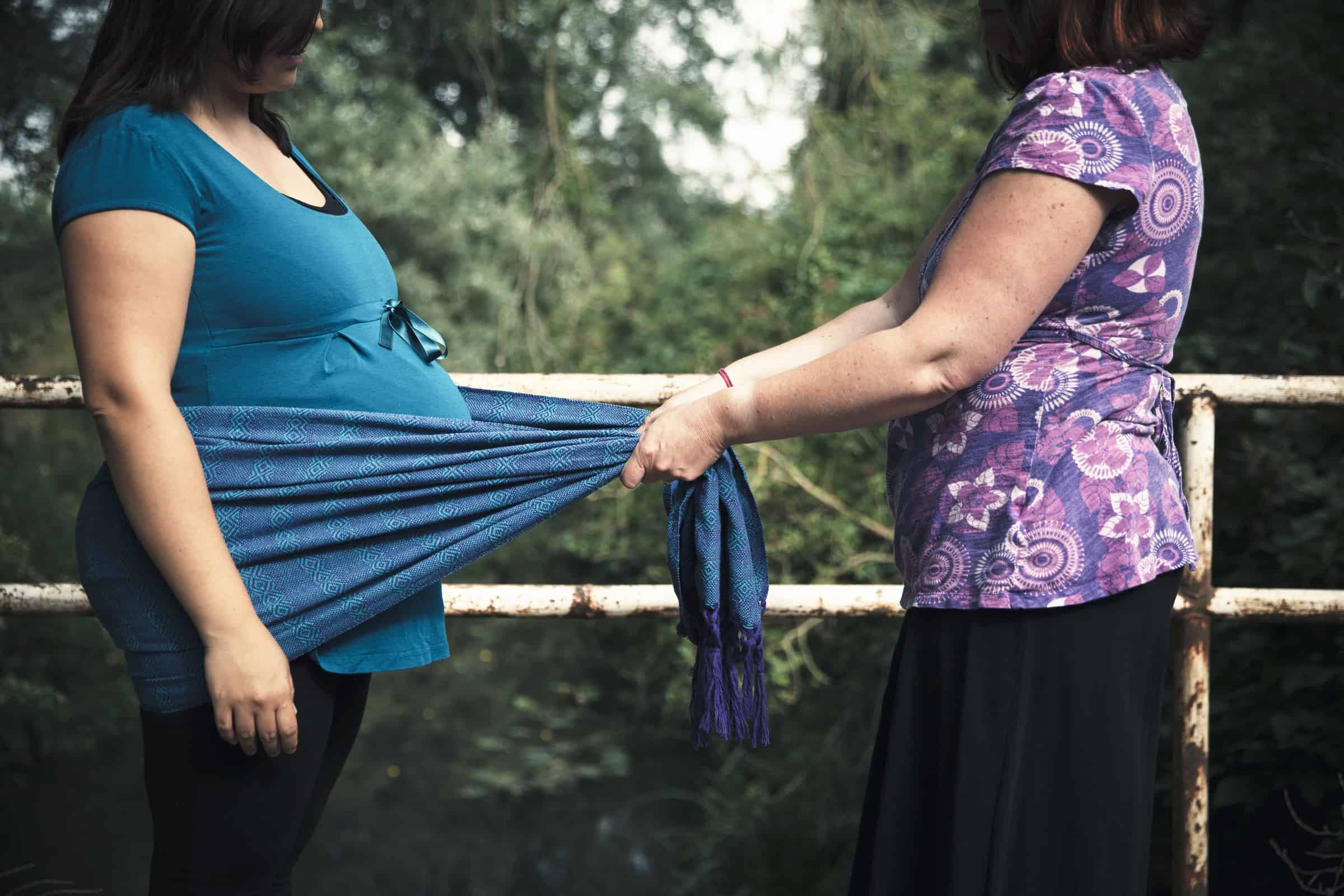
    A rebozo is a traditional Mexican shawl, which, besides being used as an item of clothing, is use to provide great comfort by rocking, jiggling and wrapping a woman’s body, especially during pregnancy, birth and the postpartum.

    I’ve been using rebozos for 7 years, as well as teaching the techniques to parents and birthworkers.

    I have had so many mind blowing experience using rebozos shawls and scarves in my work to support women through pregnancy, birth, the postpartum and beyond, I’m on a mission to pass on this skill to ask many people as possible.

    What the rebozo does, by gently rocking and wrapping you, is calm you right down and bring you back to you body.

    As a species we exist in two extreme opposite states: the fight or flight, and the rest and relaxation stage.

    Right now, understandably, many of you are stuck in the fight or flight state. It’s made worse by the fact that you literally cannot “flight” because we are all stuck at home.

    The simple techniques I describe in this blog are incredibly effective, yet super simple to do, and anybody can do them. You don’t even need a rebozo to do them, something simple like a scarf or a pashmina will do.

    Here are 3 simple relaxation techniques you can use during pregnancy, birth, and the postpartum period (or at any other time! These aren’t limited to pregnancy-anybody regardless of gender or age can benefit from their relaxing effect).

    Self-care technique

    • A quick 5 min “reboot” to get you out of your head and into a more relaxed state
    • This is an easy routine to warm and loosen your muscles. It is especially helpful if your energy could do with a boost or if you feel stiff from having sat down for too long (especially after working at a computer), or if you feel anxious or stressed. The technique starts with some shoulder stretches, followed by a shoulder, back and buttocks rub, and finishes with a foot rub. After doing this quick and easy routine you may find that you feel happier, warmer, more relaxed, and more energised 🙂

    Play

    Wrapping the shoulders

    • Wrap the rebozo or scarf around the shoulders, cross the ends, then gently tighten and hold. This can be done standing up, sitting down, or lying down. It is a very calming and grounding technique, because the gentle tightening around the ribcage encourages you to breathe deeper into your belly.

    Play


    Rocking the pelvis

    • This consists in wrapping the rebozo or scarf around the pelvis, then  gently rocking the pelvis. This can also be done with the woman resting her back or arms against a wall for support, as well as lying down on the floor, or sitting on a couch.

    Play

    This is a taster version of the full version of my self-study rebozo ebook, or in my rebozo online course. If you would like to buy a rebozo, I have them in my online shop.

    If you have found this blog helpful and would like to support my work and help me continue provide valuable free information to birthworkers and expectant and newborn families, you can donate to my paypal account paypal.me/SophieMessager.

  • Online learning and support for pregnancy, birth and beyond-how does it work?

    Online learning and support for pregnancy, birth and beyond-how does it work?

    Online learning and support for pregnancy, birth and beyond-how does it work?

    As we navigate the unexpected and unstable changes happening in our world right now, a lot of peoples are moving from offering them face to face to online.

    Some of these things that may feel normal and already be part of your life for example you might already be doing some exercise using online programmes or youtube videos.

    They are things that you may never have experienced online and cannot quite get how they are going to work.

    I get that.

    Years ago I was made redundant from a biotech company I worked for. As part of my redundancy I got a package to support me in finding another job. I choose to hire Suzanne Doyle Morris, a female coach I had met through a women in science network I belonged to, and who specialised in supporting women in male dominated fields. I was unpleasantly surprised when she explained that we would be working over the phone, because I didn’t believe it would work as well as face to face. Boy was I wrong! The sessions with Suzanne were extremely powerful and helped me not only see what I wanted to do, but also helped me shift out of the frozen feeling I had, and develop a way of being that had positive impact way beyond the job finding process.

    Fast forward to today-I can imagine if you were looking forward to face to face group classes such as antenatal classes, or had hired a doula, how too may believe that it is not going to work and that there is no point in continuing.

    I get it. I am having doubts too.

    On a normal week I sing in a choir, and I go to a 5rhythms dancing group. These are moving online and I haven’t experienced them yet so I’m feeling a mix doubtfulness but also some of curiosity about how they are going to work online. I have already heard really positive stories from people who have taken part in such groups.

    What I am also seeing however is that pregnant women are really worried about what is going to happen when they give birth, and that the support is needed more than ever.

    As a doula I am used to support people with a mix of face to face and remotely via email, texts, whatsApp and phone calls. I have even supported people through several births over the phone.

    What I can tell you is this: whilst some things cannot be done remotely (such as massage), and face to face support offers something unique, many aspect of support can be provided remotely (for example, I am able to teach techniques to help turn a breech baby or carry a baby in a sling, online), , remote support is still extremely helpful.

    At a time of uncertainly, when things are changing daily, having someone who understands and knows the system, can find information for you, and simply be a listening ear and help you navigate your worries and concerns is invaluable.

    So if you are pregnant or a new mother right, and you are worried or scared, please consider hiring someone who can support you through it.

    Here is a list of people and organisations that can offer remote support:

    One advantage is that you are no longer constrained by distance, so you can lookup antenatal and postnatal classes nationally and pick the ones that suit you best.

    Here is a list of organisations you can get support from:

    Find a doula at Doula UK, the non profit associations for doulas in the UK. Having a doula will help you navigate your birth and postnatal options whilst things change in the maternity services right now, and also guarantee that you have someone to talk to when you need to. I have blogged several times about what doulas do, both to support birth and the postnatal period, feel free to scroll through my previous blog posts to read these.

    Independent midwives

    Antenatal and postnatal education

    Babywearing support:

    Pregnancy/postnatal exercise classes

    Mental health

    Free meditations/relaxation tracks/relaxation techniques

    Mental health professionas/organisations

    • Zoë Tolman  counsellor & psychotherapist specialising in perinatal mental health.
    • Alex Kremer fertility support, birth trauma, hypnobirthing and parenting support.
    • Traumatic birth recovery : practitioners trained in a fast birth trauma release technique called the Rewind technique
    • Make birth better: A collective of parents and professionals working together to end suffering from birth trauma.
    • Mind is a mental health charity, they have a section on postnatal depression
    • Mia Scotland is a perinatal psychologist
    • Saveria EFT birth trauma and birth anxiety sessions
    • Spiritual Health Programme (free)
    • Jo Rogers doula and spiritual companion
    • The Pandas foundation for perinatal mental health
    • SHaRON is a peer support based ehealth system, available via a mobile phone app and associated website.

    Breastfeeding support organisations

    So you see there are a lot of options available, from one to one to group classes, to charities. Do give a try to at least some of the free resources, you might be surprised by how helpful you find them!

  • The incredible things doulas do to support their clients

    The incredible things doulas do to support their clients

    A criticism that is commonly heard in the doula world is that doulas are expensive.

    In the UK, healthcare is free at the point of contact. This can lead some people to believe that they shouldn’t pay for services when it comes to supporting people around anything linked to health and well-being.

    Last week, I was saddened to hear that a friend who runs a pregnancy and new mothers centre, complete with free drop-in groups for new mums, was questioned not too kindly by medical professionals who accused her of preying on vulnerable women. They said that support should be free.

    This is a commonly held view sadly. I gave a talk about doulas to a group of student midwifes, and this was brought up too.

    I agree that, in an ideal world, support should be available for free to all that need it. But, interestingly, people who mention this seem to be unable to realise that they, themselves, aren’t working for free, and that the NHS isn’t free, it is paid for by our taxes.

    I am yet to meet a doula who does this for the sole goal of making money. As I’ve written about before, when we break it down, most of us earn an hourly rate that is way below the minimum wage.

    Recently, I spoke to a doula who was waiting for a client to birth, way beyond her due date, and was facing the quandary of cancelling important plans, because she wants to be available for her client’s birth. This reminded me that, through the years, I’ve heard incredible stories about the lengths doulas go through, not just to be available to their clients for a whole month or more, being available at the drop of a hat, juggling incredibly complex childcare arrangements etc.  The things that doulas do in the background, rearranging really important personal stuff, unbeknown to their clients, so that they can be available for the birth, are usually only known to those who belong in the doula world.

    I want to clarify that I am not sharing these stories to make clients feel guilty or that we resent the commitments.

    Being a doula is a calling, and whilst we find this job demanding at times, it’s worth it otherwise we wouldn’t keep doing it!

    Doulas tend to keep these stories secrets in order to avoid burdening their clients, hence they don’t usually get shared from outside the doula community.

    I hope that these stories will help demonstrate the incredible level of dedication that doulas show for their clients.

    A couple of my own stories that stick out include attending a 4 day long birth. My husband’s birthday was in the middle of these 4 days, so not only I wasn’t there but he was alone with the kids for that time.

    Another time, my family and I were all packed and ready to go away for the week end. My husband is from Hong Kong and this was Chinese new year and we were due to visit his family. This is like missing Christmas. I had a client expecting twins, someone who I had already supported through the birth of her first child. She was 32 weeks pregnant. As I was walking over to our neighbours to let them know we were going to go away, the phone rang, and my client told me that they were taking her to theatre, right now! I walked back inside my house, my husband saw my face and asked me what had happened. I told him, and he said to just go to be with her and that we could go join his family the next day. I made it to my client with 10 min to spare prior to her transfer to theatre. When I returned a few hours later, overcome with gratitude, I asked my husband why he’d agreed to change our plans, he said “I could see how torn you were”.

    My client wrote me this testimonial:

    My twins were born 8 weeks early so had to go straight to NICU. I wanted my partner to go with them as I didn’t want them to be alone and also to make sure our wishes for them where kept. I also didn’t want to be left alone in the theatre so asked for my doula to be around in when my partner left. This really helped me to stay calm as I knew my babies had dad with them and I also had someone to support me as it can be very lonely even in a theatre full of doctors and nurses. Having someone to talk to and hold my hand stopped me panicking. It also meant that when I was taken to recovery I wasn’t by myself. It was very hard being wheeled past other mothers with their babies, I don’t think I would of have coped if I didn’t have my doula with me. She also helped me hand express my colostrum into syringes. Just having someone with my while my partner was with the babies was amazing, she kept me calm just by being by my side and holding my hand.”

    Here is a collection of stories from doulas about the amazing things they’ve have done and sacrificed in order to be there for their clients :

    I shadow doulaed for a client, I finished 9hrs in my day job, picked my girls up from childcare and got home for 1730, got the call my client was in labour at 2000 so raced over to her, stayed all night until 0530 the next morning, popped home to take the girls to childcare and then back to another 9hr shift at my day job! I worked out I went without sleep for 40hrs! But I love what I do. It is annoying when people say I charge too much but when you workout out how long you’re on call for, the extra childcare, travelling and everything else I come out the other side with very little. Working in the birthing world is definitely a ‘labour’ of love! Rachael Ruddock

    I’ve worked 3 days straight with one hours sleep. I finally got home at midnight on Christmas Eve. I then had to wrap all the gifts for my 5 and 3 year old. I also missed all the festivities leading up to Christmas including the show we had tickets for. I do still love my job. Melanie Butcher

    I had to sleep in the car off a lay-by on the A1 once at 4am as I wasn’t safe to drive, I have to travel long distances as I’m rural. I keep a blanket and pillow in the car. I have slept in hospital car parks too in the middle of the night, so safety an issue. I’ve had to leave cinema showings with my kids, give up work commitments, like cancelling clinic and moving classes. Sophie Fletcher

    I’ve missed Christmas Day with my kids to be with a solo mama in labour, went early so she wasn’t alone – the kids still bring it up. Beccy Hands

    I’ve stayed awake for 70h. Hayet Hb

    I have missed my daughters 16th birthday party, my brother in laws 30th party and my uncle’s funeral. My auntie and cousins couldn’t understand how I could miss a funeral but this client had many baby loss experiences and I would rather sacrifice the funeral and have my family upset with me than let down a woman giving birth. Supporting Birth and the beginning of a family is more important to me than almost anything! Beverley Hinton

    I’ve missed invitations to weddings, christenings and birthday parties. I’ve said no to informal gatherings to see friends or have dinner with grandparents. I’ve missed education sessions for the kids. I’ve skipped dental appointments, hospital appointments and other personal appointments. I have stayed awake for over 60 hours. I have dumped the kids and ran on many occasion to disappear, sometimes for a day, sometimes for several. I have not eaten or drank water for long periods. I’ve not seen my own family who are in hospital. I’ve taken 3 days to recover from a long birth. Nikki Mather

    I have been on call over Christmas and my sons birthday. This shows my commitment and the willingness to miss these special events to support another family. Bev Samways

    I’ve just had my first birth and missed 2 hospital appointments, my baby’s 2nd birthday party, hairdressers, I did nothing on my 40th birthday just in case I was called. My mother in law changed her holiday so that she could be on call for my childcare. I’m also a pregnancy yoga teacher and had to cancel 2 classes to be with my clients, losing money for both.  I didn’t go to a college friends reunion. Kirstie Broughton

    When I go on call my life dynamics completely change. As I have small children I have to allocate time to drop them off safely to someone before I can head-out. So I go no further the 30min out of my house range. Have all bags packed and prepared. Miss play dates, days out, constantly being alert and it can be exhausting waiting for that call. When I’m there I’m 100% in and the outside world doesn’t exist. I’m as involved as the couple need me to be. I have massaged a woman once for 6 hours because she wanted me to and there wasn’t a partner to take over. I missed my in laws 60th wedding anniversary, turned down invitations. Doulas sacrifice a lot on day to day basis but it’s so worth it seeing that mother being supported and getting the best start on her long journey through motherhood. Eva Kralova

    I once had my husband pick me and my friend up from the airport after a weekend away and drive me ( in the opposite direction) straight to the hospital so that I could meet my client who had gone there in labour. My friend had to just roll with it. My husband and children hadn’t seen me for 3 nights and we had no plan for how I’d get home after. But right then she needed me and I went. It’s what we do. Amber Strong

    For two of my son’s birthdays I wasn’t there to wake up with him- because i was with clients at their babies birthday. Bitter sweet. The first time my son was young, I was a single mum and the babysitter was there. He was very upset. I got home after 48hrs and drove him to go bowling with a couple of friends. Trying to keep the wheels on. 2nd time he was older and very gracious- when speaking to me on the phone he said “It’s ok mum – I can wait for my presents until you get home – it’s important you stay with your lady until her baby comes. Gosh I blubbed.  Katie Olliffe

    I’ve missed Christmas Day, my middle son’s birthday morning, my partner’s birthday. I go home early from rare nights out, my social life has suffered. I seldom drink. My family have left on a holiday without me & I followed them the next day. My kids complain about my job & say it’s the ‘worst job in the world’. I tell them the opposite is true! Roma Hearsey

    I just made it to my best friend and my cousin’s weddings – leaving the birth the morning of my best friend’s. I have been absent for entire weekends and was called to a birth on Christmas morning – and missed my kids opening their presents. Over January I attended 4 births despite going through one of the most stressful periods of my life (divorce). One of these births was 5 days long. It’s hard to explain the impact this work can have on a person’s life. Laura Scarlett

    It also affects my husband’s work – he also works from home but in an employed capacity and occasionally needs to travel around the country – when I’m on call – he has to not travel. Melanie English

    I rushed across the country on New Year eve to get a super fast birth of the first baby in the county. Our job is multidimensional and money exchange really represent partial contribution towards its value. In the old days the village would support the wise women who helped at birth through barter of services and goods and we are just monetising the same principle. Vera Dubrovina

    I’ve missed birthdays, anniversaries, parties. The one time I DID set a boundary around a planned event, having missed so much throughout one year- I wasn’t there for my clients birth. A back up was- but it felt really hard for me- difficult feelings I had to unpack. Tortie Rye

    I missed my daughter’s prom to rush to a client after our birth contract had finished to support with a serious health issue. Caroline Zwierzchowska-Dod

    I went directly from an early pregnancy scan where I was told my baby had died and took a cab directly to my labouring client to attend her birth. Lauren Mishcon

    I did a birth on my birthday once 20 hours, wet through from supporting the mama in a tiny en suite on the DU. She wasn’t even my client – I was a backup doula! Jo Rogers

    I missed my daughter’s birthday one year and another year was so tired after being awake for 38 hours I picked her up from school and fell asleep before she had finished opening her presents. Missed first three days of my summer holiday when my client went pass 43 weeks . Aimee Sri Laxmi Hamblyn

    These are all true stories. I hope this helps give a measure of how passionate we are about supporting our clients.

  • How a doula can support you if you are having a planned cesarean birth

    How a doula can support you if you are having a planned cesarean birth

    It’s a commonly held belief that there is no point having a doula if you are having a planned cesarean, and I want to debunk this myth.

    I too, once believed that I couldn’t justify charging to support a woman who was having a planned caesarean.

    There would be no on call period, no phone call in the middle of the night, no unpredictable length of birth care.

    Or would there?

    Last year I got called unexpectedly (as I was busy packing the car for a week end away) by a client, pregnant with twins, who was only in the 32nd week of her pregnancy. She said “they are taking them out now”. I abandoned my week end plans and made it to the hospital with 15 min to spare.

    I was also called by a woman who unexpectedly found that they were moving her cesarean a week earlier. She asked if I could come to the hospital immediately.

    I have also been hired just to cover the on call period for a mother planning a cesarean, just in case she would go into labour before the scheduled date.

    I have worked as a doula for 7 years, and having supported several planned cesareans births, I’ve learnt that there isn’t such a thing as predictability, and also that doula support can be just as needed, just as useful as it is for a planned vaginal birth.

    I’ve learnt that, as every woman who births vaginally has her own set of individual needs, so do women who are having a planned cesarean birth.

    So, if you are having a planned cesarean birth, you can benefit from the exact same support you get from your doula as you would if you were hiring her for a planned vaginal birth.

    Doula support is a three legged stool of support, emotional, practical and informational support.

    This support applies regardless of the way your baby is born.

    So what can a doula do to help you before, during and after a planned cesarean?

    Pregnancy-the preparation

    When you are having a planned cesarean ,there are still many aspects of what will happen before, during and after the birth to think about.

    Having someone at your side who knows the hospital system in and out and how to navigate it, and help you push for what’s important for you, is very valuable.

    It is very much like going to a restaurant : you need know everything that’s on the menu to make your choice. If you’re a vegetarian and I only offer you meat stew this isn’t a great option for you isn’t it?

    I once supported a friend who was very keen on having what is known as a gentle cesarean. Her local hospital completely refused to support her choices, so I suggested she might want to try another more supportive hospital. I pointed out that, as she was having a planned cesarean birth, she could go where she wanted. She ended up finding the perfect hospital and obstetrician and having a beautiful and empowering birth.

    Sometimes, women who prefer to have a planned cesarean for all sorts of very valid reasons, can find themselves having a battle on their hands to get this choice respected. Having a doula on your side to help you navigate your rights can be invaluable in this situation too.

    So knowing all the options and having help navigating them and knowing how to get what you want is what having a doula is all about.

    A doula can also help prepare you emotionally for what is going to happen which can help you feel more in control.

    She can help you plan for your recovery after the surgery and how best to manage life with a new baby post cesarean.

    She can help you access a whole network of medical and complementary practitioners too.

    Alex Heath, doula

    “Doulas definitely help clients to negotiate an elective cesarean in the first place. Using knowledge of hospital pathways, language and mindset to support them in asking for an elective cesarean if that’s what they want…”

    Pippa Moss, doula

    “Helping with any preferences/alternative birth plan. Letting their clients know there are “gentle” cesarean options they may not know about, optimal cord clamping, gown on back to front to facilitate skin to skin etc. Calming nerves before surgery”

    Kristina McKeown, doula

    “Being aware that as a doula you may be one of few people fully supporting them in their choice. There still a lot of judgement in choosing a cesarean birth and just having someone to talk that through can be really helpful.”

    Ceci Goldaracena, doula

    “My client was booked for a elective cesarean. “Past Due date” and with a preview cesarean. She could not have an induction. We worked a lot in the birth plan for a gentle cesarean. Went together to hospital that morning and started to work in keeping oxytocin and happiness in high levels. Turns out that after a couple of hours when the medical team was ready they did a last monitor and she was having labour contractions. We asked to stop the A plan. Lots of walks , stairs,dancing and laugh…baby was born that night naturally.”

    On the day-waiting for the cesarean

    When you get scheduled for a cesarean birth, you get told to come to the hospital at a certain time, without having eaten any food. It is not uncommon for the wait to be longer than expected-because emergency cesareans can take priority, so having a doula at your side whilst you wait can help you stay as calm and relaxed as possible whilst you wait.

    Sarah Budden, doula

    “My role was all about the before. I spent 5 hours pre surgery distracting – playing cards, talking about Homes under the hammer, looking at pictures of their first born, getting dad involved in some foot massaging. She was scared. I was there to make the wait less intense, to stop her legs from shaking and discharge some adrenalin.”

    During the cesarean

    Having a doula there means that there is a familiar, friendly face to keep you calm in theatre. Your doula can hold you whilst they place the spinal anesthesia. She can hold your hand during the surgery. The birth itself is usually quite quick, but the longest part is the stitching afterwards. Is you are having your baby skin to skin in theatre she can help facilitate this too, and even help you to feed your baby then if you wish to do so.

    Most hospitals have a one partner policy only, however hospital policies are only guidelines and should be adapted to the need of the birthing family.

    I have been present in theatre with a couple.

    I have also been present with the mother when there was no partner, and I have been present with the mother when it felt like the right choice for a couple (for example when the father felt uncomfortable being in theatre, or when the father needed to stay at home to look after other children).

    Nicola Collins, doula

    “I supported an elective as one of my first births and it was so calm and beautiful. I helped with putting birth preferences together and going to appointments. Worked through any worries and concerns she had before the birth. On the day she was fourth down and we just chatted and laughed and I reassured her and reminded her of the golden thread breath when she was a little anxious. She had a bit of a tricky start as couldn’t get the spinal working properly for 40mins and all I could be was a voice of reassurance and give her my support. Finally got going and section went great and I just kept talking to her and keeping her informed about what was happening. Then I got to take photos of the baby being lifted out which was amazing and then mama got skin to skin straight away and even baby had latched on just before we left theatre. Back in ward, I helped with anything that mum needed. Breastfeeding support, got her food and drink. Called her parents and kept them updated. Let her have a little rest and just sat with her while she slept”

    Claire Walker, mother

    “When I got pregnant with my twins I knew I would have a planned c-section due to an emergency c-section with my first daughter. I had no hesitation in hiring a doula as the emotional support on the day was what kept me calm and relaxed as I could be. Having someone that is just there to support you before and after who will listen and comfort you is priceless.

    My twins were born 8 weeks early so had to go straight to NICU. I wanted my partner to go with them as I didn’t want them to be alone and also to make sure our wishes for them where kept. I also didn’t want to be left alone in the theatre so asked for my doula to be around in when my partner left. This really helped me to stay calm as I knew my babies had dad with them and I also had someone to support me as it can be very lonely even in a theatre full of doctors and nurses. Having someone to talk to and hold my hand stopped me panicking. It also meant that when I was taken to recovery I wasn’t by myself. It was very hard being wheeled past other mothers with their babies, I don’t think I would of have coped if I didn’t have my doula with me. She also helped me hand express my colostrum into syringes. Just having someone with my while my partner was with the babies was amazing, she kept me calm just by being by my side and holding my hand.”

    Nuria Pozas, doula, from her client

    Nuria who accompanied me was very helpful, caring and professional. Even though I had a cesarean she helped me all the way through specially with my fear and later on with my emotion. She was also a great support after the birth and gave me useful advice regarding to breastfeeding and newborn baby.”

    Beau, mother

    “I had planned a home birth but knew if my labour was anything less than ‘perfect’, I would need another c-section, so the presence of a doula was necessary (no other support was possible as both our families are far away). There was meconium in my trickling waters so I was sent to the hospital. There was no question about it – my doula, who had been with me since 2h after labour started, came with me (my husband stayed at home to be with our first daughter) and it was the most amazing experience because, unlike my husband, my doula wasn’t squeamish (obviously!) so I asked for the drape to be lowered and saw my baby come out. I didn’t have to keep chatting to my doula to prevent her from fainting, as I had done with my husband with our first daughter. She took pictures and films. Having a doula was a no-brainer in pregnancy, and it was the best decision ever considering how my birth panned out 🙂

    Emilia, mother

    “My decision to seek the support of a doula was driven by the fact that I wanted a vbac in the face of a number of “risk factors” and to help me navigate and to support me through a medically complex pregnancy. The anomaly scan revealed that my son would be born with a complex health condition. After the diagnosis, my pregnancy became enormously stressful, requiring regular monitoring and checks, and involving the healthcare professionals who would be involved in my son’s postnatal care strongly advocating a range of birth interventions that I had always intended to avoid. In the final month leading up to the birth, we came across more complications, which led to me reluctantly deciding that an elective cesarean birth was the safest mode of arrival for both me and my baby. My birth doula was incredible. She helped me research my “risk factors” and the options open to me, knowing how important to me it was that my birth choices were well informed. I felt empowered and heard out, and although I was sad to abandon my vbac plans, with her help I felt at peace with my decision.”

    Immediately after the cesarean

    In the recovery room, your doula can help support you to to feel comfortable, look after you and help you to feed your baby. You will be having cannula in your hand still, and be hooked to equipment like fluid delivery, blood pressure monitors etc which can make handling a newborn a little trickier.

    If your baby has to go to the NICU (which can be more common with elective cesareans as they often occur earlier in pregnancy), then your partner can go with the baby, and this means that you aren’t alone in recovery. In this situation, your doula can also help support you to express colostrum to feed your baby.

    Recovery nurses will look after your vitals etc, but they won’t stay with you every minute of the few hours post surgery, and they won’t be a familiar face, someone you know and feel safe with. Your doula’s presence can help you feel more comfortable and safer. I have had women hiring me for this reason alone.

    Bryony Vickers, doula

    “Calming nerves after surgery. Having someone to sit with you in a dedicated way after you have had surgery is invaluable. I think women forget that they can feel not great after surgery. We can help to hold the baby, get skin to skin, help other parent with learning baby care – dressing, nappies, holding etc. Helping with getting food, drinks, with knowing what is normal, what will happen next.”

    Jo McCracken, doula

    “I was touched once when a client of mine had to have a section and, once she was in recovery, she did nothing but moan for me to be there. Finally a midwife came to get me and said, ‘We need you in recovery. She won’t listen to any of us’. When I arrived, she burst into tears and said, ‘thank goodness you are here now’. So, maybe, calming nerves after surgery too.”

    Emilia, mother

    On the day, we knew that only one birth partner would be able to accompany me into the theatre. Nonetheless, my doula was waiting for us in the lobby at the crack of dawn. Her presence helped to diffuse and lighten the atmosphere. I was nervously anticipating and looking forward to the birth rather than dreading it. Knowing what was really important to me, she was able to prompt discussions on the day. It had previously been agreed that my newborn would be taken away to nicu. We agreed that my partner would accompany him. The team agreed that my doula could enter once my partner left to take his place and to keep me company. She remained with me in recovery when I otherwise would have been left alone. She maintained contact with my partner and gave me regular updates on how my baby was getting on. She advocated for me with the midwives in recovery, passed me drink and food, talked to me, made me laugh. Having my birth doula made my pregnancy and my caesarean birth a very positive experience, despite it being complex, stressful, and not what I had wanted it to be, and I am completely convinced that it would not have been so positive if it wasn’t for her wonderful support and friendship.

    In the postnatal ward

    A few hours after the birth, once your vitals have stabilised, you will be transferred to the postnatal ward, where you will stay usually a minimum of 24h or so.

    Postnatal wards are often understaffed, especially at night, and it can feel very frustrating if your baby is crying and you can’t pick her up (you’re still immobile due to the spinal or epidural anaesthesia for a few hours), and if you ring the bell, it can take a while for someone to come.

    Having a doula supporting you there means that someone can help you with simple tasks like getting you a drink or a snack, passing your baby to you, changing your baby’s nappy, helping with feeding, and generally making sure you are comfortable.

    Sometimes the partner can do this, but sometimes the woman has no partner, or the partner may need a rest, or need to go home to look after other children etc, so having a doula there means that you won’t be alone whilst you cannot move whilst the spinal or epidural wears off. It also means that someone can be there to support you whilst you take your first wobbly steps or have your first shower.

    If you end up staying in the postnatal ward for a few days, then having a doula can also mean that someone can give your partner a much needed break, that your doula can hold your baby whilst you have a nap, or even bring you some much needed home cooked food.

    After the cesarean-at home

    When you get home, your doula can help you with settling in at home with your new baby (or babies!), helping you with feeding, with finding positions that feel comfortable to do so (feeding lying down can be a godsend for some post cesarean mums), and generally being a much needed extra pair of hands around the house,  so you can rest, get to know your baby, and recover from the surgery.

    I have supported many mothers post cesarean, both as a birth and as a postnatal doula. This has taught me that, similarly to a vaginal birth, everybody’s experience of recovery is very widely varied. I have seen mums bounce around 3 days for cesarean looking pink and healthy, and also at the other end of the spectrum, mums having issues with retained placentas and/or scar infections which meant that their recovery journey was long and protracted.

    Partners usually only get a couple of week’s parental leave, and post cesarean mums are more likely to need antibiotics and have a longer stay in the hospital. On many occasions I have seen mums stay in the hospital for 3 to 5 days, so by the time they got home their partner only had about a week’s leave left. It can feel very scary indeed to be alone at home with a new baby when you are not only recovering from surgery, learning to look after a new baby, but also are more limited in your ability to get around (I’ve seen mums who lived in a remote areas getting very lonely as they couldn’t drive their cars for several weeks).

    Ultimately no new mum should ever be alone coping by herself in the first few weeks post birth, she needs a  community around her to support her, and this is even more true for post cesarean mums.

    Kate wilson, mother

    Our doula, Candie, provided us with a huge amount of support both before and after the birth. She was with us in recovery and helped us to initiate breast feeding – which was so important after a traumatic experience with our first child. She then visited us at home and provided lots of support in helping us to adjust to life as a family of four. She supported me with breast feeding as Charlie had a tongue tie, she played with my older children and made sure I rested.”

    Georgia Wakins, doula

    I supported a third time mum after a cesearean recently and there were lots of practical things I could help with for all three kids, but the most satisfying thing was the blissed out expression she had after I gave her a back and shoulder massage. The oxytocin and endorphins released with physical touch can be amazing for post-op discomfort, just like for labour.

    If this resonates with you and you would like to work with me, head over here if you’re an expectant or new mum, or here if you are a birthworker

    Also feel free to signup to my mailing list to receive my newsletters by using the signup form at the bottom of this page

  • Taking the red pill: why I became a doula course leader

    The Developing Doulas course, and its founder, Maddie McMahon, have a special history for me.

    Back in 2005, when I was pregnant with my son, I hired Maddie as my doula.

    The experience was so incredibly empowering and life transforming that it started me on the path of a complete career conversion, and I went from being a scientist to becoming a doula and childbirth educator.

    Three years later, when Maddie ran the first ever Developing doulas course, she asked me to attend as a guinea pig.

    I absolutely loved the course, the course facilitators, and the amazing women I met.

    Fast forwards ten years and  I’ve been a doula for nearly 7 years, a doula mentor for 2 years, and it feels right and fitting that I should start to facilitate Developing doulas courses myself.

    I’ve felt for myself the power of being supported unconditionally through one’s pregnancy and birth choices and I feel it has the power to change the world we live in. So it feels right, and important, to help more women embark on their journey to become a doula.

    Whilst I went into doulaing to help make the world a better place and to serve parents (and to help families have the same positive, supported experience I had), I’ve personally benefited from becoming a doula in ways that I could never have envisaged. It has been such an amazing journey of self discovery, and has given me such joy, such personal growth, and such incredible self belief.

    As I’m reflecting on this journey, I’m finding it quite hard to pinpoint exactly what is it about becoming a doula that had such a positive effect on me.

    I’ve found that it’s a multilayered combination of several factors.

    Firstly, supporting women through birth and the postpartum is incredibly rewarding. I’ve joked several times that when I was a scientist, I had many exciting moments, but I never cried tears of joy like I have many times since becoming a doula. Also as a scientist, I hoped that my research may lead to advances in medical care someday. With doulaing, the positive effects one has on families is immediately visible. On more occasions than I can count, I’ve been sitting in my car after a birth or a postnatal support session, and I’ve burst into tears of joy and gratitude. I feel that I am incredibly lucky to be able to do such a fulfilling job.

    Second, becoming a doula has broadened my mind beyond belief. When I was a scientist, I hung out all day with other scientists. Yes they were all different people, but they all operated within a similar mindset. As a doula I’ve met the most incredibly range of people, doing jobs I didn’t even know existed. Supporting families through such a vulnerable time as pregnancy and birth, the relationship we develop with our clients over the course of several weeks or months means that we get to know people really well. And what has amazed me the most, is, the longer I do this job, the more people keep amazing me. We are all so different, with different life stories and different needs. You start to realise that nothing is black and white, and just many different shades of grey. and that what’s right for one isn’t for another. Nothing exposes you to breadth of this difference as supporting women through birth.

    I have likened becoming a doula to taking the ‘red pill’ (as in the Matrix movie). Once you start doing this job, it opens your eyes, your heart and your mind beyond what you thought possible, in a way that I find hard to articulate with words, especially to people who are outside the doula world. You cannot unsee what you’ve seen.

    Everything in your life starts to change too, because what you learn is so opening and so deep, you cannot stop it from percolating to the rest of your life.

    Take questioning everything. Something that we discuss in depth during the doula course. The world, especially the medical maternity care system, isn’t as evidence based as you believe. Once you start digging into the evidence for that, and you realise it’s all a house of cards, you start questioning other aspects of medical care, you start questioning parenting, you start questioning education, the list goes on and on.

    Take unconditional support. This is the cornerstone of doulaing. We’re here to work alongside women and support their choices, and help them discover what’s right for them. Often we might be the first person in their life do to this for them. Just listening with no agenda. There is incredible power in doing this. Once you start doing that for clients, it also becomes a part of who you are. You judge people less, you ask open questions instead of making statements, you stop projecting your own beliefs on other. Your close ones, your family and friends benefit immensely from this. I am proud to say that becoming a doula has made me a better mother, and that I am raising kids who will take no shit from the system.

    Take becoming self employed. I don’t know if this applies to any self employment because I haven’t tried anything but doulaing, but since becoming self employed nearly 7 years ago, I’ve realised that I was pigeon holed without knowing it, in my previous job. Within science, there was a common, quite judgemental, and narrow minded way of thinking and an unspoken rule that if you didn’t know everything, you were incompetent. I used to feel very vulnerable after giving a talk at a conference, in case I didn’t know the answer to all the questions. Becoming a doula taught me that you don’t need to have all the answers, and that it’s ok to say “I don’t know, but I’m going to try and find out”. It’s incredibly liberating, and has built my self confidence no end.

    Take entering the most amazing community of women I’ve ever encountered. The doula world is almost entirely composed of women who are passionate about supporting women, and each other. It kicks the patriarchy in the teeth. My local doula community is simply the most amazing, non competitive, non judgmental, supportive community of awesome, kick-ass women I have ever entered. We lift each other up. We laugh and we cry with each other. So not only did I gain a job I adore, but I have also gained a local and UK wide community of women I love and admire. And, after many years of buying into the patriarchal model of competition between women, I’ve discovered the joys of sisterhood.

    Take all the opportunities for learning new skills that comes with this job. Since entering the world of doulaing I have attended countless study days on topics I didn’t even know existed before. Many of these I have enjoyed so much that I’ve honed my skills, and ended up teaching others. For an eternal student and knowledge freak like me, it’s incredibly exciting.

    Take the self esteem boost. It’s so good for the soul to follow your calling and do a job that you love. Beyond that, not having to know everything also led me to start believing I was good enough, so the effects on my sense of self (along with the incredible rewards of this job) have been very far reaching indeed.

    Take breaking the mold and becoming truly myself. Doulaing has allowed me to explore what I love doing and learning beyond the confines of what’s considered “ok” by society. I’m a scientist AND an energy worker, and it’s completely ok! When you spend your days encouraging others to trust their instincts, it rubs off! So the biggest gain for me as a person has been able to grow into who I really am, and embracing my weird quirks and blend of science and woo unashamedly. I feel I’ve really grown into the person I am meant to be. I no longer fit into a nice neat box and I love it.

    As Brene Brown says

    ” Belonging is the innate human desire to be part of something larger than us. Because this yearning is so primal, we often try to acquire it by fitting in and by seeking approval, which are not only hollow substitutes for belonging, but often barriers to it. Because true belonging only happens when we present our authentic, imperfect selves to the world, our sense of belonging can never be greater than our level of self-acceptance.

    Becoming a doula has been instrumental in my journey of self growth and self acceptance.

    These are all the reasons I’m grateful that I have become a doula. These are also the reasons I’ve become a doula course facilitator.

    I’m teaching my first course in North East London in May. Visit the Developing Doulas website to find out more.

    Would you like to join me in taking the red pill? What are you waiting for?


  • Rebozos, shawls and scarves : the lost art of supporting women through the childbearing years

    Rebozos, shawls and scarves : the lost art of supporting women through the childbearing years

    RebozosI was introduced to the art of using a traditional Mexican shawl called a rebozo to comfort birthing women at my doula course by Maddie McMahon in 2008.

    Whilst I developed my antenatal and doula career, in my usual, knowledge junkie style, whislst I learn to use the tool for myself, I decided to learn as much as I could about this magic tool by attending training.

    Over the my first few years as a doula, I pursued my knowledge further by learning from several doula colleagues (I am especially grateful to doula Bridget Baker who showed me how to properly wrap a rebozo around a pregnant woman’s belly during a doula UK AGM).

    I attended my first formal workshop with Stacia Smales Hill on rebozo use for labour and birth in 2013. In the same year I also attended a workshop by Rocio Alarcon called closing the bones, a postnatal massage technique  which included rocking and binding with a rebozo.

    Frustration over long and difficult labours, and especially malpositioned babies led me to seek more specialist training,  such as the rebozo for labour progress and malposition with Selina Wallis, micromovements with Francoise Freedman, and 2 iterations of different levels of spinning babies with Jennifer Walker and Gail Tully.

    As my experienced developed I also brought more focus towards postpartum support, and recently attended a workshop on healing diastasis recti with Birthlight which included many rebozo techniques.

    I am also a babywearing instructor and tutor, and as such use rebozos and wraps to carry babies too.

    I started facilitating workshops around this topic because people asked me to. Repeatedly.  At first, I refused, as I didn’t feel qualified or experienced enough. But after a few years of constantly using this amazing tool in my birth work and my antenatal and babywearing classes, and seeing how the incredibly versatile such a simple piece cloth could be, and the miraculous experiences that ensued, I finally felt ready to start teaching workshops around this topic, because I had so many positive experiences I felt I needed to share this skill with others.

    As I met people through teaching, I constantly questioned people I met about their culture’s practises, I started to build a picture in my mind of something much more universal than the rebozo.

    It seems that every culture has (or had) a piece of cloth of some kind, call it a shawl, a sarong, a scarf, or a wrap.

    Cold countries have thick, woollen fabrics (think Welsh Shawl or Scottish plaid), and warmer countries, cooler, thin, cotton fabric (think African Kanga or Indonesian Sarong).

    There are almost too many fabrics to count, but one thing is for sure, women have used all sorts of cloths in incredibly versatile ways, and what I’m going to say below about the rebozo is true for many other cultures too. It’s a truly universal practise.

    I spent a few years believing that the rebozo use for labour was uniquely South American but I have since met a Somalian midwife who told me how they use their traditional shawl, called a Garbasar, in a similar way during labour.

    I trained a Moroccan birth worker in doing closing the bones, and she was surprised when she started offering the massage that women came forward and told her they’d had a similar treatment in the local hammam after birth (using the traditional Moroccan cloth called a Mendil).  Tunisia offers a similar practise called a fouta massage (the fouta is a hammam towel, which is very similar in nature to the Turkish towel).

    I am lucky to be part of a multicultural family, being French and married to a man from Hong Kong. In Hong Kong I’ve been told they use a long piece of muslin cloth to bind the woman’s hips and abdomen after birth, and my mother in law also showed me how she was taught how to use a towel to bind her hips and abdomen after birth.

    It’s also quite fascinating to see how contact with foreign cultures can influence each other. For example I recently acquired a Dutch postpartum girdle called a Sluitlaken. I couldn’t help but notice how similar to Indonesian postpartum binding it looks, then a friend pointed out than Holland used to have Indonesian colonies!

    So, what can you do with a rebozo, shawl or scarf of shawl?

    Pretty much all cultures on the planet, some kind of cloth is used to cradle and carry a baby. In some cultures is used to rock and soothe the baby too. Rocking is such a primal rhythm we all experienced it in our mother’s womb, that we find it soothing all through our lives.  Even in Europe there are pictures of women wearing their babies in Welsh shawls which date from the 1940s.

    Later, when the baby grew into a toddler and child, she would use the cloth to dress up, pretend play (including carrying toys and/or animals, pretending to carry a baby), make a den etc.

    As the child grew into a young woman she would use the cloth as a shawl to keep warm, as a clothing accessory, a blanket, to carry siblings ( in traditional cultures women learn baby care from a very young age as they tend to live with extended families), and to carry loads on her back or head.

    Later still when she became a woman, she might have been given her own shawl as part of a menarche ceremony. She might have worn a special cloth on her wedding day.

    When she became pregnant, she would have used the shawl to support her belly, and her midwives would have used it to alleviate the aches and pains of pregnancy, and maybe to help the baby move into the best position for birth.

    During labour she would have used the shawl to hang from, to pull on, and her birth attendants would have used it to provide comfort measures, such as sifting, rocking, shaking, and wrapping.

    After the birth she would have had a “baby moon”. Again this is something pretty much universal in the world-women the world around have been alleviated from household tasks and cared for by family members for the first 30 to 40 days postpartum. During this time they would rest so they could recover from growing and birthing their baby and get to know their baby and learn to care for them. Her birth attendants and the community of women would have come to feed her nourishing food, and close her bones and help her body heal from the pregnancy and birth by using  a combination of their hands, massage techniques and using the cloth to help move and bind her hips and abdomen to help them back into place. In the UK we used to have this practise called “churching” you can read about it here 

    She then would have started to use the cloth to carry her baby and start the cycle all over again.

    Later as she grew old, her family members would have used the cloth to rock and soothe aches and pain.

    Women would have been buried with their shawl using it as a shroud.

    So you see, a traditional cloth, rebozo, shawl or cloth can be used to support a woman throughout her whole life. It is a universal phenomenon on our planet.

    As the shawl came out of fashion and modern practises like using pushchairs became seen as more fashionable and desirable, this skill was soon lost, and because like most traditional women-only practises, it was just passed on orally rather than written about, the knowledge was lost very quickly, in one or two generations. We also tend to embrace “modern” practises mindlessly, seeing traditional ones as backwards and old fashioned.

    Mexican and Chinese friends tell me that nobody wants to use the traditional shawl or carrier these days as only remote farmers or beggars still use them. And certainly my recent trip to Hong Kong showed me that it took less than 15 years for the traditional baby carriers to have been almost forgotten and  superseded by more modern, yet less ergonomical, models.

    This is  something that we need to reclaim and teach all women, as it is part of the essence of women circles and supporting women through life transitions.

    This is why I am so passionate about passing this skill to both expectant and new mothers, and to anybody who works with expectant and new mothers. It is our birthright!

    How fitting is it that my friend Awen Clement just wrote this poem, for me it sums up everything the use of the rebozo is about.

    We are all weavers

    Life is a cloth
    our stories the threads
    carried across the warp by breath 
    and memory
    Every soul
    unique in its tapestry
    with tangles unpicked 
    and rewoven anew
    A rainbow of colour
    where our threads meet others
    and when we take our last breath
    love will weave the ends”

    (C) Awen Clement 2018

    You can learn more about rebozo and its many wonderful uses in my online course

  • rebozo master class

    rebozo master class

    I did a 45 min rebozo master class on facebook yesterday and I have uploaded it so you can watch it here

    Play


  • What do you get when you hire a doula, or why she’s totally worth the money

    What do you get when you hire a doula, or why she’s totally worth the money

    This week I saw this meme.

    It made me want to write about what you get when you hire a doula.

    The birth/wedding spending is a very well known analogy in the birth world. Most people spend A LOT more time and money planning for their wedding day than they do for their birth.

    I’ve written about this before here.

    So why do I feel compelled to write about why doulas are worth the money?

    Because I keep hearing/reading stuff about the fact that doulas are expensive.

    This simply isn’t true.

    The fact that people are reluctant to invest much time and/or money is preparing for their birth is a reflection of the low value our culture places on motherhood, and of a lack of understanding of the impact that birth has on women, and on society as a whole, but this is a topic that deserves its own blog post.

    I’ve written recently about the value of a doula, but this time I’d like to explore and explain what you really get when you hire one and why it’s worth every penny.

    My friend Maddie McMahon also wrote a brilliant blog about doulas and money this week.

    And doula SallyAnn Beresford also wrote about budgeting for your birth.

    I’d like to correct some misconceptions about doula work and its worth.

    I think the biggest misconception is that you hire a doula to support you through the birth of your baby and that’s all that matters.

    Recently a colleague was asked how much she’d charge to only come to the birth, and do no antenatals.

    This has happened to me too and I had to explain it just doesn’t work like that.

    Much of the work we do is in the preparation, the getting to know you and the support and information we give prior to the birth.

    I saw another meme last week that summed it up very well “the power of a birth plan isn’t the actual plan. It’s the process of becoming educated about all your options”.

    It’s a big myth that there is no point writing a birth plan because birth is unpredictable (and I encourage all my clients to write 3 births plans (Read about this here)

    So back to what you get from your doula, and I’m in the thick of it at the moment as I’m supporting a woman pregnant with twins and one planning a VBAC , one having her first baby, one having her 2nd baby and one having her 3rd (they are not all due at the same time!).

    The minute you hire a doula, she’s completely dedicated to you.

    Whilst most of us have letters of agreement that cover a certain number of antenatal appointments, we also state that you get unlimited phone and email support from us.

    These days I’m in contact with my clients via email, text, phone and whatsapp groups.

    All this work can seem invisible because it’s not face to face, but I spend hours for each client beside the face to face meetings, researching information for them, on whichever topic they need information about.

    I send them various signposts, from online articles, examples of birth plans I’ve collected through the years, books etc. I contact other people for information when I’m facing a situation that is new to me (this happens all the time by the way as everybody is unique).

    I help them write their birth plans, reading through and making suggestions about things they haven’t thought about.

    I send them up to date hospital policies that I’ve managed to collect through my knowing of the right person to contact at the hospital.

    I lend them books and DVDs, slings and other pieces of equipment.

    I signpost them to the huge network of midwives, doctors, osteopaths, massage therapists, and other complementary practitioners that I trust and with whom I’ve built links over the years in my community.

    I suggest they meet with a different consultant or with the consultant midwife, and I often accompany them to the appointment.

    I’m truly passionate about this (and all the doulas I know are too), so I put absolutely no limit on the time I spend doing this.

    With more complex pregnancies,  it can mean an incredibly high number of hours.

    And of course I meet face to face with my clients at least twice antenatally (not including the first time we meet for an interview).

    I prepare extensively for these appointments, discussing what they want ahead of time and preparing the right props to take with me.

    I listen deeply to their wishes, their concerns and worries, and I try to provide the information that maximises the chances of them achieving these wishes.

    This is the antenatal prep.

    Then there is the on call period. Most of the time we go on call from 38 to 42 weeks pregnancy, or until the baby is born which can be longer than 42 weeks.

    This means that for up to a month (it’s pretty rate that it’s shorter than 2/3 weeks especially for first time mums, and I’ve been on call for 5 weeks in the past), we are on standby 24/7.

    We literally put our life on hold. We don’t go away more than an hour from our house. Most of us have young children ourselves so we have to make very complex childcare arrangements to be able to drop everything and come to your whenever labour starts (including at night). We can’t drink alcohol, even at a party. We can’t let our hair down. We tell all our other professional engagements that we’re on call and may need to cancel at short notice (“unless I’m at a birth” becomes a recurrent sentence).

    We pack clothes ready for the next day so we are ready to disappear in the middle of the night when needed. We need to be careful what we wear in case we have to hot foot it to the birth. We repack our doula bag, making sure everything we need is in there, and replenishing supplies.

    Our phones are glued to us 24/7, and placed on the bedside table at night (And we’re always making sure the battery is charged).

    We sleep less well (we experience a level of heightened alertness and often wake up at night to check our phone in case we missed a text/call from you). We always make sure we are reachable, are paranoid about phone reception which something means giving someone else’s landline just in case (some clients live in areas with poor mobile reception).

    Our clients are always on our mind. We care deeply for you at this vulnerable time.

    We know that we might need to come to you very quickly when labour starts. We never know when.

    We have to remind our partners of the fact that we may disappear in the night or day, and make sure they know what’s happening with the kids etc.

    Our partners and children find the unpredictability difficult to handle ,especially as they don’t know how long we’ll be gone for.

    We keep telling our friends and family : if my client calls I’ll need to go. I choose to take the car instead of the bus when going to town, incurring extra parking charges, because I want to be as quick as possible in case I get called, plus my doula bag is usually in the car and it’s really big. I have to remind my kids when we go to the park or the cinema, remind my husband when we go for a rare meal out. Several times I have had to tell my choir leader at the beginning of a concert that if I may need to disappear.

    We miss study days and conferences we have paid for because we don’t feel safe going that little bit further away in case labour happens during that time.

    It takes a very special kind of person to cope with this level of unpredictability and low level tension on a constant basis. It gets easier as you become more experienced but it never quite get to the state when you feel completely relaxed.

    The on call period is up to 30 days, 24h a day. This can mean a total of 730h or more. So if you think that my birth package starts at  £950, one third of which is for the on call period, that’s 316 divided by 730, which amounts to 43p per hour. Not exactly minimum wage hey?

    Then there is the birth itself.

    I’ve been a doula for 6 years and the shortest birth I attended was about 3h long (I always stay a few hours after the birth to make sure mother and baby are ok and help with establishing feeding etc, so I was there for 6h). The longest was 4 days. The average was 21h.

    We spend hours supporting you and your partner, holding you, massaging you or whatever other comfort method helps at the time, managing on very little sleep and food.

    We help you navigate unexpected curve balls. We stay strong. We cheer you on.

    We have a firm commitment to the families with support and we’re not going anywhere until the baby has been born.

    When we get home after a birth, we often take days to recover.

    Then there is the post birth support. I offer a minimum of one postnatal visit and unlimited phone and email support for 6 weeks after the birth. I also offer standalone postnatal support for an hourly rate of £25.

    Some parents take to parenthood like a duck to water and require very little support from us. The shortest postnatal job I’ve done was a one-off visit of 3h. The longest one was 2 years.

    Some parents have very complex situations to deal with and this can mean hours of support.

    I recently supported a new mother of premature twins so she could achieve her goals of breastfeeding them and this took much hard work, sweat and heartache, with incredibly rewarding results at the end.

    Some parents struggle with feeding, with adjusting to being parents, with sleepless nights, with conflict with their partner, with being a single parent, with complex medical situations and more.

    We’re there for them and we don’t go anywhere until we have helped them achieve their goals. We move heaven and earth, we reach out to other knowledgeable people, we spend hours talking and researching topics.

    I haven’t written this to moan about it all and I sincerely hope it doesn’t come across this way.

    I do this because it’s all worthwhile and I don’t resent it.

    I do this because it’s a calling and because I care about birth, and about women.

    But I just want you to know what it means to be a doula, and how challenging it can be at times.

    I want you to know that when you hire a doula, she puts her life aside for you for weeks or even months at a time.

    Because you are worth it.

    And your doula is worth it too.