
Sophie Fletcher attended the closing the bones training in 2017. This is her account what the ritual did for her.
https://www.closingthebonesmassage.com/closing-bones-freedom-movement/
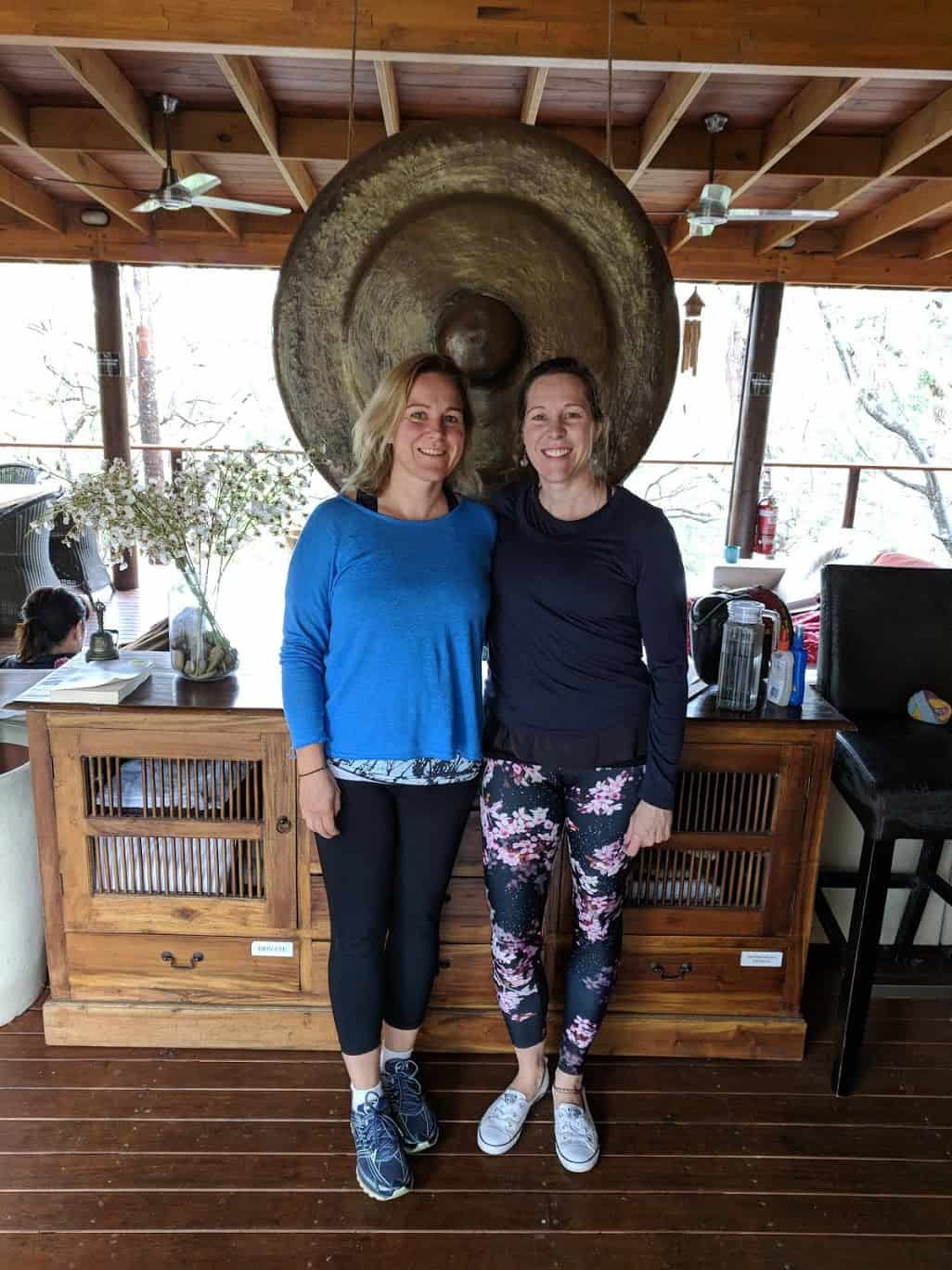
Sophie Fletcher attended the closing the bones training in 2017. This is her account what the ritual did for her.
https://www.closingthebonesmassage.com/closing-bones-freedom-movement/


Those of you who follow my blog know by now that most of my posts are inspired by something that happens to me in my work as a doula.
Today is one of those days.
I’ve just had a conversation with a new mother of two, who has a baby and a preschooler, and who wonders why she’s so exhausted, and why everybody else seems to be coping fine.
She also feels guilty at the idea of asking for support.
I’m so seriously pissed off at our society right now!
I’ve written several times before about what new mothers really need, and I’d love to see a shift in our culture about how we support new mothers, with a mother centered, and mother supportive approach, rather than one that only gives gifts to the baby and encourages the new mother to “go back to normal” (as if there was such a thing!) as soon as possible after the birth of her baby-as if nothing of significance has happened.
This post is about the lack of community support, how we’re not meant doing this on our own, and how much harm is caused to new mothers by a culture which encourages women to put up a brave face, and keep their challenging moments secret.
This secret part means that women feel inadequate thinking they are alone in their struggle.
I remember being a new mother and struggling massively with finding my new identity (another topic that isn’t discussed), but also being really tired, bored and lonely (all my social network was at work from 9 to 5) at home with my new baby, and feeling really GUILTY about it.
I had this stupid romantic notion in my head that somehow, motherhood alone ought to make me feel fulfilled.
Ah bloody ah!
So I didn’t reach out and talked to anybody about it.
Luckily I read a lot of books, and I remember feeling so vindicated when reading, in the book “The continuum concept” that it’s not normal for our species to be alone with a baby.
We’re meant to be with other adults once we have babies, and babies are meant to be around many of people too.
We’re meant to have experienced mothers around us, other women in our close community, who can help guide us and make us feel more normal and confidence as we navigate the treacherous waters of new motherhood.
I love this article called ” In the Absence of the Village, Mothers Struggle Most”
I was also amazed to read an article about the fact that women who live in traditional tribal societies have the same issues with breastfeeding as Western women but the difference is that they have the support of experienced women around them.
We’re meant to have other people who can hold the baby for a while whilst we sleep, who can take care of chores and provide us with nutritious food whilst we rest and recover from growing and birthing a baby, and get to know our new baby too.
So in our nuclear family culture, for the lack of a village around most of us, we shouldn’t feel guilty about asking for support, we should demand and expect support, because that’s what’s normal for our species.

What’ not normal in the unusual situation Western culture puts us in.
We also live in a strange, “fake” culture, one that is all about glossy Instagram pictures. Motherhood isn’t glossy. Motherhood is raw and messy. There are many moments in the day of a mother, that can be wonderful (the smiles and gurgles of a baby), and also many moments full of tedious drudgery, and many moments which are downright terrible. I love this article about it.
Coming back to my early days of being a mother, my feelings of inadequacy were exacerbated by the fact that I didn’t talk to anybody about it. One of my biggest regrets to this day is not to have hired my birth doula, Maddie Mc Mahon, as a postnatal doula to help me through make sense of things through these first few weeks and months. Knowing the magic of doula support, I know it would have made a world of difference, to have someone witnessing my mothering and reflecting it back to me in a positive light ,and reframing it like I am trying to do with this blog.
But hey I believed that I couldn’t justify spending money on myself, what with my reduced maternity leave pay and all that. It felt selfish and indulgent to spend money on myself. Yet I bought so much useless crap for my baby. Somehow, I don’t think I even realised at the time that I was a victim of the low value our culture places on mothers and motherhood.
Eventually I started going to baby classes, and met other mothers who became friends, and the informal discussions we had whilst feeding and playing with our babies were peppered with priceless nuggets of information-and made me realise that I was normal and not alone.
As a doula I have had more occasions that I can remember when I’ve witness new mums going through the same feelings of inadequacy.
“I’m not doing anything” they say. I usually reflect back to them that they are solely managing to keep a very helpless and very demanding tiny human alive-and that’s no mean feat!
The problem is that our culture place such a low value on motherhood, and considers it to the a “non activity”, so people assume that mothers just get to relax all day. But nothing could be further from the truth.
I remember when I went back to work when my son was a baby. I went back part time-working 4 days a week. On my day off , I hung out with my new mum friends, some of which had decided not to go back to work. One of them said “I don’t know how you do it”- referring to the fact that she thought that balancing work and being a mother was really difficult. I replied “no, I don’t know how YOU do it”, then proceeded to explain to her that the hard days weren’t the ones at work, but the ones at home. I told her that on my work days I got uninterrupted coffee and lunch breaks-complete with adult conversation, and that I even got to go to the toilet on my own (anybody with a small child knows that as soon as you sit on the loo they need your attention for something).
There is no breaks in the day of a new mum, no pauses, no quiet, uninterrupted time, no appraisals, no pats on the back, and no bonuses.
The days can be 14-16 hour long or more.
You cannot see the results of your mothering at the end of each day, the results of all the effort, all the patience, all the time and all the love you have poured into your child.
I love this dad’s response to a friend asking what his stay at home wife does all day.
The “I’m a crap mum” worry is another common one. We focus on where we’re failing, on the moment when we’re exhausted and loose our shit with our kids, not on all the love with pour into them all day. I did that a lot in the early days, I saw other mums do stuff I wasn’t doing with my kid, and I felt like I was lacking. I never did focus on the stuff I was doing well.
I have said many times before that there should be some kind of “bad mothers club” (a bit like AA but for mums), where mothers could safely talk about the less pleasant sides of motherhood without being judged.
I was inspired today by reading this story of a mum who hunted around her toddler’s bedroom for the source of the bad smell, only to find her toddler had done a poo behind the curtain, on the windowsill at that. (warning-graphic picture of a poo if you open the link).
This mum was judged and shamed on social media for posting this.
And yet this can be the reality of motherhood for many of us.
I once had my baby in a sling and he had an explosive poo which leaked all the way down his legs and onto the sling. And yes I was out in a park when this happened.
I for one, wish more mothers had the guts to post stories and pictures like the mum who wrote the toddler poo story.
We need a “real motherhood” Instagram account!
Let’s leave the glossy culture behind, the one that keeps on portraying motherhood as filled only with joy, let’s stop only sharing the perfect pictures, and let’s stop pretending that everything in our life is perfect.
Because if more mothers shared the less glamorous stories as well as the joyful moments, more of us would realise that we’re not alone and that motherhood comes with enormous highs, but also with terrible lows. And all within the same day, sometimes within minutes even.
More of us would feel connected, normal, and would have a good laugh in the process too!
Only in sharing the joys and the lows can we truly connect with each other.
If you resonate with this, please comment, and also please share stories of raw moments of motherhood.

When I started writing this post during baby loss awareness week, I thought I was going to write a post specifically about miscarriage. But when I started writing it, I felt that it needed to be about baby loss in general. Because you cannot measure grief by what it looks on paper.
Your grief can be as real if your baby died when you just found out you were pregnant, or if your baby dies when he was several months old. Grief cannot be defined by numbers, and we cannot measure how sad, how hurt we are, or by comparing ourselves to others. By judging that some losses are more “worthy” of grief than others. It doesn’t work like that.
Yet, god knows I’ve been guilty of doing this myself when it comes to my own grief. So I want to share my stories, and those of others, and I hope it helps. I have two different histories of baby loss. The first was when I was eight and my little brother, Julien, was stillborn.
This was in the late 70s, and in those days people thought that brushing things under the carpet was the right thing to do, that to pretend it just hadn’t happened meant that, somehow, it would disappear from your brain. None of us where allowed to grieve or process our feelings properly. There was no funeral, and my brother’s little body was disposed of in clinical waste. There was no memory box, no pictures, no footprints. I never got to see my brother (neither did my mum). My mum hid in the toilets to cry. We didn’t share our sadness. I was left with all those unprocessed feelings, so unprocessed in fact that my mind’s choose to forget them to protect me. I have this big blank in my memory which I cannot retrieve. I can’t remember my mum being pregnant, or anything after the birth. Which is odd because, of course, I have plenty of memories of times before that. There is a part of my childhood I simply cannot reclaim because we weren’t allowed to grieve at the time.
When I studied how children grieve as part of my antenatal education diploma, this led me to revisiting this in depth and I had some lovely healing conversations with my mother about it. In fact in 2017 I closed the circle by giving my mum a closing the bones session-she was very scared about what it would bring, in case it brought all the bad feelings flooding back I think, but it was gentle and beautiful and, honouring, nurturing and healing for both of us. A couple of years later, I would give her the massage again to help with back pain, only for my mother to tell me the day was the anniversary of the birth of my baby brother,
My second loss, was when I miscarried my own baby (I went on to have 3 further miscarriages and 2 live children but I am only relating the story of my first loss in this blog).
 I started to try and conceive when I was about 33. After over a year of trying and no pregnancy, we were fast tracked for fertility tests, due to my age and irregular cycles. Everything was normal but my cycles were very long and they wanted to give me drugs to induce ovulation. I wasn’t keen, so I investigated other options instead, and after 3 months of acupuncture, I fell pregnant for the first time. I can still feel the raw, amazing joy I felt when the test turned pregnant. I can still picture myself, alone in the bathroom. I looked at myself in the mirror, and I burst into tears of joy. I kept my little secret all day and then surprised my husband with the wrapped positive test in the evening. For 3 months I walked around in a constant state of bliss. Yes I was tired and nauseous at times, but mostly, I was so high on pregnancy hormones, and I felt that nothing could touch me.
At 12 weeks we went for our first scan. We were very excited. Then the sonographer told us there was no heartbeat. She tried scanning me again. I was in denial, still hopeful that somehow, there had been a mistake, and that my baby would still be alive. But my baby had died. What ensued was disbelief, numbness and shock, followed by the deepest grief I had ever experienced. I cried like I had never cried before in my life. Big heavy howling sobs. My arms literally ached for my baby.
It wasn’t helped by the lack of understanding of my own feelings, by the lack of acknowledgement our culture provides to women who miscarry, by the lack of support, or by the inappropriate, well meaning comments given by friends and relatives who didn’t know how to support a mother’s grief.
All these comments contributed to feeling that my grief wasn’t valid.
Thankfully someone put me in touch with the miscarriage association. I rang lovely local volunteer lady Janet Sackman. She was the first person to put soothing, acknowledging words on my grief. I ended up attending miscarriage association meetings for a while. I helped me a lot with processing my feelings. But nothing was done to help heal my body, my spirit, my soul, in a holistic way.
I carried this grief and this fear with me-nobody helped me with that. I never experienced that feeling of bliss in any of my subsequent pregnancies, because I was so scared that I was going to lose my baby again, that I didn’t dare let myself be happy again.
In 2013 I was trained into doing a postnatal massage called Closing the bones. I have been offering and teaching it since 2014 (read about that here). Having offered the massage to hundred of women, we started noticing some common threads in what this ritual does, and one of these thread is how helpful it is for loss. Amongst the women who received this massage, many, including the ones who had live births as well as loss, told me that the ritual felt especially significant for loss. To this day, women keep telling me this.
This is what some of those women said:
” I came along to the Closing the Bones Training about a year after my baby had died. Towards the end of the ceremony, as I was being rocked deep shudders started going through my body and as the rebozo was pulled tight around my pelvis I felt a huge emotion that even now I am not sure what to call it. It felt as though the protective bubble I had formed around myself moved away and with that my baby – as if I was releasing him. Sobs racked my body all the grief, the anger, the exhaustion all the disbelief of what had happened came pouring out. I hadn’t realised how much I was holding on to. I felt the women form a circle around me and felt what it was like to have a safe space held for me, allowing me to just be there in my wild tumult of emotion. I heard someone singing the most beautiful song and someone stroking my hair, hands touching me sending love and support“. Rosie (you can read more about Rosie story and the beautiful poem she wrote here ).
“I have had 3 different losses. All the years up to having children when I felt sad I realised I had empty arm syndrome. It was a deep sadness that as I was so young was not felt I had the luxury of acknowledging. (Wwhen I felt pregnant) I never fully bonded – just in case. I always felt doomed. After two more children in quick succession I learnt closing the bones and was lucky enough to be the subject for the full closing ceremony at the end. I could see golden light all around and I felt deeply relaxed and to have so many women touch me was a unique honour. When I got home I felt a far deeper connection to my children than I had before. A lingering barrier I was unaware of had been lifted. Since then I have felt a far deeper acknowledgement of my loss. And far less pretending all was ok. It feels far more authentic. ” Allison
“Having the closing the bones massage helped me to accept my babies loss and start to move forward and also forgive my body and let go of all the negative feelings.” Claire

This is also what some of the women who had losses, have either experienced or heard about closing the bones, but didn’t experience closing the bones at the time/or since their loss told us:
“I think it could have helped me as it took a long time to fall pregnant again and I felt like I had to be pregnant again in order to process losing our second daughter. Maybe a closing the bones ceremony would have helped with saying goodbye to that pregnancy and feeling less stressed falling pregnant again. If that makes sense?” Hannah
“Instinctively I feel this is a worthwhile ritual/ ceremony to honour the mother and acknowledge her pregnancy and loss”. Molly
“I had a miscarriage at 9 weeks. I think closing the bones would have helped me in so many ways, but mostly emotionally, being able to share it with another woman who understands or at least who can empathise and perhaps sympathise. Who could normalise it (I knew it was common, but it would still have been nice to be told again, several times!). A healing time with another woman. That’s what I would have liked”. Saveria
” I didn’t know about closing the bones until recently and had not really considered it with regards to my loss, but your post made me reflect and actually had (has!) me in tears thinking about how, at the time, a “ceremony” would have helped me so very much. I would have found a closing the bones ceremony beautiful in that situation, a celebration of my child, me as her mother, and a way of celebrating her life, however short it was. I would have found it healing and it would have allowed me the focus I so desperately needed to just be alone with her, and my thoughts, and my pain! ” Jo
“I think it would have helped me after numerous miscarriages as a way of creating ‘closure’ but still keeping that love within me, honoured as a part of my body. I think of it whenever I wrap someone else, and today when I wrapped myself…” Katrina
If I could go back in time and have women close my bones after my miscarriages, I know what it would mean to me. It would mean that I would be held by a group of loving, supportive women, and that they would witness and acknowledge my grief as valid, without judgment. THat I could let all my emotions out, within a safe space, whilst being held. This would have felt very significant for me at the time, the physical aspect of it, and I expect would have helped me heal faster, and better, than I did at the time. It would have been complimentary to the more “mental” side of the miscarriage association meetings. This is also why I feel so strongly passionate about supporting women through loss.
In her recent book, Braving the Wilderness, Brene Brown states :
” The collective pain (and sometimes joy) we experience when gathering in any way to celebrate the end of a life is perhaps one of the most powerful experiences of inextricable connection. Death, loss, and grief are the great equalizers.”
This feels like what this ritual is all about when honouring the loss of a baby.


What is energy hygiene and why do you need it as a birthworker?
Please don’t let the “woo” undertone of this title put you off and read on because I am going to try and explain it in a way that is hopefully both meaningful and helpful for those of you who aren’t used to dealing with energy work.
Let me start by making an analogy. As a doula (and I’m sure you do the same whether you are a doula, a midwife, an antenatal or postpartum educator or a therapist who work with expectant, birthing and postnatal families), I naturally use a certain level of physical hygiene. Before interacting with a family, I make sure I’m clean. For example, I wash my hands before touching a newborn or before entering a ward in the hospital. So this is the part of the hygiene where I make sure that I protect the families I look after against any germs I may be carrying.
During the actual process, during birth for example, most of the time I do not feel the need to apply extra hygiene measures, however I may choose to wear gloves whilst cleaning bodily fluids, or give my hands an extra thorough wash after dipping them in birthing pool water. By doing this, I protect myself again germs that may be carried by the people I look after.
Finally, when I get home from a birth, or from visiting the hospital or a new family, I also clean myself appropriately. After a long hospital birth, for example I always put all my clothes straight in the wash and usually have a shower or bath. This is about my own comfort and well being, as well as protecting myself and my family (i.e. trying to limit bringing hospital germs back into my home for example).
Of course, all of these practises are something I do without even thinking about it, and they are also adapted to the levels of risk and vulnerability of the clients I am supporting, both in the way I protect them (disclosing to clients that one of my children or another client’s child has come down with an illness for example), and the way I protect myself (choosing to wear gloves to clean up).
I bet you do it too, especially if you are a health professional or therapist. These basic hygiene measures will have been drilled into you. And you don’t even think about it anymore.
For a long time I thought of energy hygiene as a long and complex task that I just couldn’t do (a bit like I used that I couldn’t do meditation because I thought this required to think of nothing (if you still believe this watch this fantastic animation about it)
But various experiences made me dabble more and more into techniques of energy hygiene. It boils down to 3 aspects: Grounding, Cleansing and Protection. Good energy hygiene didn’t have to be complicated, because intention is key and the principles are the same as with physical hygiene.
But before I go into this, let me explain about bit about what I mean about energy, and energy work.

The human body (and all living things) emits an electromagnetic energy field. This can be measured scientifically with electrodes for example. But the field produces energy that also goes beyond the physical body. Traditional medicines like the Chinese and Indian medicine have a deep understanding of these energetic systems and how they affect health and wellbeing. The organ that produces the biggest, most measurable electromagnetic field is our heart, and its electromagnetic field can be used to communicate between people. The institute of HeartMath has some cool science on this.
The tricky bit for us Westerners is our current medical view of the human body doesn’t acknowledge the existence of such an energy field, so it can be difficult to understand, or to believe in. Yet, everything in our world is made of particles and energy. A friend once told me “if you believe in quantum physics, you believe in Reiki”.
Interestingly, even the most sceptical among us have felt energy. We have all felt stuff like the gaze of someone behind us, feeling really good or really uneasy somewhere for no apparent reason, or that when someone walked into a room, the room instantly felt uplifted, or the opposite, the room felt suddenly heavy and uncomfortable.
Energy work can simply be summarised by saying that every time we interact with someone, we exchange energy. Whether we are mindful of it or not. So coming back to the physical hygiene analogy, we bring our own energy to the table, and so do everybody we interact with. Therefore the same rules of cleansing and protection apply on both sides.
As birthworkers and healers, we need to make sure we’re as clean as possible, that we protect our clients and ourselves, and clean ourselves again when the work is done. When we get that close to people, especially in the birth space, where massive energetic shifts are taking place, then energy hygiene is essential, for the same reasons as physical hygiene is essential.
So whether you teach a class, do massage or healings, attend births or support families after birth, anything that involves getting close to other people who are in a state of flux energetically and/or in a vulnerable state, then you need to apply the same principles.

First, keep your own energy clean. Don’t bring your own shit to the table. As a doula, if I have some personal challenge going on, I do to mention it to my clients. Similarly, I try to leave my own energetic crap at the door. Grounding yourself will help with this (more about that later). So be mindful about protecting the people you work with, and make sure you’re as clean as possible.
Second, protect yourself. Everybody you interact with will bring their own energetic state to the space, and like for physical hygiene, some people are clean and full of positive energy and some people aren’t. You don’t want to catch the energy issues of others.
Third, when the work is done, be sure to cleanse yourself again.
So how can you do this?
It’s quite easy, because it is all about the power of visualisation and intention.
Grounding is the earthing of our own energy to the energy field of the Earth. Again some cool science behind earthing-we know that earthing helps people heal a lot faster, having measurable effects on inflammation, the immune response, wound healing, and prevention and treatment of chronic inflammatory and autoimmune diseases. One of my two favourite ways to ground myself are the tree meditation, and walking barefoot on the grass. Super simple an quick, and they work!
The tree meditation goes like this: stand up, close your eyes, give your body and mind a quick scan (how do you feel etc). Then imagine that you are a tree. Visualise the tree in as many details as you can. Then, with each out breath, imagine that you are growing your roots deep into the earth. That’s it! do this for a couple of minutes, then scan yourself again. Be prepared to be amazed at the difference!
Protecting yourself is a simple as visualising some kind of protection system around you. Find something that work for you, because in my experience if the visualisation isn’t your bag it’s harder to visualise. Some people picture a bubble (including one with a reflective surface), some see some kind of suit or cloak, or shield, etc . As you visualise your protection recite in your head what you want it to do (for example, to stop any negative energy from coming in but letting positive energy circulate both in and out). If the idea of the bubble appeals to you, you could try listening to this guided meditation.
Again it’s interesting to experiment how you might feel before and after a protection visualisation!

Cleansing can be done by grounding yourself again, whilst visualising all unwanted energies flowing into the earth works well. Walking barefoot on the grass/the earth is a quick and powerful way to ground and cleanse. You can also try and visualise whatever works for you as a way to sever the energetic links you will have made with all the people encountered that day and that you no longer need. It could be just visualising something like a shower or waterfall cleaning you, seeing the energies flow down into the earth, visualising scissors or other cutting implements actively cutting the ties you no longer need. Again intention is key, and so is finding a visual tool that speaks to you.
Another nice way to cleanse your energy is to smudge yourself with sacred herbs (sage is a classic, and there are many other. I personally love Palo Santo) or an essential oil spray made with cleansing intention (or you can buy a ready made one).
There are many many other ways to practise these energy hygiene techniques, and like the physical hygiene techniques, you may feel drawn to activate some of them depending on your circumstances and what you feel the need to do in a particular situation. For example, I often feel the need to add a layer of protection to myself on crowded public transport like the subway in London. Similarly I may feel the need to ground myself more than usual after teaching a bit group, after providing a healing session, or to cleanse my house after doing a healing in my space.
If you’re a Reiki practitioner, then there are all sorts of ways you can use the Reiki energy for grounding, protection and cleansing, depending on your intention (and specifically, if you’re trained at level 2 you can use the Chokurei Symbol for both empowerment, protection and clearing negative energies).
So in a nutshell, energy hygiene is healthy and necessary, and actually simple and easy to do! Give it a try and see what difference it makes to your life.


I’ve just finished looking after a new mum as a postnatal doula.
As I supported the new mother, once again I was reminded of the fact that our culture’s focus, when it comes to postnatal recovery, is completely wrong.
Our culture got it wrong because it focuses entirely on the new baby, when it should be focusing on the new mother.
I have touched on this before when talking about postnatal recovery, but I need to dedicate a whole post about this topic.
What it boils down to is in fact very simple.
A new baby’s needs, too, are very simple: food, warmth and shelter.
But those needs are also incredibly intense and time consuming, because babies need a lot of cuddles, and feeding little and often.
Traditional wisdom around the world understands this well, and new mothers are nurtured, and are not expected to cook, do chores and or look after other children etc for at least a month after the birth of a baby.

The support often comes in the form of extended family and local community, or an older woman or young girl is hired to help.
This happens because these cultures understand how important it is for a mother to recover physically and emotionally after growing and birthing a baby- and also how important it is for her to have time to get to know her new baby.
The nurturing takes place in the form of special nourishing dishes, as well as physical practises such as massage and/or binding of the abdomen or hips with a cloth (again many cultures are very specific about this, understanding how vulnerable the new mother is).

Since I started teaching the closing the bones postnatal massage 4 years ago, and started learning about the importance of this practise to help a new mother regain her strength and energy, I have taken it upon myself to ask every foreigner I meet what the traditional postpartum practises of his or her culture entails, and I have found that some form of nurturing practise of this kind (usually involving massage and/or binding of the abdomen hips )is ubiquitous around the world.
An Indian mum told me how her mother hired an old lady from the village who came and gave her a full body massage EVERY DAY for a month after the birth of her twins. A Kenyan mum told me how people would fight over whose turn it was to cook her food, and how she was so well looked after, she didn’t even wash herself.
What do we get, in the Western world today, on the other hand? As clinical psychologist Mia Scotland said at the doula UK conference, “Two weeks paternity leave and sleep when the baby sleeps”. We get presents that are entirely focused on the baby (bar the odd bouquet of flowers maybe-but you can’t eat those sadly), which again is very telling about what our culture considers important.
New mums aren’t nurtured, quite the opposite, in fact, their needs are ignored, nobody is admiring and respecting them for the amazing feat they just accomplished (growing and birthing a whole new person!), and they are even encouraged to “get back to normal” as soon as possible and admired if they do so.
This is SO wrong.
It also means that women feel guilty for seeking support for themselves, because of this bullshit, superwoman, “I can do it all by myself” crap that is peddled by our culture.
As I mentioned above, a new baby’s needs are simple, but they are also intense, and so what the baby really needs is for his mum to feel strong and nurtured enough to be able to meet those needs.
The needs of a new mother too, are incredible simple when it comes to it.

She needs good food, and she needs rest.
She needs not to worry about meeting anybody else’s needs for a while, but her own (and her baby’s).
But those simple needs, in our nuclear family culture, can be incredibly hard to meet.
So as I mentioned in my post “why you need to write a postnatal recovery plan” before, I would like to encourage expectant parents to plan a few weeks of support after the birth of their baby, thinking about how they are going to eat, rest and look after their house/family for the first 4-6 weeks after the birth.
You could call upon your family for support if this is a good option for you. When my children were born, my parents came from France for 2 weeks under the agreement that they would take care of all the shopping, all the cooking and cleaning etc and that my husband and I wouldn’t lift a finger. I get on very well with them so for me, this was heaven. I know, however, that many new parents do not have any family nearby, or that the family’s company may not necessarily be the kind that brings, calm peace and rest, and it will only work if that is the case.
You could plan ahead and batch cook and freeze food, or order some in.

If you can afford it, getting some support in the form of a postnatal doula, a cleaner (even if only for a short while), a mother’s help, or any other extra pair of adult hands which can take the weight of for a bit is completely priceless.
I just supported a new mum, and during the first 2 weeks postpartum, I gave her the closing the bones massage 4 times. It felt great to be able to nurture her this way, and it also felt very much needed. But I am also aware that, whilst I offered this to her as part of my postnatal doula package, not many mums who haven’t got a doula skilled in doing this would feel they can justify the expense, because of the misplaced cultural focus I mentioned above.
So if you are reading this and you’re an expectant mother, I urge you to write a postnatal recovery plan, and demand presents that support you and your growing family rather than your baby.
If you are reading this and you know a new mum who could do with some support, either give her that support directly if you can, in the form of some nourishing home cooked food delivered to her house with no expectation of entertainment in return, in the offer to play with her kids or hold her baby whilst she naps (tidy her house up, fold some laundry and empty her dishwasher whilst you’re at it), or if alternatively, buy her some help-a few hours of support from a postnatal doula, a delivery of frozen dishes that she can just pop in the oven (my client used this company ), or a closing the bones massage or 3!
Together, we can slowly help change our culture’s focus to one that honours and support new families.
If this resonates and you would like to work with me, head over here if you’re an expectant or new mother, and here if you are a birthworker

I did a live video class this week on how to use a rebozo shawl to support yourself and your clients through pregnancy, labour and birth, the postnatal period and beyond. Here is it 🙂

Please visit our sister website to read Midwife Virginia Valli’s account of closing the bones
Closing the bones, a journey in-between worlds-by Virginia Valli

I had a lightbulb moment this afternoon whilst chatting with my lovely yoga teacher and therapist friend Stephanie Satriawan. We were musing over the fact that we see more and more women working right up to their due date. It isn’t usual these days to hear stories of women going into labour at work, or the day after their maternity leave started.
In a culture that glorifies busy, and is also focused entirely on the health of the baby, not the mother, is it perhaps not surprising, especially as mothers want to keep their maternity leave for when they feel it matters most, after their baby is there. I can’t help but wonder if expectant first time mothers also believe that somehow they will get their rest once their baby has arrived.
But, I can’t help but wonder, are we missing something very important there?
My instinct tells me that this period of “doing nothing” before the birth is very important indeed. It feels that the mother needs the rest physically (that’s a given: most of us feel pretty tired during the third trimester of pregnancy), but beyond that I feel that she needs the time to just “be”, to connect with her baby, and to build her strength, both mentally and physically, for the birth and postnatal period afterwards. This article, “the last days of pregnancy-a place in between” describes this very well.
I cannot help but wonder how much impact this has on women’s physical and mental wellbeing. I can’t help but wonder what the outcomes would be if women maternity leave was automatically starting a few weeks before their due date (This is the case in France, you stop work 6 weeks before, but then women only have about 2.5 months left after birth which is another story).
I started to wonder if there was some actual peer reviewed research on this topic, so I searched for articles and was quite pleasantly surprised to find a couple of papers on the subject-I didn’t even know that this had been studied! One Canadian study found that the risks of obstetric complications during labour decreased with the duration of leave, an American study found that women who stopped work at 36 weeks were 4 times less likely to have a cesarean than women who worked right up to they gave birth. A Mexican study also linked no antenatal leave with low birth weight. There are also several studies showing a link between short antenatal leave and preterm births and low birth weight.
This really exemplifies the fact that our culture has little understanding of how important the perinatal period is, on both sides of the birth!
I want to make something clear : I am certainly not blaming women for this, and I know that some women work until they give birth because they have no choice, for example for economic reasons. I feel that the blame should rest squarely on a culture that fails to understand and support the needs of birthing women, rather than on women themselves.
Still, because a shift in cultural treatment of expectant women, I would like to encourage women and birthworkers to think that postnatal recovery starts before the birth.
I am going to start adding that to my discussions with pregnant women.


If you’re pregnant or have ever had a baby, you’re heard of birth plans, I’m sure, but have you heard of writing a postnatal plan? I doubt it.
As a doula , antenatal teacher and babywearing educator, I’ve been working with expectant and new parents since 2010, so I have met quite a few pregnant and new families and their babies (I think it’s something like close to a thousand now).
So you see I thought I kind of knew quite a bit about postnatal recovery. Expect I had missed something crucial in the mix.
When I attended the doula UK conference a few weeks ago, Mia Scotland (she is a clinical psychologist and doula, and author of the awesome “why perinatal depression matters”-the best book I have read about depression and perinatal mental health) gave a talk about postpartum practises from around the world and the dire lack of them in the West. I kind of knew all of this-I bang on about it in my antenatal classes-my friends from China, Africa, India or South America tell me stories of spending a month in bed with their babies whilst family members rally round to take care of chores, or people fighting over who is going to cook them delicious, nourishing food, or daily full body massages etc. Heck I even teach a postpartum massage from Ecuador called closing the bones.
What do we get in the UK? Two weeks leave for the partner, and we get told to “leave the chores” and “sleep when the baby sleep”. But chores need doing eventually (you need to eat, at least, and some clothes to wear for you and your baby!), and what if your baby only power naps in 40 min batches? When do you rest then? Also most mums have no family nearby, and the majority of them find themselves alone at home all day with their new baby-with no social network because their friends are at work. So you get an exhausted and lonely new mother, with no support. Feeling guilty because she isn’t feeling serene and fulfilled by new motherhood. Ah! This isn’t what we were supposed to get as a species. This isn’t right, and deep down, we know it.
So yeah I’ve been rabitting on about all this to pregnant couples. But that wasn’t enough.
What Mia suggested if that we encourage expectant couples was to write a postnatal plan. This was new to me. I think this is a genius idea!
It’s quite revolutionary when you think about it.
A postnatal recovery plan.
Just like a birth plan-I guess we could call it a postnatal recovery preferences plans.
It’s a lot more focused than just talking about what’s missing in our culture. It is encouraging parents to think about what is missing and what they can do about it. BEFORE they have their baby.
So what would it look like? I asked my birthworkers friends on Facebook over the week-end to come up with an acronym. They came up with several brilliant ideas! The one that appealed to me most was the RECOVER acronym by author and breath coach Catherine Holland. I then adapted her idea and added the words describing what each letter prompts for. It’s a great starting point for parents to think about and put support in place for after the birth.
Rest-you need to recover from growing and birthing this baby. Adult help, daytime naps (Sleep when baby sleep ), early nights, taking it in turns, or other sleep deprivation strategies that work for you.
Eat-nutritious food- fill your freezer, ask friends and family to cook and deliver food, take away menus…
Chores-can you get another adult to help? A cleaner, family members, friends, a postnatal doula, mother’s help?
Optional-refers to the visitors below but also to the fact that the plan will only work if it is tailored to your needs-some new mums prefer to stay at home, some prefer to go out and see people for example
Visitors-This can be a good or a bad thing, depending on yourself and the visitors. Visitors who come and expect to be waited upon, and insist on holding your baby, can leave you feeling exhausted with a cranky baby. Can you discuss this with friends and family ahead of time? If you don’t want visitors but don’t want to confront them, note on the door with “new mother and baby asleep” might do it.
Emotional Take it easy, this is a big change and the first few weeks are usually very chaotic. New parents need solid emotional support, Think “mothering the mother”. Yet most are bombarded with well meaning “advice” which can undermine their confidence. Find someone to talk to who can listen unconditionally.
Receive- this isn’t a time for you to give to other people-you are supposed to receive support. Demand nurturing present for yourself, like a postnatal massage. It is much more useful to have nurtured parents who feel strong enough to look after their baby than lots of flowers, babygros and cuddly toys.

Of course a postnatal doula can help you design such a plan, signpost you to the right people and provide all the support highlighted above 🙂
Let’s start the postnatal plan revolution!