Category: Doula

  • The value of a doula

    The value of a doula

    3 years ago I wrote my first blog post, in response to an article in the independent, accusing doulas of being money grabbing opportunists.

    Today I feel compelled to write another blog post, as this time a medical professional is saying that we charge “extortionate prices”.

    Dr Ahmed Rashid, an NHS doctor, wrote this piece in the British Journal of General Practise

    ” I first came across a doula as a junior doctor working in obstetrics and the idea has fascinated me since. In case you haven’t heard of them, they are trained or experienced lay women who provide social, emotional, and practical support during pregnancy and birth, but do not provide any clinical care. Although the practice has ancient origins, the modern doula movement began in the US in the 1970s and private doulas, hired by mothers (often for extortionate prices), have been popular in certain parts of the UK for some time. A recent Oxford study focused instead on volunteer doulas, trained by third-sector organisations. After interviewing 19 doulas and 16 mothers who had received their support, the authors concluded that they can play an important role in improving women’s birth experiences by offering continuous, empowering, female-focused support that complements the role of midwives, particularly where the mothers are disadvantaged. Perhaps it’s not such a bad idea after all.”

    The part of this piece that triggered me, was the ” often for extortionate prices” comment.

    Nothing could be further from the truth.

    When I left a prestigious career in science to become a doula (you can read why I did that here), I also left behind a salary over 40K, regular and predictable working hours, and job security.

    I did this to follow a calling, something that pulled at my heart, the deep need to support women through birth and make a difference to their experience.

    I sure didn’t do it for the money!

    I started as a new mentored doula (Doula UK, the association of doulas in  the UK, has a strict mentoring process  in place, which means that new doulas called themselves mentored doulas, and usually charge lower fees to reflect this, until their mentor feels that they have acquired enough experience and  can become recognised doulas), charging £250 for a birth.

    When I wrote my first blog post, after 2 years as a doula, I was still not earning enough to pay tax.

    Now, 5 years down the line, I only just paid my first tax bill. And this wasn’t because of my doula work, this was because of my other Ā hats, in particular the fact that I teach workshops. Most of us have “side jobs” to complement our income, because it is very difficult to make a decent living at a doula.

    5 years down the line, I am still quite far from earning what I earned as a scientist.

    Doulas charge as little as £300 to as much as £3000 for a birth. On average, most of the recognised doulas I know charge between £600 and £1000 for a birth.

    My birth fee now starts at £950.

    What does this include?

    This includes several antenatal meetings (those tend to be at least a couple of hours each), and unlimited support on the phone/email, accompanying clients to medical appointments etc. Whilst I offer a system with a set number of appointments, I find that I cannot restrict my support when a woman needs it. For example, I have been supporting a woman pregnant with twins , there have been many complications to her pregnancy, and I have attended well over 10 appointments with her. I am also in contact with her several times a week. It takes a lot of headspace, and I am more than happy to do it, but, with this in mind, it is easy to understand why I feel so rattled by the accusation of money grabbing.

    At 38 weeks, I go “on-call” until the baby is born. This can be a week, 2 weeks, or up to a month or more. The majority of my clients are first time mothers, and on average they tend to birth beyond 40 weeks (last year, one of my clients birthed at 43 weeks so I was on call for 5 weeks).

    During this time, I need to be able to leave everything and go to my client at very short notice when she goes into labour, at any hour of the day or night. I (like most of the doulas I know) have young children so this means complex, multilayered backup childcare arrangements, sometimes including at night (which cost money).

    Whilst on call, my phone is always with me (I even bring my phone to the side of the pool whilst going for a morning swim so I can check half ways through that she hasn’t called). I cannot go anywhere more than an hour away from home. I do not drink alcohol, and I always tell everybody I have made plans with that I’ll come “unless I’m at a birth”.

    This also means that there is a lot of pressure on my family and social life, as births have to take precedent over almost everything. This means always knowing that I may not make important family events, like birthdays or other celebrations (yes even your kids). My husband and I rarely go out and I have had to cancel a rare evening out more than once as I was called to a birth. Being on call makes us lose “brownie points” with our friends and family – who as much as they try and understand it, still find it stressful. I remember once during a difficult on call period (my client was a repeat client and her first birth had been very traumatic, and I was very invested emotionally in making sure this didn’t happen again), my parents were visiting and my mum said “you’re not there”-meaning I was physically present, but mentally, I was with my client.

    The on call period, up to 30 days, 24h a day. This can mean a total of 720h or more.

    When on call we also tell all our other clients, including the ones who have hired us for postnatal support, that we may need to cancel at short notice. Of course, when we get called to a birth, it also means that we lose out on the money we would have earned for supporting other people that day.

    Then there is the birth. Many of my clients are first time mothers, and it’s quite normal for a first birth to take anything between 24h and 48h. One year, all the births I attended were between 30 and 40h long (that’s the length of time I was with my client). The shortest birth I have ever attended was about 3h long, but I was there for 6h because I always want to make sure the mother is settled and her baby feeding well etc before I leave. The longest was 4 days (a long induction).

    Then after the birth I make a postnatal visit (again at least a couple of hours), and I am available for 6 weeks for unlimited email and phone support. New mothers contact me for support, for example when feeding isn’t going well, and I do everything I can to help them. I put no limits on the hours I spent doing this. This means many unseen hours talking to them, sending them links, and signposting them to other professionals. For example, last year when my nephew’s daughter was born, and they had problem with breastfeeding, I couldn’t support them myself because they lived too far, I spent a couple of hours late at night, when I should have been in bed. contacting my network of doulas, until I found a breastfeeding counsellor who was able to visit them the next day. We doulas constantly pull incredible feats like this because we’re all very passionate in supporting women.

    Many of us have discussed this in the past, and found that when we break down the hours spent on average with our clients, it usually works out at less than the minimum wage per hour.

    To top this, up, I personally only take 6 to 7 birth clients a year. This is because being on call in an intense, emotionally demanding time, and I have suffered burn out in the past and learnt that I need to keep the Christmas, Easter half Term and the last 2 weeks of August free for relaxing time with my family in an absolute requirement.

    Because I make a strong commitment to my client to be available for her, I also almost never take clients with overlapping on call times. This means turning clients down, or working as a shared-care team with another doula, splitting the fee in half. Most of the doulas I know do the same. So if you imagine taking on a maximum of 12 clients a year, even at my fee of Ā£950, this only makes an annual income of Ā£11400 before tax (and doesn’t take account of all the other expenses associated with this job, like travel, hospital parking fees, etc).

    Even the rare, top of the range doulas, who charge £2 to £3K, assuming they took on a birth client every month, would be looking at earning between 24 and 36 000 a year. Hardly a six figure salary.

    And let’s not forget that Doula UK has an access fund, which allows women in personal or financial hardship to access the services of a doula for free. The doula, in this situation, only gets paid expenses. I have done this myself, and so have most of my colleagues.

    I love my job, I love supporting women, I love making a difference, seeing the transformation that true, unconditional support does, especially when women have had a traumatic first birth, and end up with a positive, empowering one with doula support.

    I wouldn’t go back to my previous job for anything in the world.

    The value of a doula, how transformative and life changing it can be for many women, goes well beyond how much we charge, and most of our clients, after they’ve been doulaed, feel that our support was worth a lot more than what they paid for. Ā You can read some of the testimonials my clients have written about I supported them at the bottom of this page.

    But please, do not ever imply that this is an easy, money grabbing job.

  • The mother blessing -a mother centered alternative to the baby shower

    The mother blessing -a mother centered alternative to the baby shower


    Recently I had the privilege to organise a mother blessings for one of our local doulas who was pregnant.

    A mother blessing is an alternative to the “baby shower” were friends of the pregnant mother gather to give her presents.

    The big difference is that in the baby shower, all the presents are for the baby.

    In the mother blessing, it is the mother who is the center of attention, and the gifts are for her, not for her baby.

    It feels very important to me to facilitate such gatherings, because our culture focuses on the mother only has a vessel for the baby, and usually once the baby has been born, nobody focuses on the mother anymore.

    Therefore with the mother blessing we can help start a cultural shift towards a more mother centered culture.


    I have written before about what new mothers really need, and how much of a raw deal we get, once our baby has been born, our partner has returned to work, and we’re alone at home all day, trying to make sense of this new experience, whilst trying to understand the needs of this new life helpless being we have given birth to, whose needs come before ours, always. We’re not meant to be doing this without a support network.

    Organising a mother blessing does not have to be complicated. It can be simple yet beautiful and powerful.

    This is what we did for our doula sister:

    We sat in a circle with her.

    We sang to her

    We gave her a bead each to have during her birth and the postnatal period, and we said good wishes as we gave her our bead.

    We threaded the beads into a necklace, to remind her of her circle of sisters being there with her in spirit, holding her, through the birth of her baby and the early postpartum weeks.


    We boundĀ our wrists, in a circle, with some wool, then cut the thread, tied the individual bits around our wrists, and all agreed to keep our little wool bracelet until her baby was born.


    We readĀ poems about motherhood.


    We massaged her hands and feet with gorgeous scented oils.

    We gave her a candle and all took away little tealights to light when we would hear the news that her baby was soon to be born.

    We gave her a goody bag of nurturing gifts.

    And of course we shared some yummy food.


    It was simple, yet magical and powerful. It was, like birth, an everyday extraordinary event.

    She knew this was meaningful, and it was touching and special for her and all those involved.

    We reminded her she could call upon us after the birth of her baby for support and companionship, and we also offered to gather around her to give her a closing the bones ceremony after the birth of her baby.

    This is what Ceci wrote about her mother blessing


    Today my doula friends gave me a “mother blessing”, which is a day to share before the baby is born, like a baby shower but more focused on Ā mum, with food toĀ share, poems, songs, made me a necklace with beads and a wish of each one.Ā  They gave me a candle and they also got one each also for when I start labour. We also sat in cicrle, each one told me a few words and we were passing a thread that we all tied up on the wrist and that we will have until my daughter is born. They gave me massages and we laughed a lot! I am super grateful to have them and to have had this day for me”


    I would like to see the tradition of mother blessings to replace that of baby showers, I sincerely hope that it will help place mothers back were they should never have left, at the centre of the circle of support, with the reverence they deserve for bringing new life into the world.


  • Why being a doula is a zen-like practice

    As I have moved from learning to teaching, I have always been blown away by how much deeper one’s knowledge becomes when you start to teach something to others, rather than just using it for yourself.

    I recently became a doula mentor.

    As I support new doulas through their journeys, of course this too is deepening my understanding of what being a doula is all about.

    As a new doula and I discussed the process of supporting a couple through the beginning of their labour, it suddenly dawned on me:

    Being a doula is a zen-like practice.

    Why?

    There are many reasons.

    The first one is that birth, by essence, is totally unpredictable.

    You don’t know when labour will start.

    You don’t know how long it will last.

    You don’t know how it will unfold.

    So just like giving birth requires you to surrender to the process, being a doula too requires the doula to surrender to the unpredictability of childbirth.

    This means that, for an ex control freak like me, it is the ultimate lesson in letting go of control and acceptance of “what is”.

    In the early days of my doula journey I was so excited, bright eyed and bushy tailed about attending births, that I never gave this much thought.

    Five years and many births later, I have achieved a certain state of acceptance and relaxation that allows me to cope with the unpredictability in a much more relaxed manner.

    First, there is the on-call period. The time around the “due date” (we should really call it a “guess date”), during which my phone never leaves my side, and sits on my beside table at night. As I have young children this requires a lot of organisation and backup plans for the “just in case” scenarios. For example, right now I am waiting for a client to go into labour and my husband is abroad for a week, so I have a couple of doula friends also on call for me, just in case I need to call them at 3 am to come to my house and mind my children (I look forward to the time when my kids are old enough so they no longer need childcare). Similarly, my social life is on hold, I can’t drink alcohol, and I am never far away from home (If you want to find out more about what being on call entails, I have written about this here and here, and I really like doula Lindsey Middlemiss’s view on the topic too).

    Becoming a doula is a calling, something that women do out of passion, not motivated by money. Yet the unpredictability and the intensity of this time, the on call, requires a certain zen state of mind, in order to be able to cope with the intensity of that period. Many doulas give up after a few years. Fellow doulas who have been doulaing for more than 10 years, such as London doula Lauren Mishcon, tell me they can count on one hand which of their colleagues who started at the same time as them are still doulaing.

    And when I say unpredictability I don’t just mean waiting for the labour to starting within the 4 to 5 weeks window between 37 and 42 weeks. This is long enough by any means but I have had many experiences outside this window.

    Take for example the client who stayed pregnant until 43 weeks had passed. Or the one whose waters broke at 34 weeks, followed by a speedy labour. Or the one who unexpectedly went into labour (thankfully, easily and quickly) at 37 weeks, 48h before I was due to attend my mum’s 70’s birthday abroad. Or the client who texted me with signs of early labour a month early when I was hours drive away, committed to teaching a course and just couldn’t come home (she waited for me to return, thankfully). Or the week-end when 3 different clients, with 3 completely different due dates, where all threatening to go into labour at the same time (they ended up birthing a week apart-one was late, one was on time, one was very early). Or the time a fellow doula called me on Christmas day to ask if I could attend the beginning of the labour of her client who had unexpectedly gone into labour 6 weeks early-the doula is question was over 6 hour’s drive away.

    As I reflect on how far I have come since I started doulaing, I remind myself that in the early days of my doula career, I didn’t even dare bake a cake in case my client called whilst it was baking. I had since learnt that, with a few rare exceptions of extremely speedy labours, with most labours you get plenty of warning and time to get all your ducks in a row. These days I seem to take a lot more in my stride, and things which would sent me into a frienzed state of stress barely raise my heartbeat.

    I also bow to the doula community, which is incredible when it comes to supporting a sister in need in times like these!

    Second there is the early labour. For a first time mother, this may last many hours, and when I am asked by parents or mentees when should their doula join them, my answer is always the same : when they need her.

    During this stage of labour, everybody is at home, even couples planning a hospital birth, because hospitals tend to send you back home if labour hasn’t become established yet. Some couples just let you know that they are in labour and don’t require your support yet. So you just sit there knowing that you may be called anytime, and it might be a short time or it might be hours, or even more than a day for you to wait. In the early days I was very twitchy during this time, not knowing what to do with myself. I remember a particular time when a couple’s waters had gone earlier that day, and I didn’t dare go to bed in case they called. My husband found me trying to snooze fully dressed on the sofa and marched me to get into my pj’s and to bed. I’m so glad he did, because they didn’t get into labour until the next day at lunchtime!

    Now I treat this period like a pre-marathon and just chill, meditate, watch soppy films and eat nice food, whilst I wait for the call that I am needed. Recently I even sang in a concert with my choir whilst clients were in early labour. It was lovely, because it really energised me for the long birth that followed (interestingly they called asking me to join them the minute I got home from the concert). Many first time couples welcome the reassuring presence of their doulas in the background during this stage, however, even though they may be coping fine by themselves and not actually need you in the same room, knowing that you are in the house help them feel safer. So I have spent many early labours sleeping in the spare room, dozing on the sofa, or simply sitting down reading a book whilst their laboured in another room.

    Again there is a big element of acceptance. Supporting labouring couples is all about what the couple needs, not what the doula needs. This can be hard sometimes. You can be eager to be with them, and they don’t need you there yet, so you just sit there, chomping at the bit. They might say we’ll text you in a couple of hours, and they don’t, and you worry about them, and wonder when it is appropriate to contact them again. They might ask you to go home when you’d rather stay. I once had a couple asked me to wait outside their hospital room for several hours, they needed to be on their own for a while, this was a couple of years into my doulaing and I was totally fine with it, but earlier on I know I would be been really eager to be in the room with them and it would have been frustrating.

    As you can see, there is a lot of patience involved, and there is a lot of acceptance of “what is”. And there is no space for ego. It’s not about you.

    There is a saying in the doula world that doulas are about being, not doing. And it can indeed be challenging to wait “doing nothing” whilst you wait for a couple to ask you to join them. Except you aren’t doing nothing, you are holding space for them (read about that here), even if you aren’t actually physically present, and this space holding is the most important part of our support.

    During the birth itself, time seems to assume an unusual loose pattern, and there is something about being there during that process that feels unique and amazing-like time stands still and you are really “in the moment”, you don’t think about anything else or feel you ought to be somewhere else or doing something else. It feels like some kind of amazingly deep meditative process.

    Later on when labour becomes established, there are other aspects still, which require us to have a very flexible attitude.

    Labour can take a long time. The shortest time I have been present was about 6h (the birth was only 3h long-but doulas always stay after the birth to make sure you’re well and settled and help you feed your baby for the first time etc). The longest time I have supported a birth was 4 days (I have written a blog about How to survive along birth as a doula ) .

    Labour can also be surprisingly faster than expected. I have missed a few births, when things happened so fast the mother didn’t realise this was really labour until she started to push, so they only called me after the baby was born. Again now I am quite philosophical about it because deep down I know that things happened the way they were meant to. But missing a birth is always a sad thing for a doula. There is some grief involved in the process.

    These days I do a lot of shared care work, because of my teaching commitments. This means I work in a team with another doula to support a client. This has many advantage, not least the ability to lean onto a doula sister during the whole process, and being able to tag team through a long birth. This is the ultimate lesson is letting go of one’s ego, because, sometimes, the mother develops a deeper relationship with one of the doula team, and choses to call only one of us even when the other is available. Sometimes I only support from afar whilst my co-doula attends the birth.

    Many things can happen which makes the birth plan veer off course. And when this happens, we have to keep calm and help the couple navigate these as best as we can. I have written before about how difficult it can be for a doula when birth don’t end up the way the parents had hoped. We becoming very emotionally invested in our clients, and when they are sad, we hurt too.

    I have also learnt the hard way not to have expectations. The universe has a knack of teaching us the lessons we need to learn, and for me it has been trying hard not to have expectations about what might happen one way or another. It’s kind of difficult not to, especially when this isn’t a first time labour. With first time labours, I have learnt to expect something long (anything between 24h and 48h), so if it’s shorter I am pleasantly surprised. But with mothers who have given birth before, it’s difficult not to have expectations based on what their first birth was like. Yet every birth is totally unique. Ā So for example when a client of mine birthed early with baby number 2, I expected baby number 3 to be early too. But no, he was born 2 weeks past the due date. I also had a client whose first birth had been relatively quick, but her second birth was a lot longer. I didn’t cope very well with it at first, because of my expectations. I also had a client whose second labour had a lull, and she got sent home from the hospital, again this wasn’t what I expected. So now I give myself a mental kick up the arse when I catch myself having any expectations.

    The final lesson doulaing has taught me is that everybody is different, unique, and full of unexpected quirks.

    I didn’t grasp this in the same way prior to becoming a doula.

    It fits in the “don’t have expectations” category too, because every time I think I have sussed someone out, they do or say something completely out of character.

    Like the woman who plans a homebirth but then decides to have an elective cesarean instead. Ā Or the one who was scared of birth and planned to go to hospital as soon as possible, but then decides to stay at home during her labour.

    This is also one of the reasons doulas have to be so adaptable. If we are to support a birthing woman and her partner the best way possible, we need to change and adapt really fast as a moment’s notice, like a chameleon.

    So these are all the reasons why doulaing is like a zen practise.

    We don’t know when things are going to happen, how they are going to happen, what will happen and how long it will last. Yet we manage to stay calm, grounded and hold the space through it all.


    If this resonates with you and you feel drawn to working with me, head over here if you’re a birthworker and here if you’re an expectant or new mother.

  • Reflections on four years as a doula

    Reflections on four years as a doula

    This week is world doula week and I thought it would be the perfect occasion to reflect on what I have learnt since I became a doula.

    I kind of fell into doulaing when Maddie McMahon invited me to attend her first ever Developing Doulas course, back in 2008. Four years later, Maddie also precipitated my decision to leave my scientific career when she asked me to attend a birth as her backup (I attended the birth on my day off as I was still working 4 days a week as a research scientist).

    I remember this birth vividly. It was a long induction, and 3 of us tag teamed to support this couple. On the early morning when I made my way to the hospital, I was both excited and scared. Would I know what to do? Would the hospital staff sussed that I was a newbie and treat me differently?

    Once I joined the couple in the hospital room, however, everything fell into place and I found my role to be very instinctive and natural.

    I had my eyes and ears wide open and learnt an awful lot that day. As someone who was a staunch proponent of natural birth, I was quite surprised to find that when the couple chose to go for a caesarean, I knew in my bones that this was the right choice for them, and wholeheartedly supported their decision. They were going to end down that route anyway, and it was wise to do it sooner than later because it would be a lot more traumatic later on after many more exhausting hours on the synthetic oxytocin drip.

    The mother had a strong instinct that something about the cord was preventing descent. I watched her express this repeatedly to 4 different staff members, only to have her instincts dismissed each time.

    Baby wasn’t engaged, and at some point the mum had a wobble and asked me to massage her shoulders. With an epidural in place it wasn’t easy, so I just put my hand on her shoulders and gave her some Reiki instead.

    As soon as I did this, her baby dropped into the pelvis ( the change in her bump shape was very noticeable), she opened her eyes in wonder asking what I had done, then we noticed the baby’s heart rate dropped very significantly. The baby then popped back up, and the heart rate resumed its normal rhythm.

    I felt very strongly that this baby needed to give me a message.

    This is why I felt totally in agreement with the parents when an obstetrician suggested to either keep going with the induction, or stop and go for a caesarean. I knew this baby couldn’t be born vaginally.

    During the caesarean they found the cord tightly wrapped around the baby’s body, preventing descent (a very rare occurrence).

    This day I learnt two valuable lessons: always listen to mum’s instincts, and that what makes a good birth experience isn’t what happens on paper, but how the parents felt supported and respected through the process.

    I went home feeling completely elated, and it felt fascinating to me, because if I had been told a few years earlier than my first birth as a doula would be an emergency caesarean and I would feel happy about it, I would have laughed.

    A few days later I went back to my science job, and as I sat at my computer I thought ” what am I doing there? Doulaing is so much more exciting”.

    A couple of months later I handed out my resignation. I started doulaing officially a few months later, at the beginning of 2012.

    The universe must have heard me loud and clear because I kept being booked by clients both birth and postnatal, and became a recognised birth doula by the middle of the year, and postnatal a few months later.

    It was a very exciting but also a very challenging first year.

    During this first year I supported glorious, straightforward physiological births, which left me on a high for days. I also witnessed obstetric violence for the first time and spend several days bursting into tears after some of the births.

    I guess I took for granted that supporting birth would be amazing, so I was surprised how much I loved supporting new parents postnatally too. Although it felt very different, I loved it as much as supporting births.

    There is a kind of intimacy about being in someone’s home in those first early days after the birth, where everybody is open and tender, which feels like a real privilege.

    I discovered that I felt just as passionate supporting parents choices after the birth than before and during the birth.

    I also experienced doula burn out, and I learnt to develop a completely new kind of way of looking after myself (I wrote about this here). These days, I am religiously having some kind of body work treatment after a birth.

    In my early days I experienced trepidation when meeting parents for the first time, and I also used to turn up at antenatal appointments with a teaching plan. I have longed stopped doing this, much preferring a go with the flow approach.

    I also experienced rejection, not being the chosen doula after an interview, and even though I knew this was the right choice for the parents, it did hurt a little.

    In my first year, I embraced every job that came my way with boundless excitement, whereas now I am a lot more picky.

    I have learnt a lot about my own boundaries. And I also have learnt about what makes my heart sing and what doesn’t.

    In my first two years as a doula, I had several long term clients whom I supported postnatally for several months. I have since realised that I enjoy much more supporting couples for just the first few weeks postpartum until they find their feet, rather than for months.

    I have also learnt that I much prefer supporting first time parents postnatally because I love the emotional support that comes with those first few weeks, whereas with second (or more) time parents, the support tends to be leaning more towards practical stuff and I don’t find this quite as fulfilling.

    I have developed a thicker skin when it comes to witnessing difficult moments at births. I still have the odd tear fest though!

    There is never a dull moment in the life of a doula, and whilst I have cried tears of sadness and frustration on many occasions, I have also experienced incredible highs, and often cried tears of joy and gratitude, something I have never experienced in any other job.

    I am humbled and immensely grateful for how much personal development being a doula has brought me.

    Being a doula exposes me to a much wider range of people and lifestyles than my old job did. I often joke that as a scientist I only met other scientists, and sure, they were all different, but as a doula I regularly met people who have jobs that I didn’t even know existed!

    Being a doula has broadened my mind beyond belief. There are so many different dynamics, so many different lifestyles and families, and so many different good ways to be a couple, to be parents or a family. I am humbled by it all. Not many other jobs give you such an intimate insight into other people’s lives.

    People keep surprising me, and I love it. In this job we get to really know people for who they are and not what their job is. Every time I think I have someone sussed they surprise me with something unexpected. We are all so full of fascinating quirks, and nobody fits into a box.

    I have learnt to try not to have any expectations. I used to sit in my car before driving off to a birth, sending well wishes to the mum and her baby. Now I sit, and I just trust and surrender to the process, and I guess, a higher wisdom, that all will unfold as it is meant to. I find this incredibly liberating.

    I have learnt so much from the doula community. From new skills to new friendships, nowhere else have I found such an incredibly supportive tribe of like minded women.

    I am so grateful for the all the gifts the being a doula has brought me.

    I would like to dedicate this post to my gorgeous and wise friend Maddie Mc Mahon, who started me on this journey 12 years ago when she agreed to be my doula.

  • Slow the f*ck down-how to look after yourself after the birth of your baby

    Slow the f*ck down-how to look after yourself after the birth of your baby

    Looking after new mums recently, I’ve been reminded how the message we get from our culture is seriously wrong.

    This emphasis on “getting back to normal” is bullshit

    There is no “normal” just after you’ve had a baby.

    This isn’t a bloodyĀ race.

    Yet everything is geared towards you pretending that nothing has happened, and the most important thing is that you go back as fast as you can towards theĀ pretence that everything is all right. Get dressed in pretty clothes, get your makeup on, get your “shape” back (don’t even get me started on that one).

    All the focus is on the baby-nobody asks the mum how she is doing and how she feels and whether she looks after herself properly.

    All the presents are for the baby.

    It’s all WRONG!

    The baby doesn’t give a fuck about the bloody stuffed bear or the endless bouquets of flowers!

    Yes those flowers sure are pretty but you can’t eat them and there are no good when your fridge is empty and you have to survive on chocolate biscuits (not that there is anything wrong with chocolate biscuits by the way-I believe all new mums deserve them, but you can’t feel well for very long without proper nutritious meals).

    I see new mums not having naps because they have too many visitors interrupting their days. New mums getting themselves overtired because they feel they have to keep going.

    You know what the secret to postpartum recovery is?

    Slow the fuck down!

    sloth with baby

    In a world that glorifies busy, it is a bit of revolutionary concept.

    Did you know that all around the world (this used to include the Western world too-we just have lost the way), new mums don’t lift a finger during the first 40 days after birth? That relatives and friends rally round to cook gorgeous restorative foods? That women just lay in bed with their baby, and that they get massaged every day, complete with cloth wrapping of the abdomen and hips?

    I’m not making it up-EVERY culture I have questioned about this has a form of that going. They haven’t lost their wisdom yet and they know that a woman who has singlehandedly grown and birthed a whole new human being needs to rest and recover from it.

    I hear you saying “but my partner only gets 2 weeks’ paternity leave-how am I supposed to do that?”.

    You need to plan for your recovery BEFORE the birth. Just like you have a birth plan, you need a postnatal recovery plan. I have already written about thisĀ here and here.

    In the first 6 weeks postpartum, you need to prioritise good eating and resting over everything else.

    If you can get help in the form of a friendly relative or two (emphasis on friendly here-you really don’t want a bossy and critical mother in law looking after you during that sensitive time), a gang of friends or a doula, great!

    If you can’t, then depending what works for you/what you can afford, plan and batch freeze easily reheated food ahead of time. Have food delivered. Hire a cleaner/ a mother’s helper. Write down your list of daily/weekly chores prior to the birth, sit down with your partner and work out what you can afford to dump or outsource during those first few weeks. Anything and anybody who can help you prioritise eating well and resting over anything else.

    Make sure you plan to have daily naps (that includes not having visitors around the time of said naps). Bring your baby to bed with you if she won’t sleep without you.

    Tell all your friends and a family about your plans.

    Tell them you intend to slow the fuck down and that you deserve it and expect them to support you.

    Shout from the rooftop what you intend to do and what they can do to support you. Someone who delivers a casserole, tidies your kitchen, folds the laundry, and looks after your baby/other kids whilst you have a long shower or a nap-is a lot more valuable to you thanĀ one who comes in, expects to be given tea and entertained, and just wants to cuddle your baby instead of looking after you.

    If you work with expectant and new mothers, please please please, spread this message around!

    My hope is that as more and more new mums realise the value of this new way of applying ancient knowledge, it will help shift our culture and more mums will have heard about it and expect it to be normal.

    If you are pregnant and feel drawn to work with me, head over here. If you are a birthworker and this resonates with you- look here.


  • Choosing love over fear as a birthworker

    Choosing love over fear as a birthworker

    heart-700141_1920

    As a doula the biggest lesson since I started supporting women has been to choose love over fear.

    I remember very early on in my doula life I witnessed a very traumatic birth -it was traumatic for the parents, and it was extremely traumatic for me. I cried for days afterwards. The mother had an unnecessary instrumental birth and I saw it all happen, and it was very shocking to witness. It was the first time I witnessed obstetric violence (if this term is new to you-it is sadly very real, and you can read about it here).

    And yet in the midst of this – I was upset, I was angry, and I hadn’t slept for 2 nights in a row, so I really wasn’t in an emotionally stable state -I was forced to make a choice between love and fear. The mother had to go to theatre and when I met the parents in the recovery room, a nurse abruptly asked who I was, and stated that there was no space and that I would have to go and wait outside. I remember vividly thinking very fast that I had two choices: challenge her by saying we had been granted the right to be there by the head of midwifery (fear), or try to win her trust (love). I heard my mentor’s voice in my head saying “when there is a midwife you don’t like in the room-try to ask yourself what you like about her”. The nurse was a big African mama -a larger than life character – and I reminded myself that I loved this kind of woman,Ā  and I asked her where she was from, stating that I loved her accent. Curiously, in the middle of all this, my question was really genuine. She looked very surprised, and stated where she was from and saying that people didn’t usually like her accent. I restated that I loved it. She never asked me to leave after that.

    This lesson is still following me 4 years later, as I have bumped into this particular nurse on many occasions since, including last week, and every time we greet each other like old friends. I guess this wouldn’t be the case if I had chosen the fear route. I think the Universe keeps on putting her on my path so I do not forget this lesson.

    I’m not trying to gloat here- because even as I write this, I find it hard to believe that I found the strength to do this.

    But the interesting thing is that, at the time, doing this soothed my anger and upset.

    I think I needed the reminder recently. Sometimes when medical interventions happenĀ during a birth and there is some level of emergency, and the adrenalin is high in the room, sometimes people aren’t gentle or caring and it is really hard to witness and shift out of the fear and stay grounded in love.

    I have had to remind myself that those who perpetuate violence as also victims of a system which discourages connection and kindness.

    RecentlyĀ  I didn’t quite managed to stay as grounded as I would have liked because things happened too fast. I feel very protective of the mothers I doula, especially during labour and birth, and it is so difficult to be a gentle warrior and not let the anger rise through when they are treated without respect. I think that’s why I bumped into thisĀ particular nurse again.

    We have all heard Gandhi’s “be the change you want to be in the world” and Martin Luther King’s ” Darkness cannot drive out darkness; only light can do that. Hate cannot drive out hate; only love can do that.”

    This cannot be any truer than in the life of a birthworker

    As birthkeepers, especially in the midst of unkind behaviour, we cannot help those expressing this behaviour by being unkind back.

    hand


    I struggle a lot with finding the right balance with this, and I don’t always get it right.

    Some behaviours, like a doctor who attempts to examine a mother without introducing him or herself (this is, sadly quite common-according to a Birthrights survey-it happens about 20% of the time, 26% in London), I tryĀ to stop by plastering a big smile on my face, placing myself between the doctor and the mother and introducing her and her partner, then asking the doctor their name.

    It’s not easy when what I really I want to say is “who the fuck do you think you are sticking your fingers inside someone’s vagina without introducing yourself?”.

    But I don’t think it would help the doctor or the mother, or the situation much if I said that.

    So I try to stay grounded, and send positive loving energy around.

    It isn’t easy.

    Becoming a Reiki practitioner has helped highlight this for me.

    Recently at a birth, as I walked out to get some water, I saw a registrar I really dislike because I have seen her doing this not introducing business, and being brusque and callous with clients in the past.

    My client was due to have an obstetric review, and I caught myself thinking “please not her!”. Then I caught myself in that state of fear and shifted it quickly to “if she comes in, please let her be kind and gentle”. Then of course somebody else came in.

    Beside trying to positively affect energy and behaviour in the room, I also have to do some work choosing love over fear for myself. After a birth which ends in lots of interventions that the mother was hoping to avoid, I cannot help but go through some with “what ifs”, and wonder if I could have facilitated a gentler, a better outcome, if only I had done this or that sooner.

    But I am getting much better at it over the years. I catch myself into this narrative and I am able to step back, watch it, and stop it.

    I am also getting better at accepting that I haven’t “failed” by avoiding certain interventions during labour, or preventing unkind caregivers from interacting with her.

    I am slowly accepting that I am not responsible for the behaviour of those who enter her space. I am only responsible for my own behaviour, and how I choose to hold the space, and react to what I witness.

    I am getting better at catching myself going into a fear mode and giving myself a mental kick up the arse to get back into a grounded, loving state.

    I am getting better at returning myself to a peaceful state.

    I still have an enormous amount of work to do- but I am learning.

    If you are pregnant and feel drawn to work with me, head over here. If you are a birthworker and this resonates with you- look here.

  • Have you got impostor syndrome? Here’s how I dealt with mine.

    Have you got impostor syndrome? Here’s how I dealt with mine.

    Do you sometimes suffer from impostor syndrome? Do you worry that you do not know enough, that you haven’t got enough to offer?

    I’ve been reminded this week that we all have different levels of knowledge. That others know more than us and that we know more than others. This doesn’t mean that we do not have much to offer. And there is nothing to be gained by belittling each other’s levels of knowledge.

    I have suffered from impostor syndrome at every career change in my life.

    When I moved from academia to biotech, I suffered from it big time. All I knew was very specific, in depth academic knowledge, and suddenly I felt like a fraud, because my new knowledge was a lot wider and less deep. It took me I think at least a couple of years to shake that. In fact, a similar way to what I wrote in my “head versus hand knowledge” post, it took other people to point it out to me, for me to start acknowledging that what I was doing was worthwhile.

    A friend, who had stayed in the academic sector, expressed awe at the breadth of my knowledge. Another friend drew me this little cartoon he called “the field of knowledge”. It looked like this silly little drawing drawing below : the stick man at the bottom of the pit on the left of the picture is an academic, digging one deep hole. The other little stick men on the pits on the right are digging lots of little, shallower holes, but many more of them. My friend challenged me by saying: “who’s to say that one kind of knowledge is better than the others? Who’s to say that depth is better than breadth?”. This was a light bulb moment and was very grateful to this friend for giving me confidence like this.

    drawing


    Whilst still working as a scientist, I embarked on a women in science mentoring programme. At first, I was assigned a mentor, and it was a very useful, life affirming experience. But a couple of years into the programme I was asked to mentor someone myself. My first reaction was to refuse: I wasn’t qualified or experienced enough. But the programme organiser insisted so I took on a mentee, and you know what? I really enjoyed it, and so did the mentee. I think I did a good job, and I learnt a lot from the process.

    Of course I felt the same when I started working an antenatal teacher, slightly less so as a new babywearing consultant, because the profession was brand new at the time in the UK, and quite a lot when I started as a doula, then later on as a workshop facilitator. I was worried somebody would find out I was very green and call me a fraud. Now I look back and I think what a load of crap!

    For starters, knowledge takes many forms – not just the academic kind. Self learning and experience aren’t as acknowledged as academic credential in our culture, and intuitive knowledge is totally dismissed. You can only truly learn your craft by doing it. A bit like when you’ve just got your driving licence, and you find you have to really concentrate at turning the wheel, at using the clutch and looking into the mirrors. When you have had enough practice driving doesn’t feel like a tricky activity at all – in fact you can often drive lost in your thoughts, and not realise that until you have arrived at your destination.

    I have learnt a tremendous amount about myself and others, with an incredible level of depth, since I became a doula. I have learnt many skills, both practical and emotional, again by reading, attending conferences, workshops and study days. I have learnt a lot from my brilliant, supportive mentor when I was a new doula. She helped me trust myself and grow in my own way. But mostly I have learnt how to be a doula by being a doula. By watching women labour and give birth and watching how the hospital system work and drawing lessons from it.

    Since I became a workshop facilitator I have learnt yet another layer of knowledge which makes my serving of women even better. I have also learnt that I will never stop learning. And that every birth is different and not to have any preconceived ideas and expectations.

    Some coming back to the title of this post, there will always be people who know more and people who know less than you. And that’s OK. It doesn’t mean that you don’t have a lot to offer. If the journey of life is like climbing a mountain, there will always people further up and further down the path than you. And as you reach a ridge, catch your breath and reflect on how far you’ve come, you’ll see that the mountain actually carries on.

    So whichever ridge of the mountain you are standing on right now, there are people who can benefit from our knowledge and experience.

    You can help them climb up, and there are others further up who can help you climb up too.

    What matters most is that you help people go up in a way that is right for them, and that you are both honest and humble about your level of knowledge.

    By stepping into who we really are and where we are at, we are both acknowledging our own journey and helping other acknowledge theirs too.


  • There is no "one size fits all"

    There is no "one size fits all"

    right way

    This week I was asked to do a video on how the way I think about the people I work with (pregnant women, birthing and new families, and birthworkers) has changed since I started doing what I do.

    I was also asked why the transformation I facilitated in my clients means so much to me.

    The first thing that popped into my head was a bell curve, experience, and confidence.

    You see before I left science to become a doula I mostly only had theoretical knowledge about pregnancy, birth and parenthood.

    Great theoretical knowledge, yes, but theoretical nonetheless.

    Then I started working with pregnant women, their partners, and I also started to teach workshops to birthworkers.

    Over the course of the first 2 couple of years I had a revelation : Nothing is black and white, and we are all so different.

    For EVERYTHING there is a bell curve of normal. With some people at one end of the spectrum, some in the middle and some at the other end. All normal.

    I keep learning this everyday and in every aspect of my personal and professional life. I am very humbled and grateful for the learning.

    For example I get questions like “which sling do you recommend”. I don’t. They are like jeans or shoes. Try before you buy. What works for your friend may not work for you.

    Or I get asked “how soon after a caesarean can I practise the closing the bones massage”. I don’t know. Ask the mum how she feels. Of course waiting until the scar has healed might be common sense, but some mums might be ready after 2 or 3 weeks and some not after even 6. Same for slings-post caesarean, some mums feel ready to carry their babies after days, some not even after weeks. Some mums like the feeling of support that a thick, padded carrier belt on their tummy, some hate it and want nothing near there at all.

    I get the same questions about babies “when will my baby sleep through the night”? I don’t know, just like I can’t tell you at what age your baby will start to walk. Your baby is unique, like you. But I can help you work strategies to manage the sleepless nights.

    Please, try not to compare yourself to other mums, or to compare your baby to other babies. Usually it doesn’t lead to very positive feelings as we focus on what we perceive is “better” in other families.

    We are all different, and unique

    Yet many parents looks up to other parents or to parenting “experts” for answers. Professionals do the same to other, more experienced professionals.

    Often we are looking for a “magic trick” simple answer to a complex problem.

    fairy-1608684_1920

    But what if it wasn’t like that, what if we recognised we can all learn from each other, and more importantly from ourselves?

    Supporters- ask the mum how she feels, only she knows how she feels, what is comfy, what suits her. The answers are not to be provided by you but by the person you are supporting, Your role as a supporter is to help the parents find their own answers.

    This is much more powerful as support than “teaching” people your way of doing things. This is where real confidence comes from. From believing that you can, that you have the answers, that you know what is right for you and your baby.

    It doesn’t means that you can’t look at great role models and use other people’s ideas-but it means that you do so mindfully, and by making the decision yourself-not by asking someone else to tell you what to do.

    People who pretend that their “one size fits all approach” or that they have a magic trick to guarantee that you’ll have a pain free birth or that your baby will sleep through the night if you do what they say, they are talking bullshit.

    Life just doesn’t work like that.

    And when parents ask so-called well intentioned “experts” what to do-be it with books or in real life, and they can’t manage to achieve what has been suggested-they often feel like a failure.

    New parenthood is such a vulnerable period, and I am so pissed off that so many people are just cashing in to that vulnerability.

    We are all unique.

    So why do we always look for others, for “experts” to help us find the answers to our questions?

    I think our education has a lot to answer for, where from a very early age we are led to believe that the answers always lie outside ourselves.

    I know it certainly has taken me long time, and the journey out of academia and dogma to find my own ways to do things, and become confident in the process.

    I also believe our “plaster society” (put a plaster on itand hey-problem gone!) encourages us far too much to seek simple “quick fixes” behaviourist answers to complex issues that require complex and long term solutions.

    I love to support you as you take your own journey into learning to listen to your instincts, to your inner voice, finding your own answers.

    team-386673_1280

    There is no magic wand.

    What do YOU want to do?

    If you are pregnant and feel drawn to work with me, head over here. If you are a birthworker and this resonates with you- look here.

  • The con of being "overdue"

    The con of being "overdue"

    Everywhere in the West, when women reach their “due date” (I hate that term), everybody around them starts to behave like something is terribly wrong with them. And I mean EVERYONE: their medical caregivers, their family and friends, even random strangers in the street.

    “Your baby is late” “Have you had the baby yet?” “Are you STILL pregnant?” “we are booking you in for an induction” and so on.

    I know pregnant women who stop answering their phones and stay off social media because of this.

    HOW ON EARTH is that supposed to help?

    Do people think that that kind of pressure helps the woman (who is already fed up) cope with the wait? Do they think that somehow, it’s going to speed things up?

    Recently I was starkly reminded of this, when at an antenatal class reunion, a woman told me she was completely convinced that the pressure she was under, the stress her caregiver put uponĀ her by treating her like a ticking time bomb, prevented her from going into labour. She had read the research, she was well informed, she knew the risks where small and she wanted to wait for nature to take its course and for labour to start on its own. In the end it all became too much and rather than consenting to an induction, she had an elective caesarean. But she was really angry about the way she had been treated.

    I just don’t get it.

    For labour to start, the pregnant woman needs to feel safe and as relaxed as possible (which is kind of already difficult when you’re fed up of waiting and uncomfortable), so this added pressure and stress is sure to delay things up even further.

    In my area, when you reach 42 weeks at midnight you suddenly enter the “high risk” category-which means that the birth centre is no longer available as an option-something many parents have lamented about-again after 40 weeks have passed and you are trying to stay hopeful and patient,Ā you do not need the added pressure of knowing that your birth options will decreaseĀ unless you birth before a certain deadline.

    Babies come when they are ready to be born, and even today in our highly medicalised world, with all our cutting edge science, we can’t predict that.

    Imagine if our culture treated women who are waiting for their labour to start with the reverence and kindness they deserve? Imagine if everyone, instead of pressurising women, gave them words of encouragement, told them stories about how their own babies were “late” too, and just generally behaved like everything was normal and we just needed to wait until baby was ready? I love this article on the topic.

    The “due date” is like a curse. In the days before pregnancy tests and scans, when we had to rely on the woman’s intuition that she was pregnant and things like missing periods. People used to say something like “the baby will be born in the Spring” and nobody worried about the “date”.

    I find it very odd indeed, because EVEN FUCKING SCIENCE show us that this is still true today. The medical definition of pregnancy term is 37 to 42 weeks. That’s right, 5 WEEKS. So WHY ON EARTH aren’t women given a “due month” or a “due period” or whatever the hell they want to call it, instead of this blooming “due date” thing? The whole due date thing is based on a con anyway, on a study of just 100 women done by a Dutch doctor nearly 300 years ago, that was wrongly interpreted by American doctors. Yep you read that right, and you can read the whole story on the evidence based birth blog. And by the way, to show how ridiculous the whole “due date” thing is, just over the channel, in France, theĀ due date is set at 41 not 40, weeks. Stats also shows us that, on average, first time mothers are much more likely to give birth at around 41 weeks than 40.

    You can tell I’m pretty pissed off right?

    Too right I am.

    First, I experienced this first hand with my first child, who arrived 16 days after this “due date”. I was lucky enough to have a very supportive midwife (at the time when case loading midwifery was still the norm in my area-so I had the same midwife throughout) who completely respected my decision to decline induction. And my family was pretty supportive too. Yet I was still given the society’s pressure. I still heard that “you’re STILL pregnant?” sentence more times than I care to count. I also recall the freaked out “get out of my shop” expressionĀ that appeared on shopkeeper’s faces when they asked when the baby was due and I said 10 days ago.

    Second, as an antenatal teacher and a doula, I have also supported plenty of couples through this challenge. And plenty of women who, in their hearts, didn’t want to be induced, but consented reluctantly because of the pressure that came from everybody else, and first of all, from their medical caregivers. And many bitterly regretted it afterwards.

    Third, my strongest desire is that pregnant women make truly informed decisions. And by pressuring them like this, we coerce them into consenting to intervention, and a decision isn’t informed if the person making it feels scared to say no. And I also find that it is very rare for women to be informed by their caregivers on the reality and the risks of induction. Yet the law is very clear that consent must be obtained, without undue pressure-read the birthrights factsheets about that.

    We don’t really know what starts labour, but what we know from research is that it’s the baby’s maturity that starts the labour process. We know that there are manyĀ hormonal processes that need to take place (from complex chemical reactions in the lungs to prepare for breathing and to reabsorb fluidsĀ afterbirth, to brain maturity, to extra storage of nutrients in the liver and much more), all of which are designed to prepare the baby for the transition to the outside world as smoothly as possible. So there is no doubt that, on many levels, it’s best for labour to start on its own, because ONLY THEN do we know that the baby is ready to be born.

    clock

    So what is the reason we have induction policies? Surely there must be some seriously strong medical evidence behind that, right? Not quite. Induction policies are partly based on myths, partly based on debatable evidence.

    The myths are twofold: one is that the placenta will start “failing” once the due date has been reached. Science tells us that it isn’t the case . In a paper called “Aging of the placenta” the author concludes that:

    “A review of the available evidence indicates that the placenta does not undergo a true aging change during pregnancy. There is, in fact, no logical reason for believing that the placenta, which is a fetal organ, should age while the other fetal organs do not: the situation in which an individual organ ages within an organism that is not aged is one which does not occur in any biological system. The persisting belief in placental aging has been based on a confusion between morphological maturation and differentiation and aging, a failure to appreciate the functional resources of the organ, and an uncritical acceptance of the overly facile concept of ā€œplacental insufficiencyā€ as a cause of increased perinatal mortality.”

    I have written a blog called The Myth of the aging placenta. The main point I make in it is that whilst there are cellular changes in the placenta at term, we have no proof that these changes represent “aging” rather than say changes that need to happen in preparation for the birth.

    The second myth is that the baby will get “too big” and therefore more difficult to birth. Again there is no evidence that this is the case. Babies skulls mould to fit through the pelvis, and pregnant women’s pelvises, helped by the relaxin hormone, stretch and open to let the baby out.

    Interestingly as pointed out by Dr Rachel Reed, in an excellent blog post on induction risks, these two myths also contradict one another-how is the baby supposed to get so big if the placenta is failing?

    So we come to the third risk, the one behind which there is some “science” and on which the clinical guidelines are based. As explained by midwife Dr Sara Wickham, in her article “ten things I wish women knew about induction of labour” : “The post-term risk is later, lower and less preventable than people think

    Namely the induction guidelines are based on the factĀ that the risk of an unexplained stillbirth increases from Ā 1 in 926 at 40 weeks, to 1 in 633 at 42 weeks. That’s it. So it goes up from 0.1% to 0.15″. You hear health professionals say that the risks doubles (which isn’t quite technically true), and this triggers a 50% image in people’s minds. We do not know what explains this increase, and interestingly, the risk at 37 weeks is 1 in 645 (pretty much the same as the risk for 42 weeks), but you don’t see everyone being offered an induction then because the risk is higher than at 40 weeks then.

    At this point I want to give a couple of disclaimers: one that I fully understand that the risks highlighted above may be unacceptable to you. And that’s fine. It’s your decision. I have no agenda, other than making sure that you have all the information you need to make that decision a truly informed one. Two is that I also have no doubt that sometimes, induction is the right course of action: if for example you are late in your pregnancy and there are signs that all is not well, or if you there is a medical condition that makes it safer for the baby to be born sooner rather than later, or even simply if your gut instinct tells you that this is the right course of action.

    What bugs me however, is that few people are given the information to make that decision in a truly informed manner. What I hear and witness as standard is women being told that they’ve been booked for an induction, without any discussion about consent having taken place. Women tell me “they didn’t let me go past 42 weeks”. The consent rests with you, and you are the one doing the allowing. But it’s kind of hard when you’re being presented the induction date as a fact (I have met many women who didn’t even realise they could decline the induction that was supposed to be “offered” to them). I have even sadly, heard plenty of stories of women, who chose to decline induction, only to be told that their baby might die if they didn’t consent.Ā  How on earth are you supposed to be in the right frame of mind to decide when you are already feeling fed up and fragile and you hear something like that?

    thinker

    The other part of the consent discussion that doesn’t seem to take part, is that women are informed of the risks of not inducing, but they aren’t usually informed of the risks of induction. There are two risks categories in my view: 1-inductionĀ can be a long and not particularlyĀ pleasant process which limits your birth choices (this doesn’t usually get explained either), 2- induction seriously increases the risk of interventions, and in particular the risk of needing aĀ caesarean.

    Having an induction can be very long and tiring. You get admitted to a ward, and a pessary of prostaglandins is inserted into the vagina to soften and ripen the cervix. You then have to waitĀ for either contractions to start, or your cervix to be open enough for your waters to be broken. This can take 24h, 48h or more, during which you won’t get much sleep as you’ll be in a ward with other women being induced around you (if your local hospital offers outpatient induction, I suggest you look into this option-being at home waiting for labour to start maybe more relaxing for you). Your partner is usually sent home at night. WhenĀ things process to the next level, you are transferred to the labour ward to have your waters artificially broken. Induction restricts your birthing options as only the labour ward is open to you (so no home or birth centre options-though you could choose to stay at home if you wanted to), and constant monitoring is recommended which restricts your mobility. Unless you have gone into active labour with the pessary and water breaking alone, at some point a drip of artificial oxytocin is inserted into a cannula in your hand to create contractions that mimic the patternĀ of active labour. There is no build up like in normal labour so many women find this harder to cope with than normal labour, and request more pain relief, which itself can result in more interventions. I have seen this process taking a long time (over another 24h) before the woman was fully dilated. Finally, if after all the induction steps have been taken and you aren’t fully dilated, or your baby doesn’t cope well with the contractions and gets distressed (induction increases the risk of the baby not coping well with labour), then the only option is a caesarean. This may happen after several days of labour. This risk is seriously increased, despite some papers claiming that induction doesn’t increase the risk of caesarean, an in depth analysis of the literature and recent research shows that induction of labour more than doubles the risk of caesarean. In my area, the rate of caesarean for first time mothers who are being induced is about 45% (compared to 28% for the general population).

    I am sorry to depict such a gloomy picture, but these are the possible realities of induced labour. Dr Rachel Reed and DrĀ Sara Wickham have also written excellent articles about it, if you would like to read more and access moreĀ references.

    What confuses me further is that the Cochrane review on induction states this:

    A policy of labour induction compared with expectant management is associated with fewer perinatal deaths and fewer caesarean sections (….)

    However, the absolute risk of perinatal death is small. Women should be appropriately counselled in order to make an informed choice between scheduled induction for a post-term pregnancy or monitoring without induction (or delayed induction).”

    And yet I haven’t seen this applied in practise.

    So what does that leave you with?

    Inform yourself, do your research and know what is right for you. In may go as far as suggesting you think about the possibility of your baby being late as part of your birth preferences preparation. Again in my area, over 35% of first time mothers are induced, the majority for being “overdue”. It’s much easier to negotiate your way through the medical minefield of postdates pregnancy if you have thought about it ahead of time.

    Also always remember that if you were in a real emergency situation, you would be offered a cesarean, not an induction.

    PS: I have written a “sequel” to this blog, more specifically about what happens during an induction. It’s called: “Induction of labour – do you know what you are letting yourself in for?”

    RE-PS: I also wrote another sequel/follow up to this blog in 2018 called The myth of the aging placenta

    If you are pregnant or a new mmum and feel drawn to work with me, here over here. If you are a birthworker and this resonates with you- look here.

    If you have found this blog helpful and would like to support my work and help me continue provide valuable free information to birthworkers and expectant and newborn families, you can donate to my paypal account paypal.me/SophieMessager.

    Also feel free to signup to my mailing list to receive my newsletters by using the signup form at the bottom of this page


  • Three ways to educate yourself about birth

    Three ways to educate yourself about birth

    wedding

    One of the side effects of the viral gentle caesarean video I shared last week is that I have been contacted by many women wanting to find out how to have such an caesarean, and I also received many unrelated questions from anxious pregnant women.

    It has been quite an eye opener for me, because normally I work with women who have chosen to have me as their antenatal educator or as their doula. This means that I rarely interact with women who have no such support in place.

    I know that statistically, less than 20 % of all expectant couples attend any form of antenatal education. This includes free NHS classes.

    I find this very odd, because it is a most important and one probably one of the most important transition of a couple’s life. Yet for most very little time or money is spent on preparing for it.

    I wonder if this is linked to the lack of value our culture places on parenting, but, hey that’s the subject of another (or many other blog posts) altogether.

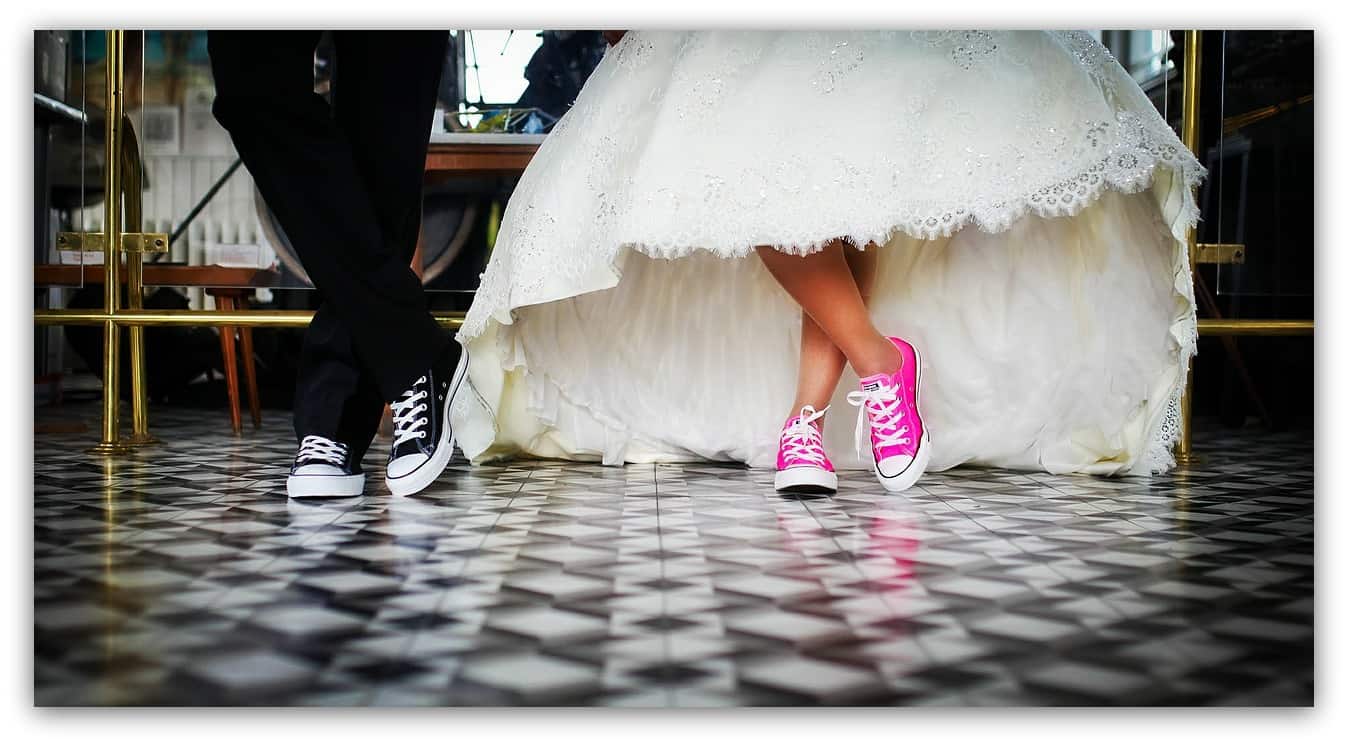
    Compare to what the average British couple spends on a wedding (Ā£20K according to Money Saving Expert…). Yet which of the two events is going to have the biggest impact on the rest of your life? I know people think of medical staff as the experts in childbirth, so they think it’s ok to just turn up and “go with the flow”. But wedding planners are the experts in weddings, and you wouldn’t just tell them “just decide everything for me”, or you wouldn’t say about your wedding “I’m just going to wing it”. Would you?

    If you want what is right for YOU, you need to find out what’s out there, what the options available are, what the stats for your local hospital are (you can find that here by the way), and much more.

    Imagine for a minute if expectant couples inĀ  the UK spent only half of what they spend on their wedding on preparing for their births? Ā Or even a quarter? The world of childbirth would change. People would be so educated, there would be more classes, more doulas, more support, everybody would find it normal, heck even maybe the NHS would get more funding if expectant couples demanded it!

    But back to the topic of this post: If you want to educate yourself about the birth (and the postnatal period too-that’s just as important), there are three main options: The DIY version (teach yourself), the group version (antenatal classes) and the one to one version (hiring a doula).

    By the way, when I am talking about preparation here I am thinking both birth and preparation for postnatal life/parenthood.

    1) The DIY option:

    glasses-and book

    What is out there if you choose to teach yourself? Well , there are countless books, scientific and lay articles, blog posts, social media groups, and so on, on the topic of birth and parenting. You can pick and choose, read at your leisure, exchange ideas with people online, the list is endless. There is a lot to read. All you need is time and dedication. There is nothing inherently wrong from this approach, and it also complements well the other two approaches below. Coming back to the wedding analogy, “DIY” weddings can be quirky and wonderful. It’s going to be the right approach for some people. But for others, it won’t be. The tricky part with self learning is that, at least at the beginning, you might not be able to discern between what is based on facts and what is merely an opinion, or just plain untrue, or not right for you. Because you do not know what you don’t know, you might miss out on important facts that you didn’t know about, or were relevant to your particular situation (the “I wish I had known…” situation). What your friends rave about may not suit you, but you may not know that until you try it so you might end up spending Ā your money on books and equipment for nothing, or you could end up buying into ideas that will actually turn out to be wrong for you and your family. The opinions you’ll get from exchanging knowledge with others are also unlikely to be unbiased, because people will tell you what worked for them or what didn’t. It might not be true for you and your baby. The costs range from free (reading online, getting books from the library etc), to quite a bit if you end up buying a lot of books and equipment. You will also need to invest a lot of time-which you may not have.


    2) The group approach

    classroom-group

    What about antenatal classes? These tend to be done in groups of various sizes, which means you might get a great social support network out of them (which is I believe one of the top reasons people sign up for them). There is a whole range out there, from NHS classes to various private classes like those provided by the NCT (which are free for low income couples by the way) and various other organisations. Some classes are generally birth and parenting knowledge based (a mix of physical emotional and practical knowledge), some focus more specifically on some aspects of birth preparation (like Hypnobirthing classes), and some are exercise and/or relaxation based (like pregnancy yoga). The exercise based classes also usually incorporate an element of discussion. Partners usually accompany you to the group classes. Private classes are usually facilitated by people who are knowledgeable about birth and parenting, and passionate about empowering parents. There is a chance to ask questions and find out about a whole bunch of information you didn’t know existed, and build your confidence. Coming back to the wedding analogy, this is the equivalent of booking in a venue that provides all the catering under one roof-there will be choice, but from a limited list. You just need to make sure you pick the right venue. Because the classes are group based, there may not be enough time to address your individual concerns and needs in the depth that would suit your needs. Your teacher might be available to answer your questions by email between classes , but won’t be available 24/7 when you need support. You can also book one to one antenatal classes. Prices range from free (NHS classes) to about Ā£200 to Ā£400 for knowledge based group classes. The time is usually something from around 6 to 16h for a course.

    3) The one to one approach

    IMG_5186 compressed with background

    What about hiring a doula? A doula is like having your own birth coach. A doula will provide truly individualised support, and guide you through the maze of conflicting information, using her intuition and the information you give her so suggest links, articles, books etc which are more likely to float your boat. She will be there to hold you and your partner’s hands every step of the way, making sure you have all the information you need, all the emotional support you need (she will always be there for you-if you have a questions or a wobble, she is only an email, text or phone call away), that you and your partner feel confident and prepared for the birth and postnatal period (out of the three options above she is also the only one who can be there to support you both DURING and AFTER the birth as well as before). She will help you write your birth preferences. Your doula will meet you in the comfort of your own home at least a couple of time during your pregnancy so you get to know her and become comfortable with her, and there is no limit on email and phone support. This is truly one to one tailored to you need support in every sense of the way. In wedding analogy terms this is like hiring a wedding planner, and everything being bespoke. I have written a specific blog about that-Ten things a doula does to prepare you for the birth of your baby. What about the costs? Hiring a doula ranges from free (couples in receipt of benefit can apply for the doula UK access fund) to around Ā£300 to Ā£400 for a mentored (newly qualified) doula, to Ā£600 to Ā£2000 for a recognised doula. The time involved is usually at least 4h to 6h of antenatal face to face time, as well as unlimited email and phone support, and support throughout the whole of your labour and birth, be it 3h or 3 days long.

    So there you have it-three options to prepare for birth and parenthood-they aren’t mutually exclusive either. But it’s good to know what is available, and what you get for your money šŸ™‚

    I know I’m biaised because I am a doula. And I also know I haven’t written any disadvantages of hiring a doula, but this is because I genuinely cannot think of any! I once was that pregnant mother myself, and I had a doula, and I know how much of a difference it made. It is difficult to describe with words, and often, mothers don’t really understand the full value of their doula after they have been doula’ed themselves. This is what led me on this path. I feel very strongly that every woman deserves a doula.

    If you feel drawn to working with me as a doula, look here. If you are a birthworker and this resonates with you-you can find the workshops I offer here.