Category: decision

  • How do we make decisions (especially difficult ones during pregnancy and birth)?

    How do we make decisions (especially difficult ones during pregnancy and birth)?

    I’ve been reflecting on the complexity of decision making lately.

    How do we make decisions , especially difficult ones, and how does this apply to pregnancy and birth?

    Let’s debunk some myths first.

    I think we naively like to believe that we make decisions in a step by step, rational, logical, maybe even scientific basis.

    You know, gathering all the facts, all the “evidence”, making sure it’s process driven etc.

    Nope.

    Our decisions are first and foremost shaped by our experience and our emotions (fear being a big one and I’ll come back to that in a minute).

    Think about it this way: your decision is like the tip of an iceberg. All you see if the decision. What you don’t see is the iceberg below, which is made of EVERY SINGLE EXPERIENCE you’ve had in your life so far.

    That’s right, everything you have experienced until now plays a role in your decision making.

    People do not make decisions ignoring their experiences, only often this isn’t a conscious process.

    Let’s say for example, something really scary happened to a friend of yours during her birth, or you witnessed a very negative experience (this includes stuff you’ve seen/read in the media).

    This is what you now associate this experience with.

    Being presented with scientific evidence showing that  is not necessarily going to shift this belief.

    It takes a lot more work than this, because exploring your own belief system isn’t a quick and easy job.

    That is why, by the way, so many women are scared about childbirth-because the media only ever portrays birth as a scary, mightily painful, life threatening like emergency.  This message has been passed onto you and built into your subconscious without you even noticing it.

    In an antenatal class I taught, there was  a father who was a medical doctor. He got very heated up when we talked about co-sleeping, stating that it was dangerous.

    The thing is, science tell us that when you remove risks factors such as consuming alcohol, taking alertness altering drugs, smoking (and as long as you make sure that the co-sleeping environment is safe and the baby is exclusively breastfed), then having a baby in your bed carries no more risks of SIDS than having your baby sleep on a separate surface-read more about it here (ISIS).

    I chatted to this dad during the coffee break and asked him what he had witnessed. He said during his training he saw 4 babies who (allegedly) died of SIDS due to co-sleeping.

    So he had integrated this belief through his experience and no amount of evidence was going to change this.

    That’s what I mean when I say experiences shape our decision making.

    What doesn’t help is that we live in a culture that has put science on some kind of impossible pedestal, and create dogmatic beliefs rather than fluid thinking.

    We also completely dismiss emotions, and instinct especially, in favour of “rational” thinking.

    Interestingly, evidence even shows that under pressure of time for example, even experts revert to gut instincts when making decisions.

    And we are more guided by our experience and emotion than by logic.

    I was chatting to male midwife Mark Harris earlier and he reminded me of a favourite topic of his: that everything we see, the world we live in, is an hallucination, because it is the product of the mental construct we have developed as children.

    If decisions about where to give birth were based on facts and logic, the majority of women would be planning to have their babies at home or in a birth centre. Not in a hospital obstetrics led unit. Because, for healthy women with uncomplicated pregnancies, there can be more risks in giving birth in an obstetric unit than in the other two settings. The odds of having a straightforward vaginal birth, for the same low risk population, are roughly 90% at home, 80% in a birth centre, and only 58% in an obstetrics unit (this was demonstrated by the birth place study).

    And yet most women are scared into believing that birth is inherently dangerous and that they must give birth next to doctors, just in case something goes wrong. Not realising that much of the “going wrong” is actually perpetuated by a risk averse, fear based, maternity system.

    Now before you start clamouring that sometimes, thing DO go wrong, let me explain this : my most important value as a doula is to make sure you feel supported in your decisions.

    My work as a doula has completely changed the way I perceive the world and people.

    As a scientist, I mostly interacted with scientists, and although they were all different, they kind of shared a lot of ways of thinking.

    Plus being a doula means I get to discuss people’s emotions and feelings a lot-something you don’t tend to do as much in a day to day science job.

    What doulaing has taught me above all, is how amazingly, fascinatingly and wonderfully different we all are.

    And that every time I think I have “sussed” someone, they throw me a curveball that goes against everything I thought I knew about them.

    Nobody fits nicely in little boxes.

    And we should celebrate out quirks.

    I have supported women who were terrified of hospitals, and for whom being at home felt like the safest option. I have also supported women who were terrified of giving birth vaginally and for whom having an elective cesarean was the safest option.

    See where I’m getting to, here?

    We are all SO DIFFERENT. I’m still learning about this and still being amazed by it every day.

    What worked for your friend might  not (and most likely isn’t) necessarily the best choice for you.

    How does all of this relate to the decision making process?

    It means that each person has their own, individual way of making decisions.

    It means that the process is incredibly complex.

    And it means, when it comes to childbirth, that only YOU know what are the right decisions for you.

    It doesn’t mean that you mustn’t look at facts and debunk myths.

    But it means that supporting you, REALLY supporting you, without an agenda, through making such important, life changing decision such as how to birth your baby, requires an incredibly sensitive, skilled person, who can help you tease out what you really want, rather than what others have led you to believe what is right for you.

    But at the end of the day, because of your personal circumstances, some options are going to feel safer than others, regardless of what the evidence says.

    And I fiercely defend your right to make your own decisions, however odd and quirky they end up being.

     

  • Slow the f*ck down-how to look after yourself after the birth of your baby

    Slow the f*ck down-how to look after yourself after the birth of your baby

    Looking after new mums recently, I’ve been reminded how the message we get from our culture is seriously wrong.

    This emphasis on “getting back to normal” is bullshit

    There is no “normal” just after you’ve had a baby.

    This isn’t a bloody race.

    Yet everything is geared towards you pretending that nothing has happened, and the most important thing is that you go back as fast as you can towards the pretence that everything is all right. Get dressed in pretty clothes, get your makeup on, get your “shape” back (don’t even get me started on that one).

    All the focus is on the baby-nobody asks the mum how she is doing and how she feels and whether she looks after herself properly.

    All the presents are for the baby.

    It’s all WRONG!

    The baby doesn’t give a fuck about the bloody stuffed bear or the endless bouquets of flowers!

    Yes those flowers sure are pretty but you can’t eat them and there are no good when your fridge is empty and you have to survive on chocolate biscuits (not that there is anything wrong with chocolate biscuits by the way-I believe all new mums deserve them, but you can’t feel well for very long without proper nutritious meals).

    I see new mums not having naps because they have too many visitors interrupting their days. New mums getting themselves overtired because they feel they have to keep going.

    You know what the secret to postpartum recovery is?

    Slow the fuck down!

    sloth with baby

    In a world that glorifies busy, it is a bit of revolutionary concept.

    Did you know that all around the world (this used to include the Western world too-we just have lost the way), new mums don’t lift a finger during the first 40 days after birth? That relatives and friends rally round to cook gorgeous restorative foods? That women just lay in bed with their baby, and that they get massaged every day, complete with cloth wrapping of the abdomen and hips?

    I’m not making it up-EVERY culture I have questioned about this has a form of that going. They haven’t lost their wisdom yet and they know that a woman who has singlehandedly grown and birthed a whole new human being needs to rest and recover from it.

    I hear you saying “but my partner only gets 2 weeks’ paternity leave-how am I supposed to do that?”.

    You need to plan for your recovery BEFORE the birth. Just like you have a birth plan, you need a postnatal recovery plan. I have already written about this here and here.

    In the first 6 weeks postpartum, you need to prioritise good eating and resting over everything else.

    If you can get help in the form of a friendly relative or two (emphasis on friendly here-you really don’t want a bossy and critical mother in law looking after you during that sensitive time), a gang of friends or a doula, great!

    If you can’t, then depending what works for you/what you can afford, plan and batch freeze easily reheated food ahead of time. Have food delivered. Hire a cleaner/ a mother’s helper. Write down your list of daily/weekly chores prior to the birth, sit down with your partner and work out what you can afford to dump or outsource during those first few weeks. Anything and anybody who can help you prioritise eating well and resting over anything else.

    Make sure you plan to have daily naps (that includes not having visitors around the time of said naps). Bring your baby to bed with you if she won’t sleep without you.

    Tell all your friends and a family about your plans.

    Tell them you intend to slow the fuck down and that you deserve it and expect them to support you.

    Shout from the rooftop what you intend to do and what they can do to support you. Someone who delivers a casserole, tidies your kitchen, folds the laundry, and looks after your baby/other kids whilst you have a long shower or a nap-is a lot more valuable to you than one who comes in, expects to be given tea and entertained, and just wants to cuddle your baby instead of looking after you.

    If you work with expectant and new mothers, please please please, spread this message around!

    My hope is that as more and more new mums realise the value of this new way of applying ancient knowledge, it will help shift our culture and more mums will have heard about it and expect it to be normal.

    If you are pregnant and feel drawn to work with me, head over here. If you are a birthworker and this resonates with you- look here.


  • Choosing love over fear as a birthworker

    Choosing love over fear as a birthworker

    heart-700141_1920

    As a doula the biggest lesson since I started supporting women has been to choose love over fear.

    I remember very early on in my doula life I witnessed a very traumatic birth -it was traumatic for the parents, and it was extremely traumatic for me. I cried for days afterwards. The mother had an unnecessary instrumental birth and I saw it all happen, and it was very shocking to witness. It was the first time I witnessed obstetric violence (if this term is new to you-it is sadly very real, and you can read about it here).

    And yet in the midst of this – I was upset, I was angry, and I hadn’t slept for 2 nights in a row, so I really wasn’t in an emotionally stable state -I was forced to make a choice between love and fear. The mother had to go to theatre and when I met the parents in the recovery room, a nurse abruptly asked who I was, and stated that there was no space and that I would have to go and wait outside. I remember vividly thinking very fast that I had two choices: challenge her by saying we had been granted the right to be there by the head of midwifery (fear), or try to win her trust (love). I heard my mentor’s voice in my head saying “when there is a midwife you don’t like in the room-try to ask yourself what you like about her”. The nurse was a big African mama -a larger than life character – and I reminded myself that I loved this kind of woman,  and I asked her where she was from, stating that I loved her accent. Curiously, in the middle of all this, my question was really genuine. She looked very surprised, and stated where she was from and saying that people didn’t usually like her accent. I restated that I loved it. She never asked me to leave after that.

    This lesson is still following me 4 years later, as I have bumped into this particular nurse on many occasions since, including last week, and every time we greet each other like old friends. I guess this wouldn’t be the case if I had chosen the fear route. I think the Universe keeps on putting her on my path so I do not forget this lesson.

    I’m not trying to gloat here- because even as I write this, I find it hard to believe that I found the strength to do this.

    But the interesting thing is that, at the time, doing this soothed my anger and upset.

    I think I needed the reminder recently. Sometimes when medical interventions happen during a birth and there is some level of emergency, and the adrenalin is high in the room, sometimes people aren’t gentle or caring and it is really hard to witness and shift out of the fear and stay grounded in love.

    I have had to remind myself that those who perpetuate violence as also victims of a system which discourages connection and kindness.

    Recently  I didn’t quite managed to stay as grounded as I would have liked because things happened too fast. I feel very protective of the mothers I doula, especially during labour and birth, and it is so difficult to be a gentle warrior and not let the anger rise through when they are treated without respect. I think that’s why I bumped into this particular nurse again.

    We have all heard Gandhi’s “be the change you want to be in the world” and Martin Luther King’s ” Darkness cannot drive out darkness; only light can do that. Hate cannot drive out hate; only love can do that.”

    This cannot be any truer than in the life of a birthworker

    As birthkeepers, especially in the midst of unkind behaviour, we cannot help those expressing this behaviour by being unkind back.

    hand


    I struggle a lot with finding the right balance with this, and I don’t always get it right.

    Some behaviours, like a doctor who attempts to examine a mother without introducing him or herself (this is, sadly quite common-according to a Birthrights survey-it happens about 20% of the time, 26% in London), I try to stop by plastering a big smile on my face, placing myself between the doctor and the mother and introducing her and her partner, then asking the doctor their name.

    It’s not easy when what I really I want to say is “who the fuck do you think you are sticking your fingers inside someone’s vagina without introducing yourself?”.

    But I don’t think it would help the doctor or the mother, or the situation much if I said that.

    So I try to stay grounded, and send positive loving energy around.

    It isn’t easy.

    Becoming a Reiki practitioner has helped highlight this for me.

    Recently at a birth, as I walked out to get some water, I saw a registrar I really dislike because I have seen her doing this not introducing business, and being brusque and callous with clients in the past.

    My client was due to have an obstetric review, and I caught myself thinking “please not her!”. Then I caught myself in that state of fear and shifted it quickly to “if she comes in, please let her be kind and gentle”. Then of course somebody else came in.

    Beside trying to positively affect energy and behaviour in the room, I also have to do some work choosing love over fear for myself. After a birth which ends in lots of interventions that the mother was hoping to avoid, I cannot help but go through some with “what ifs”, and wonder if I could have facilitated a gentler, a better outcome, if only I had done this or that sooner.

    But I am getting much better at it over the years. I catch myself into this narrative and I am able to step back, watch it, and stop it.

    I am also getting better at accepting that I haven’t “failed” by avoiding certain interventions during labour, or preventing unkind caregivers from interacting with her.

    I am slowly accepting that I am not responsible for the behaviour of those who enter her space. I am only responsible for my own behaviour, and how I choose to hold the space, and react to what I witness.

    I am getting better at catching myself going into a fear mode and giving myself a mental kick up the arse to get back into a grounded, loving state.

    I am getting better at returning myself to a peaceful state.

    I still have an enormous amount of work to do- but I am learning.

    If you are pregnant and feel drawn to work with me, head over here. If you are a birthworker and this resonates with you- look here.

  • Have you got impostor syndrome? Here’s how I dealt with mine.

    Have you got impostor syndrome? Here’s how I dealt with mine.

    Do you sometimes suffer from impostor syndrome? Do you worry that you do not know enough, that you haven’t got enough to offer?

    I’ve been reminded this week that we all have different levels of knowledge. That others know more than us and that we know more than others. This doesn’t mean that we do not have much to offer. And there is nothing to be gained by belittling each other’s levels of knowledge.

    I have suffered from impostor syndrome at every career change in my life.

    When I moved from academia to biotech, I suffered from it big time. All I knew was very specific, in depth academic knowledge, and suddenly I felt like a fraud, because my new knowledge was a lot wider and less deep. It took me I think at least a couple of years to shake that. In fact, a similar way to what I wrote in my “head versus hand knowledge” post, it took other people to point it out to me, for me to start acknowledging that what I was doing was worthwhile.

    A friend, who had stayed in the academic sector, expressed awe at the breadth of my knowledge. Another friend drew me this little cartoon he called “the field of knowledge”. It looked like this silly little drawing drawing below : the stick man at the bottom of the pit on the left of the picture is an academic, digging one deep hole. The other little stick men on the pits on the right are digging lots of little, shallower holes, but many more of them. My friend challenged me by saying: “who’s to say that one kind of knowledge is better than the others? Who’s to say that depth is better than breadth?”. This was a light bulb moment and was very grateful to this friend for giving me confidence like this.

    drawing


    Whilst still working as a scientist, I embarked on a women in science mentoring programme. At first, I was assigned a mentor, and it was a very useful, life affirming experience. But a couple of years into the programme I was asked to mentor someone myself. My first reaction was to refuse: I wasn’t qualified or experienced enough. But the programme organiser insisted so I took on a mentee, and you know what? I really enjoyed it, and so did the mentee. I think I did a good job, and I learnt a lot from the process.

    Of course I felt the same when I started working an antenatal teacher, slightly less so as a new babywearing consultant, because the profession was brand new at the time in the UK, and quite a lot when I started as a doula, then later on as a workshop facilitator. I was worried somebody would find out I was very green and call me a fraud. Now I look back and I think what a load of crap!

    For starters, knowledge takes many forms – not just the academic kind. Self learning and experience aren’t as acknowledged as academic credential in our culture, and intuitive knowledge is totally dismissed. You can only truly learn your craft by doing it. A bit like when you’ve just got your driving licence, and you find you have to really concentrate at turning the wheel, at using the clutch and looking into the mirrors. When you have had enough practice driving doesn’t feel like a tricky activity at all – in fact you can often drive lost in your thoughts, and not realise that until you have arrived at your destination.

    I have learnt a tremendous amount about myself and others, with an incredible level of depth, since I became a doula. I have learnt many skills, both practical and emotional, again by reading, attending conferences, workshops and study days. I have learnt a lot from my brilliant, supportive mentor when I was a new doula. She helped me trust myself and grow in my own way. But mostly I have learnt how to be a doula by being a doula. By watching women labour and give birth and watching how the hospital system work and drawing lessons from it.

    Since I became a workshop facilitator I have learnt yet another layer of knowledge which makes my serving of women even better. I have also learnt that I will never stop learning. And that every birth is different and not to have any preconceived ideas and expectations.

    Some coming back to the title of this post, there will always be people who know more and people who know less than you. And that’s OK. It doesn’t mean that you don’t have a lot to offer. If the journey of life is like climbing a mountain, there will always people further up and further down the path than you. And as you reach a ridge, catch your breath and reflect on how far you’ve come, you’ll see that the mountain actually carries on.

    So whichever ridge of the mountain you are standing on right now, there are people who can benefit from our knowledge and experience.

    You can help them climb up, and there are others further up who can help you climb up too.

    What matters most is that you help people go up in a way that is right for them, and that you are both honest and humble about your level of knowledge.

    By stepping into who we really are and where we are at, we are both acknowledging our own journey and helping other acknowledge theirs too.


  • There is no "one size fits all"

    There is no "one size fits all"

    right way

    This week I was asked to do a video on how the way I think about the people I work with (pregnant women, birthing and new families, and birthworkers) has changed since I started doing what I do.

    I was also asked why the transformation I facilitated in my clients means so much to me.

    The first thing that popped into my head was a bell curve, experience, and confidence.

    You see before I left science to become a doula I mostly only had theoretical knowledge about pregnancy, birth and parenthood.

    Great theoretical knowledge, yes, but theoretical nonetheless.

    Then I started working with pregnant women, their partners, and I also started to teach workshops to birthworkers.

    Over the course of the first 2 couple of years I had a revelation : Nothing is black and white, and we are all so different.

    For EVERYTHING there is a bell curve of normal. With some people at one end of the spectrum, some in the middle and some at the other end. All normal.

    I keep learning this everyday and in every aspect of my personal and professional life. I am very humbled and grateful for the learning.

    For example I get questions like “which sling do you recommend”. I don’t. They are like jeans or shoes. Try before you buy. What works for your friend may not work for you.

    Or I get asked “how soon after a caesarean can I practise the closing the bones massage”. I don’t know. Ask the mum how she feels. Of course waiting until the scar has healed might be common sense, but some mums might be ready after 2 or 3 weeks and some not after even 6. Same for slings-post caesarean, some mums feel ready to carry their babies after days, some not even after weeks. Some mums like the feeling of support that a thick, padded carrier belt on their tummy, some hate it and want nothing near there at all.

    I get the same questions about babies “when will my baby sleep through the night”? I don’t know, just like I can’t tell you at what age your baby will start to walk. Your baby is unique, like you. But I can help you work strategies to manage the sleepless nights.

    Please, try not to compare yourself to other mums, or to compare your baby to other babies. Usually it doesn’t lead to very positive feelings as we focus on what we perceive is “better” in other families.

    We are all different, and unique

    Yet many parents looks up to other parents or to parenting “experts” for answers. Professionals do the same to other, more experienced professionals.

    Often we are looking for a “magic trick” simple answer to a complex problem.

    fairy-1608684_1920

    But what if it wasn’t like that, what if we recognised we can all learn from each other, and more importantly from ourselves?

    Supporters- ask the mum how she feels, only she knows how she feels, what is comfy, what suits her. The answers are not to be provided by you but by the person you are supporting, Your role as a supporter is to help the parents find their own answers.

    This is much more powerful as support than “teaching” people your way of doing things. This is where real confidence comes from. From believing that you can, that you have the answers, that you know what is right for you and your baby.

    It doesn’t means that you can’t look at great role models and use other people’s ideas-but it means that you do so mindfully, and by making the decision yourself-not by asking someone else to tell you what to do.

    People who pretend that their “one size fits all approach” or that they have a magic trick to guarantee that you’ll have a pain free birth or that your baby will sleep through the night if you do what they say, they are talking bullshit.

    Life just doesn’t work like that.

    And when parents ask so-called well intentioned “experts” what to do-be it with books or in real life, and they can’t manage to achieve what has been suggested-they often feel like a failure.

    New parenthood is such a vulnerable period, and I am so pissed off that so many people are just cashing in to that vulnerability.

    We are all unique.

    So why do we always look for others, for “experts” to help us find the answers to our questions?

    I think our education has a lot to answer for, where from a very early age we are led to believe that the answers always lie outside ourselves.

    I know it certainly has taken me long time, and the journey out of academia and dogma to find my own ways to do things, and become confident in the process.

    I also believe our “plaster society” (put a plaster on itand hey-problem gone!) encourages us far too much to seek simple “quick fixes” behaviourist answers to complex issues that require complex and long term solutions.

    I love to support you as you take your own journey into learning to listen to your instincts, to your inner voice, finding your own answers.

    team-386673_1280

    There is no magic wand.

    What do YOU want to do?

    If you are pregnant and feel drawn to work with me, head over here. If you are a birthworker and this resonates with you- look here.

  • The con of being "overdue"

    The con of being "overdue"

    Everywhere in the West, when women reach their “due date” (I hate that term), everybody around them starts to behave like something is terribly wrong with them. And I mean EVERYONE: their medical caregivers, their family and friends, even random strangers in the street.

    “Your baby is late” “Have you had the baby yet?” “Are you STILL pregnant?” “we are booking you in for an induction” and so on.

    I know pregnant women who stop answering their phones and stay off social media because of this.

    HOW ON EARTH is that supposed to help?

    Do people think that that kind of pressure helps the woman (who is already fed up) cope with the wait? Do they think that somehow, it’s going to speed things up?

    Recently I was starkly reminded of this, when at an antenatal class reunion, a woman told me she was completely convinced that the pressure she was under, the stress her caregiver put upon her by treating her like a ticking time bomb, prevented her from going into labour. She had read the research, she was well informed, she knew the risks where small and she wanted to wait for nature to take its course and for labour to start on its own. In the end it all became too much and rather than consenting to an induction, she had an elective caesarean. But she was really angry about the way she had been treated.

    I just don’t get it.

    For labour to start, the pregnant woman needs to feel safe and as relaxed as possible (which is kind of already difficult when you’re fed up of waiting and uncomfortable), so this added pressure and stress is sure to delay things up even further.

    In my area, when you reach 42 weeks at midnight you suddenly enter the “high risk” category-which means that the birth centre is no longer available as an option-something many parents have lamented about-again after 40 weeks have passed and you are trying to stay hopeful and patient, you do not need the added pressure of knowing that your birth options will decrease unless you birth before a certain deadline.

    Babies come when they are ready to be born, and even today in our highly medicalised world, with all our cutting edge science, we can’t predict that.

    Imagine if our culture treated women who are waiting for their labour to start with the reverence and kindness they deserve? Imagine if everyone, instead of pressurising women, gave them words of encouragement, told them stories about how their own babies were “late” too, and just generally behaved like everything was normal and we just needed to wait until baby was ready? I love this article on the topic.

    The “due date” is like a curse. In the days before pregnancy tests and scans, when we had to rely on the woman’s intuition that she was pregnant and things like missing periods. People used to say something like “the baby will be born in the Spring” and nobody worried about the “date”.

    I find it very odd indeed, because EVEN FUCKING SCIENCE show us that this is still true today. The medical definition of pregnancy term is 37 to 42 weeks. That’s right, 5 WEEKS. So WHY ON EARTH aren’t women given a “due month” or a “due period” or whatever the hell they want to call it, instead of this blooming “due date” thing? The whole due date thing is based on a con anyway, on a study of just 100 women done by a Dutch doctor nearly 300 years ago, that was wrongly interpreted by American doctors. Yep you read that right, and you can read the whole story on the evidence based birth blog. And by the way, to show how ridiculous the whole “due date” thing is, just over the channel, in France, the due date is set at 41 not 40, weeks. Stats also shows us that, on average, first time mothers are much more likely to give birth at around 41 weeks than 40.

    You can tell I’m pretty pissed off right?

    Too right I am.

    First, I experienced this first hand with my first child, who arrived 16 days after this “due date”. I was lucky enough to have a very supportive midwife (at the time when case loading midwifery was still the norm in my area-so I had the same midwife throughout) who completely respected my decision to decline induction. And my family was pretty supportive too. Yet I was still given the society’s pressure. I still heard that “you’re STILL pregnant?” sentence more times than I care to count. I also recall the freaked out “get out of my shop” expression that appeared on shopkeeper’s faces when they asked when the baby was due and I said 10 days ago.

    Second, as an antenatal teacher and a doula, I have also supported plenty of couples through this challenge. And plenty of women who, in their hearts, didn’t want to be induced, but consented reluctantly because of the pressure that came from everybody else, and first of all, from their medical caregivers. And many bitterly regretted it afterwards.

    Third, my strongest desire is that pregnant women make truly informed decisions. And by pressuring them like this, we coerce them into consenting to intervention, and a decision isn’t informed if the person making it feels scared to say no. And I also find that it is very rare for women to be informed by their caregivers on the reality and the risks of induction. Yet the law is very clear that consent must be obtained, without undue pressure-read the birthrights factsheets about that.

    We don’t really know what starts labour, but what we know from research is that it’s the baby’s maturity that starts the labour process. We know that there are many hormonal processes that need to take place (from complex chemical reactions in the lungs to prepare for breathing and to reabsorb fluids afterbirth, to brain maturity, to extra storage of nutrients in the liver and much more), all of which are designed to prepare the baby for the transition to the outside world as smoothly as possible. So there is no doubt that, on many levels, it’s best for labour to start on its own, because ONLY THEN do we know that the baby is ready to be born.

    clock

    So what is the reason we have induction policies? Surely there must be some seriously strong medical evidence behind that, right? Not quite. Induction policies are partly based on myths, partly based on debatable evidence.

    The myths are twofold: one is that the placenta will start “failing” once the due date has been reached. Science tells us that it isn’t the case . In a paper called “Aging of the placenta” the author concludes that:

    “A review of the available evidence indicates that the placenta does not undergo a true aging change during pregnancy. There is, in fact, no logical reason for believing that the placenta, which is a fetal organ, should age while the other fetal organs do not: the situation in which an individual organ ages within an organism that is not aged is one which does not occur in any biological system. The persisting belief in placental aging has been based on a confusion between morphological maturation and differentiation and aging, a failure to appreciate the functional resources of the organ, and an uncritical acceptance of the overly facile concept of “placental insufficiency” as a cause of increased perinatal mortality.”

    I have written a blog called The Myth of the aging placenta. The main point I make in it is that whilst there are cellular changes in the placenta at term, we have no proof that these changes represent “aging” rather than say changes that need to happen in preparation for the birth.

    The second myth is that the baby will get “too big” and therefore more difficult to birth. Again there is no evidence that this is the case. Babies skulls mould to fit through the pelvis, and pregnant women’s pelvises, helped by the relaxin hormone, stretch and open to let the baby out.

    Interestingly as pointed out by Dr Rachel Reed, in an excellent blog post on induction risks, these two myths also contradict one another-how is the baby supposed to get so big if the placenta is failing?

    So we come to the third risk, the one behind which there is some “science” and on which the clinical guidelines are based. As explained by midwife Dr Sara Wickham, in her article “ten things I wish women knew about induction of labour” : “The post-term risk is later, lower and less preventable than people think

    Namely the induction guidelines are based on the fact that the risk of an unexplained stillbirth increases from  1 in 926 at 40 weeks, to 1 in 633 at 42 weeks. That’s it. So it goes up from 0.1% to 0.15″. You hear health professionals say that the risks doubles (which isn’t quite technically true), and this triggers a 50% image in people’s minds. We do not know what explains this increase, and interestingly, the risk at 37 weeks is 1 in 645 (pretty much the same as the risk for 42 weeks), but you don’t see everyone being offered an induction then because the risk is higher than at 40 weeks then.

    At this point I want to give a couple of disclaimers: one that I fully understand that the risks highlighted above may be unacceptable to you. And that’s fine. It’s your decision. I have no agenda, other than making sure that you have all the information you need to make that decision a truly informed one. Two is that I also have no doubt that sometimes, induction is the right course of action: if for example you are late in your pregnancy and there are signs that all is not well, or if you there is a medical condition that makes it safer for the baby to be born sooner rather than later, or even simply if your gut instinct tells you that this is the right course of action.

    What bugs me however, is that few people are given the information to make that decision in a truly informed manner. What I hear and witness as standard is women being told that they’ve been booked for an induction, without any discussion about consent having taken place. Women tell me “they didn’t let me go past 42 weeks”. The consent rests with you, and you are the one doing the allowing. But it’s kind of hard when you’re being presented the induction date as a fact (I have met many women who didn’t even realise they could decline the induction that was supposed to be “offered” to them). I have even sadly, heard plenty of stories of women, who chose to decline induction, only to be told that their baby might die if they didn’t consent.  How on earth are you supposed to be in the right frame of mind to decide when you are already feeling fed up and fragile and you hear something like that?

    thinker

    The other part of the consent discussion that doesn’t seem to take part, is that women are informed of the risks of not inducing, but they aren’t usually informed of the risks of induction. There are two risks categories in my view: 1-induction can be a long and not particularly pleasant process which limits your birth choices (this doesn’t usually get explained either), 2- induction seriously increases the risk of interventions, and in particular the risk of needing a caesarean.

    Having an induction can be very long and tiring. You get admitted to a ward, and a pessary of prostaglandins is inserted into the vagina to soften and ripen the cervix. You then have to wait for either contractions to start, or your cervix to be open enough for your waters to be broken. This can take 24h, 48h or more, during which you won’t get much sleep as you’ll be in a ward with other women being induced around you (if your local hospital offers outpatient induction, I suggest you look into this option-being at home waiting for labour to start maybe more relaxing for you). Your partner is usually sent home at night. When things process to the next level, you are transferred to the labour ward to have your waters artificially broken. Induction restricts your birthing options as only the labour ward is open to you (so no home or birth centre options-though you could choose to stay at home if you wanted to), and constant monitoring is recommended which restricts your mobility. Unless you have gone into active labour with the pessary and water breaking alone, at some point a drip of artificial oxytocin is inserted into a cannula in your hand to create contractions that mimic the pattern of active labour. There is no build up like in normal labour so many women find this harder to cope with than normal labour, and request more pain relief, which itself can result in more interventions. I have seen this process taking a long time (over another 24h) before the woman was fully dilated. Finally, if after all the induction steps have been taken and you aren’t fully dilated, or your baby doesn’t cope well with the contractions and gets distressed (induction increases the risk of the baby not coping well with labour), then the only option is a caesarean. This may happen after several days of labour. This risk is seriously increased, despite some papers claiming that induction doesn’t increase the risk of caesarean, an in depth analysis of the literature and recent research shows that induction of labour more than doubles the risk of caesarean. In my area, the rate of caesarean for first time mothers who are being induced is about 45% (compared to 28% for the general population).

    I am sorry to depict such a gloomy picture, but these are the possible realities of induced labour. Dr Rachel Reed and Dr Sara Wickham have also written excellent articles about it, if you would like to read more and access more references.

    What confuses me further is that the Cochrane review on induction states this:

    A policy of labour induction compared with expectant management is associated with fewer perinatal deaths and fewer caesarean sections (….)

    However, the absolute risk of perinatal death is small. Women should be appropriately counselled in order to make an informed choice between scheduled induction for a post-term pregnancy or monitoring without induction (or delayed induction).”

    And yet I haven’t seen this applied in practise.

    So what does that leave you with?

    Inform yourself, do your research and know what is right for you. In may go as far as suggesting you think about the possibility of your baby being late as part of your birth preferences preparation. Again in my area, over 35% of first time mothers are induced, the majority for being “overdue”. It’s much easier to negotiate your way through the medical minefield of postdates pregnancy if you have thought about it ahead of time.

    Also always remember that if you were in a real emergency situation, you would be offered a cesarean, not an induction.

    PS: I have written a “sequel” to this blog, more specifically about what happens during an induction. It’s called: “Induction of labour – do you know what you are letting yourself in for?”

    RE-PS: I also wrote another sequel/follow up to this blog in 2018 called The myth of the aging placenta

    If you are pregnant or a new mmum and feel drawn to work with me, here over here. If you are a birthworker and this resonates with you- look here.

    If you have found this blog helpful and would like to support my work and help me continue provide valuable free information to birthworkers and expectant and newborn families, you can donate to my paypal account paypal.me/SophieMessager.

    Also feel free to signup to my mailing list to receive my newsletters by using the signup form at the bottom of this page


  • Three ways to educate yourself about birth

    Three ways to educate yourself about birth

    wedding

    One of the side effects of the viral gentle caesarean video I shared last week is that I have been contacted by many women wanting to find out how to have such an caesarean, and I also received many unrelated questions from anxious pregnant women.

    It has been quite an eye opener for me, because normally I work with women who have chosen to have me as their antenatal educator or as their doula. This means that I rarely interact with women who have no such support in place.

    I know that statistically, less than 20 % of all expectant couples attend any form of antenatal education. This includes free NHS classes.

    I find this very odd, because it is a most important and one probably one of the most important transition of a couple’s life. Yet for most very little time or money is spent on preparing for it.

    I wonder if this is linked to the lack of value our culture places on parenting, but, hey that’s the subject of another (or many other blog posts) altogether.

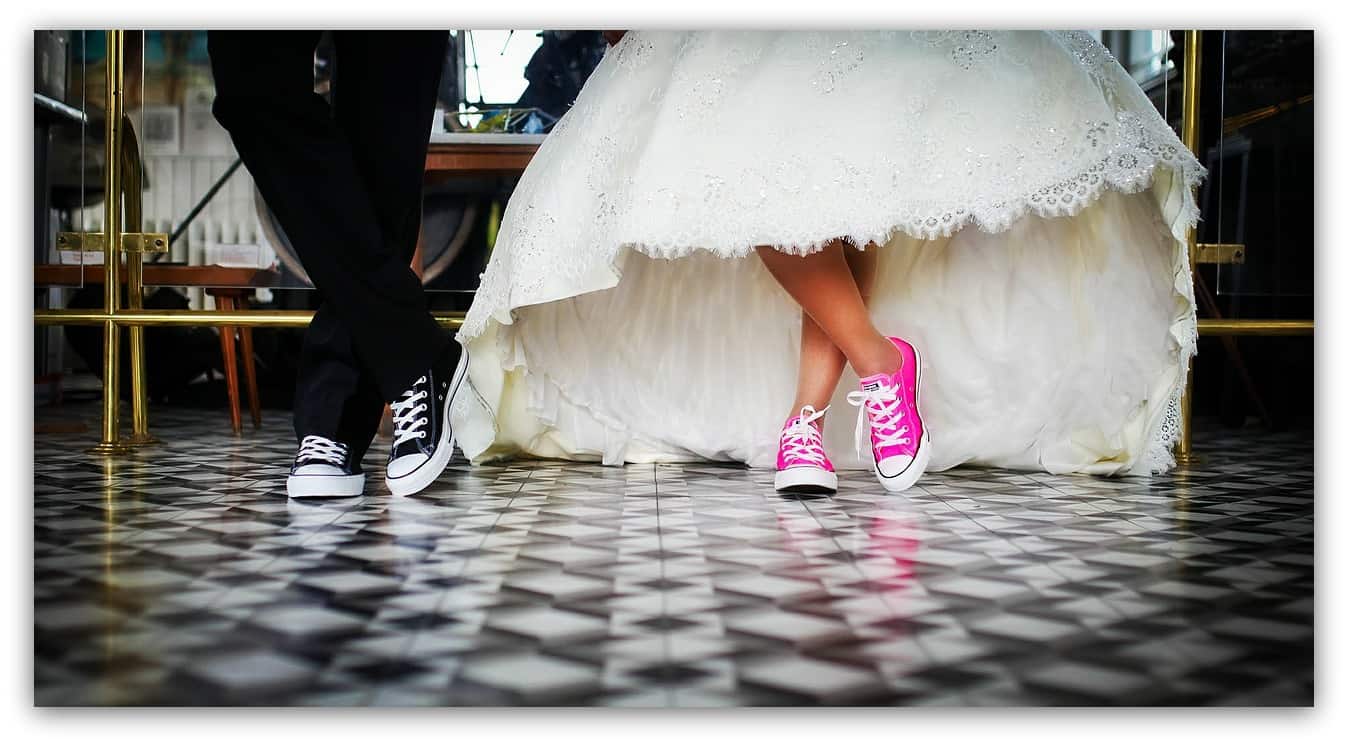
    Compare to what the average British couple spends on a wedding (£20K according to Money Saving Expert…). Yet which of the two events is going to have the biggest impact on the rest of your life? I know people think of medical staff as the experts in childbirth, so they think it’s ok to just turn up and “go with the flow”. But wedding planners are the experts in weddings, and you wouldn’t just tell them “just decide everything for me”, or you wouldn’t say about your wedding “I’m just going to wing it”. Would you?

    If you want what is right for YOU, you need to find out what’s out there, what the options available are, what the stats for your local hospital are (you can find that here by the way), and much more.

    Imagine for a minute if expectant couples in  the UK spent only half of what they spend on their wedding on preparing for their births?  Or even a quarter? The world of childbirth would change. People would be so educated, there would be more classes, more doulas, more support, everybody would find it normal, heck even maybe the NHS would get more funding if expectant couples demanded it!

    But back to the topic of this post: If you want to educate yourself about the birth (and the postnatal period too-that’s just as important), there are three main options: The DIY version (teach yourself), the group version (antenatal classes) and the one to one version (hiring a doula).

    By the way, when I am talking about preparation here I am thinking both birth and preparation for postnatal life/parenthood.

    1) The DIY option:

    glasses-and book

    What is out there if you choose to teach yourself? Well , there are countless books, scientific and lay articles, blog posts, social media groups, and so on, on the topic of birth and parenting. You can pick and choose, read at your leisure, exchange ideas with people online, the list is endless. There is a lot to read. All you need is time and dedication. There is nothing inherently wrong from this approach, and it also complements well the other two approaches below. Coming back to the wedding analogy, “DIY” weddings can be quirky and wonderful. It’s going to be the right approach for some people. But for others, it won’t be. The tricky part with self learning is that, at least at the beginning, you might not be able to discern between what is based on facts and what is merely an opinion, or just plain untrue, or not right for you. Because you do not know what you don’t know, you might miss out on important facts that you didn’t know about, or were relevant to your particular situation (the “I wish I had known…” situation). What your friends rave about may not suit you, but you may not know that until you try it so you might end up spending  your money on books and equipment for nothing, or you could end up buying into ideas that will actually turn out to be wrong for you and your family. The opinions you’ll get from exchanging knowledge with others are also unlikely to be unbiased, because people will tell you what worked for them or what didn’t. It might not be true for you and your baby. The costs range from free (reading online, getting books from the library etc), to quite a bit if you end up buying a lot of books and equipment. You will also need to invest a lot of time-which you may not have.


    2) The group approach

    classroom-group

    What about antenatal classes? These tend to be done in groups of various sizes, which means you might get a great social support network out of them (which is I believe one of the top reasons people sign up for them). There is a whole range out there, from NHS classes to various private classes like those provided by the NCT (which are free for low income couples by the way) and various other organisations. Some classes are generally birth and parenting knowledge based (a mix of physical emotional and practical knowledge), some focus more specifically on some aspects of birth preparation (like Hypnobirthing classes), and some are exercise and/or relaxation based (like pregnancy yoga). The exercise based classes also usually incorporate an element of discussion. Partners usually accompany you to the group classes. Private classes are usually facilitated by people who are knowledgeable about birth and parenting, and passionate about empowering parents. There is a chance to ask questions and find out about a whole bunch of information you didn’t know existed, and build your confidence. Coming back to the wedding analogy, this is the equivalent of booking in a venue that provides all the catering under one roof-there will be choice, but from a limited list. You just need to make sure you pick the right venue. Because the classes are group based, there may not be enough time to address your individual concerns and needs in the depth that would suit your needs. Your teacher might be available to answer your questions by email between classes , but won’t be available 24/7 when you need support. You can also book one to one antenatal classes. Prices range from free (NHS classes) to about £200 to £400 for knowledge based group classes. The time is usually something from around 6 to 16h for a course.

    3) The one to one approach

    IMG_5186 compressed with background

    What about hiring a doula? A doula is like having your own birth coach. A doula will provide truly individualised support, and guide you through the maze of conflicting information, using her intuition and the information you give her so suggest links, articles, books etc which are more likely to float your boat. She will be there to hold you and your partner’s hands every step of the way, making sure you have all the information you need, all the emotional support you need (she will always be there for you-if you have a questions or a wobble, she is only an email, text or phone call away), that you and your partner feel confident and prepared for the birth and postnatal period (out of the three options above she is also the only one who can be there to support you both DURING and AFTER the birth as well as before). She will help you write your birth preferences. Your doula will meet you in the comfort of your own home at least a couple of time during your pregnancy so you get to know her and become comfortable with her, and there is no limit on email and phone support. This is truly one to one tailored to you need support in every sense of the way. In wedding analogy terms this is like hiring a wedding planner, and everything being bespoke. I have written a specific blog about that-Ten things a doula does to prepare you for the birth of your baby. What about the costs? Hiring a doula ranges from free (couples in receipt of benefit can apply for the doula UK access fund) to around £300 to £400 for a mentored (newly qualified) doula, to £600 to £2000 for a recognised doula. The time involved is usually at least 4h to 6h of antenatal face to face time, as well as unlimited email and phone support, and support throughout the whole of your labour and birth, be it 3h or 3 days long.

    So there you have it-three options to prepare for birth and parenthood-they aren’t mutually exclusive either. But it’s good to know what is available, and what you get for your money 🙂

    I know I’m biaised because I am a doula. And I also know I haven’t written any disadvantages of hiring a doula, but this is because I genuinely cannot think of any! I once was that pregnant mother myself, and I had a doula, and I know how much of a difference it made. It is difficult to describe with words, and often, mothers don’t really understand the full value of their doula after they have been doula’ed themselves. This is what led me on this path. I feel very strongly that every woman deserves a doula.

    If you feel drawn to working with me as a doula, look here. If you are a birthworker and this resonates with you-you can find the workshops I offer here.

  • Why you may want to have a plan C (for caesarean) in your birth preferences

    Why you may want to have a plan C (for caesarean) in your birth preferences

    right way

    When I support couples antenatally, I always encourage them to write a birth preferences document. I do not like the word “plan” because if a plan goes to pot, then you’ve left with nothing (I love this article on the topic).

    I liken writing your birth preferences to going out for diner in a restaurant: you need to see what’s on offer before you can decide whether you fancy a set menu, a la carte, or just a starter and a pudding. If you don’t see the menu, you just get given the dish of the day, which might not suit your tastes at all.

    Similarly, I like to remind parents that the people working in the restaurant are there to serve them, not to serve themselves.

    I sometimes meet resistance from parents who say that you cannot plan birth, and that they would prefer not to have one in case they end up disappointed. I understand that point of view, which is why I like to suggest to parents that they have a plan A, a plan B, and a plan C, as part of their birth preferences. It isn’t a box ticking exercise by the way, it is the process of thinking about all the options and writing them down which is useful. The midst of labour, when you might have been awake for hours and maybe stressed as well as tired, isn’t the best time to weigh up options about interventions you have never heard about.

    menu

    It also helps your medical caregivers, who you will be meeting for the first time during your labour, to establish rapport with you and know how best to support you.

    Again going back to the restaurant analogy, if you came to dinner at my house and you hadn’t told me you were vegetarian, and I had cooked a beef stew, this wouldn’t be great for you, but this wouldn’t be comfy for me either.

    So plan A might be your ideal birth scenario: for example a natural birth, in a low key tech environment (home or a birth centre), using a birth pool and/or relaxation and breathing techniques for comfort (this is just an example by the way-I have been in the birth field long enough to know that birth prefs are like marmite and that one woman’s dream plan may be a low key vaginal birth and another a planned caesarean, and this is totally fine by me).

    Plan B might be looking at things like: what if your labour is induced, what if you have complications that require you to be in the obstetric unit and have constant fetal monitoring, what if you need an epidural, what is your baby needs instrumental help being born. By looking at the interventions and the scientific evidence behind them you will truly be able to make an informed decision about what is right for you.

    Plan C covers what you might want to think about if you baby needs to be born by caesarean, be it planned or during labour (the term “emergency caesarean” is the biggest misnomer of all times-it conjures an imagine of blue lights flashing and medical people running down corridors, when most of the time(crash sections are very rare) is it decided calmly and takes more than 30 min or so to setup-it should really be called an “in labour ” caesarean), what may happen in the few hours after birth and what recovery might look like. Again there are many options, for example you can ask for the cord clamping to be delayed so that your baby received an optimal level of blood, you can have skin to skin in theatre and even feed your baby then if you want to. This is known as a “natural caesarean” (watch the video here, and here is a brilliant natural cesarean birth preferences blog post by doula Lindsey Middlemiss) and if you do not know about it then you might be given the type of caesarean that your obstetrician is used to performing, which might be different.

    It is something I find tricky to navigate and completely follow the couple’s lead, because I am also aware of the school of thought that by talking about interventions, you are also prepping your mind for it (if I say “don’t think of a tree-what pops into your mind?), but I am also aware that our current maternity statistics have very high intervention rates (the UK caesarean rate for 2014/15 is 26.5% which means that 1 in 4 woman is likely to have a caesarean), and that it is therefore realistic to prepare for this eventuality.

    I remember supporting a couple who had planned a birth centre water birth. When after pushing for a long time there was no sign of baby and it became obvious baby needed to be born by caesarean, they had a part of their birth preferences covering that. They had the kindest doctor, who took the time to read their preferences and facilitated most of it. Later on the mother told me how much she had hated writing this part of the document because she didn’t want to entertain the idea that her baby would be born by caesarean , but that when it came to it, she felt that she had a positive birth experience because of it.

    The main reason behind the planning and the thinking is that research shows that it isn’t how the birth unfolds, it isn’t how the baby ends up being born that makes a positive birth experience or not. It is HOW THE PARENTS WERE MADE TO FEEL during the experience. The parents who feel respected, treated with kindness, and with whom the decision making process is shared with their medical caregivers, tend to have a positive birth experience regardless of the process.
    idea

  • The slow disappearance of homebirth services,  the erosion of women’s choices and the need for respect and kindness.

    The slow disappearance of homebirth services, the erosion of women’s choices and the need for respect and kindness.

    change-

    This week I received an invitation to a group called “save our homebirth team”.

    It broke my heart, because this a campaign against the disappearance of the dedicated homebirth team in Peterborough.

    Peterborough is one of the few trusts in the UK that still has a dedicated homebirth team.

    This means that there is a group of midwives there who are not only confident and skilled at supporting homebirths, but when a couple books a homebirth, the team arranges for them to meet every single one of the midwives in the team. This ensures that they actually know the midwives who are going to come and support them during their birth. How awesome is that?

    Nowadays in my antenatal classes, I mostly hear stories of women telling me that they rarely see the same midwife twice during their pregnancy. They say the appointments feel like box ticking exercises, and that they don’t trust the midwives they meet. Why would they? How do you trust someone you don’t know?

    It didn’t used to be like this.

    Ten years ago when I was pregnant with my son, Cambridge used to have a caseloading community midwifery team. During my pregnancy I saw the same midwife at every appointment (and the appointments were about 20 min long). She came to visit me at home a couple of times, and when I was in labour, as she was on call then, she came and supported me through the birth. I didn’t quite realise how lucky I had been to have this kind of continuity of care. My midwife was also very experienced, reassuring, and confident enough in her own practise to fully support my decision to refuse an induction (My son was born at home 16 days after his “due date”).

    Three years later when I was pregnant with my second child, I had started my childbirth educator and doula journey and I felt I couldn’t take the risk of having a stranger turning up at my birth, so I hired independent midwives. It makes me so sad to think that not all the women who psychologically need this kind of care can afford independent midwives.

    We know for a fact that continuity of care leads to better outcomes for mothers and babies. Beside the science backing this up, it makes sense, right? How on earth is a midwife going to know a pregnant mother is out of sorts, or more swollen than usual, or any other mental or physical signs are off, if she has never met her before?

    We know that mothers prefer it, and that staff prefer it too, if they are adequately supported, with caseloads that are appropriately sized.

    The trend towards team midwifery and lack of continuity of care is worrying enough, but I am now seeing a more worrying trend: the looming disappearance of homebirth services.

    Kings Lynn’s hospital stopped providing a homebirth service a few years ago – this has been the object of a campaign called Birthplace Matters (the brainchild of doula Paula Cleary)  which has resulted in the Trust being criticised by the Ombudsman for its inadequate provision for choice of place of birth but has sadly not yet resulted in the reinstatement of services.

    In Cambridge, where I live, we used to have a higher than average homebirth rate. When I started working as antenatal teacher in 2010 it was 6%, well above the 1% national average. In my antenatal classes, I used to have a homebirth couple in almost every class. Now it’s more like one or two per year (running monthly classes).

    Since the local birth centre opened in 2012, the homebirth rate has steadily decreased to about 1%. This is partly due to the birth centre attracting potential homebirth couples, but I believe it’s also down to a lack of commitment to promoting homebirth from the local NHS trust.

    Until last year we were lucky enough to have a fairly healthy homebirth service; whilst we heard stories of women being refused a homebirth in other parts of the country, it didn’t seem to happen here.

    It all started to change last October, when a pilot was put in place at the local hospital. Instead of having two community midwives on call for homebirth at night, there is one, working an ordinary shift in the hospital.

    Since then, several things have happened.

    Couples planning homebirths have received letters telling them that the trust cannot guarantee a midwife will be available to support them at home. Whilst I understand that the hospital needs to be honest with women so they can make informed decisions, women booking hospital births are not being officially notified that the hospital may be short staffed or even closed when they go into labour.

    The trust even has a statement about this on their website

    The maternity service at the Rosie supports home births however it is acknowledged that at times this will not possible due to staffing and/or workload both within the hospital and/ or community. Should it not be possible to support a homebirth then a woman in labour will be asked to attend the Rosie(or if on divert to a neighbouring unit ) where there is a midwife available to care for her. In the event of a labouring woman being unable to make her way in or declining to attend and the unit is unable to attend the birth at home then an ambulance will be sent to facilitate transfer to a unit where a midwife is available to provide care.”

    As you can imagine the recipients of this letter were very distressed, and the statement above doesn’t exactly inspire confidence to potential homebirth parents. You can read more about that here.

    Since the change has happened, I have heard several stories of births for which a midwife wasn’t available and how distressing this was for the mother in labour.

    In my antenatal classes, I have also heard stories of disgruntled couples who were in the birth centre, then their midwife told them she had to leave because she had to attend a homebirth. This gave parents the impression that a homebirth was more important than them.  I wish different language had been used. For example, the midwife could have explained that she was community based and if a call came from the community she may have to go.

    I just do not understand the logic.

    I know the NHS finances are in a terrible state, but when the Birthplace study shows us that homebirths are significantly cheaper than hospital births, (and also that homebirth is very nearly as safe for healthy first time mothers at home than in hospital, and safer for second time mothers), that homebirth are less likely to result in costly interventions, when the NICE guidelines were changed last year to reflect this, surely there should be a concerted effort to INCREASE the homebirth service and to actively promote it rather than trying to scrap it?

    Yet it seems that the opposite is happening.

    I am by no means trying to say that everybody should birth at home by the way. I have been in the birth field for long enough to know individual perceived safety is, and that women should birth where they feel the safest. For some it’s at home, for some in a birth centre, for others in an obstetric unit. I have no issues with that.

    What I have issues with, however, is that women appear to be having their choices restricted.  It is paramount that these choices are respected, not just because many women prefer to birth outside the hospital but because for many women, it really is the only psychologically healthy option for them.

    Asking some women to go to hospital is like asking a soldier to return to the battlefield that caused his shellshock.

    I believe that women cannot make fully informed choices when they aren’t informed of all the options, their pros and cons (teaching antenatal classes for the last 5 years have showed me how many misconceptions people have about the safety of homebirth), and also being confident that the option they choose will be available.

    For homebirth to become normal like it is in some countries like Holland, or even some parts of the UK where the homebirth rate is closer to 10%, there needs to be a concerted effort from the NHS to promote it as a valid choice.

    Legally, where we choose to give birth in the UK doesn’t fall under the remit of maternity care, it falls under the remit of human rights.

    Some countries in Europe, in particular Hungary, have banned homebirth. In 2010, a Hungarian homebirthing woman called Anna Ternovsky challenged her country in the European court of human rights, and won the case. The court ruled that meaningful choice in childbirth is a human rights issue, and that birthing women are the ultimate decision-makers regarding the circumstances in which they birth their babies. You can read more about women’s rights in childbirth on the Birthrights website.

    Beside the decrease of women’s birthing options, I am also seeing a worrying trend towards disrespect of women’s choices within the health system in general. I see a lot of coercion. I hear a lot of “do as you’re told, or else”. This week I was told of a new mother who was threatened with a report to social services when she tried to discharge herself from the hospital against medical advice. Earlier this year a client of mine chose to go home to wait for labour to start on its own rather than consenting to induction, and was told by the midwife as she left “I hope you don’t have a stillbirth during the night”. Another one wanted to wait for labour too and was also told “your baby might die”.

    Health professionals, I just don’t get it.

    I know you want what you think is the best for the mother, but do you think for one second that the mother doesn’t have the best interests of her unborn child at heart?

    Do you think there is any mother in the world who is going to put her unborn baby willingly at risk of injury or death?

    Do you realise you are in breach of your own code of conduct?

    The code of conduct of doctors and midwives in this country is very clear on consent. The GMC guidance states that:

    ” You must respect a patient’s decision to refuse an investigation or treatment, even if you think their decision is wrong or irrational. You should explain your concerns clearly to the patient and outline the possible consequences of their decision. You must not, however, put pressure on a patient to accept your advice.”

    doctor

    Very clear right? Only I wish I witnessed it more often. From time to time I meet a refreshing doctor or midwife who really gets it. But they are a minority. It’s so unusual that I am in awe of them. I always mention it to the person in question how impressed I am by their bedside manner. What I see, most of the time, are various shades of coercion. Sometimes it’s gentle and well meaning, but it’s still coercion. What I believe happens is that most patients are compliant with medical advice and do not question things. Therefore I assume that medical professionals are used to this behaviour, and few get to hone and practise informed decision making on a regular basis. I also believe that the fear of judgement from peers and the fear of litigation, has a lot to answer for.

    The other problem is that clinical guidelines and hospital policies are based on a population. They have to be. But you, an individual pregnant mother, are not the population. You are an individual, and as such you deserve an individualised plan of care.

    I appreciate the words above are potentially upsetting. I am not writing this to cause upset.

    I am writing this because I hope expectant and new mothers read this  and that it helps them make more informed decisions.

    I am writing this because I hope more expectant and new mothers can receive nurturing, individualised care.

    I am writing this because I want to see more respect and kindness within maternity services.

    kindness-620

    I do not believe the system will change through people like me. I have been trying to make positive change happen for the last 5 years, by being a lay member of my local maternity liaison service committee and bending the ear of every health professional who will listen, with little results.

    What I have seen however, is system changes happening when the people who use it (pregnant and new mothers) demanded it.

    If you are pregnant, attend antenatal education, inform yourself about your birth and postnatal options, reach out to other mothers and to birthworkers and build up your knowledge so you can make the truly informed decisions that are right for YOU.

    If you work with expectant parents, help them feel empowered enough to challenge the decisions that don’t feel right for them.

    The more people challenge things, the faster it will change.