
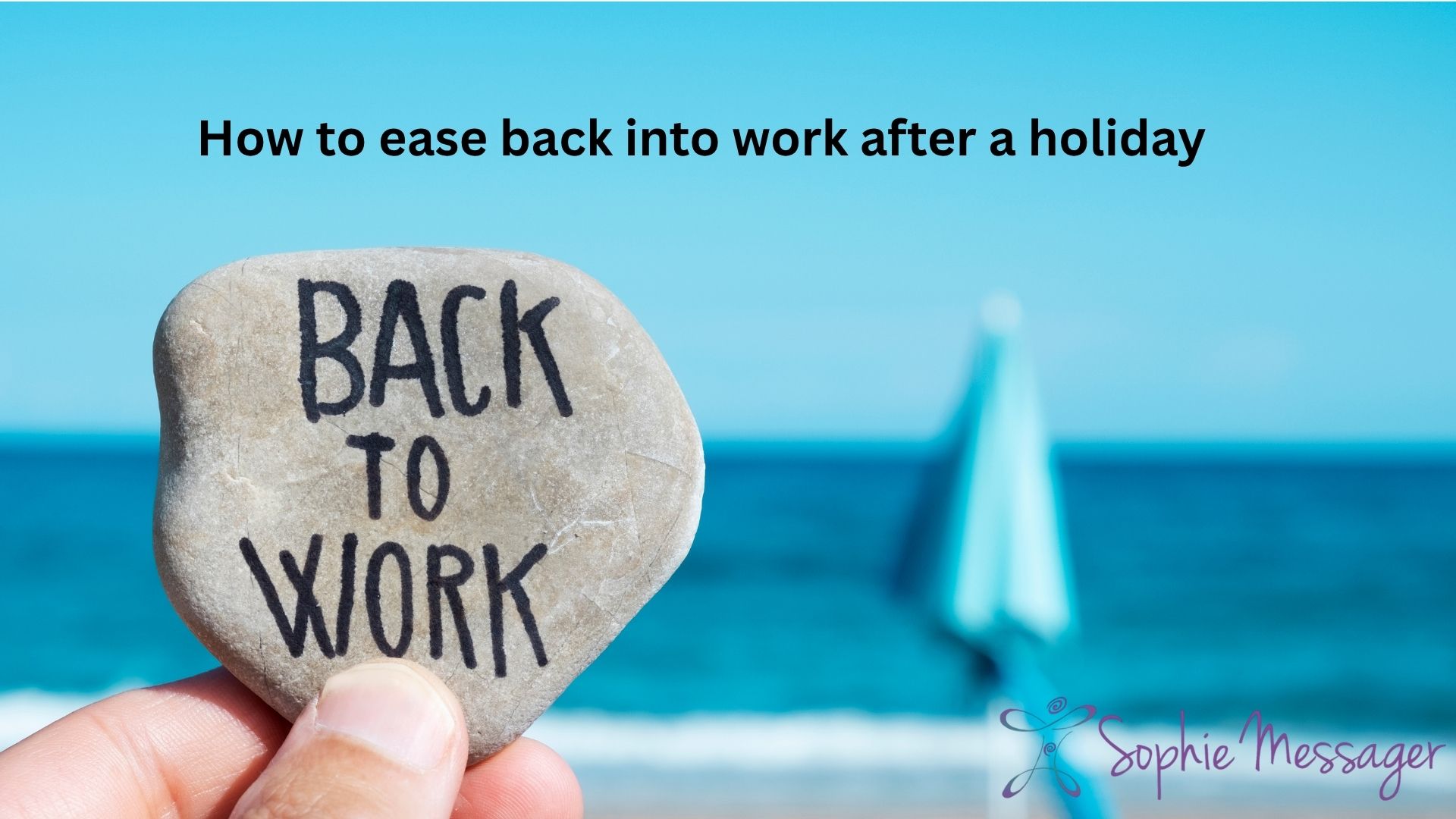
If you are returning to work this week after a holiday like I am, you might notice that getting back into work can feel overwhelming, with the change of pace, the accumulated emails and tasks that need to be attended to….
I used to struggle massively with this transition, but I’ve now got a way to have a slower, less stressful return.
Here I share my journey from pressured catch-up to mindful re-entry, and how you can transform the post-holiday dread into a gentle, productive glide back into work.
The importance of a slow re-entry
Monday (yes it was a UK bank holiday but self employed make these irrelevant to me) was my first day at work after spending 2 weeks in the South of France the last 2 weeks of August. I had pre-planned this by writing down a list of important tasks to do on my return. And instead of waiting for Monday evening, I spent an hour on Sunday afternoon looking at the coming week with a slow re-entry in mind (ie only doing what absolutely needs to be done).
I did not do much work at all on Monday, and very little on Tuesday, only starting to slowly get back into a normal routine by Wednesday. This is a process I have been refining for about 5 years now. Does it completely erase the resistance? No. Sitting at my desk on the first Monday after my holiday and there was still a fair amount of it. But not adding extra pressure, and accepting that this is normal, and human, is key. Since I became self-employed 14 years ago, I had to learn the hard way that removing pressure upon return was essential.
My holiday experience
Truly clocking off during my holiday is made easier by the fact that I learnt several years ago to mitigate the loss of income on holiday by promoting my courses and workshops ahead of breaks (so I can enjoy my holiday without worrying about making enough money to cover my outgoings that month). Before my holiday I ran a well-attended online workshop, and quite a few people there went on to join one of my trainings.
I have had a VA for 3 years. She takes care of clients & emails whilst I’m away. For example, one evening I saw an email from someone who needed a document for a course, I made a mental note to reply the next day. When I woke up I saw that my VA had already sent them the form they needed. This is priceless support for me and I’m very grateful to have it. Some of the support is free through my access to work grant.
I had a lovely relaxing time in France, hanging out with my family. Leisurely mornings, swimming in the sea, in lakes, rivers, and pools. Coffee and pastries in cafes after early morning swims. I loved staying somewhere by the sea where everything could be done on foot. I read a bunch of books (The Island of Sea Women was brilliant, and so was Burn the Haystack). I drummed and sang. I watched French movies. I took afternoon naps. I visited markets. We played games, went on boat trips in the bay where we stayed, and to see new places, including the biggest sand dune in Europe (it’s impressive, 100 meter high, look up Dune du Pilat if you want to see) at sunset.
Slowing down, with little agenda and being led by what my heart wants to do is very good for my soul.
The challenge of returning to work
Even though I love what I do, I always find the change of pace after coming back from a break challenging.
In the past, I used to try to get myself back into full speed work instantly, and when that didn’t work, I tried to mentally flog myself back into instant productivity mode. Not only did this not work, but it added unnecessary stress, a double layer of negative pressure and self-judgement to an already uncomfortable situation.
My approach to returning to work now
Now, I purposefully plan for 2 or 3 days of slow re-entry. I plan my return ahead of time, writing a list of everything I’ll need to do when I get back from my break, because it stops me worrying I’ll miss important things. Being clear that nothing intense or extra challenging is taking place immediately when I’m back also helps avoid overwhelm.
The first day, all I ask of myself to do is mostly planning what needs to be done. Then I slowly increase the amount of work whilst carefully gauging whether I’m OK to do this amount yet. Instead of berating myself, I take notice of my energy, and I remind myself that this is human and normal and that being gentle and taking it slow is the wise way to go about it.
Because of the way resistance works, as soon as I give myself permission to take things slowly, my nervous system relaxes, the resistance eases, and as if by magic, I no longer feel the desire to avoid work. It’s like reverse psychology.
Tips for a gentle re-rentry
I’ve been writing about self-care as a solopreneur for over 10 years, you can read my first article about this here.
Here’s a collection of other articles about self-care, gentleness and self-kindness I’ve written over the years:
- How I went from overwhelm to joyful productivity and authentic marketing
- Feeling overwhelmed or stuck? Some easy ways to resolve the issue.
- Getting out of overwhelm
- Today I give myself permission to do nothing
- ADHD hacks: the tricks I use to overcome procrastination and actually get sh*t done
- Unseen Brilliance: ADHD, Witnessing Your Gifts, and Empowering Others to See Theirs
- Have you got impostor syndrome? Here’s how I dealt with mine
- Stressed? Overwhelmed? Try grounding
- Do you long for more sacredness in your life?
Key takeaways:
- Recognise the importance of real breaks from work, especially if you are self-employed (I was an employee for 20 years before starting to work for myself and it was much easier to switch off as an employee).
- Pre-plan for dealing with lower income during holiday months by running events that bring income before and after the holiday.
- Delegate tasks when possible (hiring a VA) to truly disconnect during time off
- Plan a gradual re-entry to work
- Plan your return ahead of time, listing tasks to be able to see what is really important
- Start with a day of just planning, removing all pressure to accomplish other tasks on that day
- Slowly increase workload while paying attention to your mood and energy levels
- Replace self-criticism with gentle self-talk and understanding
- Remember that a mindful, gradual return often leads to better productivity in the long run
- Experiment and continue to refine your re-entry process based on what works best for you
Disclaimer:
This is what works for me. It’s not a magic bullet, or a universal method. It’s what I have learnt over many years of trying many things, including several things that REALLY didn’t work for me. I hate approaches that pretend that one magic trick works for everyone. When people try stuff from “experts” who claim to have all the answers and it doesn’t work for them, people tend to blame themselves and feel even more inadequate. Try stuff, if it works for you great, if it doesn’t try something else.
Conclusion
Embracing a slow, intentional return to work isn’t just about easing stress, it’s also about honouring the reset and relaxation you’ve gained from your time off. By giving yourself permission to ease back in gently, you’re likely to find yourself more productive and calm. It’s not about how quickly you can jump back in, but how kindly and realistically you can transition.
Next time you return from a break, try this approach. Your future self will thank you!
What strategies do you use to make your return to work easier? I’d love to hear your thoughts and experiences in the comments below.
If slowing down and listening to your body is something you want more support with, this is exactly what I love to help women to do, and you can find out more here