Tag: drumming

  • Medicine of the Land: the story of a new drum

    Medicine of the Land: the story of a new drum

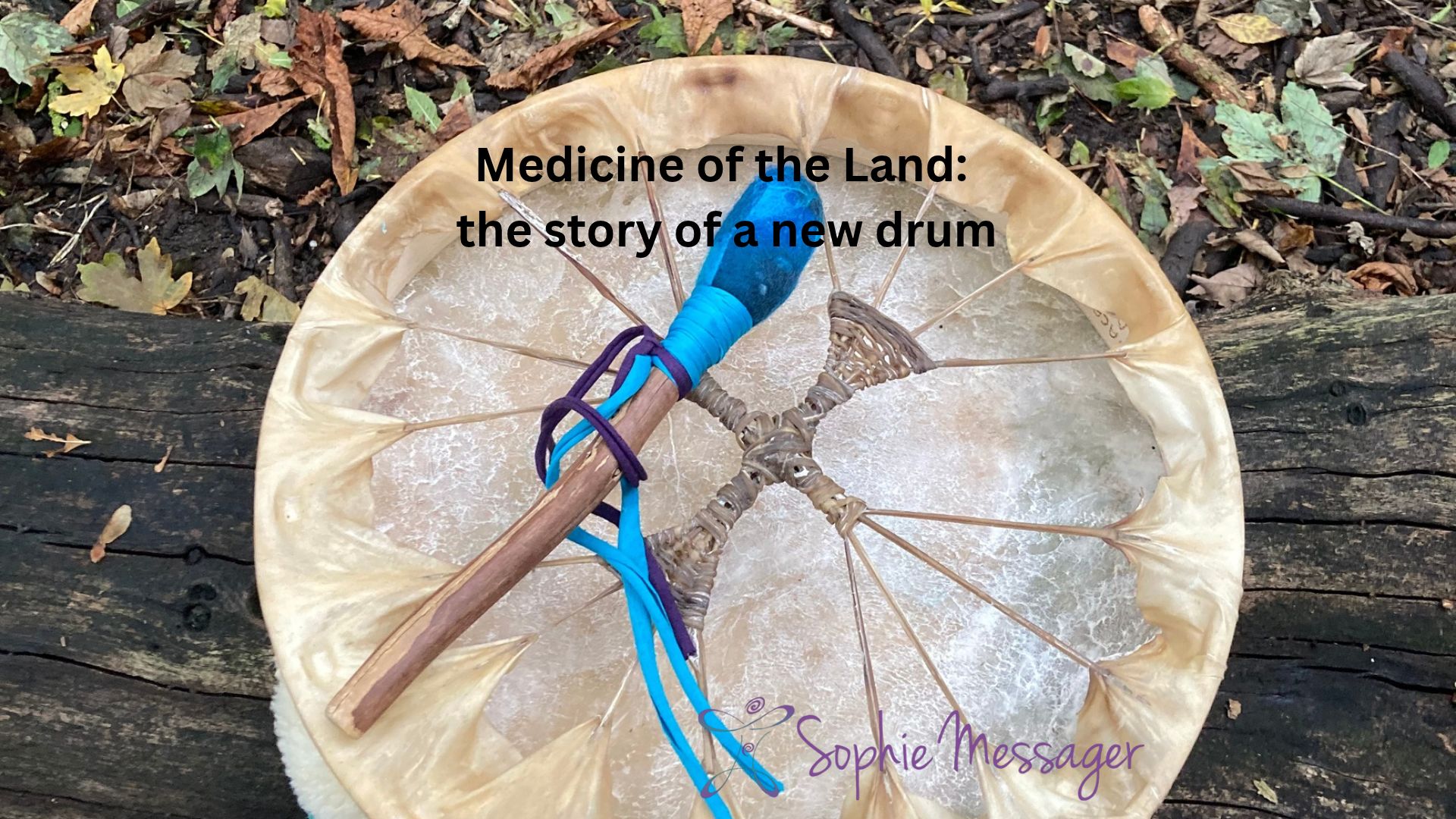
    Last week I made a drum. I’ve made several drums over the last 10 years, but this one was different. She took six months to come into being. It involved a lot of waiting, a lot of learning, several wells and springs, and meeting women I would not have met otherwise. Her name is Medicine of the Land, and this is her story so far.

    It’s also the story of how I am slowly preparing to teach drum making in a new way: using hides from local deer, and connected to the land and the waters where I live.

    So many of the places and people in this story came to me through the drum.

    The pull towards water

    Early in the year, I started feeling the pull of being near sacred springs and waters. I first visited the springs in Ashwell, which is the source of the river Cam in which I have been swimming all year round for the last 8 years. I have always had a deep affinity for water.

    Learning to make rawhide
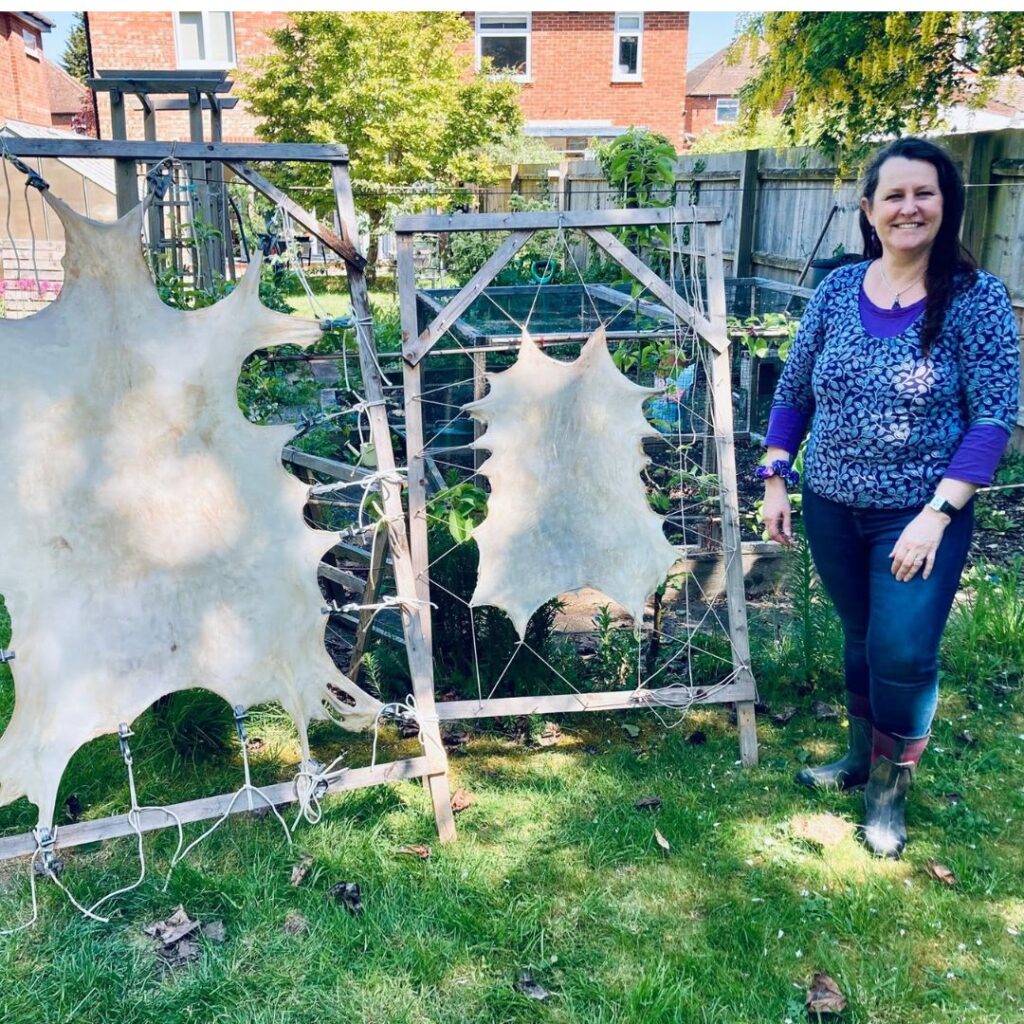
    In the spring, I learnt to process local deer hides into rawhide for making drums, under the gentle guidance of local tanner Jess Peace. I processed four hides over 3 weeks, two fallows and two muntjacs, both from the land where I live near Cambridge.

    I found it a welcome slow and deeply meditative process. I loved reconnecting with ancestral skills this way, and whilst doing the prep I had a strong feeling of déjà vu. It felt important to have done this myself before getting ready to teach women how to make drums.

    I also got a tanned fallow hide from Jess to use on an altar when I would start making drums with women.

    The download

    In June, whilst drumming at home, I received clear guidance. I needed to take women to drum and make drums at sacred water sites on the land I live on. Not far away, not somewhere famous, just close to where I live, within a 30 min drive radius of my home. That way women can connect with the land they live in, and stop believing that magical land connection only happens in faraway “special” lands.

    I’ve taken women drumming on sacred sites close to where I live for a few years, but this was something new. This was a pull towards the waters.

    Clearing the spring

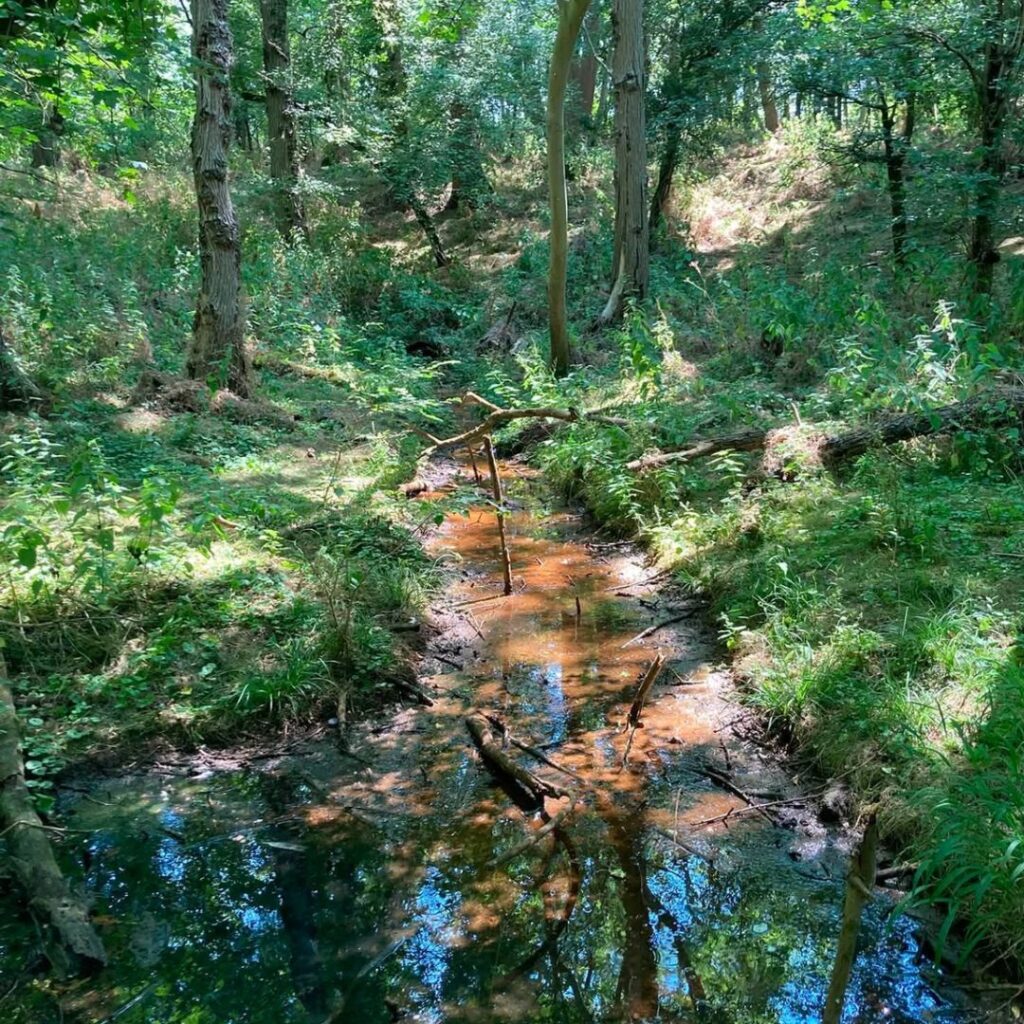
    Soon after, I did something really special with a small group of friends. We cleared a small natural spring in my local nature reserve so it could flow again. After we worked, removing stagnant water, mud, sticks and rocks, we sang and drummed, and created a small shrine, the little stream of chalk stream water became crystal clear, flowing freely and started making a beautiful little tinkly sound. We made a little shrine and honoured it with drums, bells and songs.

    One spring leads to another
    When I shared about the spring clearing online, it connected with several women I had never heard off, who are also being guided to connect and work with the waters and the drum.

    One of them is Charlotte Emily Rose, who clears wells in Ireland. We swapped our books (hers is a stunning illustrated one, called Well-being). I was invited to drum with a group of people to honour St Helen’s Well in Thetford Forest. And I also met Charmaine Porter, and we went together to honour a hidden red well I had been wanting to visit for 2 years, which is in a woodland only about 25 minutes from my home. The first time I went there, on a hot 30 degrees day in July,  I was amazed by how wild the space felt, like nothing I had seen around Cambridge, and how magical and soothing the energy felt there. I loved it so much I ended up staying there for 2h, alone, feeling my whole nervous system exhale, and feeling a sense of deep peace within. I also found a green woodpecker feather and a buzzard feather that day. I have visited this place about 5 times since, including with others.

    Learning to make hoops
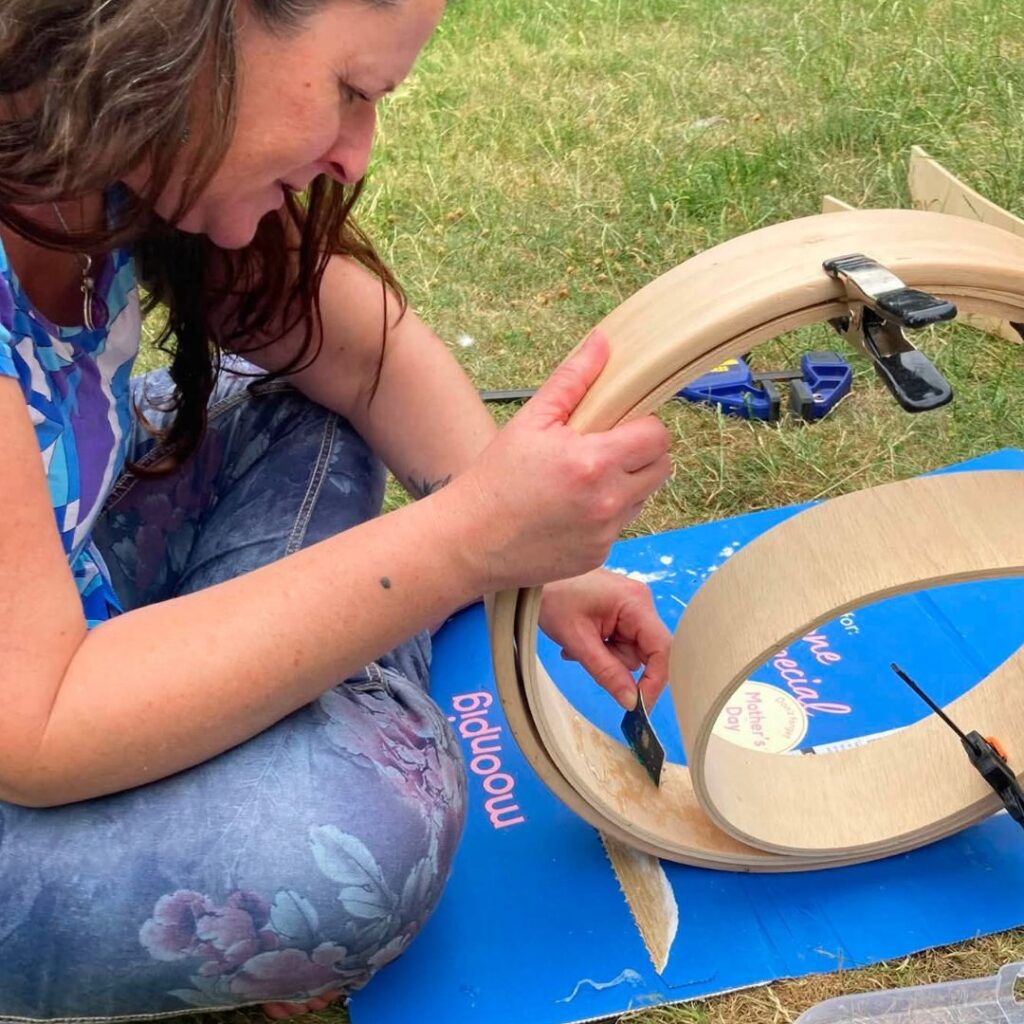
    In July I spent a few days learning to make drum hoops with Toni Vyse.

    Then the hides and the hoops sat in my garage through the rest of the summer and into early autumn. I felt a bit impatient at times, wondering when I would finally use them. And yet I also knew that I’d need to make my own drum before I took women through making their own. I wondered how long it would take, but it wasn’t the right time yet

    Meanwhile, the deer

    Things kept moving gently in the background. I first sat and asked which of the hides I had made were for me, and then let a friend choose one of the remaining hides, and offered to make a drum with her. I offered to another friend to make a drum with the remaining hide, and also ordered another couple of UK deer hides, and committed to making a drum with one of them with another friend.

    Then I spent a day with an amazing artist, Suzi Edwards-Goose, at her Deer Woman Knowing workshop. She unveiled a series of deer women paintings, and we connected with deer up close in a park near Leicester where 650 deer roam freely. The day confirmed something I had been feeling: the hides I use when I teach women to make drums need to be local to me. That same day I asked Jess, who had taught me to make hides, if she would make some to order for the land connected drums I’m going to make with women and she said yes.

    I also got a set of antlers to place on a future drum making altar from the park.

    The call
    After all that waiting, it happened all at once, and very fast.

    Once the date was set to teach my friend how to make her drum, the message became extremely clear. I needed to make my own drum, connected to local land and springs, before teaching my first drum making. I would also need that drum for the water blessing ceremony I’m leading at Samhain this coming weekend.

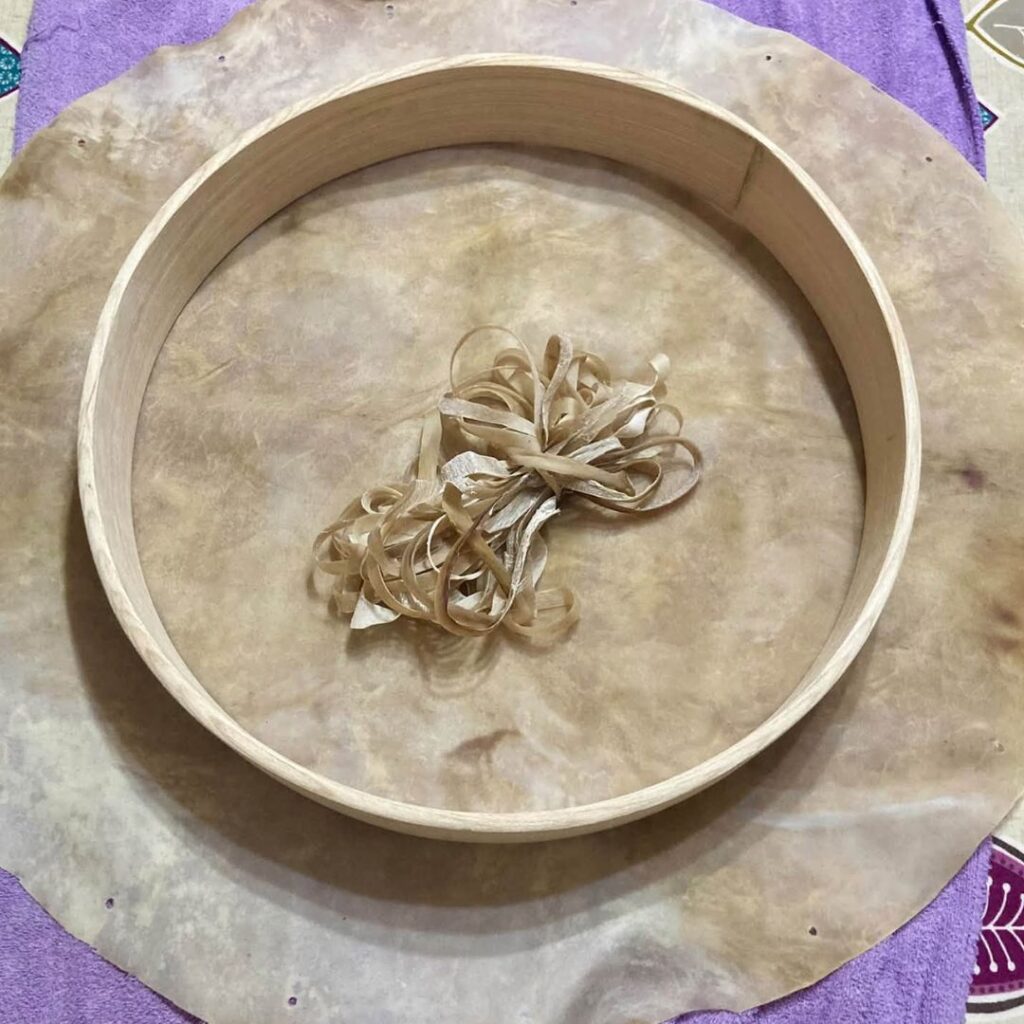
    The hide said that I start the drum NOW. So I listened. I soaked the hide in my bathtub that very day, then cut the drum head and the lacing. The next morning I took the hide and lacing to accompany my weekly drumming in the woods, because it had told me it needed to be connected to several places on the land, not just the red well.

    The next day I used a woodburning pen to write some words on the hoop. These words appeared as I wrote:

    Sacred waters
    Sacred lands
    Sacred women
    Sacred drums

    Making the drum at the red well
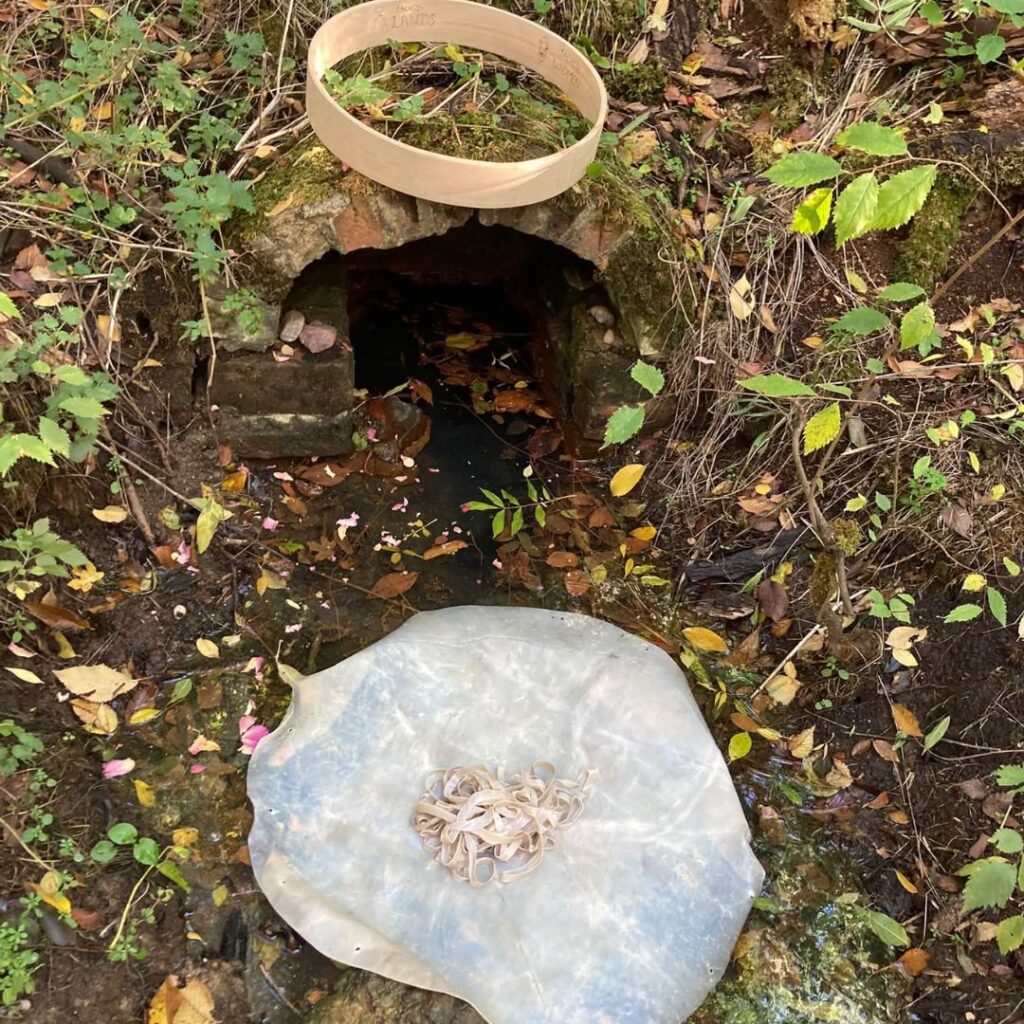
    Last week I took my hide, hoop and tools to the red well, alone. Once I got there I gave an offering of rose petals and yew berries to the well, then I drummed to ask for guidance first, and was shown that I needed to bathe the hide in the well water and place the hoop on the well head.

    So I did just that. I place my cut hide and lacing onto the water and my hoop on the well head, and  while the hide was in the water, I asked the waters, the land and the deer to help infuse this drum with an energy that would guide women back to the land, to the waters, to themselves, to the drum and to each other. I also asked that it would ripple out to many more women.

    Then I retrieved my hoop and hide and I sat on a log with them on my lap and started lacing the drum. It wasn’t easy. I had only ever made drums on a table. The lacing broke at one point. I repaired it and felt ok with it, because it felt linked to my change of work direction. The lacing kept tangling because it didn’t have the space between a table and the floor to drop into. I had to collect more water to keep it slippery.
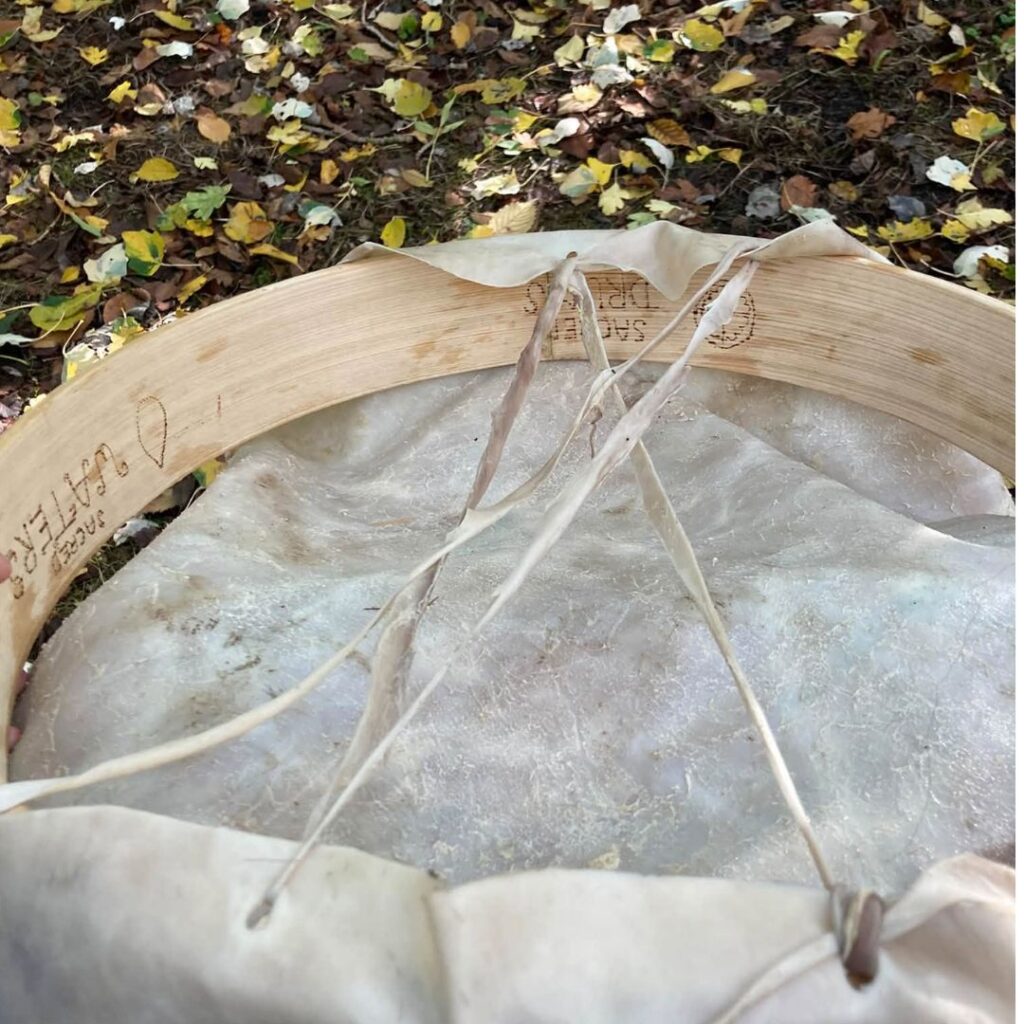
    Eventually the sun got low and the woods started to get dark. I knew I had to allow time to pack up and walk back through the woods. I lit a mugwort stick I had made in the summer, smoked and cleansed myself and my drum then placed my drum onto the well head again, thanking the well and the land for their energy and guidance. I also offered the offcuts from the hide back to the land.

    Then I gently placed my not quite finished drum inside my drum bag and took it home (I had done half of the handle cross by then) and finished making the drum on my kitchen table. This means this drum is now beautifully connected to my home as well as the water and the land.

    Her name

    That evening I placed my newly finished drum on a shelf at home to dry. The next day I held her and asked why she had come into my life and what her medicine is.

    She said: My medicine is to slow down and breathe with the land. My name is Medicine of the Land.

    Opening the drum
    Five days after being made, my drum was finally dry enough to be played properly for the first time. I asked her to guide me. Different locations and images came up, but the timing and the weather had other ideas. The only sunny day coming up, I was actually in London. There was also the matter of making a beater for her, and I was told to make it from a local willow, because of its connection with water, and that I would need to write the same words on the beater.

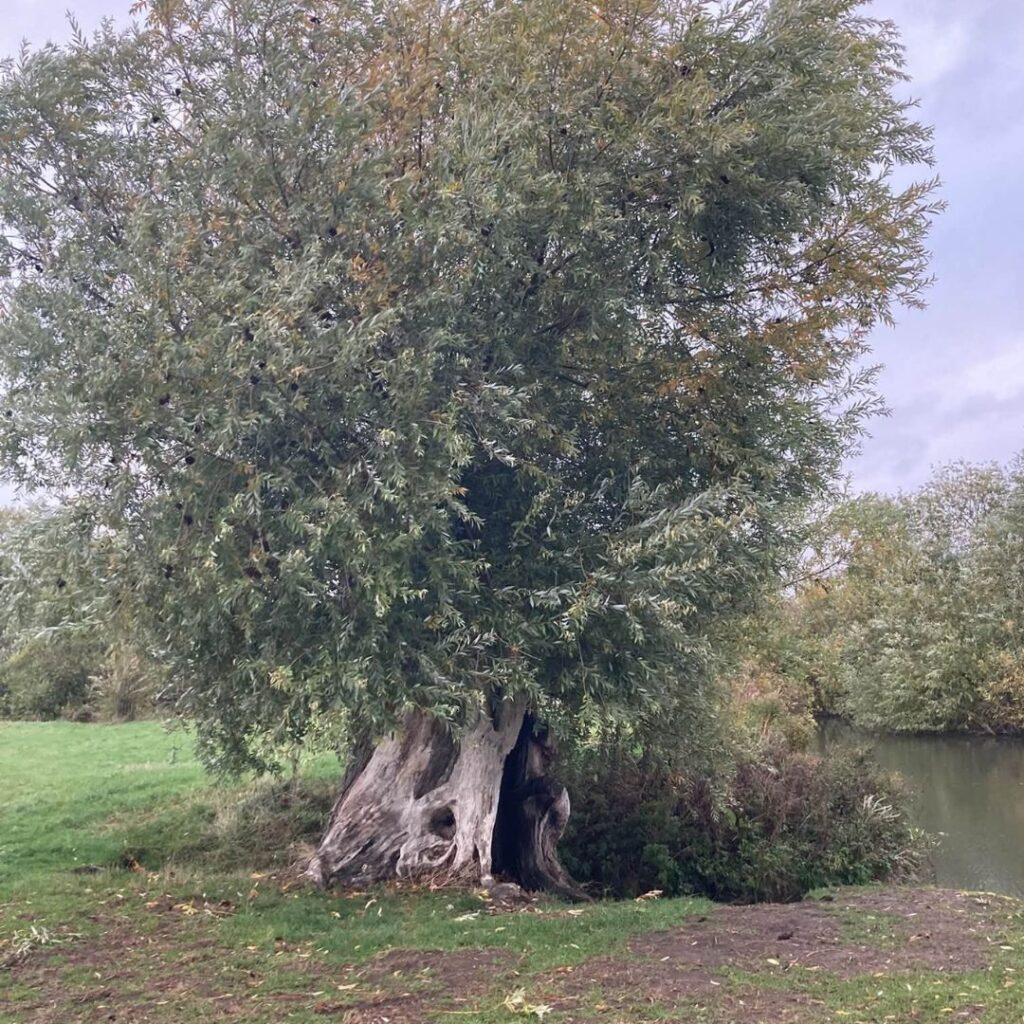
    The clear image that finally appeared was to play this drum for the first time inside an old willow tree near the river in  a nearby village. This tree, which I have loved and visited many times, was hit by lightning a few years ago, and all that’s left of it is a big hollow stump, blackened by fire in the middle, big enough to walk inside, and facing the river. Amazingly, it still grows. I call it the grandmother tree. It also turned out to be the full moon that day which felt special.
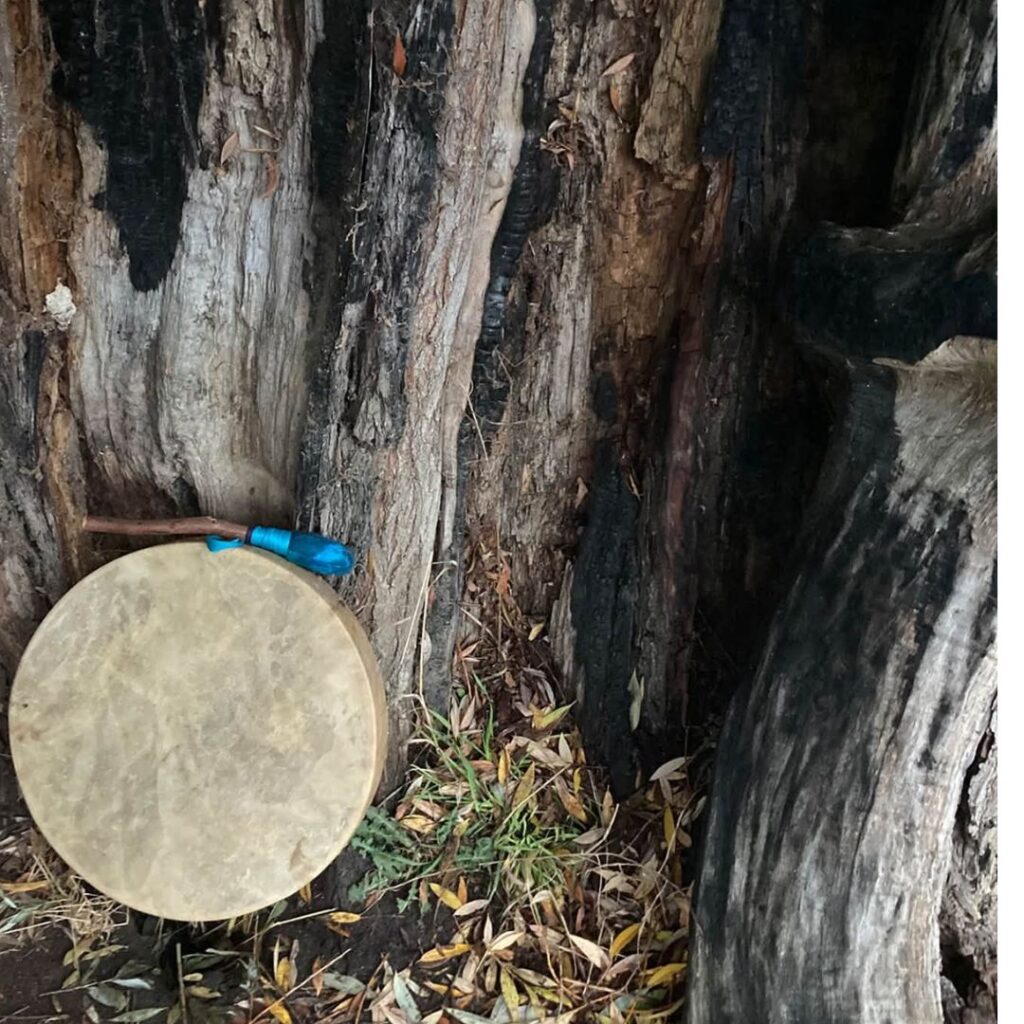
    So on Monday, despite a forecast of rain, I went there in the late afternoon, with my new drum, some smudge and some secateurs. Interestingly the gate access to the meadows was overgrown, so much that I had to duck, so I first used my secateurs to clear the access, which in hindsight feels significant as a path clearing process.. When I reached the willow tree, in the misty damp, the tree looked more alive than I had ever seen since the lighting strike, with luxuriant branches and leaves sprouting from it like hair. I first asked permission to cut a branch to make my beater. Then I went inside, smudged myself and my drum, and I was delighted to discover that the tree sheltered me and my drum from the light rain. I was guided to dip my villow branch in the river and sprinkle my drum with it, to connect it with the waters of the cam as well as the well. Then I started to drum. Within minutes this chant came:

    Sacred be the water

    Sacred be the land

    Sacred be the women

    Sacred be the drums

    Here is a video of me singing it inside the willow tree

    Play

    I sang for a while and then I drummed some more asking for more guidance and connection. It was so special and beautiful, and I felt so happy there, I didn’t want to leave, and ended up staying until it was nearly dark.

    Playing this drum for healing and with others

    wrapped in rhythm1 to 1 healing
    wrapped in rhythm1 to 1 healing

    Yesterday, I did a closing the bones ceremony. I had planned to use a different drum, but as I worked my new drum called loudly to be used instead. So half way through the ritual, I moved to the next room where my new drum was on a shelf, and used it for the drumming part of the ritual. It was surprising because I hadn’t intended or planned to use this drum for healing. And it also made sense as this drum is designed to help women on their path.

    This morning I took my new drum to my weekly morning woodland playing with my friend. In the past I acquired some drums that didn’t feel like they belonged there. But this drum did and my friend shared that whilst this drum clearly belonged to me and felt loyal to me, it also felt welcoming. 

    I reflected on the fact that I used to make drum to heal others, and that for the last 3 years I started making drums for myself first, reflecting a move from the saviour syndrome I use to have when I started working as a healer and doula, into a more balanced,  integrated way of being.

    The updated scale of drum acquisition

    I used to say my scale of acquiring a drum goes like this, in order of the power of the experience: getting a factory made drum like a Remo, getting a handmade drum, getting a handmade drum made for you, and finally getting a drum you had made yourself. But now I realise there is a fifth category: a drum you have made yourself using a hide you have processed yourself.

    Decorating the drum

    After making the drum, I also wondered how to decorate her. She’s told me she needs me to place the antler and deer bones I received at the deer workshop and also representation of the 4 elements, with the water element needing to be a fresh water representation and not a sea shell, that I need to use some of the feathers I found at the red well for the air, and a deer bone for the earth some tinder fungus for the fire. I happen to have all of these already. I am yet to decorate my drum and make my beater but I trust in the gentle timing of this process. For someone who used to be massively impatient, this feels like a big deal.

    What comes next

    This drum has taught me a lot before I made or played her. She taught me to wait, and then to move quickly when it was time.

    Next I’ll make a drum with my friend from the muntjac hide I prepared, and then comes the water blessing ceremony at Samhain. After that, slowly, I will start offering drum making to women in this way: local deer, local waters, local land.

    We don’t need to travel far to find sacred places. They are often right where we live, sometimes hidden under mud and sticks, waiting for someone to find them.
  • The wrapping ritual and the chrysalis: dissolving to transform

    The wrapping ritual and the chrysalis: dissolving to transform

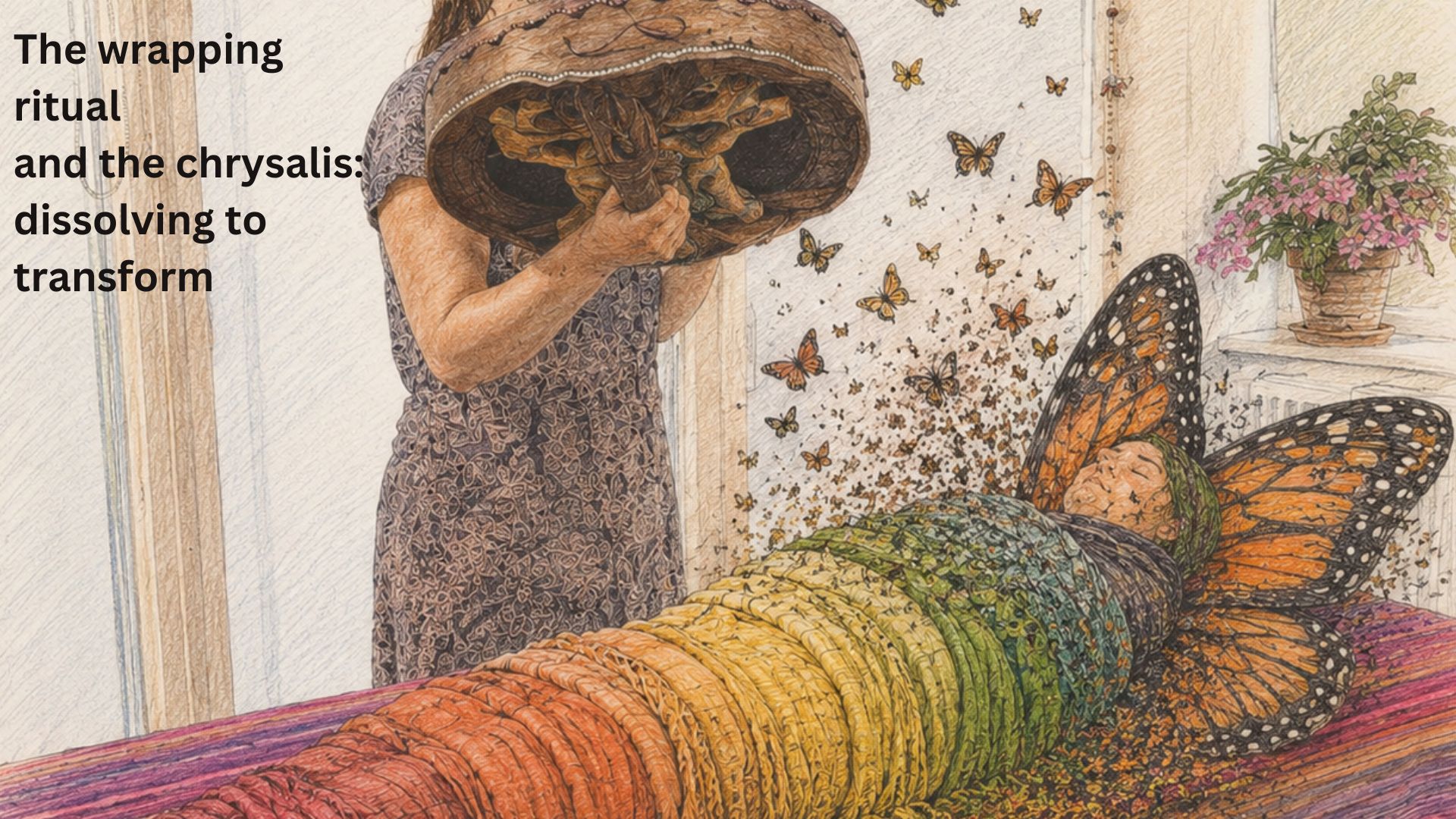
    Everybody knows that when a caterpillar is ready, it forms a chrysalis around itself, and that through an amazing process, hidden from view, it emerges in the completely different form of a butterfly.

    It is a beautiful and powerful metaphor for transformation, and for the moments in a woman’s life when we undergo deep, transformative change: menarche (the onset of puberty and our first period), matrescence (becoming a mother), perimenopause and menopause (the end of our periods), and other important thresholds. The caterpillar goes and hides somewhere enclosed and unseen, and emerges as a different version of itself.

    What you may not know, however, is what has to happen inside the chrysalis for that change to take place. In order to become a butterfly, the caterpillar has to dissolve itself completely. If you were to open the chrysalis at that stage, you would find a sort of “soup” of dissolved caterpillar tissue. Inside this soup, clusters of cells called imaginal discs begin to develop and grow into the new butterfly.

    In the phases of womanhood we don’t transform in such an extreme way on the physical level. But the woman who emerges through these thresholds is a completely different version of her previous self. And, inside, her transformation is just as deep, but in our culture at least, is also largely unappreciated and unseen.

    Which brings me to rituals, and the lack of them in Western culture.

    The rituals we have lost

    Since the dawn of time, human cultures have had rites of passage to support the phases of people’s lives, and women used to have them to mark many thresholds. The role of these rituals is to offer a physical, tangible recognition and celebration of the transformation, one that is witnessed by the community, and that makes the change from one state to another clear and honoured.

    For the last 15 years I have felt the need to recreate these rituals, both for myself and in my work supporting women, first as a doula and then as a ceremonialist, healer and teacher. During my first year as a doula, when I was recognised as experienced by my mentor, I didn’t want to simply have a drink or a meal to celebrate. I asked my doula trainer, my mentor and a doula friend to create a recognition ceremony for me, one that included stepping over a physical threshold. It was later used for other doulas in the community.

    In the Western world, we no longer have the rituals to mark the passages in a woman’s life.

    In his book Rites of Passage (first published in French in 1909), Arnold van Gennep observed that when the activities associated with such ceremonies were examined in terms of their order and content, three phases could be distinguished: separation, transition, and incorporation. If we look at this from the viewpoint of a woman giving birth, she separates herself from everyday activities as she enters labour, she transitions into a different version of herself during the birth, and she incorporates the process throughout the early postpartum period of a month or so, finally claiming her new role as a mother. Contrary to Western beliefs, this process is not completed by the birth, but about 4 to 6 weeks after birth, which is why we used to have rituals to celebrate this, known as churching, the end of confinement, or relevailles, in the Western world, up until the first half of the 20th Century, after which it started to fade.

    I wrote at length about this topic and the lack of rituals for motherhood in my first book, Why Postnatal Recovery Matters, and the same is true for other phases in women’s lives. Without rituals to witness, anchor, support and recognise the transformation, we are left somewhat at sea. We often minimise or fail to understand the change ourselves. The depth of the process, the need for support through it, has disappeared from our shared awareness, and we do not talk about it.

    Because it is not spoken about, let alone celebrated, we have no compass to navigate it. There is little recognition of what a new mother has accomplished in bringing a new person into the world, and little care, nurturing or reverence offered to her. All the attention goes to the baby instead, as if the mother did not exist. No one talks about or understands her need for support, and so many new mothers struggle not only with the lack of cultural holding, but also with blaming themselves for that struggle.

    In The Beat of Your Own Drum, I wrote that rituals play a vital role in personal growth and healing by:

    • Creating a sacred, intentional space for processing and integrating profound experiences.
    • Calming the nervous system and facilitating grounding and connection.
    • Tapping into the collective subconscious through symbolic elements and practices.
    • Providing a structured framework for processing trauma or shock.
    • Fostering a sense of community and shared understanding.

    This is why I have become so passionate about bringing rites of passage rituals back to women. In a world where women often feel isolated during significant life changes, ritual offers a way to reconnect with oneself, with one’s community, and with the sacred nature of life’s transitions. And my favourite ritual for this is closing the bones.

    What is closing the bones?

    Closing the bones is a traditional postpartum massage ritual, most widely known from its Mexican and South American roots. Similar practices exist, or have existed, across all continents, including in Europe. It is a tool for healing and for honouring the transitions in a woman’s journey.

    A closing the bones ceremony typically involves:

    • A sequence of rocking the body using scarves.
    • An abdominal massage, sometimes full-body.
    • A sequence of tightening scarves around the whole body.
    • In some traditions, a steam bath or sweat lodge.
    • Drumming and/or singing, as incorporated by some practitioners.

    (Watch this video to see what it looks like)

    The ritual supports healing on multiple levels:

    • Physical: it encourages movement in joints, muscles, tissues and fluids, aiding recovery and realignment.
    • Emotional: it provides a safe space for rest, witnessing and release, allowing feelings to be processed and honoured.
    • Spiritual: it facilitates closure, celebration and witnessing, creates space for letting go of what has been, and helps redirect energy back to the woman.

    While it is traditionally associated with postpartum care, the ritual holds significance for many transitions and rites of passage. It can be particularly supportive during times of loss and trauma, whether that is the physical loss of a pregnancy or birth, the loss of a baby, the ending of a relationship, or the invisible yet deeply felt losses that come with change. In our modern culture, where such milestones are often overlooked, the ritual offers a chance to pause, reflect and honour the depth of a transformative moment.

    Why I created Wrapped in Rhythm

    This year I have changed the way I do and teach this work, simplifying it down to the rocking and wrapping, making more room for the space holding and for the drumming.

    I did this for two reasons. The first is that I am working towards a deinstitutionalised and intuitive way of sharing this with women (read more about this [here] and [here]). The second is that so many women carry impostor syndrome and worry they can only do this work if they do it “right.” This simpler way allows their intuitive space holding and healing abilities to come through.

    In this version (see video), we rock and wrap the body with rebozo scarves, and then intuitively drum over the wrapped woman.

    Having taught it online since 2022 to over 400 students, and in person since November 2025, I have seen its effects. The case studies from my students show how deeply healing the ritual is, with self-reported wellbeing often moving from a 2 or 3 out of 10 to an 8 or 9 in a single session. One recent example came from a woman who uses the ritual to ease her partner’s neuropathic pain, which moved from a 9 out of 10 to a 2 out of 10 in twenty minutes. My own case studies show an average improvement in wellbeing of around 80 percent in one single session.

    I have felt it myself, too. Back in 2022, when my mental health was in tatters, I received the wrapping during a training with Mexican midwife Naoli Vinaver. The depth of comfort and transformation I felt from just 15 minutes of wrapping in a group setting was hard to believe.

    More recently, I asked a group of friends to give me the ritual for my birthday. We gathered in a yurt, they wrapped me, and several of them drummed. I dropped into such an altered state of consciousness from the combination of the two that I lost track of time and space in a way I had not experienced since giving birth to my children.

    Since then I have reflected on why adding the drumming makes such a difference. The drum takes the brain deeper into an altered state, and that state is itself a kind of dissolution. The wrapping and the drumming together create a melting, much like what happens inside the chrysalis. And it is this dissolution that allows us to soften, let go, and re-form into the next version of ourselves.

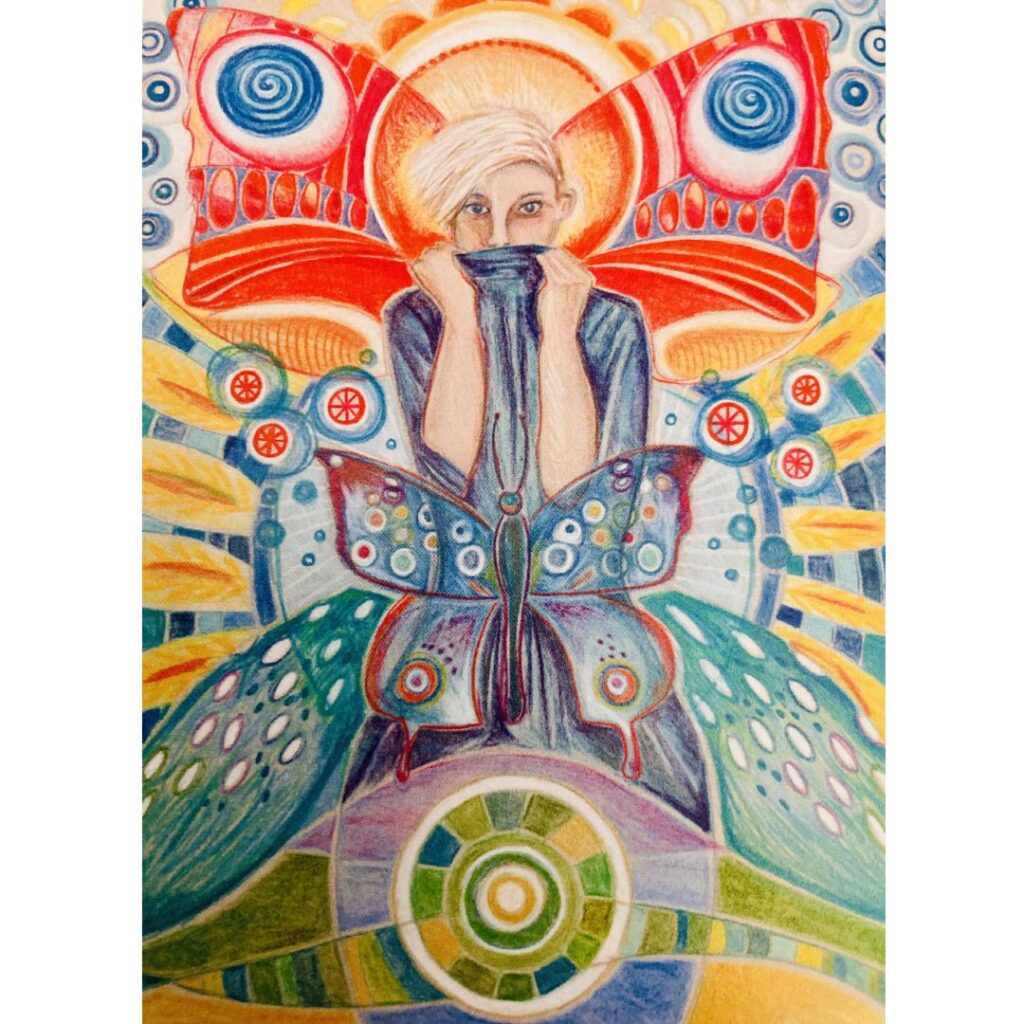
    Transformation by artist Jaine Rose

    Learn this with me

    Wrapped in Rhythm (two-day in-person training) Learn the rocking, wrapping and intuitive drumming ritual, and bring it into your own work with women. All my in-person upcoming workshop dates are listed here

    Online courses (self-directed) Learn the wrapping and drumming work in your own time, from anywhere in the world. Browse the rebozo massage and closing ritual course

    Seen Into Wholeness (work with me one to one for three-months) A personal container for women moving through transition and wanting to find themselves and new confidence . Find out more here.

    Have a question about any of these? I would love to hear from you. Either comment below or get in touch with me here.

  • Women, rituals, drumming, and deinstitutionalising ourselves

    Women, rituals, drumming, and deinstitutionalising ourselves

    We have been taught that learning looks like a straight line.

    Step one, step two, step three. Get it right before you move on. Follow the method. Master the technique.

    But that is not how women have ever really learned, or shared, or passed wisdom to each other.

    Our way is more like a spiral. More like a web. Like a circle. We learn through story and through body and through being in the room together. We teach each other without hierarchy. We remember things we were never formally taught.

    The idea that there is a right order, a correct technique, a linear path to mastering the drum, that is an institutionalised belief. And like so many institutionalised beliefs, it was not designed with us in mind.

    And the cost of that is real. When the system tells you there is one right way to learn and you are not following it, the conclusion you draw is not that the system is wrong, but that you are. Not ready yet. Not far enough along. Not enough. Women carry this quietly for years, doing more training, seeking more credentials, waiting for a feeling of readiness that the system is never going to give them, because the system was never built to tell women they are enough.

    So if you have ever felt like you are doing it wrong, or not ready yet, or not far enough along, I want you to consider that you might just be learning in a way the system was never built to recognise. And that the problem was never you.

    A word that changed everything

    Last weekend I was teaching a Wrapped in Rhythm course, and afterwards my dear friend Claire Graziano told me that she loved how deinstitutionalised my training was.

    I was extremely grateful for this word, because it describes exactly what I have been trying to do. When I look back, it was always how I wanted to teach.

    Eleven years ago I was teaching Closing the Bones alongside someone more experienced than me, and I was taken aback when my mentor told me she much preferred my style. When I asked why, she said: your colleague’s teaching style is “this is my box.” Yours is “this is my box, take what you need from it.”

    That has stayed with me ever since. And I have been trying to move further and further from institutionalised ways of learning ever since.

    Simplifying Closing the Bones

    I have been teaching Closing the Bones and rebozo techniques in various forms since 2014. I have trained over 1500 professionals in person and over 700 online.

    The question people keep asking is: how do I do this? They want a precise, metric-measured answer. When teaching rebozo rocking, for example, they ask: how fast, and for how long? And they expect me to give them a number.

    Except that is not how it works. Every woman is unique. The speed, the amplitude, the length of time all depend on what she needs and what she wants.

    I was delighted when I attended a rebozo training with Mexican midwife Naoli Vinaver and she was asked exactly the same question. Her answer was: you just ask the woman.

    How empowering is that? Instead of worrying about the right way to do this, which I know from experience is an incredibly common fear (and one I used to have myself), you realise you can never get it wrong. Because all you need to do is ask, and do what the woman wants.

    And this points to something I have come to believe more and more the longer I have taught.

    There is no single perfect way of learning. I have met people who had never massaged anyone in their lives and were clearly, immediately gifted. I have trained experienced therapists who struggled. And the opposite of both. What determines whether someone can offer this work well is not how many courses they have done or how precisely they follow a technique. It is something harder to measure and impossible to teach through prescription. A quality of presence. A willingness to listen to the person in front of them. An ability to trust what they already know.

    That is what I am trying to make room for.

    And there is something else I have noticed over years of teaching, and it took me a while to find the words for it.

    Most of the women who come to learn with me already know how to hold space. They have been doing it their whole lives, in their homes, in their friendships, in their work with their clients, and in the ways they support the people around them. They just do not see it in themselves. They have been so taught to look for the credential, the technique, the external validation of their readiness, that they walk past their own gifts without recognising them.

    What my way of teaching tries to do is not give them something they do not have. It is to get out of the way long enough for them to notice what was already there.

    When I hand someone a drum with no instructions and they find themselves instinctively knowing how to move it over someone’s body, adjusting without being told, that is not beginner’s luck. That is a woman finally being given permission to trust herself.

    That is what I am really teaching. Not a technique. A coming home to yourself.

    Finding my own way with the drum

    My journey with drumming followed a similar path.

    I practised and learned almost entirely by myself for the first three years, and I am so glad I did. It meant I found my own way of doing it, rather than absorbing someone else’s idea of the only right way.

    And after three years, I decided to take formal drum healing training by attending a Reiki Drum course. I gained some useful things from it, including a particular way of holding the drum to send vibrations through the body. But I found a lot of what was taught far too prescriptive.

    And something else started to bother me. Before you can learn Reiki Drum, you have to first complete two levels of Reiki. The more I sat with this, the more it bothered me. Not because Reiki isn’t valuable, but because it felt like such a linear and patriarchal way of gatekeeping knowledge. You must do this before that. You must earn the right to the next level. You are not ready yet.

    And then a few years later, when I started running a drum circle in Cambridge. I began suggesting that people drum for each other for healing, with no instructions at all. And I discovered something: they all knew what to do.

    I had already been demoing drumming during my Closing the Bones training for years, and this often led students to want to learn drumming themselves. So I started handing students a drum with no instructions other than: just drum for the person you have just wrapped.

    And again, they all knew what to do.

    This is women’s wisdom in action. Not a linear staircase with prerequisites and gatekeepers, but an immediate, embodied knowing that was already there. 

    The birth of Wrapped in Rhythm

    At the end of 2025 I facilitated a Closing the Bones wrapping and drumming workshop for 55 women at a drum convention. I lost count of how many approached me afterwards to say: this is life changing.

    A couple of weeks later, as I taught a Closing the Bones workshop, I realised it was the last time I would teach it in its current form. I felt a deep need to simplify, and to make more room for the drum, and for women’s innate wisdom.

    There are two reasons for this.

    When I teach the hands-on massage techniques, they are quite technical. I spend a lot of time correcting people, and they spend a lot of time worrying they are doing it wrong. Very few women walk away immediately feeling confident. The wrapping and the rocking, on the other hand, everyone can do immediately without difficulty.

    And the second reason is this: when I am correcting technique, I stay in my head. But when I facilitated the Drum Con workshop, I was able to drop into an altered state of consciousness, feel what was happening in the room, and respond from that place. That is the quality of presence I want to teach from, and the quality of presence I want to help others find.

    As I write this, I have taught one taster workshop and two full Wrapped in Rhythm weekend workshops. The energy in the room has been extraordinary. Women who have never touched a drum feel they can. Women who have never touched a rebozo feel they can. Women feel safe enough to add their own unique gifts to the ritual. By the end, everyone feels ready to take this back to their communities and make their own magic with it.

    That is what deinstitutionalised learning looks like. Not a staircase. Not a prerequisite. Not a moment when you are finally ready enough.

    A spiral. A web. A group of women who already know, and simply needed someone to help them remember.

    If this speaks to you, I teach Wrapped in Rhythm workshop regularly near Cambridge, UK. You can find out more here.

  • Why I’m no longer interested in aging placentas

    Why I’m no longer interested in aging placentas

    7 years ago I wrote one of my most popular blog posts: The Myth of the aging placenta, a lengthy article designed to support parents and birth professionals in understanding that the mainstream view that placentas “age” and stop functioning at the end of pregnancy isn’t based on logic or solid evidence. 

    Recently I was asked to be interviewed about this topic, something I’ve done a lot in the past. But when I listened to my body, it was a very clear no. 

    How I got there

    I want to explain why I’ve moved on from this, and other topics.

    4 years ago I stopped working as a doula. If you want to understand why I did that, you can read this article I wrote at the time.

    After I stopped doula work, I was in a weird limbo for some time, and eventually something else showed itself, which led to the writing of my second book, The beat of your own drum.

    As I stepped away from birth work, I started to see the landscape more clearly for what it was, because it isn’t always easy to see the water you swim in. I remember the realisation that, contrary to what I had been believing, the maternity care system wasn’t broken at all: it was functioning exactly like it was designed to function, to control women. That was a hard moment for me.

    And then, after I navigated supporting my youngest child’s inability to function within mainstream education and the battle that ensued to get them the support they needed, it became clear that the pattern of control was not confined to maternity care: it was also there in the way we are told to parent, in childcare, in education, in healthcare, in the workplace, in politics
it was everywhere. And at every point it was designed to make people, and especially women, do as they are told, and never question things.

    In the introduction of my The beat of your own drum, I wrote this:

    “Since stepping away from doula work a couple of years ago, I’ve come to the stark realisation that not only is the current maternity care system beyond repair, but that the thread of disempowerment weaves through every stage of a woman’s life. Its pervasive narrative that begins in infancy, winds its way through our experiences of parenting, education and careers. This insidious message – that we are somehow ignorant of our own needs and should defer to those who ‘know better’ – isn’t confined to any one sphere. It permeates politics, the medical and education world and is woven into the very fabric of our society. From the moment we’re born, we’re subtly (and sometimes not so subtly) taught to doubt our own instincts, to question our inner wisdom. It’s as if society has conspired to whisper in our ears, “You don’t know what’s best for you.” This message echoes in the halls of schools, reverberates in workplaces and finds its way into the most intimate moments of our lives.

    The result? A deep-seated, often unconscious belief that our own knowledge– especially when it comes to our bodies, our choices, our lives – is somehow inferior to the ‘experts’. This belief chips away at our autonomy, erodes our confidence in our own experiences and intuition. And it’s a belief that I’ve come to recognise as not just false, but deeply harmful to the wellbeing and empowerment of women everywhere.”

    It was never about the science

    And so this is why I’m no longer interested in debating the science behind whether placentas age or not-because it’s looking at the wrong problem. It’s a distraction. 

    As a doula, I always cautioned my clients against trying to argue their decisions by bringing scientific papers to meetings  with healthcare professionals. Not because the papers were wrong, but because it was the wrong dynamic. They didn’t have to justify their decisions. And the health professionals would almost never be convinced by the papers anyway; they would just look for holes in the argument.

    This is the same thing. Picking apart the science behind specific policies misses the point entirely. The same is true of debating the science behind ANY hospital policy. The main issue is control. You cannot oppose control by arguing with logic.

    A system built on control isn’t interested in engaging in self introspection, it is only interested in doing what it’s designed to do: to manage women’s behaviour, under the false pretence of risk management. As Jane Hardwicke Collings says: modern maternity care is “Institutionalised acts of abuse and violence on women and babies masquerading as safety”.

    In my 15 years in the birth world (I started training as an antenatal teacher and doula in 2008), it took me a good few years to understand that the people working within the system were victims of it too. As a scientist, I was flabbergasted when I encountered time and time again the lack of scientific curiosity in maternity care professionals. This was until I realised that the people who worked inside the system were actively discouraged from engaging in curiosity. It worked like a medieval church. Employees were expected to follow guidelines and hospital policies like if they were gospel. And if they engaged in questioning guidelines overtly, they were usually punished, or removed altogether.

    So what can we do instead of arguing tiny details with authority figures who aren’t interested in questioning things? We focus on what we can control: ourselves and our power, which resides in our ability to listen to our inner wisdom.

    We have spent a lifetime being taught to distrust ourselves. To defer to the expert, the system. Unlearning that is not a small thing. So how do we begin? 

    Sophie drum Ali

    Enters the drum

    This is where working with the drum offers a new way of being. I started drumming during births, instinctively, because something in me told me this would help women. Then the women for whom I had drummed all told me the drumming not only helped them manage the sensations of labour better, every single one of them told me it gave them their power back. You can download a PDF of the article I wrote about this in the International Journal of Birth and Parenting Education here.

    Whilst writing my book I realised that birth was meant to be an altered state of consciousness, and that the reason modern maternity care actively prevents this from happening is because it’s very hard to control women who have experienced this. I explain this in greater details in my article, Forbidden trance, why medicine hijacks altered consciousness during birth.

    You might think: What’s has such a hippy thing as a drum got to do with managin the pain of birth, or to do with power? You might even scoff. I get it, because I too, used to think it was bullshit. And yet the scientific evidence behind how drumming changes our brain, our physiology, our emotional wellbeing is so overwhelming that I had to write not one but two chapters solely dedicated to the science of drumming in my book, and I’m currently in the process of doing some research on how drumming supports women’s wellbeing with Prof Joyce Harper of UCL London.

    Beyond birth, drumming offers something that most of us urgently need: a direct route back to our own inner voice.

    Here is why it works: most of us live in our heads. We overthink, second-guess, and talk ourselves out of what we already know. Drumming shifts that. Within minutes it can move us from an overactive thinking state into a meditative state where the noise settles and the inner voice becomes audible again. And the beauty is that you don’t even have to believe in it for it to work.

    This isn’t mystical. It’s how rhythm works on the nervous system, by entraining brain waves. This was already known in the 1960s. And it means that something ancient and simple can do what years of conditioning have made very difficult: help us trust ourselves again.

    What I do now

    My work has shifted. Where I once supported women through birth as a rite of passage, I hold a broader vision.

    We are living in a time of profound imbalance. The world is burning, literally and metaphorically, because we have become so disconnected from nature, from community, from ourselves. We can no longer function within the patriarchal model our society is built on.

    I believe that helping women find their way back to their own inner voice is not a small thing. It is a path toward a different world.

    Drumming works like psychedelics, opening and rewiring the mind to a completely new way of thinking and seeing. And yet, it is legal, affordable, accessible, and the system has no fucking clue how dangerous it is. And I don’t think it will for many years.

    It is dangerous because women who enter altered states of consciousness, access their inner voice and their power, and it makes them very difficult to control. People who experience these things do not do as they are told. They question things. 

    When women start drumming, and listening to the voice deep within, they can also imagine a new world, outside of the current system.

    A world where belonging matters more than productivity. Where community is not optional but foundational. Where peace, nurturing, and mutual support are not ideals we aspire to but values to live by.

    The drum is one of the oldest tools we have for this. It bypasses the thinking mind and speaks directly to something older in us. Something that remembers. When a woman picks up a drum and begins to play, she is not just making a sound. She is finding her voice, her rhythm, her power. She no longer needs someone to tell her what to do . She no longer abdicates authority. And it creates a ripple effect that attracts other women to do the same.

    That is why I do this work. And that is why it matters now.

    An invitation 

    I have started a movement called Women drumming for peace. It happens every Sunday night at 8PM UK time. You can just join by intending to, or if you want more direct connection, I hold 10 minutes of live stream for this in my Facebook group, The Women Drumkeepers Community.