Your basket is currently empty!
Category: Pregnancy

The wisdom messenger podcast: An interview with Aimee Hamblyn, reclaiming your power and sovereignty
In this show, I interview pioneers in womenâs health and personal development about ground-breaking concepts that help women reclaim lost knowledge and inner wisdom.
By bridging insights from ancient traditions and modern research, weâll question stale cultural narratives and midwife a new paradigm around birth, life transitions, and womenâs autonomy. Join me as we delve into stories and studies that empower women to reconnect with their inner voice.
In this episode, I interview Aimee Hamblyn. Aimee is a doula, doula trainer and Energy-Lift Healer. Working with families since 2010, initially as a breastfeeding peer support and body work practitioner, focused on the post partum period. Always fascinated by observing how bringing the body into a state of deep peace, brings about healing on many levels. After experiencing the profound personal transformation in her own life, Aimee studied with Shakti Durga in 2012, to train as an Ignite Your Spirit practitioner to support her own clients.
Aimee works with her clients using Shakti Durgas’s healing modality Ignite Your Spirit; this practice helps to heal past traumas, clear negative thought patterns, and clean & uplift the energy field. This happens through connecting clients with their own inner light, wisdom and innate power to heal. Clients are uplifted and experience transformative life changing experiences.Â
As part of her dedication in the birth space, she also trains doulas with Developing Doulas. As well as running an annual mentoring container for birth professionals, âSacred Birthâ, supporting those working with families during the perinatal period to open to the energetic and soul dimensions of their work.
Highlights include:
- Aimee discusses her spiritual journey and influences, including her upbringing, exposure to various religions, a pivotal trip to India, and her father’s passing.
- We explore different types of healing abilities, with Aimee sharing about her clairvoyant visual abilities that have evolved over time.
- We discuss the concept of Ignite Your Spirit therapy that involves meditation, visualization, and clearing/filling the energy body to tune into one’s intuitive languages.
- Aimee introduces the idea of reclaiming wounded parts of oneself and integrating them into the present as part of the healing process.
- We talk about a cord cutting practice to detach from emotional ties with others one is no longer willing to carry. Aimee incorporates this into her work with clients.

Can you listen to the episode on Spotify, Youtube, or Apple Podcast
You can find Aimee at

Drumming for Birth: The Wisdom and Science of How Drum Beats Support the Brain and Body to Empower the Birth Journey
Pregnancy, birth and the postpartum constitute a profound rite of passage. Expectant families are often guided to seek holistic approaches to enhance their birth experience. One such approach, which is gaining recognition, is the ancient practice of drumming. Rhythm is innate, and every culture around the world has (or has had) drumming traditions.Â
Beyond its musical and cultural significance, drumming offers a unique potential to support and empower and heal during pregnancy, birth, and the postpartum period. In this post, I explain some of the ways in which drumming can positively influence the birth process.
Creating Sacred Space
Drumming can be part of bringing more sacredness to the pregnancy and birth journey. Pregnancy and birth are sacred processes which deserve reverence and a sense of ritual. In today’s modern healthcare system, where many births take place in hospital settings, it is essential to find ways to re-infuse the birthing process with a sense of sacredness. Drumming is a powerful way to create a sacred atmosphere, adding a ritualistic element that can positively impact the birth experience.
âAt home I felt in my own space, but in the hospital I felt at the mercy of the system, with a lot of vulnerability. The drumming stirred up my sense of empowerment and of standing up for myselfâ Leigh
Tuning inDrumming taps into the innate rhythms within us, synchronising the body, mind, and spirit. When expectant parents listen or engage in drumming, it helps them connect with their own internal rhythm and intuitive knowledge, promoting a sense of calm, focus, and empowerment. By embracing these qualities, individuals can navigate the various stages of the pregnancy and birth journey with greater ease and confidence. During labour, drumming can also support the mother into entering an altered state of consciousness that facilitates the birth process.
In the book âWhen the drummers were womenâ Layne Redmond explains:
âPriestesses of the Goddess were skilled technicians in its (the frame drum) uses. They knew which rhythms quickened the life in freshly planted seeds; which facilitated childbirth; and which induced the ecstatic trance of spiritual transcendence. Guided by drumbeats, these sacred drummers could alter their consciousness at will, travelling through the three worlds of the Goddess: the heavens, the earth and the underworldâ
âI had some gentle drumming at beginning of pregnancy. I found it very calming and healing. The effect lasted a couple of weeks.â Leigh
âThe main thing I remember was my consciousness ascending with the drumbeat and connecting with my baby’s consciousness and bringing him into this reality before I did it physically.â Ailsa
Relaxation and Alleviating Anxiety
The repetitive beats of a drum have a soothing effect on the nervous system, inducing a trance-like state of deep relaxation. Drumming can help reduce stress, and ease the anxiety commonly experienced during pregnancy and birth. This relaxation response not only promotes a more peaceful birth environment but also allows the mother to surrender to the flow of the process. Heartbeat-like drumming reminds us of our time in the womb, and promotes a sense of safety.
âI wanted a doula who could drum to help me remain calm (I had massive anxiety going into my second birth, for lots of reasons). â Ailsa
Increasing Endorphin Release
Drumming stimulates the release of endorphins, which are natural pain-relieving and mood-enhancing hormones. During labour, the intensity of contractions can be accompanied by discomfort and pain. Drumming can help activate the body’s own pain management system, creating a more positive birth experience.
âDuring my birth, the drumming felt a bit like when you are jogging and you have power music on, it gave me a power boost. It felt like it was saying âopen up, relax, trust your body, have faith in the journeyâ. It made me feel more confident in my abilities.â Leigh
Facilitating a Sense of Community and SupportDrumming can be a communal activity, bringing together partners, doulas, midwives, and other birth supporters. Creating a drumming circle during pregnancy or birth fosters a sense of community and support, allowing individuals to feel held and encouraged throughout the birthing journey.Â
I came to the drum circle on my due date, to ground myself, to feel the vibrations from the drums, and because I felt that it would call my baby into going into our world, to feel welcomed. Kamila
Connecting with Spirituality
Throughout history, drumming has been used as a spiritual practice, connecting individuals to their ancestral roots and the wisdom of past generations. By incorporating drumming into the birth process, expectant parents can tap into this ancient wisdom, accessing a deep sense of spirituality and connection. Drumming can serve as a bridge between the physical and the spiritual realms and can also help parents connect more easily with their unborn baby. Drumming helps create a sense of sacredness and people help turn inwards.Â
âI wanted a doula who could drum for me during birth for many reasons, to mark a huge initiation, welcome my baby into the world to the sound of the universeâs heartbeat, to have something of me present in a medical situation, a reminder of the vast context of the process I was going throughâ Ailsa
Nurturing the postpartum transition:
Drumming continues to be a valuable practice beyond the birth itself, offering support and nurturing during the postpartum period. The beats of the drum can provide a soothing and grounding presence, helping new parents navigate the emotional and physical changes that accompany the postpartum transition. Drumming can serve as a form of self-care, allowing individuals to release tension, process emotions, and find inner peace during this transformative phase.
âA week after giving birth, during the closing the bones ceremony, the drumming helped me release something and really opened up the gates to my connection as a mother. The realisation that Iâd arrived as a mother really landed. It was beautiful, I cried tears of joy.â Leigh
Conclusion
Drumming offers a unique and multifaceted approach to supporting the birthing process. By listening or practising drumming, expectant parents can tap into their inner strength, find deep relaxation, alleviate anxiety, enhance endorphin release, foster a sense of community, and connect with their baby and spiritual dimensions.Â
Incorporating drumming into the birth journey holds potential for supporting transformative and empowering experiences.Â
If you have drummed during the pregnancy, birth or postpartum journey, or have had drumming during these times, please comment below, Iâd love to hear your stories.
Note:
I am in the process of collating a lot of drumming research, experience and stories related to the birthing process and women life transitions. If you have stories to share, Iâd love to hear them, as I am writing a book about women and drumming.
Read more: I have published an article about drumming for pregnancy and birth for the International Journal of Birth and Parent Education, which you can download for free here. I wrote another article about it in the Green Parent Magazine, which can be downloaded for free here. I offer an online course called drumming for birth. I gave a talk about the science of shamanic drumming at the convention of womenâs drummers in Colchester in November 2023 and will do the same again in 2024. I run monthly drum circles near Cambridge which everyone is welcome to attend. No experience necessary.

Preparing for the postpartum : it works!
In the West, after a new mother has her baby, the focus shifts entirely on the baby, and the mother receives very little support. This is not normal for our species to be in this situation, and everywhere around the world, there is, or used to be, a period of about a month post birth when new mothers were treated like goddesses, supported, fed, and nurtured by the community and didn’t lift a finger!
I wrote my book, why postnatal recovery matters, to raise awareness about the lack of support new mothers get during the postpartum in the UK, and to offer practical solutions to change this.
I suggested in the book that we prepare for the postpartum like we do for birth: by writing a postnatal recovery plan, using the four pillars of the postpartum (social support, rest, food and bodywork) as a blueprint.
Since the book was published, and the feedback I have received, I can report that preparing for the postpartum is not only worthwhile, but it works!
The message in the book is doing exactly what I hope it would do, which is help families prepare for the postpartum, get more support, and have a better experience all round. In fact it has gone further than my wildest expectations in how it has positively impacted families.
It has also helped many families who didnât have a great experience the first time have a much better one for their next one.
It has not only transformed the lives of many new mothers, but it has also transformed how I support the postpartum myself, because I now talk about it antenatally. I have also run a lot more mother blessings (a mother centred version of the baby showers), during which I have asked people to pledge support for the new mother in the 4 pillars above).
Here are some of the things that have been shared with me:
- Several people have told me that, rather than buying gifts for the baby, they have decided to organise food deliveries for the new parents instead.
- A new mother Iâm supporting as a doula, and for whom I organized a mother blessing, shared that food parcels keep turning up on her doorstep.
- âAfter reading the book, I felt much less guilty about letting other people look after me this time aroundâ
- âI am so grateful for someone finally voicing how I felt as a new mother, but couldnât put into words myself. We are living in very different times from when (even) our parents gave birth, and the recommendations of this book could not be more relevant to new families now – and especially those struggling with loneliness and isolation due to COVID related restrictions.â
- âI bought your book, read it and passed it on to my daughter. Wow! It has made such an impact on her as she plans ahead. As she suffers with OCD and anxiety, your book gives her the tools so she knows how she can plan ahead and manage othersâ expectations. For example she has made a list of ways in which supporters (as oppose to visitors) can help during the postpartum.â
- âReading it has made my recovery after having my 4th baby so much easier and relaxed. Without the guilt that I should be doing more. I also feel that my bond with my baby was better, I suffered with depression and anxiety which came on during pregnancy.â
- âIt helped me see what I could have done differently after my first child was born and made me feel so much more confident in preparing for number two. I had never even considered some of the ideas she presents for post-natal recovery, but after reading about them I realized that they sound like just what I need.â
- âI ordered this book 3 weeks before my due date hoping this would help. I read it in 2 days and was able to action some of the advice straight away. I love that is it so readable and go to the point, and above all that is written in such a kind, gentle, non-judgemental way. It really helped me to reframe my expectations for these first few weeks/months after birthâ
- âSophie Messager writes with such empathy for new mothers that I found her words hit me in a very raw place. She has put her finger on a particular type of pain that (in my experience) has gone unrecognised. Her simple validation that for weeks after giving birth, a mother needs and deserves rest, attentive care, reverence, good food, emotional and physical holding and nurturing by others and by society, is profoundly moving and not rocket scienceâ
If you want to learn more about this topic, I have a whole host of resources available:
Free resources like my postnatal recovery plan template, and many blogs on the topics.
- The postnatal recovery plan, a blueprint for a nurturing postpartum
- How to normalise rest and support after birth
- Baby shower? Have a mother blessing instead
- Why I want to change the nature of postpartum support
- Maslow’s hierarchy of needs for the postpartum
- What new mothers really need
- Mother is f***king hard and you’re not meant to be doing this on your own
- Slow the f*** down, how to look after yourself after the birth of your baby
- The lost art of postnatal wrapping
- Why waiting 6 weeks after birth to have a massage makes no sense
- Why postnatal bodyworks matters
- Your postnatal recovery isn’t about how soon you can start doing chores
- Nurturing postpartum recipes: Chicken and red dates soup
- Nurturing postpartum recipes: Groaning cake
My book, why postnatal recovery matters, which costs ÂŁ10 including UK postage.
The book is also available in French (MĂšres nouvelles, traditions ancestrales : Restaurer les rituels de soin du post-partum), in Italian (Il Postparto,Cosa serve a una neomamma), and German (Was im Wochenbett wichtig ist).
You can read why I wrote the book in this blog post. This page has all the clickable links from the book available for free
My online course, How to prepare for a nurturing postpartum, is for birthworkers and families who want to take a more in depth journey in how to prepare, or help others prepare, for a nurturing postpartum. Read about what’s special about it in this blog post.
And, because bodywork seems to be the most neglected aspect of the postpartum, I have created an online course on postnatal rebozo massage and closing ritual. You can read why I created this course in this blog post.

A little bit of background about rebozos and their use to support women
I was introduced to the art of using the traditional Mexican shawl called the rebozo back in 2013 when I attended a workshop by doula Stacia Smales Hill on rebozo use for labour and birth. During the same year I also attended a workshop by Dr Rocio Alarcon, who taught a postnatal massage technique called closing the bones, some elements of which included rocking and binding with a rebozo.
Over the course of the following years I pursued my knowledge further by doing several more workshops with Rocio, and several other rebozo workshops with different focuses, such as the rebozo for labour progress and malposition with Selina Wallis, micromovements with Francoise Freedman, 2 different spinning babies with Jennifer Walker and Gail Tully, and a workshop on healing diastasis recti with Birthlight which included many rebozo techniques.
I am also a babywearing instructor, and as such use rebozos and wraps to carry babies too.
As I started teaching workshops around closing the bones and rebozo work as well as babywearing, the incredibly versatile use of the cloth really blew my mind.
As I met people through teaching, I constantly questioned people I met about their culture’s practises, I started to build a picture in my mind of something much more universal than the rebozo.
It seems that every culture had a piece of cloth of some kind, call it a shawl, a sarong, a scarf, or a wrap.
Whilst the rebozo is a traditional shawl from Mexico and some South American countries, I found that other cultures used different pieces of cloths in the same fashion.Cold countries often us thick, woollen fabrics (think Welsh Shawl or Scottish plaid), and warmer countries, cooler, thin, cotton fabric (think African Kanga or Indonesian Sarong).
There are almost too many fabrics to count, but one thing is for sure, women have used all sorts of cloths in incredibly versatile ways, and what I’m going to say below about the rebozo is true for many other cultures too. It’s a truly universal practise.
I spent a few years believing that the use of the rebozo during labour was uniquely South American but I have since met a Somalian midwife who told me how they use their traditional shawl, called a Garbasar, in a similar way during labour. Supporting a pregnant woman from the same country confirmed this, and in fact her mother even showed me how it is used to bind the abdomen post birth.
I trained a Moroccan birth worker in doing closing the bones, and she was surprised when she started offering the massage that women came forward and told her they’d had a similar treatment in the local hammam (Steam bath/wet room) after birth (using a traditional Moroccan cloth called a Mendil). Tunisia offers a similar practise called a fouta massage (the fouta is a hammam towel, which is very similar in nature to the Turkish towel-it has become a very popular alternative to beach towels in France recently).
I am lucky to be part of a multicultural family, being French and married to a man from Hong Kong. In Hong Kong I’ve been told they use a long piece of muslin cloth to bind the woman’s hips and abdomen after birth, and my mother in law showed me how the midwifes taught her to wrap her belly with a towel post birth.
It’s also quite fascinating to see how contact with foreign cultures can influence each other. For example I recently acquired a Dutch postpartum girdle called a Sluitlaken. I couldn’t help but notice how similar to Indonesian postpartum binding it looks, then a friend pointed out than Holland used to have Indonesian colonies!
So, what can you do with a rebozo (or a scarf of shawl)?

Pretty much all cultures on the planet, some kind of cloth is used to cradle and carry a baby. In some cultures is used to rock and soothe the baby too. Rocking is such a primal rhythm we all experienced it in our mother’s womb, that we find it soothing all through our lives.  Even in Europe there are pictures of women wearing their babies in Welsh shawls which date from the 1940s.
Later, when the baby grew into a toddler and child, she would use the cloth to dress up, pretend play (including carrying toys and/or animals, pretending to carry a baby), make a den etc.
As the child grew into a young woman she would use the cloth as a shawl to keep warm, as a clothing accessory, a blanket, to carry siblings ( in traditional cultures women learn baby care from a very young age as they tend to live with extended families), and to carry loads on her back or head.
Later still when she became a woman, she might have been given her own shawl as part of a menarche ceremony. She might have worn a special cloth on her wedding day.
When she became pregnant, she would have used the shawl to support her belly, and her midwives would have used it to alleviate the aches and pains of pregnancy, and maybe to help the baby move into the best position for birth.

During labour she would have used the shawl to hang from, to pull on, and her birth attendants would have used it to provide comfort measures, such as sifting, rocking, shaking, and wrapping.
After the birth she would have had a “baby moon”. Again this is something pretty much universal in the world-women the world around have been alleviated from household tasks and cared for by family members for the first 30 to 40 days postpartum. During this time they would rest so they could recover from growing and birthing their baby and get to know their baby and learn to care for them. Her birth attendants and the community of women would have come to feed her nourishing food, and help her body heal from the pregnancy and birth by using  a combination of their hands, massage techniques and using the cloth to help move and bind her hips and abdomen to help them back into place. In the West we used to have this practise called “churching” whereby the new mother was expected to rest for a month before rejoining the community and be welcome back during a special blessing at the church (you can read about it here). The research I have done for my upcoming book “Why postnatal recovery matters” has also shown me that the rest AND the binding still used to be part of the UK culture, less than 70 years ago.
She then would have start to use the cloth to carry her baby and start the cycle all over again.
Later as she grew old, her family members would have used the cloth to rock and soothe aches and pain.
Women would have been buried with their shawl using it as a shroud.
So you see, a traditional cloth, rebozo, shawl or cloth can be used to support a woman throughout her whole life. It is a universal phenomenon on our planet.

As the shawl came out of fashion and modern practises like using pushchairs became seen as more fashionable and desirable, this skill was soon lost, and because like most traditional women-only practises, it was just passed on orally rather than written about, the knowledge was lost very quickly, in one or two generations. We also tend to embrace “modern” practises mindlessly, seeing traditional ones as backwards and old fashioned.
Mexican and Chinese friends tell me that nobody wants to use the traditional shawl or carrier these days as only remote farmers or beggars still use them.
This is  something that we need to reclaim and teach all women, as it is part of the essence of women circles and supporting women through life transitions.
This is why I am so passionate about passing this skills to both expectant and new mothers, and to anybody who works with expectant and new mothers. It is our birthright!
You can learn more about the Rebozo and its many wonderful uses to support pregnancy, birth and the postpartum in my online rebozo course.
(This is an update from a blog I published originally in 2018)
If you have found this blog helpful and would like to support my work and help me continue provide valuable free information to birthworkers and expectant and newborn families, you can donate to my paypal account paypal.me/SophieMessager.

Rebozo techniques for relaxation during uncertain times
I’m seeing a lot of understandably anxious pregnant women since the beginning of the Covid-19 crisis. What will happen to my appointments and when I go into labour? Will I have to give birth alone? What will happen after the birth?
I’ve tried to address as many of these questions in this blog about pregnancy and the pandemic, this one about postnatal recovery, and this one about online support.
But I’d also like to offer a simple practical way to relax that you may not know about.
A rebozo is a traditional Mexican shawl, which, besides being used as an item of clothing, is use to provide great comfort by rocking, jiggling and wrapping a woman’s body, especially during pregnancy, birth and the postpartum.
I’ve been using rebozos for 7 years, as well as teaching the techniques to parents and birthworkers.
I have had so many mind blowing experience using rebozos shawls and scarves in my work to support women through pregnancy, birth, the postpartum and beyond, Iâm on a mission to pass on this skill to ask many people as possible.
What the rebozo does, by gently rocking and wrapping you, is calm you right down and bring you back to you body.
As a species we exist in two extreme opposite states: the fight or flight, and the rest and relaxation stage.
Right now, understandably, many of you are stuck in the fight or flight state. It’s made worse by the fact that you literally cannot “flight” because we are all stuck at home.
The simple techniques I describe in this blog are incredibly effective, yet super simple to do, and anybody can do them. You don’t even need a rebozo to do them, something simple like a scarf or a pashmina will do.
Here are 3 simple relaxation techniques you can use during pregnancy, birth, and the postpartum period (or at any other time! These aren’t limited to pregnancy-anybody regardless of gender or age can benefit from their relaxing effect).
Self-care technique
- A quick 5 min “reboot” to get you out of your head and into a more relaxed state
- This is an easy routine to warm and loosen your muscles. It is especially helpful if your energy could do with a boost or if you feel stiff from having sat down for too long (especially after working at a computer), or if you feel anxious or stressed. The technique starts with some shoulder stretches, followed by a shoulder, back and buttocks rub, and finishes with a foot rub. After doing this quick and easy routine you may find that you feel happier, warmer, more relaxed, and more energised đ
PlayWrapping the shoulders
- Wrap the rebozo or scarf around the shoulders, cross the ends, then gently tighten and hold. This can be done standing up, sitting down, or lying down. It is a very calming and grounding technique, because the gentle tightening around the ribcage encourages you to breathe deeper into your belly.
PlayRocking the pelvis
- This consists in wrapping the rebozo or scarf around the pelvis, then  gently rocking the pelvis. This can also be done with the woman resting her back or arms against a wall for support, as well as lying down on the floor, or sitting on a couch.
PlayThis is a taster version of the full version of my self-study rebozo ebook, or in my rebozo online course. If you would like to buy a rebozo, I have them in my online shop.
If you have found this blog helpful and would like to support my work and help me continue provide valuable free information to birthworkers and expectant and newborn families, you can donate to my paypal account paypal.me/SophieMessager.

Rebozos, shawls and scarves : the lost art of supporting women through the childbearing years
I was introduced to the art of using a traditional Mexican shawl called a rebozo to comfort birthing women at my doula course by Maddie McMahon in 2008.Whilst I developed my antenatal and doula career, in my usual, knowledge junkie style, whislst I learn to use the tool for myself, I decided to learn as much as I could about this magic tool by attending training.
Over the my first few years as a doula, I pursued my knowledge further by learning from several doula colleagues (I am especially grateful to doula Bridget Baker who showed me how to properly wrap a rebozo around a pregnant woman’s belly during a doula UK AGM).
I attended my first formal workshop with Stacia Smales Hill on rebozo use for labour and birth in 2013. In the same year I also attended a workshop by Rocio Alarcon called closing the bones, a postnatal massage technique which included rocking and binding with a rebozo.
Frustration over long and difficult labours, and especially malpositioned babies led me to seek more specialist training, such as the rebozo for labour progress and malposition with Selina Wallis, micromovements with Francoise Freedman, and 2 iterations of different levels of spinning babies with Jennifer Walker and Gail Tully.
As my experienced developed I also brought more focus towards postpartum support, and recently attended a workshop on healing diastasis recti with Birthlight which included many rebozo techniques.
I am also a babywearing instructor and tutor, and as such use rebozos and wraps to carry babies too.
I started facilitating workshops around this topic because people asked me to. Repeatedly. At first, I refused, as I didn’t feel qualified or experienced enough. But after a few years of constantly using this amazing tool in my birth work and my antenatal and babywearing classes, and seeing how the incredibly versatile such a simple piece cloth could be, and the miraculous experiences that ensued, I finally felt ready to start teaching workshops around this topic, because I had so many positive experiences I felt I needed to share this skill with others.
As I met people through teaching, I constantly questioned people I met about their culture’s practises, I started to build a picture in my mind of something much more universal than the rebozo.
It seems that every culture has (or had) a piece of cloth of some kind, call it a shawl, a sarong, a scarf, or a wrap.
Cold countries have thick, woollen fabrics (think Welsh Shawl or Scottish plaid), and warmer countries, cooler, thin, cotton fabric (think African Kanga or Indonesian Sarong).There are almost too many fabrics to count, but one thing is for sure, women have used all sorts of cloths in incredibly versatile ways, and what I’m going to say below about the rebozo is true for many other cultures too. It’s a truly universal practise.
I spent a few years believing that the rebozo use for labour was uniquely South American but I have since met a Somalian midwife who told me how they use their traditional shawl, called a Garbasar, in a similar way during labour.
I trained a Moroccan birth worker in doing closing the bones, and she was surprised when she started offering the massage that women came forward and told her they’d had a similar treatment in the local hammam after birth (using the traditional Moroccan cloth called a Mendil). Tunisia offers a similar practise called a fouta massage (the fouta is a hammam towel, which is very similar in nature to the Turkish towel).
I am lucky to be part of a multicultural family, being French and married to a man from Hong Kong. In Hong Kong I’ve been told they use a long piece of muslin cloth to bind the woman’s hips and abdomen after birth, and my mother in law also showed me how she was taught how to use a towel to bind her hips and abdomen after birth.
It’s also quite fascinating to see how contact with foreign cultures can influence each other. For example I recently acquired a Dutch postpartum girdle called a Sluitlaken. I couldn’t help but notice how similar to Indonesian postpartum binding it looks, then a friend pointed out than Holland used to have Indonesian colonies!So, what can you do with a rebozo, shawl or scarf of shawl?
Pretty much all cultures on the planet, some kind of cloth is used to cradle and carry a baby. In some cultures is used to rock and soothe the baby too. Rocking is such a primal rhythm we all experienced it in our mother’s womb, that we find it soothing all through our lives. Â Even in Europe there are pictures of women wearing their babies in Welsh shawls which date from the 1940s.
Later, when the baby grew into a toddler and child, she would use the cloth to dress up, pretend play (including carrying toys and/or animals, pretending to carry a baby), make a den etc.
As the child grew into a young woman she would use the cloth as a shawl to keep warm, as a clothing accessory, a blanket, to carry siblings ( in traditional cultures women learn baby care from a very young age as they tend to live with extended families), and to carry loads on her back or head.
Later still when she became a woman, she might have been given her own shawl as part of a menarche ceremony. She might have worn a special cloth on her wedding day.
When she became pregnant, she would have used the shawl to support her belly, and her midwives would have used it to alleviate the aches and pains of pregnancy, and maybe to help the baby move into the best position for birth.
During labour she would have used the shawl to hang from, to pull on, and her birth attendants would have used it to provide comfort measures, such as sifting, rocking, shaking, and wrapping.After the birth she would have had a “baby moon”. Again this is something pretty much universal in the world-women the world around have been alleviated from household tasks and cared for by family members for the first 30 to 40 days postpartum. During this time they would rest so they could recover from growing and birthing their baby and get to know their baby and learn to care for them. Her birth attendants and the community of women would have come to feed her nourishing food, and close her bones and help her body heal from the pregnancy and birth by using a combination of their hands, massage techniques and using the cloth to help move and bind her hips and abdomen to help them back into place. In the UK we used to have this practise called “churching” you can read about it hereÂ
She then would have started to use the cloth to carry her baby and start the cycle all over again.Later as she grew old, her family members would have used the cloth to rock and soothe aches and pain.
Women would have been buried with their shawl using it as a shroud.
So you see, a traditional cloth, rebozo, shawl or cloth can be used to support a woman throughout her whole life. It is a universal phenomenon on our planet.
As the shawl came out of fashion and modern practises like using pushchairs became seen as more fashionable and desirable, this skill was soon lost, and because like most traditional women-only practises, it was just passed on orally rather than written about, the knowledge was lost very quickly, in one or two generations. We also tend to embrace “modern” practises mindlessly, seeing traditional ones as backwards and old fashioned.
Mexican and Chinese friends tell me that nobody wants to use the traditional shawl or carrier these days as only remote farmers or beggars still use them. And certainly my recent trip to Hong Kong showed me that it took less than 15 years for the traditional baby carriers to have been almost forgotten and superseded by more modern, yet less ergonomical, models.
This is  something that we need to reclaim and teach all women, as it is part of the essence of women circles and supporting women through life transitions.
This is why I am so passionate about passing this skill to both expectant and new mothers, and to anybody who works with expectant and new mothers. It is our birthright!
How fitting is it that my friend Awen Clement just wrote this poem, for me it sums up everything the use of the rebozo is about.
“We are all weavers
Life is a cloth
our stories the threads
carried across the warp by breathÂ
and memory
Every soul
unique in its tapestry
with tangles unpickedÂ
and rewoven anew
A rainbow of colour
where our threads meet others
and when we take our last breath
love will weave the ends”(C) Awen Clement 2018
You can learn more about rebozo and its many wonderful uses in my online course

Rebozo video class-how to use a rebozo for pregnancy, birth and beyond
I did a live video class this week on how to use a rebozo shawl to support yourself and your clients through pregnancy, labour and birth, the postnatal period and beyond. Here is it đ
Play
Choosing love over fear as a birthworker

As a doula the biggest lesson since I started supporting women has been to choose love over fear.
I remember very early on in my doula life I witnessed a very traumatic birth -it was traumatic for the parents, and it was extremely traumatic for me. I cried for days afterwards. The mother had an unnecessary instrumental birth and I saw it all happen, and it was very shocking to witness. It was the first time I witnessed obstetric violence (if this term is new to you-it is sadly very real, and you can read about it here).
And yet in the midst of this – I was upset, I was angry, and I hadn’t slept for 2 nights in a row, so I really wasn’t in an emotionally stable state -I was forced to make a choice between love and fear. The mother had to go to theatre and when I met the parents in the recovery room, a nurse abruptly asked who I was, and stated that there was no space and that I would have to go and wait outside. I remember vividly thinking very fast that I had two choices: challenge her by saying we had been granted the right to be there by the head of midwifery (fear), or try to win her trust (love). I heard my mentor’s voice in my head saying “when there is a midwife you don’t like in the room-try to ask yourself what you like about her”. The nurse was a big African mama -a larger than life character – and I reminded myself that I loved this kind of woman, and I asked her where she was from, stating that I loved her accent. Curiously, in the middle of all this, my question was really genuine. She looked very surprised, and stated where she was from and saying that people didn’t usually like her accent. I restated that I loved it. She never asked me to leave after that.
This lesson is still following me 4 years later, as I have bumped into this particular nurse on many occasions since, including last week, and every time we greet each other like old friends. I guess this wouldn’t be the case if I had chosen the fear route. I think the Universe keeps on putting her on my path so I do not forget this lesson.
I’m not trying to gloat here- because even as I write this, I find it hard to believe that I found the strength to do this.
But the interesting thing is that, at the time, doing this soothed my anger and upset.
I think I needed the reminder recently. Sometimes when medical interventions happen during a birth and there is some level of emergency, and the adrenalin is high in the room, sometimes people aren’t gentle or caring and it is really hard to witness and shift out of the fear and stay grounded in love.
I have had to remind myself that those who perpetuate violence as also victims of a system which discourages connection and kindness.
Recently I didn’t quite managed to stay as grounded as I would have liked because things happened too fast. I feel very protective of the mothers I doula, especially during labour and birth, and it is so difficult to be a gentle warrior and not let the anger rise through when they are treated without respect. I think that’s why I bumped into this particular nurse again.
We have all heard Gandhi’s “be the change you want to be in the world” and Martin Luther King’s ” Darkness cannot drive out darkness; only light can do that. Hate cannot drive out hate; only love can do that.”
This cannot be any truer than in the life of a birthworker
As birthkeepers, especially in the midst of unkind behaviour, we cannot help those expressing this behaviour by being unkind back.

I struggle a lot with finding the right balance with this, and I don’t always get it right.
Some behaviours, like a doctor who attempts to examine a mother without introducing him or herself (this is, sadly quite common-according to a Birthrights survey-it happens about 20% of the time, 26% in London), I try to stop by plastering a big smile on my face, placing myself between the doctor and the mother and introducing her and her partner, then asking the doctor their name.
It’s not easy when what I really I want to say is “who the fuck do you think you are sticking your fingers inside someone’s vagina without introducing yourself?”.
But I don’t think it would help the doctor or the mother, or the situation much if I said that.
So I try to stay grounded, and send positive loving energy around.
It isn’t easy.
Becoming a Reiki practitioner has helped highlight this for me.
Recently at a birth, as I walked out to get some water, I saw a registrar I really dislike because I have seen her doing this not introducing business, and being brusque and callous with clients in the past.
My client was due to have an obstetric review, and I caught myself thinking “please not her!”. Then I caught myself in that state of fear and shifted it quickly to “if she comes in, please let her be kind and gentle”. Then of course somebody else came in.
Beside trying to positively affect energy and behaviour in the room, I also have to do some work choosing love over fear for myself. After a birth which ends in lots of interventions that the mother was hoping to avoid, I cannot help but go through some with “what ifs”, and wonder if I could have facilitated a gentler, a better outcome, if only I had done this or that sooner.
But I am getting much better at it over the years. I catch myself into this narrative and I am able to step back, watch it, and stop it.
I am also getting better at accepting that I haven’t “failed” by avoiding certain interventions during labour, or preventing unkind caregivers from interacting with her.
I am slowly accepting that I am not responsible for the behaviour of those who enter her space. I am only responsible for my own behaviour, and how I choose to hold the space, and react to what I witness.
I am getting better at catching myself going into a fear mode and giving myself a mental kick up the arse to get back into a grounded, loving state.
I am getting better at returning myself to a peaceful state.
I still have an enormous amount of work to do- but I am learning.
If you are pregnant and feel drawn to work with me, head over here. If you are a birthworker and this resonates with you- look here.

There is no "one size fits all"

This week I was asked to do a video on how the way I think about the people I work with (pregnant women, birthing and new families, and birthworkers) has changed since I started doing what I do.
I was also asked why the transformation I facilitated in my clients means so much to me.
The first thing that popped into my head was a bell curve, experience, and confidence.
You see before I left science to become a doula I mostly only had theoretical knowledge about pregnancy, birth and parenthood.
Great theoretical knowledge, yes, but theoretical nonetheless.
Then I started working with pregnant women, their partners, and I also started to teach workshops to birthworkers.
Over the course of the first 2 couple of years I had a revelation : Nothing is black and white, and we are all so different.
For EVERYTHING there is a bell curve of normal. With some people at one end of the spectrum, some in the middle and some at the other end. All normal.
I keep learning this everyday and in every aspect of my personal and professional life. I am very humbled and grateful for the learning.
For example I get questions like “which sling do you recommend”. I don’t. They are like jeans or shoes. Try before you buy. What works for your friend may not work for you.
Or I get asked “how soon after a caesarean can I practise the closing the bones massage”. I don’t know. Ask the mum how she feels. Of course waiting until the scar has healed might be common sense, but some mums might be ready after 2 or 3 weeks and some not after even 6. Same for slings-post caesarean, some mums feel ready to carry their babies after days, some not even after weeks. Some mums like the feeling of support that a thick, padded carrier belt on their tummy, some hate it and want nothing near there at all.
I get the same questions about babies “when will my baby sleep through the night”? I don’t know, just like I can’t tell you at what age your baby will start to walk. Your baby is unique, like you. But I can help you work strategies to manage the sleepless nights.
Please, try not to compare yourself to other mums, or to compare your baby to other babies. Usually it doesn’t lead to very positive feelings as we focus on what we perceive is “better” in other families.
We are all different, and unique
Yet many parents looks up to other parents or to parenting “experts” for answers. Professionals do the same to other, more experienced professionals.
Often we are looking for a “magic trick” simple answer to a complex problem.

But what if it wasn’t like that, what if we recognised we can all learn from each other, and more importantly from ourselves?
Supporters- ask the mum how she feels, only she knows how she feels, what is comfy, what suits her. The answers are not to be provided by you but by the person you are supporting, Your role as a supporter is to help the parents find their own answers.
This is much more powerful as support than “teaching” people your way of doing things. This is where real confidence comes from. From believing that you can, that you have the answers, that you know what is right for you and your baby.
It doesn’t means that you can’t look at great role models and use other people’s ideas-but it means that you do so mindfully, and by making the decision yourself-not by asking someone else to tell you what to do.
People who pretend that their “one size fits all approach” or that they have a magic trick to guarantee that you’ll have a pain free birth or that your baby will sleep through the night if you do what they say, they are talking bullshit.
Life just doesn’t work like that.
And when parents ask so-called well intentioned “experts” what to do-be it with books or in real life, and they can’t manage to achieve what has been suggested-they often feel like a failure.
New parenthood is such a vulnerable period, and I am so pissed off that so many people are just cashing in to that vulnerability.
We are all unique.
So why do we always look for others, for “experts” to help us find the answers to our questions?
I think our education has a lot to answer for, where from a very early age we are led to believe that the answers always lie outside ourselves.
I know it certainly has taken me long time, and the journey out of academia and dogma to find my own ways to do things, and become confident in the process.
I also believe our “plaster society” (put a plaster on itand hey-problem gone!) encourages us far too much to seek simple “quick fixes” behaviourist answers to complex issues that require complex and long term solutions.
I love to support you as you take your own journey into learning to listen to your instincts, to your inner voice, finding your own answers.

There is no magic wand.
What do YOU want to do?
If you are pregnant and feel drawn to work with me, head over here. If you are a birthworker and this resonates with you- look here.

The con of being "overdue"
Everywhere in the West, when women reach their “due date” (I hate that term), everybody around them starts to behave like something is terribly wrong with them. And I mean EVERYONE: their medical caregivers, their family and friends, even random strangers in the street.
“Your baby is late” “Have you had the baby yet?” “Are you STILL pregnant?” “we are booking you in for an induction” and so on.
I know pregnant women who stop answering their phones and stay off social media because of this.
HOW ON EARTH is that supposed to help?
Do people think that that kind of pressure helps the woman (who is already fed up) cope with the wait? Do they think that somehow, it’s going to speed things up?
Recently I was starkly reminded of this, when at an antenatal class reunion, a woman told me she was completely convinced that the pressure she was under, the stress her caregiver put upon her by treating her like a ticking time bomb, prevented her from going into labour. She had read the research, she was well informed, she knew the risks where small and she wanted to wait for nature to take its course and for labour to start on its own. In the end it all became too much and rather than consenting to an induction, she had an elective caesarean. But she was really angry about the way she had been treated.
I just don’t get it.
For labour to start, the pregnant woman needs to feel safe and as relaxed as possible (which is kind of already difficult when you’re fed up of waiting and uncomfortable), so this added pressure and stress is sure to delay things up even further.
In my area, when you reach 42 weeks at midnight you suddenly enter the “high risk” category-which means that the birth centre is no longer available as an option-something many parents have lamented about-again after 40 weeks have passed and you are trying to stay hopeful and patient, you do not need the added pressure of knowing that your birth options will decrease unless you birth before a certain deadline.
Babies come when they are ready to be born, and even today in our highly medicalised world, with all our cutting edge science, we can’t predict that.
Imagine if our culture treated women who are waiting for their labour to start with the reverence and kindness they deserve? Imagine if everyone, instead of pressurising women, gave them words of encouragement, told them stories about how their own babies were “late” too, and just generally behaved like everything was normal and we just needed to wait until baby was ready? I love this article on the topic.
The “due date” is like a curse. In the days before pregnancy tests and scans, when we had to rely on the woman’s intuition that she was pregnant and things like missing periods. People used to say something like “the baby will be born in the Spring” and nobody worried about the “date”.
I find it very odd indeed, because EVEN FUCKING SCIENCE show us that this is still true today. The medical definition of pregnancy term is 37 to 42 weeks. That’s right, 5 WEEKS. So WHY ON EARTH aren’t women given a “due month” or a “due period” or whatever the hell they want to call it, instead of this blooming “due date” thing? The whole due date thing is based on a con anyway, on a study of just 100 women done by a Dutch doctor nearly 300 years ago, that was wrongly interpreted by American doctors. Yep you read that right, and you can read the whole story on the evidence based birth blog. And by the way, to show how ridiculous the whole “due date” thing is, just over the channel, in France, the due date is set at 41 not 40, weeks. Stats also shows us that, on average, first time mothers are much more likely to give birth at around 41 weeks than 40.
You can tell I’m pretty pissed off right?
Too right I am.
First, I experienced this first hand with my first child, who arrived 16 days after this “due date”. I was lucky enough to have a very supportive midwife (at the time when case loading midwifery was still the norm in my area-so I had the same midwife throughout) who completely respected my decision to decline induction. And my family was pretty supportive too. Yet I was still given the society’s pressure. I still heard that “you’re STILL pregnant?” sentence more times than I care to count. I also recall the freaked out “get out of my shop” expression that appeared on shopkeeper’s faces when they asked when the baby was due and I said 10 days ago.
Second, as an antenatal teacher and a doula, I have also supported plenty of couples through this challenge. And plenty of women who, in their hearts, didn’t want to be induced, but consented reluctantly because of the pressure that came from everybody else, and first of all, from their medical caregivers. And many bitterly regretted it afterwards.
Third, my strongest desire is that pregnant women make truly informed decisions. And by pressuring them like this, we coerce them into consenting to intervention, and a decision isn’t informed if the person making it feels scared to say no. And I also find that it is very rare for women to be informed by their caregivers on the reality and the risks of induction. Yet the law is very clear that consent must be obtained, without undue pressure-read the birthrights factsheets about that.
We don’t really know what starts labour, but what we know from research is that it’s the baby’s maturity that starts the labour process. We know that there are many hormonal processes that need to take place (from complex chemical reactions in the lungs to prepare for breathing and to reabsorb fluids afterbirth, to brain maturity, to extra storage of nutrients in the liver and much more), all of which are designed to prepare the baby for the transition to the outside world as smoothly as possible. So there is no doubt that, on many levels, it’s best for labour to start on its own, because ONLY THEN do we know that the baby is ready to be born.

So what is the reason we have induction policies? Surely there must be some seriously strong medical evidence behind that, right? Not quite. Induction policies are partly based on myths, partly based on debatable evidence.
The myths are twofold: one is that the placenta will start “failing” once the due date has been reached. Science tells us that it isn’t the case . In a paper called “Aging of the placenta” the author concludes that:
“A review of the available evidence indicates that the placenta does not undergo a true aging change during pregnancy. There is, in fact, no logical reason for believing that the placenta, which is a fetal organ, should age while the other fetal organs do not: the situation in which an individual organ ages within an organism that is not aged is one which does not occur in any biological system. The persisting belief in placental aging has been based on a confusion between morphological maturation and differentiation and aging, a failure to appreciate the functional resources of the organ, and an uncritical acceptance of the overly facile concept of âplacental insufficiencyâ as a cause of increased perinatal mortality.”
I have written a blog called The Myth of the aging placenta. The main point I make in it is that whilst there are cellular changes in the placenta at term, we have no proof that these changes represent “aging” rather than say changes that need to happen in preparation for the birth.
The second myth is that the baby will get “too big” and therefore more difficult to birth. Again there is no evidence that this is the case. Babies skulls mould to fit through the pelvis, and pregnant women’s pelvises, helped by the relaxin hormone, stretch and open to let the baby out.
Interestingly as pointed out by Dr Rachel Reed, in an excellent blog post on induction risks, these two myths also contradict one another-how is the baby supposed to get so big if the placenta is failing?
So we come to the third risk, the one behind which there is some “science” and on which the clinical guidelines are based. As explained by midwife Dr Sara Wickham, in her article “ten things I wish women knew about induction of labour” : “The post-term risk is later, lower and less preventable than people think”
Namely the induction guidelines are based on the fact that the risk of an unexplained stillbirth increases from  1 in 926 at 40 weeks, to 1 in 633 at 42 weeks. That’s it. So it goes up from 0.1% to 0.15″. You hear health professionals say that the risks doubles (which isn’t quite technically true), and this triggers a 50% image in people’s minds. We do not know what explains this increase, and interestingly, the risk at 37 weeks is 1 in 645 (pretty much the same as the risk for 42 weeks), but you don’t see everyone being offered an induction then because the risk is higher than at 40 weeks then.
At this point I want to give a couple of disclaimers: one that I fully understand that the risks highlighted above may be unacceptable to you. And that’s fine. It’s your decision. I have no agenda, other than making sure that you have all the information you need to make that decision a truly informed one. Two is that I also have no doubt that sometimes, induction is the right course of action: if for example you are late in your pregnancy and there are signs that all is not well, or if you there is a medical condition that makes it safer for the baby to be born sooner rather than later, or even simply if your gut instinct tells you that this is the right course of action.
What bugs me however, is that few people are given the information to make that decision in a truly informed manner. What I hear and witness as standard is women being told that they’ve been booked for an induction, without any discussion about consent having taken place. Women tell me “they didn’t let me go past 42 weeks”. The consent rests with you, and you are the one doing the allowing. But it’s kind of hard when you’re being presented the induction date as a fact (I have met many women who didn’t even realise they could decline the induction that was supposed to be “offered” to them). I have even sadly, heard plenty of stories of women, who chose to decline induction, only to be told that their baby might die if they didn’t consent. How on earth are you supposed to be in the right frame of mind to decide when you are already feeling fed up and fragile and you hear something like that?

The other part of the consent discussion that doesn’t seem to take part, is that women are informed of the risks of not inducing, but they aren’t usually informed of the risks of induction. There are two risks categories in my view: 1-induction can be a long and not particularly pleasant process which limits your birth choices (this doesn’t usually get explained either), 2- induction seriously increases the risk of interventions, and in particular the risk of needing a caesarean.
Having an induction can be very long and tiring. You get admitted to a ward, and a pessary of prostaglandins is inserted into the vagina to soften and ripen the cervix. You then have to wait for either contractions to start, or your cervix to be open enough for your waters to be broken. This can take 24h, 48h or more, during which you won’t get much sleep as you’ll be in a ward with other women being induced around you (if your local hospital offers outpatient induction, I suggest you look into this option-being at home waiting for labour to start maybe more relaxing for you). Your partner is usually sent home at night. When things process to the next level, you are transferred to the labour ward to have your waters artificially broken. Induction restricts your birthing options as only the labour ward is open to you (so no home or birth centre options-though you could choose to stay at home if you wanted to), and constant monitoring is recommended which restricts your mobility. Unless you have gone into active labour with the pessary and water breaking alone, at some point a drip of artificial oxytocin is inserted into a cannula in your hand to create contractions that mimic the pattern of active labour. There is no build up like in normal labour so many women find this harder to cope with than normal labour, and request more pain relief, which itself can result in more interventions. I have seen this process taking a long time (over another 24h) before the woman was fully dilated. Finally, if after all the induction steps have been taken and you aren’t fully dilated, or your baby doesn’t cope well with the contractions and gets distressed (induction increases the risk of the baby not coping well with labour), then the only option is a caesarean. This may happen after several days of labour. This risk is seriously increased, despite some papers claiming that induction doesn’t increase the risk of caesarean, an in depth analysis of the literature and recent research shows that induction of labour more than doubles the risk of caesarean. In my area, the rate of caesarean for first time mothers who are being induced is about 45% (compared to 28% for the general population).
I am sorry to depict such a gloomy picture, but these are the possible realities of induced labour. Dr Rachel Reed and Dr Sara Wickham have also written excellent articles about it, if you would like to read more and access more references.
What confuses me further is that the Cochrane review on induction states this:
“A policy of labour induction compared with expectant management is associated with fewer perinatal deaths and fewer caesarean sections (….)
However, the absolute risk of perinatal death is small. Women should be appropriately counselled in order to make an informed choice between scheduled induction for a post-term pregnancy or monitoring without induction (or delayed induction).”
And yet I haven’t seen this applied in practise.
So what does that leave you with?
Inform yourself, do your research and know what is right for you. In may go as far as suggesting you think about the possibility of your baby being late as part of your birth preferences preparation. Again in my area, over 35% of first time mothers are induced, the majority for being “overdue”. It’s much easier to negotiate your way through the medical minefield of postdates pregnancy if you have thought about it ahead of time.
Also always remember that if you were in a real emergency situation, you would be offered a cesarean, not an induction.
PS: I have written a “sequel” to this blog, more specifically about what happens during an induction. It’s called: “Induction of labour – do you know what you are letting yourself in for?”
RE-PS: I also wrote another sequel/follow up to this blog in 2018 called The myth of the aging placenta
If you are pregnant or a new mmum and feel drawn to work with me, here over here. If you are a birthworker and this resonates with you- look here.
If you have found this blog helpful and would like to support my work and help me continue provide valuable free information to birthworkers and expectant and newborn families, you can donate to my paypal account paypal.me/SophieMessager.
Also feel free to signup to my mailing list to receive my newsletters by using the signup form at the bottom of this page


Tuning in
Facilitating a Sense of Community and Support
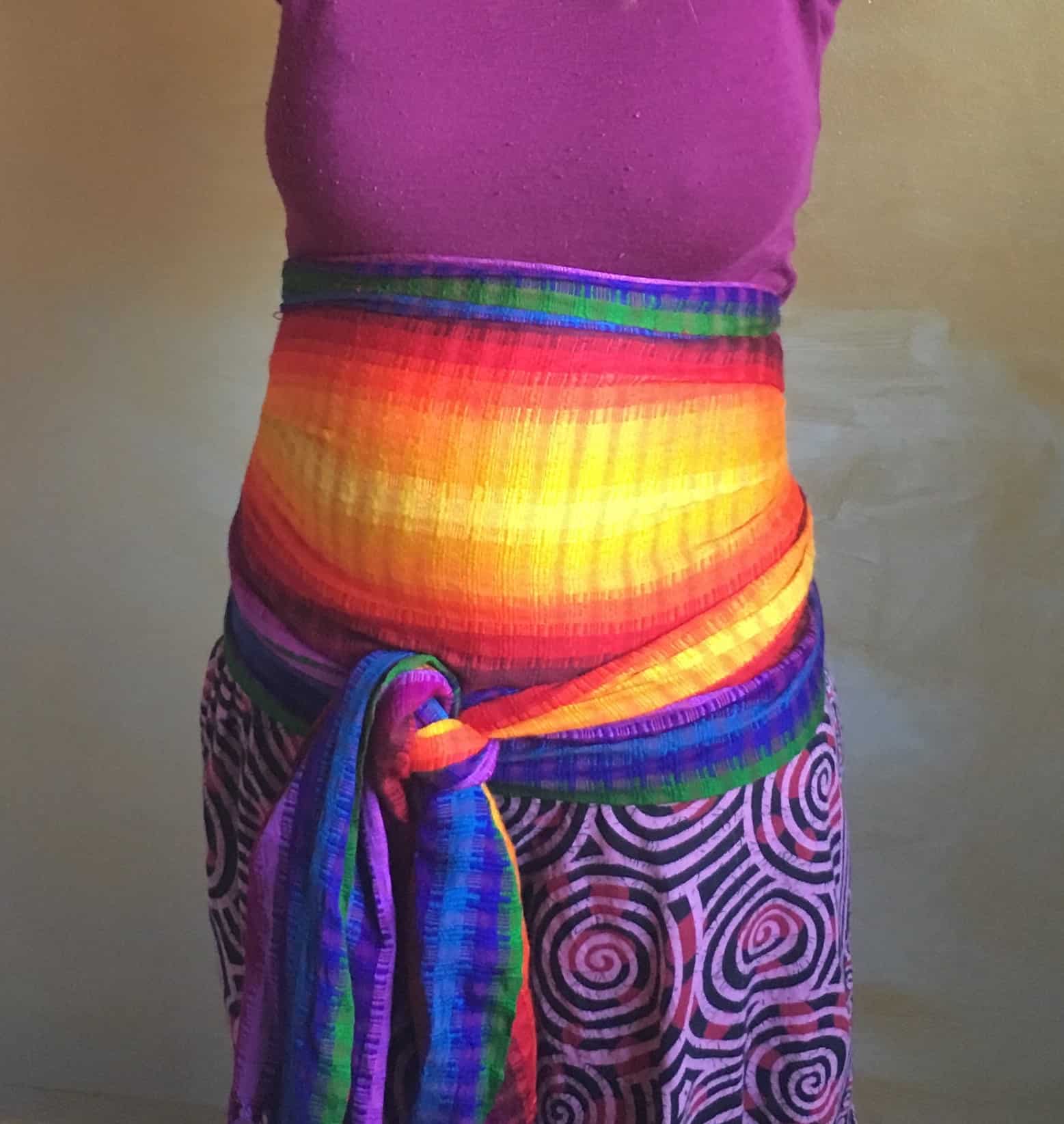
Whilst the rebozo is a traditional shawl from Mexico and some South American countries, I found that other cultures used different pieces of cloths in the same fashion.


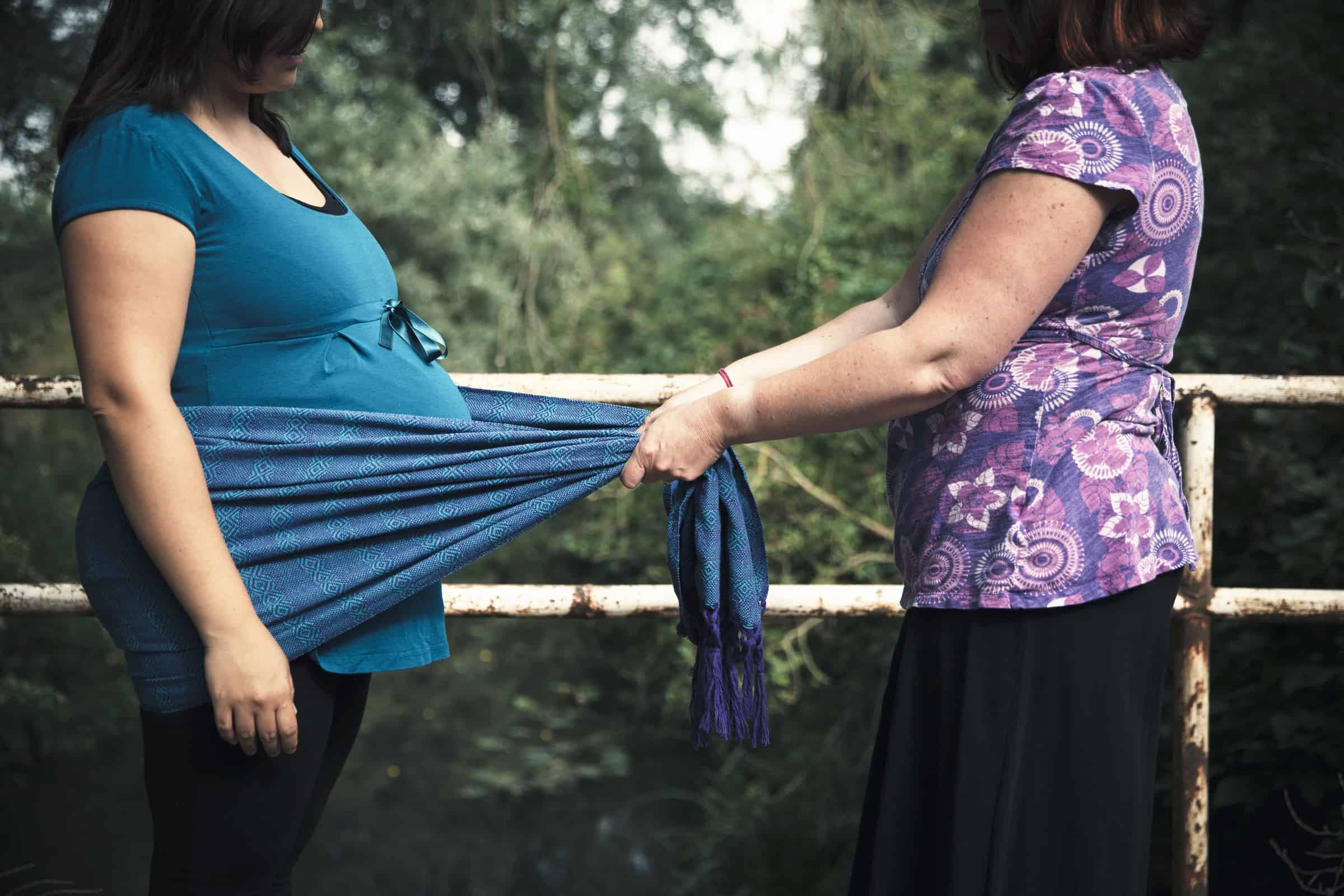

I was introduced to the art of using a traditional Mexican shawl called a rebozo to comfort birthing women at my doula course by Maddie McMahon in 2008.
It’s also quite fascinating to see how contact with foreign cultures can influence each other. For example I recently acquired a Dutch postpartum girdle called a
During labour she would have used the shawl to hang from, to pull on, and her birth attendants would have used it to provide comfort measures, such as sifting, rocking, shaking, and wrapping.
She then would have started to use the cloth to carry her baby and start the cycle all over again.


