Category: closing the bones

  • You don’t need permission: why wrapped in rhythm is touching something women didn’t know they were missing.

    You don’t need permission: why wrapped in rhythm is touching something women didn’t know they were missing.

    What if you already knew how to do this?

    Last November, when I decided to create a new healing ritual, blending rebozo wrapping (closing the bones style) and intuitive drum healing, I knew I was taking a gamble, but I never expected it to prove so popular.

    I ran a fully booked taster workshop last month, and my first ever teaching workshop was also fully booked with a waiting list. Women are asking me when I’m doing it again AND also asking when I’m going to be offering an online version of this training.

    Honestly I was really surprised by how popular this has been. I think I’m beginning to understand why this is resonating so deeply. And it has everything to do with permission, intuition, and breaking away from patriarchal ways of doing things.

    How I got here

    I decided to create this hybrid modality after teaching closing the bones for over 12 years, when I facilitated a workshop with this modality, without prior training, for 55 women at the convention of women drummers. There not only did I witness how powerful it was, but I lost count of how many women approached me afterwards saying it was life changing.

    I had already been handing drums to my closing the bones students for over 3 years, but I hadn’t yet not making the drum as important as the wrapping. When I last taught the closing the bones workshop in its previous inception to a group of doulas last November (with the rocking, the massage and the wrapping), one thing became clear: I needed to simplify things and make more room for the drumming.

    Four years ago, whilst training with Mexican midwife Naoli Vinaver, I had already become aware that wrapping what powerful in its own right, especially as I took this training whilst undergoing a mental health crisis. You can read about that here and the amazing effect of sharing this with my community here.

    Since the launch of my book, The Beat of Your Own Drum, and through teaching women about drumming and about ritual, one thread has become very clear: I want to offer something easy, simple and accessible to everyone. Something that is away from rules and rigid ways of practising. Something that doesn’t require years of training, but rather makes space for each person to do it from intuition, and with what works for them.

    In short: do it like you, not like me.

    Intuition over technique

    I think this was always in my nature, because during the first year I was teaching closing the bones 12 years ago, my then doula mentor, Suzanne, a very experienced healer, told me that what she liked best about my style of teaching was that I wasn’t imposing “my way” onto my students, but rather encouraging them to do it their own way.

    What I witnessed with 55 women at the drum convention in November showed me I was right. All these women knew how to hold space and how to drum, intuitively. Very little teaching was needed and I could focus on space holding and responding in real time to what was happening, instead of being in my head to correct techniques.

    Last week when I did a taster workshop with 12 women I was able to go into a completely altered state of consciousness whilst facilitating, because I didn’t need to focus on the technique. From that space I could feel where everybody was at, whether they were ready to move to the next wrap, I could drum and sing, and respond energetically instead of intellectually.

    That felt very, very right to me.

    The patriarchal construct of “doing it right”

    Over the last 12 years of teaching closing the bones and rebozo techniques, one thing that I have noticed time and time again is that students often ask how long or how fast/tight they should rock, massage, or wrap the woman they’re working with. I have felt that this need to be given strict numbers is rooted in a patriarchal way of doing things, one that likes to measure everything, and treat everyone the same. I have always answered that it depends on the woman and that you need to ask her what she prefers, as well as feel into it.

    Since starting to teach drumming workshops, I keep hearing women ask me what is the “right technique”, the right rhythm to drum. And time and time again I tell them the right rhythm is the one they want to play intuitively. IWhen I was interviewed by a scientific journal about drumming and birth, and the editor asked me what rhythm I play during births, and I explained that I didn’t use any set rhythms, rather I played my drum by responding intuitively to the mother and the energy in the room.

    But with the drum, now I’m going even further: I tell women to actively avoid trying to play set drumming rhythms, because it may prevent them from learning to trust themselves (worrying that they are “doing it wrong”), and also prevent them from learning to drum intuitively.

    This fear of doing things wrong, this idea that there is only one right way of doing things, is a patriarchal construct, and I want to help women break away from it. I tell them this is self expression, and the opposite of a performance.

    The drumming I encourage women to explore isn’t a performance, it’s self expression.

    For me this is similar to dance. I’ve attended 5 Rhythms dance sessions for over 6 years. 5 Rhythms is about self expression, not “doing the right dance steps”. It’s completely different from taking ballroom dancing classes. 

    Believing that the only right drumming is playing set rhythms is similar to believing that 5 Rhythms isn’t dance, and that only dance with set steps, like say Tango, is ā€œtrueā€ dance. They are just two different things. Both are valid and enjoyable in their own rights but they do not serve the same purpose. And you could do and enjoy both!

    You don’t need permission

    Another thing I have noticed (something I write about extensively in my book), is that the gatekeeping of artistic expression is something that only exists in modern western society. In human cultures around the world, drumming, dancing and singing are normal communal activities (the same way it’s normal for bees to make honey), and NOT DOING THEM isn’t normal. They aren’t reserved to a select few who are ā€œgood enough” Only it’s kind of hard when we haven’t been raised that way.

    This leads me to my next point: you don’t need permission.

    You don’t need permission from anyone to drum, not from me, not from a teacher, not from anyone who can decide whether you are “good enough” to do it.

    You also don’t need permission to give healing, touch, holding, nurture and care to other women.

    The same applies to the idea that one needs permission to do healing rituals like closing the bones. While I understand that some people prefer to prioritise formal lineage structures, I believe the practices of woman care, including closing ceremonies, belong to the collective wisdom of women across cultures, not to gatekeepers. These are human practices that have emerged independently in multiple traditions precisely because they meet fundamental human needs. I don’t believe anyone requires permission to learn, adapt, and offer rituals or woman care, and I encourage all my students to do so.

    What matters is not whose permission you have, but whether you practice with skill, ongoing learning, and genuine care for the women you serve.

    The new era we’re stepping into

    I believe that we are at the cusp of a new era when new modalities need to come forth, away from the gatekeeping of patriarchal structures, and that encouraging women to trust themselves and feel good enough (in a culture that has subtly, and not so subtly been teaching them that they aren’t), is fundamentally important.

    And this is why I believe that my new workshop is proving so popular, because deep down we women know this.

    We know that we don’t need more rules, more techniques to master, more hoops to jump through to prove we’re “good enough”. We need permission to trust ourselves. We need practices that meet us where we are. We need to remember what our ancestors knew: that caring for each other, drumming together, holding each other, these aren’t skills reserved for the initiated. They’re our birthright.

    Want to learn this work?If what I’ve written here resonates with you, I’m teaching the next Wrapped in Rhythm in person workshop near Cambridge on the 9th and 10th of May.

  • From Closing the Bones to Wrapped in Rhythm: Why I’m Changing How I Teach This Ritual

    From Closing the Bones to Wrapped in Rhythm: Why I’m Changing How I Teach This Ritual

    For over a decade, I’ve been teaching closing the bones, a traditional postpartum ritual involving rocking, massage, and wrapping with rebozos. I’ve worked with hundreds of women, trained over 1,000 students both in person and online across 30 countries, and continuously evolved my practice through experience, training, and intuition.

    Now, I’m making a significant shift. I’m moving away from teaching the full traditional sequence and focusing on what I’ve discovered is most powerful: the wrapping combined with drumming. I’m calling this new approach Wrapped in Rhythm.

    This isn’t abandoning the ritual, it’s distilling it down to its most accessible, intuitive, and transformative essence. Here’s how I got here.

    The Evolution: From Complex to Simple

    I started teaching closing the bones in 2014. Since I first started, the way I teach has evolved continuously, not only because I trained with a wide range of people, but because my own practice evolved over time, and is still evolving.

    In the early days I taught a simple hip rocking, abdominal massage, and hip wrapping  process. Over time I learnt more massage techniques, and adapted some of them to make them more effective, and learnt to wrap the entire body rather than just the hips.

    By practising this ritual with hundreds of women, teaching it to over 1000 students, and continuing to train with a wide range of teachers of this ritual and bodyworkers, I developed my own unique way of offering it.

    Fairly early on I added drumming, because, even before I understood the way drumming slows the brain down and modifies our state of consciousness, it felt right.

    There were several defining moments in my experience that changed the way I practiced. For example supporting new mothers post cesarean, and finding out that I could adapt the technique, and omit the lower abdominal massage and still provide deep healing. Another one was first during the 2020 lockdowns, when I supported new mothers in pain (read more about this here), I realised that just rocking and wrapping could still be immensely helpful (this led me to offer my closing the bones online course), and more recently when I trained with Mexican Midwife Naoli Vinaver, whilst going through a mental health crisis, I discovered how incredibly healing the wrapping alone could be. I started sharing the wrapping more widely with my local community, and this led to the ritual being done often on people’s birthdays.

    I see a similarity between this evolution and how I originally practised when I first learnt Reiki in 2003: I thought it would only work if I had at least 30 min, had the person lying down on a couch and did all the hand positions in the right order. Then I read an article from a teacher who encouraged people to do just 5 min on someone sitting on a chair if that’s all that time allowed, and discovered that it could still be powerful.

    Over the last 4 years, I have done a lot of impromptu closing the bones, sometimes having no rebozos with me, and borrowing people’s scarves, sometimes doing workshops, sometimes doing just a 10 min taster by wrapping the hips in women circles. Last year I attended a local retreat. I only had one rebozo, and I hadn’t planned to demonstrate anything but I ended up doing some impromptu wrapping because people asked me. I was amazed when a man had a very powerful emotional release when I wrapped his shoulders, and I think he was as amazed as I was. These experiences have taught me that 5 min of wrapping can be powerful in their own right.

    The Drumming Deepens

    I started adding drumming to the ritual in 2014, because I did a group ceremony during which a woman was drumming in the background, and it just felt right. Over the last 13 years my drumming practice has grown exponentially, from drumming during closing the bones, to training to become a Reiki drum practitioner then teacher, to drumming during births (read about that here), to publishing a article on the effect of drumming during birth in the international journal of birth and parenting education. All of this led to the writing and publishing of my second book, The beat of your own drum, the history, science and contemporary use of drumming as a path for women’s wisdom, health and transformation. As I write this I’m in the process of starting some research with Prof Joyce Harper, Professor of Reproductive Science at the Institute for Women’s Health, University College London, which we will publish.

    The Power of Simplicity

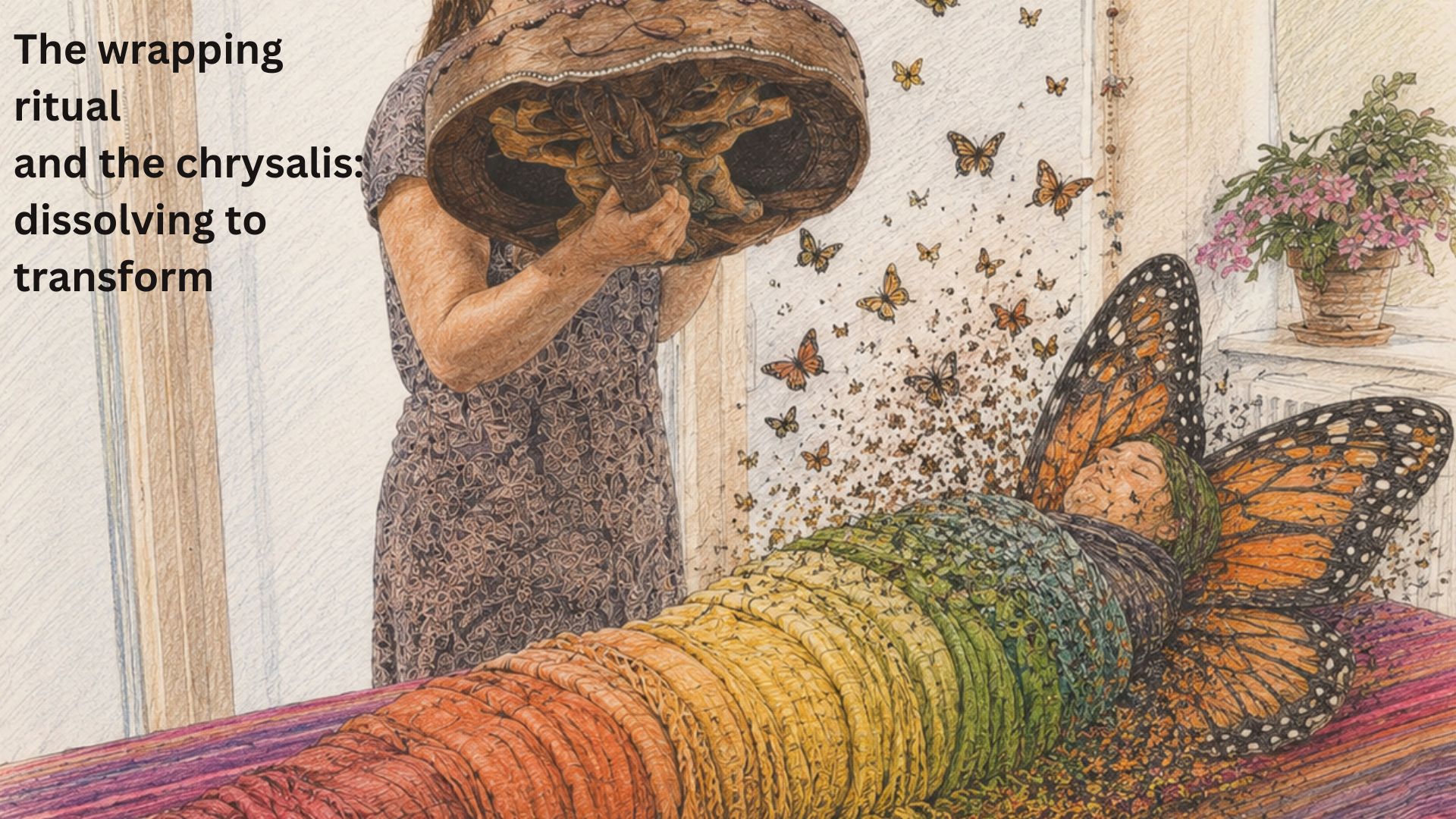
    In 2022, when I was in the middle of a mental health crisis, I attended a 3 day long rebozo training with Mexican midwife Naoli Vinaver. She showed us how to the closing the bones wrapping with 7 rebozos, something I was already doing. However, she showed a slightly different version of what I had been teaching. In particular she wrapped the head and eyes like a cocoon (I had been avoiding wrapping the eyes until then, believing that it might make people feel claustrophobic), and she also instructed us to tighten each rebozo until it was tight enough for the woman, then hold it until she said it was ā€œdoneā€ for each wrap. The combination of the tight wrap around the head, helping me to go deeply inwards, and being wrapped and waiting until it was ā€œdoneā€ felt incredibly powerful, and healing.

    A couple of weeks after this training, I shared this experience with 30 of my friends in a local community retreat, and I could clearly see how powerful it was for everyone.

    After this I shared it as widely as possible, and I changed the way I taught closing the bones workshops to reflect my new knowledge.

    Towards the end of 2025, I got the sense that change was afoot again and that I was probably teaching the last of the current version of closing the bones in its current inception.

    You see I’m someone who loves doing new things, and I like what I offer to reflect my evolution. I’ve modified my teachings to reflect my evolution countless times, forever creating new teaching plans and handouts as the practice evolves.

    In November 2025, I led a large workshop at the UK convention of women drummers. Being aware that closing the bones can lead to big emotional releases, I has asked to limit my group to 30 women. However, due to venue constraints, I was asked to take half of the attendees (50 women), whilst the other half did a drumming workshop in the other hall. I asked my friend Malwina, who is also experienced in teaching closing the bones, to join me in holding the space for the workshop. It was no mean feat, and I had to bring my entire teaching stock of 47 rebozos, and ask Malwina to bring 10 extras. In the end we had 55 women attending the workshop. I shouldn’t have worried because it was utterly magical. I led women in groups of three, to wrap each other with 3 rebozos (shoulders, hips and lower legs), and then to drum over the wrapped woman. Was it because most women there were already drummers, and skilled at holding space? The energy in the room was so beautiful and healing as they worked. Thanks for over 15 years of facilitation experience, I was able to respond in real time and make changes according to what was happening in the room. I also drummed, played the flute, and sang whilst women were being wrapped. It went better than I could have imagined.Ā  We even had time to show all the women how to wrap their own hips, and we finished singing and swaying in a big circle. Not only did it feel magical but I lost count of how many women came to see me after the workshop, and the following way to tell me it was life changing.

    Why Wrapped in Rhythm Makes Sense

    So I’ve decided to change the way I teach closing the bones, to make more room for the wrapping and the drumming. Instead of teaching a sequence of rocking, abdominal massage and wrapping, I’m going to teach the wrapping in more depth, with more options, and make more room for the drumming.

    There are several reasons for this:

    With my drumming work, I’m very keen to encourage women to drum intuitively rather than using set rhythms. This is because I use the drumming as a tool for self expression rather than a performance. When being asked about rhythms, I always answer that the best rhythm is an intuitive one that responds to the energy of the person drumming, or the person for whom you are drumming.

    This is similar to what Naoli Vinaver said when people asked ā€œHow fast, how long, at what amplitude should you rock or wrap the rebozoā€ and she always replied (something I’ve always done too): you just ask the woman!

    Everything in my work currently is leaning towards more simplicity and accessibility, towards the fact that we already know what to do, we have just forgotten how to do it. In my drum circle, during one of the rounds of drumming, I ask if anybody is particularly in need of healing, then I suggest there people lie down, and that the rest of us drum over them. I purposefully do not give any instructions and people (including people who have never drummed before) always know what to do, and report that they found it incredibly powerful to find out that they can do this.

    With the wrapping is it the same: contrary to the abdominal massage, which requires skill and correction, and a lot of practice to become confident, everyone can immediately do the wrapping, after just a few minutes of demonstration.

    Combined together the wrapping and drumming are powerful. The wrapping provides a deep sense of nervous system safety, brings you back into the present and into your body. The drumming adds to this by putting you into a deeply relaxed state of consciousness (like a deep meditative state), and from this place, the body and mind can reset into a place of calm and grounding. 

    In the workshop I also want to cover both working on a mat on the floor and on massage tables so people can discover what works best for them.

    With my desire to support more women  to go from a place of intuitive knowing rather than structured learning,this new modality, which I called Wrapped in Rhythm, makes a lot of sense.

    Moving Forward

    The essence of healing doesn’t require complexity. It requires presence, intention, and trust.

    By focusing on wrapping and drumming, the two elements that are most accessible, most intuitive, and most transformative, I’m honouring what I’ve learned from over a decade of practice and countless moments of discovery.

    I’m teaching the first taster workshop of Wrapped in Rhythm on Sunday afternoon, 1st February, and the full technique on Saturday 28th February and Sunday 1st March.

    This feels like coming home to what the work has been trying to tell me all along: we already know how to heal each other. We just need to remember, to slow down, and to trust our hands and our rhythm.

    The wrapping holds us. The drumming carries us. Together, they help us return to ourselves.

  • Closing the Bones: Ritual Healing for Life Transitions

    Closing the Bones: Ritual Healing for Life Transitions

    You may have heard of the Closing the Bones massage ritual for postpartum recovery, but did you know it can also help with healing after loss and trauma, support transitions, and soothe the nervous system, especially for neurodivergent women?

    In our modern world, we often forget the power of traditional healing traditions. Closing the Bones is one of those rituals that offers deep healing beyond words. It holds space for the body, mind and spirit to come back into balance.

    Rooted in traditions from all over the world, this ritual has helped women through major life changes for centuries. It’s not just for new mothers. It can help with grief, trauma, illness, and any time of beginning or ending. It provides a safe space to rest, release and reconnect with yourself.

    Closing the Bones uses gentle rocking movements using scarves, massage, wrapping, and symbolic ritual. In my version, I also use texts, songs, energy healing and drumming . It’s a quiet, nourishing experience that helps people feel safe and held. The ritual can be offered one-to-one or in a group setting. I’ve offered this ritual to hundreds of women and trained over 1,000 practitioners and witnessed again and again how powerful it is.

    What is Closing the Bones?

    Closing the Bones is a traditional postpartum ritual. It’s best known from its South American culture origins, but versions of it exist(ed) in every continents including in Europe and other parts of the world too. It involves gently rocking the body with scarves, massaging the abdomen and chest (and sometimes the whole body), and wrapping scarves around the body in a particular sequence. In some cultures, it also includes a steam bath or sweat lodge. I always include drumming.

    The ritual helps:

    • Physically, by bringing movement into joints, tissues and fluids
    • Emotionally, by offering space to rest and be witnessed
    • Spiritually, by marking a transition or closure and gathering back your energy

    This practice supports healing during many of life’s transitions, not just postpartum.

    Here are some of the ways I’ve used it, both personally and professionally:

    • Menarche, Motherhood, Menopause These three big changes in a woman’s life are often ignored or seen as inconvenient. But they’re powerful rites of passage. As Jane Hardwicke Collings says: “Anything to do with women, or the feminine that is put down, ridiculed, feared, or made invisible, is a clue that it holds great power.” Closing the Bones honours and witnesses these transitions.
    • Conception and Fertility This ritual has helped many women on their fertility journeys. It can be used to support conception or as part of conscious conception work.
    • New Beginnings or Endings From marriage to divorce, career changes to birthdays, any new beginning or ending can be supported with this ritual. It creates a space to pause, reflect and honour what is changing.
    • Loss I have supported many women after miscarriage, abortion, stillbirth and other forms of loss. It can also help with grieving a loved one, a community, or a version of yourself. It provides a gentle and sacred space for mourning and healing. Read my article about this.
    • Trauma I’ve used this ritual to support healing from birth trauma, sexual trauma, accidents and emotional crises. I’ve received it myself in a very difficult time, and it made a huge difference. You can read more in my post on ADHD and the kindness boomerang.
    • Neurodivergence and Nervous System Support Many neurodivergent people struggle with nervous system regulation. This ritual helps the body learn what it feels like to be safe. My daughter, who is autistic, has always loved it. Only later did I realise how connected it was. The wrapping especially helps calm and contain big feelings. It’s also helped many of the neurodivergent children and adults I’ve worked with.
    • Recovering from Illness Whether it’s chronic illness, long-term fatigue, or even end-of-life care, Closing the Bones can bring comfort and support to the body and soul.
    • A different approach to mental health Western models of mental health often focus only on the mind. But trauma lives in the body. This ritual helps without needing to talk. The body gets to release, integrate and find peace. There’s no need to share your story unless you want to. That’s one of the things people appreciate the most.

    The ritual uses gentle pressure, rocking, massage and wrapping to create a sense of safety. It calms the nervous system, helps the body release stored stress and trauma, and brings deep rest. The symbolic elements, like the tightening of the scarves around the body and the drumming, help people feel a sense of completion and rebirth.

    Want to learn or receive this ritual?

    If you work with women or support people through big life transitions, and you want to offer this ritual, I have an in-person training coming up near Cambridge:

    I also offer an online course version of the ritual if you cannot travel.

    I am running a free online masterclass about closing the bones for life transitions on Tuesday the 5th of August at 8pm UK time.

    If you’d like to receive the ritual yourself, I’m based in Cambridge, UK, and cover within a 30 min radius of my home. I’ve trained over 1,000 practitioners in person and can likely help you find someone near you.

    As they say, a picture speaks a thousand words, the video below shows a taster example of what my ceremony looks like

    Play


  • Rocking Away the Pain: Innovative Postpartum Rituals for Trauma Healing and Nervous System Regulation

    Rocking Away the Pain: Innovative Postpartum Rituals for Trauma Healing and Nervous System Regulation

    In postpartum care and trauma healing, ancient wisdom is meeting modern neuroscience to create powerful, holistic approaches. Somatic rituals like closing the bones are gaining recognition for their profound impact on both physical and emotional well-being.Ā 

    At the heart of these rituals lie two seemingly simple yet deeply effective techniques: rocking and wrapping. In this article I look at the science behind these practices, exploring how they tap into our primal comfort mechanisms to regulate the nervous system, promote healing, and offer a symbolic journey of rebirth after trauma.Ā 

    Whether you’re a new mother, a trauma survivor, or a holistic or healthcare professional, understanding the transformative power of these rituals can open new pathways to healing and self-discovery.

    What happens during a closing the bones ritual?

    The ritual includes rocking the entire body with scarves (I use Mexican shawls called Rebozos), following by an abdominal massage sequence, and finally a process of tightening the rebozos around the body in sequence from the head to the toes.

    For a longer explanation, read my article What is closing the bones. And, because a pictures speaks a thousand words, watch the short video below to get a taster of what it looks and feels like:

    Play

    How closing the bones supports healing and nervous system re-regulation

    Rocking and wrapping

    Rocking and wrapping, two key elements of the closing the bones and postnatal recovery massage ritual, play a crucial role in calming the nervous system and healing from stress/trauma. These seemingly simple actions tap into deep, primal comfort mechanisms that can profoundly impact both our nervous system and emotional state.

    The soothing power of rocking

    • Rocking is a universal comfort measure, instinctively used by mothers to soothe infants. This rhythmic motion has several benefits for trauma recovery:
    • Nervous system regulation: The gentle, repetitive movement of rocking helps activate the parasympathetic nervous system, our body’s “rest and digest” mode. This counteracts the hyperarousal often associated with trauma.
    • Grounding and presence: Rocking encourages a focus on bodily sensations, helping individuals connect with the present moment rather than being caught in traumatic memories.
    • Emotional release: The soothing motion can create a sense of safety, allowing suppressed emotions to surface and be processed gently.
    • Vestibular stimulation: Rocking stimulates the vestibular system, which is linked to our sense of balance and spatial orientation. This can help individuals feel more centered and embodied.


    The comforting effect of wrapping

    Wrapping, another key component of these rituals, offers its own set of benefits for trauma recovery:

    • Deep pressure therapy: The firm, encompassing pressure of wrapping, activates the body’s deep pressure receptors. This stimulation can reduce anxiety and increase feelings of security.
    • Boundary reinforcement: For those who have experienced boundary violations, wrapping can provide a tangible sense of where the body ends and the outside world begins, reinforcing a sense of self.
    • Containment: The physical containment offered by wrapping can symbolically represent emotional containment, helping individuals feel safe enough to process difficult emotions.
    • Proprioceptive input: Wrapping provides strong proprioceptive input, which can help individuals feel more present in their bodies – particularly beneficial for those who dissociate as a trauma response.


    Neurodivergence and Sensory Regulation

    For neurodivergent individuals with autism or ADHD, rocking and wrapping can be particularly beneficial:

    • Sensory regulation: These actions provide predictable, controllable sensory input, which can be calming for those who struggle with sensory processing.
    • Self-stimulatory behaviour: Rocking, in particular, mimics self-stimulatory behaviours often used by neurodivergent individuals for self-regulation.
    • Anxiety reduction: The deep pressure from wrapping can significantly reduce anxiety, a common co-occurring condition in neurodivergence.

    Symbolic Rebirth and Integration

    Beyond their physiological benefits, rocking and wrapping carry powerful symbolic meaning:

    • Womb-like experience: these processes can recreate a womb-like environment, symbolically offering a chance for rebirth or a fresh start after trauma.
    • Ritual transformation: The process of being wrapped and then unwrapped can represent a journey through trauma and emerging anew.

    In conclusion, the rocking and wrapping elements of closing the bones and postnatal recovery massage offer a unique blend of physiological regulation and symbolic transformation. By tapping into these primal comfort mechanisms, these rituals provide a gentle yet powerful approach to trauma healing, honouring the body’s innate wisdom and capacity for recovery.

    Conclusion

    The practices of rocking and wrapping, central to rituals like closing the bones, offer a potent blend of physiological and psychological benefits. By harnessing the body’s innate healing mechanisms, these techniques provide a gentle yet effective approach to trauma recovery and nervous system regulation. Their universal appeal lies in their ability to create a sense of safety, groundedness, and renewal – essential elements for healing after birth or traumatic experiences.

    The adaptability of these practices makes them valuable tools for a wide range of individuals, including people who are neurodivergent. Rituals like these remind us of the profound connection between body and mind in the healing process.

    For professionals in the field of women’s health and trauma recovery, incorporating these techniques into your practice can offer clients a unique and deeply nurturing path to healing.Ā 

    In embracing these ancient yet innovative practices, we open doors to holistic healing that honours the body’s wisdom and the power of gentle, intentional care. As we rock and wrap away the pain, we create space for a profound sense of coming home to ourselves.

    Learn to offer the ritual

    If you are a holistic professional who supports women through birth, other life transitions or healing and you would like to be able to offer this ritual, I have 3 in person trainings near Cambridge this summer. I also offer an online course version of the ritual which makes it possible to learn this ritual anywhere in the world.

    You can watch the videos below to get a feel of both the postnatal recovery massage ritual (done on a massage table instead of a mat on the floor).


    Play


  • Closing the Bones Ritual: A Polyvagal Approach to Healing Trauma

    Closing the Bones Ritual: A Polyvagal Approach to Healing Trauma

    The ancient ritual of closing the bones offers a powerful approach to healing trauma that aligns remarkably well with modern understanding of the nervous system, particularly polyvagal theory.Ā 

    This ritual, traditionally used for postpartum recovery, has broader applications in addressing various forms of trauma and supporting nervous system regulation.

    What is closing the bones?

    Closing the bones is a traditional postpartum massage ritual. It is mostly known for its Mexican and South American roots, but versions of it exist (or used to exist) on all continents (including in Europe).

    A closing the bones ritual involves the rocking of the body using scarves, a deep massage of the abdomen (and sometimes the whole body), and a sequence of tightening scarves around the body.Ā  Some traditions also add a steam bath or sweat lodge. I use drumming in my rituals as well.

    A closing the bones massage supports healing

    • Physically, by providing movement in the joints, muscles, tissues and fluids.
    • Emotionally, by providing space to rest, be witnessed and held safely, as well as for emotions to be honoured and released.
    • Spiritually, by providing closure, a space to let go of what was, and bringing energy back to the person receiving it.

    Closing the bones and trauma through a polyvagal theory lens

    The polyvagal theory, developed by Dr. Stephen Porges, explains how our nervous system responds to stress and trauma. It describes three states: the ventral vagal (safe and social), sympathetic (fight or flight), and dorsal vagal (freeze or shutdown). Trauma often leaves individuals stuck in sympathetic arousal or dorsal vagal shutdown.Ā 

    The closing the bones ritual provides a unique, body-based approach to gently guide the nervous system back to a state of safety and connection.

    Here’s how the ritual supports trauma healing through a polyvagal lens:

    • It creates a sense of safety. The ritual environment, with its gentle touch, rhythmic movements, and nurturing presence, helps activate the ventral vagal state. This allows the nervous system to remember what it feels like to be safe, a crucial first step in trauma healing.
    • It provides rhythmic stimulation. The rocking movements used in the ritual provide rhythmic stimulation, which can help regulate the nervous system and bring it out of fight/flight or freeze states. Think about how rocking soothes a baby.
    • It provides deep pressure. The use of scarves to apply pressure around the body stimulates the parasympathetic nervous system, promoting relaxation and countering the hyperarousal often associated with trauma.
    • It provides an opportunity for non-verbal processing. By focusing on bodily sensations rather than verbal recounting of traumatic experiences, the ritual allows for processing trauma without risking re-traumatization.
    • It provides interoception. The gentle massage and body awareness promoted in the ritual can enhance interoception – the sense of the body’s internal state. This is often disrupted in trauma and improving it is key to healing.
    • It offers an opportunity for social engagement. The presence of a supportive practitioner during the ritual activates the social engagement system, a key aspect of the ventral vagal state that promotes healing and connection.
    • It provides embodiment. The ritual’s focus on the body helps individuals reconnect with their physical selves, countering the dissociation often experienced in trauma.
    • It provides containment. The wrapping of the body provides a sense of containment, which can be particularly soothing for a dysregulated nervous system. Again, think about how swaddling helps many babies calm down.
    • It is also particularly helpful for neurodivergent people, who may experience heightened nervous system dysregulation. It provides a structured, predictable experience that can help regulate an overwhelmed system without relying on verbal processing.

    By incorporating elements that speak directly to the nervous system’s need for safety, rhythm, and connection, the closing the bones ritual offers a holistic approach to trauma healing. It provides a somatic experience that can guide individuals from states of hyperarousal or shutdown back to a state of calm and connection, supporting the integration of traumatic experiences.

    This body-based, non-verbal approach stands in contrast to traditional talk therapies, offering a complementary path to healing that honours the wisdom of the body and the intricate dance of our nervous system.Ā 

    As we continue to understand the profound impact of trauma on both mind and body, rituals like closing the bones offer a bridge between ancient wisdom and modern neuroscience in the journey towards healing and wholeness.

    If you’d like to learn more, I have a masterclass on using closing the bones to heal trauma, and you can learn to offer this ritual in my online course.

  • Closing the bones: Ancient Wisdom for Modern Healing

    Closing the bones: Ancient Wisdom for Modern Healing

    You may have heard of the closing the bones massage ritual for postpartum recovery, but did you know that it also supports healing loss and trauma, supports endings and beginning through life’s transitions & helps regulate the nervous system, including for people who are neurodivergent?

    In our modern times, we often overlook the profound wisdom of ancient healing traditions passed down over generations. The closing the bones ritual offers a transformative path to healing that transcends physical and emotional boundaries.

    Rooted in diverse cultural practices worldwide, this powerful ritual has supported women through life’s most pivotal transitions and traumas for centuries. From the journey of motherhood to experiences of loss, it provides a nurturing space to process, integrate and heal mind, body and spirit.

    But this ritual’s impact extends far beyond the postpartum period. It offers a unique approach to supporting mental health, emotional wellbeing and overall vitality. Through gentle movements, symbolic elements and connection to the body’s wisdom, it empowers women to reclaim their bodies as vessels for healing.

    Prepare to be captivated as you discover how this ancient tradition is profoundly relevant in today’s world in supporting women through every facet of their life’s journey.

    What is closing the bones?

    Closing the bones is a traditional postpartum massage ritual. It is mostly known for its Mexican and South American roots, but versions of it exist (or used to exist) on all continents (including in Europe).

    A closing the bones ritual involves the rocking of the body using scarves, a massage of the abdomen and chest (and sometimes the whole body), and a sequence of tightening scarves around the body. Some traditions also add a steam bath or sweat lodge. I use drumming in my rituals as well.

    A closing the bones massage supports healing:

    • Physically, by providing movement in the joints, muscles, tissues and fluids.
    • Emotionally, by providing space to rest, be witnessed and held safely, as well as for emotions to be honoured and released.
    • Spiritually, by providing closure, a space to let go of what was, and bringing energy back to the person receiving it.

    I have written many posts on closing the bones and you can find them below:

    Beyond the postpartum

    A closing the bones ritual holds immense significance beyond the postpartum period, serving as a profound way to honour and facilitate healing through various transitions and rites of passage in a woman’s life. Rituals play a vital role in these contexts, as they provide a sacred and intentional space for individuals to process and integrate profound experiences.

    In our modern culture, where life’s significant milestones are often overlooked or minimised, rituals offer a much-needed opportunity to pause, reflect, and honour the depth of these transformative moments. They create a container for personal growth, healing, and transformation, allowing individuals to navigate life’s transitions with intention and reverence.

    Rituals have the power to calm the nervous system and facilitate a sense of grounding and connection. By incorporating symbolic elements, movements, and practices that resonate with the individual, rituals tap into the depths of our collective unconscious, providing a sense of meaning and belonging. This can be particularly powerful during times of trauma or upheaval, as rituals offer a structured and supportive framework for processing and integrating difficult experiences.

    Rituals also foster a sense of community and shared understanding. They create a space for individuals to come together, share their experiences, and offer mutual support and validation. This communal aspect is particularly relevant in the context of life transitions, where individuals may feel isolated or disconnected from their support systems. What is true for the lack of support women experience in the modern world during the postpartum period is also true during other significant life transitions.

    By embracing rituals like closing the bones, we reclaim a sense of sacredness and reverence for the journeys that women undertake throughout their lives. These rituals serve as a bridge between the physical and spiritual realms, honouring the profound transformations that occur within the body, mind, and spirit. They offer a space for healing, integration, and celebration, reminding us of the intrinsic value and beauty of life’s transitions and the growth that can emerge from them.

    Important life transitions times during women’s lives include:

    • Menarche, Motherhood, Menopause
    • Conception and fertility
    • New beginnings or endings
    • Loss: baby loss (miscarriage,Ā  abortion stillbirth), and any form loss
    • Trauma (birth trauma, sexual trauma, shock…)
    • Regulating nervvous system overwhelm (especially helpful for neurodivergent women)
    • Recovering from illness

    Menarche, Motherhood, Menopause

    • The 3 big transitions of a woman’s life, adolescence, matrescense and sagescence, are systematically dismissed, shamed, downplayed, feared, presented as only scary and/or inconvenient, andĀ  in modern cultures instead of the powerful rite of passage that they are.
    • As Jane Hardwicke Collings says ā€œAnything to do with women, or the feminine that is put down, ridiculed, feared, or made invisible, is a clue that it holds great power. Think menstrual blood, think childbirth, think menopauseā€¦ā€
    • A closing the bones ritual (especially one held in ceremony with a group of other women) provides a way to empower, witness and honour these passages.

    Conception and fertility

    • Not only is this ritual a powerful healing experience for the postpartum but I have plenty of personal experience (and other practitioners too) of women overcoming fertility issues after this ritual. It can also be part of a conscious conception process.

    New beginnings or endings

    • A closing of the bones is beautifully suited to support and ritualistically mark new beginnings and endings, such as mariage, divorce, a new career or job (or the end of one). I now use it as part of birthday celebrations for friends, and because I have trained many people in my community in offering this ritual, people tend to ask for it or offer it when people are struggling or when it’s their birthday.

    Loss

    • I have supported many women through loss, from miscarriage to abortion and stillbirth, and I have written a blog post called How closing the bones can support babyloss.Ā 
    • I have also used it to support people through the loss of a loved one, the loss of a community, a relationship etc. It is a perfect way to honour and support grieving and healing through difficult times in life

    Trauma

    • I have used this ritual many times to support birth and sexual trauma, including during pregnancy.Ā 
    • I have also used it to support people through all sorts of other situations causing trauma and or shock, including recently for a friend after she had been in a car accident.
    • I was myself the recipient of such a ritual last year when I was in a very difficult family situation, and it was instrumental in my recovery. You can read about this in my post, ADHD and the kindness boomerang.

    Regulating nervous system overwhelm & neurodivergent regulation

    • Through the ten years I have trained people in giving this massage, many told me how helpful it was for their kids who were autistic, especially the wrapping. My own daughter loved it and it never occurred to me until she was diagnosed with autism to put two and two together. This year I was diagnosed with ADHD myself, and I have been on a big journey to understand what this means. One of the things I have discovered is that people who are neurodivergent are very easily dysregulated. Closing the bones not only soothes the nervous system deeply but it also helps teach the body what it feels like to be safe. This is also helpful for anyone who is experiencing nervous system dysregulation.

    Recovering from illness

    • In the past I have used this ritual to support people through severe illness, including chronic lyme disease, and more recently, terminal cancer. Every time I can see how the effects of the ritual are incredibly supportive in this context too.

    A different approach to supporting mental health and wellbeing

    The closing the bones ritual stands as a powerful antidote to the limitations of the Western model of mental health, which often treats the mind as separate from the body. This holistic practice recognises that trauma and emotional wounds are not confined solely to the mind but are deeply embedded within the body.

    Western approaches to mental health tend to focus heavily on talk therapy and cognitive-behavioural techniques, which, while valuable, usually fail to address the somatic aspects of trauma and emotional distress. Trauma, in particular, is known to have a profound impact on the body, manifesting as physical tension, disrupted nervous system regulation, and even chronic pain or illness.

    Closing the bones offers a refreshing departure from this compartmentalised view by acknowledging the intrinsic connection between the mind, body, and spirit. Through its gentle, nurturing movements, deep pressure and symbolic elements, this ritual creates a safe and supportive space for women to process and release trauma without the need to relive their experiences.

    One of the profound strengths of this ritual lies in its nonverbal nature. By avoiding the need to share personal stories, it circumvents the potential for re-traumatisation that can occur in some talk therapy settings. Instead, it allows the body to express and integrate traumatic experiences through the language of sensation, movement, and energy.

    The ritual’s emphasis on holding, rocking, and massaging specific areas of the body facilitates a deep sense of grounding and embodiment. The gentle, safe touch and rhythmic movement can help regulate the nervous system, providing a sense of safety and allowing the body to release deeply held tensions and patterns associated with trauma.

    Moreover, the ritual’s incorporation of symbolic and ritual elements, such as setting intentions, the tightening and releasing with scarves around the body (a symbolic rebirth), the adding of drumming or energy work, can resonate on a profound level, facilitating the integration of experiences that may be difficult to articulate verbally.

    By embracing the closing the bones ritual, women have the opportunity to reclaim their bodies as vessels for healing and transformation. This ritual empowers them to process and integrate trauma in a holistic, non-retraumatizing way, honouring the wisdom of the body and the interconnectedness of physical, emotional, and spiritual well-being.

    Learning or receiving the ritual

    If you are a professional who supports women through life transitions or healing and you would like to be able to offer this ritual, I have 3 in person trainings near Cambridge in June, July and October.Ā 

    If you want to experience the ritual for yourself, feel free to get in touch with me. I’m based in Cambridge, UK, but I have trained over 1000 people in offering this ritual, and I may be able to help you find a practitioner near you.Ā 

  • The Postnatal Recovery Massage: Embracing Tradition, Embodying Innovation

    The Postnatal Recovery Massage: Embracing Tradition, Embodying Innovation

    Since 2014, I have been teaching the closing the bones postnatal massage ritual to perinatal professionals. What started with a small workshop in my home grew organically. Over the last 10 years, I have trained over 800 professionals to provide this amazing ritual.  Postpartum specific bodywork is something that exists (or used to exist) all over the world and I’m on a quest to make it the norm once more. 

    The catalyst for evolution

    Within a couple of years of teaching, a growing number of students who had trained in the closing the bones ritual reached out, asking for a version adapted for a massage table instead of the traditional floor setting. They asked for this because several of them faced challenges like bad knees or backs, making floor work difficult.

    This call to action resonated deeply with me, and I consulted with my trusted friend and osteopath, Teddy Brookes, who was very familiar with the massage, having helped me understand its effects on the various joints and organs from an anatomical standpoint.

    Together, we embarked on an ambitious journey to develop a massage table version of this ritual, a true labour of love that took over a year and a half of dedicated trial and error.

    The creation process

    Each session was a meticulous exploration, meticulously recorded and analysed. Teddy and I would alternate between giving and receiving each technique, first on the floor, then on the massage table. We encountered numerous challenges, from biomechanical limitations to the struggle of preserving the ritual’s essence while adapting it to a new form.

    There were a lot of frustrations as we grappled with the intricacies of rebozo rocking and hip squeezing. Teddy’s deep knowledge of body function guided my perfectionist desire to create something true to the original ritual, whilst ensuring the technique’s safety, effectiveness, and ease on the therapist’s body.

    The breakthrough

    Just when we thought we had hit an impasse, the magic happened. I let go of my need for an exact replication of the original ritual, embracing Teddy’s guidance that we were aiming for the same effect, not an identical experience.

    With this breakthrough, everything seemed to flow effortlessly. We modified and added elements, treating areas like the ribs and shoulders that were overlooked in the original massage. The movements felt logical, seamlessly blending into a new, inspired ritual.

    The Postnatal Recovery Massage (PRM) was born, a fusion of tradition and innovation, embodying the essence of the closing the bones ritual.

    The first training

    After unveiling the PRM to a small group of local doulas and massage therapists, the feedback was overwhelmingly positive. The movements flowed beautifully, resonating with the spirit of the original ritual while offering a modern, therapist-friendly approach.

    As we put the final touches on our comprehensive handout, complete with descriptions, pictures, videos, and anatomical explanations, we looked forward to introducing this transformative technique to the world.

    The first workshop took place Cambridge in January 2019, and was a resounding success, with trainees expressing gratitude, excitement, and confidence in their newfound ability to support women postnatally. They spoke of the magical blend of science and spiritual knowledge we’d created and also expressed that this new massage would appeal to a wider range of women, due to it being done on a massage table instead of on the floor.

    Joining the movement

    The journey Teddy and I have taken has been one of passion, perseverance, and a deep commitment to nurturing the postpartum experience. With the Postnatal Recovery Massage, we have created a powerful ritual that harmonises tradition and innovation, empowering birth workers and therapists to provide profound healing and support to new mothers and support healing for women through life transitions. Since 2019 we have taught this massage to over 120 students.

    Because we teach this workshop together, we offer a unique blend of healing approach together with solid anatomical knowledge, a lot of hands-on practice, personalised feedback and support during the training, and any additional resources or support provided to ensure students feel fully supported to offer the ritual after the workshop.

    Here is some of the feedback we received from our students:

    • What a wonderful, professional, well constructed and instructive course with plenty of time for step by step practical, complemented by Teddy’s expertise and Sophie’s organic shamanism and such a wonderful community of like minded body workers. Thank you. Thoroughly recommended. Jenni Tribe, Therapist
    • Amazing workshop! Loved being in a small group to work through techniques in enough details. As an osteopath this experience has been invaluable in improving my practices of postnatal patients, in fact all of my patients! Rob Ballard, osteopath
    • The course was well organised, very informative and easy to follow. The level of practical support was fantastic and I feel confident to take what IĀ  have learnt and help local women postnatally. Thank you! Becki Scott, doula and massage therapist
    • The massage is a wonderful reworking of the traditional Closing The Bones massage performed on a couch rather than the floor. Sophie and Teddy have taken all that is special about it and fused her energy-work approach with his osteopathic technique to create something extraordinary. It incorporates binding, rocking, jiggling and specific tension releases, with massage of the chest, abdomen and pelvis with warming oil. It is truly a celebration of the postpartum body!Ā  Charlotte Filcek, doula

    Since developing this massage, both Teddy and myself have had repeatedly amazing results when offering this ritual to women, both in terms of physical healing (in particular, its incredible effectiveness at closing separation of the abdominal muscles, known as diastasis recti. This proved very effective for new mothers, I had a woman with an inch gap from her birth 4 years prior.

    Questions and answers about the postnatal recovery massage

    What are the benefits of the postnatal recovery massage over closing the bones?

    • It is much easier on the body of the therapist. Working on the table allows you to use your body weight to provide the strength needed to rock the body with the rebozo, and to do the massage movements. You can move easily around the table, staying comfortable, without needing to kneel or squat as you do on the floor. Recently, I was delighted to hear from a friend who had a knee injury that learning the ritual meant that she could offer the massage again, much to her delight, and with amazing results.
    • It requires less space than a mat on the floor, making it more suited to a small therapy room.
    • There are more massage techniques than in the original massage, and they are more technical (for example: one is designed to help reduce the rib flare after birth, one to close the diastasis recti and one to pump lymphatic fluid around the chest), and some of the original massage movements have been modified to make them more effective.Ā 
    • Some women may feel more appealing to be massaged on a table rather than on the floor because being massaged on a table is the norm in the Western world. In this respect this massage may appeal to a broader audience than the floor work.

    Are there any disadvantages?

    • This is a very personal preference, but since I do both the floor version and the table version of the massage (and blend some of the techniques together), there are aspects of both I wish I could do in both settings and this just isn’t possible. So there are aspects of the treatment I like more on the floor (for example, the rebozo rocking, because standing over the person means that you can cocoon the body in a way you cannot do from the side of a table), and there are also movements can only be done easily on the massage table due to the need to use one’s body weight to do them (for example the rib massage or collarbone massage, are much more effective on the table)
    • The rocking with the rebozo is quicker on the floor as it rocks both sides of the body at once, instead of one side at a time on the table.
    • Some women prefer the floor version of the ritual as they find it more ā€œearthyā€.

    Are we going to offer an online version of the massage?

    • Many people have contacted me to ask for this. As the massage techniques are quite technically precise, we do not feel that we could teach this effectively without being present to demonstrate and correct our students.

    If you feel the call to be part of this transformative movement, to embrace the nurturing power of the Postnatal Recovery Massage, and to change the face of postnatal support, one ritual at a time, contact me to find out when the next workshop is taking place.

  • How to recover from a miscarriage

    How to recover from a miscarriage

    I am writing this to provide a blueprint for physical and holistic recovery after a miscarriage.

    Background

    There is very little nurturing support offered to women after they give birth to a live baby, and in particular, almost no support in terms of bodywork to help the body and spirit heal. When you lose a baby, this kind of support is almost non existent. This is one of the reasons I wrote my book, Why Postnatal Recovery Matters. In the book there is part that covers recovery after baby loss.Ā 

    When you have a miscarriage, especially when your baby dies before you have reached 24 weeks pregnancy, there is usually very little offered to support your physical and emotional wellbeing. Because losing a pregnancy before a baby is considered medically viable, once the medical aspect of the loss has happened, once the baby has left your uterus, no further support is usually offered. The taboo around the first trimester of pregnancy doesn’t help.

    As a culture we are notoriously crap at supporting grief, and in the case of a miscarriage, it is further impacted by the lack of consciousness around the fact that it can be a very significant loss, regardless of how many weeks pregnant you were. There is no “holding” from the community as there might be post loss. No people rallying round with nutritious home cooked food and just being there for you.

    It can leave you with emotions and feelings that have nowhere to go, both physically and emotionally. Furthermore, there is no guide or support given to help you recover from a more holistic point of view. The leaflets given in the hospital usually only mention the physical aspects such as cramps and bleeding, but not much else beyond that.

    I have had 4 miscarriages and I wish I had known about the importance of nurturing myself back then. I was given a week off work, and I went to miscarriage association meetings which I found very helpful, but I now know that there is much more that could have been done so support and soothe my heart and body.

    A simple guide about how to look after yourself when you have a miscarriage:

    First of all, if you experience a loss, regardless of what stage of your pregnancy you were at, you will be in a postpartum state. You deserve the same support as a mother who has given birth to a live baby. In fact you will probably need it more, as you may experience deep grief.

    If you lost your baby earlier in pregnancy you might feel that your loss isn’t valid. But you cannot measure grief by what it looks like on paper. Your grief can be as real as if your baby died when you just found out you were pregnant, or if your baby died when he was several months old.Ā 

    There are some wonderful charities like the miscarriage association that offer very helpful emotional support. I have listed organisations at the end of this post that can provide support. Here I want to focus on some of the things you can do to support yourself, and your body, as you recover.

    Postpartum recovery boils down to 4 simple areas: Social/community support, rest, food and bodywork. The tricky aspect is that it is likely that you will have no time to plan. I hope you can still use some of the suggestions made here.Ā 

    Social/community support

    • Friends, family, neighboursĀ 
    • Hired helpĀ  such as doulas, who can not only take care of things in your house but also provide much needed holding and validation of your emotionsĀ 
    • Online support (social media groups, WhatsApp groups…)Ā 
    • Gifts. If people ask what they can do to help, you could ask them to purchase you some of the things you need from the list below. You can make a list to suggest what you’d like: food delivery, doula support or massage vouchers etc
    • Reach out to people for support. Many want to help but they just don’t know what to do or do not want to intrude. Ask for what you need. It might be different each day.

    Rest

    • Take time off work/ask for compassionate leave (this is only if doing this would help, some people find it easier to keep working). If this isn’t possible (for example if you work for yourself), try to slow down as much as you can.
    • Help with household (chores, cooking, cleaning, other children etc.)
    • Make a list of potential helpers for the above.Ā 
    • Take naps/ slow down
    • Relaxation: use relaxation techniques and appsĀ 

    Food

    • Make a list of people who can make/deliver you some food/ or ask someone to organise a meal train
    • Get food delivered (supermarkets, takeaway meals, frozen, fresh, meal boxes)
    • Eat foods that are warm, comforting, and which contains warming ingredients, lookup for typical postpartum foods, such as this Chinese postpartum soup.
    • Nutritious snacks and warming drinks.

    Bodywork

    • A massage/postnatal with someone who is sensitive to your needs
    • A closing the Bones ceremony
    • An appointment with a womb massage therapist
    • Work with a specialist manual therapists (osteopaths, chiropractors, and pelvis health physiotherapists)
    • Wrap your hips/abdomen
    • Keep your body warm by wearing layers/hot water bottles

    The Importance of Bodywork

    I want to expand on the bodywork aspect as I know it’s the most neglected one of the 4 categories. We literally offer zero bodywork after the birth of a live baby, and it doesn’t even enter most people’s consciousness to offer this after a miscarriage or stillbirth.

    I have been giving a postpartum massage ritual called closing the bones to new mothers, both post live birth and post loss for over 10 years, I know how important and healing this ritual can be. I have lost count of the times women have told me ā€œI thought I was just getting a massageā€ after receiving a closing the bones ceremony post loss.Ā  I have given this ritual to my own mother on the anniversary of the stillbirth of my little brother, over 40 years after birth, and it was very very significant and healing for us both.

    Symbolic Rituals and Objects

    Symbolic rituals and objects can be powerful ways to help process your emotions. I had a Jizo doll, inspired by a Japanese deity for pregnancy loss, made to represent and honour the loss of my babies. Some people make miscarriage jewellery. Some of my clients have written a letter to their baby, done a letting go ritual (for example by burying something), or made a small altar with a candle.

    Loss involves shock, and I was reminded of this recently, when I gave a closing the bones massage to a friend who had been in a car crash. She wasn’t physically hurt but she was in shock. After the ritual she was visibly calmer, softer, and more together.

    After a miscarriage, and any pregnancy loss, your body will be in need of healing and nurture. Giving your body this space will also help you process the grief. It will give you a space to honour your emotions, and give your body a change to regulate to a place of relaxation and safety.

    I wrote this blog post about how closing the bones can help with baby loss, and here are a couple of stories that poignantly express how meaningful it can be.

    ā€ I came along to the Closing the Bones Training about a year after my baby had died. Towards the end of the ceremony, as I was being rocked deep shudders started going through my body and as the rebozo was pulled tight around my pelvis I felt a huge emotion that even now I am not sure what to call it. It felt as though the protective bubble I had formed around myself moved away and with that my baby – as if I was releasing him. Sobs racked my body all the grief, the anger, the exhaustionĀ  all the disbelief of what had happened came pouring out. I hadn’t realised how much I was holding on to. I felt the women form a circle around me and felt what it was like to have a safe space held for me, allowing me to just be there in my wild tumult of emotion. I heard someone singing the most beautiful song and someone stroking my hair, hands touching me sending love and supportā€œ. RosieĀ 

    ā€œHaving the closing the bones massage helped me to accept my baby’s loss and start to move forward and also forgive my body and let go of all the negative feelings.ā€ Claire

    Wrapping for Comfort and Healing

    Bodywork wise, one thing you can do for yourself is wrap your hips and or belly, both to keep your core and womb warm, and help you feel more contained.

    WrappingĀ  makes you feel held and protected. It also helps to feel more present in your body, which is grounding and can reduce anxiety and stress. There is something about being wrapped that feels very primal, like a baby in the womb, or a baby being swaddled. The calming effect is a mix of being able to feel the contours of your body, and also being reminded of the primal sensations of being in the womb.

    Interestingly I have found (and others have too), that wrapping helps support my mental health. I think this has to do with both the feeling contained and the more energetic/protective aspect. In this blog post a woman describes how head wrapping helped her with anxiety, and my experience with pelvis/belly wrapping feels very similar.

    On a spiritual/energetic level, wrapping it helps you to feel grounded, return to your centre, feel less ā€˜open’ and gives a sense of protection. In many indigenous cultures, protecting the womb with a belt is a common practise for these reasons.

    I have written a blog about wrapping for wellbeing which contains a simple tutorial, and also one about postnatal wrapping, which has links to a range of tools you can use for this purpose, from scarves, to velcro wraps, to clothing, and Japanese inspired waist warmers called haramakis.


    Support Organizations and Resources (UK)

    Here is a list of organisations and resources for support in the UK after a miscarriage

    Charities and organisations

    This charity provides memory boxes for different stages of pregnancy, including early pregnancy.

    Books

    A long list of links about other organizations here

    Articles

    Miscarriage Recovery Plan Template

    I have made this simple miscarriage recovery plan template which you can download, print, and share, to use as a way to list what you might need and what help to ask for. Feel free to print it so that you can jot down ideas.

    In conclusion

    Recovering from a miscarriage requires tending to the physical, emotional, and spiritual needs of the whole person. By building a support network, allowing for space and rest, nourishing the body with warming foods, and incorporating nurturing bodywork practices, women can create the space for processing grief and facilitating holistic healing after pregnancy loss. The suggestions provided offer a compassionate blueprint for this often overlooked but deeply meaningful journey back to wholeness.

    I hope this helps and if you try any of the ideas suggested above I would love to hear from you.


  • Beyond Postpartum Care: How Closing the Bones Benefits All Women

    Beyond Postpartum Care: How Closing the Bones Benefits All Women

    You may have heard of closing the bones for postpartum recovery, but did you know that it also supports healing through life transitions, physical and emotional health, and helps regulate the nervous system, including for people who are neurodivergent?

    Closing the bones is a traditional postpartum massage ritual. It is mostly known for its South American roots, but versions of it exist (or used to exist) on all continents (including in Europe).

    The ritual involves a massage/rocking of the body using scarves, a hands on skin massage, and a sequence of tightening scarves around the body. I use drumming in my rituals as well.

    Closing the bones supports healing:

    • Physically, by providing movement in the joints, muscles, tissues and fluids.
    • Emotionally, by providing space to simply rest and be and be held, as well as for emotions to be honoured, witnessed and released.
    • Spiritually, by providing closure, and bringing energy back to the person receiving it.

    I have written many posts on closing the bones for the postpartum and you can find them below:

    Beyond the postpartum, this ritual supports healing through women’s life transitions and rites of passage, as well as healing trauma and calming the nervous system.

    This includes:

    • Menarche, Motherhood, Menopause
    • Conception and fertility
    • New beginnings or endings
    • Loss: baby loss (miscarriage,Ā  abortion stillbirth), and any form loss
    • Trauma (birth trauma, sexual trauma, shock…)
    • Regulating neurodivergent overwhelmĀ  (ASD/ADHD)
    • Recovering from illness

    Menarche, Motherhood, Menopause

    • The 3 big transitions of a woman’s life, adolescence, matrescense and sagescence, are systematically dismissed, shamed, downplayed, feared, presented as only scary and/or inconvenient, andĀ  in modern cultures instead of the powerful rite of passage that they are.
    • As Jane Hardwicke Collings says ā€œAnything to do with women, or the feminine that is put down, ridiculed, feared, or made invisible, is a clue that it holds great power. Think menstrual blood, think childbirth, think menopauseā€¦ā€
    • A closing the bones ritual (especially one held in ceremony with a group of other women) provides a way to empower, witness and honour these passages.

    Conception and fertility

    • Not only is this ritual a powerful healing experience for the postpartum but I have plenty of personal experience (and other practitioners too) of women overcoming fertility issues after this ritual. It can also be part of a conscious conception process.

    New beginnings or endings

    • A closing of the bones is beautifully suited to support and ritualistically mark new beginnings and endings, such as mariage, divorce, a new career or job (or the end of one). I now use it as part of birthday celebrations for friends, and because I have trained many people in my community in offering this ritual, people tend to ask for it or offer it when people are struggling or when it’s their birthday.

    Loss

    • I have supported many women through loss, from miscarriage to abortion and stillbirth, and I have written a blog post called How closing the bones can support babyloss.Ā 
    • I have also used it to support people through the loss of a loved one, the loss of a community, a relationship etc. It is a perfect way to honour and support grieving and healing through difficult times in life

    Trauma

    • I have used this ritual many times to support birth and sexual trauma, including during pregnancy.Ā 
    • I have also used it to support people through all sorts of other situations causing trauma and or shock, including recently for a friend after she had been in a car accident.
    • I was myself the recipient of such a ritual last year when I was in a very difficult family situation, and it was instrumental in my recovery. You can read about this in my post, ADHD and the kindness boomerang.

    Regulating neurodivergent overwhelm

    • Through the ten years I have trained people in giving this massage, many told me how helpful it was for their kids who were autistic, especially the wrapping. My own daughter loved it and it never occurred to me until she was diagnosed with autism to put two and two together. This year I was diagnosed with ADHD myself, and I have been on a big journey to understand what this means. One of the things I have discovered is that people who are neurodivergent are very easily dysregulated. Closing the bones not only soothes the nervous system deeply but it also helps teach the body what it feels like to be safe.

    Recovering from illness

    • In the past I have used this ritual to support people through severe illness, including chronic lyme disease, and more recently, terminal cancer. Every time I can see how the effects of the ritual are incredibly supportive in this context too.


  • What is closing the bones?

    What is closing the bones?

    Closing the bones is a traditional postpartum massage ritual. It is most known for its Mexican and South American heritage, but versions of it exist on all continents.

    Depending on the culture, a closing the bones ritual involves different elements. There is a massage, done using scarves or with the hands or both, and a ritual tightening of scarves around the body. In some cultures, such as the Mexican, North African, and Russian version, the ritual also includes the use of a steam bath.

    The closing the bones I offer is a blend of Ecuadorian and Mexican traditions, with modifications created together with osteopath Teddy Brookes. The ritual starts with rocking the whole body with rebozos (a type of Mexican shawl), massaging of the abdomen, hips, ribs, chest, and shoulders, followed by more rocking of the pelvis, and finally wrapping the body tightly with 7 rebozos. The video below gives you a taster of what the ritual looks like.

    Play


    In the Mexican version of the ritual, as shown in this video by Mexican midwife Naoli Vinaver, the ritual starts with a whole body massage, followed by a steam bath, a period of sudation under lots of blankets, and finally the sequential tightening using rebozos.

    What does closing the bones do?

    Closing the bones is not just a massage, but a specific kind of bodywork designed to help speed up and enhance the healing process and changes that the new mother’s body undergoes after her baby has been born. A closing the bones massage helps healing by providing healing movement in the joints, muscles, tissues and fluids. It provides much needed space to simply rest and be and be held, as well as for emotions to be honoured, witnessed and released. Finally, it provides closure, and brings the energy back to the mother.

    Having massaged hundreds of women for over ten years, some as early as 24h post birth, and some as late as 47 years post birth, I know the following: This ritual provides a space for physical nurturing, but also maybe more importantly, holds a space for whatever needs to be expressed, witnessed and released. It is different for every person, depending on what has happened to them. For some it is a joyful honouring, for others it is a space to acknowledge and let go of difficult emotions.Ā 

    I have seen very significant shifts happen in people after it, either physically or emotionally or both.Ā 

    Physical aspects:

    • Very early post birth, it speeds up the healing process. When the uterus is still high in the abdomen and the internal organs are still working their way down in the abdomen, I can feel under my hands how ā€˜open’ the new mother is, how everything is shifting.
    • Many women have told me that their hips, or back, or both felt much better, more mobile, comfortable and more ā€˜together’ after the massage.Ā 
    • It is a very relaxing and nurturing treatment and people look more ā€˜glowy’ and relaxed afterwards.
    • Sometimes the level of healing is so powerful it is difficult to believe. Once I massaged someone who had had a caesarean 15 years ago and whose skin had been numb between her pubic bone and belly button since then. The day after the massage, sensation returned to her skin. I have also seen years old diastasis recti (separation of the stomach muscles) disappear after the massage.

    Emotional aspects

    • People often have big emotional releases during the ritual. It helps whatever emotion pain was held to come out.
    • Many times after the massage people tell me that something significant happened in terms of transition: They got their period back for the first time since the birth, they moved their toddler into their own room, they had a big row with their partner which cleared the air etc.

    Spiritual/energetic aspects

    • It can help move energy that is stuck and therefore provide very deep healing. Once a mother told me that she felt the ā€œbrain fogā€ she had had since her toddler was born 2 years ago being lifted after receiving the massage.
    • Once I massaged a mother who was stooped forward since the birth like an old lady and couldn’t stand up straight. During the massage she had a big emotional release. Afterwards she could immediately stand up straight again.

    Loss, and baby loss

    • Women have repeatedly told me it was extremely helpful for them to integrate a loss, and particularly for perinatal loss.Ā 

    ā€œI came along to the Closing the Bones Training about a year after my baby had died. Towards the end of the ceremony, as I was being rocked deep shudders started going through my body and as the rebozo was pulled tight around my pelvis I felt a huge emotion that even now I am not sure what to call it. It felt as though the protective bubble I had formed around myself moved away and with that my baby – as if I was releasing him. Sobs racked my body. All the grief, the anger, the exhaustion, all the disbelief of what had happened came pouring out. I hadn’t realised how much I was holding on to. I felt the women form a circle around me and felt what it was like to have a safe space held for me, allowing me to just be there in my wild tumult of emotion. I heard someone singing the most beautiful song and someone stroking my hair, hands touching me sending love and supportā€Ā  Rosie

    • Being the older sister of a stillborn baby and someone who had recurrent miscarriages I have somewhat specialised in giving this ritual after loss. I massaged my own mother, over 40 years after the loss of my baby brother, on the anniversary of his birth, and it was very healing. I wrote a blog about how closing the bones can help after baby loss.

    Not just for new mothers

    • I have given this massage to maidens, to new and not so new mothers, and to crones. I believe it can benefit anyone of any age or gender.

    When is closing the bones done?

    There are variations depending on the culture, but is it usually done within the first 4 to 6 weeks postpartum. The version I learnt is done as soon as possible after the birth, and with straightforward vaginal births, I have done it as soon as 24h post birth, and that’s when I found that it was the most beneficial. However it is never too late and I’ve seen women having very powerful healing experiences with it years after birth.

    What does science says about it?

    As you can imagine and as is the case with much traditional wisdom around the postpartum, there isn’t a lot of published research or written words on the subject. In the research for my book I found a couple of pieces of published evidence to back up this process:

    French midwife Juliette Danis, chose to study the subject in her thesis. Juliette used a simple binding around the pelvis, applied the day after the birth for an hour. She used questionnaires to evaluate its effect on pain in the pelvic area on a group of 160 women. 64% of women described an improvement in their pelvic and perineal pain after the treatment. 79 out of 80 of the women who received the binding said they would recommend it. Juliette explains that the care given to the women after the birth using massages or wrapping has a positive effect both physically and psychically, and that it symbolically helps to redraw the contours of the body.Ā 

    Wrapping after the postpartum used to be recommended in the UK too. In the book ā€˜An Introduction To Midwifery’ (Donald 1915) the authors explain in detail how to bind the pelvis and abdomen and says that ā€œThe binder is used merely to give external support to the loose abdominal wall.ā€

    To have some form of validation behind the techniques, I practised the techniques extensively with osteopath Teddy Brookes, who gave me some wonderful insight about the effect of each of the massage mouvements on the various joints and organs, how the body benefits from them, as well as reassurance about how effective and gentle they are.Ā 

    In conclusion

    Closing the bones is a beautiful healing ritual, and the most powerful form of postpartum bodywork I know. I want as many people as possible to know about this. My vision is a world where postpartum bodywork becomes the norm once more, and closing the bones something every new mother expects and receives after birth.